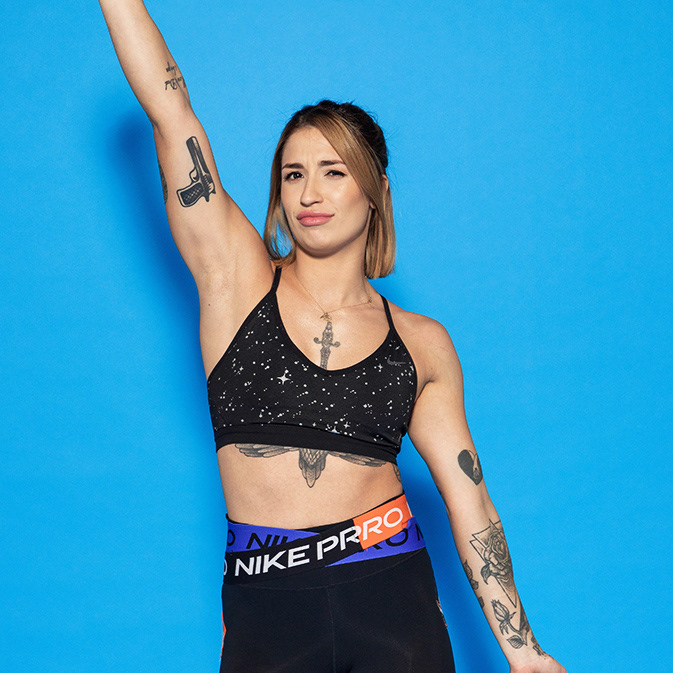
Ewa Swoboda’s tattoos are as recognisable as her sprinting style: old-school flowers, a bird, a pistol, small personal marks, and a large collection that keeps growing across her arms and legs. She has spoken openly about why some of the pieces matter, while her competition photographs show how much of the work is visible in motion. The result is not one single sleeve story. It is a changing record of family, taste, injury, humour, and the visual confidence she brings to the track.
This guide follows the photographs that show the ink clearly. It uses five different tattoo-bearing originals from sports coverage, interviews, and photo galleries. A close hand portrait, a full race-day view, a shoulder-and-arm frame, a wider track image, and a press-room photograph each reveal a different part of the collection. The separate featured portrait is kept outside the inline evidence sequence so readers can identify Swoboda without counting a general identity image as another tattoo photograph.
The meanings come from Swoboda’s own reported comments and from named athletics coverage. The images establish placement, scale, and design. They do not make every line readable, and they do not prove a chronology for every addition. Where a piece is partly hidden, the description stays with what the frame actually shows.
The large rose and the first story
Swoboda has said that her first tattoo was the large rose on her right thigh. She got it in 2015, before she was eighteen, with her father taking her to the studio. In her interview with Ślązag, she explained that the original motivation was practical as well as aesthetic: she wanted the rose to cover a scar. Once she had the design, she found that she liked the process and continued adding more work.
That detail gives the collection a useful starting point. The rose is not simply an image chosen because it looks good in photographs. It was the first large decision in a relationship with body art that later expanded to her arms, hands, and legs. Swoboda has also said that her parents and brother have tattoos, so ink was already familiar in her family. Her account makes the first piece feel considered without turning it into a grand origin myth.
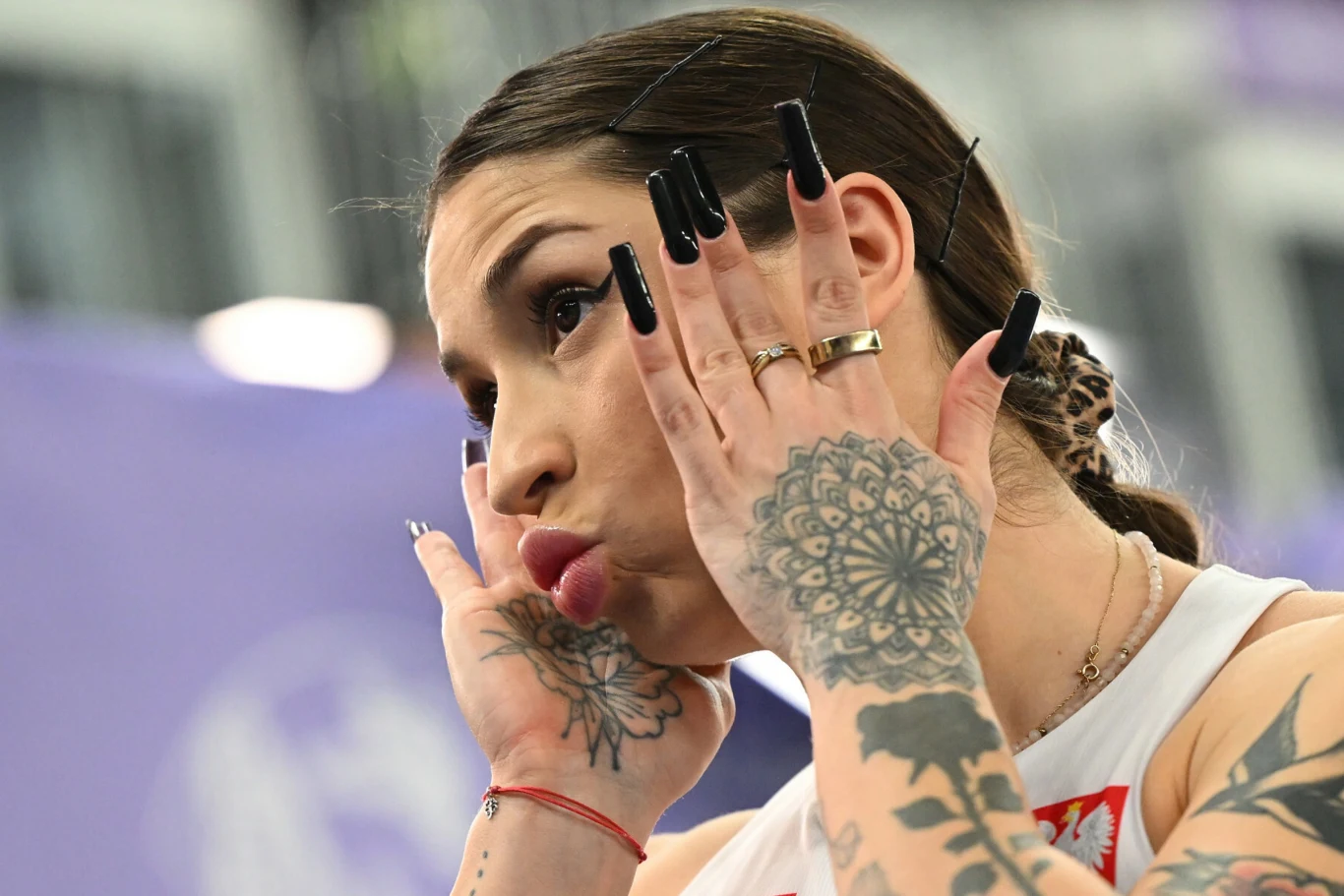
The close photograph shows Swoboda with both hands raised near her face. The mandala-like work across the nearer hand is the focus, but a larger floral composition continues through the lower part of the frame. The angle does not show the right thigh rose, yet it helps explain why her collection reads as a set of connected visual choices rather than one isolated design. Flowers, repeated petals, and dark outlines recur across different parts of the body.
It is also a reminder that public images are selective. A sprinting photograph may show a forearm and hide a thigh. A portrait can make the hand the centre of attention while leaving the rest of the arm cropped. Swoboda’s own explanation of the rose supplies the meaning; this image supplies a close look at the hand work that came later.
Flowers, a swallow, and the arm composition
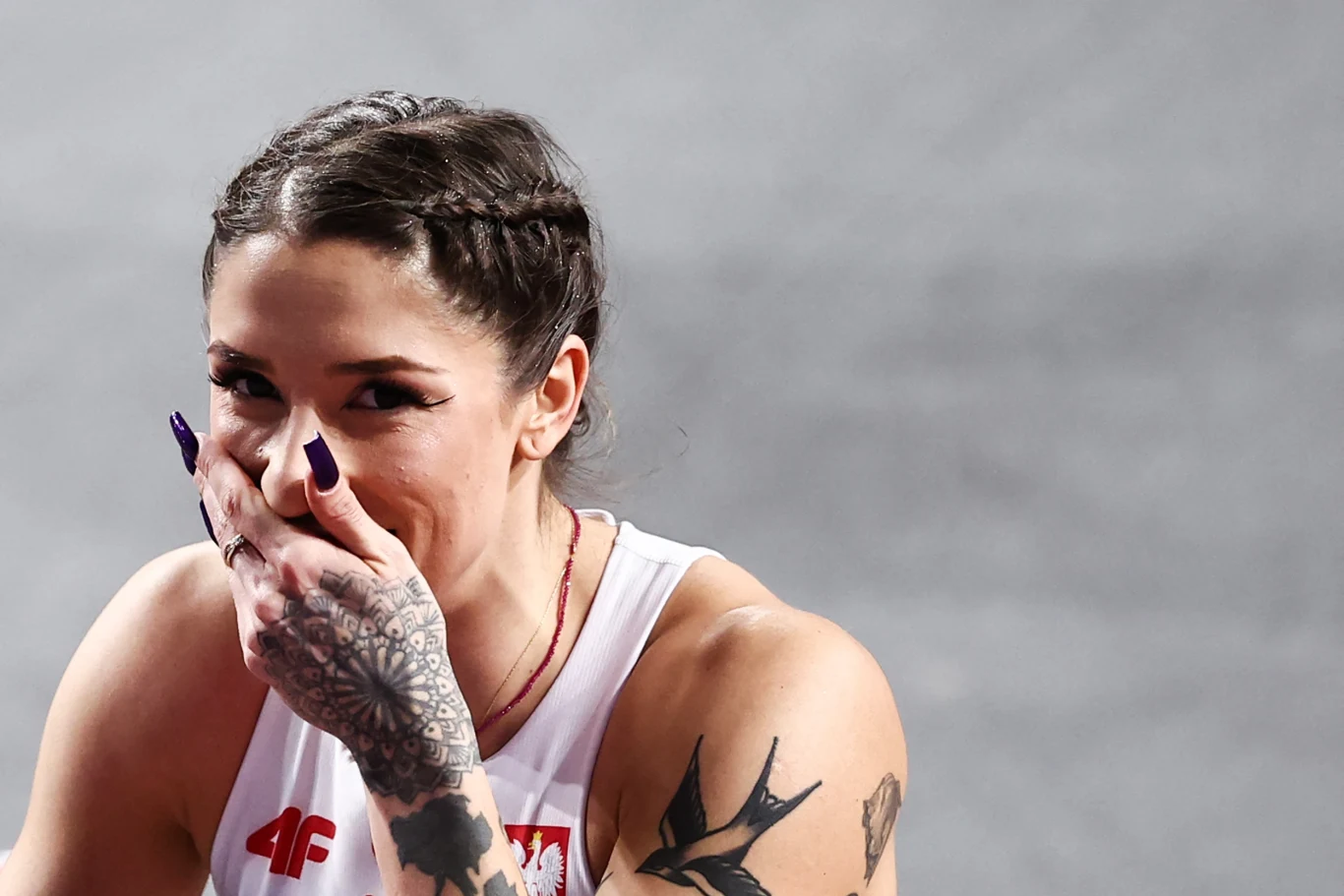
The race-day photograph gives the clearest view of several of Swoboda’s larger arm pieces at once. On the upper arm, a swallow sits above a bold rose. Lower down, further floral details and darker shapes run toward the elbow and forearm. The opposite arm carries a pistol design, creating an unusual balance between soft botanical forms and a hard-edged object.
The photograph is useful because the tattoos are shown on skin that is moving and flexing, not arranged for a catalogue. The rose has a strong outline and a dark centre, while the swallow is easier to read as a separate silhouette. The lower designs are more compressed by the crop. They can be described as additional floral and ornamental work, but the frame should not be used to invent names for every small mark.
European Athletics has described Swoboda as having a bird tattoo on her arm, a butterfly on her left thigh, Olympic rings, several cat designs, a gun on the right bicep, the number 777, a skull on her palm, hearts, and a sword. That inventory helps explain why a single photograph cannot stand for the whole collection. The visible swallow is one confirmed part of a much larger record, not a substitute for it.
The arm image also shows how Swoboda’s old-school preference works in practice. The flowers have a clear outline and readable silhouette, while the surrounding pieces leave enough space for each motif to remain identifiable. Her tattoos do not all share one scale or one subject. Some are large compositions, some are small marks, and some are personal symbols whose meaning is known only from her own explanation.
The pistol on the upper arm
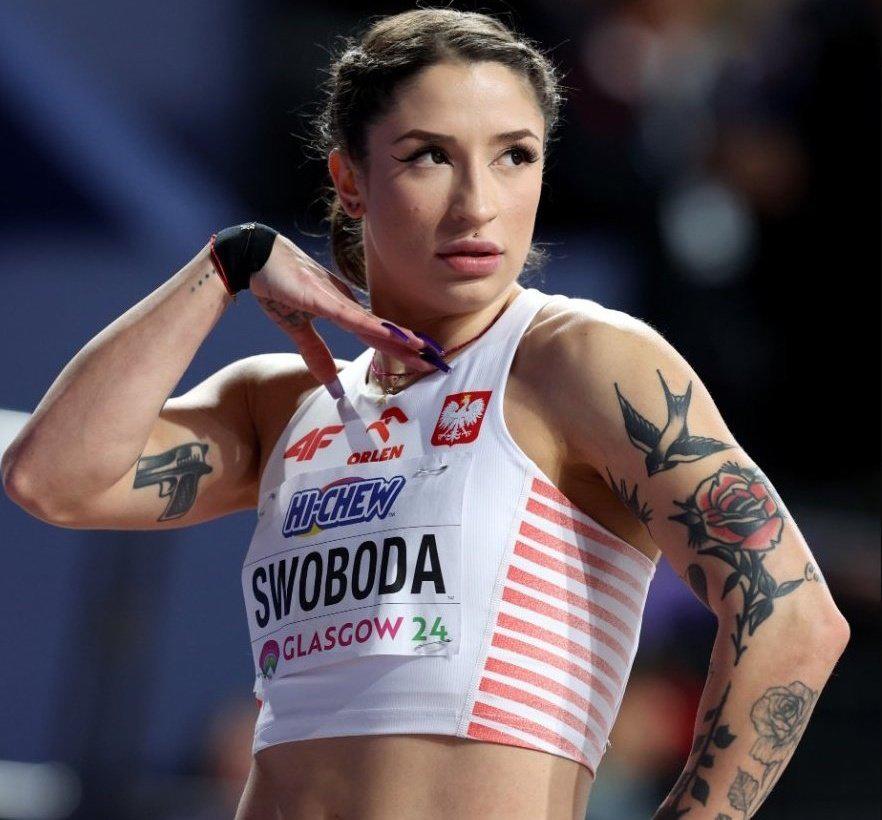
The pistol is one of the most immediately distinctive designs in Swoboda’s public photographs. It sits on the upper arm and appears in several different settings, including training and interview images. In the wider track frame, the pistol is visible beneath the edge of her vest while the floral work on the opposite arm occupies the other side of the picture.
That contrast gives the image a clear visual rhythm. One arm carries the rose-and-swallow grouping, while the other introduces a compact object with a very different outline. The pistol does not need a dramatic interpretation to be interesting. Its shape is already unusual beside the botanical pieces, and Swoboda’s comments about her tattoos make clear that she chooses designs because they appeal to her as well as because they carry personal associations.
The shoulder-and-arm photograph is especially helpful for placement. Swoboda is in a white Polish vest with her face turned toward the camera, and the pistol can be read on the inner upper arm while the other arm’s bird and rose are exposed from shoulder to forearm. The frame shows that the designs are not hidden details added for a camera trick. They are part of the way she presents herself in ordinary sporting spaces.
It would be easy to label every visible form as a separate tattoo, but the safer reading is broader. The pistol is clearly identifiable. The floral and bird pieces are clearly present. Smaller shapes around them need closer source photographs before they can be named. This distinction keeps the article grounded in evidence and leaves room for Swoboda’s own descriptions to carry the personal side of the story.
The small tattoo marks that stay personal
Swoboda’s interview comments show that the collection is not made only of large, camera-friendly designs. She pointed to dots on her wrist that represent the most important people in her life. She also described a tattoo expressing love for her mother and father. These are small pieces, but her explanation gives them a weight that a large rose does not automatically have.
Another example is the “Ała” tattoo on her left leg. Swoboda said she got it after an injury in 2021, while also noting the connection to a record by rapper Ten Typ Mes. She described the little “XD” tattoo on her right ankle as especially expressive despite its size. That sense of humour matters. The collection includes serious family references and athletic milestones, but it also includes marks that work because they are playful.

The wider track photograph places those smaller stories inside the larger picture. Swoboda’s arm ink is visible while she stands in her national kit, and the camera catches the relationship between the large flowers, the bird, the pistol, and the smaller pieces below them. The shot is not a close-up of the wrist or ankle, so it cannot prove the exact shape of the dots or the lettering. It does show how the collection moves between large, readable images and details that only appear when she chooses to point them out.
That difference between public visibility and private meaning is part of what makes the record interesting. A rose can be read from the stands. A set of dots may need an interview. The photographs show where the work lives; Swoboda’s words explain why some small marks matter to her.
How the leg tattoo pieces fit the wider record
Swoboda has more than ten tattoos on her left thigh alone, according to European Athletics. The same profile mentions the butterfly on that thigh and notes that she has pieces connected to her cats, family, and important moments. The scale of the thigh collection changes the way the arm photographs should be read. Her ink is not confined to the body parts that appear most often in competition pictures.
The thigh work also connects back to the first rose. Because that design began as a cover for a scar, the leg became the place where the whole project started. Later additions made the area more crowded and personal, but the origin remained straightforward: she liked the look, she had a reason to cover the scar, and she wanted to continue.
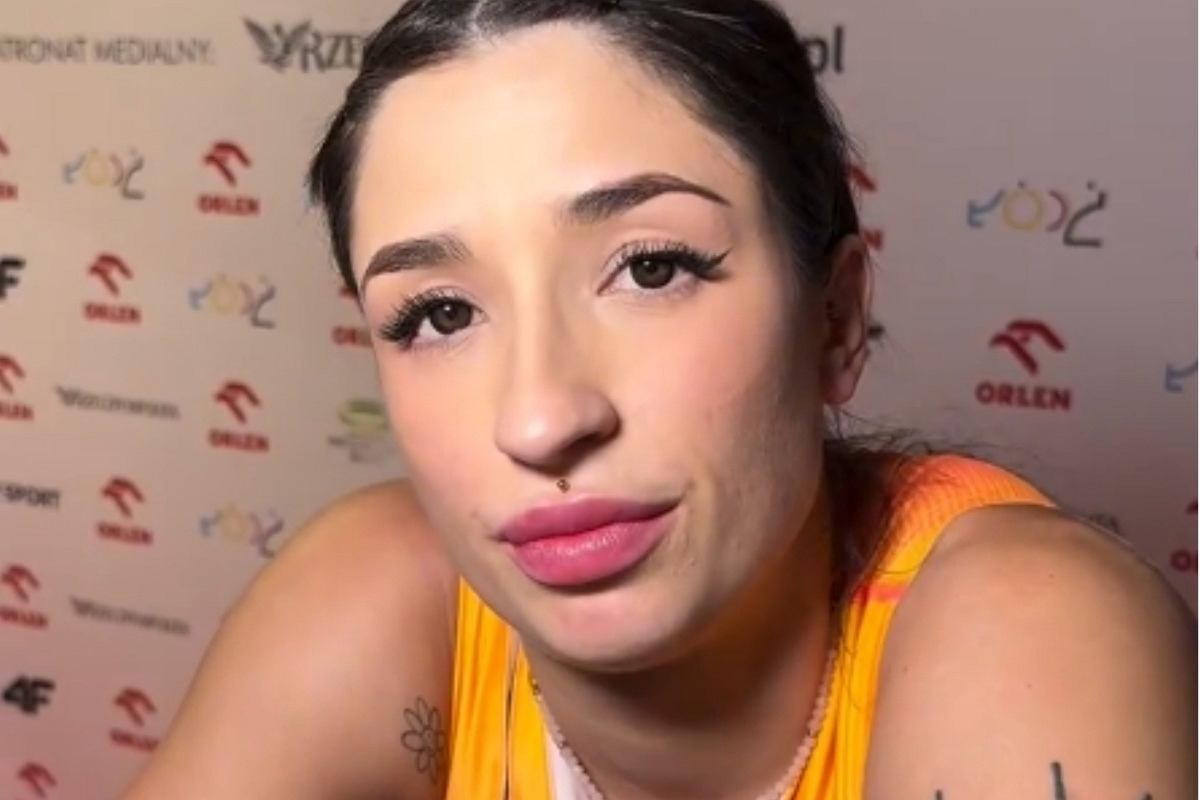
The press-room photograph is a different kind of tattoo evidence. It is a face-visible close-up with Swoboda leaning toward the camera in a bright top, and it reveals small shoulder marks that are easy to miss in a race image. The frame does not display the full thigh collection. It adds another angle to the record by showing that her visible ink continues upward through the shoulder and is not limited to the bold arm pieces seen in stadium photographs.
That is why the five selected photographs need to remain separate. The first close-up centres the hand. The race-day frame establishes the flower-and-swallow grouping. The shoulder view makes the pistol and arm placement readable. The wider track image shows the collection in motion. The press-room image adds a quieter face-and-shoulder context. Each one contributes information that the others leave out.
Reading the images without overclaiming
Swoboda’s tattoos are often discussed through a handful of recognisable pieces: the large rose, the bird, the pistol, the butterfly, the Olympic rings, and the family-related marks. Those are all supported by her interviews or by athletics profiles. Other parts of the collection are visible in photographs without a published explanation. The honest approach is to separate what can be identified from what can only be described as a shape, pattern, or placement.
The distinction matters because close images can create false confidence. A crop may make a design look complete when the edge of the tattoo is outside the frame. A social repost may remove the original caption. A gallery may show a different date and make an older piece look new. The source-led record here uses the published interview for meanings and the selected originals for visual description.
It also matters that none of the images are repeated. The collection is extensive enough to support different views, so there is no reason to use the same track frame three times with slightly different crops. A featured identity portrait can sit at the top of the page, but the inline sequence should be reserved for photographs where the ink itself is the subject. That gives every image a job.
What the sources actually establish
The strongest facts are simple. Swoboda’s first tattoo was a large rose on her right thigh, made in 2015 to cover a scar. She has described dots for important people, a family-linked tattoo, the “Ała” design connected to a 2021 injury and Ten Typ Mes, and an expressive “XD” mark on her ankle. Athletics coverage identifies a much wider inventory that includes a bird, butterfly, Olympic rings, cats, a pistol, 777, a skull, hearts, and a sword.
The photographs confirm the character of that inventory without turning every visible line into a claim. The hand work is dense and ornamental. The arm images show strong outlines, flowers, and a swallow. The pistol creates a sharper counterpoint. The press-room frame shows that smaller shoulder ink can matter even when it is not the most recognisable piece. The collection is large, but the article does not need to pretend that every design has a documented story.
Swoboda has said she will not put tattoos on her neck or face, even while planning future additions elsewhere. That choice is consistent with the images: the work is visible on her arms, hands, legs, and shoulder, while her face remains clear. It also gives the collection a boundary. Her tattoos can be bold without being a complete mask or a single full-body project.
The same-celebrity search covered close-ups, wider views, alternate angles, different dates, Polish and international athletics coverage, interview galleries, social-post reproductions, reputable photo archives, and source-page image variants. Five distinct tattoo-bearing originals were retained after visual inspection. A near-duplicate track frame was discarded and replaced with a different press-room photograph. The featured face-visible portrait remains separate and is not counted as inline tattoo evidence.
Ewa Swoboda’s ink is best read the way she discusses it: some pieces are there because they look right, some mark family or important people, some hold memories of injury or music, and some are simply funny. The photographs make those choices visible from different angles. Her own words keep the meanings precise.