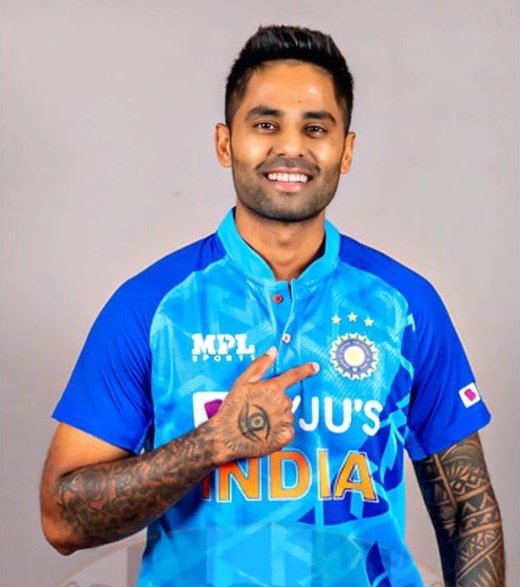
Suryakumar Yadav’s tattoos are best understood as a visual record of family, protection, movement, and the life he has built around cricket. The India batter has spoken about the names and portraits of his parents, a tattoo dedicated to his wife Devisha, and the evil-eye design she encouraged him to get. Other pieces connect to ideas he has described in interviews, including a calm lion, arrows that represent being pulled back before moving forward, a Maori-inspired design, and the reminder to take life one step at a time.
This guide keeps those meanings tied to the photographs that actually show the ink. It uses five different tattoo-bearing originals, not repeated crops or a collage. The images move from a close gym photograph to a poolside portrait, a direct hand close-up, a full-arm sports portrait, and a separate chest view. A face-visible featured portrait is kept outside the inline tattoo sequence so readers can identify Suryakumar without confusing a general identity image with tattoo evidence.
The written record comes from interviews and established sports reporting. The Indian Express recorded Suryakumar saying that his first tattoo carried his parents’ names and that the tattoo near his heart represented his wife. JioCinema interview reporting later described the evil-eye design, the lion, the arrows, and the Maori-inspired work. The photographs show placement and style; the interviews supply the personal meaning. Where a design is only partly visible, this article describes the image without inventing a complete catalogue.
Suryakumar Yadav’s full arm sleeve and Maori-inspired geometry
The clearest starting point is a close gym photograph in which Suryakumar rests his arms on a bench and looks toward the camera. Both the face and the subject’s distinctive body art are visible in the same original frame. The nearest arm carries a dense sleeve of curved lines, geometric bands, and darker filled areas. The design travels from the shoulder down toward the forearm, giving the photograph enough scale to show that this is a large composition rather than a handful of isolated symbols.
The visual language is strongly geometric. Repeating triangular shapes sit beside rounded lines and heavier black sections, creating a pattern that follows the changing width of the arm. That matters when discussing the Maori-inspired tattoo reported in coverage of Suryakumar’s explanations. The source record connects the design with a New Zealand trip and with ideas of luck, love, and calmness. The photograph supports the broader observation that the sleeve is built from repeated pattern and structure. It does not, by itself, prove that every visible section belongs to one single session.
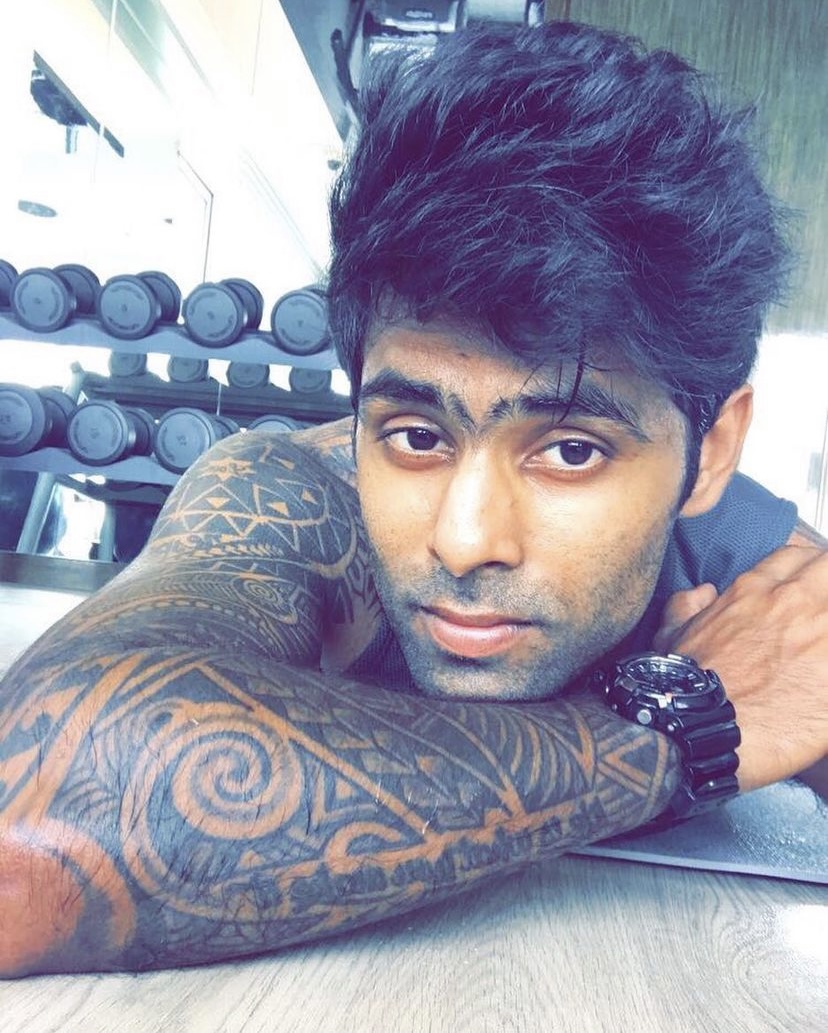
What the frame documents particularly well is the relationship between coverage and movement. The ink remains readable while Suryakumar bends his arms across the bench, which suggests that the artist planned the design to follow the body rather than sit as a flat emblem. The shoulder area is darker and more layered, while the lower sections open into bands and curved motifs. The important evidence is the full arm view, not an attempt to assign a name to every small shape.
This is also why the photograph is more useful than a generic red-carpet portrait. It shows the actual surface of the skin and gives readers a meaningful reference for the later images. The article can discuss the sleeve as a continuous visual field while leaving the exact chronology of each addition to the sources that address it directly.
The shoulder and chest composition in a poolside photograph
A second original photograph offers a different angle. Suryakumar is shown in profile beside a bright blue pool, drinking from a glass while the right side of his chest and shoulder fills the frame. The pose is casual, but the tattoo visibility is unusually strong. The shoulder carries the same broad geometric language seen in the gym image, while the chest includes a large central motif with darker outlines and patterned edges.
Because the camera is close, this photograph reveals the way the design transitions from the upper arm across the shoulder and toward the chest. It also shows why the collection should not be reduced to the phrase “arm sleeve.” Suryakumar’s ink extends across several connected body areas, with large pieces that can be read together from some angles and separately from others. The poolside setting, jewellery, watch, and side profile make this a distinct visual context, not a second copy of the gym frame.
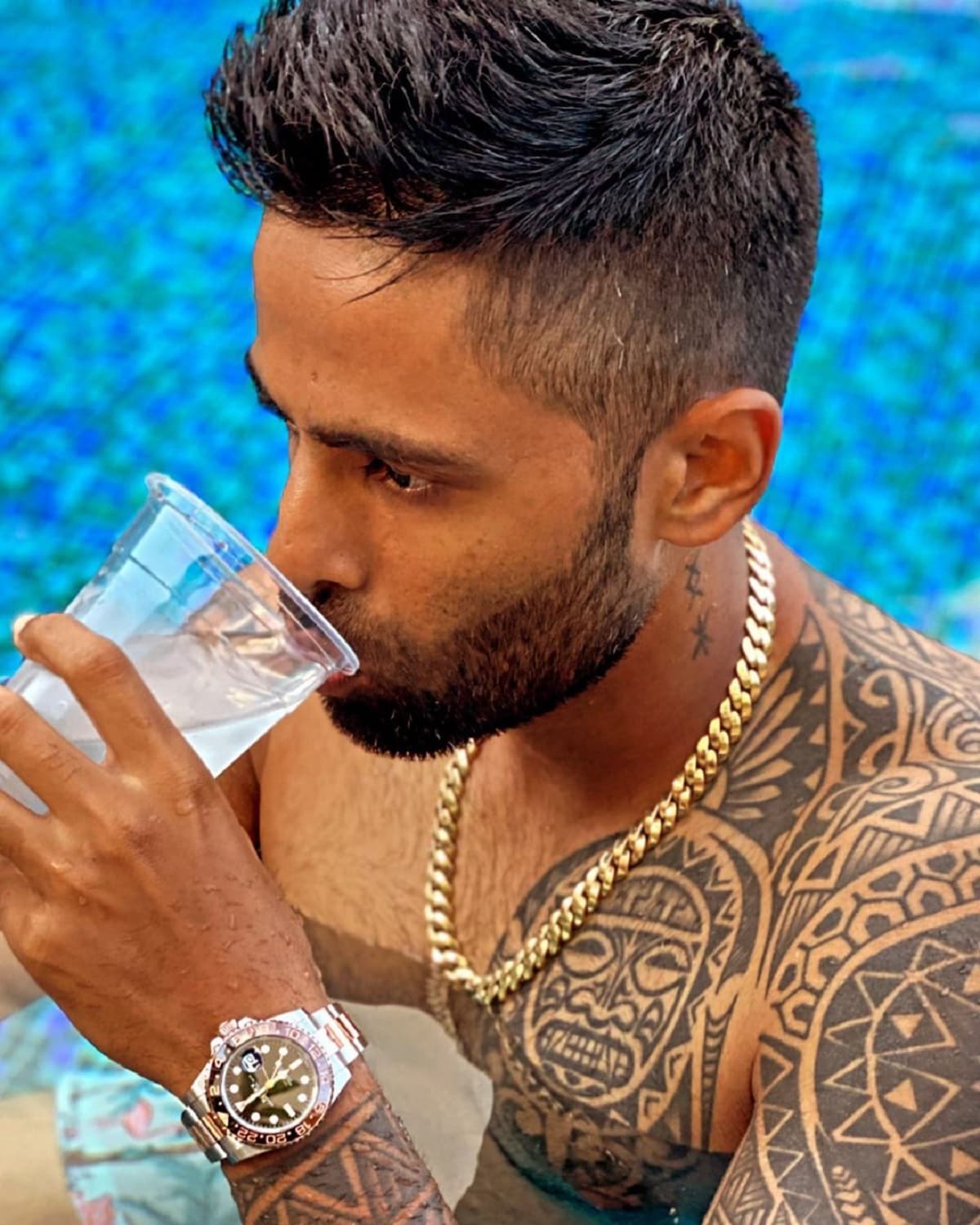
The chest area is especially relevant to the personal meanings Suryakumar has described. Reporting on his interviews says that a tattoo near his heart is dedicated to his wife Devisha, while other coverage identifies the parents’ names and portraits as his most valued tattoo. The photograph does not provide a readable close-up of every name or portrait, so the careful claim is that it shows the larger chest and shoulder composition in which those personal pieces are situated.
The difference between what is visible and what is explained is useful. A photograph can show the scale, position, and pattern of the ink. An interview can explain why one piece matters. Together they create a stronger account than either one alone, but they should not be merged into a claim that the camera has not proved.
The evil-eye tattoo on Suryakumar Yadav’s hand
The most immediately recognisable symbol in the collection is the blue-and-black eye on Suryakumar’s hand. In a direct portrait, he raises both hands across his face, leaving the eye tattoo centred in front of his mouth and lower nose. The design has a blue iris, a pale centre, radiating lines, and a darker outline. The framing makes the symbol impossible to mistake for a logo printed on clothing or an object held in the hand.
This photograph is a different kind of evidence from the two full-arm views. Instead of showing coverage, it isolates a symbol and gives the reader a clear view of its colours and structure. Smaller markings are also visible around the fingers and wrist, but the eye is the obvious focal point. The image should therefore be used to discuss the evil-eye tattoo itself, not to claim that it provides a complete inventory of Suryakumar’s hand work.
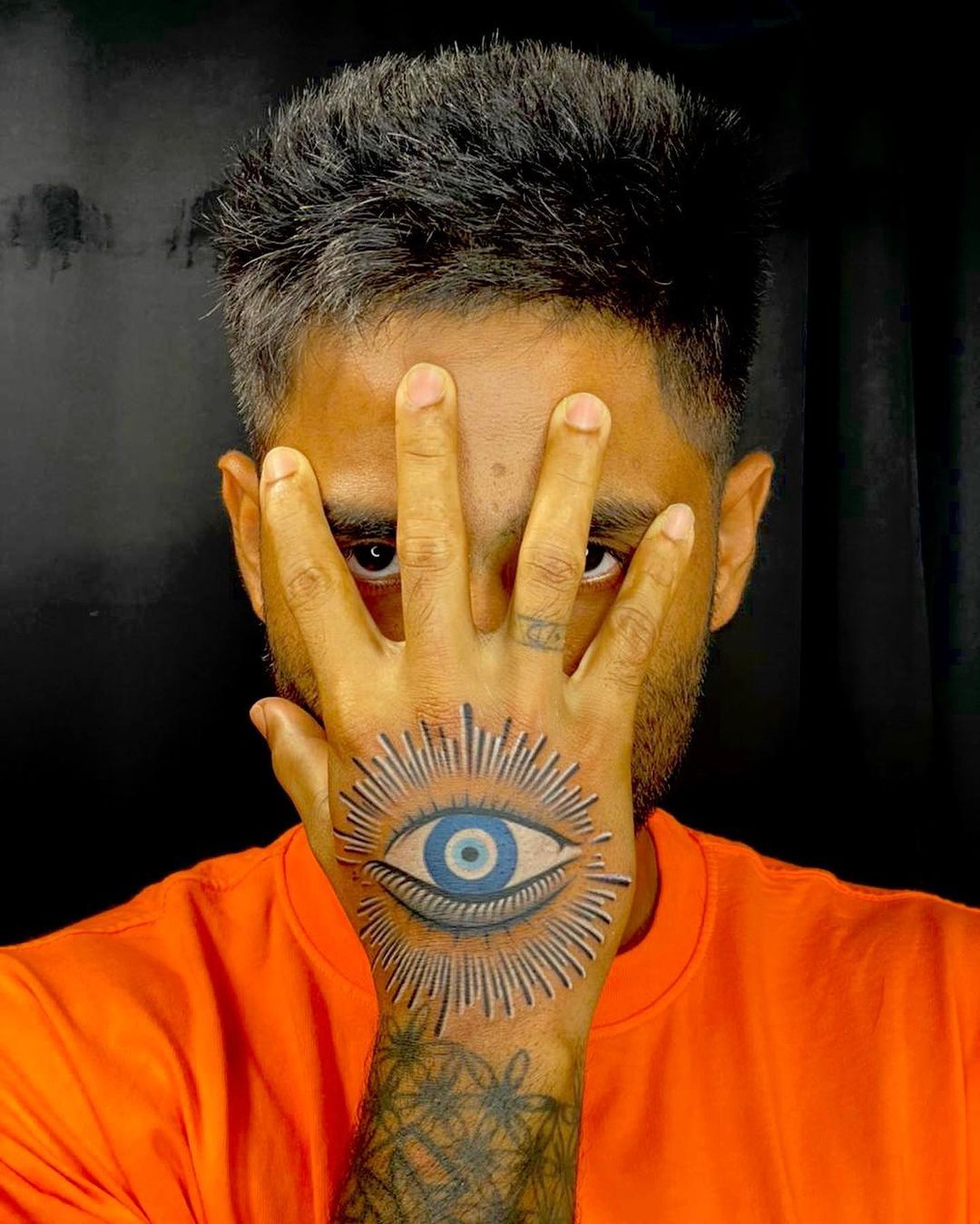
Sports reporting on Suryakumar’s JioCinema interview says that his wife suggested the evil-eye design because she believed he was easily affected by nazar, the evil eye. That explanation makes the tattoo personal without requiring a supernatural claim from the article. It is enough to say that Suryakumar connected the design to his wife’s suggestion and to the protective idea behind it.
The close-up also shows how placement changes the feel of a design. A sleeve can read as a landscape across the arm, while the eye works as a compact emblem that announces itself the moment the hands rise. The symbol is not generic filler in the visual record. It is a documented piece with a reported meaning and a photograph that lets readers inspect it directly.
The lion, arrows, and symbols of momentum
Suryakumar has described other designs in terms of character and movement. Reporting on his interview identifies a calm lion on the arm, arrows that express the idea of being pulled back before moving forward, and a foot tattoo associated with taking one step at a time. Those descriptions fit the broader visual impression of his collection, which combines bold animal imagery, directional lines, words, and patterned sleeves rather than following one minimalist style.
The meaning of an arrow is particularly easy to oversimplify. In Suryakumar’s explanation, the backward pull is part of the motion toward a stronger launch. That makes the design a personal metaphor for setbacks and progress. The photograph does not identify every triangular line as an arrow. Instead, the interview supplies the meaning, while the photographs establish that his arms contain multiple distinct motifs layered into larger compositions.
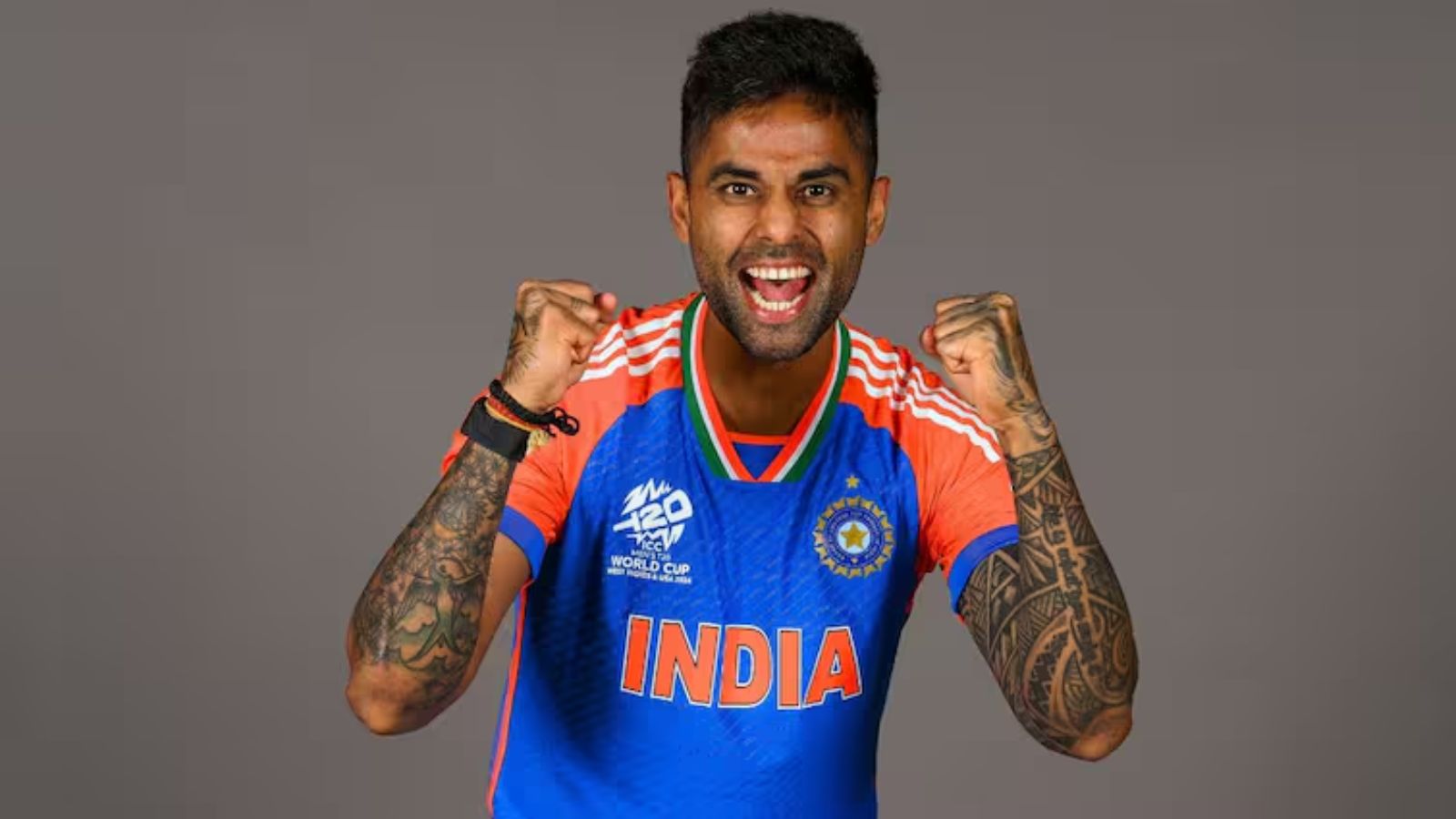
A full sports portrait helps put those descriptions into a recognisable setting. Suryakumar stands in an India jersey with both fists raised, and the tattoos run along both forearms. The pose is celebratory, but the ink remains visible from wrist to upper arm. It is a different original image from the close gym and poolside frames, with a different outfit, background, camera distance, and body position. The tattoos are the subject of the image, not a side effect of a generic celebrity portrait.
This view also demonstrates why a useful article needs more than one angle. The eye tattoo becomes prominent in the hand close-up, the chest and shoulder become clearer beside the pool, and the full-arm pattern reads more completely in the jersey portrait. None of those photographs should be repeated to create the illusion of coverage. Each original frame reveals a different part of the record, which is why distinct sources matter more than a larger count built from repeats.
The chest, family, and the first tattoo
A separate chest photograph gives the collection a quieter, more intimate frame. Suryakumar is lying back with his face visible and his right shoulder turned toward the camera. A large tattoo occupies the shoulder and upper chest, with a central face-like motif surrounded by bold dark shapes and patterned points. Additional lettering and designs continue down the torso, although the lower portion falls into shadow and should not be described as if every line were readable.
The picture is valuable because it makes the scale of the shoulder work obvious. It is not an abstract mark glimpsed through a cricket sleeve. The tattoo follows the roundness of the shoulder and spreads inward across the chest, creating a composition that has to be viewed as part of the body. The source page identifies the photograph in a tattoo-focused context, while Suryakumar’s own reported comments provide the personal background about family names and portraits.
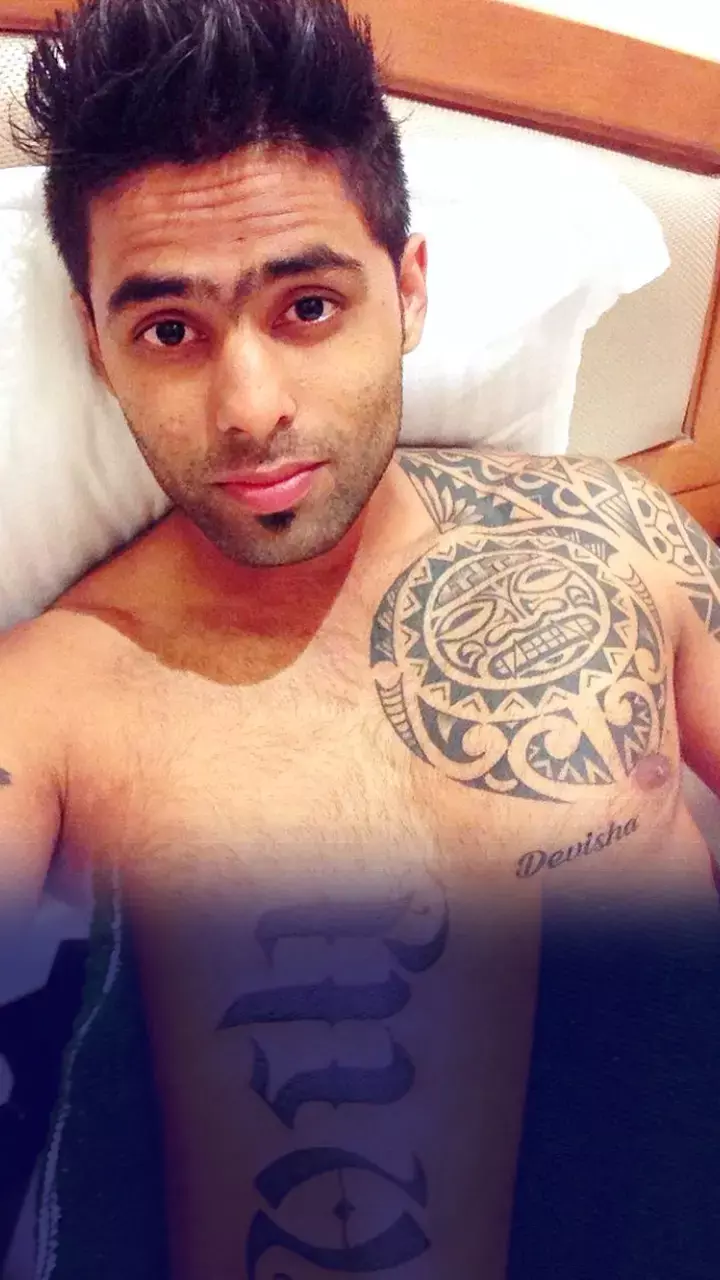
The Indian Express interview records Suryakumar saying that his first tattoo was of his parents and that the tattoo near his heart represented his wife. Later coverage reports that he considers the parents’ names and portraits his favourite. Those statements give the chest and shoulder tattoos an emotional centre. They also explain why the collection includes so many designs connected to people close to him rather than only decorative patterns.
The wording should remain precise. The photograph visibly documents shoulder and chest ink. The interview documents the family meaning. It does not allow the article to label every visible section as a parent portrait, and the image does not make every word legible. The strongest account respects both kinds of evidence instead of asking one source to do the work of the other.
Why the photographs need to stay separate
Suryakumar’s tattoo record is unusually easy to flatten into a single image because his sleeves are recognisable. That would be a mistake. The gym photograph shows the density of the upper arm. The poolside photograph shows how the shoulder and chest connect. The hand portrait isolates the evil eye. The India jersey frame maps both forearms in a celebratory pose. The reclining chest photograph brings the family-linked shoulder composition into view. These are five distinct originals, and each one answers a different visual question.
Keeping them separate also prevents generic imagery from taking over the story. A face-visible portrait is useful for identification, but it is not automatically evidence of a tattoo. The featured portrait for this article remains outside the inline sequence for that reason. The tattoo-bearing photographs are placed inside the sections where their evidence matters, with prose before and after each one. The page can therefore move through the subject’s ink instead of opening with a pile of photos and leaving all the explanation until the end.
The same principle applies to source quality. A source page can help identify the context of a photograph, while an interview can explain a design’s meaning. Repeated social crops, unattributed collages, and images that show only a generic pose add less value. They may be useful leads during research, but they should not displace a distinct original that readers can inspect.
A careful reading of the photographic record
The clearest conclusions are also the most defensible. Suryakumar Yadav has extensive arm and shoulder work, a documented evil-eye tattoo on his hand, family-linked tattoos, a wife-linked tattoo, a calm-lion design, arrows, and a Maori-inspired patterned piece described in interview reporting. His own explanations connect the ink with protection, family, love, calmness, resilience, and progress. The photographs confirm the body locations and the visual variety without pretending that every small mark has an independently verified meaning.
That balance matters for any celebrity tattoo guide. Original photographs let readers inspect the work, while interviews explain only the parts that Suryakumar has actually discussed. Here, the result is a collection that feels personal without being over-decoded. Suryakumar’s tattoos are not just a sleeve, an eye, or a series of symbols. They are a set of memories and ideas placed across the body, revealed differently whenever the camera finds a new angle.
The search for this article covered tattoo-focused reporting, close-ups, wider arm and torso views, alternate angles, different dates, regional sports outlets, image galleries, social-post reproductions, reputable archives, and source-page image variants. The selected five tattoo photographs were retained because they are distinct, visually inspected, and genuinely show the subject’s ink. The separate featured portrait is kept for identity only. No image is repeated, and no generic portrait is mapped as tattoo evidence.