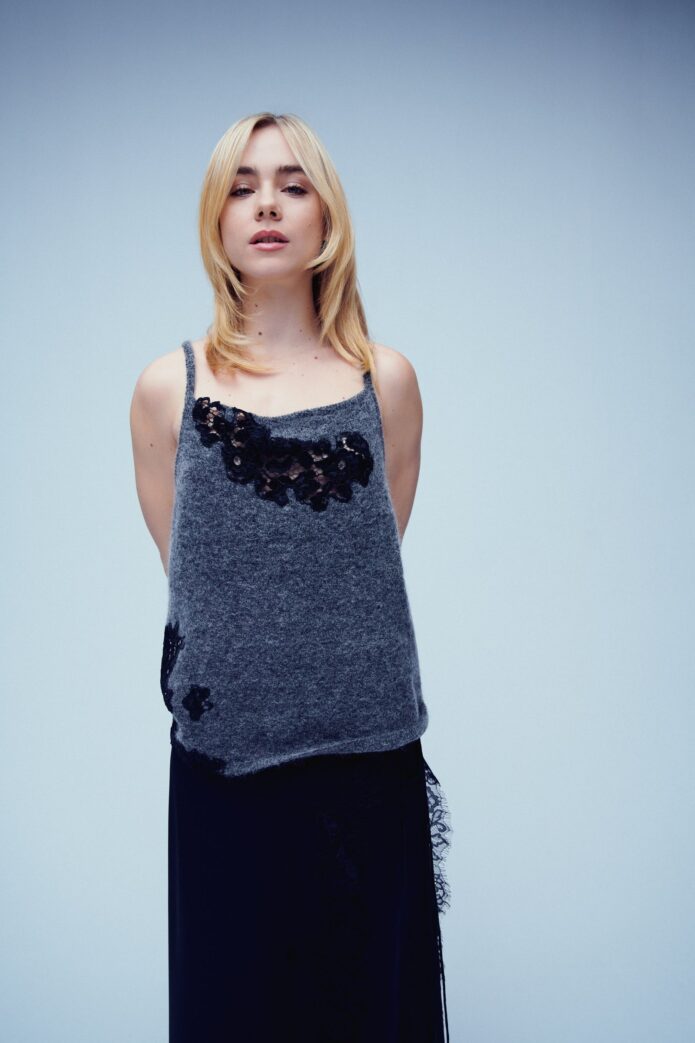
Clara Galle’s tattoos are unusually well documented because one of them was made on television. During her December 2024 appearance on La Revuelta, the Spanish actress agreed to a live tattoo and chose a small reversed R on the inside of her right wrist. The program’s own video and several Spanish outlets show the moment from different positions. Separate Glamour photographs also show fine-line ink on her upper arm and lower leg. The images below are not a pile of interchangeable portraits: each one is a different inspected photograph with a specific visual job.
The live La Revuelta wrist tattoo
RTVE’s coverage places the live tattoo inside Clara Galle’s fifth visit to the program. The joke was that a frequent guest might receive the show’s logo on the face, but Galle decided she would accept a smaller design somewhere else. She chose the reversed R associated with the program and let the tattoo artist work on her wrist in the studio.
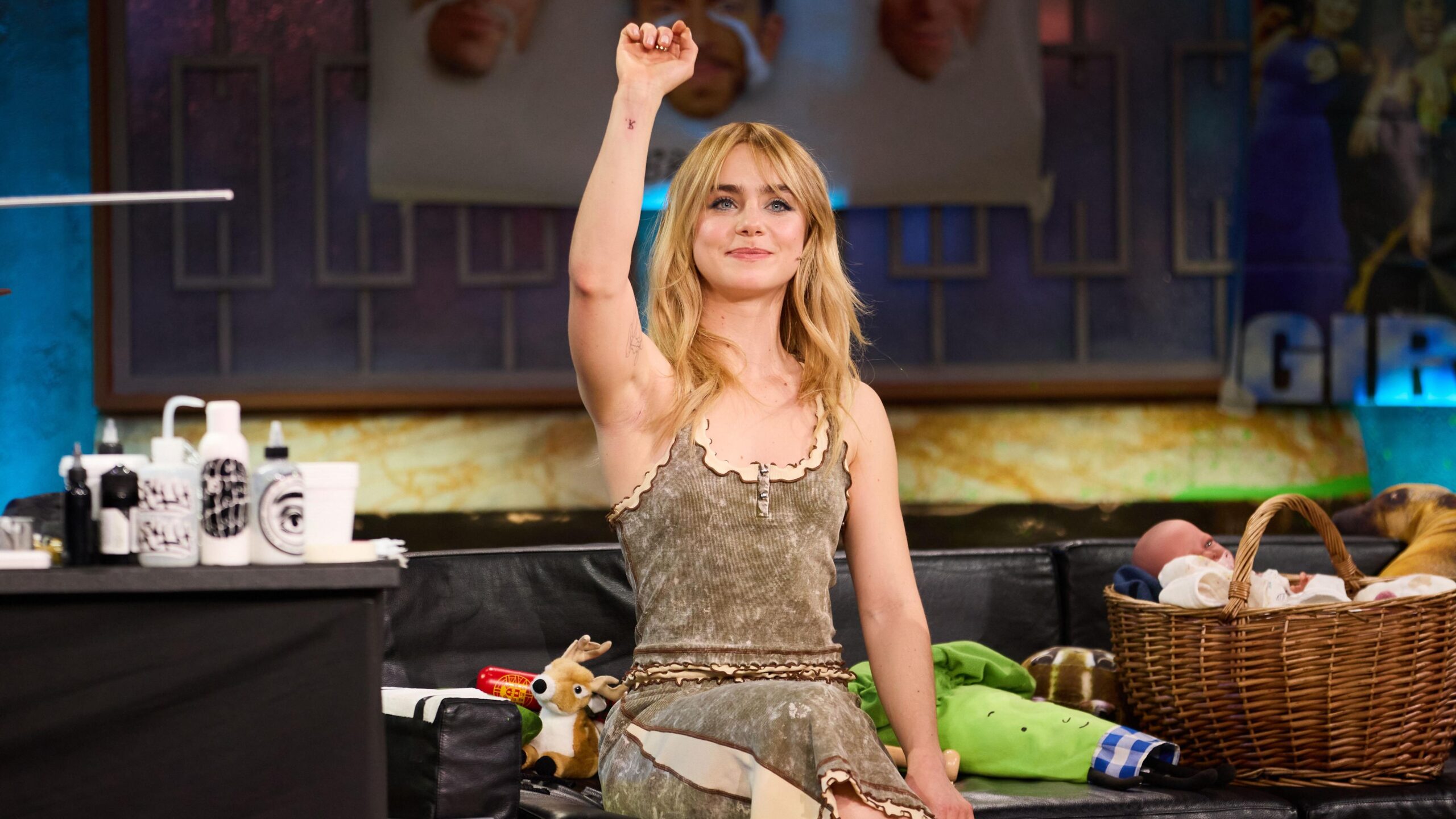
This wide RTVE still is useful because the wrist is raised and the new mark can be located against the rest of her arm. The image also preserves the setting: the couch, the tattoo station and the bright studio are visible, so the reader can understand that this was a documented broadcast event rather than a later fan reconstruction. The mark is small, dark and placed near the inside of the wrist. Its scale means that a close crop is helpful, but the wider photograph confirms whose arm is being shown.
T13 reported that Galle described the design as a playful inversion connected with the show’s name. The report also linked the decision to the end of filming a sex scene for her series, which gave the moment a personal sense of timing. That context comes from the interview coverage. The photograph establishes the visible ink and its placement, while the written report explains why she accepted the challenge.
A second angle on the wrist reveal
The live segment was photographed more than once, and the second RTVE still gives the wrist story a different visual angle. Here Galle is seated while the artist and host remain in the frame. Her arm is extended rather than held directly in front of the camera, which makes the image less useful for reading the tiny letter but more useful for understanding the process.
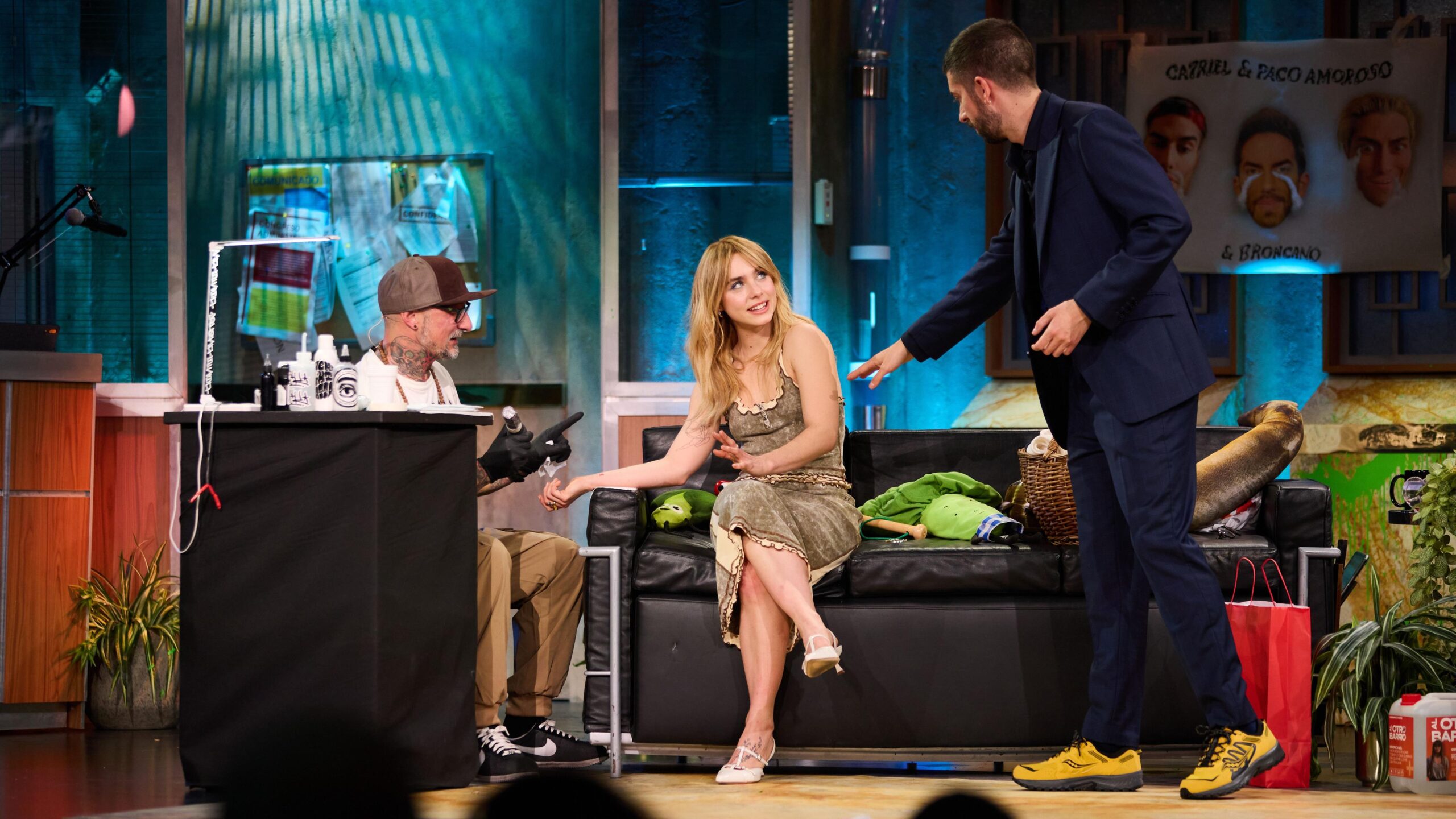
That distinction matters in a tattoo article. A frame that shows the artist, equipment and body position supports the claim that the mark was made during the broadcast. It should not be described as a close-up of the lettering when it is not one. Visual precision keeps the evidence honest: this photograph documents the live session and the wrist area, while the closer frame carries the strongest detail about the symbol itself.
RTVE’s accompanying video page identifies the guest, the program and the tattoo episode. The related Spanish reports from 20minutos, AS and La Vanguardia repeat the same basic account, including the inside-right-wrist placement. The agreement between the broadcaster and independent outlets makes the event unusually secure as a documented tattoo record.
The arm tattoo visible in a FormulaTV frame
A separate FormulaTV photograph from the same television appearance shows Galle standing with both arms exposed. The picture is not the same frame as either RTVE still. Her face is fully visible, her pose is different and the fine-line design on the arm can be seen away from the tiny wrist mark.
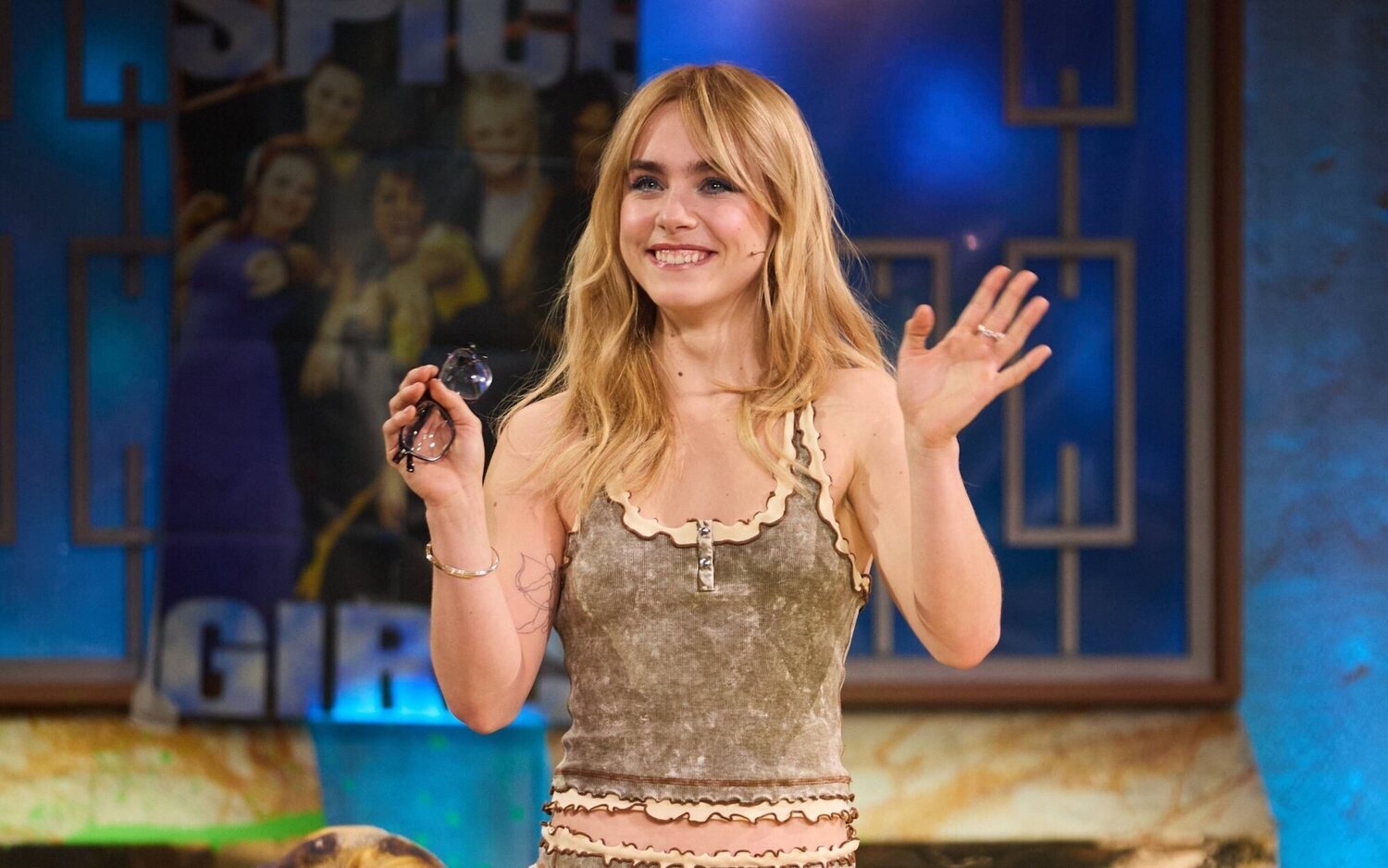
This frame is valuable for a different reason. It shows that the live wrist tattoo is not the only piece of visible ink associated with Galle’s public photographs. A fine-line design appears on the arm near the upper section, although the image does not provide enough detail to assign a precise name or meaning to every line. The responsible description is therefore limited to what the photograph supports: a visible arm tattoo, a recognisable subject and a separate televised setting.
The difference between the wrist symbol and the arm design should not be erased. The wrist mark has a clear origin story because it was made on air. The arm tattoo is visible in editorial and television imagery, but the sources used here do not identify its artist, date or full symbolism. A good tattoo record can hold both levels of certainty at once instead of inventing a backstory for the less documented piece.
Fine-line ink in a Glamour portrait
Glamour Spain’s 2025 Women of the Year coverage provides a high-resolution portrait in which Galle raises her arms above her head. The pose exposes the side of her upper arm and lets the viewer inspect the fine-line work from a clean editorial setting, separate from the live television reveal.
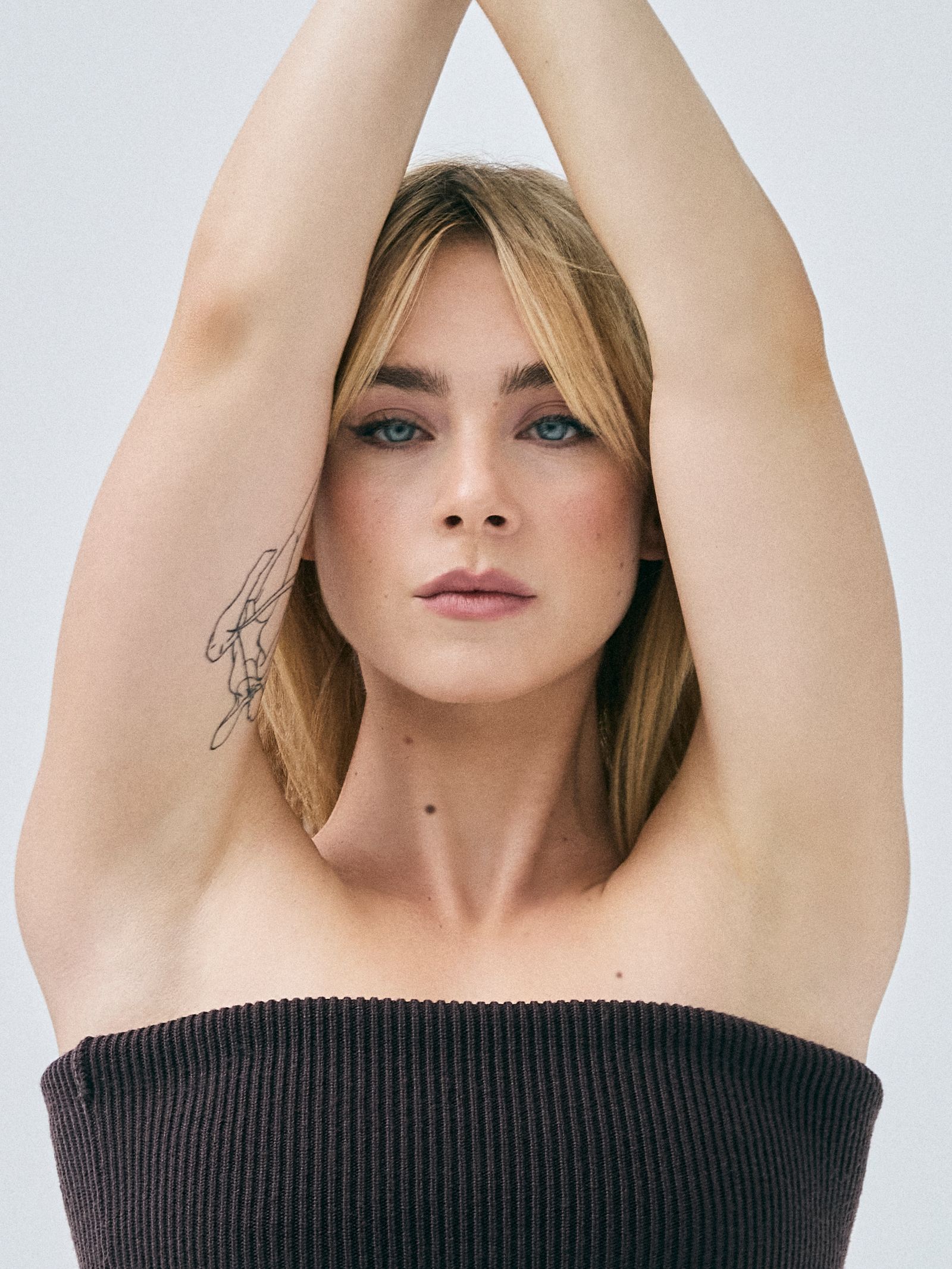
The inspected photograph shows a delicate line drawing on the upper arm. It is visually distinct from the reversed R on the wrist and should not be labelled as the same tattoo. The design is narrow and linear, with enough contrast to confirm that it is ink on the skin rather than a clothing seam or temporary graphic. The face, hair and studio lighting make the subject match clear, while the source page identifies the photograph as part of Glamour’s Clara Galle feature.
Because the article does not have a direct statement from Galle explaining this particular design, the image is the evidence for its existence and placement. The page does not assign a meaning to the linework. That restraint is especially important when a fine-line tattoo resembles an illustration, handwriting or a symbolic motif but cannot be read with confidence at the supplied resolution.
A wider Glamour view of the same arm ink
A second Glamour frame presents Galle seated in a red dress with her arm extended. It comes from the same editorial coverage but is a different original photograph, with a different pose, crop and background. The wider composition makes the relationship between the tattoo and the arm easier to understand than a tight face portrait would.
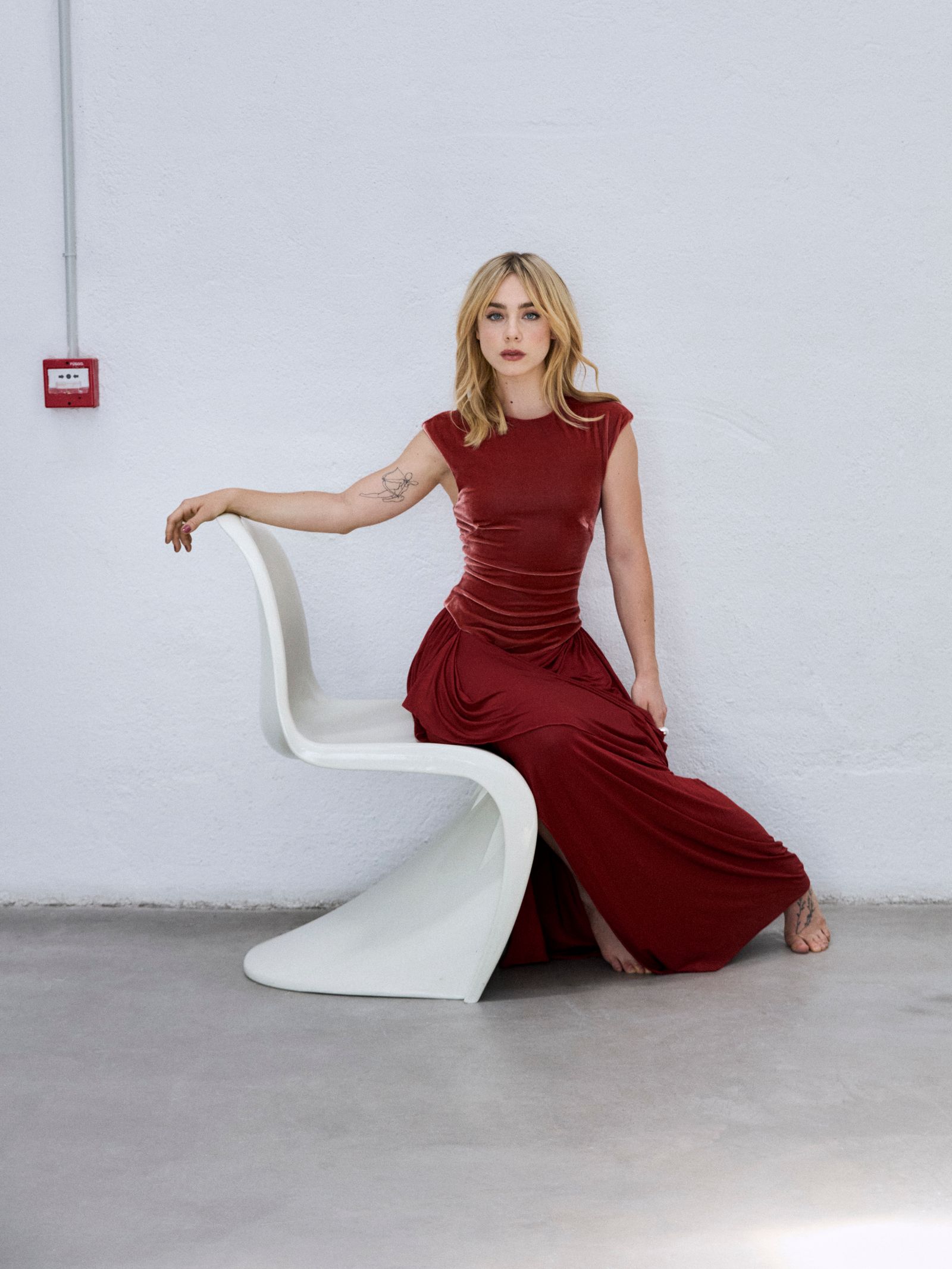
The arm design is visible near the upper arm, while another tattoo can be seen near the lower leg. These are separate visible pieces in a single editorial photograph, and the image does not justify combining them into one design. The useful conclusion is that Galle has more than the small wrist symbol documented on La Revuelta, with additional ink visible in later fashion coverage.
Using two Glamour photographs is justified because they are not duplicate media assets or repeated crops. One is a close editorial composition with both arms lifted; the other is a full seated portrait with the arm extended and the leg visible. The distinct angles give readers more information about placement without pretending that either image reveals the complete tattoo catalogue.
How the record fits together
The strongest narrative thread is the contrast between a tattoo made publicly and tattoos that appear in ordinary editorial photography. The reversed R has a named program, a broadcast date and multiple images of the session. The arm and leg designs are visible, but their dates and meanings are less firmly documented in the sources gathered for this profile.
That does not make the older or less explained tattoos unimportant. It simply changes how they should be described. The wrist mark can be discussed as a television-made tribute to La Revuelta. The other pieces should be discussed as visible body art with cautious placement notes. Source strength determines the wording, not the desire to make every tattoo sound like a complete biography.
The photographs also explain why different images are necessary. A raised wrist makes the new symbol visible, a standing frame exposes the arm, and the Glamour portraits show the fine-line work under calmer lighting. No single photograph can provide every answer. Taken together, the set lets the reader compare the tattoo locations while keeping each claim attached to the frame that supports it.
What the published sources establish
RTVE establishes that Clara Galle received a tattoo during her December 2024 appearance on La Revuelta. The broadcaster’s video description and the stills identify her as the guest and show the tattoo being made on the wrist. T13, AS, 20minutos and other Spanish coverage explain that the design was a reversed R connected to the program’s logo and that Galle chose the placement herself.
Glamour Spain establishes a separate visual record. Its 2025 feature photographs show Galle with fine-line ink visible on the upper arm, and one wider frame also shows ink near the lower leg. The photographs are evidence of visible tattoos, not proof of a specific artist, date or private meaning. The distinction between a documented event and an inspected image keeps the profile useful without filling gaps with fan speculation.
The sources do not establish a complete inventory of every tattoo Galle may have, nor do they provide a verified list of tattoo artists. They also do not prove that every line visible in an editorial photograph is permanent unless the source or the image context makes that clear. This article therefore focuses on the pieces that can be seen and the wrist event that is described by the broadcaster and multiple independent outlets.
Why the visual sequence matters
A tattoo page works best when its images are placed beside the claims they support. The first RTVE frame introduces the broadcast moment. The second shows the same session from a different angle. The FormulaTV photograph makes the arm ink easier to locate. The two Glamour images then move the reader into a separate editorial record. This sequence follows the evidence rather than stacking five photographs before the article begins.
That structure also prevents generic celebrity photography from being mistaken for tattoo proof. The featured Vogue portrait is used only to identify Galle at the top of the post. The inline images are all tattoo-bearing photographs and each carries a different source URL, local file and visual inspection record. The portrait and the tattoo evidence have separate jobs, so neither is asked to prove more than it shows.
Galle’s record offers concrete design observations without turning her body art into a template. The wrist symbol is small and personal to a television program. The arm pieces are more illustrative and less explained in public reporting. Their scale, placement and visibility demonstrate how a tattoo can be private in meaning while still becoming visible through a carefully chosen photograph.
The documented record
The clearest documented tattoo is the reversed R that Clara Galle received on her inside right wrist during La Revuelta. It has a reliable public context and is shown in several distinct photographs. Separate Glamour and television images show additional fine-line tattoos on her arm and lower leg, but the supplied sources do not attach a confirmed meaning to every design.
That is enough for a strong visual profile. The reader can inspect the wrist mark, compare different views of the live session, see the arm ink in a standing frame and then examine the later editorial photographs. The article does not claim that a generic portrait shows a tattoo, does not reuse one image to fill several slots and does not treat an unreported meaning as fact.
As new interviews or photographs appear, the record could be expanded with a confirmed tattoo artist, dates for the older pieces or clearer close-ups of the linework. For now, the evidence supports a straightforward conclusion: Clara Galle has a publicly documented reversed R wrist tattoo from La Revuelta and additional visible fine-line body art recorded in distinct editorial photographs.