
Aum Luckkana’s tattoos have become part of the public story around a Thai actress, model and mother whose photographs show the designs from several different angles. Her collection is not a single fixed picture. It includes visible lettering, a large upper-back image, older spiritual work, and marks that have later been discussed in connection with removal. The photographs and interviews also show how the same designs can look very different when they are seen beside a swimsuit, in a close portrait, or in a report about travel.
The most recent attention came after Aum described being asked to leave a Japanese onsen when patches covering her tattoos came loose. That account made the subject personal rather than abstract. It also gave viewers a clearer reason to look at the placements that appear in her public photographs. The image record below follows the designs that can be identified without turning a partially visible mark into a definite claim.
Aum Luckkana’s waist lettering and the words around it
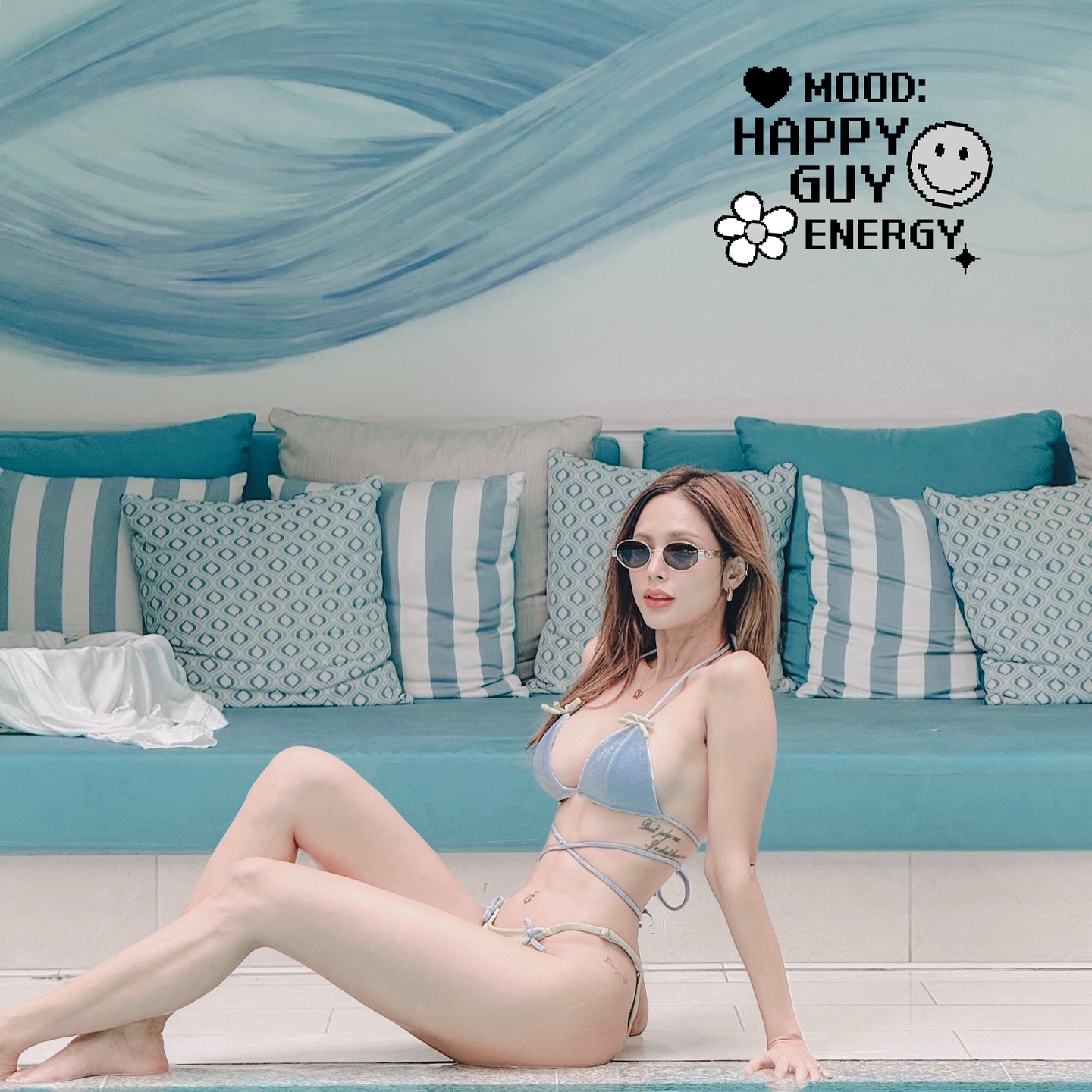
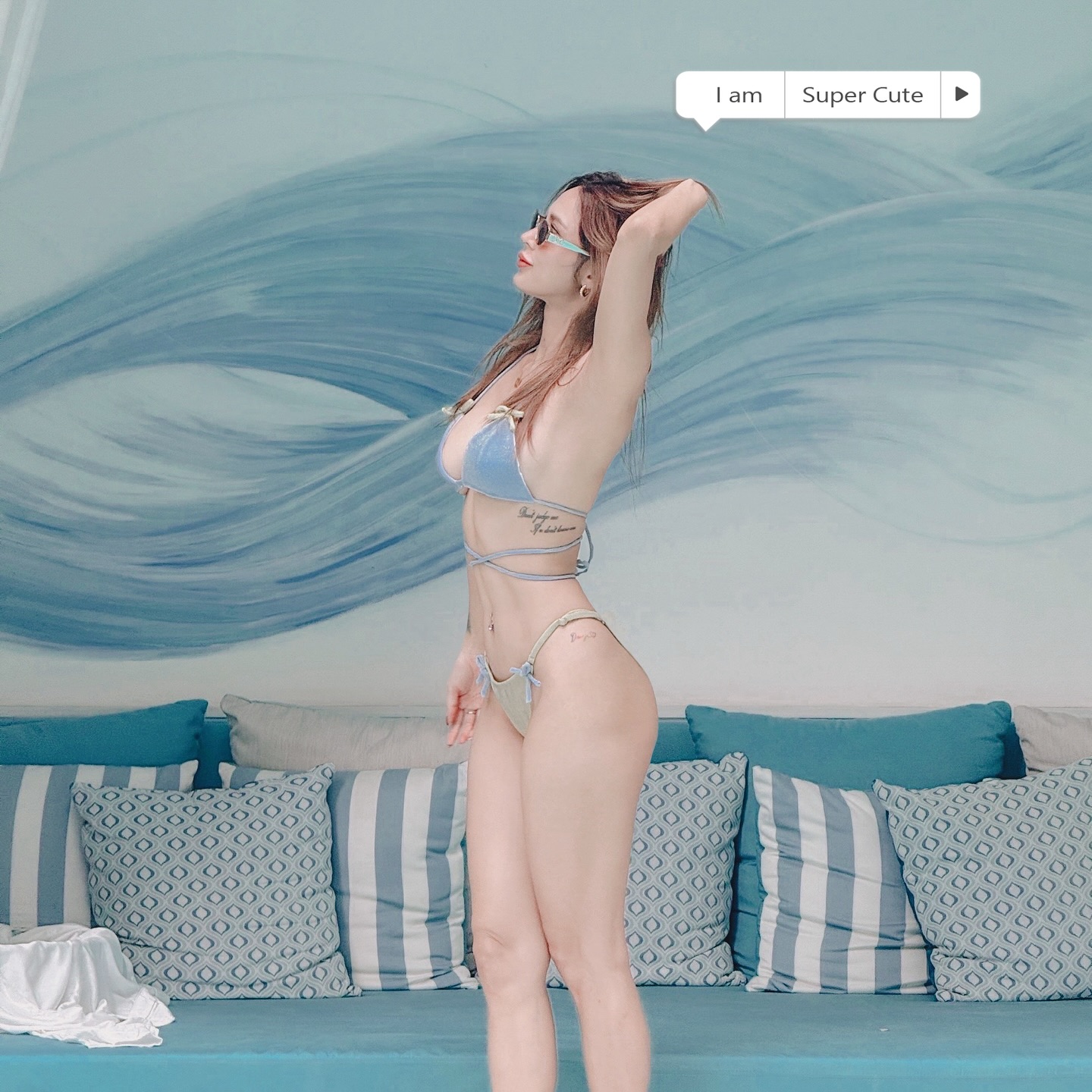
The waist lettering is one of the easiest elements to recognise across Aum Luckkana’s recent photographs. In the Siamzone archive, the script sits along the side of her waist and becomes visible when her body turns slightly away from the camera. It is not presented as a large central chest piece. Instead, it follows the curve between the side of the torso and the hip, which is why a straight-on portrait can miss it completely.
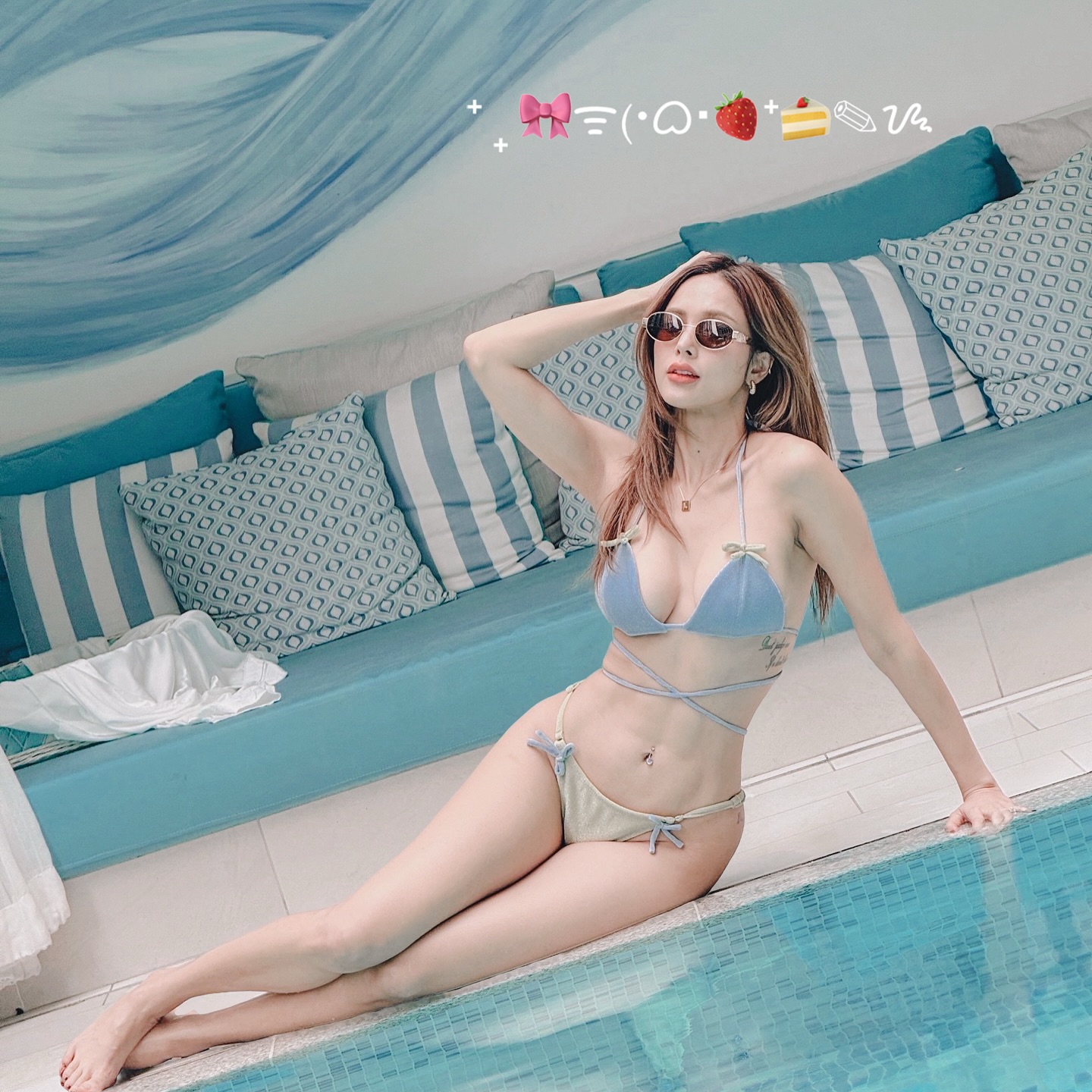
In the first poolside image, the lettering appears as a compact black line near the waist. The angle keeps the words close to the edge of the frame, while the warm light and patterned swimwear make the placement easy to overlook. A second photograph gives the side of the body more room and makes the lettering easier to trace. The difference between those views matters because it shows the design as a real placement on a moving body rather than as a flat graphic.
The wording itself should be described cautiously. Public image pages identify the mark as lettering, but they do not provide a complete translation or an authenticated statement from Aum explaining every word. What can be said from the photographs is that the script is horizontal or slightly curved, dark enough to remain legible at a distance, and placed where the waist naturally folds when she sits or bends. Its scale gives it a private quality even when the photographs are openly shared.
The mother-and-child bird tattoo on her upper back
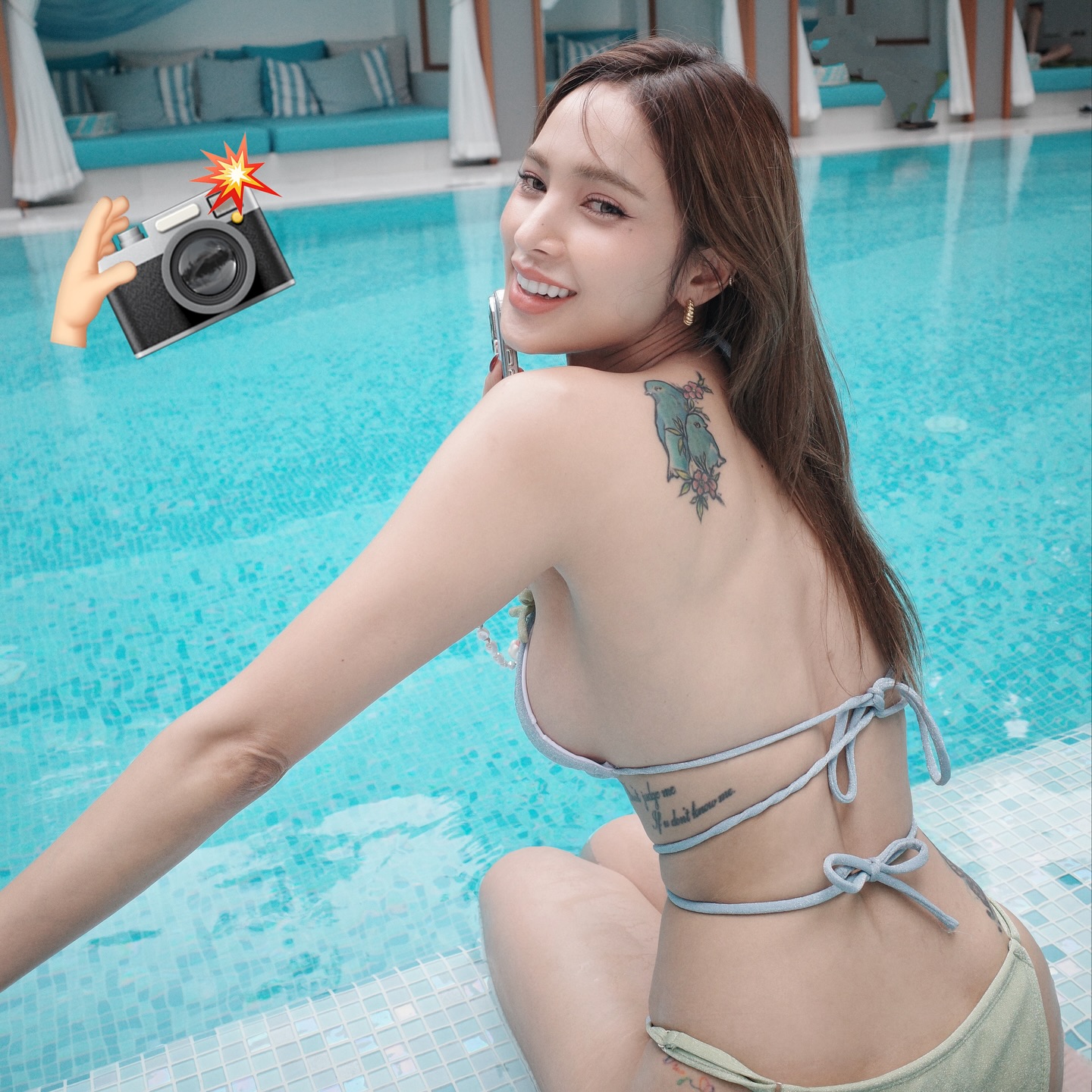
The large upper-back tattoo is more graphic than the waist lettering. In the close back-facing Siamzone photographs, the design is positioned high on the shoulder and upper back. It shows a larger bird form together with a smaller bird, a composition commonly described in Thai coverage as a mother-and-child motif. The arrangement gives the piece a strong vertical shape, with the larger figure carrying most of the visual weight.
That family reading is connected to Aum’s public identity as a mother, but the design does not need a sentimental caption to be visually striking. The two figures are separated enough to read as individual forms, while the surrounding line work keeps them connected. From a distance, the tattoo looks like a dark ornamental shape. At closer range, the contrast between the bodies and the finer details becomes more noticeable.
The placement also explains why this tattoo appears inconsistently in celebrity photographs. It is covered by many tops, hidden when Aum faces the camera, and partly obscured when her hair falls across the shoulder. The images where she turns away are therefore important to the record. They show that the upper-back piece is not a small symbol near the spine, but a substantial composition that occupies a visible part of the shoulder area.
The five-line yantra design and its replacement
Earlier coverage from TrueID describes a five-line yantra tattoo associated with Aum’s body art and discusses a bird image connected with the area. Thai tattoo culture often treats yantra designs as meaningful spiritual markings, and the five-line form is widely recognised in Thailand. Aum’s coverage is more specific: the report connects the older yantra work with a later mother-and-child bird design.
The change is significant because it gives the collection a visible timeline. A tattoo can remain physically present while its meaning changes, and a cover-up can place a newer image over a design that once held a different role. The available report does not turn every layer of ink into a perfectly readable diagram. It does, however, record that the older five-line design was part of the story before the bird composition became the stronger image in public photographs.
The upper-back photograph helps explain the difference between the earlier and later descriptions. The bird figures have a clear outline and a recognisable relationship to one another, while the old line pattern is not separately legible in every frame. That is why it is useful to keep the yantra account alongside the photographs instead of assuming that one close-up shows every stage of the tattoo’s history.
Aum’s side tattoo and its placement

Older entertainment coverage from Favforward identifies a side tattoo carrying the phrase Don’t judge me if u don’t know me. The wording gives this piece a different character from the bird design. It is a sentence rather than an emblem, and it reads like a direct statement placed on the side of the body. The casual spelling of “u” is part of the quoted phrase reported in that coverage.
The side placement means the phrase changes shape as Aum moves. When she stands in profile, the line follows the ribs and can be read as a compact statement. When she twists toward the camera, parts of it may disappear behind the contour of the torso. This is one reason a gallery of images is more informative than a single cropped photograph. Each angle reveals a different amount of the same design.
Visually, the lettering is restrained rather than oversized. It does not dominate the whole body, but it creates a clear horizontal accent that can sit beside swimwear, evening clothing, or a bare shoulder. The phrase also helps distinguish the side tattoo from the waist script. Both rely on words, yet they occupy different zones and have different visual rhythms.
The changing view of her tattoo collection
A fifth photograph brings the separate parts of the collection into one visual sequence. The waist lettering appears when Aum turns, while the upper-back bird design becomes visible in a more open pose. Smaller marks can appear near the arms or side of the body, but the exact shape of every small mark should not be forced into a description when the photograph does not show it clearly. A careful record leaves room for the image to remain partial.
That partial quality is part of the appeal of the archive. Public appearances do not provide a medical diagram or a studio scan. They provide moments: a poolside pose, a close back view, a side profile, and a portrait where clothing hides most of the ink. Taken together, those moments establish a consistent set of placements without pretending that every detail is equally visible.
Coverage from MGR adds another part of the timeline by discussing a wave design and Aum’s later decision to remove a tattoo after receiving advice that the meaning was not positive for her. The report also describes the time and patience involved in laser removal. This does not mean that every photograph taken afterward can be used to date every remaining mark. It does show that her collection has been subject to change, interpretation, and personal reassessment.
Aum Luckkana’s public story
Aum’s onsen account brought unusual attention to the practical reality of living with visible tattoos. Overseas Idol reported that she travelled in Japan, used patches to cover the designs, and later found that the patches came loose in another pool. Other Thai reports and the YouTube segment from NineEntertain describe the same incident in more detail, including her reflection that she might not have chosen tattoos if she could go back.
The story is memorable because it connects the designs to a real situation rather than a staged photograph. It also explains why images of the waist and back matter. Those are the areas that required covering, and the incident made clear that the tattoos were spread across more than one location. The later public discussion about possible removal adds a new chapter without erasing the photographs that document the designs as they appeared.
The video embedded below comes from NineEntertain Official and carries Aum’s name in its Thai title. It focuses on the onsen incident and the plan she discussed around removal. Its value here is contextual: it gives viewers Aum’s own public account of the event and places the image archive in the same period of her life.
How the photographs complement one another
The five photographs work because they are not duplicates of one pose. The first three keep the waist lettering in view from different positions. The later close views turn the body so the upper-back bird composition can be seen as a larger piece. That variety is important for a collection whose most recognisable designs sit on curved surfaces and disappear when Aum faces forward.
The Siamzone page identifies the images as part of an archive associated with Aum’s public Instagram presence and places them in a summer poolside setting. The page gives the photographs a shared date and setting, but the frames still show different details. One picture prioritises the face and body line, another favours the waist, and another makes the back the centre of the composition. The set therefore reads as a small visual sequence rather than five unrelated portraits.
A separate Thai news portrait is useful for recognition because it shows Aum’s face clearly against a floral background. It does not replace the tattoo photographs. Its role is to identify the person in the article while the body-art images carry the placement details. Keeping those roles separate makes the visual record easier to follow and prevents a generic portrait from being mistaken for a close tattoo view.
Aum Luckkana’s visual timeline
The timeline begins with the side phrase and the five-line yantra account in older entertainment coverage. It moves through the later bird composition, which gives the upper back its most distinctive current image. Recent poolside photographs show the waist lettering and the bird design together in a way that makes their different placements clear. The onsen report then shows how those same designs affected an ordinary travel experience.
There is also a future-facing part to the story. MGR coverage described removal of at least one design and Aum’s changing feelings about the ink, while the onsen conversation brought the topic back into public attention. The collection should therefore be understood as a record that can change. A photograph captures one point in time, and a later photograph may show a covered, faded, altered, or removed design.
What remains consistent is the visual contrast among the pieces. The waist lettering is narrow and personal. The side phrase uses a complete sentence. The yantra account points to spiritual symbolism and an earlier layer of the collection. The mother-and-child bird tattoo is the most immediately recognisable large composition in the current photographs. Together, they explain why Aum Luckkana’s tattoos continue to attract attention while also showing why careful dating and clear placement matter.
Sources consulted for this account include Overseas Idol’s report on the Japanese onsen incident, the Siamzone photograph archive, TrueID’s coverage of the yantra and bird tattoo history, Favforward’s report on the side phrase, MGR’s discussion of the wave design and removal, and the NineEntertain Official video. Each source contributes a different kind of detail: an event, a photograph, a historical explanation, a quoted phrase, a later change, or Aum’s own televised account.