
Giovanni Simeone’s most clearly documented tattoo is the UEFA Champions League design he carried from adolescence into his professional career. The story became visible to a much wider audience when he scored on his Napoli debut in the competition and kissed the mark during an emotional celebration. Several photographs show the same forearm tattoo from different angles, while later football portraits provide separate face-visible identity and career context. The account below keeps those jobs apart. It names the design that reliable reporting identifies and uses the remaining photographs to show who Simeone is away from that single moment.
Giovanni Simeone’s Champions League tattoo
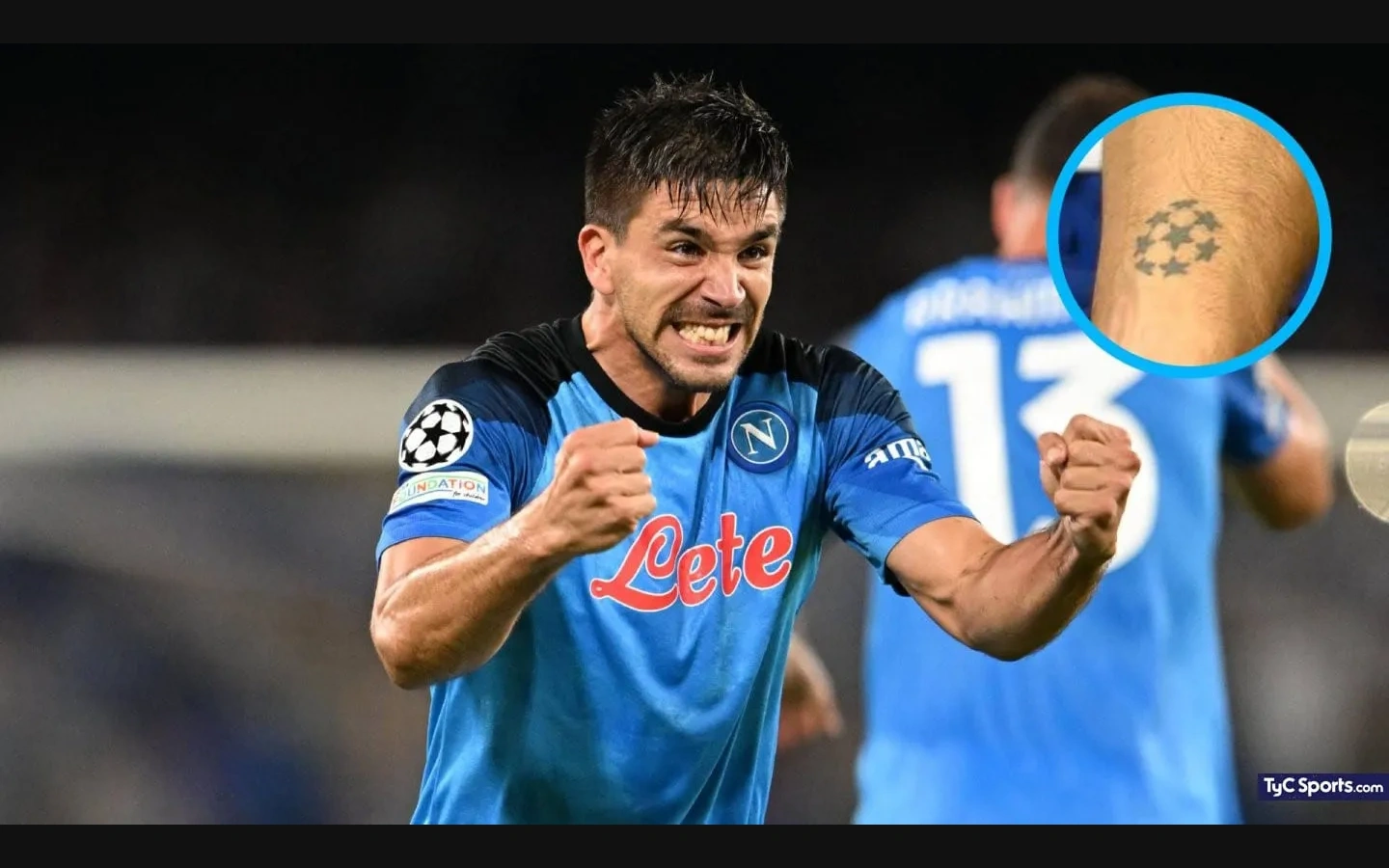
The best documented piece is the Champions League star-ball logo on Simeone’s forearm. TyC Sports and other Argentine sports outlets describe it as a childhood promise: Simeone had the competition’s emblem tattooed when he was about thirteen or fourteen, long before he had made his Champions League debut. The design was not added after the goal. It was a visible reminder of a dream that had been part of his identity since he was a boy. The timing is the important fact: the tattoo predated the achievement it later celebrated.
When Simeone came on for Napoli against Liverpool in September 2022, he scored with his first touch or very soon after entering the match, depending on the detailed match account. The exact sequence is less important to the tattoo record than what happened next. He brought his forearm to his lips and kissed the star-ball design. The gesture connected a private piece of ink to a public football milestone and gave photographers a clear view of the placement.
The star-ball emblem on the forearm
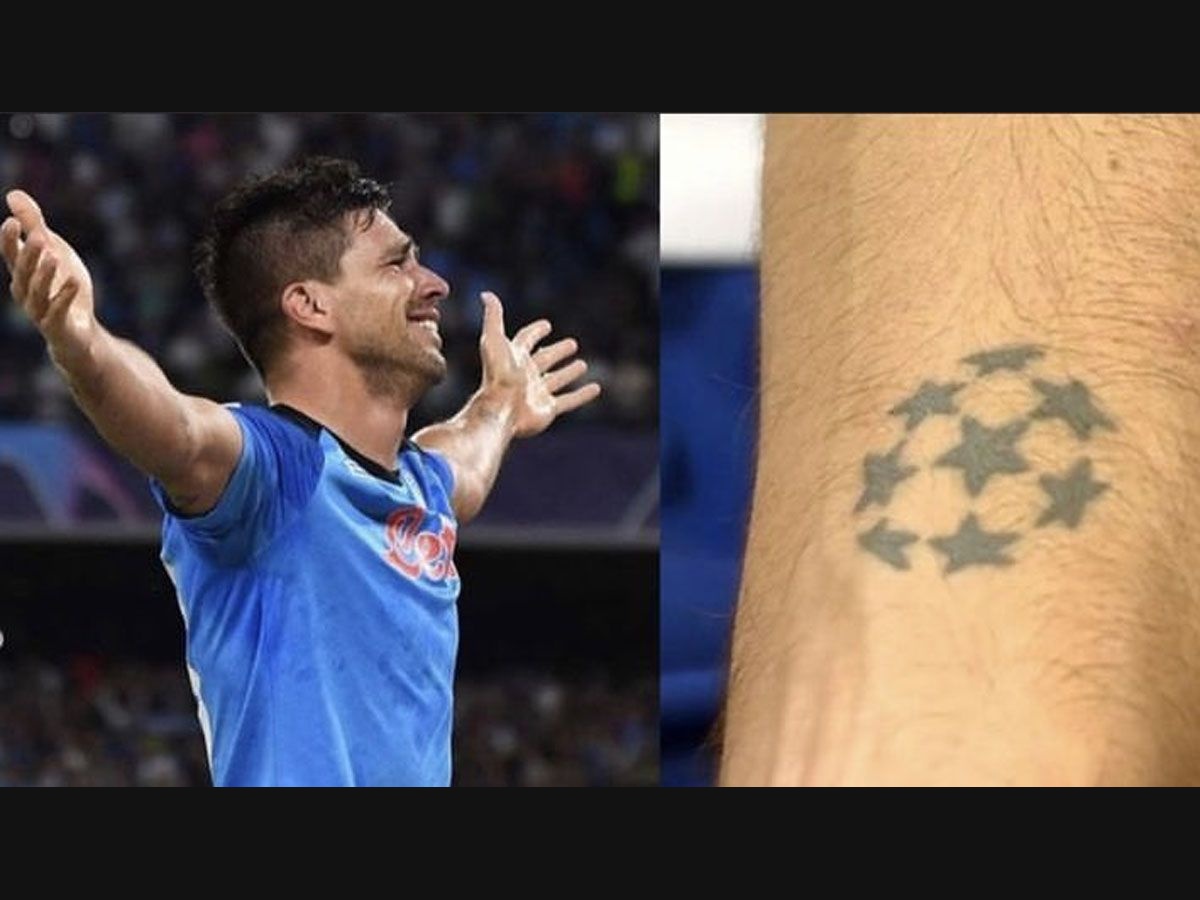
The close-up celebration photograph is useful because it isolates the forearm from the rest of the match scene. The cluster of stars and the circular football motif can be seen on Simeone’s skin, and the image confirms the same design described by the reporting. It is not a generic Napoli badge or a temporary mark from the match. The tattoo is on his arm and appears as part of his established collection. The photograph also captures the emotional setting in which the mark became famous.
Sources differ slightly on whether the tattoo was made at thirteen or fourteen. That small age difference is common in later retellings, but it does not change the central record. Simeone had the Champions League image tattooed during adolescence, and he promised himself that he would kiss it after scoring his first goal in the competition. The visual evidence and the source-led story agree on the emblem, the forearm placement and the promise.
A promise made before the first European goal
Simeone’s tattoo story stands out because the design is connected to a future event rather than a retrospective tribute. Many football tattoos commemorate a title, a club or a family member after an important moment. This one represented an ambition before the player knew when, or whether, he would reach the tournament. The star ball was a personal challenge carried on the skin while Simeone moved through River Plate, Italian clubs and the Argentina setup.
That background also explains why his celebration became so emotional. The mark had been waiting for the moment he imagined as a teenager. When the goal arrived in a Napoli shirt, the tattoo became a prop in the most literal sense: Simeone used it to complete the promise he had made to himself. The photographs capture the kiss, but the meaning comes from the reporting about when the tattoo was made and why the gesture had been planned.
Napoli and the forward’s public image

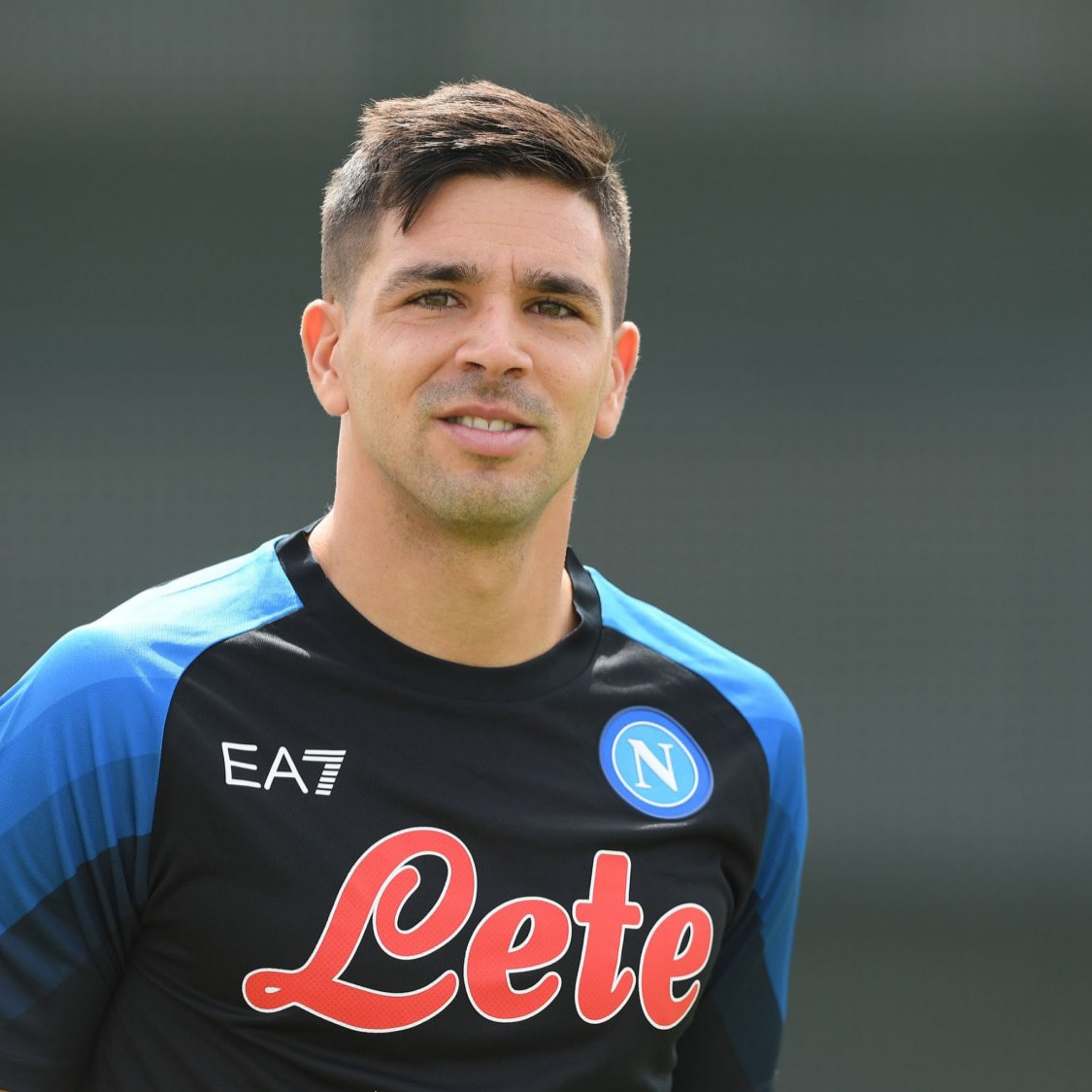
A separate Napoli player portrait places Simeone in a calm, face-visible setting. He wears the club’s blue shirt and looks directly toward the camera, giving readers a reliable identity reference that does not ask a generic portrait to prove a tattoo. The image is included because the celebration photographs are tightly connected to one match and show Simeone in motion. A straightforward portrait makes it easier to recognise the same player across the visual record.
The difference between these roles is editorially important. The star-ball images provide the tattoo evidence. The portrait provides career context and a clean view of Simeone’s face. It does not add a second design or suggest that covered skin is evidence of hidden ink. A face-visible portrait can support identification without being mislabelled as a tattoo photograph. That distinction keeps the page useful even when the documented tattoo inventory is deliberately narrow.
Argentina and the national-team return

Simeone’s Argentina portrait shows another side of his public career. The light-blue and white shirt connects him to the national team, while the direct gaze keeps the subject clear. TyC Sports used the image in coverage of his hope of returning to the squad, a context that helps readers understand the forward’s ambitions without adding unsupported tattoo claims. The portrait is supplemental by design. Its job is to show Simeone as the Argentine striker described in the surrounding article.
His route to the senior team was not completely straightforward. Simeone developed through River Plate, represented Argentina at youth level and later worked to earn opportunities under Lionel Scaloni. The football story gives the tattoo promise a wider setting. The Champions League mark was made by a young player who wanted to reach the highest stage, and the later portraits show the professional whose career eventually gave him that chance.
River Plate beginnings and family football
The River Plate photograph brings the career timeline back to Argentina. Simeone stands in the famous white shirt with the red sash, smiling with a trophy in a dressing-room setting. It is a face-visible career image rather than tattoo evidence. The different shirt and surroundings are useful because they show that Simeone’s identity does not depend on the Napoli celebration alone. The tattoo story can be read alongside his development as a footballer without turning every sports photograph into a claim about ink.
His surname also carries an unusually visible football connection through his father, Diego Simeone. That family context is often part of the coverage of Giovanni’s career, but it should not be confused with the meaning of the star-ball tattoo. The reliable sources connect the tattoo to the Champions League dream and the promised celebration. They do not say that the logo represents his father or that the design was copied from a family tradition.
The meaning of the celebration
The tattoo’s meaning is unusually easy to describe because Simeone’s action supplied the explanation. He had followed the Champions League as a dream and used the emblem as a reminder of that goal. Kissing the tattoo after scoring made the connection visible to spectators. It was not necessary to infer a private symbol from the shape. The emblem itself and the documented promise provide enough information to explain why the moment mattered.
The celebration also shows why a tattoo should be discussed with more than one image. A wide match frame establishes the event and Simeone’s identity. A closer crop shows the mark on the forearm. The two images support each other, but they are not identical evidence. The wide view explains the emotion and setting; the close view explains the design and placement. Using both avoids the common mistake of relying on a distant action photograph for a detail it cannot resolve.
What the published sources establish
The strongest stable record is specific. Simeone has a Champions League star-ball tattoo on his forearm. He had the design made as a teenager, before his first appearance in the competition. He later scored for Napoli against Liverpool and kissed the tattoo during the celebration. TyC Sports, UEFA-related coverage and multiple regional sports reports describe the connection, while the celebration photographs visibly show the mark on the same player.
The sources also establish the surrounding football timeline. Simeone was a forward with a long-standing ambition to play in the tournament, and the goal gave that ambition a public conclusion. The separate portraits show him in Napoli, Argentina and River Plate settings. They are not presented as proof of additional tattoo designs. The page therefore has one documented tattoo, several visually distinct views and a clear separation between evidence and context.
What remains unconfirmed
Public reporting does not provide a complete catalogue of Simeone’s other tattoos, if he has added additional pieces since the famous Champions League emblem. The supplied photographs are not a reason to guess at covered skin or to name small marks that are not described by a reliable source. The articles also vary on the exact age at which the tattoo was made. That uncertainty can be stated openly without weakening the core story.
It is also safer not to invent a tattoo artist, a precise appointment date or a deeper symbolic interpretation of the star ball. Simeone’s own public action and the reporting around it already give the design a strong meaning. Adding unreported detail would make the article sound more complete while making it less reliable. The visual record is enough: a star-ball emblem on the forearm, photographed during the celebration that fulfilled the promise.
A moment that waited to happen
Giovanni Simeone’s Champions League tattoo is memorable because it was created before the story reached its climax. The emblem did not simply record a famous goal. It represented the desire to score one in the first place. When the goal arrived, Simeone did not need a long explanation. He kissed the mark, and the gesture allowed the image, the interview reporting and the football event to line up.
Readers can take away a secure conclusion without needing a larger, speculative inventory. Simeone’s forearm carries the documented star-ball design. The tattoo was made during adolescence as a reminder of a Champions League dream. The Napoli celebration visibly connected the ink to the achievement. The additional portraits help identify Simeone across his Napoli, Argentina and River Plate careers, but they remain supplemental images rather than tattoo evidence.
The result is a focused visual profile. It includes the genuine tattoo photographs that matter, uses distinct face-visible portraits for context and leaves unknown designs unlabelled. That approach gives the Champions League tattoo its full story while respecting the limits of what the published images and sources actually show.