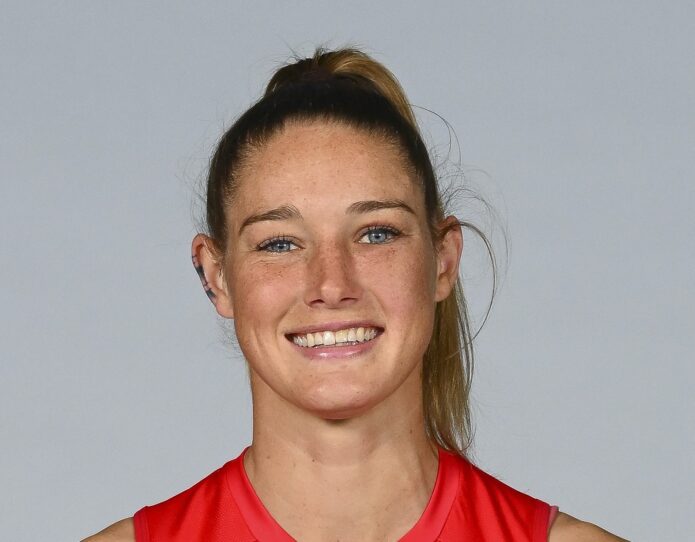
Tayla Harris’s tattoos are documented through sports photography and direct interview material. The clearest named piece is the hand message to be kind is powerful, while separate photographs show linear work near her ear and neck and a larger collection across both forearms. This profile keeps the visible images and reported details together without turning indistinct marks into invented design names.
Tayla Harris’s hand tattoo and its message
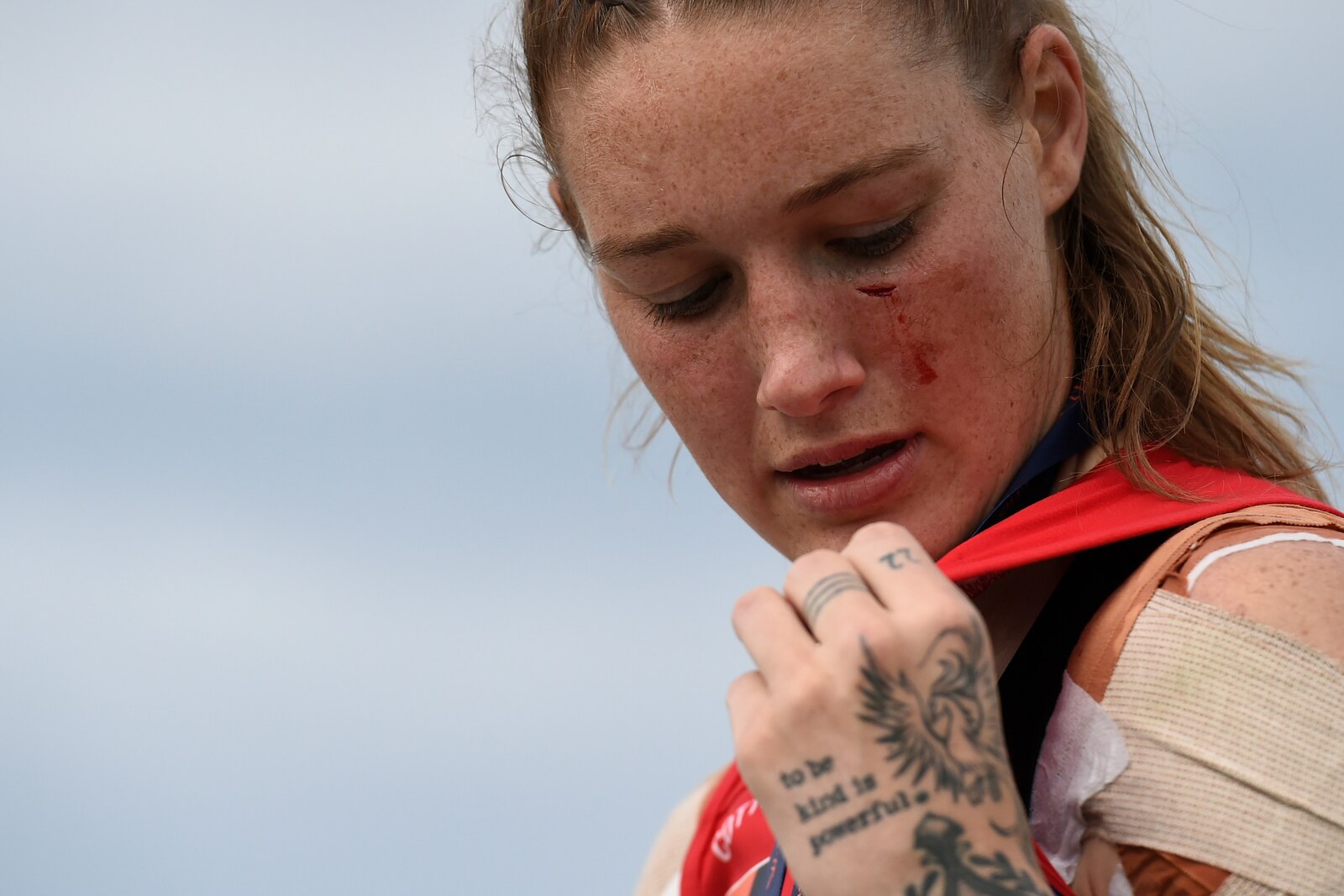
The clearest named tattoo in Tayla Harris’s public record is the message on the back of her hand: to be kind is powerful. ABC News describes the words as a motto she keeps close, while a Pedestrian.TV interview places the hand tattoo inside the documentary Kick Like Tayla. The available close image shows Harris looking down at the hand as the lettering and surrounding work come into view. The message is documented as a tattoo, not inferred from a fashion photograph.
The wording matters because it gives the piece a direct connection to Harris’s public work around online abuse and respect in sport. The interview also says she regards it as one of her favourite meaningful tattoos so far. That does not mean every mark on the hand has a published explanation. It means this particular phrase has both a visible photograph and an interview account behind it. The safest description is therefore the message, the hand placement and the documented connection to her own story.
The neck and ear lines visible in profile
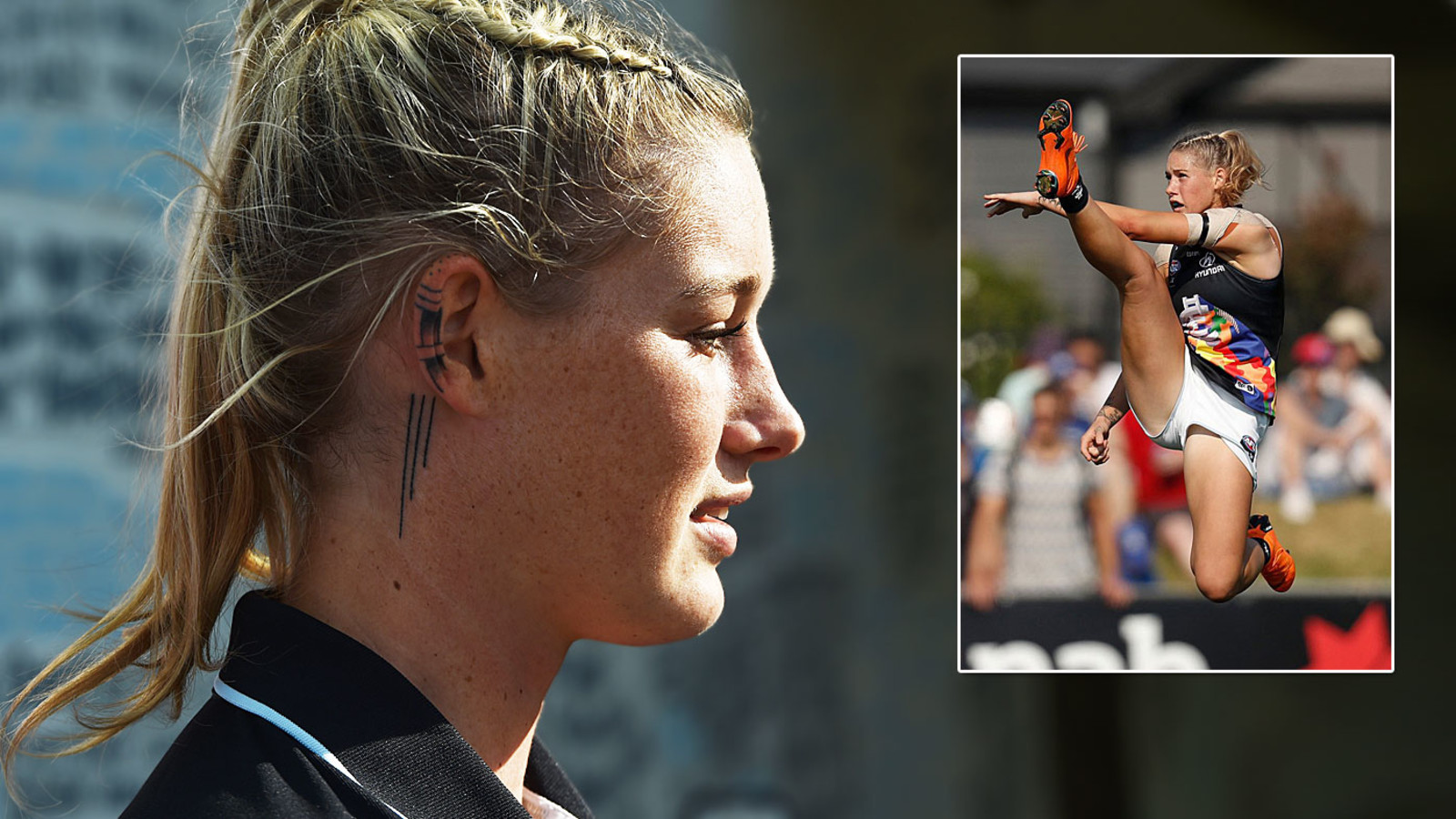
A Nine photograph provides a different view of Harris’s ink. The side profile shows several narrow, dark lines running behind the ear and down the side of the neck. Because the face is visible and the marks sit against the skin rather than the clothing, the image is useful for confirming placement. It does not identify a design name or a meaning for those lines. The photograph proves a visible neck-area tattoo group while leaving the individual symbols unlabelled.
The profile also shows why changing angles are valuable. The same person can look almost uninked in a full team portrait when the arms are lowered, then show a concentrated set of marks when the head turns. Hair, shadow and the edge of the collar affect how much of the neck is visible. The article records only what the inspected frame supports: a small, linear group near the ear and neck, separate from the larger forearm work seen elsewhere.
The forearm work shown in an AFL portrait
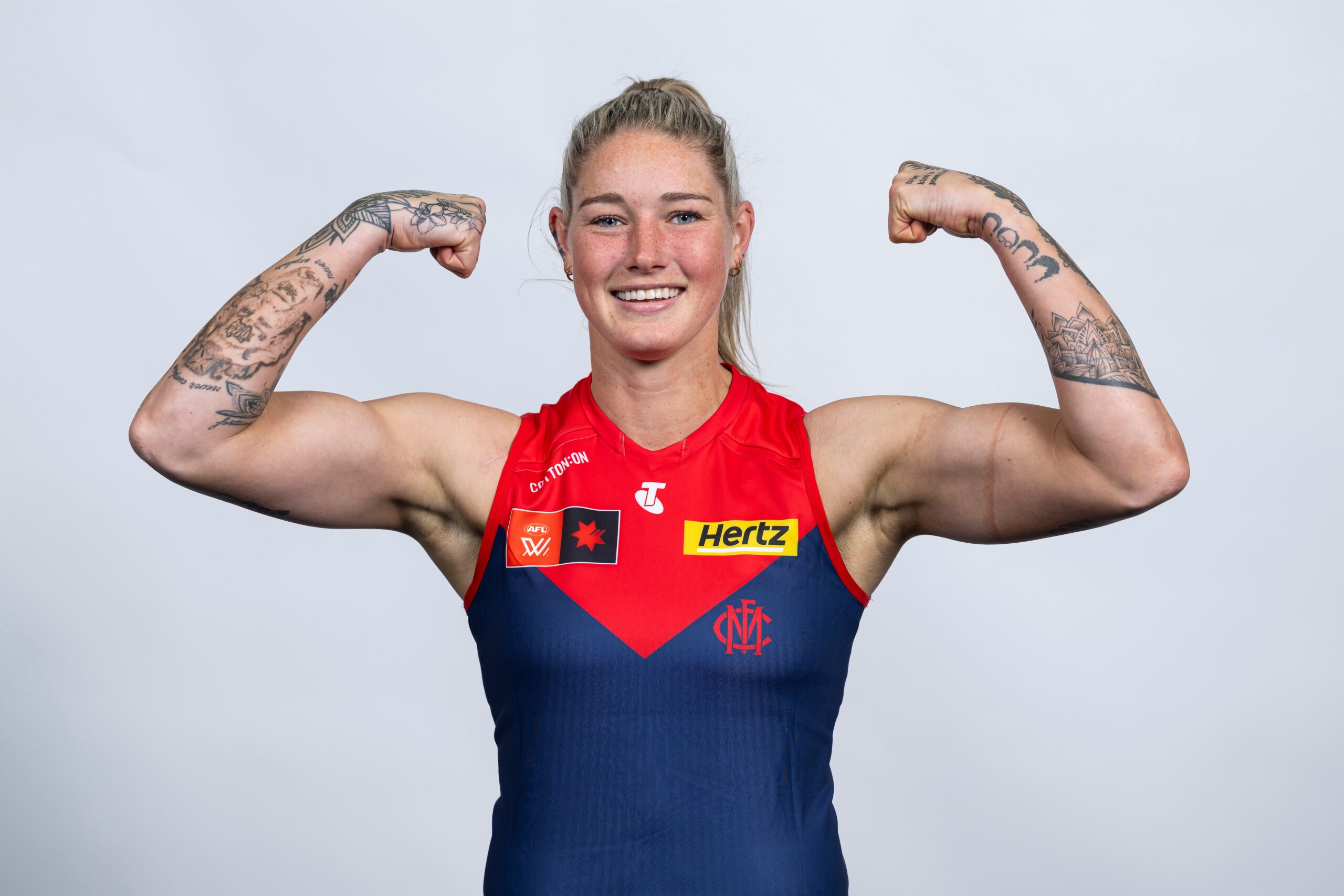
An AFL image of Harris flexing in a Melbourne Demons guernsey exposes both forearms at once. The left side carries a dense mix of fine lines, shaded forms and smaller pieces, while the right side shows a more geometric arrangement toward the forearm. The pose is deliberate enough to make the ink easy to inspect, and her face remains visible for identity. This is the strongest single frame for the scale of her arm collection.
The image should still be read as a placement record rather than a complete catalogue. Some shapes overlap because the arms are bent, and the jersey and sponsor marks create visual noise around the skin. It is reasonable to describe a substantial collection across both forearms. It is not reasonable to assign a private meaning to every flower, line, letter or shaded panel without an interview or artist statement that names it.
Tayla Harris’s hand and arm placement in team photography
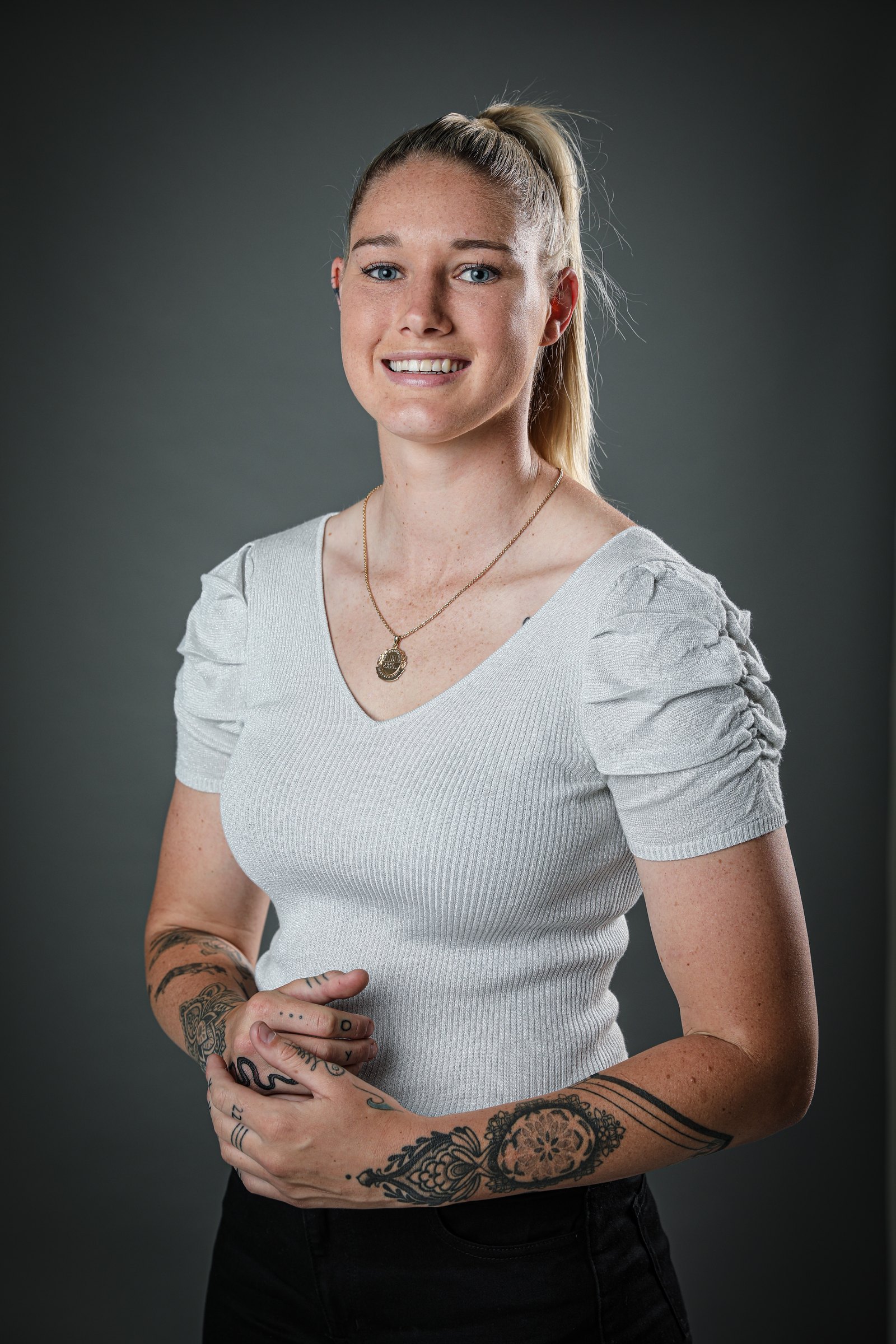
A second AFL team photograph places the football in front of Harris’s torso while both forearms extend toward the camera. This angle makes the hand tattoos especially noticeable and shows how the lettering on the hands sits alongside larger pieces on the arms. The composition is not a tattoo close-up, but the ink is plainly visible and the face is unobstructed. It gives readers a useful front-on comparison with the flexed-arm portrait.
The image also captures the practical challenge of describing body art from sports coverage. A ball hides part of the center of the frame, while the hands, wrists and forearms remain exposed. The tattooed areas are therefore more reliable than any claim about work on the chest or torso. The useful detail here is the relationship between hand, wrist and forearm placement, not a guessed inventory of designs that the photograph does not fully reveal.
A further view of the visible arm collection
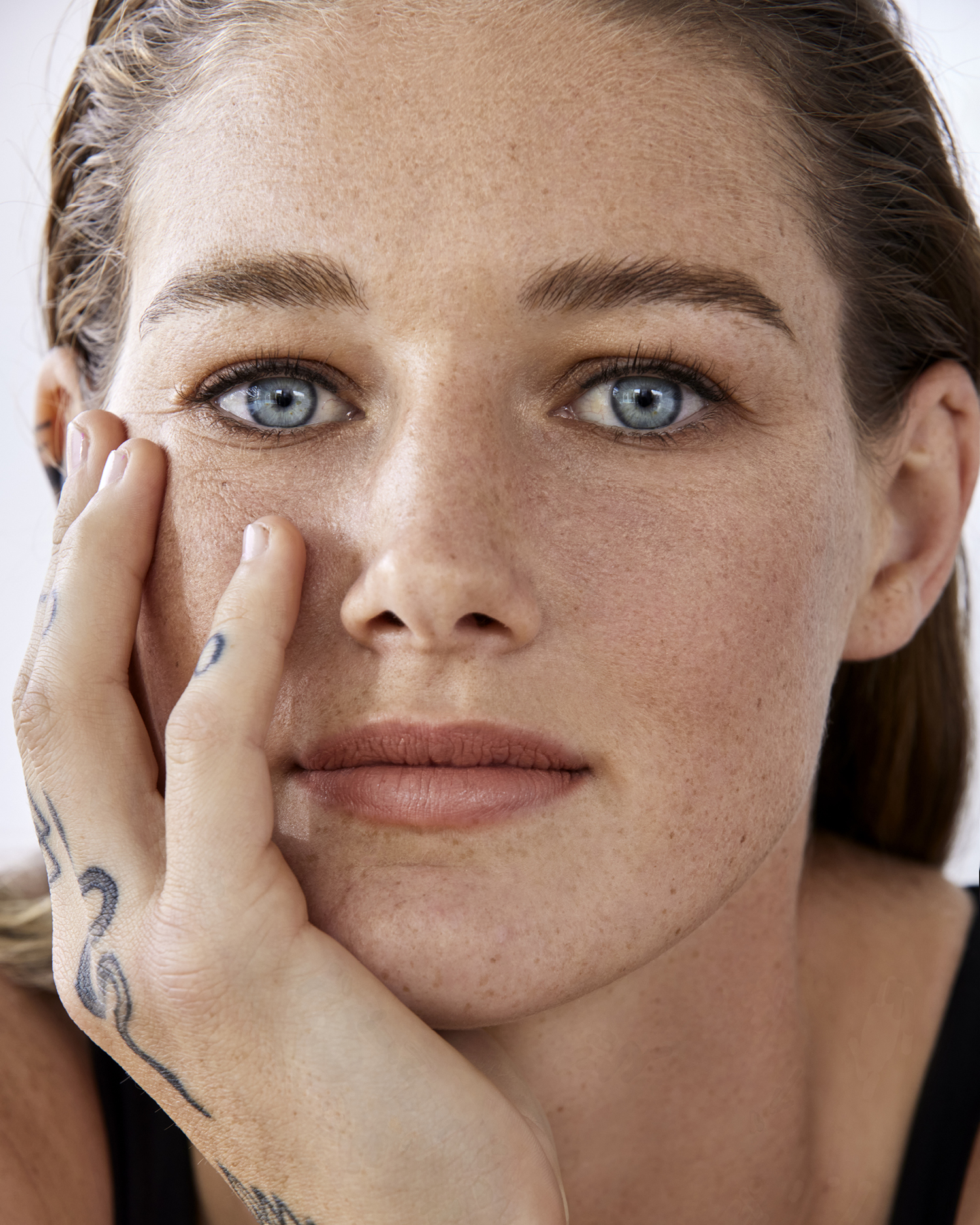
An older Carlton photograph shows Harris in motion with ink visible on both hands and forearms. The image is less controlled than the studio-style AFL portraits, yet it adds a separate view of how the tattoos look during play. The lettering on the hand remains recognisable, while the broader forearm pieces break into smaller visible sections as the arms move. The frame supports the existence of the collection without claiming that every mark is newly added.
Comparing the sports images is more informative than treating any one of them as complete. The close hand photograph establishes the message, the profile image isolates the neck lines, and the team portraits show the density of the arms. Distinct photographs reveal different tattoos without requiring generic celebrity pictures to do the evidentiary work. That distinction is especially important for a page whose subject is real body art rather than a general biography.
The athlete behind the headlines
Harris is known in Australia as both an AFLW footballer and a professional boxer. ABC News framed its 2023 interview around her return to boxing after four years, while the same account described her preparation for another title bout. Her sporting identity is relevant to the tattoo story because the available photographs come from training, team and competition settings rather than a single studio session. The body art is seen in the environments where her career actually happens.
That context also explains why her tattoos appear with different levels of clarity. A close portrait can show the hand and cheek after a match, while a club photograph can expose both arms under even lighting. A game-day frame may show only a wrist or forearm as the athlete moves. The variety is not a weakness. It is the reason the documented record can distinguish stable placement from details that remain hidden or too small to name.
The working life beyond competition
Harris’s public career has moved between football and boxing without reducing either side to a hobby. ABC News records her boxing ambitions, and the Melbourne Demons profile presents her as a major AFLW figure. The published accounts also connect her to the documentary Kick Like Tayla, which examined the pressure that followed a widely circulated football photograph. Those career strands sit behind the hand message, which turns a personal phrase into a visible principle.
The tattoo coverage therefore has a clear human frame. The hand lettering is linked to kindness, the documentary interview gives it a favourite-status explanation, and the sports photographs show how the ink travels with Harris through different professional roles. The record does not need a dramatic origin story for every piece. It is already specific where the sources are specific and appropriately quiet where they are not.
How the public story developed
The public story around Harris changed after a football action image became a flashpoint for sexist abuse. Later coverage discussed her response, her documentary and her efforts to use the attention to support more respectful treatment of women in sport. The tattoo phrase about kindness sits naturally in that timeline, but the sources do not say that the phrase was created solely as a response to the controversy. It is safer to call the connection thematic rather than inventing a date or motive.
Her other quoted tattoo detail is unusually personal: Pedestrian.TV reports that Harris has a Judge Judy design on her butt with the words only Judy can judge me. That account names both the subject and the wording, but no clean editorial close-up is supplied in the inspected image set. It belongs in the documented inventory as an interview fact, while the inline photographs remain focused on the hand, neck and arms that viewers can actually inspect.
What the published record leaves open
The sources establish a meaningful hand phrase, a visible linear group behind the ear and neck, and a substantial collection across both forearms and hands. They do not provide a complete list of artists, appointment dates, stencil drawings or the private meaning of every smaller mark. They also do not support reading sponsor logos, jersey graphics or background shapes as tattoos. Keeping those boundaries makes the article more useful because each claim can be traced to either an inspected photograph or a named interview.
For readers interested in adapting an idea, the strongest starting points are the documented principles rather than a literal copy. The hand message is short lettering with a clear personal statement. The broader arms show how multiple placements can coexist without becoming one uniform sleeve. The neck lines demonstrate how a small graphic group can remain recognisable from a side angle. Those are observable design lessons, while the final meaning belongs to Harris.
Viewed together, the photographs show a collection that is personal without being fully itemised in public. The hand lettering is the easiest piece to name, the profile makes the neck placement clear, and the team portraits show the density and variety of the arms. That balance gives readers a grounded way to discuss Harris’s ink: start with what the sources identify, then describe what the photographs visibly establish.