Lakshya Sen’s tattoo record combines visible motivational lettering, a winged peace symbol, neck script and further illustrative arm work documented in sports and regional coverage.
Lakshya Sen’s visible tattoo references
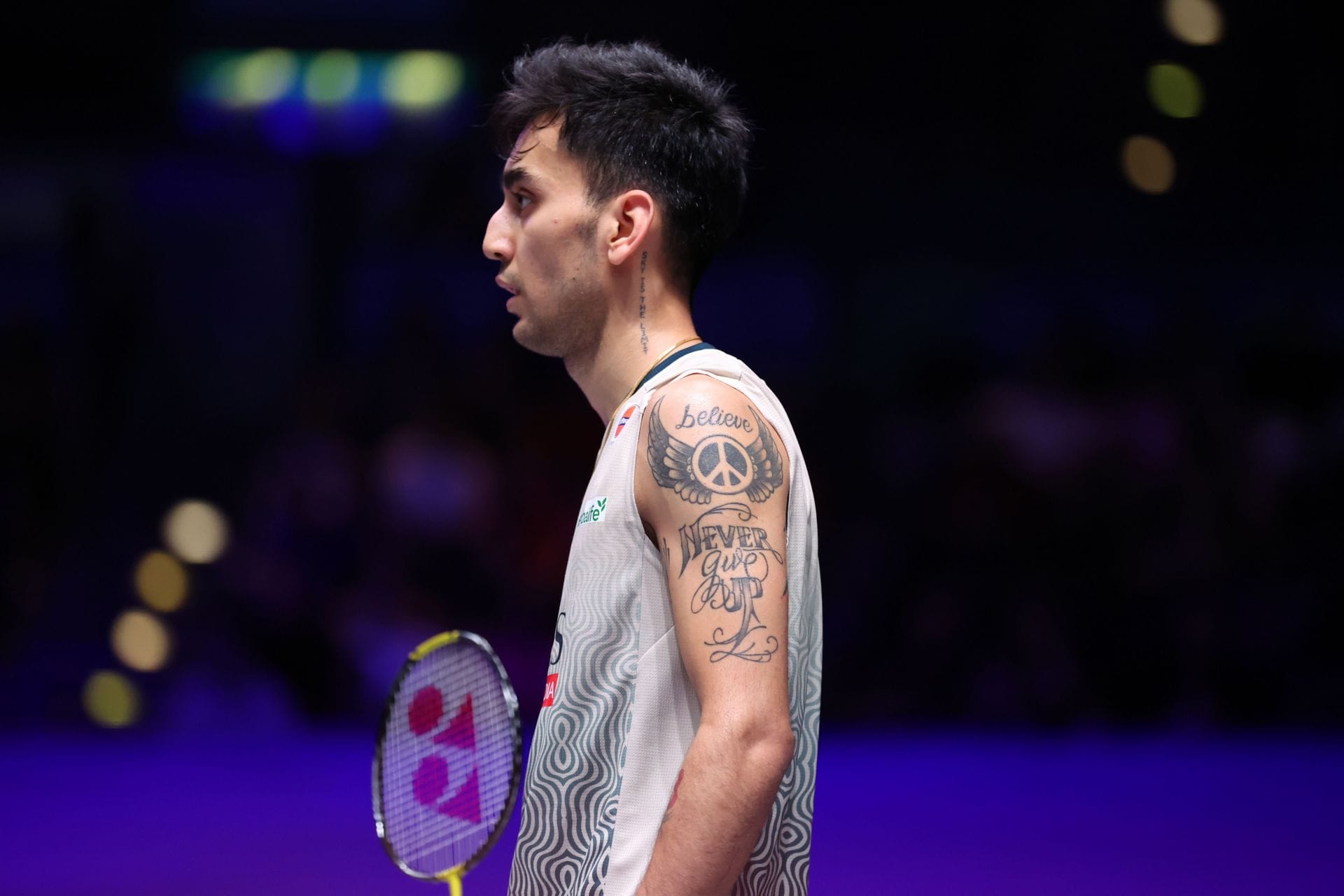
Lakshya Sen’s documented tattoos sit alongside the story of an Indian badminton player whose rise has been built on repetition, movement and composure. A published Sportskeeda photograph gives the clearest visual starting point: Sen is shown in profile on court, with his face visible and several tattoos exposed across the upper arm and neck. The image is useful because identity and ink appear together in one unaltered sports frame.
The same photograph shows a winged peace-symbol design on the upper arm, the word “believe” above it and a larger script message lower on the arm. The lettering can be read visually at the supplied resolution, while the surrounding source record identifies the athlete. That combination lets the page discuss the visible designs without turning a single photograph into a claim about every tattoo Sen may have.
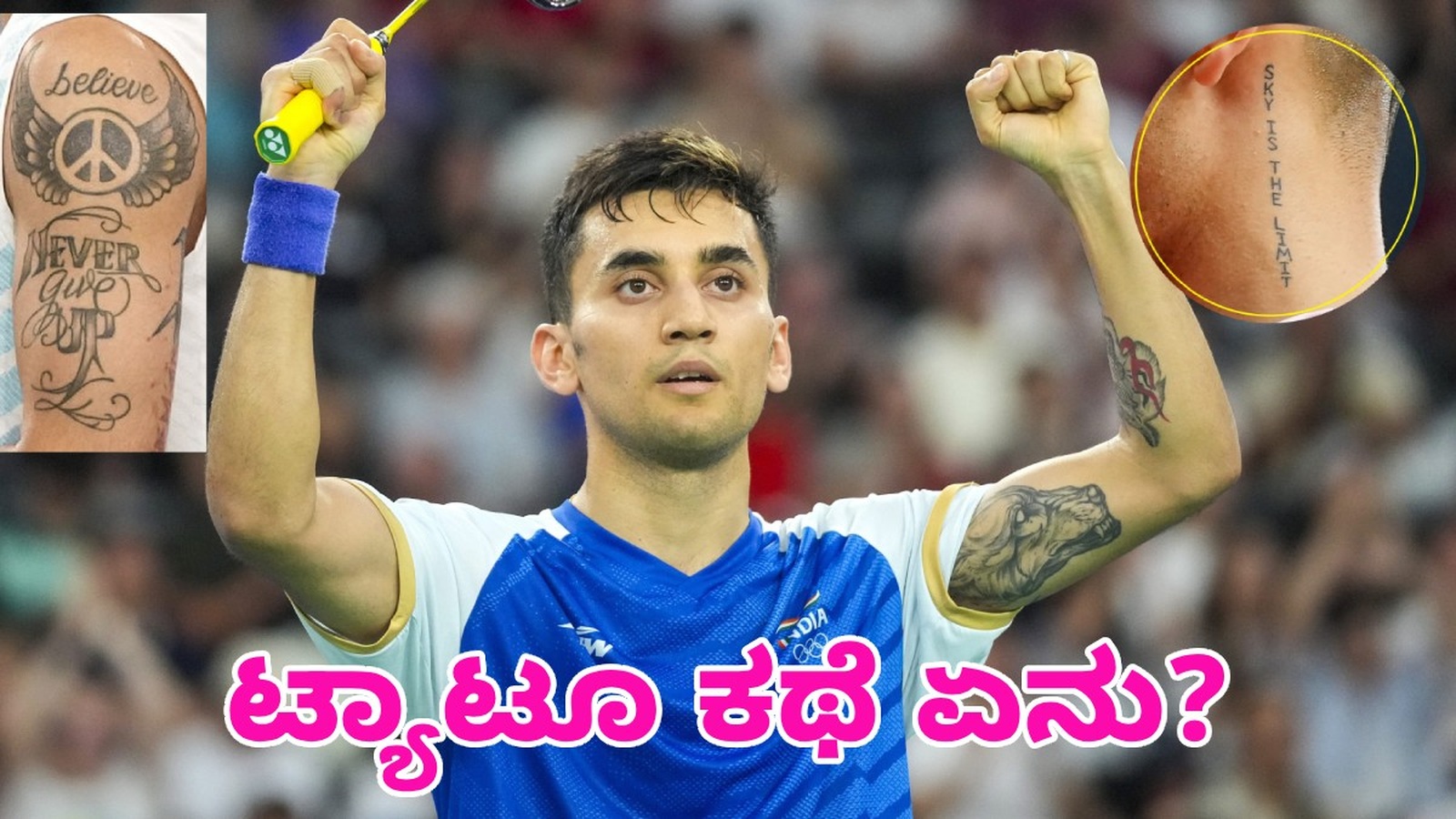
A second published image from Kannada Oneindia is a collage built around Sen’s arms. It repeats the upper-arm view and adds a close inset of the vertical neck lettering, reported as “Sky is the limit.” The collage also shows further animal imagery on the arm. Because the image is designed as a visual explainer, it offers a different view of the same documented collection rather than pretending that the marks are new or unrelated.
The third tattoo image is another sports photograph from Sportskeeda. Sen raises both arms in celebration, and the frame exposes the neck lettering as well as ink on the arms. The camera angle is less intimate than the first image, but it helps establish that the designs are part of a recurring visual record. It also gives readers a wider view of how the tattoos appear during competition.
Lakshya Sen’s arm tattoos in the published collage
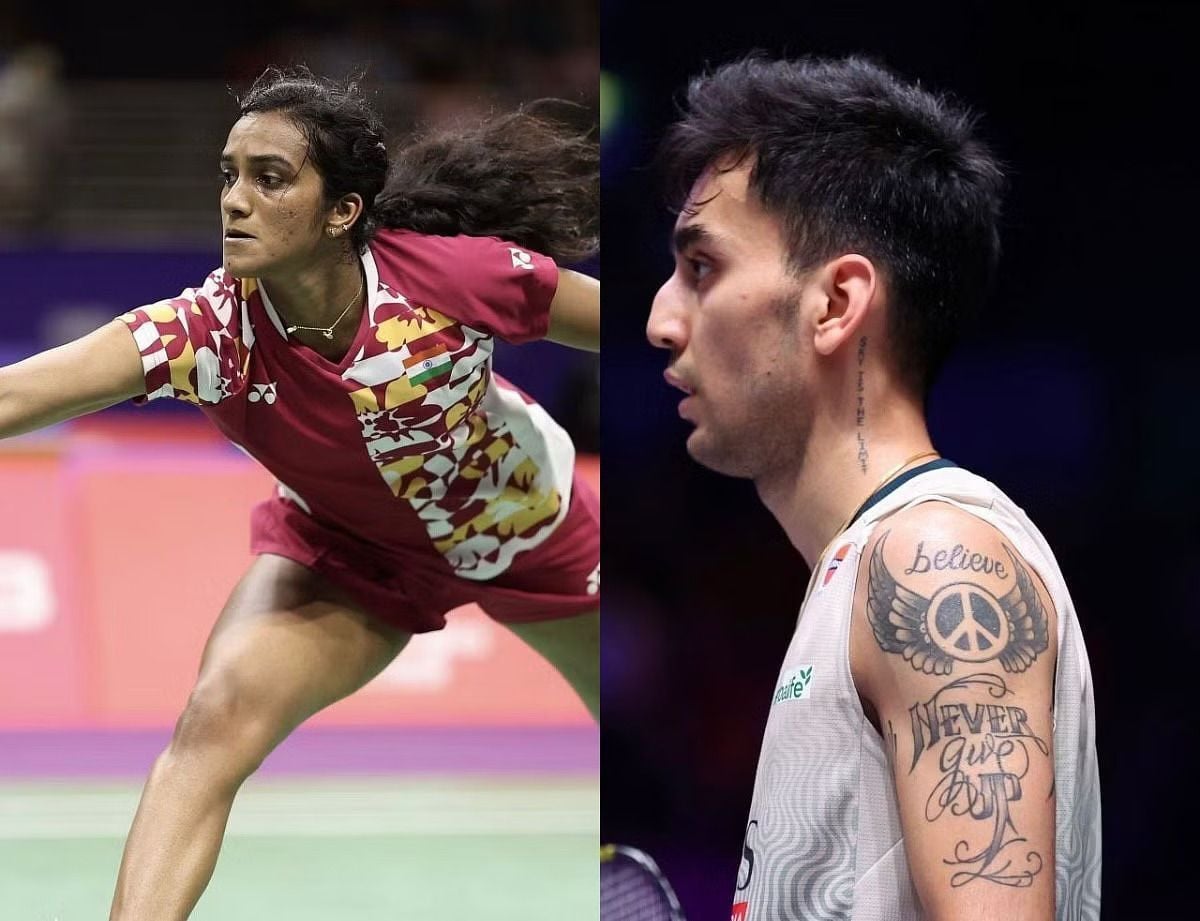
The visual record is strongest when the sources are kept in conversation. Sportskeeda supplies a clear court-side view, Oneindia explains several visible motifs and the second Sportskeeda frame shows the tattoos in a different pose. None of these sources needs to be stretched into a complete catalogue. Together they establish genuine, recurring ink connected to the same recognisable badminton player.
Red Bull’s athlete profile describes Sen as a major figure in Indian badminton. It places his career start in 2019 and records his early progress, including a junior world number-one ranking, the 2022 Indian Open title, India’s Thomas Cup victory and Commonwealth Games gold. Those milestones matter here because the tattoos are being read on the body of an active athlete, not as isolated graphic samples.
Sen began playing badminton as a child and came through a family and training environment closely connected to the sport. Red Bull’s profile notes that his father, D K Sen, is a respected coach and that his older brother also competed. This background helps explain why the images feel rooted in sporting life. The tattoo article can acknowledge that context without inventing a private story for each design.
The court-side photograph has a particularly direct quality. Sen is turned slightly away from the camera, but his face remains visible and the upper arm is uncovered. The winged peace symbol, “believe” lettering and the larger script are clear enough to discuss as visible motifs. A reader does not have to rely on a cropped body fragment or an anonymous close-up to understand whose tattoos are being shown.
Lakshya Sen’s tattoos during competition
The neck tattoo is easier to miss in ordinary action coverage. The Oneindia collage isolates it in a circular inset, while the Sportskeeda frames show it as vertical lettering behind the ear and down the neck. Published reporting describes the phrase as “Sky is the limit.” The wording stays attributed to the source and the photograph serves as the visual confirmation of placement and subject.
The arm designs carry the most visual weight in the supplied material. The peace symbol is surrounded by wings, while the script below includes a motivational phrase that reads as “Never give up.” Oneindia’s account also refers to animal imagery lower on the arm. Since the larger pieces are partly overlapped by clothing and changing angles, the article describes the visible forms conservatively rather than guessing at every contour.
A useful tattoo profile distinguishes what is plainly visible from what is reported. The images confirm that Sen has multiple tattoos on the neck and arms. Sports coverage and Oneindia identify the phrases and motifs associated with those locations. The page does not claim an exact date for every session, the identity of the tattoo artist or a complete inventory of work that is not visible in the supplied photographs.
The tattoos also fit the language that surrounds high-level sport: belief, persistence and limits that are meant to be challenged. That does not prove a single origin story, and Sen has not been shown explaining every mark in the available source set. It does show why the designs attract attention when he competes. The phrases are legible and the placement is public, while the messages echo the demands of a long season.
Career context
The wider career context makes the word “believe” especially legible. Sen became the youngest player to reach the Indian national men’s singles final at 15, then built a senior career through international titles and major team success. The tattoos do not summarise all of that work, but they sit beside a public record in which resilience and self-trust have been recurring themes.
His Paris 2024 run made the neck design especially visible to a broad audience. Indian and international coverage followed Sen through a deep Olympic tournament, and separate sports reporting drew attention to the phrase behind his ear. That attention is useful evidence of public visibility, not proof that the tattoo was created for the Games. The article therefore keeps the chronology modest and avoids assigning a dramatic turning point without a source.
The images show how the same tattoo can look different from one setting to another. Under the dark arena lighting, the arm script and peace symbol read as a connected composition. In the collage, the inset treatment makes the neck phrase easier to inspect. During celebration, the raised arms reveal more of the collection while the face and team setting preserve the subject’s identity.
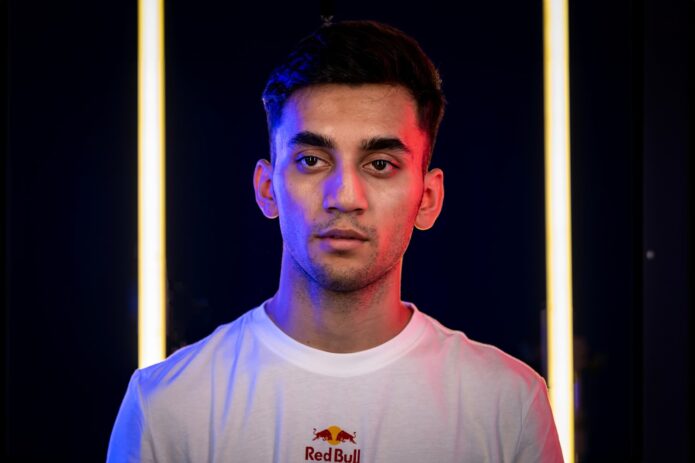
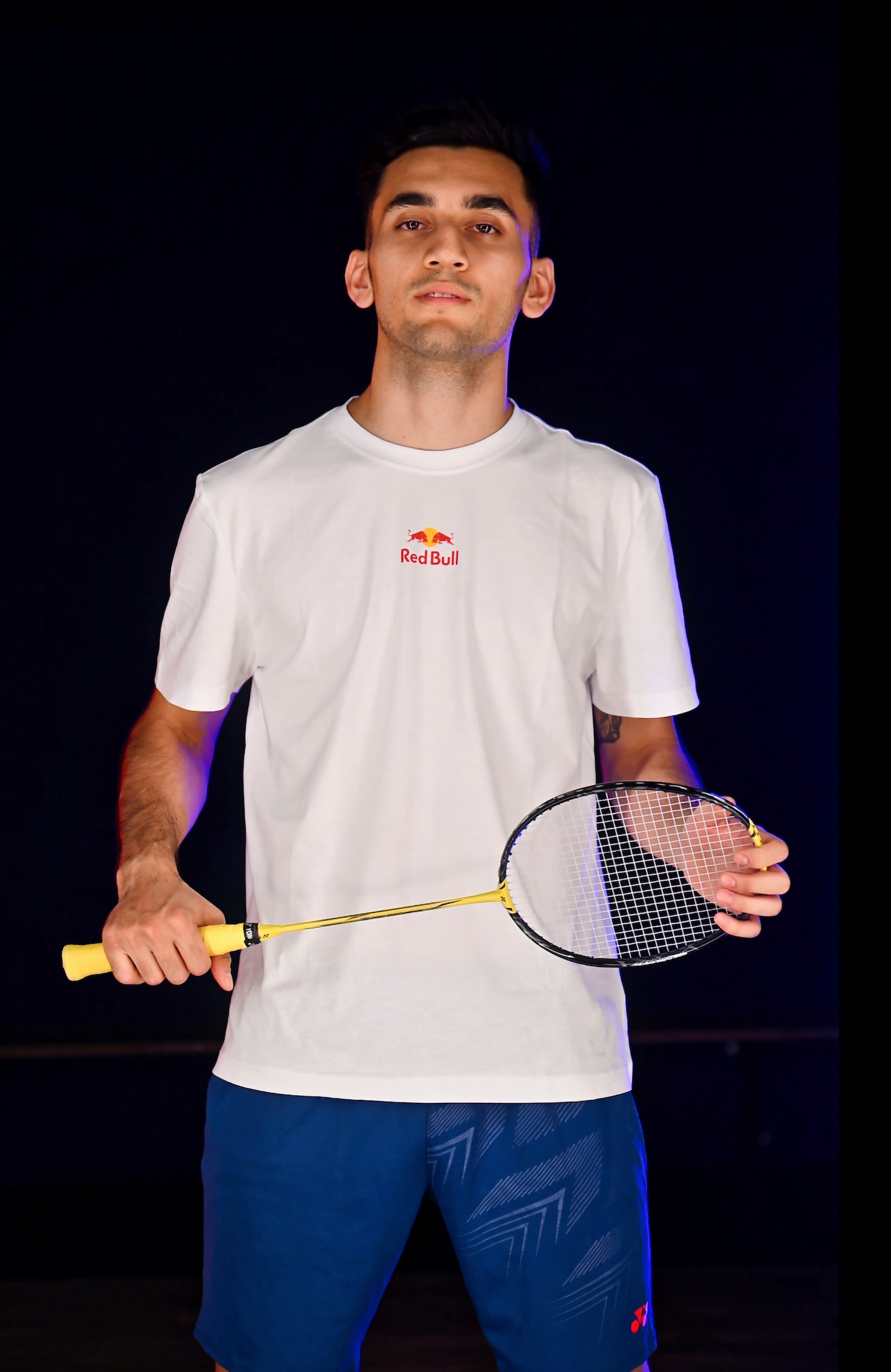
Supplemental Red Bull portraits have a different job. One shows Sen standing with a racket against a dark background, his face fully visible and his athlete identity easy to match. Another shows him seated in a locker room with the racket in front of him. These are supplemental context rather than direct ink documentation. They broaden the page’s visual rhythm and give readers clear face-visible reference points without assigning ink that the frames do not show.
Public-facing style

That separation keeps the gallery honest. The first three images are the tattoo-specific record: they visibly show genuine designs on Sen’s body. The Red Bull photographs are contextual portraits used to show the athlete in a professional setting. A portrait can be valuable even when the sleeves and shirt hide most of the skin, but it should never be captioned as if it reveals a tattoo.
The public-facing style around Sen is consistent with the images. He appears in competition kit, training clothes and sponsor portraits, moving between intense focus and a relaxed direct gaze. The tattoos are visible in some of those settings because badminton clothing leaves the arms and neck open. They are not presented as a costume. They are permanent marks that happen to enter the frame when the athlete plays or poses.
The visible phrases are also distinct from the surrounding branding. Sponsor logos and team colours change from photograph to photograph, while “believe,” “Never give up” and “Sky is the limit” stay attached to Sen’s skin. That contrast is one reason the tattoos are easy to recognise. They form a personal layer inside images that otherwise document tournaments, training and commercial partnerships.
Oneindia’s description connects the arm work with animal imagery, including a form compared with a fox and a tiger. The photographs support the presence of additional illustrative ink, although changing scale makes detailed species identification less certain than the broad shapes. The careful approach is to mention the reported comparison and let the images carry the visual impression, rather than label every shaded section as a confirmed animal portrait.
Messages and motivation
The page can therefore discuss several design families without reducing them to one message. The neck is a vertical phrase. The upper arm combines lettering with a winged peace symbol. The lower arm includes large script and reported animal imagery. Each area has a different visual rhythm, and the available photographs show how those areas relate without offering a complete skin map.
A long-form account also needs space for the career beyond a list of motifs. Sen’s results include the Indian Open, Thomas Cup gold, Commonwealth Games gold and a top-ten breakthrough. Red Bull describes his attacking instinct, powerful smashes and later work on defence and net play. The tattoo imagery gains meaning from that movement between ambition and refinement, even when the sources do not state a direct connection.
The YouTube interview route provides an additional identity and career reference. “The Badminton Experience” episode features Sen discussing beating Viktor Axelsen and winning the Commonwealth Games. It is a candidate-specific video source for the person and his sporting voice. The article uses it as context, not as a substitute for a clear tattoo photograph and not as evidence that every design was discussed on camera.
Why the record stays careful
This distinction is important because a video title can create an impression of intimacy that the still images cannot prove. The video confirms that Sen has spoken publicly about the demands of his career. The photographs confirm the visible tattoos. The written reports identify the phrases and motifs. Keeping those jobs separate makes the final account more persuasive and easier for a reader to audit.
The images also show why face visibility matters. The tattoo-specific Sportskeeda frame is not an anonymous arm close-up; Sen’s profile, hair and kit are visible. The Oneindia collage retains his face in the central panel. The celebration frame shows him frontally. The Red Bull portraits provide separate high-resolution reference images. Across the set, the same subject can be identified without relying on captions alone.
A strong profile resists the temptation to create a larger mythology around motivational words. “Believe” and “Never give up” are visible phrases, and “Sky is the limit” is reported for the neck. Their language naturally resonates with sport, but the available sources do not establish a private confession about why each phrase was chosen. A careful page can still explore the visual and cultural appeal while leaving the unanswered parts unanswered.
A measured visual record
There is a practical design lesson in the placement. The neck lettering is narrow and vertical, making it readable from the side while remaining discreet from the front. The upper-arm composition uses a central peace symbol, wings and text to create a larger focal area. The script lower on the arm extends the composition downward. Those observations come from the photographs themselves and do not require invented measurements.
The gallery’s order reinforces that visual logic. Begin with the court-side image because it shows the main arm work clearly. Follow with the collage for the neck inset and the reported animal motifs. Use the celebration frame to show recurrence in a second setting. The Red Bull portraits then slow the pace and return attention to Sen as an athlete rather than leaving the reader with a sequence of cropped tattoo details.
The source record remains relatively focused. Sportskeeda supplies the strongest tattoo view and competition context. Oneindia offers a dedicated tattoo explainer with additional descriptions. Red Bull supplies the career profile and two face-visible portraits. The Badminton Experience provides a candidate-specific interview route. Together they are enough for a researched article, provided the writing does not pretend that the sources say more than they do.
Lakshya Sen’s tattoos are therefore best understood as a visible combination of motivational lettering, a winged peace symbol, neck script and further illustrative arm work. The photographs make the genuine ink verifiable. The reporting gives readers the phrases and broad motifs. The career sources explain the sporting context. The portraits keep the subject recognisable. Each piece of evidence has a defined role, and the result is stronger because those roles remain distinct.
Documented collection: the supplied tattoo photographs visibly show genuine Lakshya Sen ink, while Sportskeeda and Oneindia identify the motivational phrases and the neck placement. Red Bull portraits are included only as supplemental face-visible context.