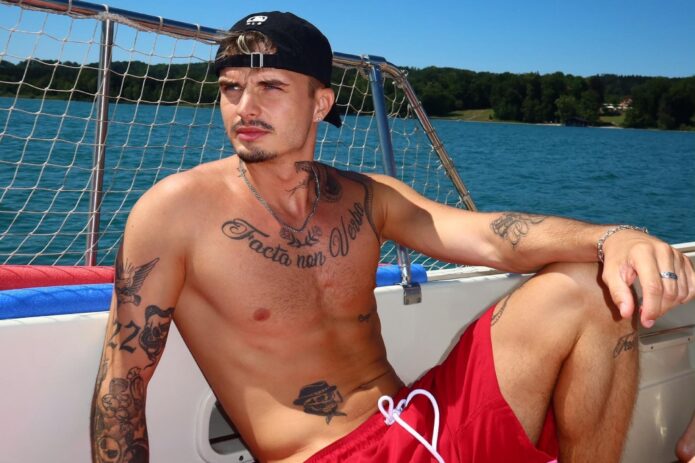
Brian Gamlien’s tattoos range from a snake that follows his neck and shoulder to chest script, a winged arm design and smaller pieces. A BLICK feature covers some of the motifs and their stories; photographs show the rest of the collection without explaining every detail.
The photos are useful for seeing how the designs sit on his body. They can also prompt ideas about scale and placement, though a tattooer would need to adapt any reference to the wearer.
Brian Gamlien’s Snake Tattoo
The snake begins near the side of Gamlien’s neck and travels over his shoulder in a long loop. Its head is compact, while the repeated scales make the body easy to follow in angled photos. The line bends along the clavicle and shoulder cap, giving the design room to move with his arm.
Gamlien has described the snake as a symbol of freedom and self-determination. In the reference photo, its dark outline and scale pattern stand out in bright daylight without a heavy black background.
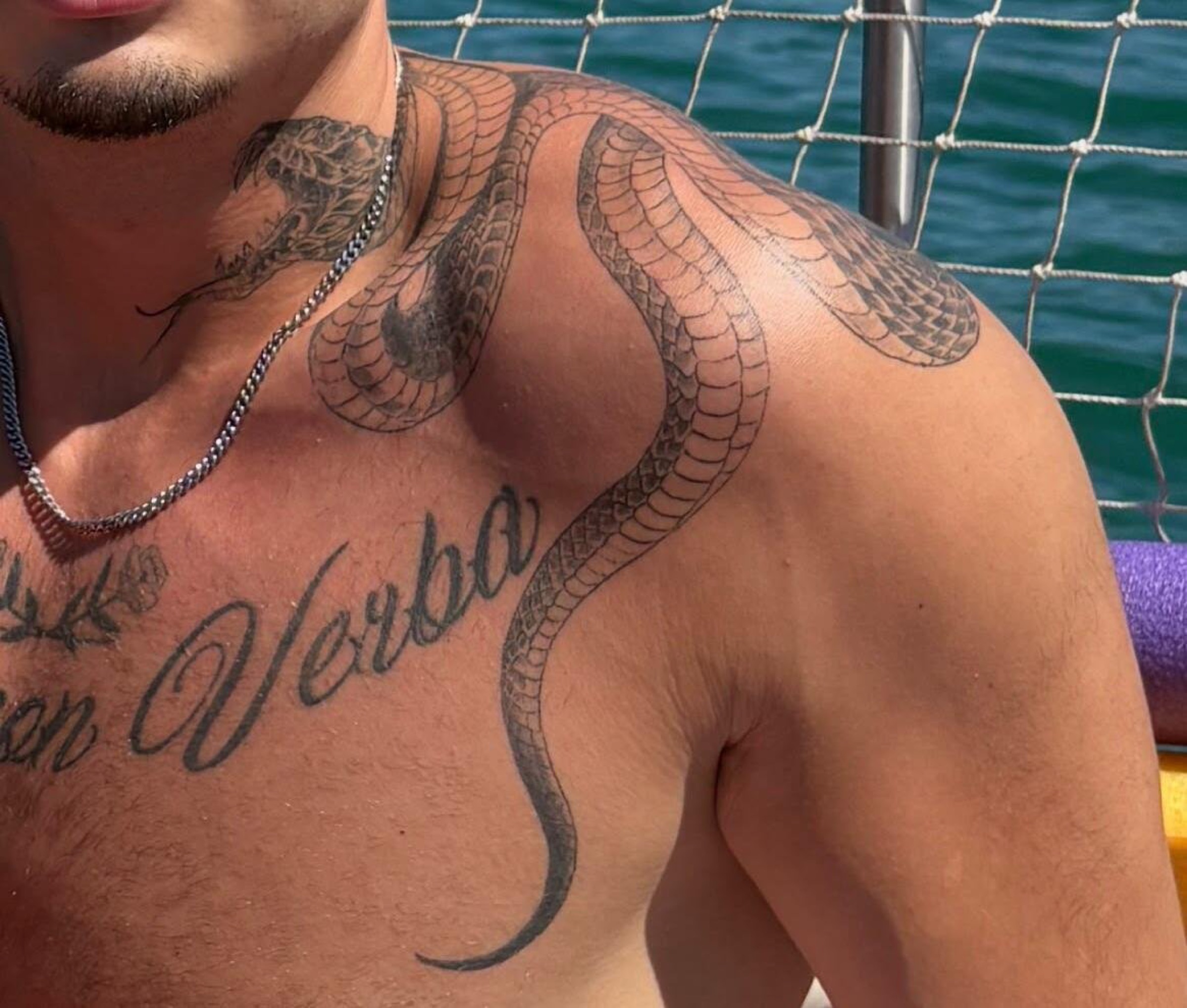
If you use the snake as a reference, decide how much of it should show from the front and where the body should disappear around the shoulder. Ask the artist to map its full path from more than one angle.
Brian Gamlien’s Chest Script Tattoo
Large handwritten lettering crosses Gamlien’s upper chest. Its loose strokes differ from the snake’s repeated scales, and the writing follows the curve of the pectoral. Smaller symbols and lines sit nearby, so the script is part of a larger arrangement rather than an isolated phrase.
The photo gives a sense of how much space the lettering uses. For chest script of your own, check that the words remain readable when your arms rest naturally and leave enough room for any nearby designs.
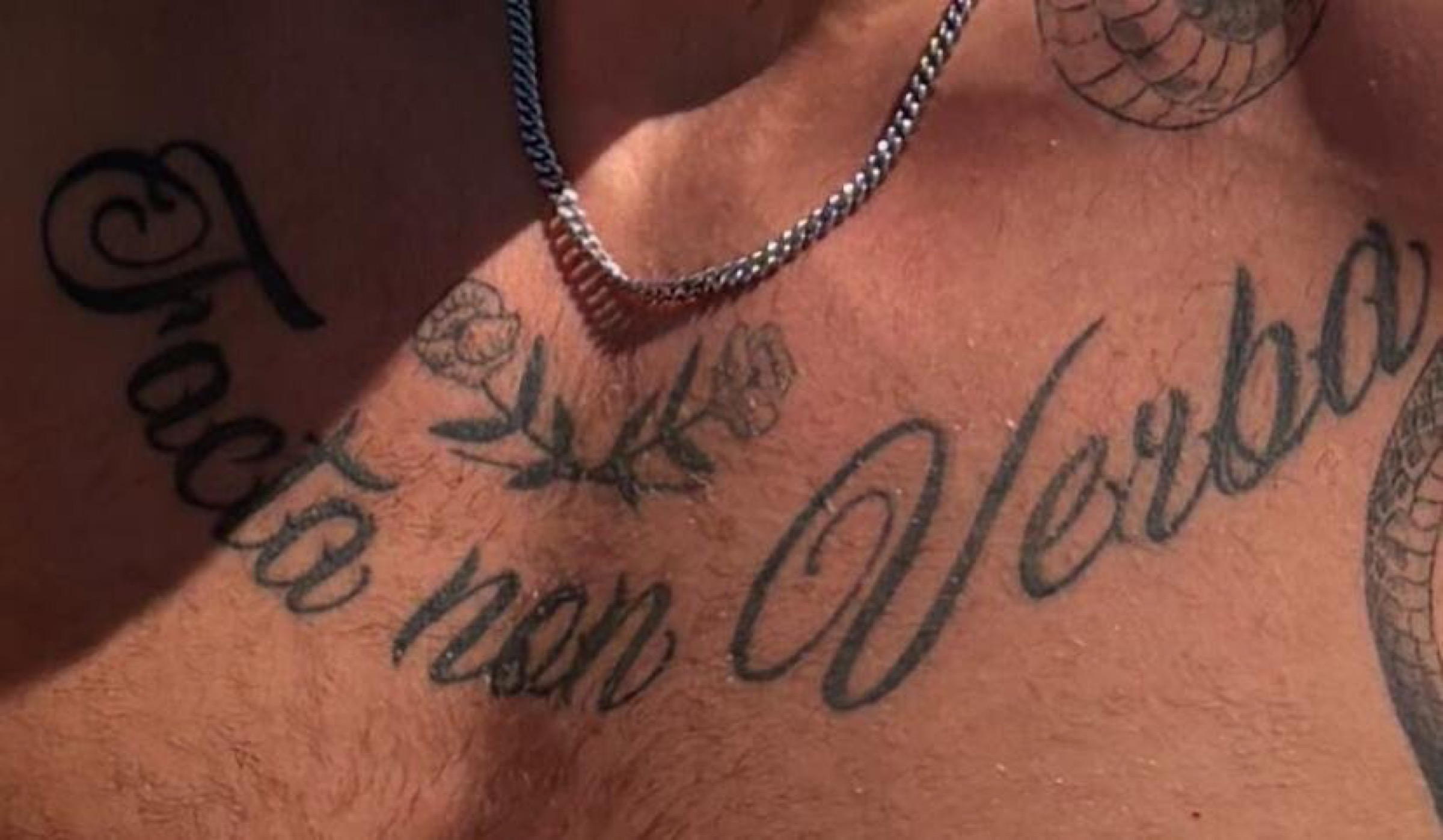
A mirror can help you see how chest lettering reads from the outside, since the wearer views it from a different angle during the design process.
Brian Gamlien’s Winged Arm Tattoo
A winged figure adds an illustrative shape to the upper arm. The wings spread across the muscle, with rows of feathers providing detail and a central figure drawing the eye.
In the photos, open skin between this and nearby pieces keeps the feather lines distinct. The arm collection has shaded areas but does not use one solid fill throughout.
For a wing design, look at how the feathers change direction and how shading is distributed. The wing’s angle also affects its shape on the arm: it can extend toward the elbow or open across the bicep.
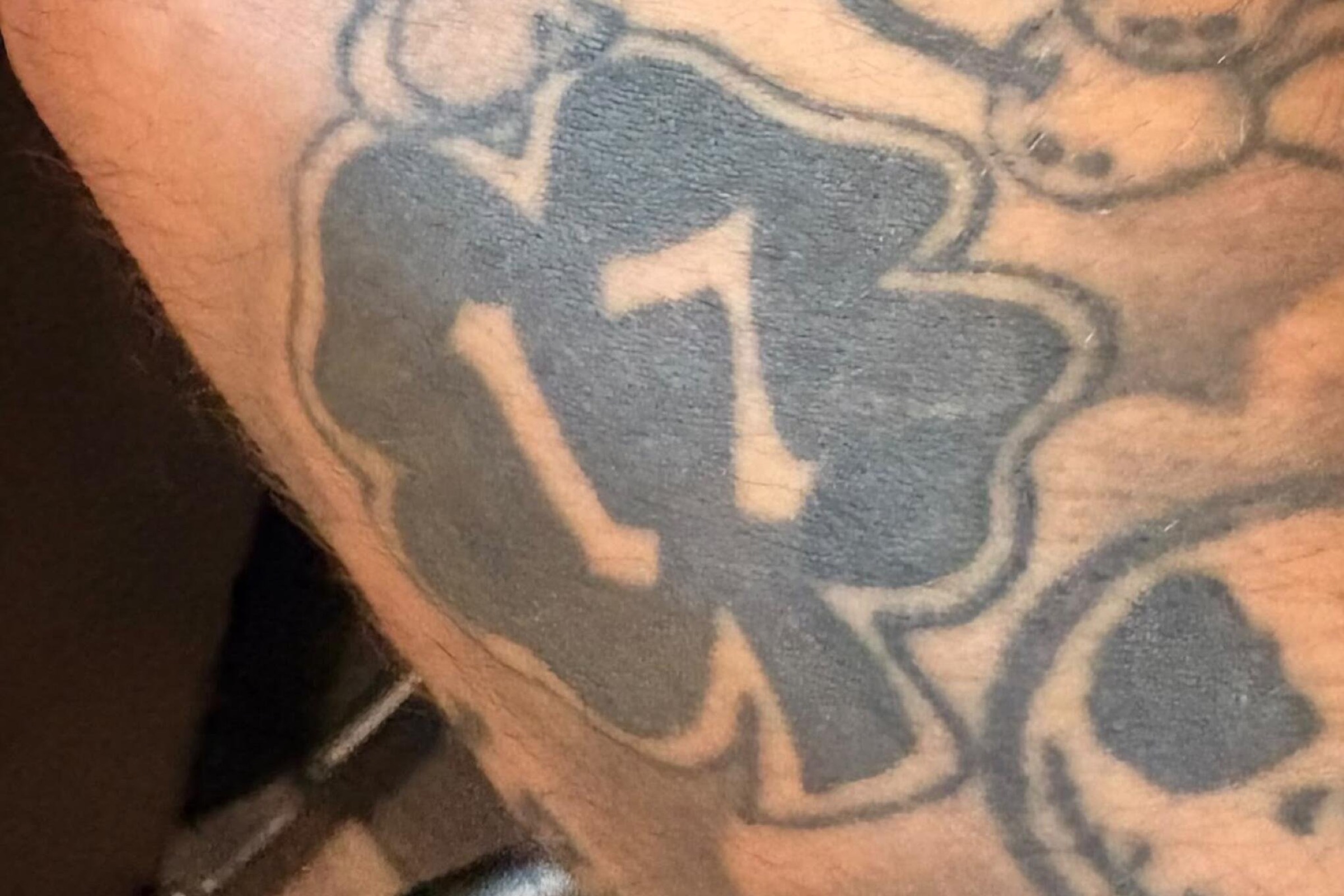
Brian Gamlien’s Number Tattoo
A small number design sits among the larger tattoos. Its meaning has not been publicly explained in the material covered here, so its role in the collection is visual: a compact mark between broader pieces.
Numbers need clear spacing, especially when the design is small. If you are planning one, decide whether it needs to be legible from a distance and choose a size and line weight that leave each digit distinct.
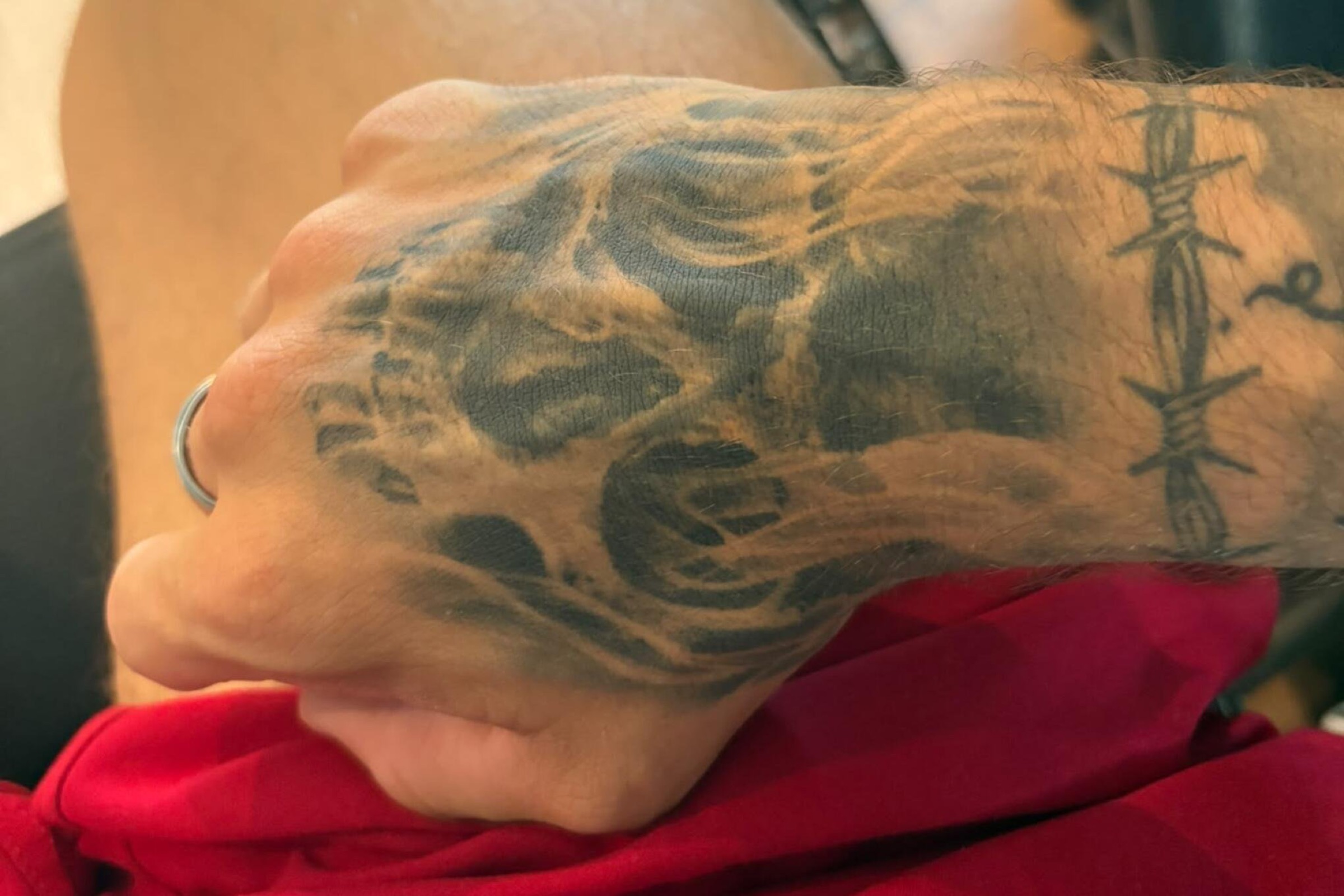
Placement changes how a number reads. A design on the ribs can stay discreet, while forearm lettering is more exposed and wraps with the arm.
Brian Gamlien’s Smaller Arm Designs
Smaller pieces fill the spaces beside the larger motifs. In the photos, they add detail along the arm without making every design part of a single sleeve. The mix of sizes gives the collection a patchwork feel.
Gamlien’s arm is shown relaxed and turned toward the camera. Those views show why placement should be checked with the elbow bent as well as straight: a design can shift as the arm moves.
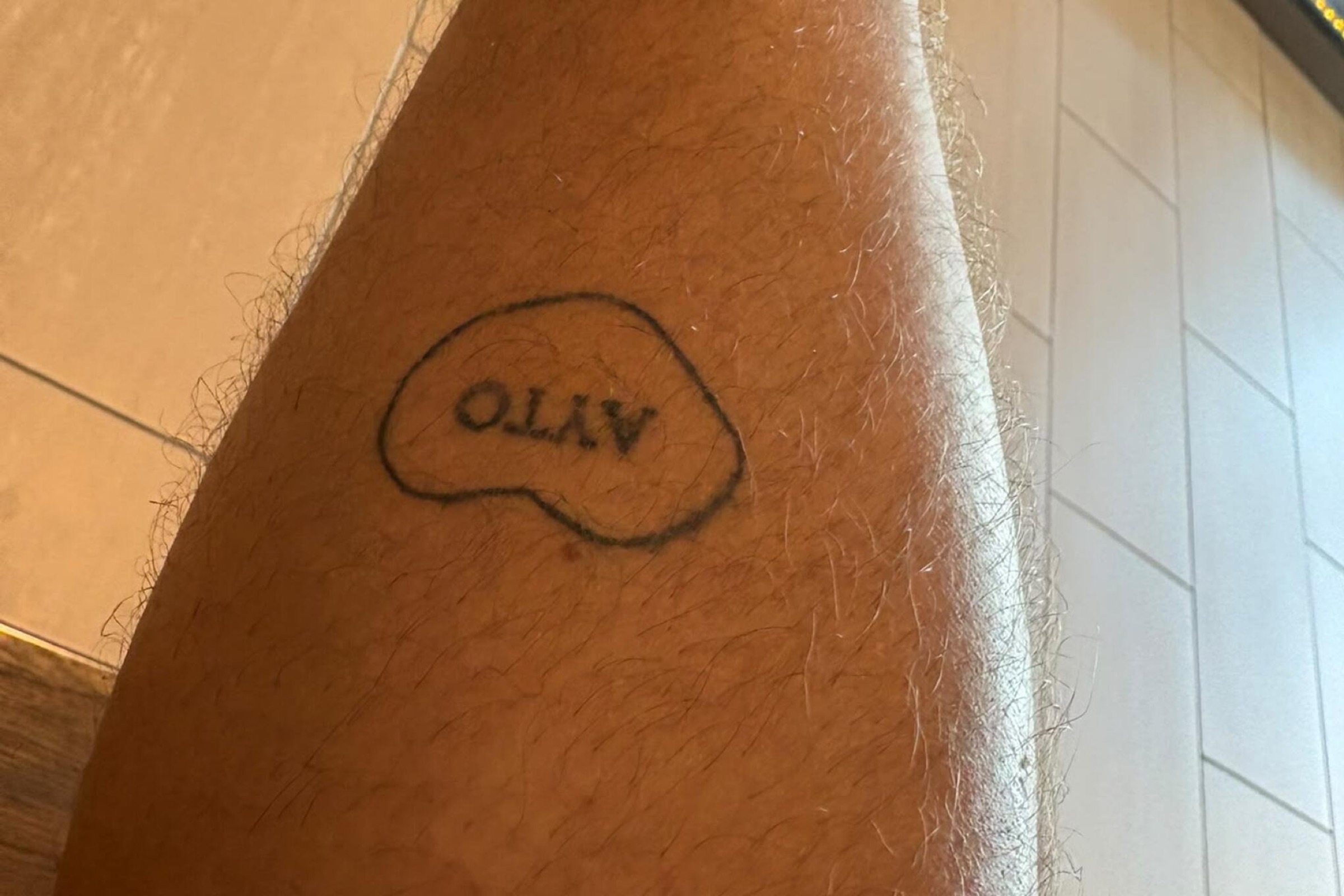
When planning several small tattoos, decide on the gaps between them as well as the designs themselves. Clear space can keep individual marks readable as the collection grows.
How Brian Gamlien’s Style Works as a Collection
The designs differ in scale and shape. The snake follows the shoulder, the script crosses the chest, the winged figure spreads over the upper arm, and smaller marks fill nearby spaces. Repeated attention to line weight and placement helps them sit together across the body.
Using Gamlien’s Photos as Reference
Use the photographs to discuss placement, scale and linework with a tattooer, not as templates to copy. The snake’s shoulder path, the chest lettering, feathered shading and smaller arm marks each offer a different reference point. An artist can redraw those ideas for your anatomy and preferred level of detail.
Compare more than one photo before deciding how a tattoo looks. Light and camera angle can change how dark a design appears. Ask to view a proposed placement from several angles and talk through how the lines may age. The finished design should suit the person wearing it.