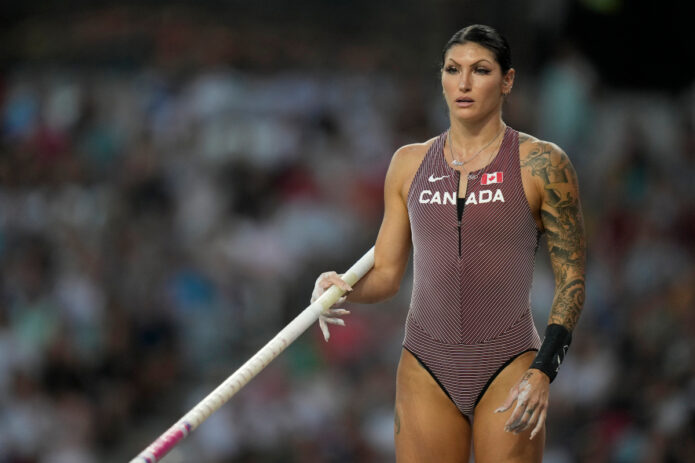
Anicka Newell’s tattoos often appear in photographs of her pole-vaulting career. She has described them as part of her athletic journey and the Olympic dreams she has pursued. The public images show where the designs sit, but don’t explain every motif.
The right arm is the collection’s main visual anchor
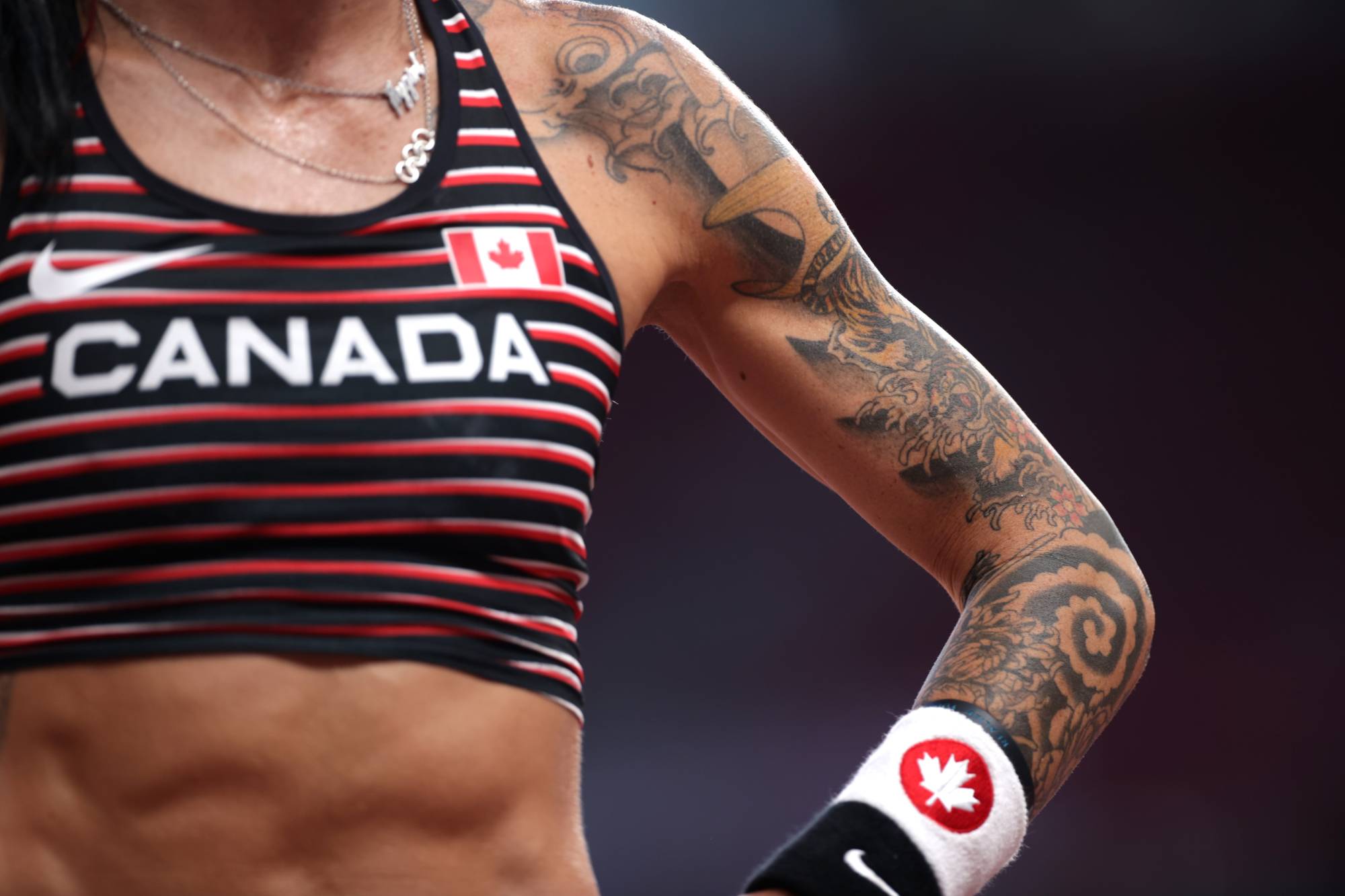
A close Reuters photo published by The Japan Times fills the frame with Newell’s right arm. The sleeve is dense, with large black outlines, shaded figures and lighter gaps between the darker areas. The upper work narrows toward the elbow, then gives way to a busier mix of detail on the lower arm.
The available reporting doesn’t name every figure. It does show several designs connected across the arm rather than one uninterrupted geometric band. A wider training photo shows the sleeve beside Newell’s Canadian uniform, where it remains visible without being the focus of the portrait.
The sleeve combines large figures with fine line detail
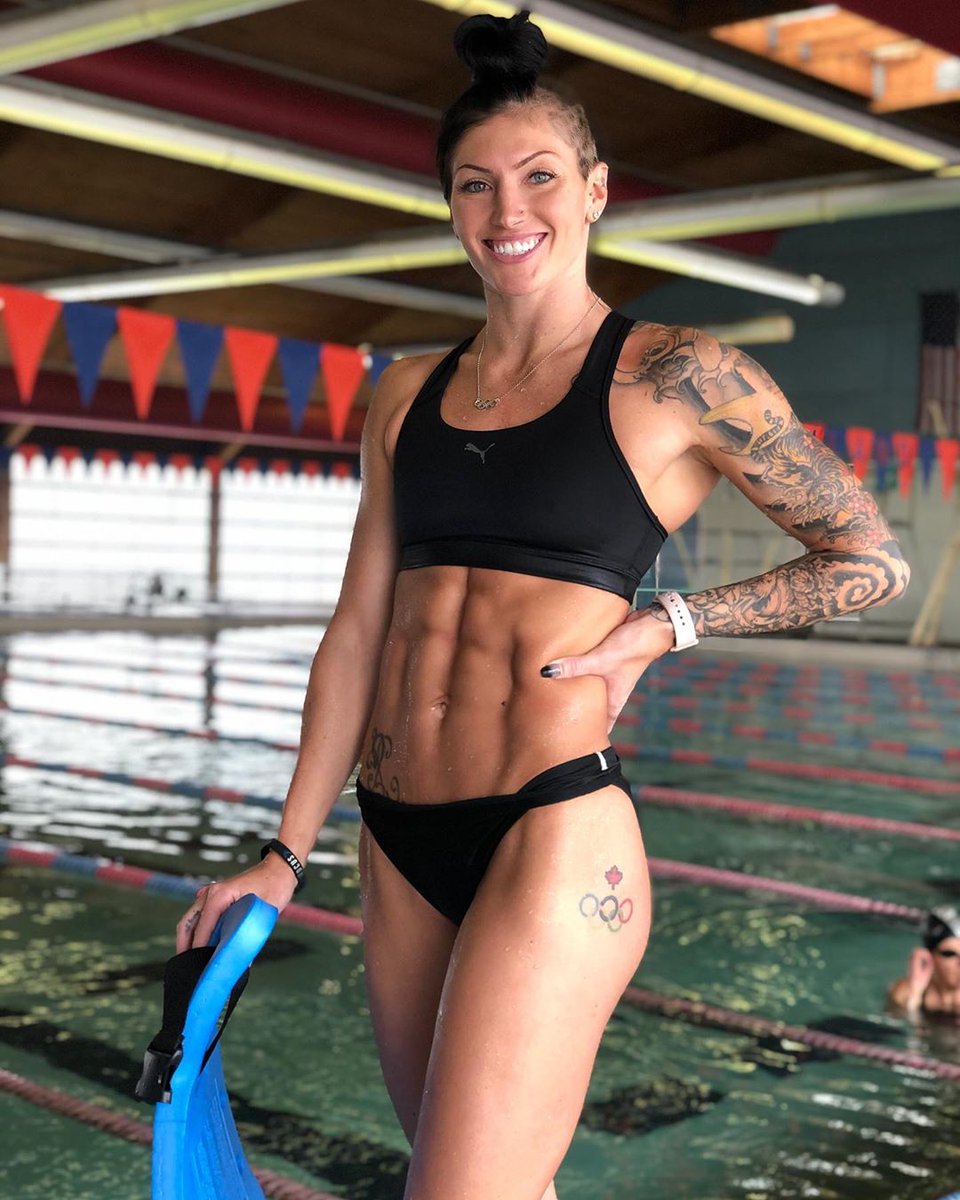
In the wider portrait, the sleeve’s larger shapes sit above more fragmented linework and smaller marks. Shading and open skin keep the arm from reading as a solid block. During a vault, the designs bend with her shoulder, elbow and wrist; the source photos don’t confirm a separate meaning for each figure or ornamental detail.
The mermaid tattoo runs down Newell’s right side
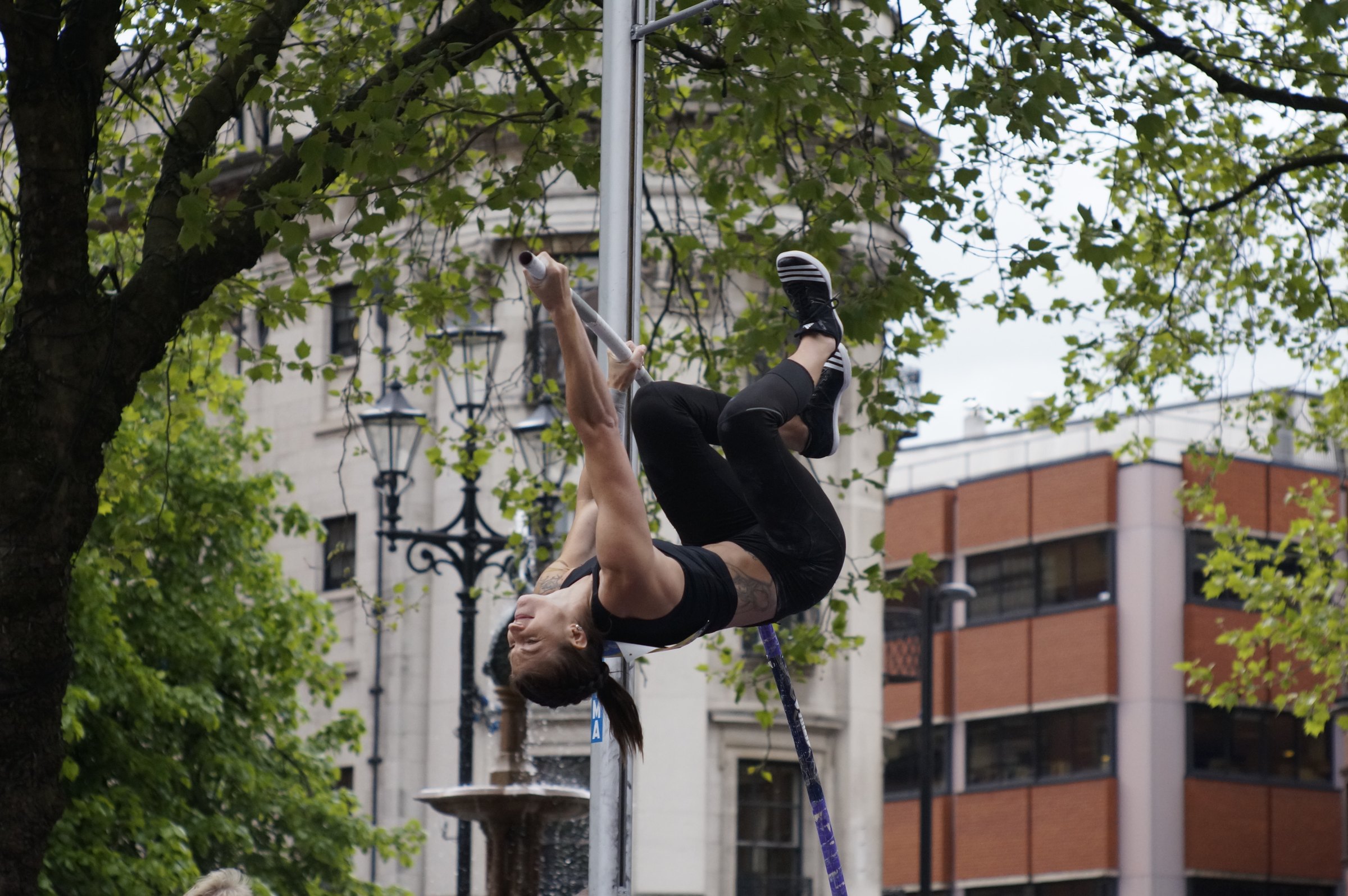
Canadian Press has described a large mermaid tattoo running down Newell’s right side. A Wikimedia Commons vaulting photo shows the long figure along her torso and hip as she turns through the jump. It is larger than a small emblem and follows the line of her body.
The available coverage identifies the tattoo and its placement but doesn’t give a confirmed explanation for its meaning. The image is easiest to see when her training top or competition uniform leaves the side uncovered.
The Olympic rings and maple leaf tattoo mark the hip
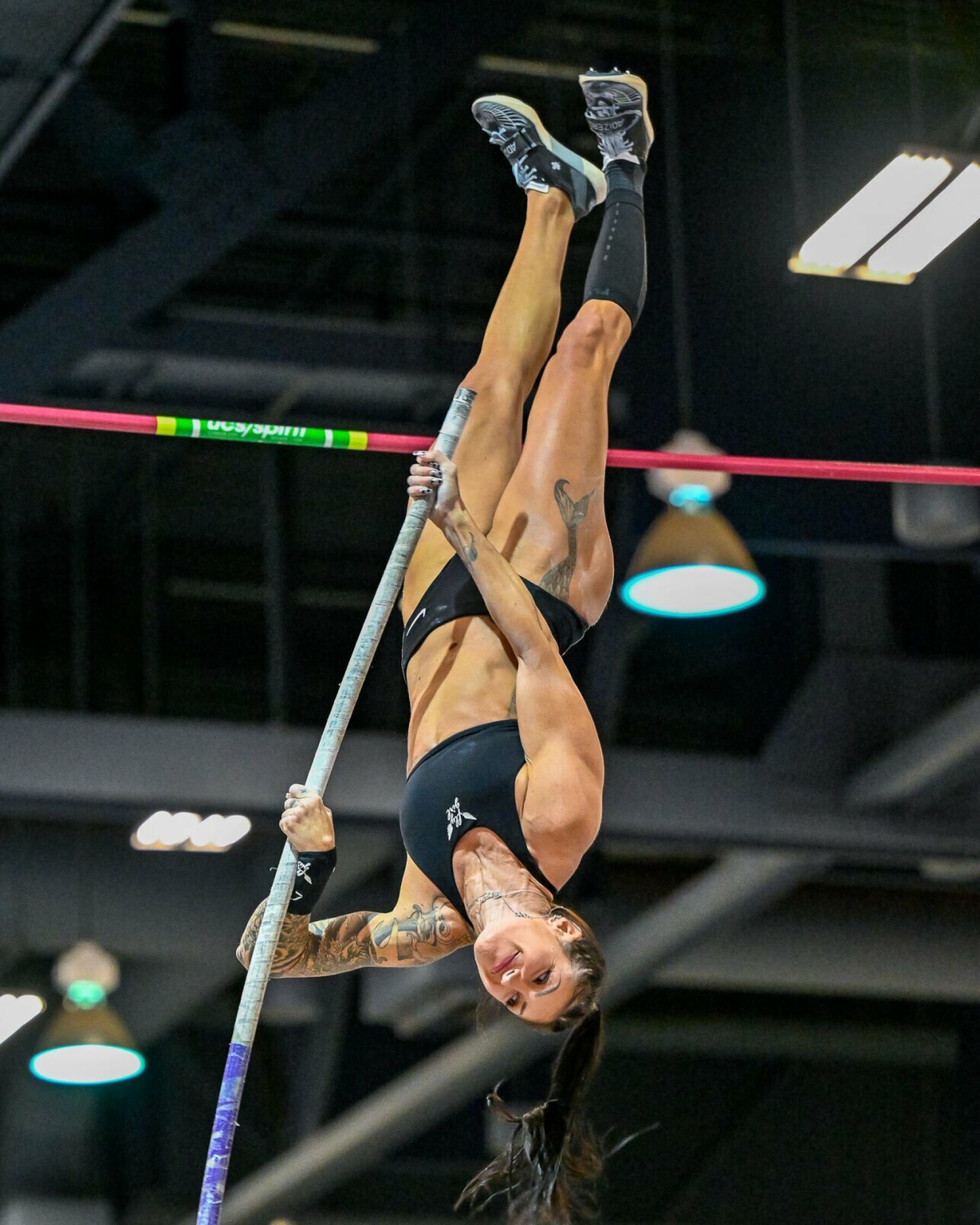
An Albuquerque Journal photograph shows five Olympic rings with a maple leaf above them on Newell’s hip. The colored rings are smaller than the sleeve and mermaid, but easy to identify; the maple leaf marks the design’s Canadian connection.
Newell competed at Rio 2016 and Tokyo 2020 before qualifying for Paris 2024.
Small torso and hand marks sit beside the larger pieces
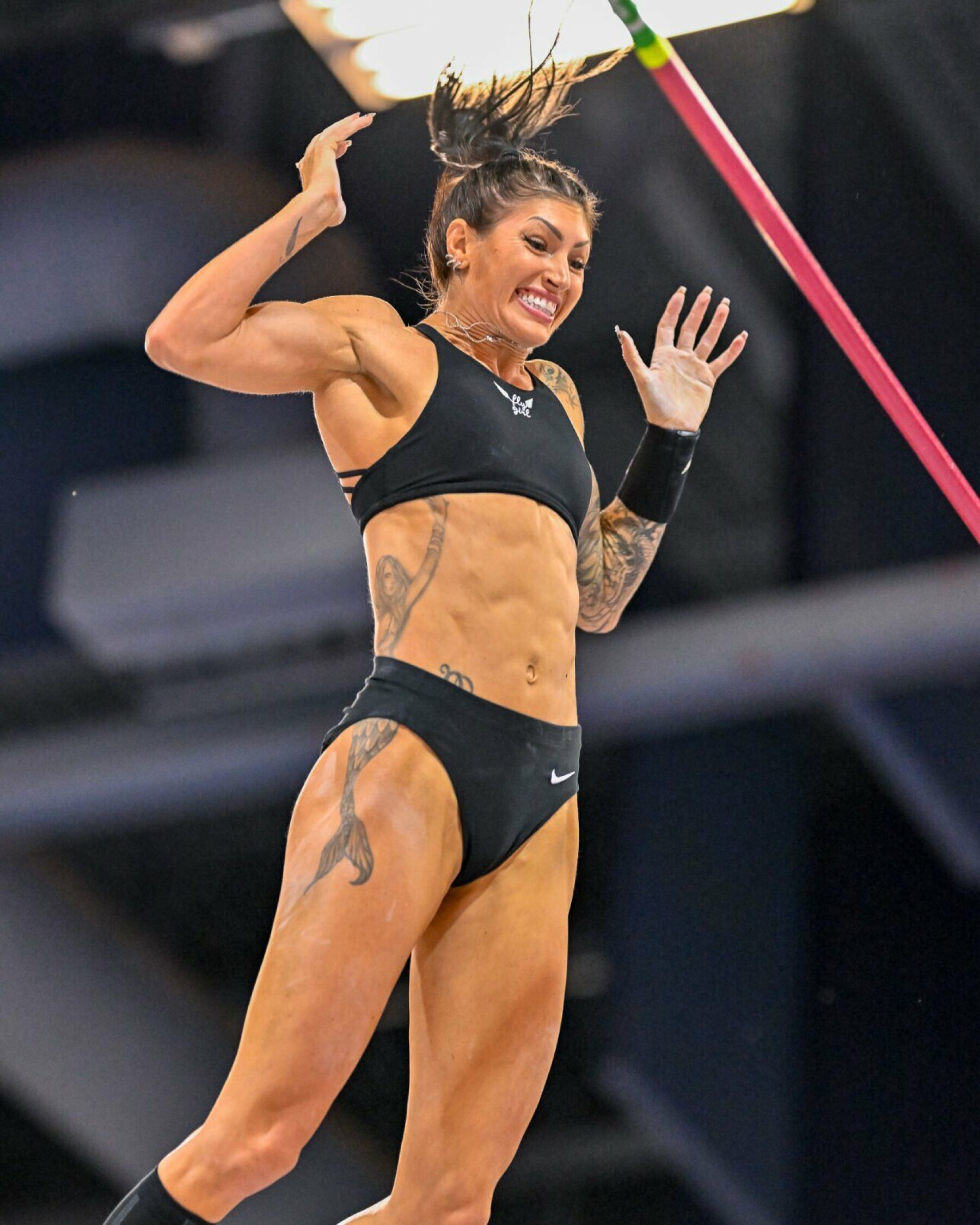
The Albuquerque Journal’s upright competition photo shows fine-line marks near Newell’s torso and hand. A small script-like tattoo sits near the waist above the hip design, but the image is too small to read and the reporting doesn’t give a confirmed transcription.
The hand markings are narrow lines and small symbols rather than a full covering. Their visibility changes with her grip on the pole and the angle of the photograph.
How the photographs change with motion
Competition images show the tattoos in different positions as Newell rotates through a vault or stands after a jump. Team Canada’s red and white uniform frames the dark sleeve; training clothes can leave more of the torso and hip visible. A single image rarely shows all of the work clearly.
These are sports photographs rather than posed tattoo portraits. They help establish how the designs sit on a moving body, while the closer images make line work and placement easier to see.
A personal timeline in public view
In her Inked Originals profile, Newell wrote that her tattoos became a major part of her life, athletic journey and pursuit of Olympic dreams. That is the clearest statement of what the collection means to her; the profile doesn’t assign a separate explanation to every design.
Athletics Canada records Newell’s move from gymnastics to pole vault after a back injury, and World Athletics confirms her event and athlete profile. Those sources help place the tattoos in her sporting career, but don’t explain the imagery beyond Newell’s own account.
What the available photographs document clearly
The reporting and competition photos identify selected designs, but the sources don’t provide a complete tattoo inventory. They are strongest on placement and broad shape, not on the meaning of every mark.
Some arm shapes overlap, and the small script is not legible enough to transcribe. Without a direct explanation from Newell, those details should remain descriptions of what the photographs show rather than guessed symbols.