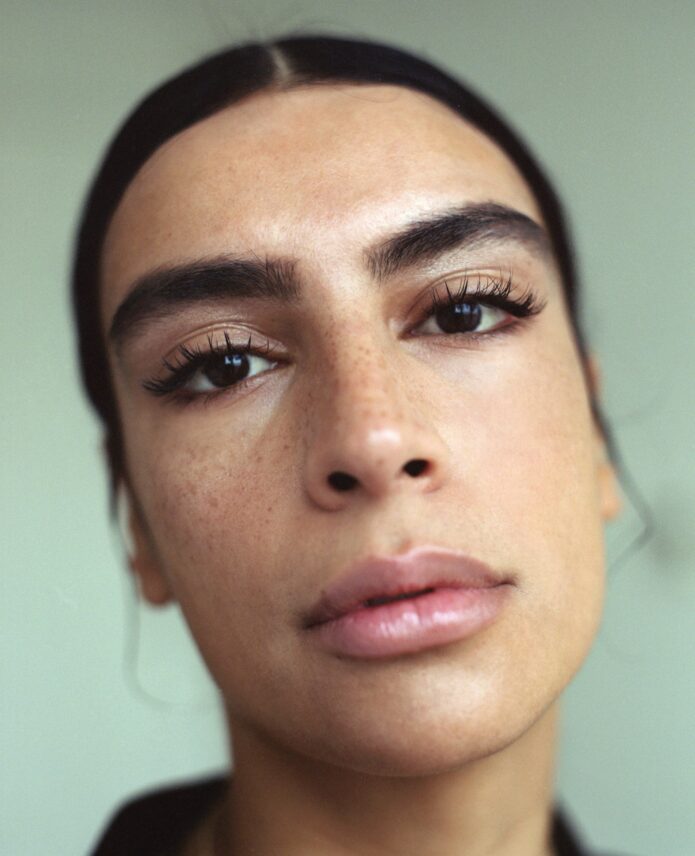
Sevdaliza, the Iranian-Dutch singer, has tattoos across her back, neck, hip, thigh and torso. Editorial photos show geometric linework, portrait imagery and short script. Some details are clear in close-ups; others remain difficult to identify.
The Geometric Upper-Back Tattoo
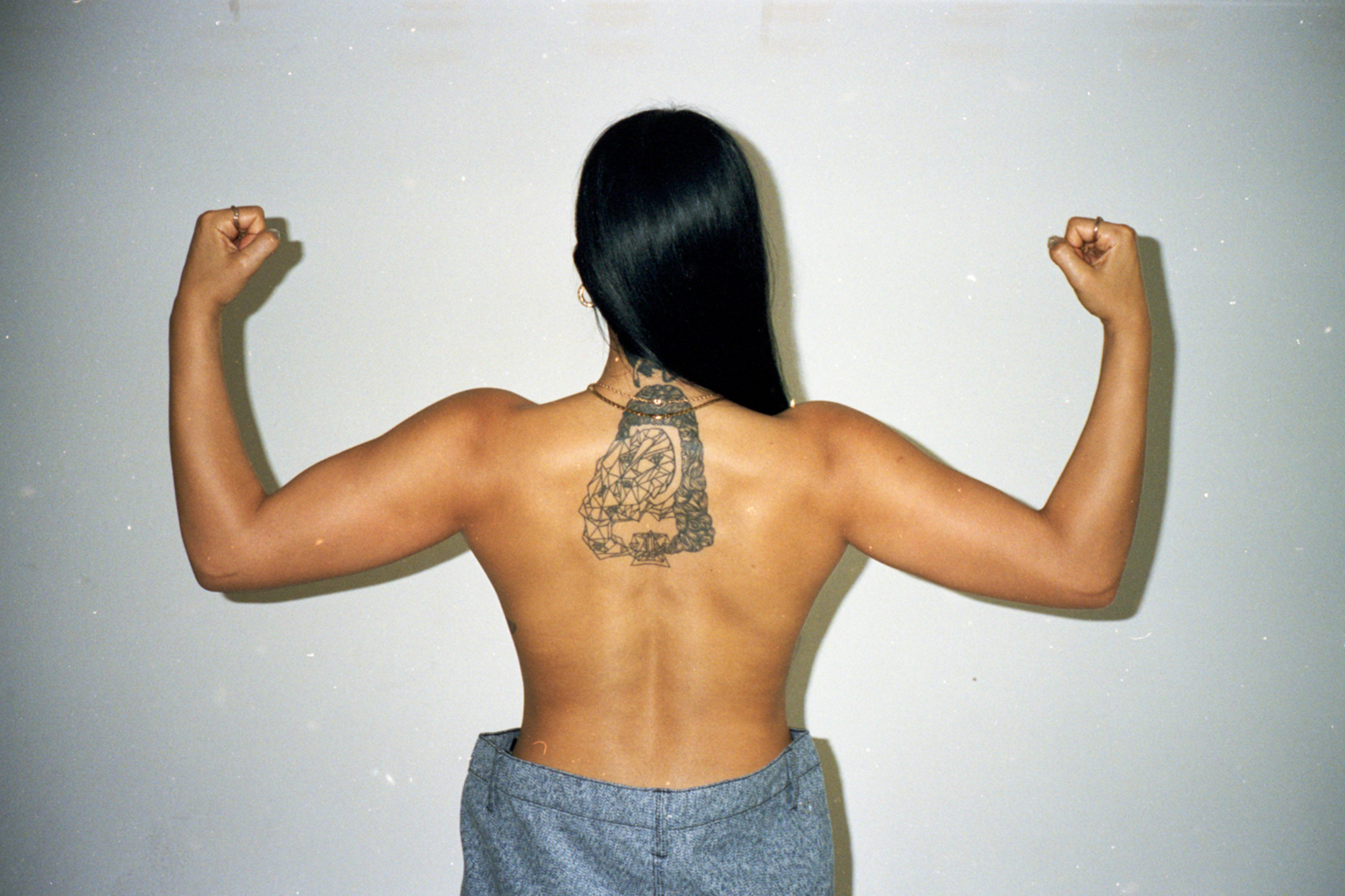
A large black-and-grey design sits high on Sevdaliza’s back, between the shoulder blades. In the wide Crack Magazine photograph, its rounded upper form and face-like central figure lead into angular lines below. The interview material doesn’t give the figure a formal name.
Fine lines divide the central shape into facets, while darker contours define its edges. A rear portrait shows the full vertical composition; a closer FADER image reveals more of the upper linework. The figure’s identity and the moment it might represent remain unconfirmed.
The Side-Neck Linework
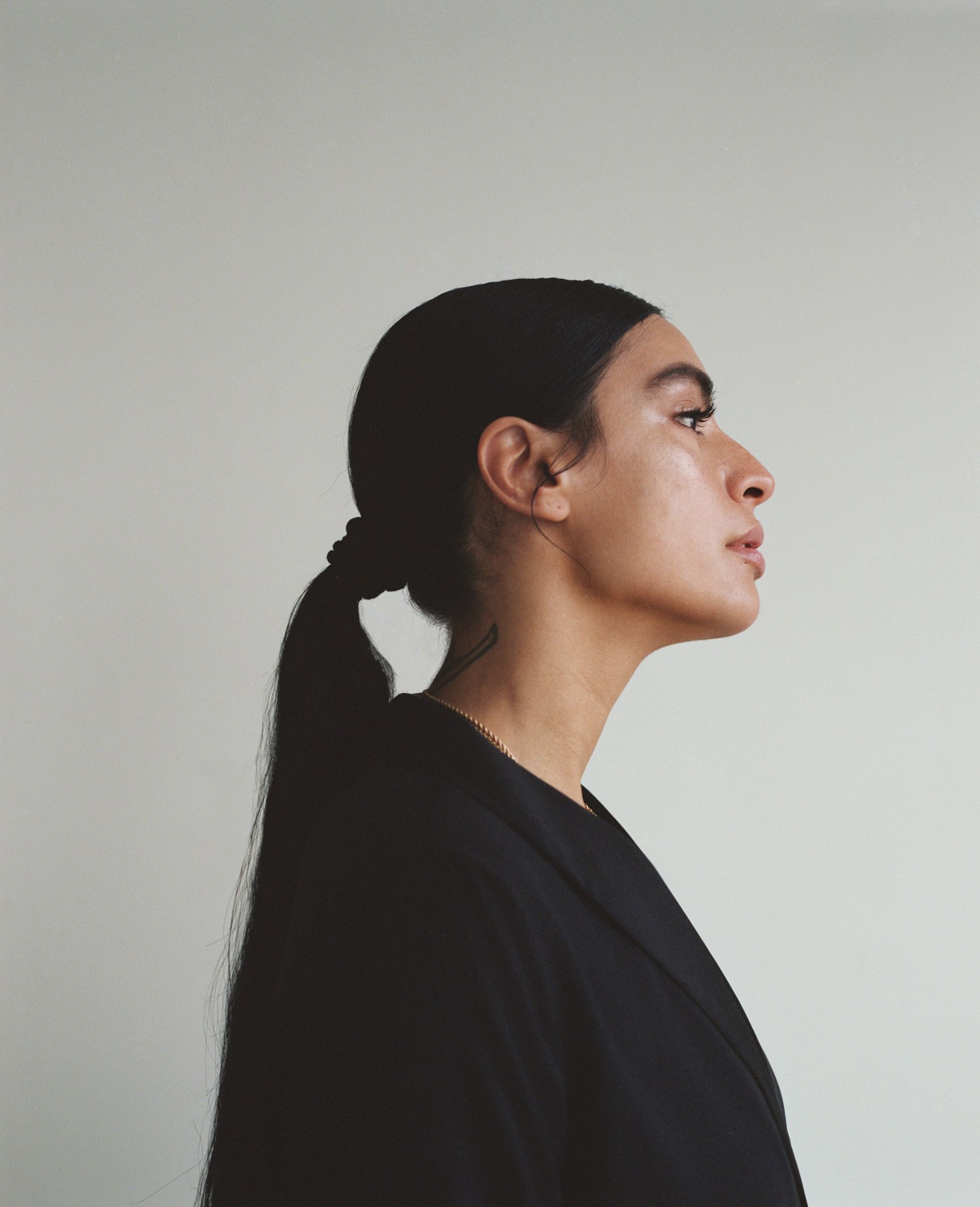
A FADER portrait shows narrow black linework along the side and back of Sevdaliza’s neck beneath her ear. It is much smaller than the back piece, with a dark central stroke and finer details.
The mark can disappear when her hair falls over it or the light changes. The photo confirms its placement, but the available interviews don’t assign it a specific phrase or symbol.
The Thigh Portrait and Lettering
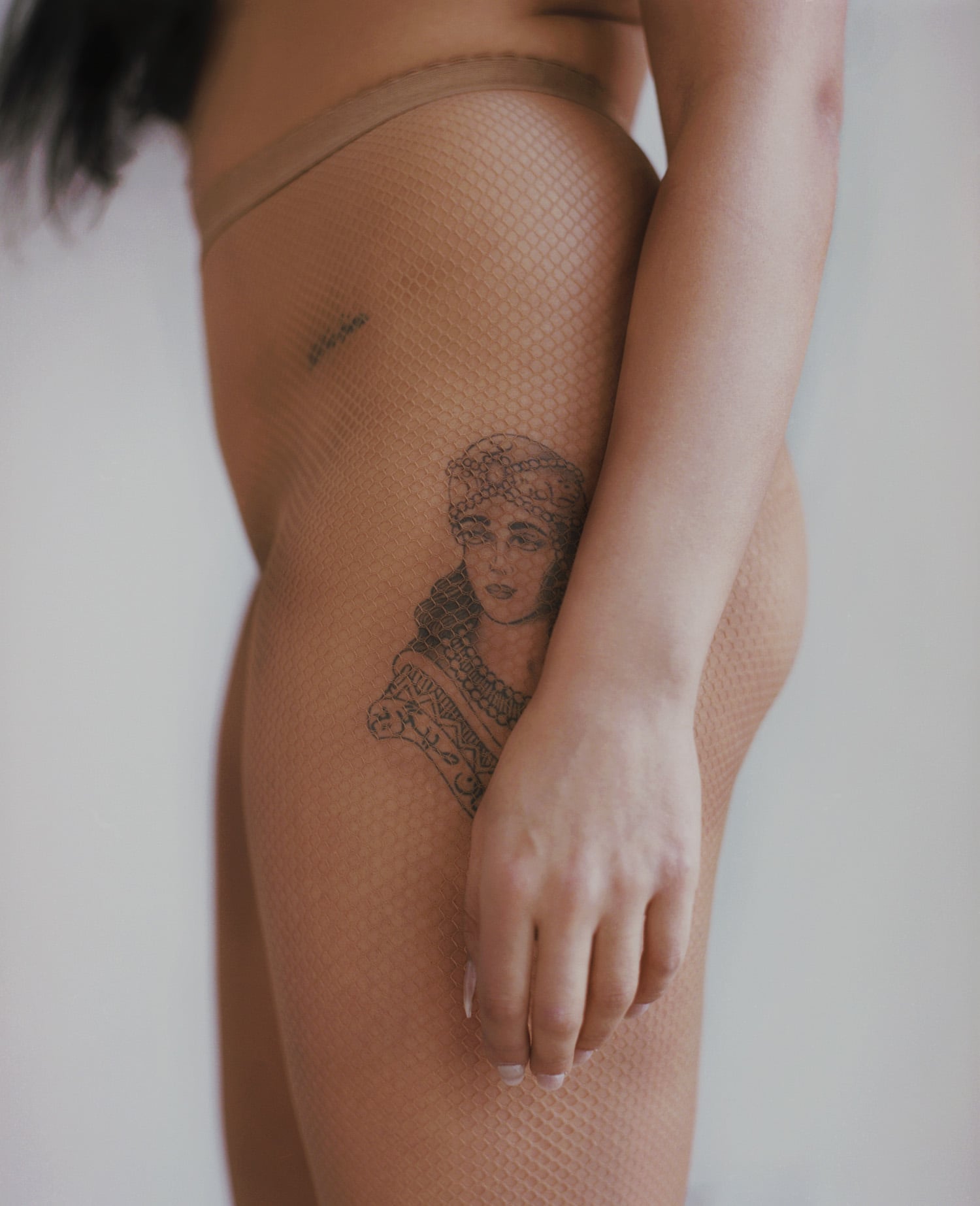
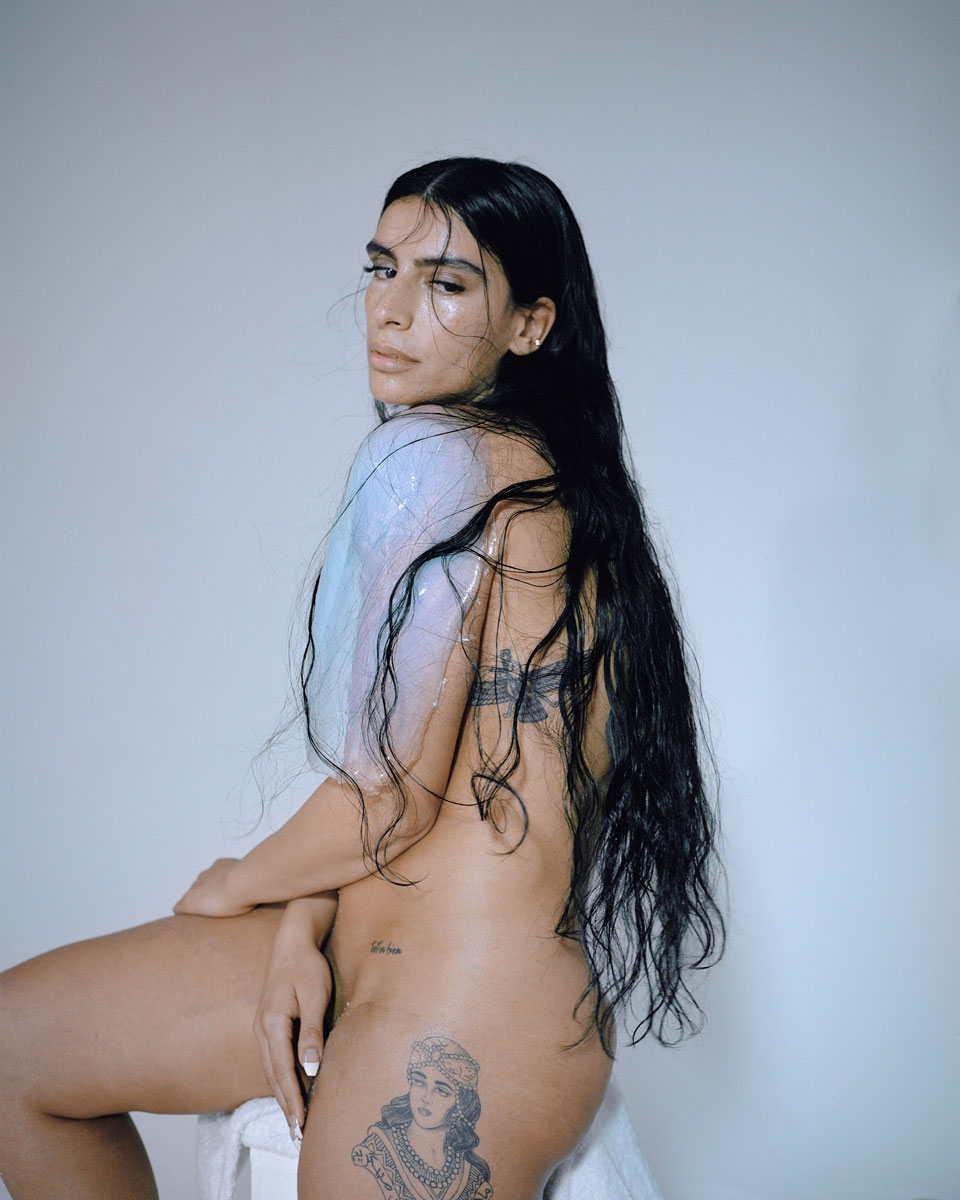
Another FADER photograph shows a portrait-style figure on Sevdaliza’s upper thigh and hip. It has long hair, ornamental clothing and a band across the chest that resembles a necklace. Fine outlines define the face and clothes, with darker shading around the hair and lower edges; lettering sits close to the image.
The figure’s identity isn’t named in the available sources, so it can’t be confirmed as a literal likeness of Sevdaliza. A wider Glamcult photograph shows the same tattooed area in a seated pose and reveals more of how the design sits across the thigh and hip.
The Chest Script and Dense Lettering
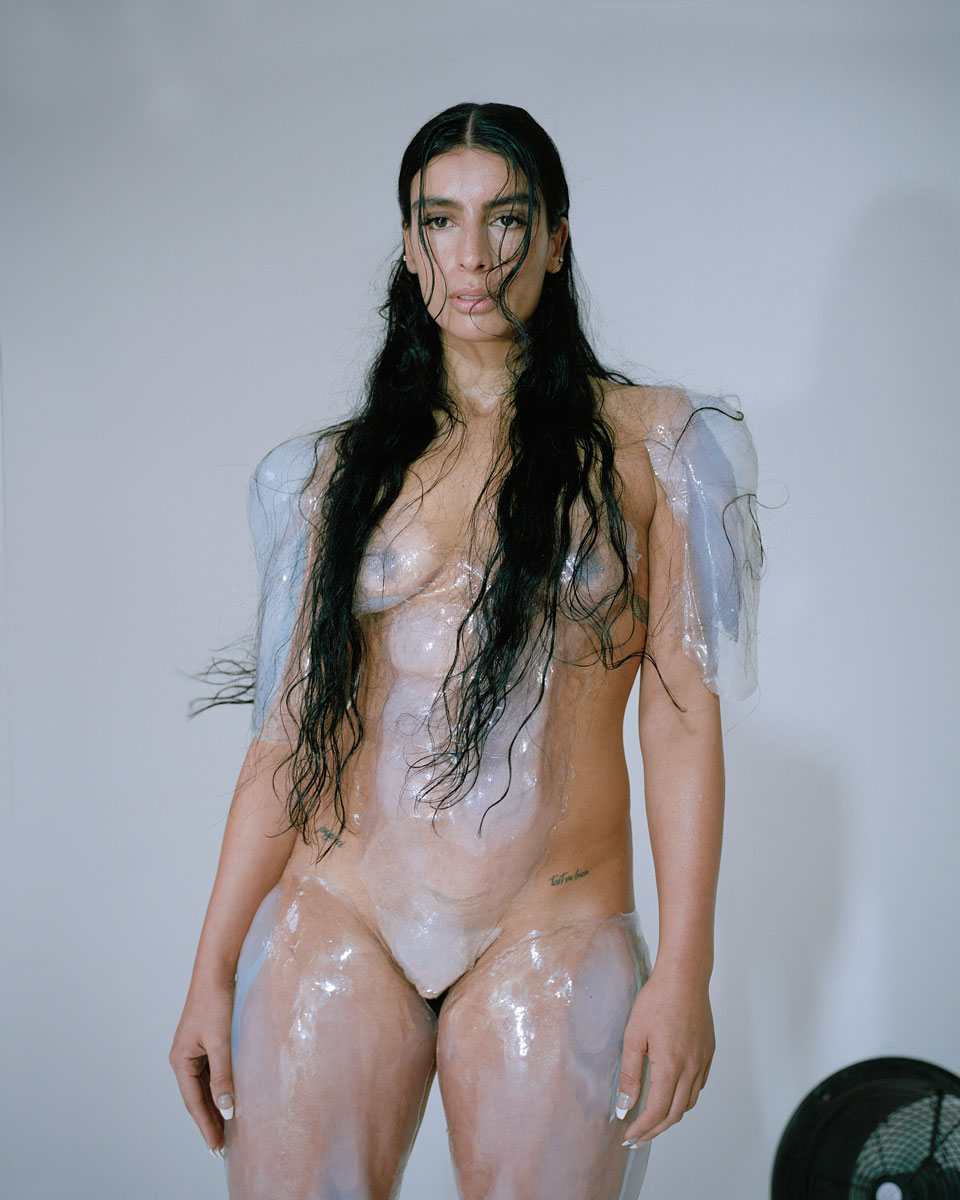
Glamcult and Attitude photographs show short script marks near Sevdaliza’s lower torso and hip. One appears black beneath translucent styling; another looks greenish. The images establish that they are lettering, but don’t make every character clear enough to transcribe.
The marks are smaller than the portraits and geometry, and can be covered or revealed as her pose changes. The photographs don’t show enough detail to transcribe the words.
The Smaller Back and Shoulder Marks
A seated Glamcult portrait shows a compact dark mark near Sevdaliza’s shoulder blade, with part of the thigh portrait visible in the same frame. Hair and a translucent garment obscure sections of the area, so the photo doesn’t provide a full inventory of the smaller designs.
The mark is denser than the neck line and much smaller than the back composition. The image puts separate pieces in one frame, but doesn’t establish that they form a single design.
What Sevdaliza Says About Her Body Art
Sevdaliza has called her tattoos self-portraits and a living diary: each one recalls a different period or state and reminds her where she came from. That is the clearest account of the collection’s meaning in the available interviews.
The idea links the designs as a record over time, not as a code that viewers can solve. The music video for HUMAN offers a related view of how she uses the body in her visual work; it doesn’t document a tattoo.
The Visual Archive Around Sevdaliza’s Work
Editorial photographs show different parts of the collection depending on pose, hair and clothing. A rear view reveals the back piece, a profile exposes the neck line, and a seated portrait brings the thigh and shoulder into view. No single image serves as a complete catalogue.
Taken together, the photos establish the placement and visible form of the designs. Where they don’t identify a figure or a word, its specific meaning remains unknown.