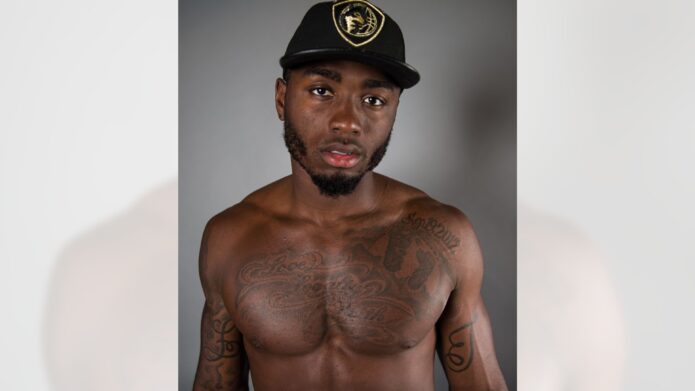
Laquon Treadwell’s official Purple Ink Extra gallery is unusually direct about its subject. The Minnesota Vikings published thirteen photographs specifically to show the wide receiver’s tattoos, not merely a portrait session in which a sleeve happens to appear. The sequence moves between full-body frames, close arm views, color duplicates, and side poses, creating a visual record of how the ink covers his chest, shoulders, arms, and torso.
The gallery’s editorial text identifies the photographs as an up-close look at Treadwell’s tattoos. It also places the images within a broader football context, but the photographs remain the central evidence. The designs are visible from several angles, while the accompanying Vikings material explains that his body art includes family references, faith-related imagery, football memories, and nods to the pickleball paddles and Skechers shoes associated with his career. Individual motifs are not assigned a meaning in every frame, so the visual descriptions below stay close to what the official photographs actually show.
Treadwell’s tattoos read as a collection rather than a single uniform sleeve. Large chest work, outlined arm symbols, dense script, and smaller pieces occupy different zones of skin. The variety is easiest to understand when the official gallery is viewed as a sequence, because each photograph exposes a different relationship between the designs and the body positions they follow.
The full-body gallery establishes the scale of Treadwell’s ink
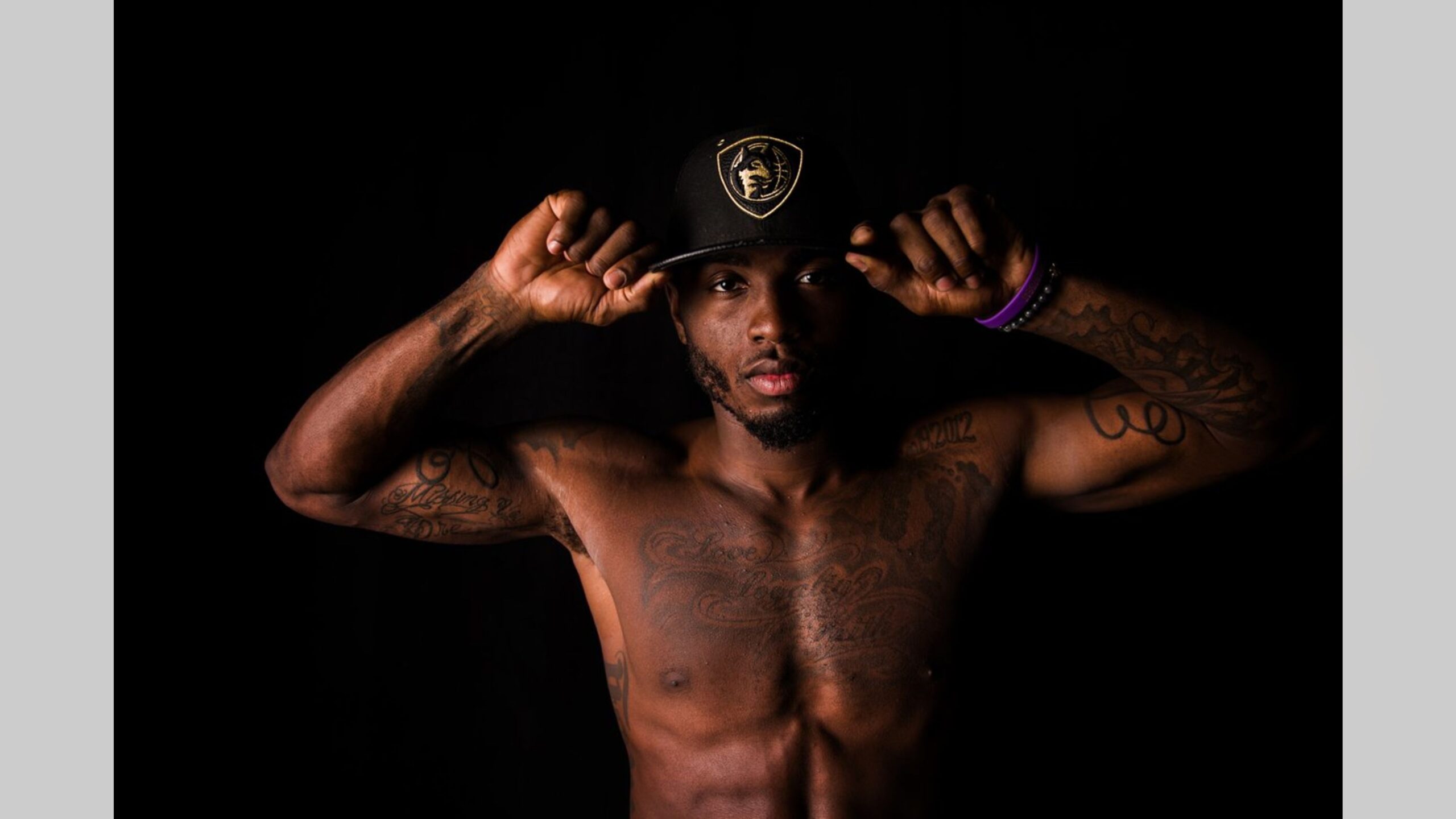
The opening photograph presents Treadwell from the waist up, shirtless and centered against a dark studio background. Both arms and the chest carry visible tattoo work, making the extent of the collection immediately clear. The outer arms show large dark areas and outlined details, while the chest contains a broad central composition with lighter spaces between the elements. The image is not a catalogue of every design, but it establishes that his tattoos extend across multiple connected areas rather than sitting in one isolated location.
The pose also shows how the ink changes with movement. His raised arms pull the skin taut and expose the outer-arm pieces, while the chest remains front-facing. That combination makes the photograph useful as a visual starting point for the rest of the gallery. Later close-ups add detail, but this first frame explains the overall map of Treadwell’s body art.
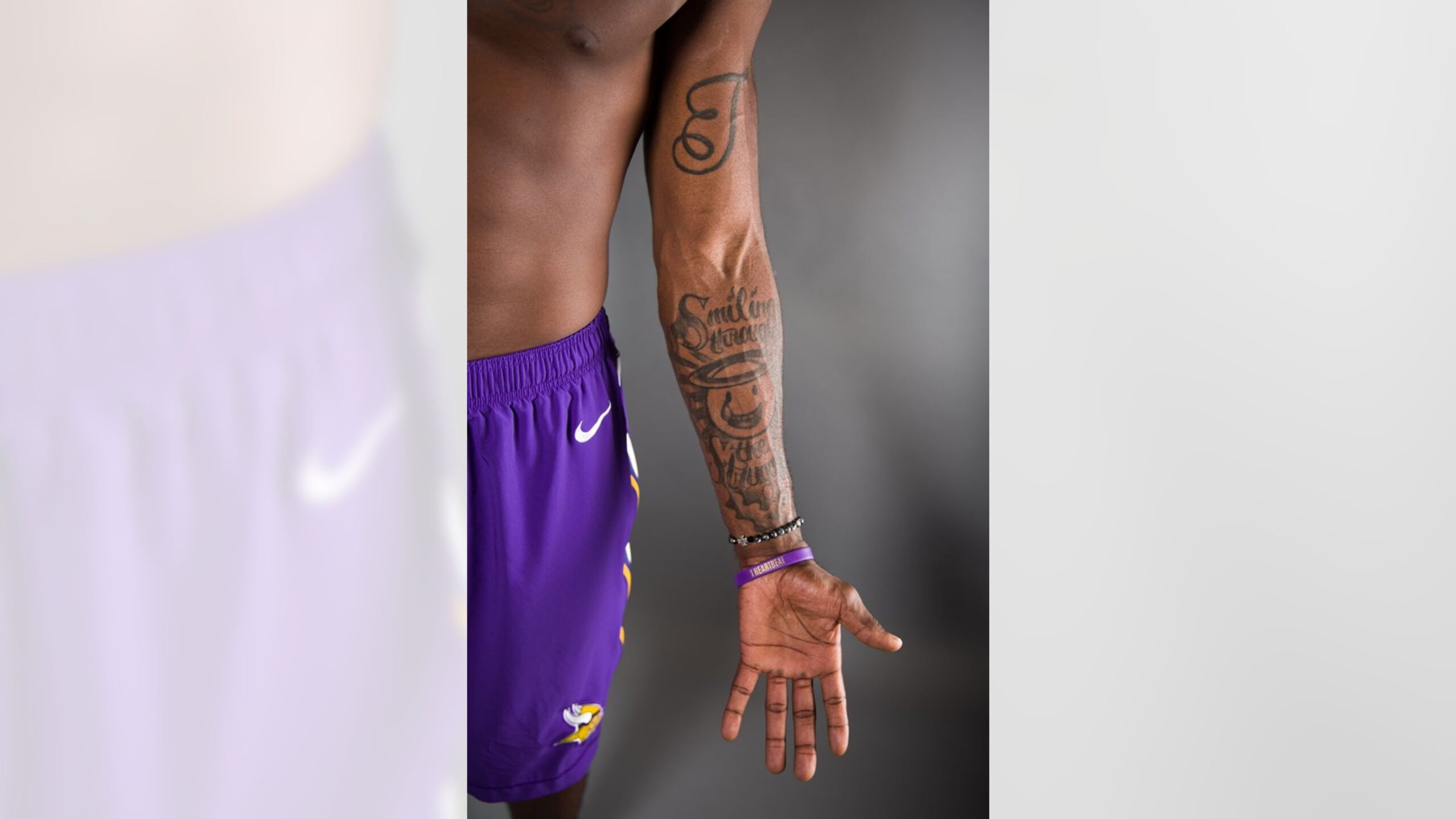
The first close view shows the right-arm lettering
The second photograph narrows the view to Treadwell’s right side. A tall outlined symbol sits high on the arm, with several bands of script-like lettering below it. The lines are dark and compact, and the surrounding skin remains visible, so the piece does not read as a solid blackout. The framing also captures part of the chest and the hand, linking the arm detail to the larger arrangement.
The official gallery does not attach a specific meaning to every visible word or mark. Its broader description says the collection includes family and faith themes, but the photograph itself is the reliable evidence for placement and appearance. The vertical orientation of the upper-arm element is especially clear in this close view, as is the way the lettering follows the length of the limb.
The color crop clarifies the upper-arm linework
A color version of the arm photograph removes the distraction of the purple shorts and concentrates attention on line, contrast, and placement. The outlined upper-arm symbol becomes easier to separate from the shaded lettering below it. The image also shows how the tattooed area stops and starts around the arm’s natural contours, with open skin breaking up the darker passages.
This frame matters because it is a distinct photograph, not a generic stock image or an unrelated football portrait. It records the same tattoo area with a different tonal treatment and a slightly different visual emphasis. The change in framing does not change the design, but it makes the structure of the ink more legible.
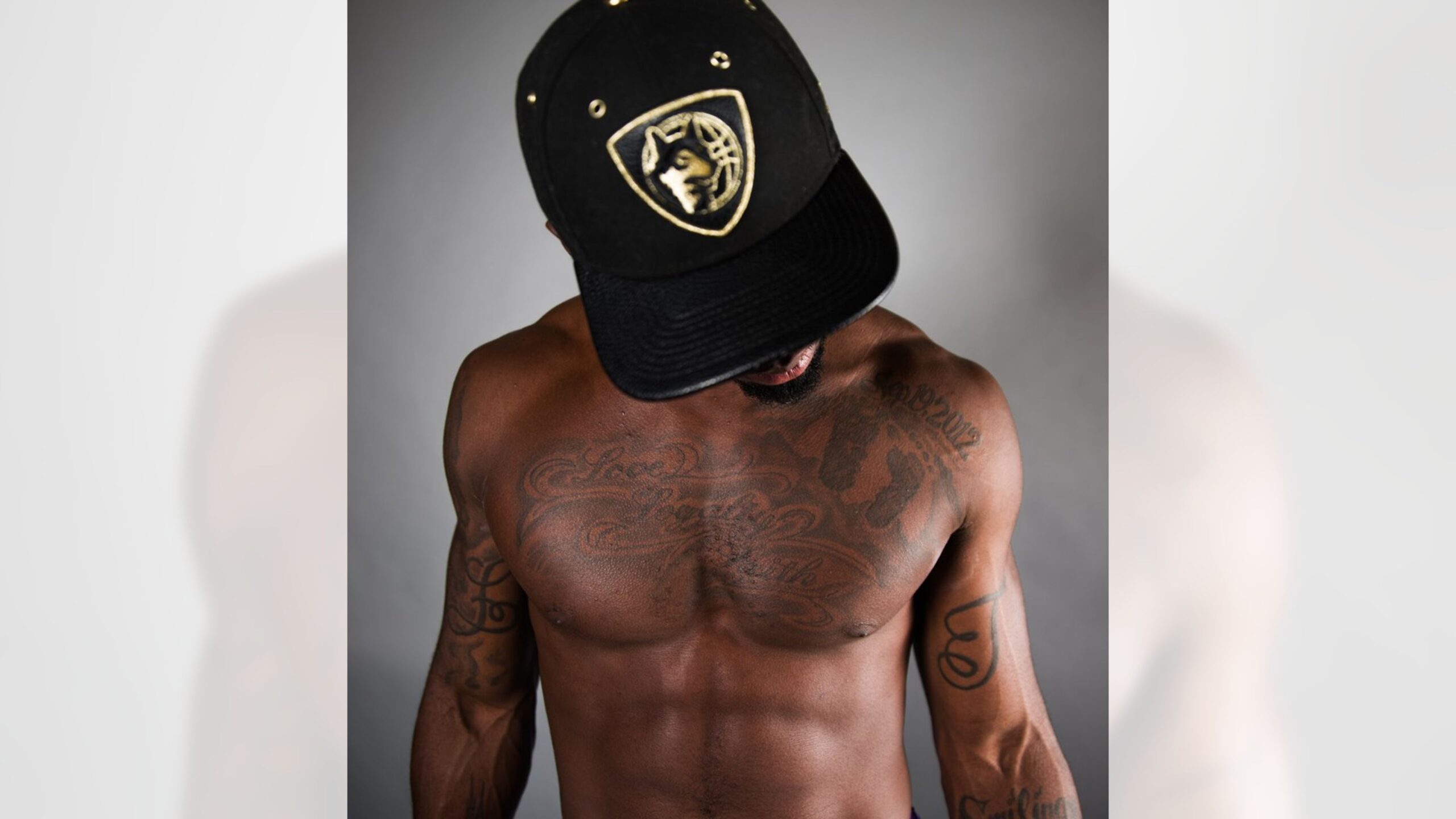
The chest composition is the gallery’s most prominent field of ink
In the fourth image, Treadwell looks downward and the chest becomes the dominant feature. The artwork spreads across the pectoral area in a dense arrangement of dark outlines, gray shading, and lighter gaps. The exact motifs are not named in the gallery caption, so the safest description is visual: the chest piece contains several connected forms rather than one simple emblem.
The image also shows smaller and larger tattoos working together. The upper arms frame the chest, while the lower edge of the composition disappears toward the bottom of the crop. Because the pose is angled, the photograph reveals depth that is less obvious in the front-facing frames. The chest work follows the curve of the torso instead of reading like a flat rectangle placed on top of it.
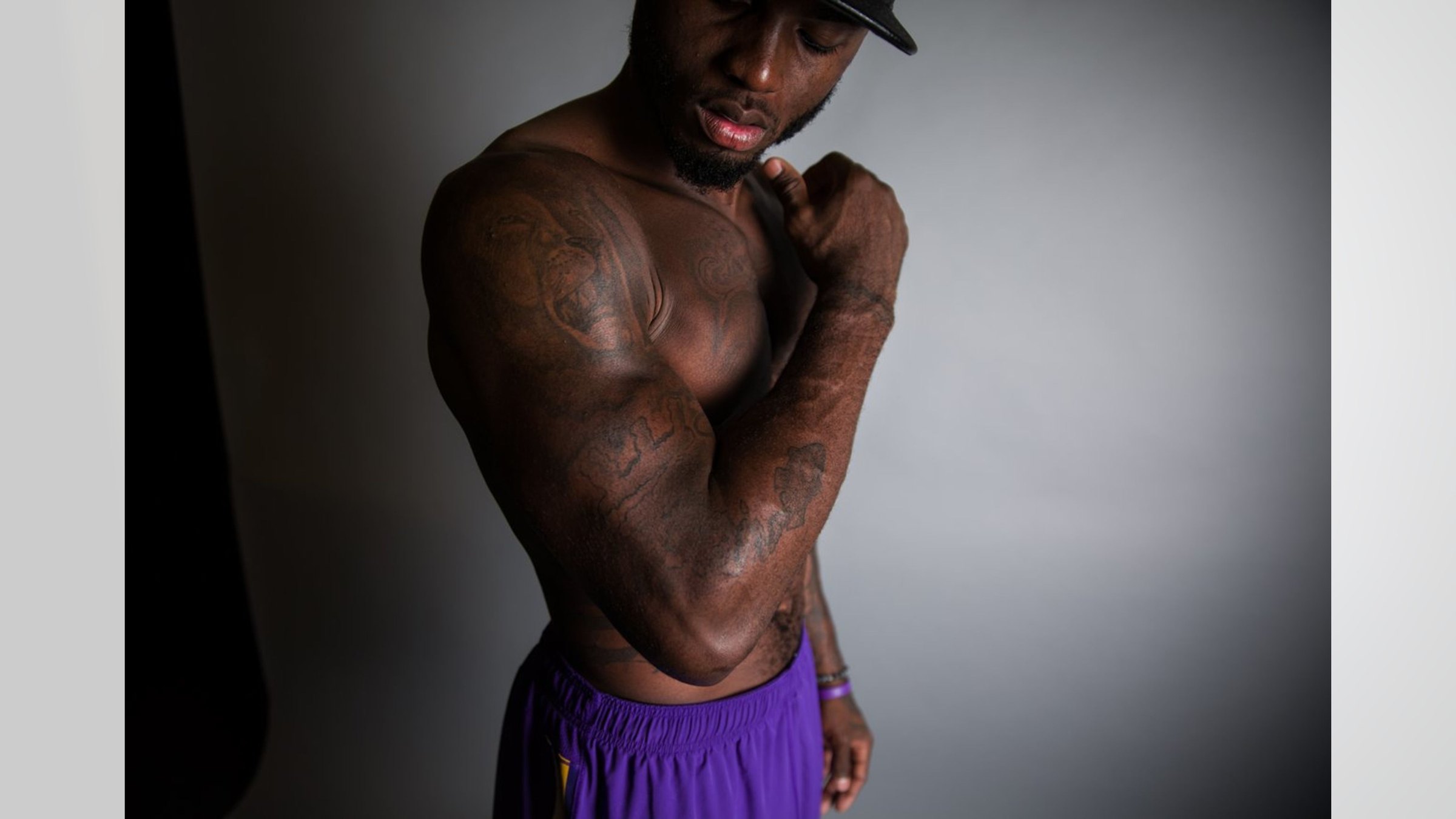
A downward portrait keeps both arm tattoos in view
The fifth photograph uses a similar downward gaze but a wider composition. Both arms are visible, and the chest artwork sits between them as a central anchor. The large shaded areas on the arms do not perfectly mirror one another. Instead, each side contains its own group of shapes and lettering, giving the collection an assembled, personal quality.
Placement is the clearest story in this frame. The ink travels from shoulder to upper arm, then meets the chest work at the front of the body. The official gallery’s text connects Treadwell’s body art with family, faith, and football, but the image itself is most useful for understanding the visual relationship between those zones.
The front-facing studio frame shows how the tattoos sit together
Treadwell faces the camera in this portrait, with his face unobscured and the tattoos exposed across his chest and upper arms. The central chest artwork appears as a broad field of layered marks, while the arms carry denser vertical pieces. The clear front angle makes it possible to compare the symmetry of the composition without implying that the designs are identical on each side.
The image is also important for identity context. His face is visible, his body is fully consistent with the other official photographs, and the studio setting matches the rest of the Purple Ink sequence. It functions as a genuine tattoo photograph rather than a substitute portrait inserted only to fill an image slot.
The color portrait separates linework from the jersey context
The color front portrait changes the emphasis again. With the color front portrait, the eye moves across the tattoo edges and the tonal differences between chest shading, arm lettering, and open skin. The upper-arm symbols stand out as separate marks, while the chest appears more continuous because the shadows around it are deeper.
There is no need to invent a story for each shape. The official Vikings gallery provides the subject, the tattoo context, and the photographs. What remains visible is enough to describe the collection accurately: extensive work across the torso, separate lettering and symbols on the arms, and a chest composition that dominates the front of the body.
The side pose reveals the continuous arm coverage
From the side, the outer arm becomes the focal point. The pose shows how a large piece wraps around the shoulder and continues down the upper arm. The chest artwork is still visible at the edge of the frame, which helps explain how the tattoos connect visually without claiming that every section was completed as one session.
The purple shorts provide a strong color contrast against the skin and dark ink, while the studio shadow isolates the silhouette. The photograph also makes the arm lettering easier to read as a vertical design element. It is a different perspective from the front portraits, so the body placement is not being represented by repeated copies of the same crop.
The alternate angle brings the shoulder and chest into focus
This color photograph turns Treadwell slightly toward the camera and brings the shoulder forward. The tattoo work at the top of the arm appears denser than the chest’s central field, with dark passages and lighter linework layered together. The pose shows how the shoulder piece changes shape as it meets the upper chest.
The gallery’s visual evidence supports a collection of distinct placements: chest, shoulder, outer arm, and vertical torso lettering. The official text supplies broad themes, including family, faith, and football, but does not assign every visible mark to one of those categories. The description therefore keeps the documented meaning separate from the visual analysis.
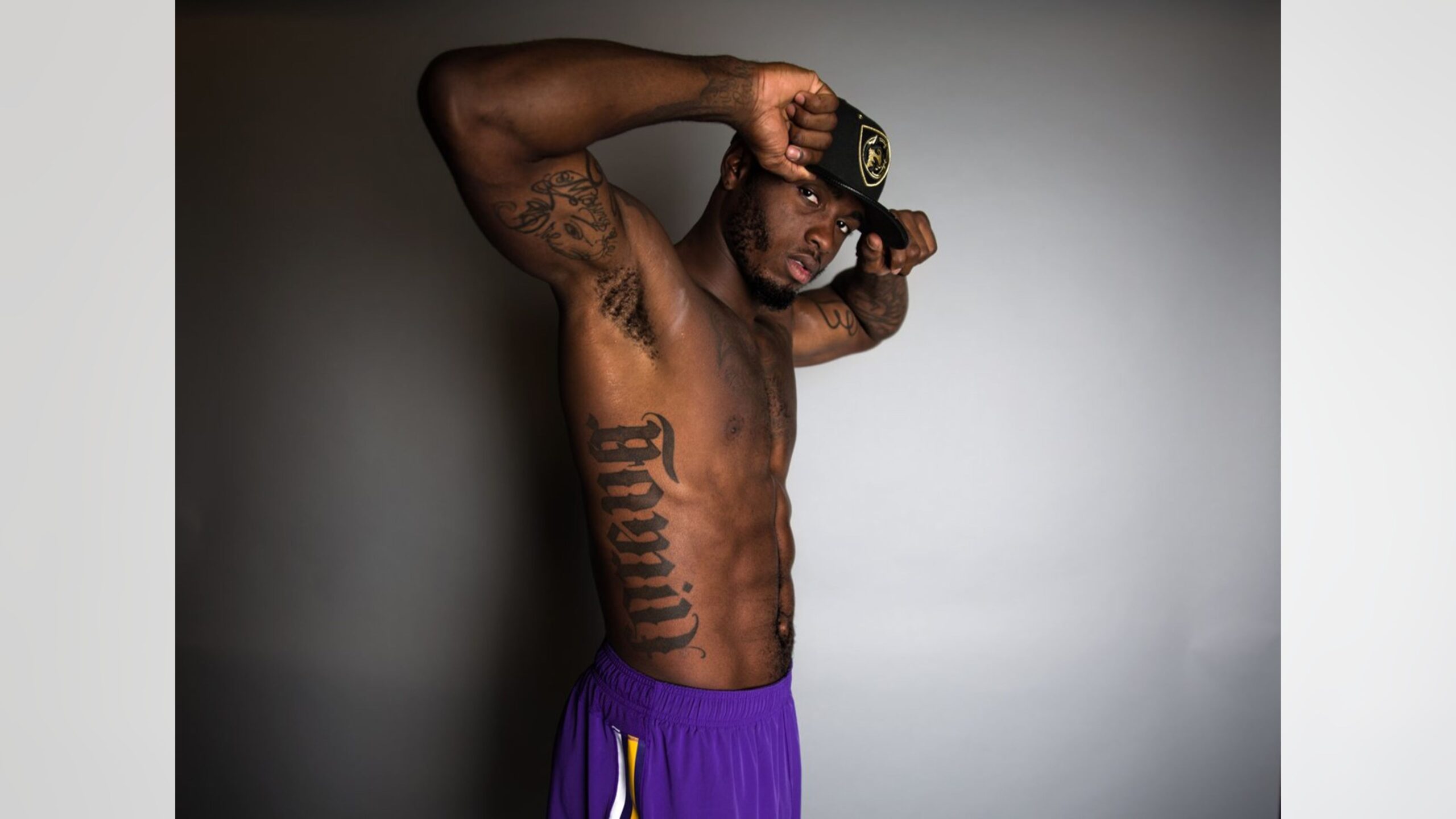
The side-body frame exposes the vertical lettering along his torso
The tenth frame is one of the clearest views of a tall lettering element running down Treadwell’s side. The letters or symbols are arranged vertically, following the length of the torso rather than sitting horizontally across it. The arm remains heavily tattooed, and the chest piece bends out of view as the body turns away from the camera.
This placement gives the collection a strong directional feature. Most of the front-facing images are organized around the chest, but the side view reveals that the tattoo story continues beyond the central panel. The design is visible without requiring a guess about its exact wording, so the official photograph can carry the description on its own.
The second color side frame shows the torso lettering
The color side portrait repeats the angle with a different tonal treatment. The vertical torso lettering remains the dominant feature, while the arm and shoulder work appear as a darker continuous mass. The shift in color treatment makes the silhouette and spacing easier to compare with the earlier side photograph.
Seen together, the color and color side frames show why the official gallery contains multiple photographs of the same subject. They are not interchangeable filler. Each view exposes a separate relationship between the ink and the body, with the side pose documenting lettering and wraparound coverage that the front portraits cannot show clearly.
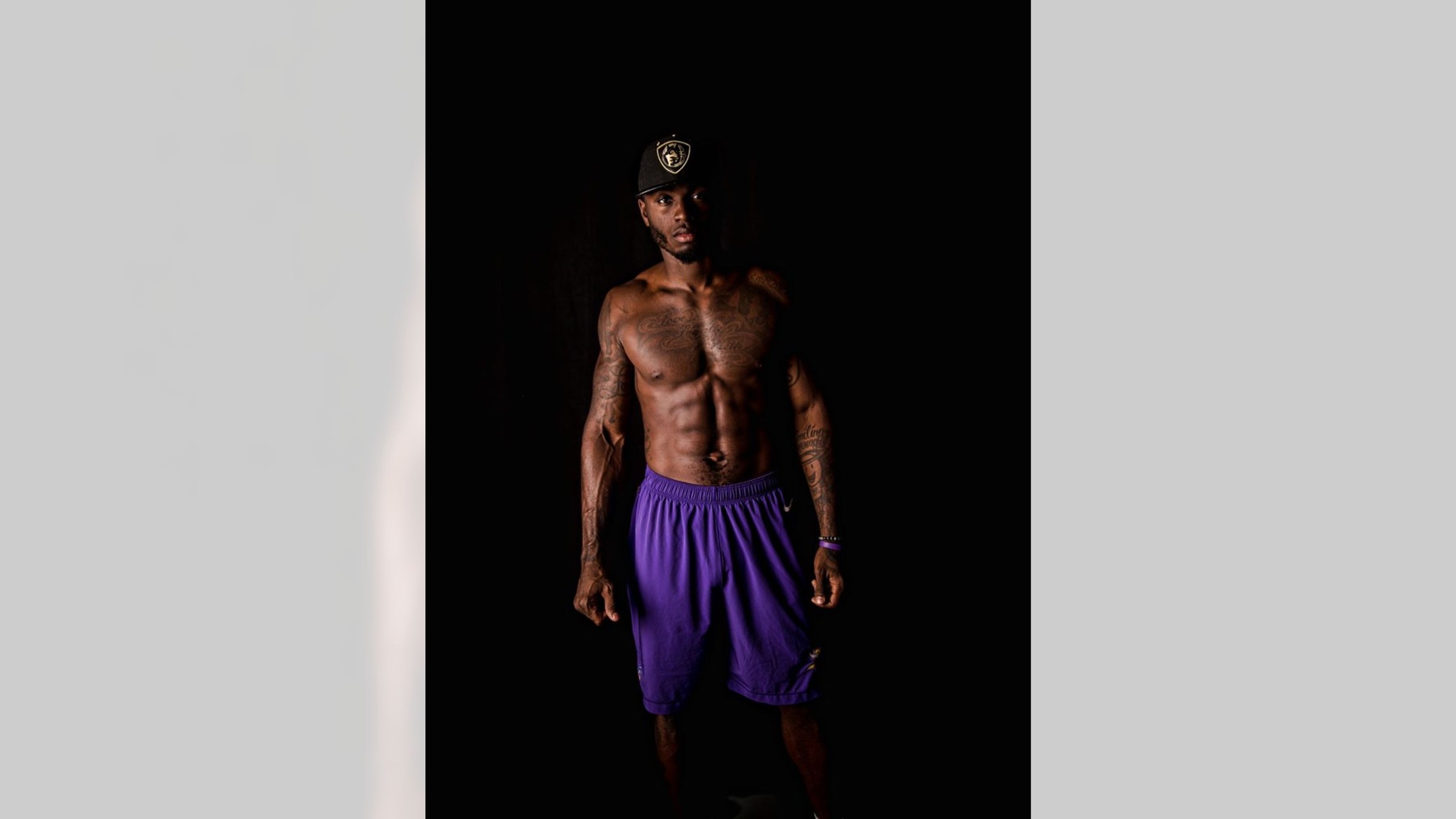
The standing portrait shows the tattoos as part of his public image
The full standing photograph places Treadwell’s tattooed body in a football portrait rather than a close-up. The chest and arms remain visible, but the image also shows his stance, clothing, and proportions. The ink is part of the identity the official gallery is presenting, not a hidden detail that appears only when the camera crops tightly.
The frame supports the broader context supplied by the Vikings: Treadwell’s tattoos are connected to the memories, people, and sport that have shaped his career. The photograph does not identify a particular family name or faith symbol, so those details stay with the written source rather than being assigned to an unlabelled shape.
The final gallery photograph returns to the shoulder and upper arm
The closing image returns to a close, angled view of the shoulder and upper arm. The lighting picks up the texture of the ink and the way darker shapes sit beside unmarked skin. The chest is partly visible, creating a visual bridge to the earlier front-facing photographs.
The official gallery ends where the visual story began: with the scale and texture of Treadwell’s real tattoos. Across thirteen photographs, the collection is shown from front, side, close, full-body, color, and color perspectives. That range makes the tattoos understandable as actual body art with changing contours, rather than as a list of disconnected names.
The source’s broader account of the collection
The Vikings describe the Purple Ink feature as an up-close look at Treadwell’s tattoos. The accompanying material identifies family, faith, football memories, and personal interests as recurring subjects in his body art. It specifically notes that the gallery includes imagery connected with family references and football, while the photographs show the chest, arms, shoulder, and torso placements.
That distinction between documented explanation and visual observation matters. The source supports the themes at the collection level, but it does not provide a caption naming every design in each photograph. The most reliable account therefore combines the source’s broad meaning with the photographs’ clear evidence of scale, placement, lettering, shading, and composition.
The gallery as a visual record
Treadwell’s gallery stands out because it gives the tattoos room to be seen from several distances. The full-body images establish coverage, the arm close-ups reveal lettering and symbols, the chest portraits show the central composition, and the side photographs expose the vertical torso element. The color frames add contrast without pretending to document different designs.
The result is a coherent visual record of a collection built over time. Family, faith, football, and personal interests are the themes the official source supplies. The photographs add the physical details: dark linework, broad chest shading, upper-arm symbols, separate script, and ink that follows the changing planes of Treadwell’s body.
Closing summary of the documented collection
Laquon Treadwell’s tattoos cover the chest, shoulders, arms, and torso with a mix of broad shaded compositions, outlined symbols, dense lettering, and smaller connecting pieces. The Vikings’ official gallery documents those tattoos in thirteen distinct photographs, while its editorial text places the collection within themes of family, faith, football, and personal history.
The images show the collection as it exists on Treadwell’s body: layered, directional, and visible from more than one angle. A separate official portrait confirms his identity, but the tattoo photographs remain the heart of the record. Together they provide a grounded look at the scale, placement, and visual character of his ink.
Sources for the documented tattoos
The primary source is the Minnesota Vikings’ official Purple Ink Extra photo gallery, which presents thirteen photographs of Treadwell’s tattoos. The Vikings’ player and video pages provide independent identity and career context. The related video is included below because it identifies Treadwell in official Vikings media, while the gallery remains the source for the tattoo photographs.
Official Vikings video: Laquon Treadwell highlights.