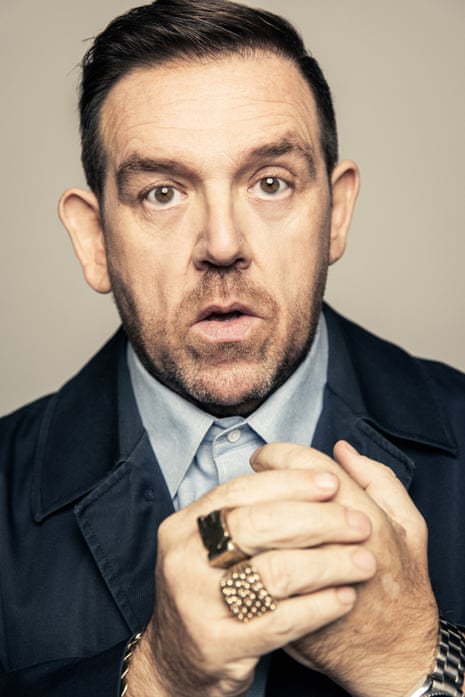
Nick Frost has described his tattoos as a “suit of armor.” The clearest named piece is a rough forearm inscription: “Poor Old Me.” Interviews place the larger collection in the years after his father died, while photos show broad coverage across his arms and upper body. They do not explain every design.
Nick Frost’s Poor Old Me forearm script
The Observer describes the lettering as wobbly and ink-black. Frost said it reminds him to count his blessings, despite the blunt wording. In the same conversation, he mentioned a San Quentin sketchbook and said the worse its drawings looked, the better.
An Observer portrait shows his tattooed forearm and wrist, but the letters are not clear enough to read in the photo. The interview is the source for the exact phrase.
Nick Frost’s tattooed arms and upper body
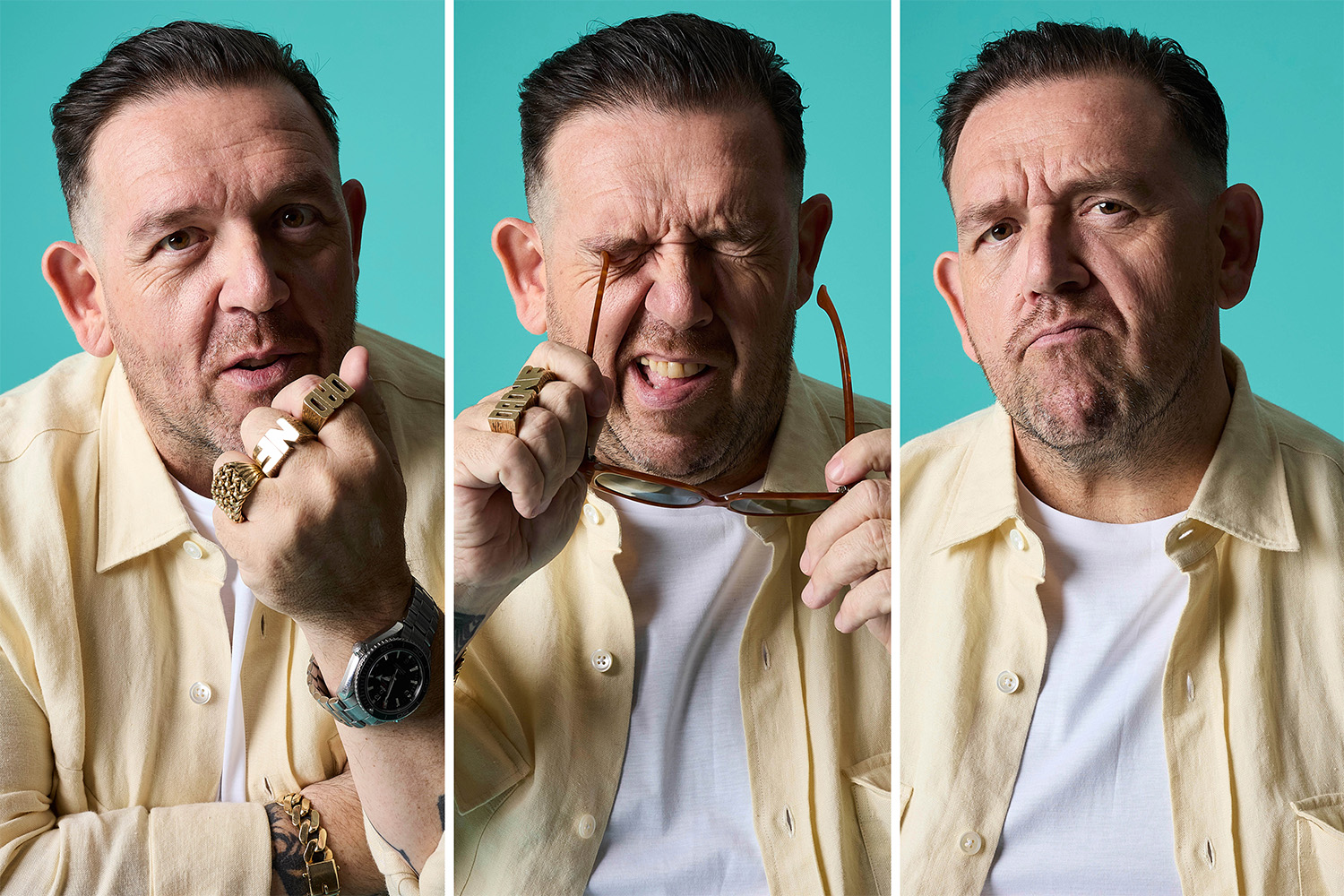
A Yahoo two-panel portrait shows one forearm close to the camera and both arms beneath short sleeves in the standing panel. The Guardian reported that Frost’s “whole top and arms” were covered by age 53; the photos show lettering, dark filled areas and lighter skin breaks rather than one uniform sleeve.
Frost told the Guardian that after his father died, tattooing helped him turn spiritual pain into physical pain. He also described the ink as armor. He has not given a separate meaning for each visible mark.
The black-ink arm coverage in Nick Frost’s portraits
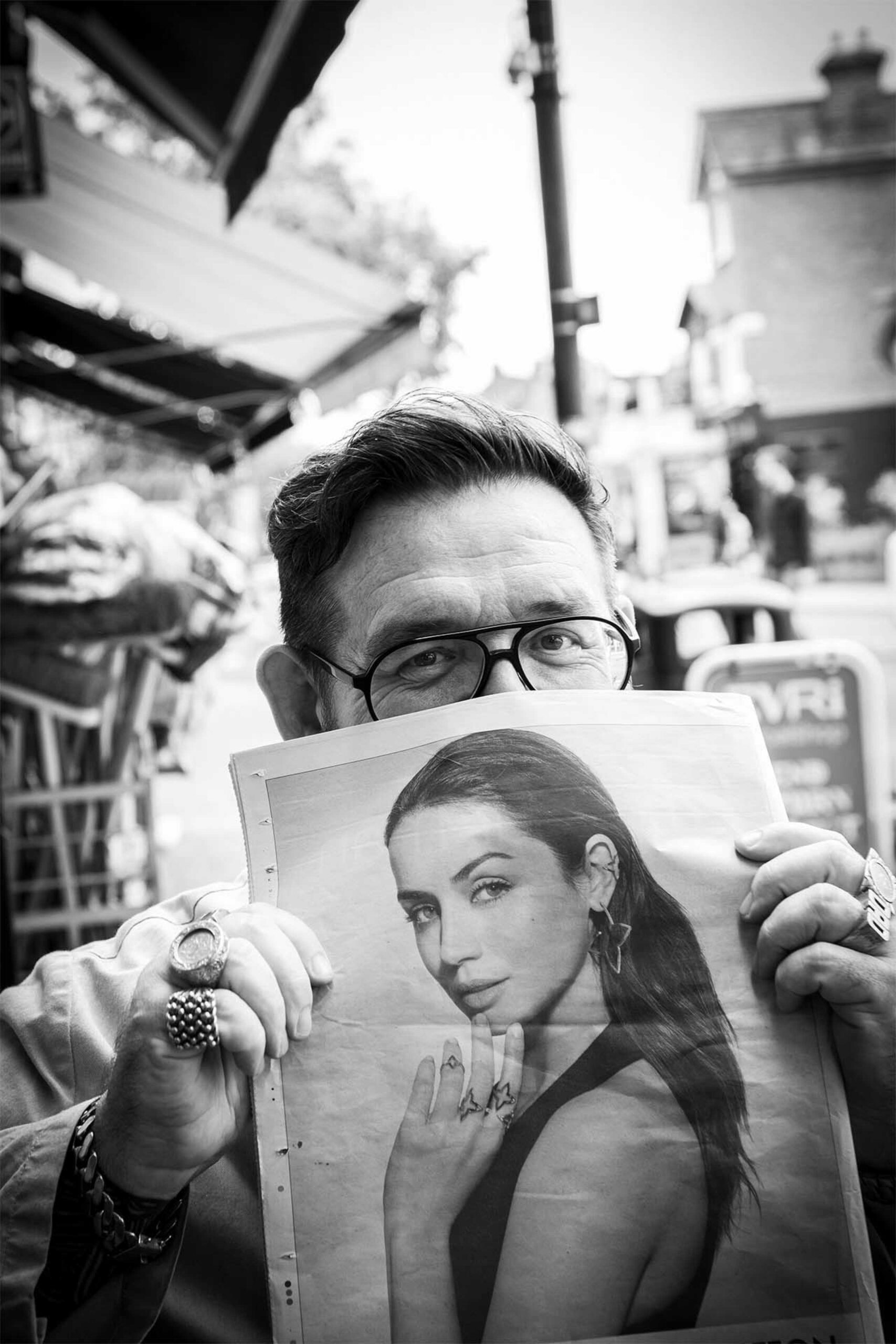
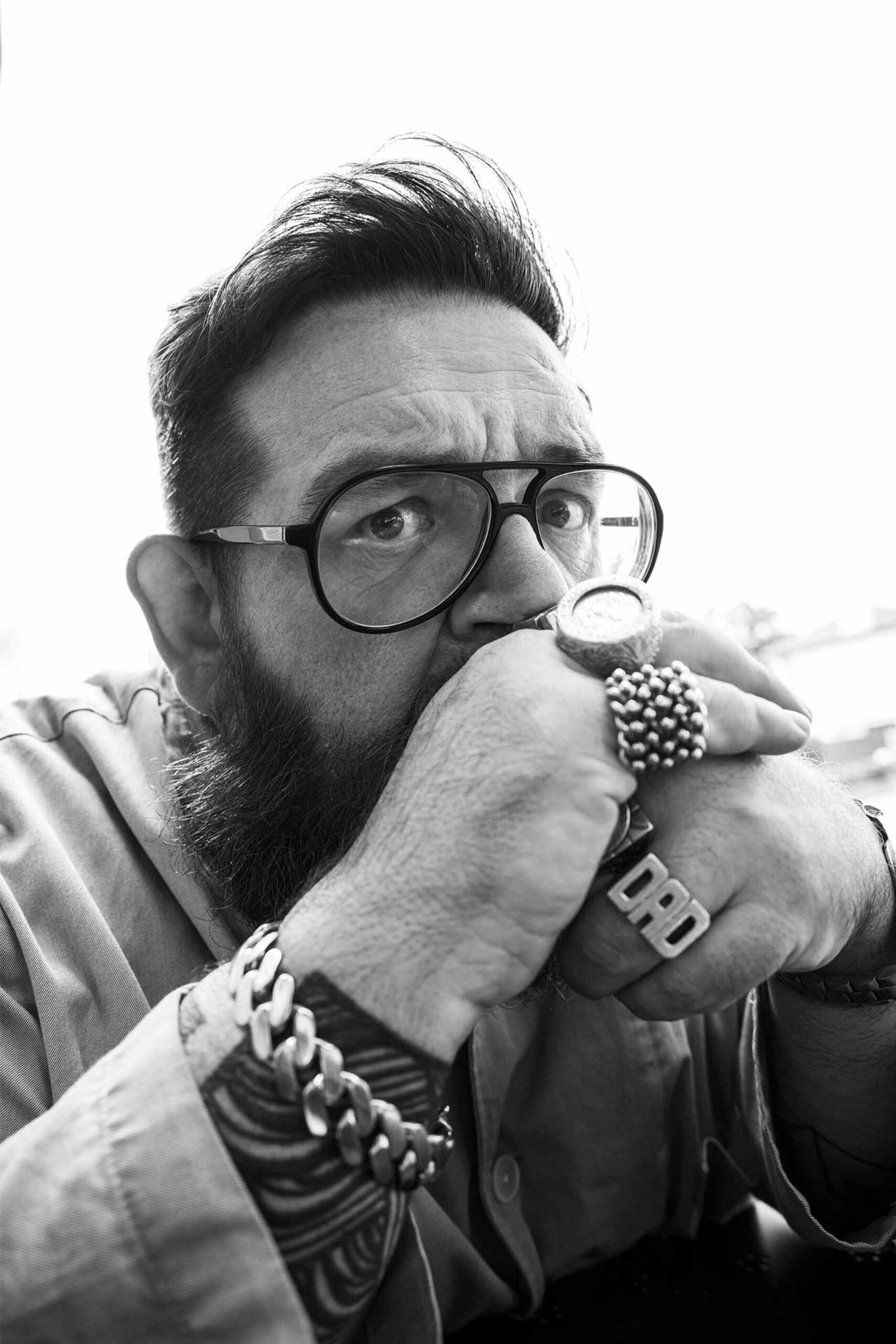
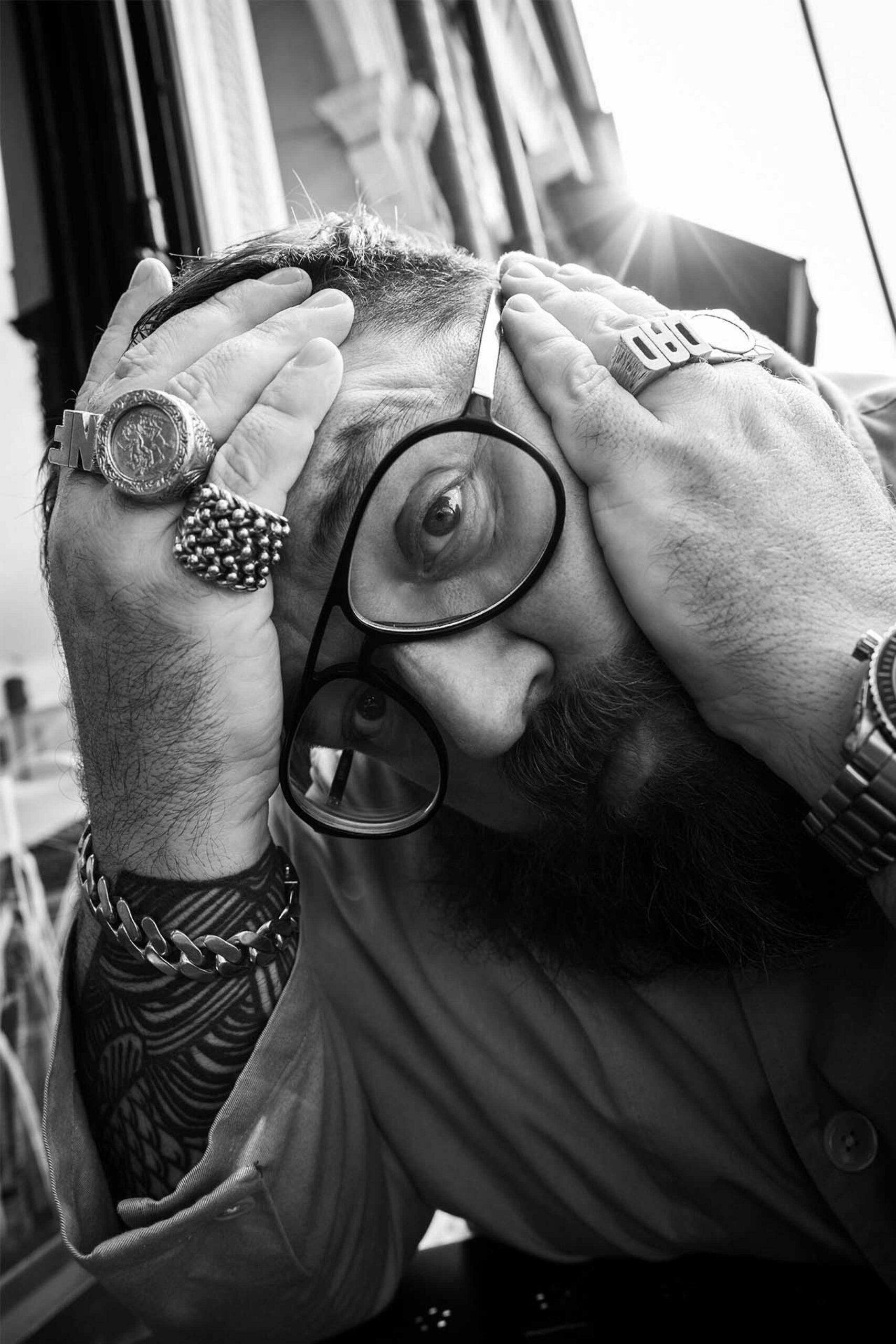
Perry Curties’s black-and-white portrait catches Frost holding the collar of a dark jacket, with both forearms exposed. One arm has a large filled section; the other carries separate shapes and lettering. The monochrome image makes the dark areas and lighter gaps easy to distinguish.
The portrait gives a clear view of density and placement, but it does not identify the designs or date them. It shows separate pieces gathered across both arms.
The forearm tattoos visible beneath Nick Frost’s sleeves
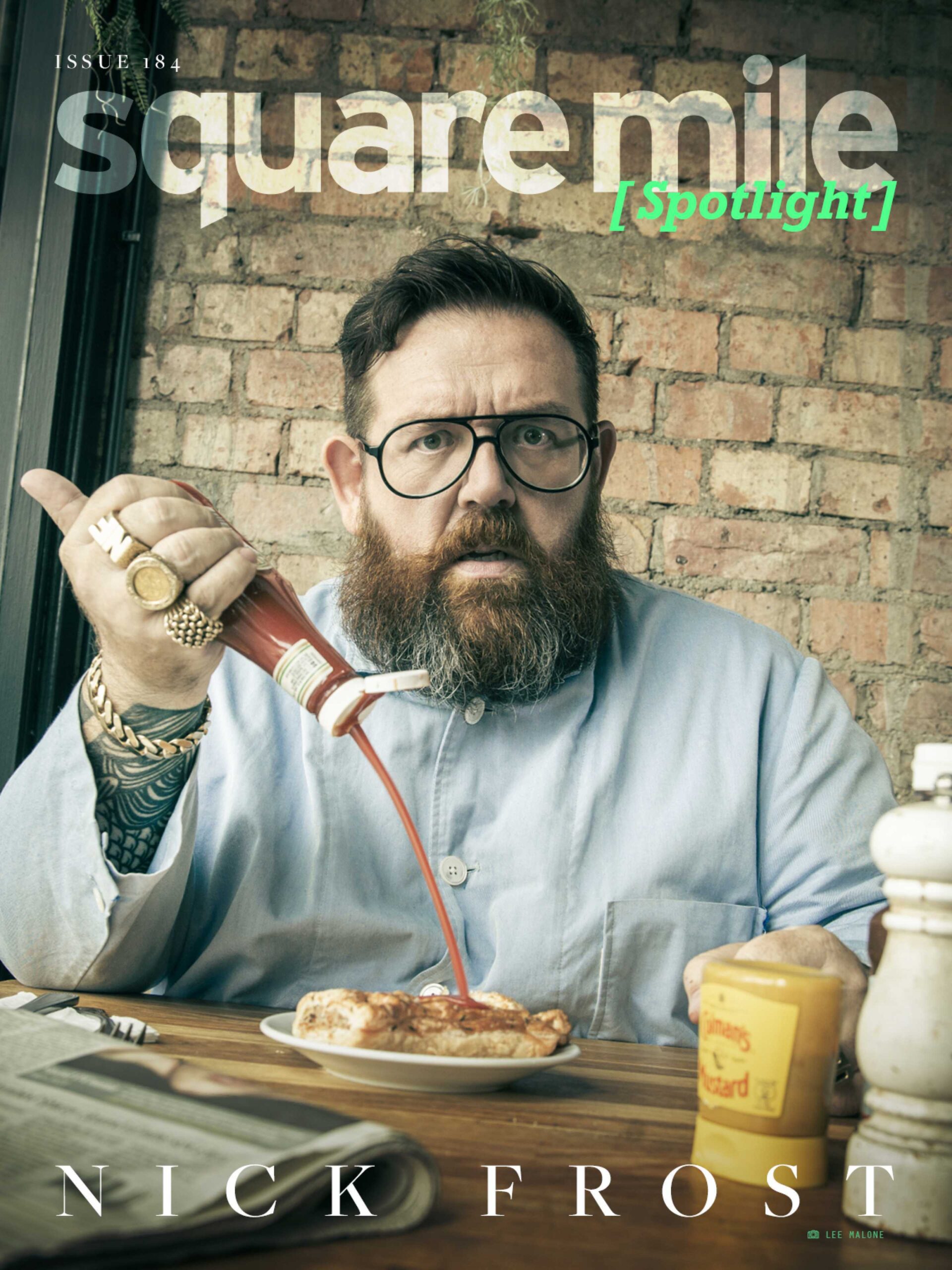
Square Mile’s portrait for Frost’s recipe-memoir coverage shows one tattooed forearm beneath a rolled sleeve, beside his glasses and watch. A broad dark area runs along the lower arm, while finer lines are hard to make out.
This is a separate visual record from The Observer’s named script and The Guardian’s timeline. It shows where the ink sits, but not who made the other pieces or what they mean.
The shoulder and chest tattoos in Nick Frost’s documented images
Another portrait shows Frost’s face along with dark tattoos across both shoulders and his upper chest. Shaded shapes meet around the collarbone; the photo records the extent of the coverage, not an identifiable motif.
The available interviews do not name these pieces or assign meanings to them. Their placement is as far as the record goes.
The documented timeline
Frost said he got his first tattoo at 20, then went years without adding more. He resumed after his father’s death, when he was about 39 or 40; The Observer described that return as compulsive. By 53, The Guardian reported, his arms and upper body were covered.
The accounts describe an early start, a long pause and a later expansion. They do not date each piece, so the photos cannot place every design within that sequence.
What the interviews establish
The Observer gives the wording and meaning of “Poor Old Me.” The Guardian supplies the bereavement context, Frost’s “suit of armor” description and the scale of the coverage. The five photos add different views: the Observer forearm portrait, Yahoo’s two-panel image, Perry Curties’s black-and-white shot, Square Mile’s rolled-sleeve portrait and the shoulder-and-chest picture.
Together, the sources confirm one named tattoo and extensive visible ink, not a complete inventory of designs, dates or artists. Beyond the phrase and Frost’s broad description of the collection, the other pieces remain unexplained in the available interviews.