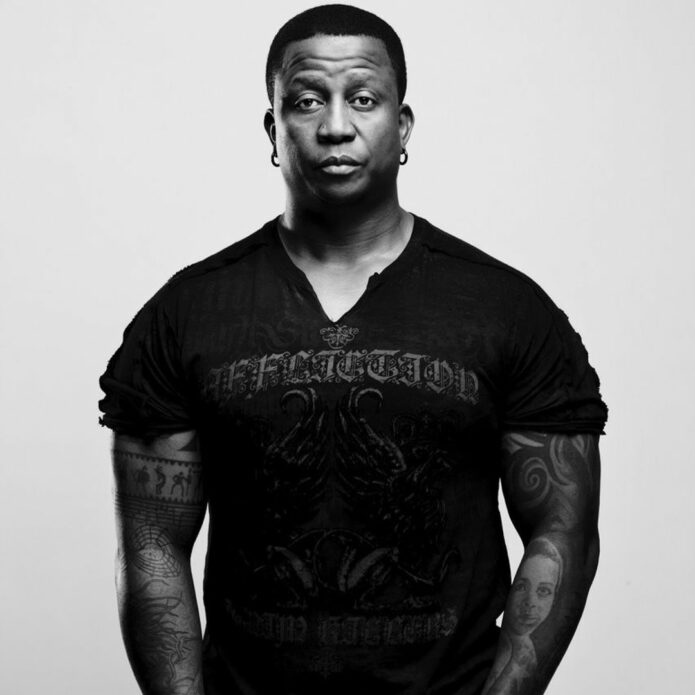
DJ Fresh’s tattoos form a visual record of family, history, faith and African identity. The South African broadcaster, producer and DJ has described a collection that reaches across both arms, his legs and his back, leaving no simple number to attach to it. The most distinctive piece is an outline of the African continent across his back, filled with portraits of people who matter to him and figures he regards as important to African history. His sleeves carry another layer of imagery, while a panther on the upper arm marks the beginning of his tattoo history.
DJ Fresh’s panther tattoo began the collection
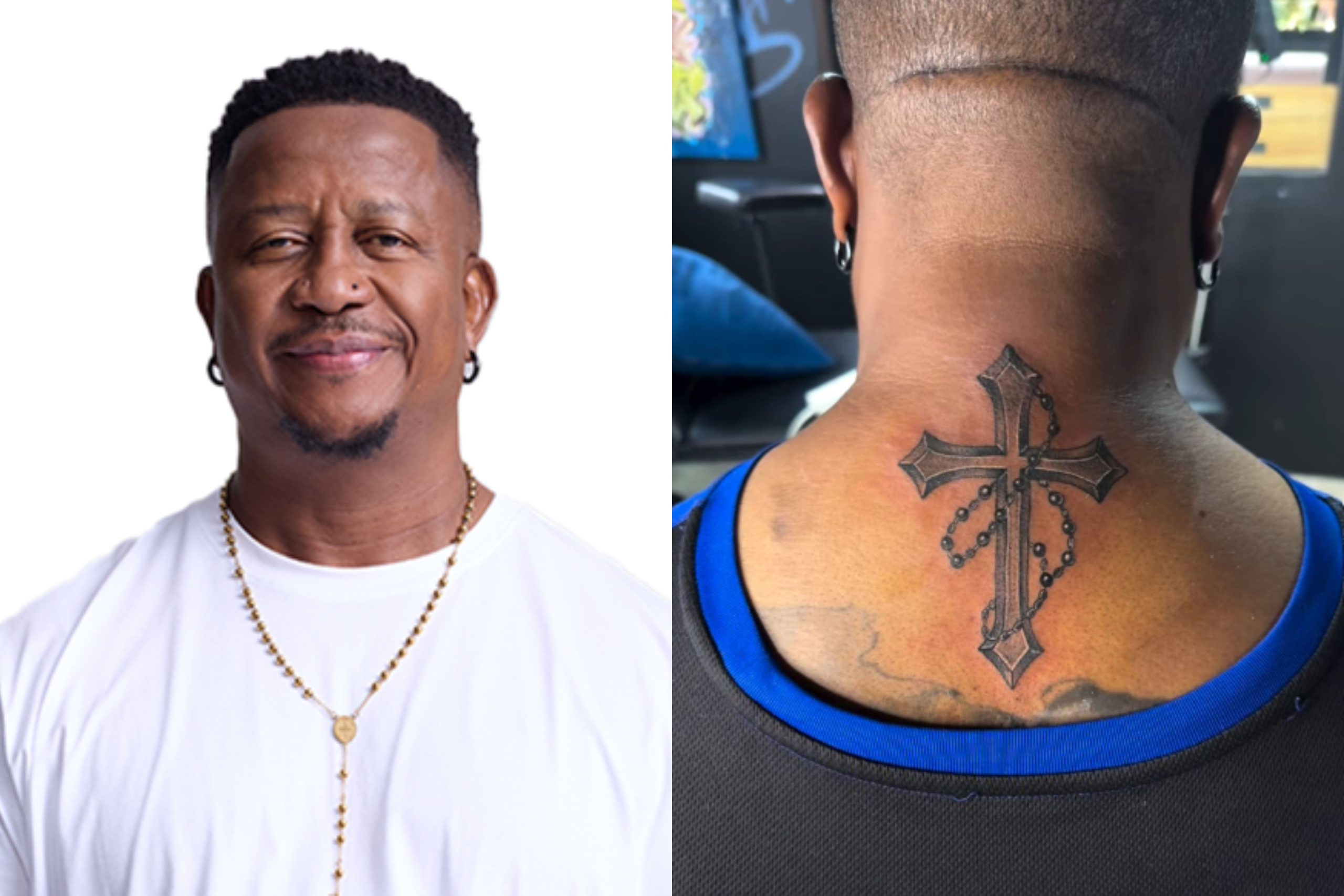
DJ Fresh’s first tattoo was a black panther on his upper arm. In the Kaya 959 account of his tattoo history, he connects the piece to fellow broadcaster Thomas Msengana, who had received a matching panther in 1997. Fresh got his version at the beginning of 1998, turning a shared idea into the first mark in a collection that would eventually cover much of his body.
The panther is more than an early piece that survived as the rest of the collection grew. Fresh said the design was connected to the Black Panther movement and its history of resistance to racial segregation in the United States. That explanation gives the upper-arm tattoo a political and historical context that sits beside its animal form. The image itself is compact and dark, while its stated association reaches beyond a simple symbol of strength.
Fresh has also joked about the difference between his panther and Msengana’s version, saying that his looked healthier. The remark gives the origin story a distinctly personal tone. It places the tattoo inside a friendship and a period of shared broadcasting, rather than presenting it as an isolated decision. The upper-arm placement also became the starting point for the dense sleeve work that now surrounds it.
The African map across DJ Fresh’s back
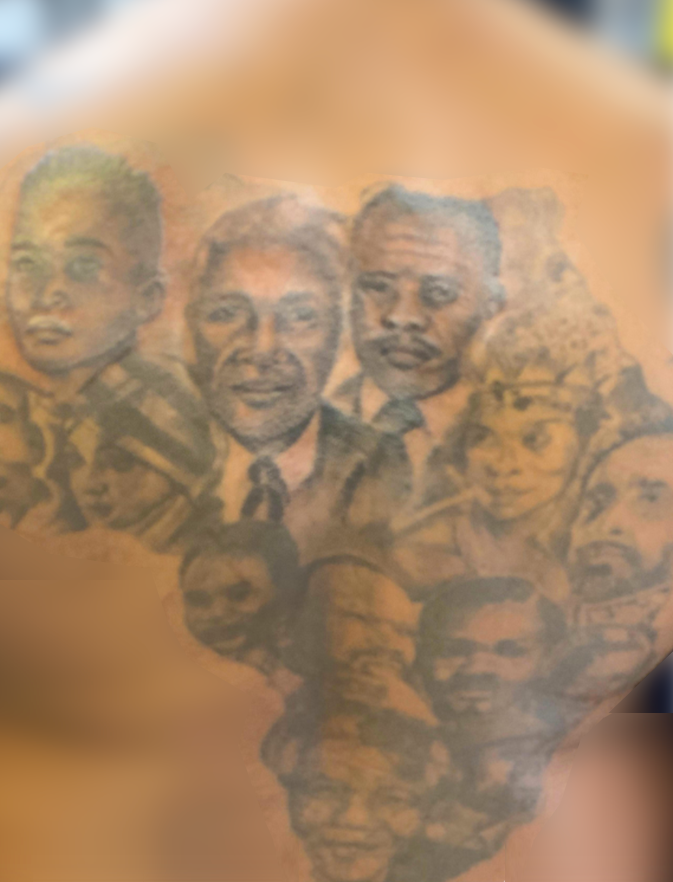
The largest and most meaningful centrepiece in DJ Fresh’s documented collection is an outline of Africa across his back. The map acts as a frame for a montage of faces, turning the tattoo into a portrait gallery rather than a single outline. Daily Sun reported that the early composition included his son Lefika, his late grandfather Kgosi Mmipi and former Botswana president Quett Ketumile Joni Masire. Nelson Mandela also appears within the continent, linking family memory with public history.
The back tattoo has continued to change as Fresh adds new faces. Daily Sun reported that he visited tattoo artist Juan-Pierre Le Roux at RisingDragon Tattoo and Piercing to add Winnie Madikizela-Mandela. The article described the new portrait as another part of a map of people Fresh considers important. The addition does not replace the earlier images. It expands the internal gallery and gives the outline of Africa a continuing narrative.
Photographs of the back show how the design works as a single composition. The continent is readable from a distance, but the interior portraits create a much denser surface when viewed closely. The faces sit inside the map instead of around it, so geography and biography occupy the same space. The tattoo is therefore both a large black outline and a collection of individual likenesses, with the border holding the portraits together.
The African map is the clearest expression of DJ Fresh’s tattoo language: a broad visual structure containing specific people, places and memories. Its subject is not abstract. The named portraits connect the image to his family, Botswana, South Africa and the wider history of the continent. Fresh’s own descriptions keep the meaning grounded in those documented relationships.
Portraits, faces and family history in the body art
The close photographs of DJ Fresh’s torso show why his back tattoo cannot be reduced to one emblem. The faces are arranged in a montage, with different expressions and levels of detail visible across the skin. Some portraits read clearly in the supplied images, while others soften into the larger field of shading. The changing focus is part of the design’s character: the back functions like a collection of connected portraits rather than a flat graphic.
Family is central to that arrangement. Fresh’s son Lefika appears among the faces, and his late grandfather Kgosi Mmipi is another named subject. Their presence changes the emotional scale of the tattoo. The design is not only a list of famous figures. It places private family memory alongside presidents, national leaders and cultural heroes, allowing the back to carry both intimate and public histories.
The portrait work also shows a preference for recognisable faces instead of anonymous decorative figures. The people named in the reporting are not incidental details. They explain why the map contains a human gallery and why new additions have been treated as chapters in an ongoing story. The faces turn the back into a piece of personal history that can expand as Fresh’s understanding of his heroes and family develops.
Fresh has said that every tattoo represents a chapter of his life, his values, the people he loves or the causes he believes in. That statement fits the portrait montage closely. The image does not require an invented explanation for every line because the published accounts already identify the people and the relationships that matter most.
The full sleeves and the visible arm language
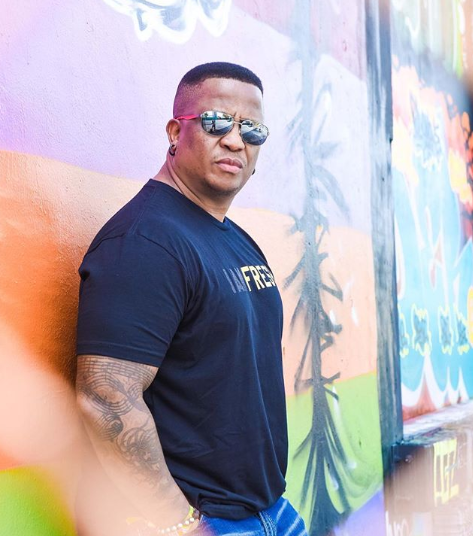
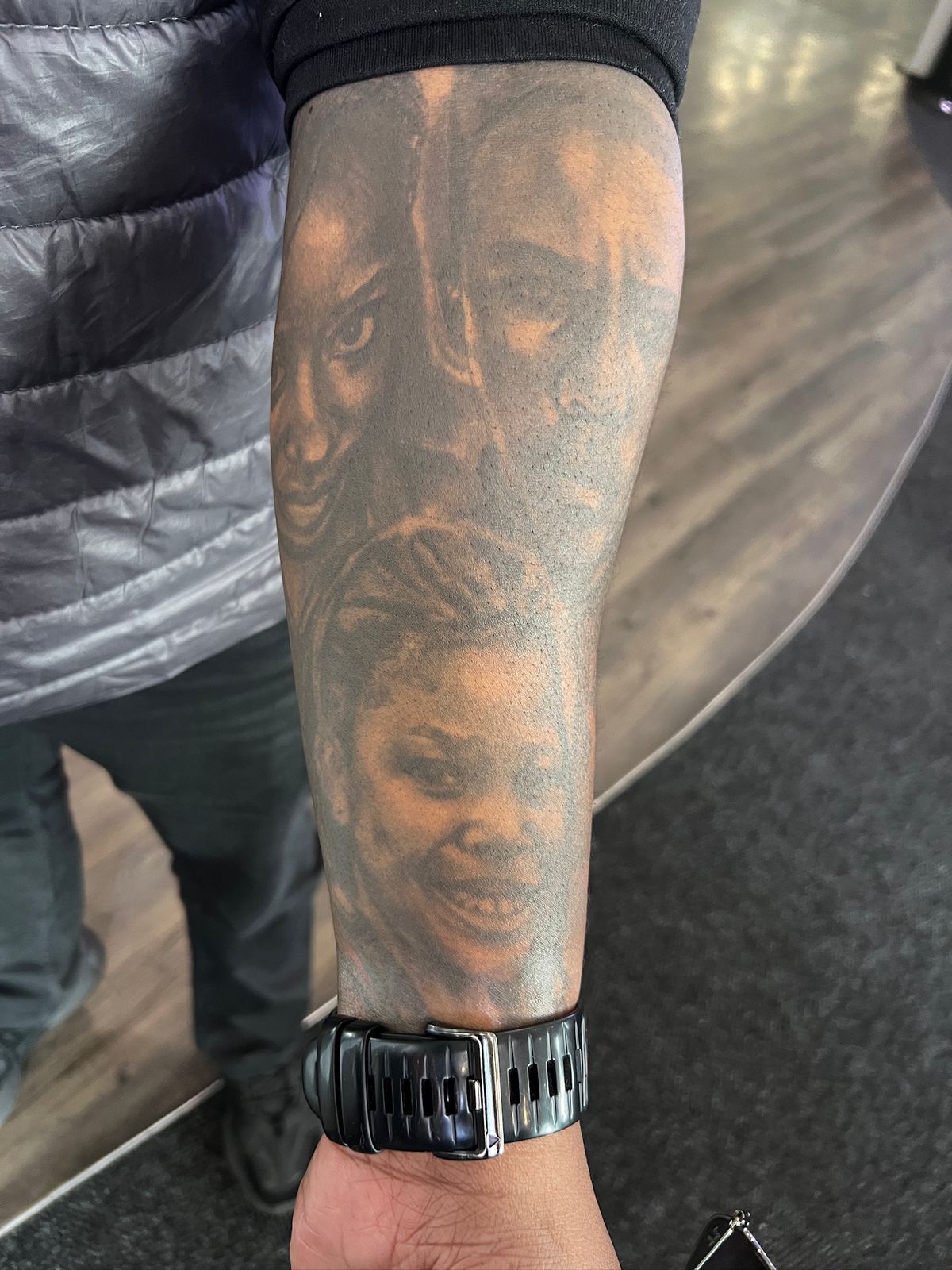
Fresh’s arms are covered in full sleeves, and the tattoo photographs show a mixture of bands, portraits, curved forms and dense black-and-grey shading. The arm work has a different rhythm from the back map. Instead of one continent holding a set of faces, the sleeves move around the arms in layers. Some sections appear as geometric or patterned bands, while others contain faces and illustrative forms that become clearer in close photographs.
The Daily Sun image shows Fresh in a black T-shirt with the tattooed arm exposed against a colourful wall. The visible sleeve follows the arm from the upper section toward the forearm, with dark linework and shaded shapes packed closely together. The photograph is not a catalogue of every symbol, but it confirms how much of the arm is covered and how the designs sit beside his jewellery and clothing.
The arm coverage also reveals how Fresh’s public image changes depending on the setting. A studio portrait can make the tattoos read as a deliberate part of his silhouette, while a radio or performance photograph may show only the lower arm or a small section beneath a sleeve. The collection remains identifiable across those views because the density of the ink and the exposed skin create a consistent visual pattern.
Fresh’s sleeves are built as accumulated surfaces rather than one isolated design. The panther marks the beginning of the story, but the surrounding work shows decades of additions. The published photographs support observations about coverage, shading and placement. They do not justify assigning a private meaning to every smaller mark, so those details remain visual rather than speculative.
The arm tattoos in older broadcast portraits
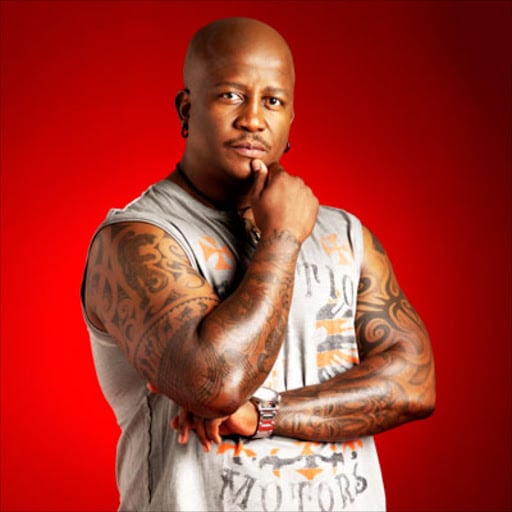
Older South African broadcast portraits show that Fresh’s arm tattoos have long been part of his public appearance. A Sowetan photograph from the period when he moved from 5FM to Metro FM shows both arms exposed in a sleeveless top. The ink is visible from the upper arms down toward the forearms, with contrasting bands and larger shaded areas creating a strong frame around the body.
The older image matters because it places the sleeve work within Fresh’s career history. The tattoos were not a recent visual change tied to a single album or television appearance. They were already part of the broadcaster’s identity during a major radio transition. The image pairs the tattoos with the relaxed, direct posture associated with his public portraits, making the arm work part of the person audiences recognised on air and in photographs.
The photograph also helps separate the arm collection from the back map. The back tattoo is a carefully framed portrait montage, while the sleeves appear more varied in scale and texture. Bands, curves and shaded blocks move around the arms, and the visible skin between areas allows individual parts to remain distinguishable. The difference between the two placements gives the full collection visual variety.
Fresh’s ink is therefore connected to both stillness and movement. In a seated or posed photograph, the arms create a symmetrical outline around his torso. In a performance or broadcasting setting, the same designs shift as the arms move, revealing different sections of the sleeves. The tattoos remain recognisable even when the camera does not show their full extent.
The collection reaches beyond the back and arms

Kaya 959 reported that Fresh’s legs are also covered in ink and that he has long since lost track of the total number of tattoos. That description places the African map and the sleeves within a much larger collection. The back is the most narratively specific area, but the legs and other parts of the body extend the visual record beyond the pieces that are easiest to identify in a portrait.
The same report records a clear boundary in Fresh’s tattoo history: he does not want a face tattoo. He explained that he would not place ink where it could not be concealed because he lives in a conservative society. This is a documented choice about his own collection, not a general statement about tattoos. It helps explain the contrast between extensive coverage on his back, arms and legs and the untouched visibility of his face.
The line between concealed and visible placement is important in Fresh’s public image. His arms can be displayed in sleeveless portraits or hidden beneath a jacket. His back can appear in personal photographs, while his face remains free of permanent ink. The collection occupies a large amount of skin without changing the recognisable features that audiences associate with the broadcaster.
The leg tattoos are less individually documented than the panther and the African map. The reliable descriptions establish that the legs are covered, but they do not provide a complete inventory of each design. A careful account should keep that distinction clear. The collection is extensive, while the strongest explanations belong to the pieces Fresh and the reporting sources have specifically discussed.
How the collection changed
The repeated presence of African leaders and family portraits gives Fresh’s tattoos a clear organising idea. The map of Africa provides the structure, while the faces supply the names and relationships. Nelson Mandela, Winnie Madikizela-Mandela, Quett Masire, Kgosi Mmipi and Lefika occupy different positions in Fresh’s personal and historical world, yet the tattoo brings them together inside one outline.
The design also reflects Fresh’s background as a broadcaster and producer whose public work has moved between Botswana and South Africa. His tattoo history does not exist separately from that identity. The back map ties the body to places, people and memories that have shaped his life, while the sleeves and legs make the same story physically continuous across the rest of the collection.
That context is visible in the photographs. A close back image emphasises the faces and their arrangement. A sleeveless portrait emphasises the arms and their coverage. A wider photograph places the tattooed body within the settings where Fresh has appeared as a radio personality, DJ and public figure. Each image reveals a different part of the same relationship between ink and identity.
The African map is not background decoration in Fresh’s collection. It is the organising surface that explains why the back receives the most attention. The portraits make the piece readable as a record of people, while the outline makes it unmistakably geographical. The result is a tattoo that carries personal, cultural and historical references without needing every area of the skin to be separately named.
What remains uncertain
DJ Fresh’s documented tattoos show a collection built across time rather than around one short-lived image. The panther on his upper arm began the process in the late 1990s. The sleeves grew around it. The legs became covered. The back developed into an African map filled with portraits of family members, leaders and heroes, with new additions extending the story.
The most reliable meanings come from Fresh’s own explanations and the reporting that records them. The panther is connected to the Black Panther movement and the history of segregation. The back portraits honour people such as his son, grandfather, Nelson Mandela, Quett Masire and Winnie Madikizela-Mandela. The map itself reflects a strong connection to Africa and to the people Fresh regards as part of its story.
Other marks remain best described by their appearance and placement. The sleeves are extensive, the legs are covered and the photographs show a layered mixture of bands, portraits, linework and shading. The available evidence does not identify every small symbol, and the collection does not need invented meanings to be visually compelling.
Fresh’s ink reads like a living archive: family faces, African history, a panther tied to political memory, and years of layered sleeve work. The tattoos are inseparable from the public image of a broadcaster who has spent decades moving between music, radio and cultural conversation. Their strongest feature is not a single style, but the way each area of the body carries a different part of the same documented story.