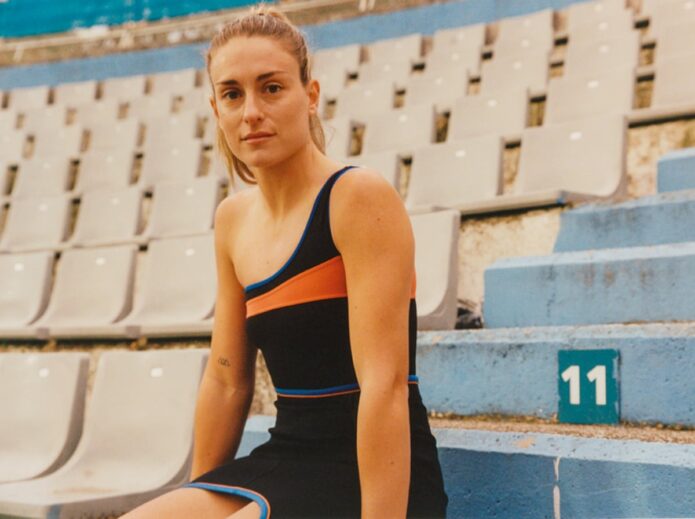
Alexia Putellas’s tattoos span her back, arms, wrist and right foot. The back holds a Latin motto, a father-and-child silhouette and smaller Barcelona and football references. Photographs establish where the pieces sit; interviews and published accounts explain some of them, while others have no confirmed personal meaning.
Alexia Putellas’s back tattoo map
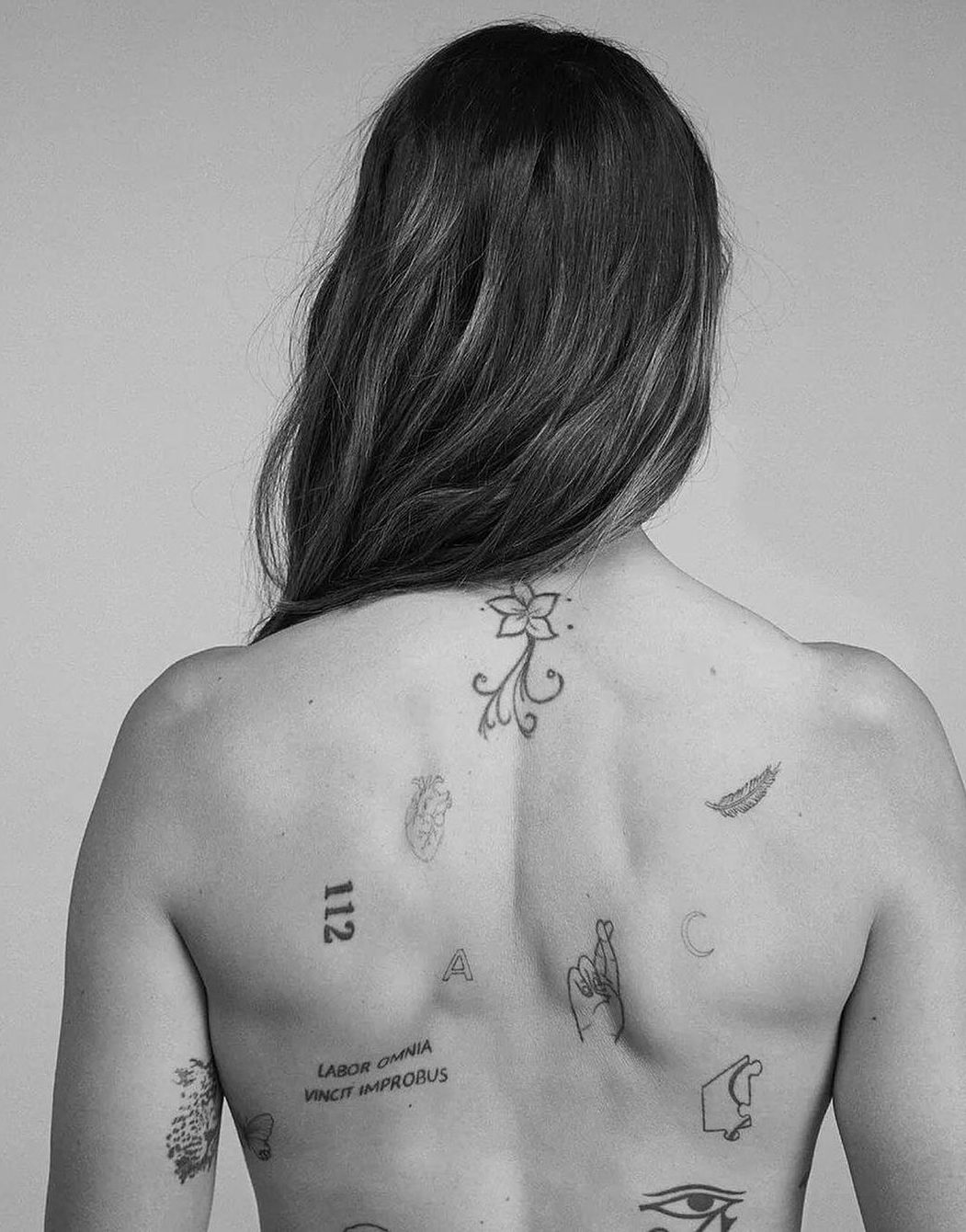
The back is arranged as separate designs with open skin between them: lettering high on the back, a father-and-child image below, and smaller symbols nearby. Published descriptions name an Eye of Horus, a Barcelona panot tile marked “Made in,” a butterfly, feather, moon, football and the number 112. Coverage also identifies a large Hand of Fatima on her right foot.
Some of the smallest marks are difficult to distinguish in event photographs. The images show placement and spacing; reports supply many of the labels.
The photographs as evidence
A rear photograph establishes how the back designs sit together, while event images may reveal only a wrist or arm mark. The photographs are useful for the visible arrangement, but they do not always identify each small symbol.
A collection read through images
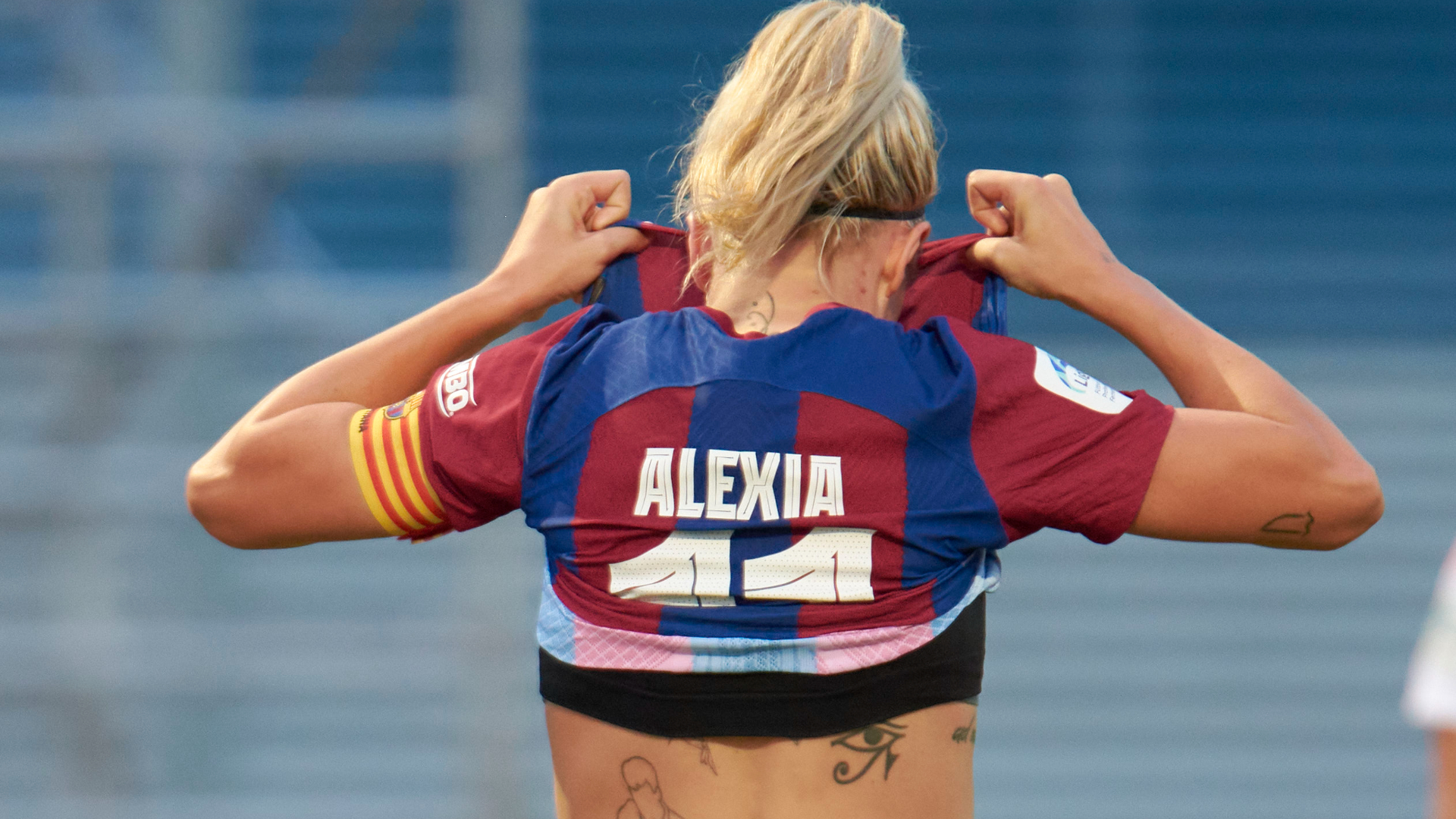
Clothing changes what can be seen. A football shirt can cover much of the back, while formal or sleeveless outfits expose different areas. This is why reports and photographs often focus on different pieces of the collection.
The Labor Omnia Vincit lettering
The wording across Putellas’s upper back is reported as “Labor omnia vincit improbus,” commonly translated as “persistent work conquers all.” Her documentary series uses the shorter title Labor omnia vincit. At its presentation, she was quoted saying, “Really, I believe it: work conquers everything.”
The phrase is the clearest tattoo in the collection with a public explanation. It expresses persistence, while the nearby portrait and smaller marks refer to more specific people, places and parts of her football history.
The phrase in public photographs
Match and event photographs sometimes show only part of the lettering, because a shirt or camera angle covers the lower line. The fuller wording comes from published descriptions; partial crops should not be used to guess what is written.
The motto is larger and easier to read from a distance than most of the surrounding symbols, which is why it often anchors photographs of the back.
The father-and-child portrait
The silhouette shows Putellas’s father holding her as a baby, with a small Barça ball in the scene. El País has described it as an old family photograph translated into a tattoo; later coverage identifies the same father-and-child image.
The outline preserves the figures without trying to reproduce a photograph in full detail. The ball connects the family scene to football, while the tattoo’s subject remains the relationship between father and daughter. Putellas has also spoken about her father’s influence on her development in the sport.
The phrase in interviews
Putellas has given a direct explanation of the Latin motto, and reports describe the story behind the father-and-child image. She has also said that some of her tattoos have clear meanings while others do not. That distinction matters when the smaller marks are visible without a personal explanation.
The small arm symbols visible at the ceremony

Huffington Post coverage identifies an Eye of Horus, a Barcelona panot tile with “Made in” above it, a butterfly, feather, crossed-fingers hand, moon and football among the smaller back designs. The tile is a local reference to Barcelona, while the other symbols vary in size and style.
The sources name the Eye of Horus but do not provide a confirmed statement from Putellas about why she chose it. Its shape and placement are visible; a private meaning should not be supplied without her explanation.
Reading the smaller marks
Published coverage links the number 112 to two shirt numbers: 11 at Barcelona and 12 at the start of her Spain career. The small mark compresses that football history into a single number.
Full-back photographs show the arrangement of the smaller pieces, while closer images help separate them. A hand, shirt or camera angle may hide one symbol and expose another.
The small wrist tattoo visible in public photographs
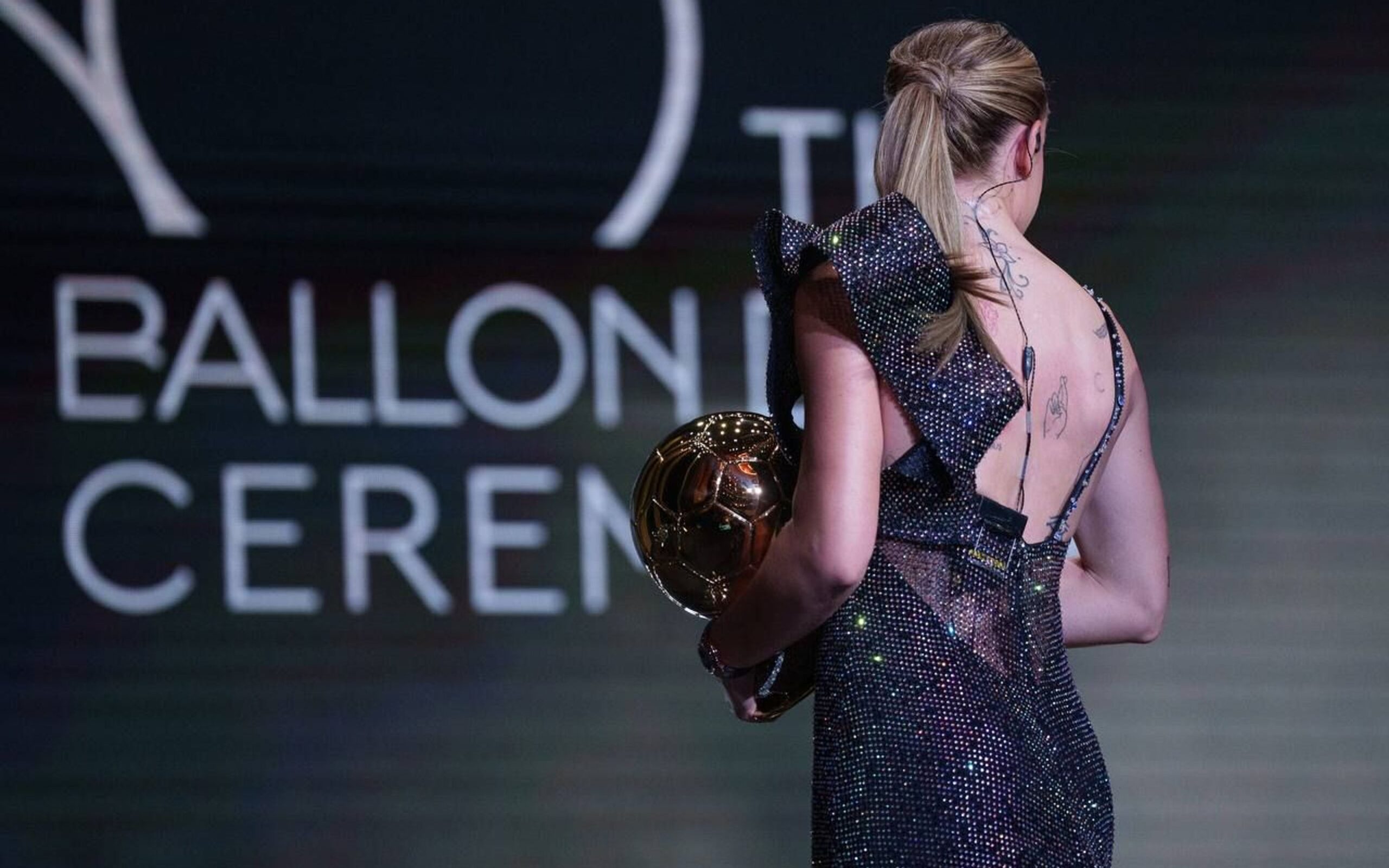
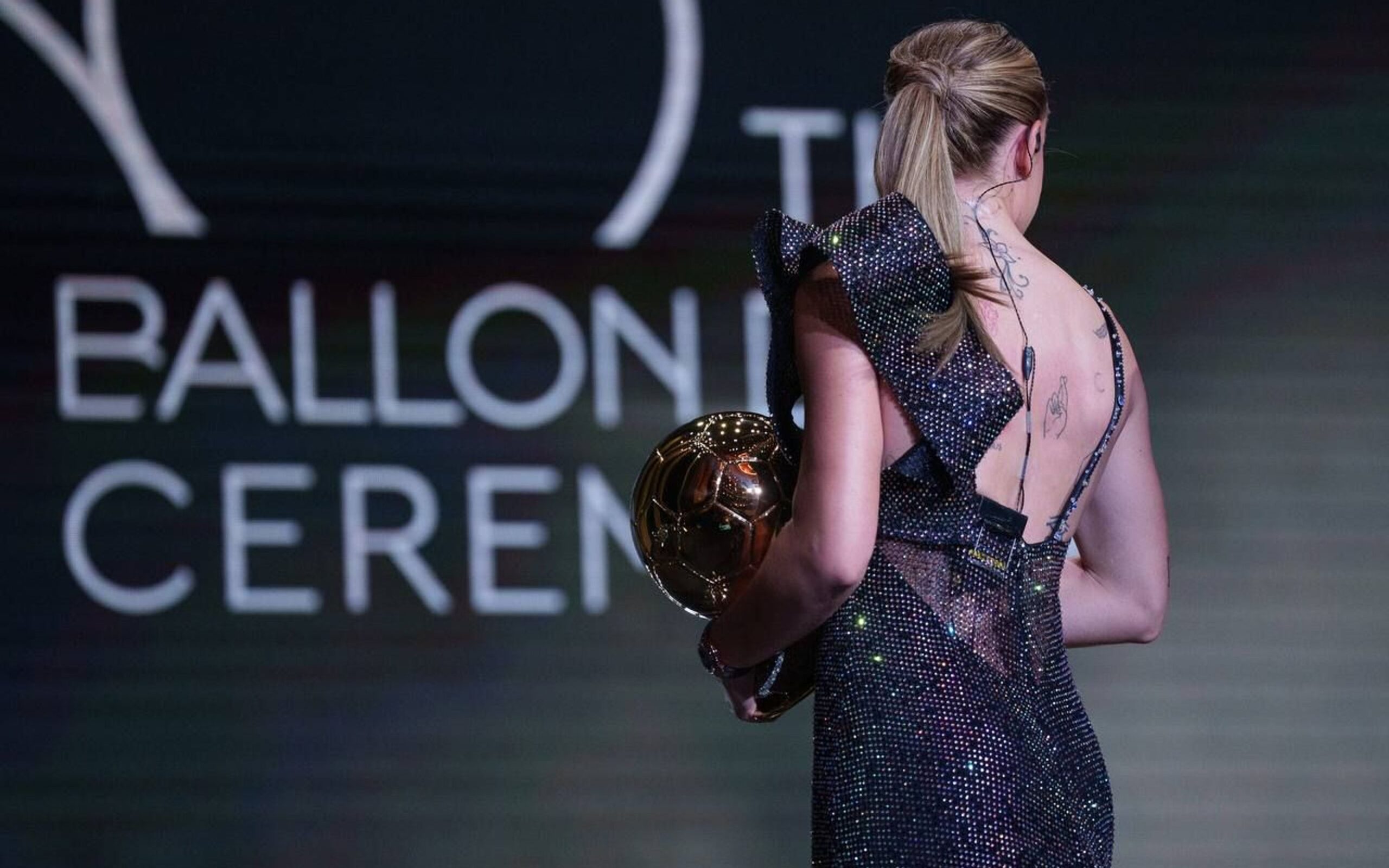
At the Ballon d’Or ceremony, a small black tattoo is visible on Putellas’s wrist as she holds the trophy. The photograph establishes the location, but the reviewed sources do not identify it as any of the named back symbols.
Reports also describe an extra-large Hand of Fatima on her right foot, with colored detail and a heart of health. That larger piece is distinct from the small wrist mark.
Different scales in the collection
The collection ranges from readable lettering and a family silhouette to compact symbols, a wrist mark and a large foot tattoo. Some pieces have reported explanations; others are best described by their visible form and placement.
Putellas’s documentary and career interview appears below.