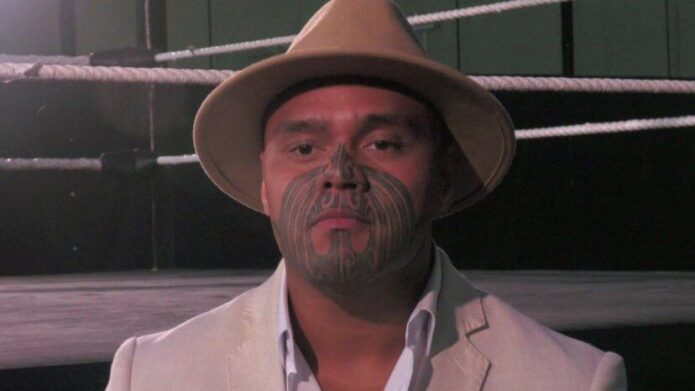
Henare’s tattoos are easy to spot even if you’ve only caught a few seconds of his wrestling. The dark curves across his face stay visible through a scowl, a shout and the blur of a match. They’re an unmistakable part of his appearance. But treating them as a clever character detail misses what he has actually said about them.
His facial moko, or mataora, is tied to his Māori identity and whakapapa. That makes the usual celebrity tattoo questions a little different here. The useful question isn’t which image he picked out of a book. It’s why he chose to carry this part of himself so publicly, and how the markings work across the shape of his face.
There’s plenty to appreciate visually without pretending we can decode somebody else’s ancestry. Look closely at the movement of the lines, then listen to the person wearing them. With Henare, both parts matter.
Henare’s face tattoo: his mataora
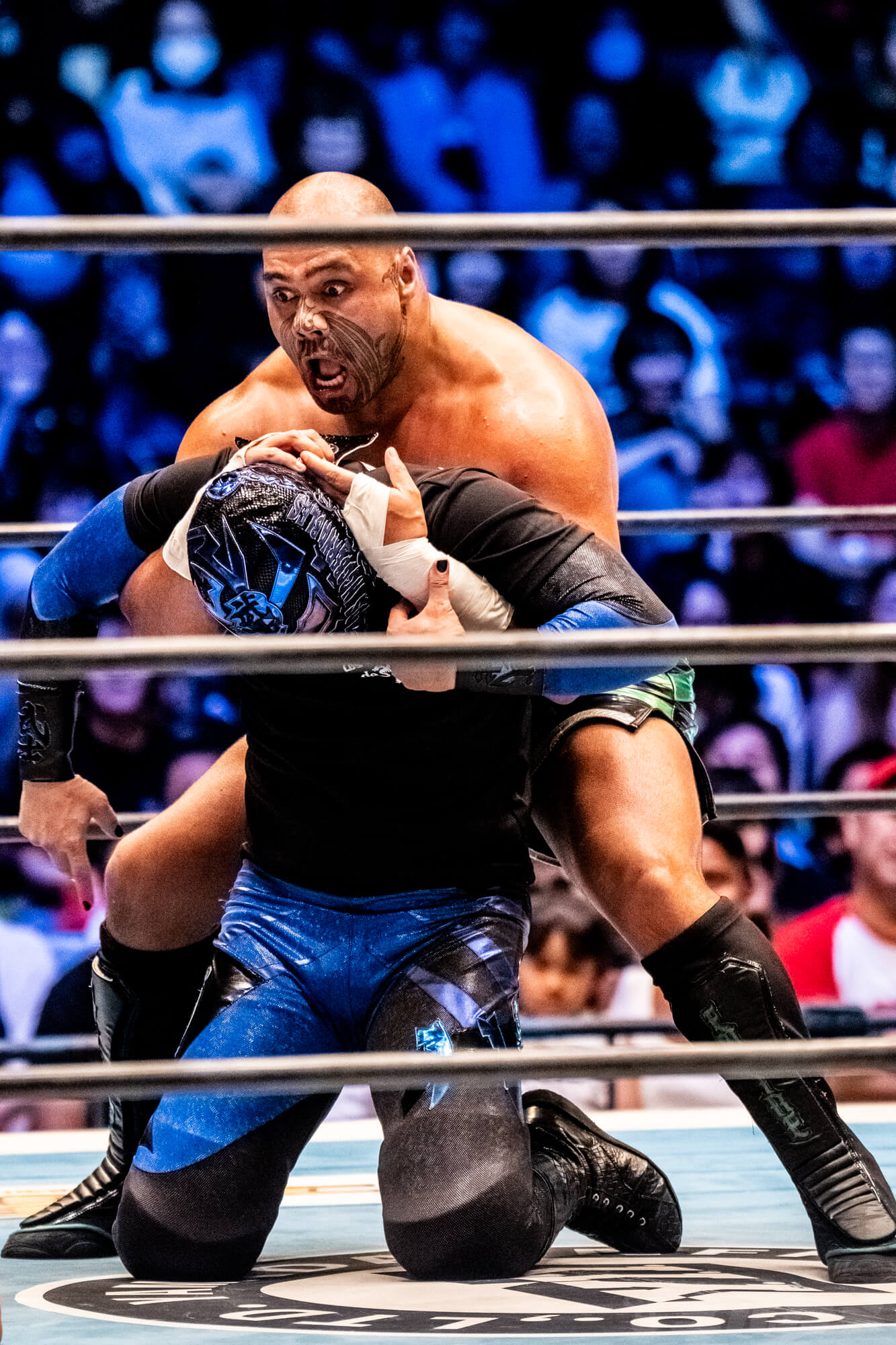
The most noticeable area is the lower half of his face. Dark, closely spaced curves frame the mouth, travel across the cheeks and continue towards the jaw. The chin has its own arrangement of dark shapes and open skin. Around the nose, smaller marks connect the upper and lower areas, so your eye doesn’t read them as separate stickers.
The face itself is part of the composition. A cheek isn’t a flat canvas, and a jaw changes direction. Here, the lines move with those surfaces. In the photograph above, Henare is applying a hold, with his mouth open and his head tilted. You can still follow the pattern across the lower face despite the movement and the busy ring around him.
That’s a useful way to look at it: notice what is physically visible before attaching a meaning. The curves are visible. The dark areas around his mouth are visible. A specific meaning for every individual mark isn’t something a viewer can reliably pull out of a match photograph.
It’s also why calling the whole thing a beard tattoo would be misleading. The placement overlaps an area where facial hair grows, but placement alone doesn’t explain the work. Henare identifies it as mataora, and that is the name to start with.
A personal identity beyond the character
Wrestling gives you plenty of reasons to be skeptical of a dramatic change in appearance. Hair, clothing, lighting and entrance music can all change when a performer takes a new direction. A tattoo can be caught up in that same conversation, especially when it appears on someone whose job includes looking intimidating.
Henare’s explanation deserves to be heard on its own terms. In his Monthly Puroresu interview, he described the facial work through genealogy and ancestry. He also corrected the assumption that Kiwi was the identity he preferred, explaining his connection to being Māori and to Ngāpuhi. Those are his own distinctions, rather than a label fans need to invent for him.
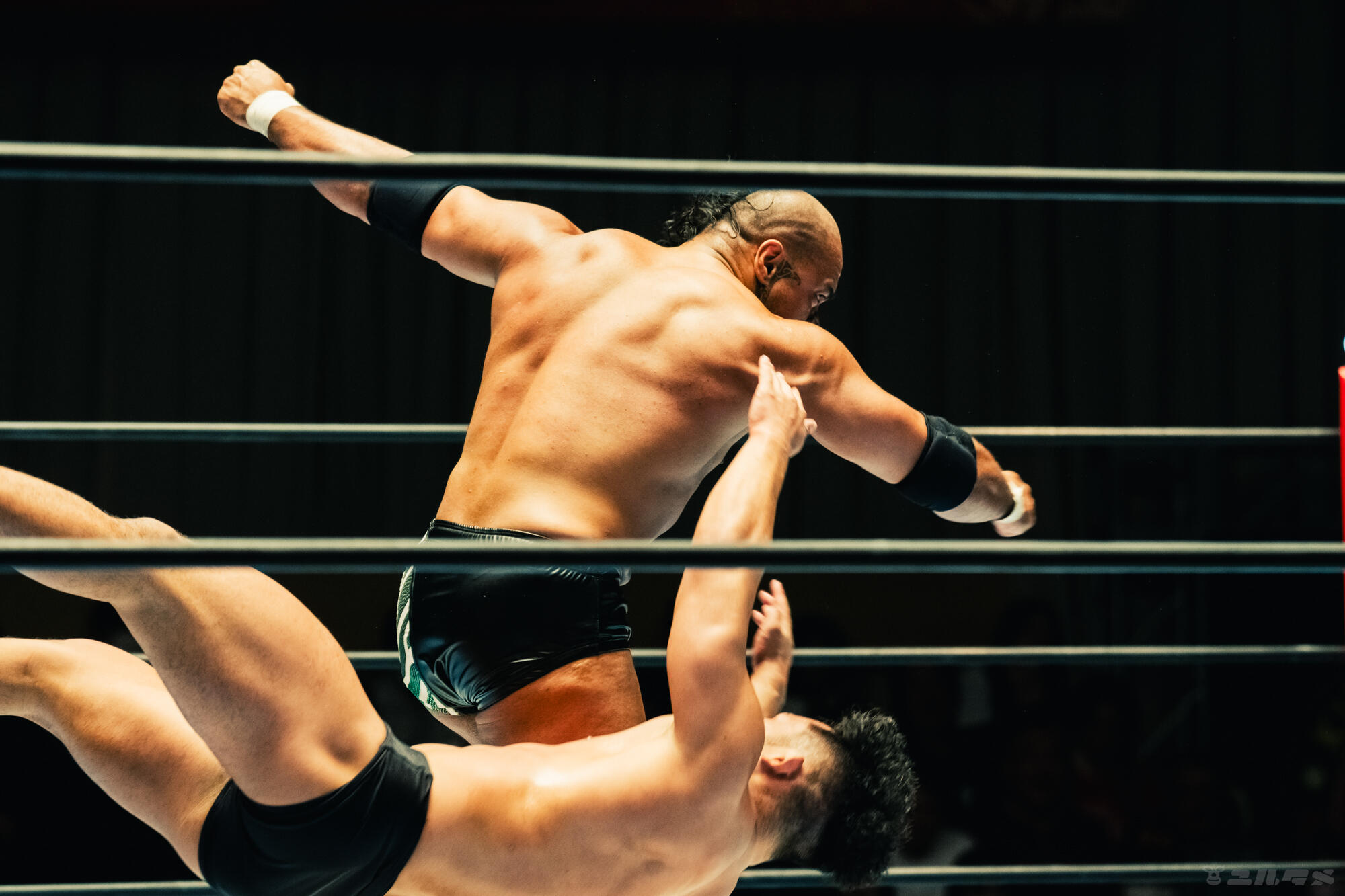
The action photograph here puts the wrestler back in view: the physical effort, the raised arm and the opponent reacting. It’s a reminder of the setting in which many people first encounter him. It doesn’t turn that setting into the meaning of everything he wears.
Looking fierce and carrying personal significance can happen at the same time. You don’t have to choose one explanation and erase the other. The visual impact belongs to the performance you’re watching; the personal explanation belongs to Henare.
Returning home for the work
Te Ao Māori News reported that Henare received his mataora on June 23, 2023, in Rotokura/Cable Bay. The artist was kaitā Raniera McGrath, and Henare’s whānau were part of the occasion. Those details put a real person, place and date behind an appearance that some viewers initially encountered as a surprise on television.
There’s a big difference between seeing the finished result under arena lights and understanding that it was received at home with family nearby. The first is public and immediate. The second gives you a sense of the relationships surrounding the decision, without needing to turn a private family experience into entertainment.
Artist credit matters here, too. Tattoo discussions can become so focused on the famous wearer that the person doing the work disappears. Naming McGrath keeps the account grounded. It also avoids the lazy habit of calling any recognisable facial pattern a generic style, as though the maker and the wearer were interchangeable.
None of that requires guessing at a hidden message. Sometimes the strongest details are the straightforward ones: who did the work, where it happened and who was there. They give the tattoo context while leaving room for the parts Henare hasn’t chosen to explain publicly.
How he reads in the ring
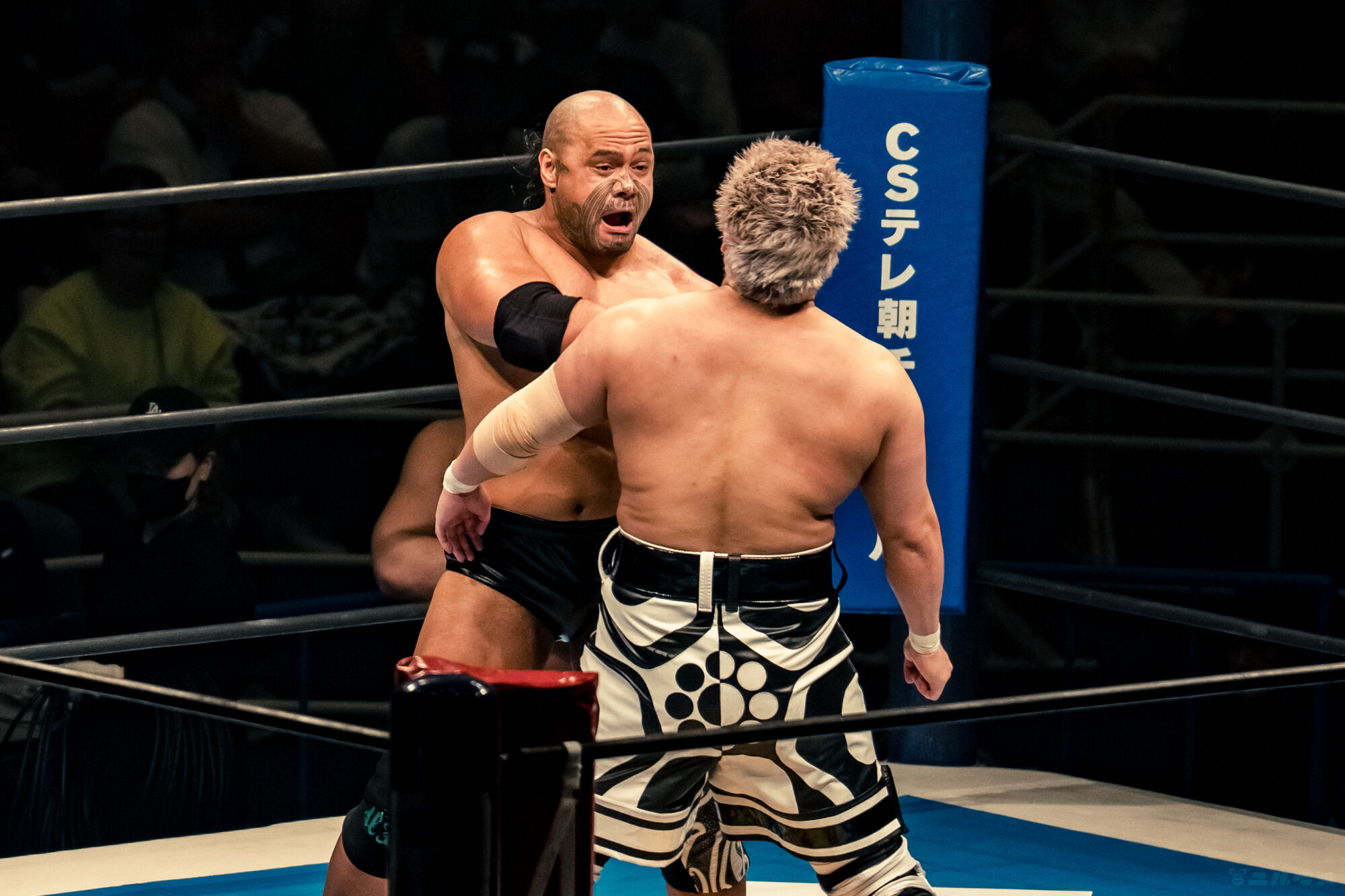
In a still photograph, you can take your time. During a match, you usually can’t. Ropes cut across the view, another wrestler moves in front of the camera and a head turns before you’ve worked out what you were looking at. The wider photograph here is useful for that reason. It shows how much information competes for attention in a wrestling ring.
Henare’s face remains recognisable within all that activity. The dark lower-face pattern creates a strong visual anchor, even when you aren’t close enough to inspect individual lines. Up close, there’s detail. At a distance, there’s a broader shape. Those two ways of seeing the same work don’t cancel each other out.
Expression changes the effect as well. A relaxed mouth and a fully open mouth put different tension through the cheeks and chin. That can make the same arrangement look quieter in one image and much more forceful in another. It isn’t evidence of a new tattoo every time the camera catches a different angle.
If you’re comparing photographs, start with the lighting, expression and head position. Those ordinary differences explain a lot. Jumping straight to cover-up theories or supposed changes in meaning tends to create questions the pictures never raised.
Bringing home into the public space
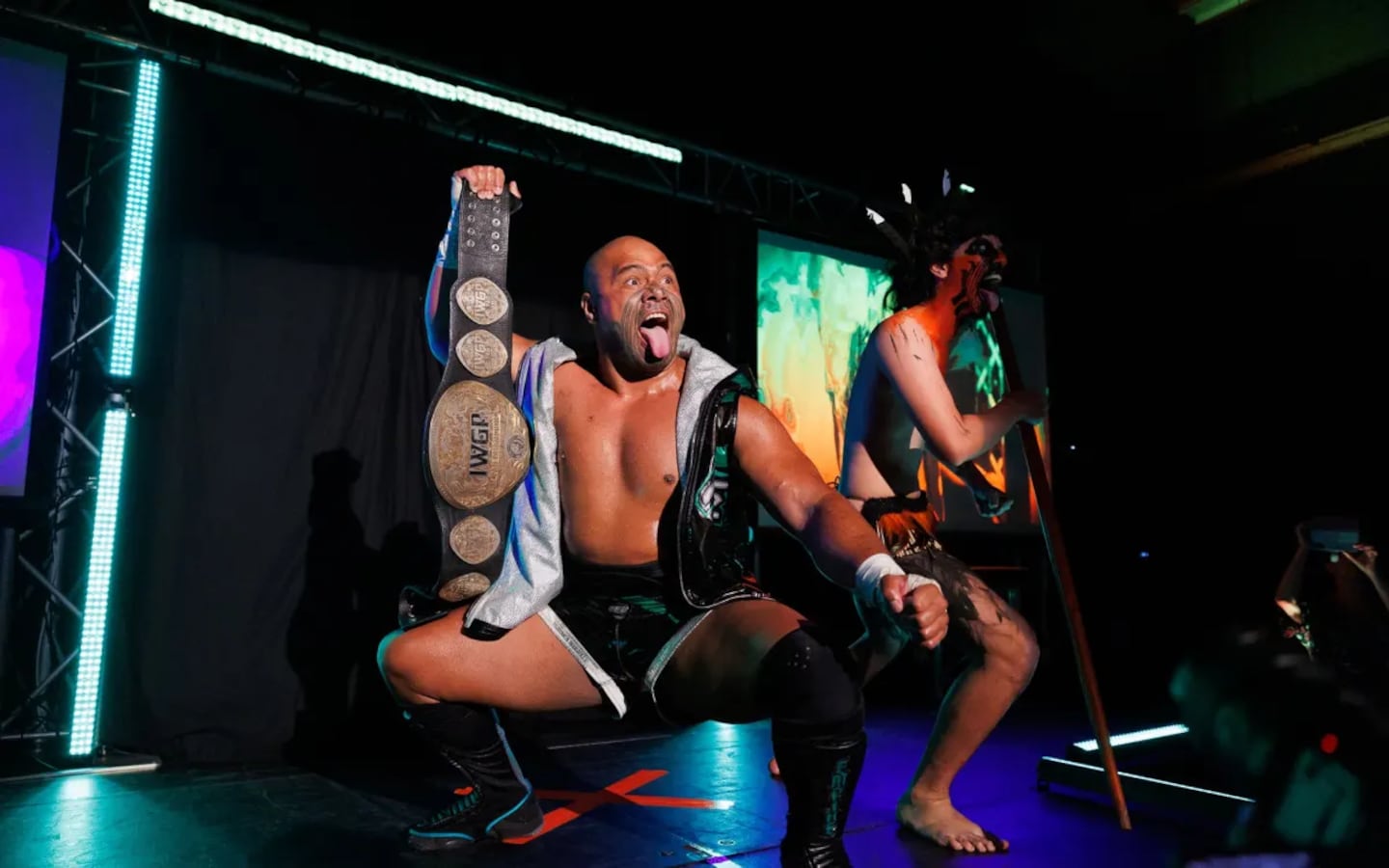
The homecoming photograph has a very different energy from the close wrestling shots. Henare is holding up a championship belt, with another performer beside him and the stage lit around them. It’s a wider scene, with celebration and presentation taking up more of the frame than the details of his face.
That wider perspective matters. A person with a prominent tattoo still has a whole life around it. Clothing, family, work, performances and the places they return to all exist outside the close-up. Keeping a few wider views in mind helps prevent the tattoo from becoming the only thing you see when you look at the wearer.
In Te Ao’s later 2023 interview, Henare discussed bringing Māori culture to an international wrestling audience. He described a positive response to his identity from people around him. The interesting part is the scale: something personal can become visible to strangers in another country, through an ordinary part of someone’s working life.
You don’t need to turn that into a claim about every fan or every venue. One wrestler’s account is still one wrestler’s account. It’s valuable because it explains his experience, without asking it to stand in for everybody else’s.
Seeing the whole person

The full-length photograph gives the face a little breathing room. Here, Henare is standing with his belts against a brightly lit entrance backdrop. You see his stance, his gear and the amount of space around him. The face is part of the overall presence, rather than an isolated detail filling the frame.
That’s worth remembering when tattoo pictures circulate on their own. A tight image is useful for examining a line, but it can also strip away the wearer’s expression, surroundings and personality. A wider photograph puts some of that back. Neither view is automatically better; they answer different questions.
For someone interested in tattoo composition, the contrast is useful. Notice where your eye lands in the full-length shot, then compare that with a closer view. Strong contrast can make a small area of the body command attention without needing colour or a large expanse of coverage. That’s a visual observation, rather than a rule about what anybody ought to get.
Henare’s appearance works as a whole. There’s no need to invent extra tattoos or assign meanings to accessories just to make the discussion longer. The documented facial work already gives you a lot to look at carefully.
Appreciation without copying
It’s completely reasonable to admire the precision, confidence and visual force of Henare’s mataora. Admiration doesn’t require treating his face as a reference sheet for your next appointment. A personal ancestral marking isn’t a ready-made design brief. The fact that a celebrity wears it publicly doesn’t make its meaning public property.
If what catches your eye is the way the lines follow the face, think about that as a broader artistic idea. Placement, contrast and movement are things you can discuss with an artist without asking for another person’s exact markings. Being clear about what you actually like is much more useful than handing over a photograph and asking for a copy.
The same care applies when talking about the images. Describe the areas you can see. Use the name Henare uses. Credit the artist where the credit is known. Leave specific ancestral meanings to the people entitled to explain them. You can be curious without acting as though every detail needs an answer from you.
The best final word belongs to Henare himself. Hearing him speak adds tone and emphasis that a photograph can’t give you. The interview below is a good place to hear that personal account alongside the appearance that first drew your attention.