
Taylor Momsen’s rock-era photos are full of crosses, stars, smudged makeup and dramatic body art. Most of those marks aren’t permanent tattoos. The one consistently confirmed piece is a small black star on her left side, near her chest.
Momsen has said she got it when she was 16 and later described the decision as one she made very young and very drunk. There’s no confirmed grand explanation behind the star, so it’s best to leave the story there.
The cross tied to Going to Hell belongs to the album artwork. Stars in magazine shoots were styling, and the XXXX mark used in The Pretty Reckless imagery was temporary. They’re part of her visual history, but they don’t add to her tattoo count.
Taylor Momsen’s confirmed black star
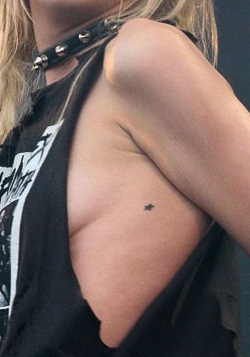
The confirmed tattoo is a small, solid black star on Momsen’s left side, close to her chest and below the arm. Tattoo-focused reports identify it as the one permanent design they could verify.
It can show when she wears a low-sided top or lifts her arm, then disappear under a shirt. The placement is less visible than a forearm tattoo, and the star itself is simple: a filled shape, without lettering or fine-line detail.
What the two photos actually show

The first photograph gives a close side view; the second shows more of the performance setting. Neither turns every dark mark or logo into a tattoo. In side-chest photos, an arm, strap or fold of clothing can hide the star, and a tight crop can make it look larger than it is.
The reliable description stays modest: one small black star on her left side. The available images don’t confirm extra stars or a larger symbol system.
The cover concept and the camera

The cover image shows a large star-shaped mark around Momsen’s eye and outlined stars across her shoulder and back. They belong to the shoot’s styling, not a record of permanent ink.
The same shape does a different job on her chest: there it’s a tattoo; around the eye and across the shoulder, it’s part of the camera look. Paint, makeup and temporary markings can read as ink in a still image, so a design needs more than one themed photograph to count as a tattoo.
Taylor’s rock-era look

This portrait is another style reference, not evidence of extra tattoos. Black clothing, heavy texture and dramatic makeup can make permanent ink hard to separate from the rest of Momsen’s look. The styling has changed over the years; the confirmed tattoo count hasn’t.
Onstage style and the band’s temporary mark

The XXXX mark associated with The Pretty Reckless is part of the band’s visual identity, but it has been described as temporary. A symbol can be strongly tied to a musician without being permanent body art.
Trying a mark temporarily can help you decide whether you want to keep it. A band logo or stage symbol may fit one era of your life; give it time before making it permanent.
Why simple shapes can age well
A filled black star is easy to recognize and doesn’t depend on tiny details. That makes it a straightforward design, not a guarantee that it will never need care. Side-chest skin moves, clothing rubs against it and sunlight reaches it when the area is uncovered.
Placement changes with posture, too. A tattooer can check a stencil while you stand, sit and lift your arm, so the design follows the body instead of looking centered only on a flat image.
What’s actually confirmed?
The tattoo-focused coverage consistently confirms one permanent design: the small black star on Momsen’s left side. The Going to Hell cross is album artwork, the stars in the cover photos are styling, and the band’s XXXX mark is temporary. Those distinctions keep the tattoo count accurate while leaving room to take inspiration from the imagery.