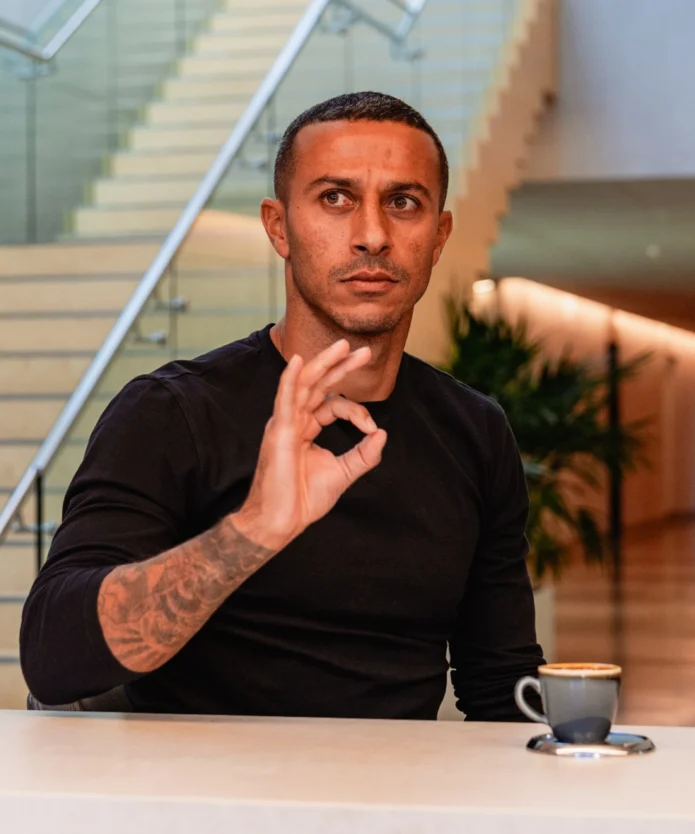
Thiago Alcántara describes his tattoos as a collage of moments, not a matching set. The clearest stories lead back to a childhood photograph, his parents, leaving home for Barcelona, his father and football. He has also left some words private and given artists room to shape the designs.
The childhood football portrait on his right forearm
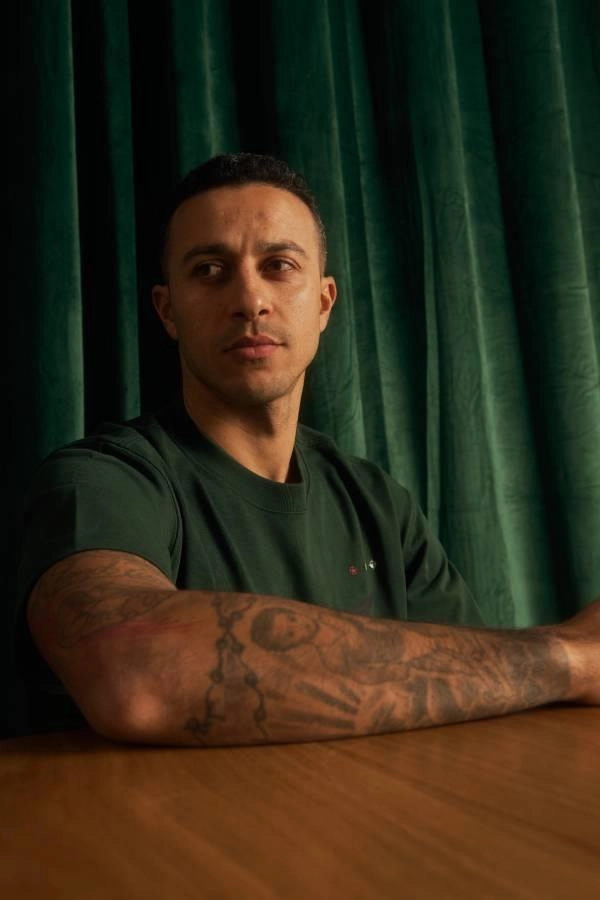
A portrait on the back of Thiago’s right forearm shows him at about one year old, in diapers with a football close by. El País described the ball under his arm; BILD also identified the child and ball. Thiago said the ball was his first gift from his parents and that he carried it everywhere. He kept a photograph of that time and wanted the memory on his body.
Reports place the tattoo around the time he turned 18. El País said in 2010 that he got it at 18 after asking permission at home; in a later Liverpool interview, he recalled his first tattoo coming the day after his 18th birthday. A 2014 El País interview also calls a phrase from his mother his first tattoo, so the reports don’t establish which design came first.
The message linked to leaving home for Barcelona
Thiago left home at 14 to join Barcelona’s La Masia academy. In a 2024 Liverpool interview, he connected his mother’s words and the opening design to that move, describing it as bittersweet: he was leaving home to pursue a dream.
In 2014, he told El País that a phrase his mother had embroidered on a cushion when he first arrived in Spain became his first tattoo. He wouldn’t reveal the wording, saying it was too private.
The horse and ‘good times’ ribbon on the right-arm sleeve
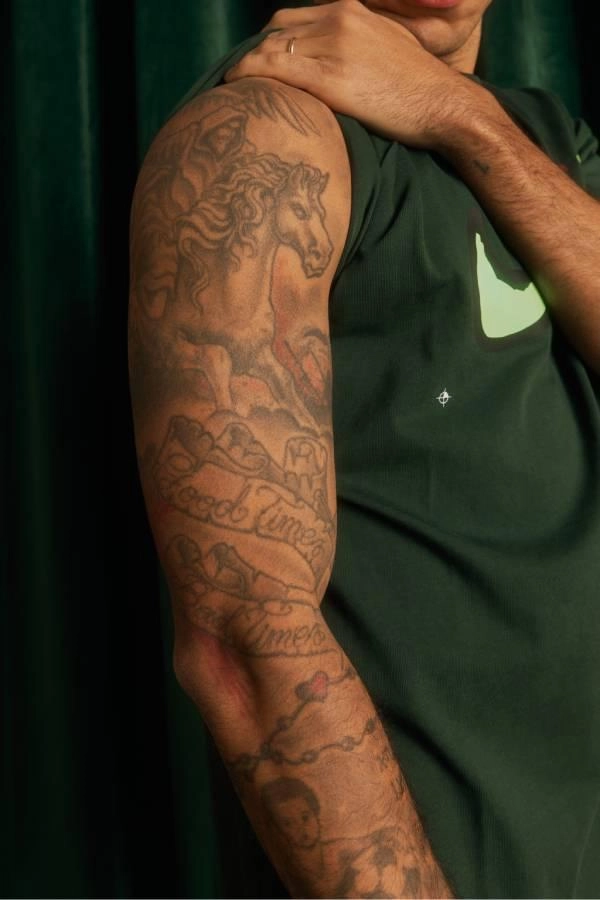
A large horse emerges through cloud-like shading on Thiago’s right-arm sleeve, beside a ribbon carrying the words “good times.” He hasn’t given the horse or phrase a specific public meaning. In the Liverpool feature, he said he enjoys working with tattoo artists and gives them room to create. The image can be described without assigning it a story he hasn’t shared.
The Brazilian anthem, his father and football tattoos
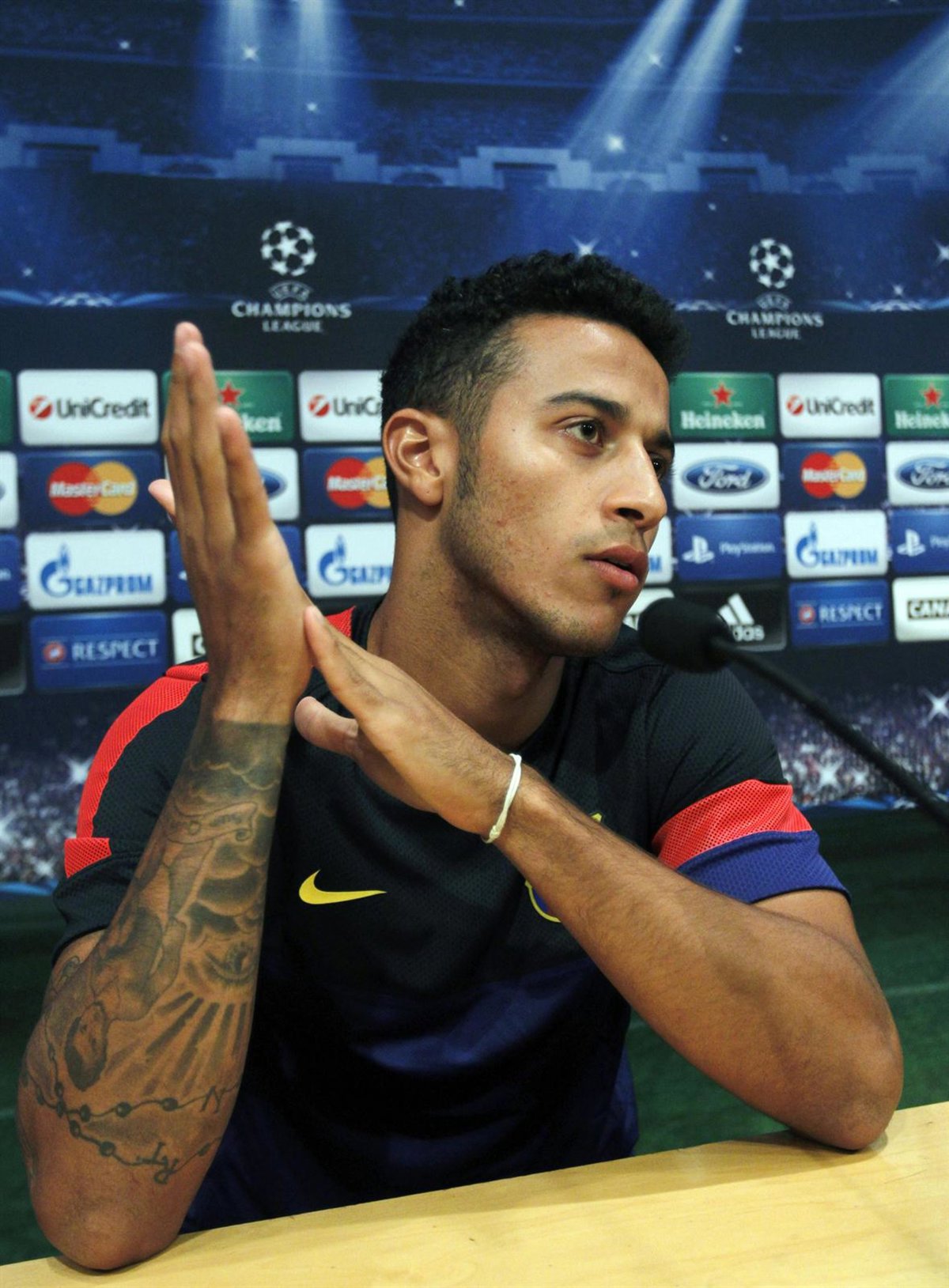
A line from the Brazilian national anthem is connected to Thiago’s father, Mazinho. Liverpool’s feature also mentions a guardian angel and a symbol of Thiago’s love of football. It doesn’t publish the full anthem line or say whose angel it is, so those details should stay open.
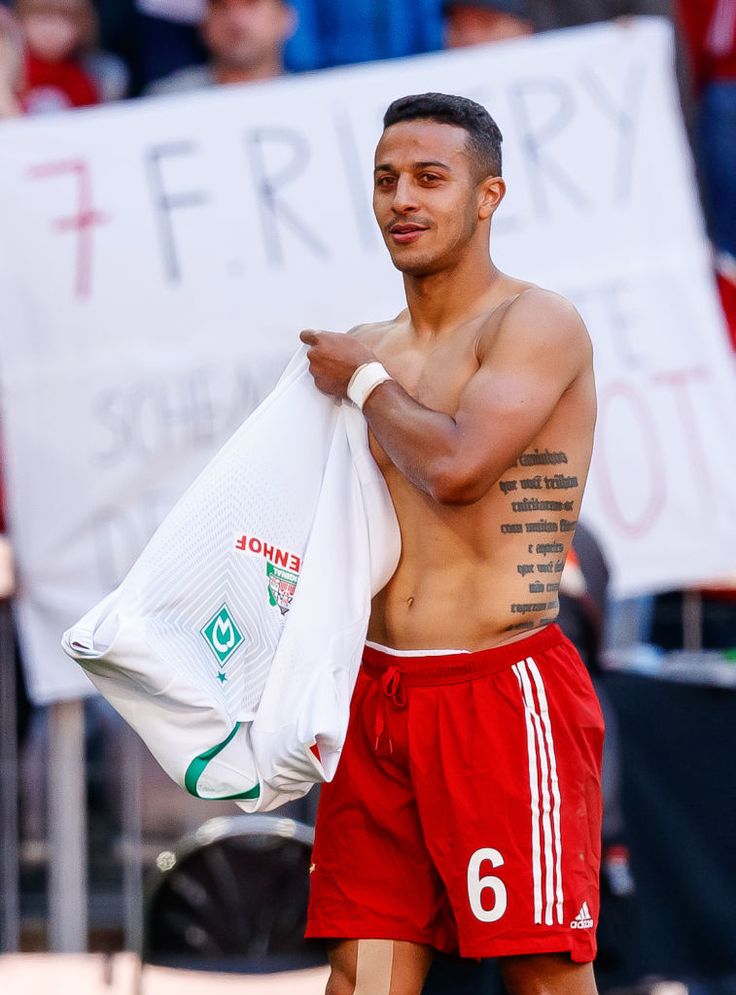
BILD reported torso lettering in 2013, but the English translation in that article isn’t confirmed by the primary interviews. The photograph shows script; the exact wording and meaning aren’t settled.
Why the sleeve tattoos look like a life collage

Thiago has called the collection a collage of pieces added over time, reflecting good and difficult moments. He grew up in Brazil around beach culture and people with tattoos, and his mother has many as well. He has described tattooing as self-expression and said he likes meeting artists and seeing how they work.
The sleeve mixes portraits, writing, shading and other images rather than following one pattern. Football shirts and match cameras make the ink visible, but that doesn’t make every tattoo’s meaning public. Some stories are clear, some have only a broad explanation, and others remain private.
What Thiago has and has not explained
His interviews explain some tattoos in detail and leave others open. Thiago’s “collage” description is the best guide to the whole sleeve: separate designs tied to different moments, without a public explanation for every one.
For a closer look at Thiago discussing the tattoos, watch the feature below.