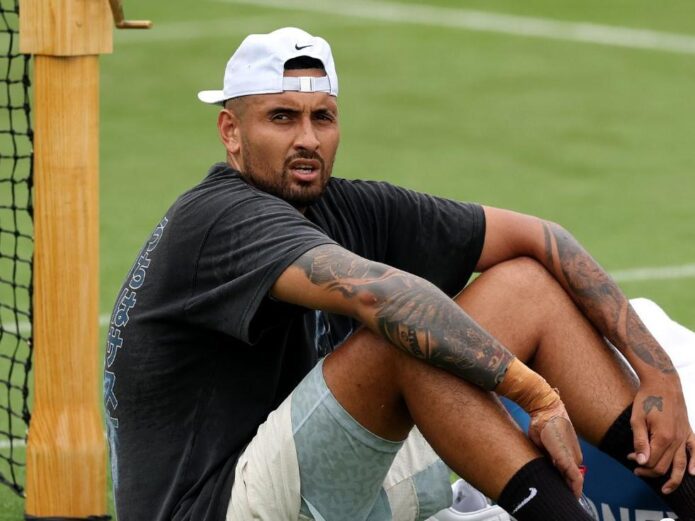
Nick Kyrgios tattoos are as loud, personal, and unpredictable as his tennis. The Australian star has a huge Pokémon mural across his back, a right-arm collection devoted to NBA heroes, and smaller pieces that carry more private memories. His ink jumps from childhood gaming to basketball worship, then down to short phrases and tiny numbers that only make sense when you know the story.
The full-back piece is the one everyone notices first. It is packed with first-generation Pokémon, with Blastoise in the center and characters such as Charizard, Gyarados, Gengar, Mewtwo, Lapras, Alakazam, Dragonite, and Snorlax around it. Kyrgios has explained that Pokémon was a big part of his childhood and that he still plays the games. The tattoo is huge, but the reason behind it is simple: he wanted something that felt like him.
His arm work has a different mood. Kobe Bryant, LeBron James, Michael Jordan’s shoes, and the word GOAT turn the sleeve into a running tribute to the basketball world he follows so closely. Other pieces include “Time is Running Out,” a broken feather, “Inspire Others,” and the number 74 for his grandmother. This guide looks at the designs that can be identified clearly in public photos without guessing at details that are not visible.
Nick Kyrgios’s Pokémon back tattoo is the centerpiece
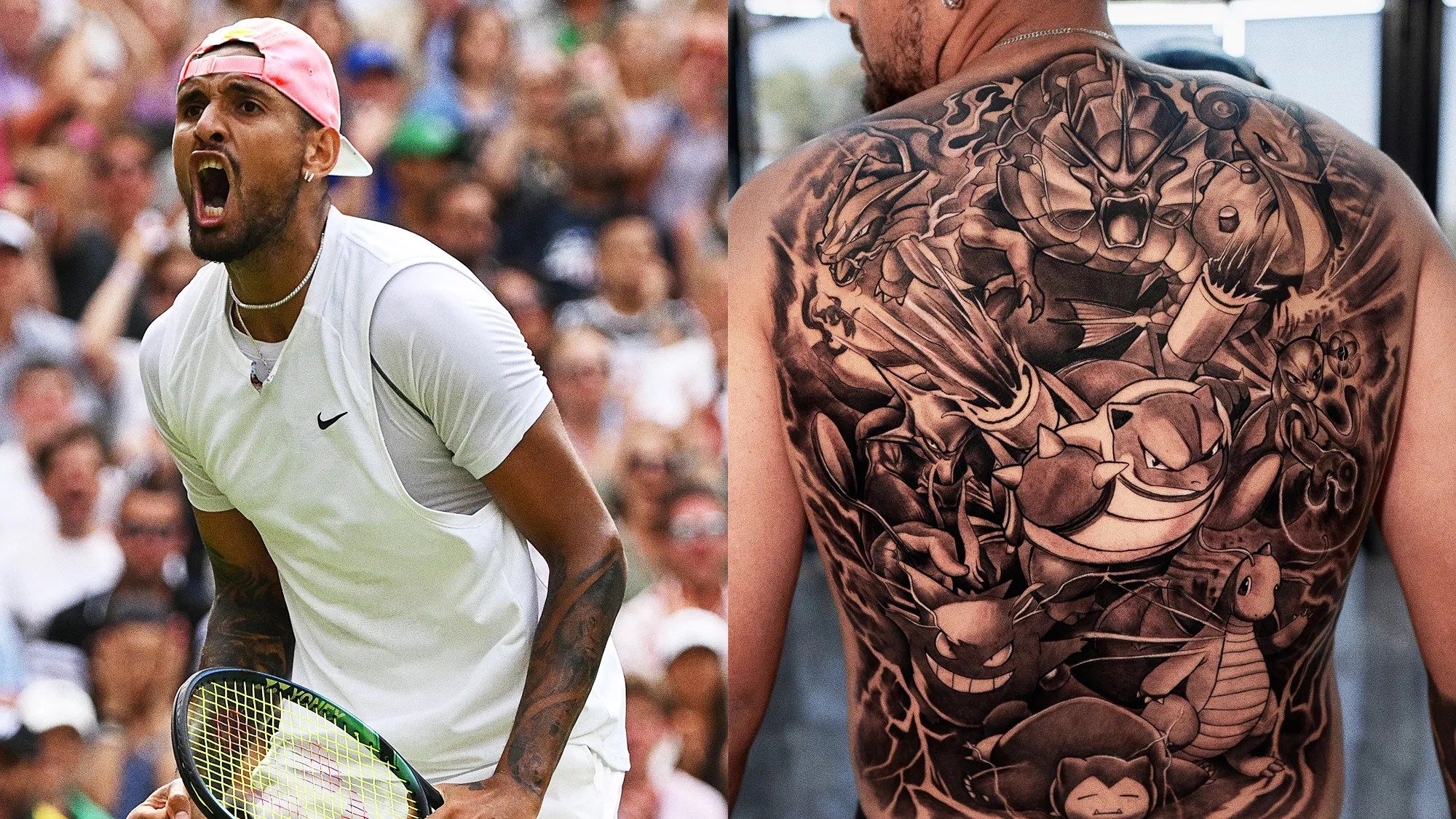
The main event in Nick Kyrgios tattoos is the full-back Pokémon piece. From the shoulders to the lower back, the artwork fills the skin with black-and-grey characters and heavy shading. Blastoise sits in the middle because Kyrgios has called it his favorite. Charizard and Gyarados sit nearby, while Gengar, Mewtwo, Lapras, Alakazam, Dragonite, and Snorlax help complete the lineup.
It is not a tiny character tucked beside a shoulder blade. The design takes up nearly the whole back, which gives the individual figures room to breathe while still making the tattoo read as one big scene. The darker areas create a strong outline around the characters, and the lighter skin breaks stop the piece from becoming a flat black wall.
Kyrgios has said he focused on the original generation because those characters are the ones most people recognize. That choice gives the tattoo a nostalgic feel. Someone who grew up with the early games can look at the piece and immediately understand the references. It also explains why characters such as Venusaur, Lugia, Ampharos, and Tyranitar did not make the final cut.
The design has a playful subject, but the execution is serious. The faces, claws, shells, wings, and scales are packed together with enough contrast to stay readable. It is the kind of back piece that rewards a closer look because the overall silhouette catches your eye first, then the smaller creatures start to separate as you study it.
The back piece was completed by a full tattoo team
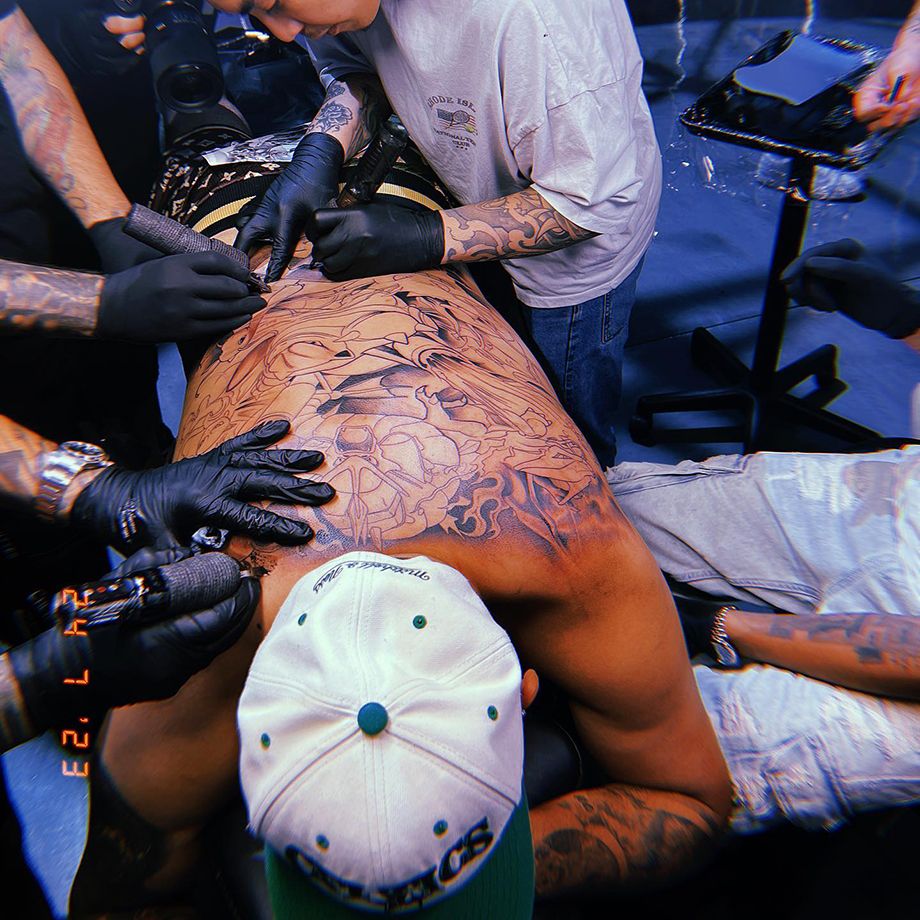
Photos from the session show why the Pokémon tattoo looks so ambitious. Several artists worked on Kyrgios at the same time at Ganga Tattoo in Los Angeles. He has described the experience as intense, with multiple tattoo machines moving across his back while the team followed a design that had been worked out with his brother and Australian artist Alexi Bouras.
That process is part of the story because the tattoo was not a random walk-in decision. Kyrgios had been thinking about Pokémon work for a while, then found Ganga after asking for a recommendation in Los Angeles. The studio had already worked with major names, and the artist understood how to turn a large character collection into a piece that would sit properly across the back.
He has put the time at roughly seven and a half hours, although different reports and captions describe the session slightly differently. Either way, this was a long and painful appointment. Kyrgios said the first few hours were particularly rough and that his back was shaking. He also had to deal with the awkward healing stage almost immediately because he needed to fly back to Australia.
For tattoo fans, the useful detail is the way the group kept the work connected. Six artists could have produced six separate-looking sections, but the black-and-grey value range helps the whole back feel consistent. The result is busy without looking like a scrapbook of unrelated flash designs.
His basketball sleeve pays tribute to Kobe and LeBron
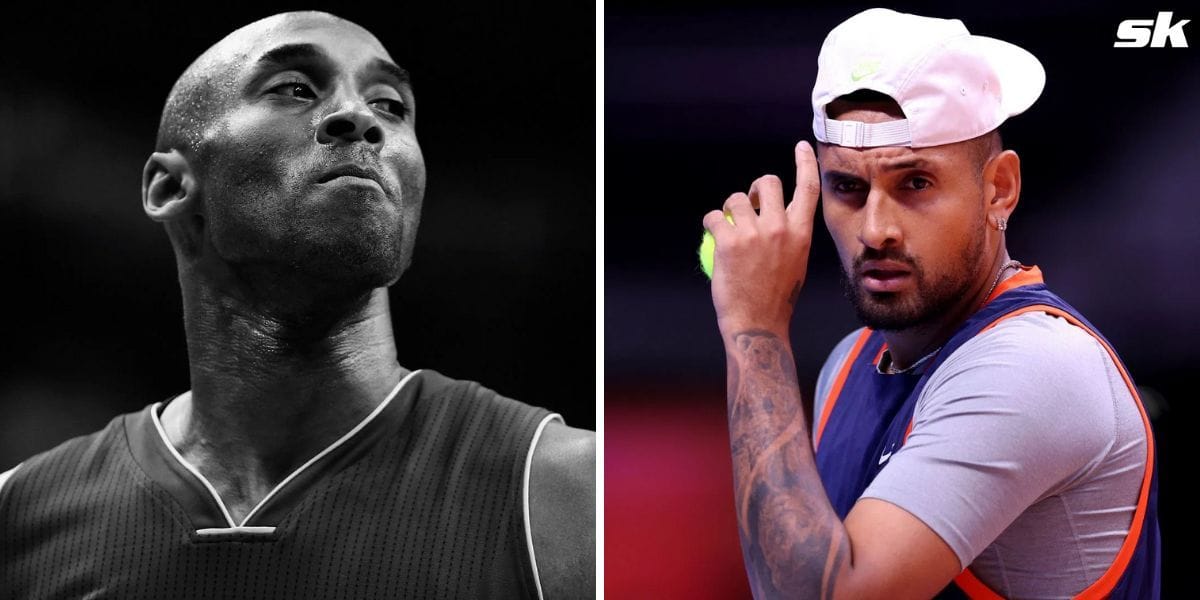
Before the Pokémon tattoo, Kyrgios had already covered much of his arm with basketball references. The most famous part is the Kobe Bryant portrait, made after Bryant’s death. Kyrgios had worn a Lakers jersey in tribute at the Australian Open, and he later explained that he wanted Kobe to stay with him forever. The tattoo turns that moment of respect into something permanent.
LeBron James appears beside Kobe, and Michael Jordan is represented through a pair of Air Jordan 1s. The mix is important because the sleeve is not simply a portrait of one athlete. It shows the players and objects Kyrgios connects with when he talks about basketball. The arm becomes a fan’s wall of heroes, only the wall is his skin.
The Kobe image is especially striking because it reads clearly even in photos taken during a match. The portrait has enough contrast to hold its shape when the arm is bent or partly covered by a shirt. That is a good lesson in placement. A realistic face needs a position where the viewer can still read the main features while the arm moves.
There is also a little bit of Kyrgios’s personality in the choice. He has often said basketball is his real sporting passion, even though tennis is his profession. The sleeve makes that affection visible. It is not hidden under a jacket or limited to a sneaker collection. The tribute sits right beside him on court.
The sleeve mixes portraits, GOAT details, and sneaker imagery
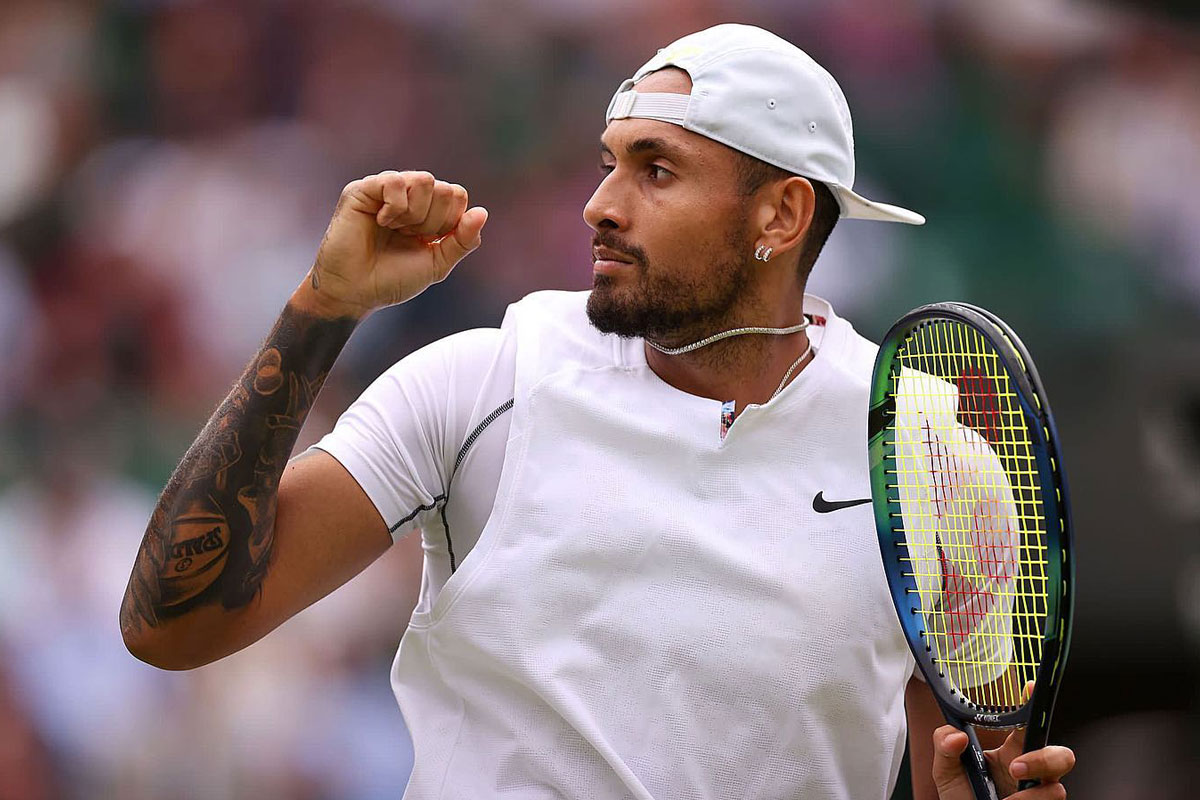
When Kyrgios raises his arm in a match photo, the sleeve reads as a layered collection rather than one single picture. The Kobe and LeBron portraits are the obvious anchors, but the surrounding work fills the gaps and gives the arm a more complete shape. Public descriptions also identify a GOAT reference and the Jordan 1 imagery as part of the design.
This mix keeps the tattoo from feeling too formal. A portrait can make a sleeve look serious, while a sneaker reference brings in something more playful and everyday. It feels like a fan’s personal collection, not a carefully packaged brand statement. That relaxed quality fits the way Kyrgios talks about the things he loves.
The arm also shows how tattoos change over time. Early small pieces were gradually joined by larger portraits and filler work. Once the sleeve became dense, the newer designs had to work around what was already there. That kind of growth often creates more character than planning a complete sleeve in one appointment.
Photos from the court are helpful because they show the tattoo in normal movement. You can see how the work bends with the elbow and disappears under the sleeve of a shirt. A posed studio picture may show more detail, but an action photo explains how the tattoo actually lives on the body.
“Time is Running Out” and the broken feather add a quieter note
Not every piece in Nick Kyrgios tattoos is a giant portrait or a full-back scene. Earlier photos show the words Time is Running Out on his right forearm, with a broken feather above it. Those pieces are smaller and easier to miss now that the arm has more coverage, but they help show how his collection developed.
The phrase has an obvious sense of urgency, although Kyrgios has not publicly given one definitive explanation that covers every possible meaning. It is better to describe what is visible than to invent a backstory. The lettering runs along the forearm, and the broken feather creates a visual break above it. Together they make a simple text-and-symbol pairing.
The feather is interesting because it softens the heavier basketball imagery. A portrait of Kobe or LeBron carries a strong blocky presence. A feather uses a lighter outline and a different shape. Even when later work surrounds it, that contrast helps the older design remain part of the overall sleeve.
This is also the kind of small tattoo that can disappear in poor photos. Distance, motion, and harsh stadium light make the lettering hard to read. Clear images from earlier in his career are more useful than trying to zoom into a modern screenshot. The tattoo is there, but the exact detail depends on the photograph.
“Inspire Others” and the number 74 keep the collection personal
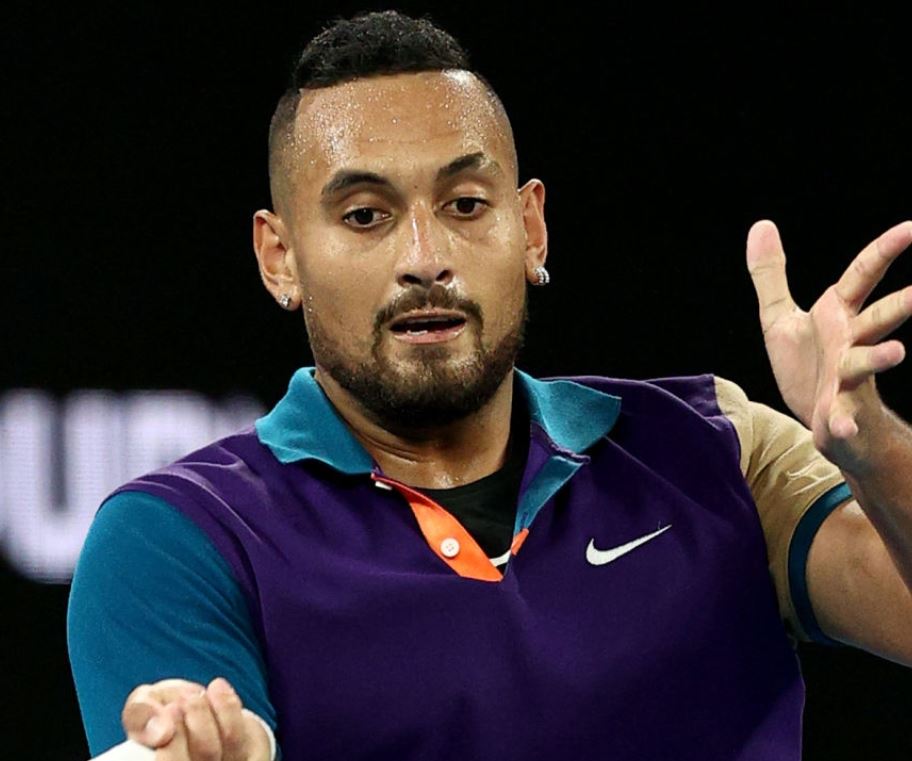
On the outer right hand, Kyrgios has the words Inspire Others. A small mark also appears on one finger, and the number 74 is visible on another. Tennis.com reported that the number honors his grandmother and refers to the age she was when she died in 2014. Those small pieces bring a very different feeling to the collection.
The message on the hand is direct and easy to understand. It is not hidden in a complicated symbol or buried inside the sleeve. Because it sits where he can see it every day, it feels like a reminder rather than a decoration. The number 74 works in the opposite way. Most people would not know its meaning without the explanation.
Small finger tattoos can also be difficult to photograph well. The hand is constantly moving, and a tennis grip can hide the exact placement. In the clearest public photos, the words and numbers are visible enough to identify, but not every tiny mark should be treated as a confirmed symbol. That is why a careful tattoo guide separates documented details from guesses.
These pieces make the larger designs feel less like a collection of celebrity references and more like a personal timeline. Kobe and LeBron show the sporting world Kyrgios looks up to. Pokémon shows the games and childhood interests that still matter to him. The number 74 points to family. The sleeve contains all of those parts at once.
The overall vibe of his collection
The strongest thing about Nick Kyrgios tattoos is that they do not follow one safe theme. The back is colorful in subject even though it is mostly black and grey. The arm is built around basketball heroes, then interrupted by words, a feather, shoes, and small hand pieces. Nothing about the collection feels designed to please everyone.
That honesty is why the Pokémon piece works so well. Kyrgios did not choose a small symbol that could be hidden when people found it too childish. He chose the characters he actually likes and gave them his entire back. He has talked about gaming as something that helped him through difficult periods and connected him with friends, so the tattoo is more than a novelty.
The sleeve carries the same confidence. Kobe, LeBron, and Jordan are not obscure references, but the combination is personal because it reflects the people and objects Kyrgios has repeatedly talked about. The smaller phrases and family number stop the arm from becoming a generic sports tribute.
If you are studying the collection for ideas, focus on the meaning and the way the pieces grow together. Do not copy a portrait, a Pokémon, or a phrase just because it looks good in a photo. Think about the people, games, and memories that would still matter years later. That is the real lesson in Kyrgios’s ink: the boldest designs work when they come from something the wearer genuinely cares about.
Here is a related look at Kyrgios discussing the huge back session and the six-artist process: