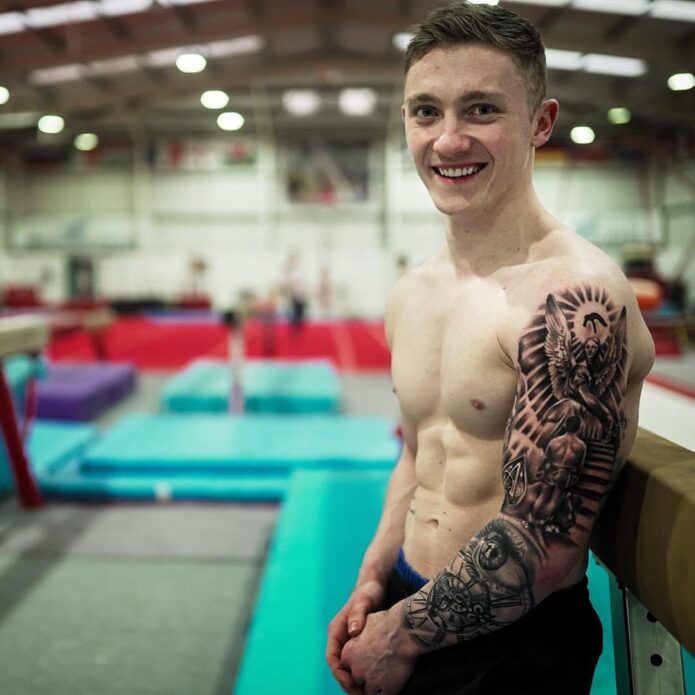
Nile Wilson’s tattoos fit his career surprisingly well. The former British gymnast has a sleeve packed with movement, a compass near the shoulder, a tiger eye across the chest, words along the ribs and Olympic imagery tied to the years that made him famous. The collection feels athletic without looking like a matching uniform. Each piece has its own shape, and the placements give the eye a route around his body.
That is the appeal of Nile Wilson tattoos. They mix personal milestones with strong black-and-gray work, then leave enough open skin for every major design to breathe. Some meanings have been discussed publicly, while other details are easiest to understand by looking at the linework and placement. Here’s a relaxed look at the designs that stand out most and the practical ideas they offer if you’re planning a sleeve, a chest piece or a tattoo built around a big life chapter.
Wilson’s career also gives the collection a clear thread. He won an Olympic bronze medal on the horizontal bar at Rio 2016, became a Commonwealth champion and later moved into life as a creator and coach. The ink doesn’t need to explain every part of that story to work. It simply shows how a collection can grow alongside the person wearing it.
Nile Wilson’s sleeve tattoos use motion, shading and layered symbols
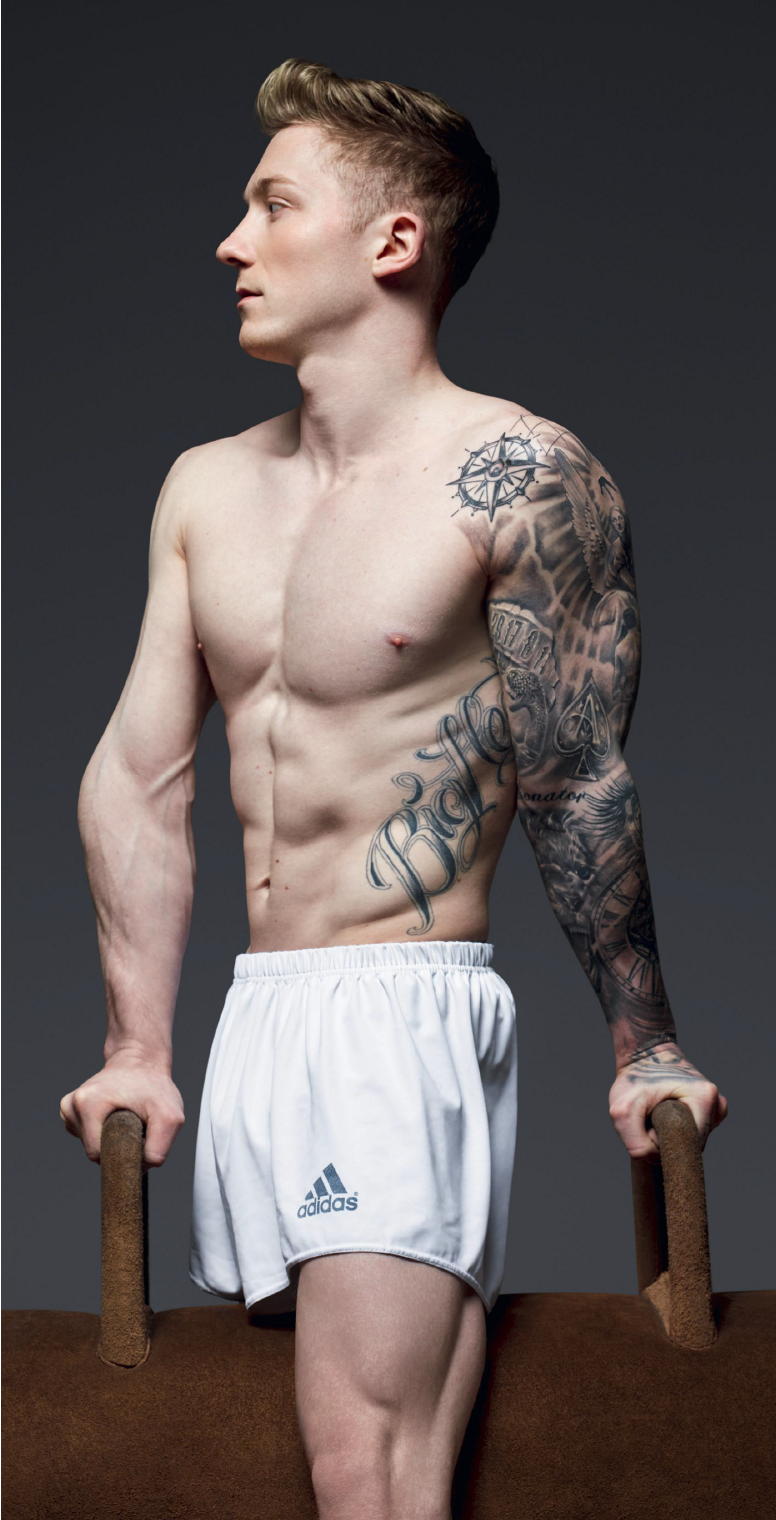
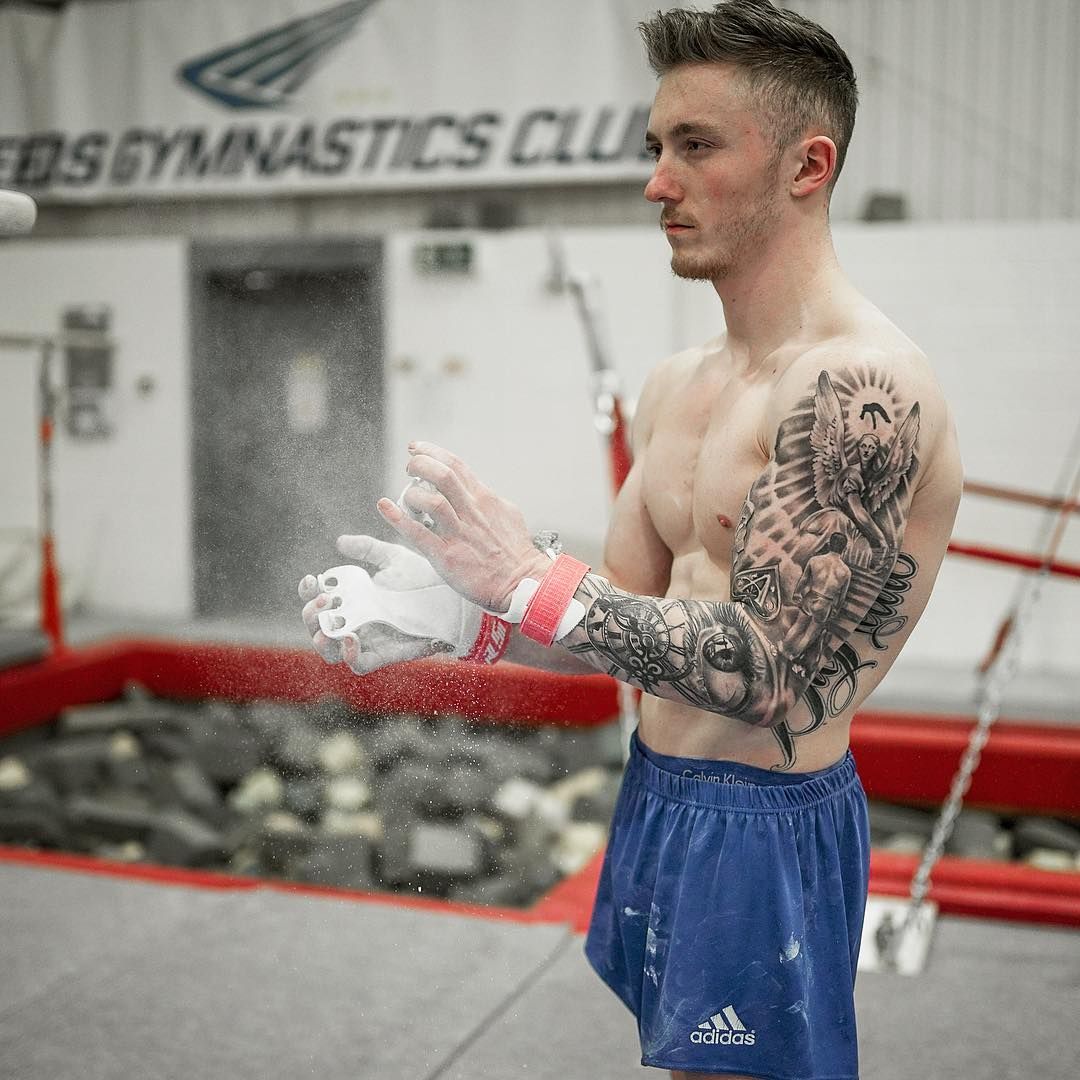
The arm sleeve is the first place most people look. It runs from the shoulder toward the hand and combines large figures with smaller symbols, so the design has a strong silhouette from a distance and plenty to study up close. The darker areas sit beside lighter skin breaks, which keeps the sleeve from reading like one solid block of ink.
You can see the influence of movement in the way the shapes wrap around the arm. Curves follow the bicep and forearm instead of stopping at a single flat panel. That is especially useful on a gymnast’s body, where the muscles change shape constantly as the arm bends, reaches or bears weight. A sleeve designed around those changes will look more natural in motion than one built from five unrelated rectangles.
The angel and stairway imagery on Wilson’s upper arm gives the sleeve a clear emotional center. An angel can be a faith symbol, a tribute or a reminder of somebody important. The stairs add direction, which makes the picture feel like a journey rather than a static portrait. A central image with a clear visual direction can make a busy sleeve feel organised, even when the surrounding tattoos come from different moments.
If you’re planning similar work, choose the main image before you pick filler. Decide whether the sleeve should feel soft and realistic, graphic and heavy, or loose and sketchy. After that, let the smaller elements support the mood. Wilson’s arm shows why a strong sleeve doesn’t need every gap packed with tiny decoration. The open areas give the larger forms room to read.
The compass tattoo keeps direction close to the shoulder
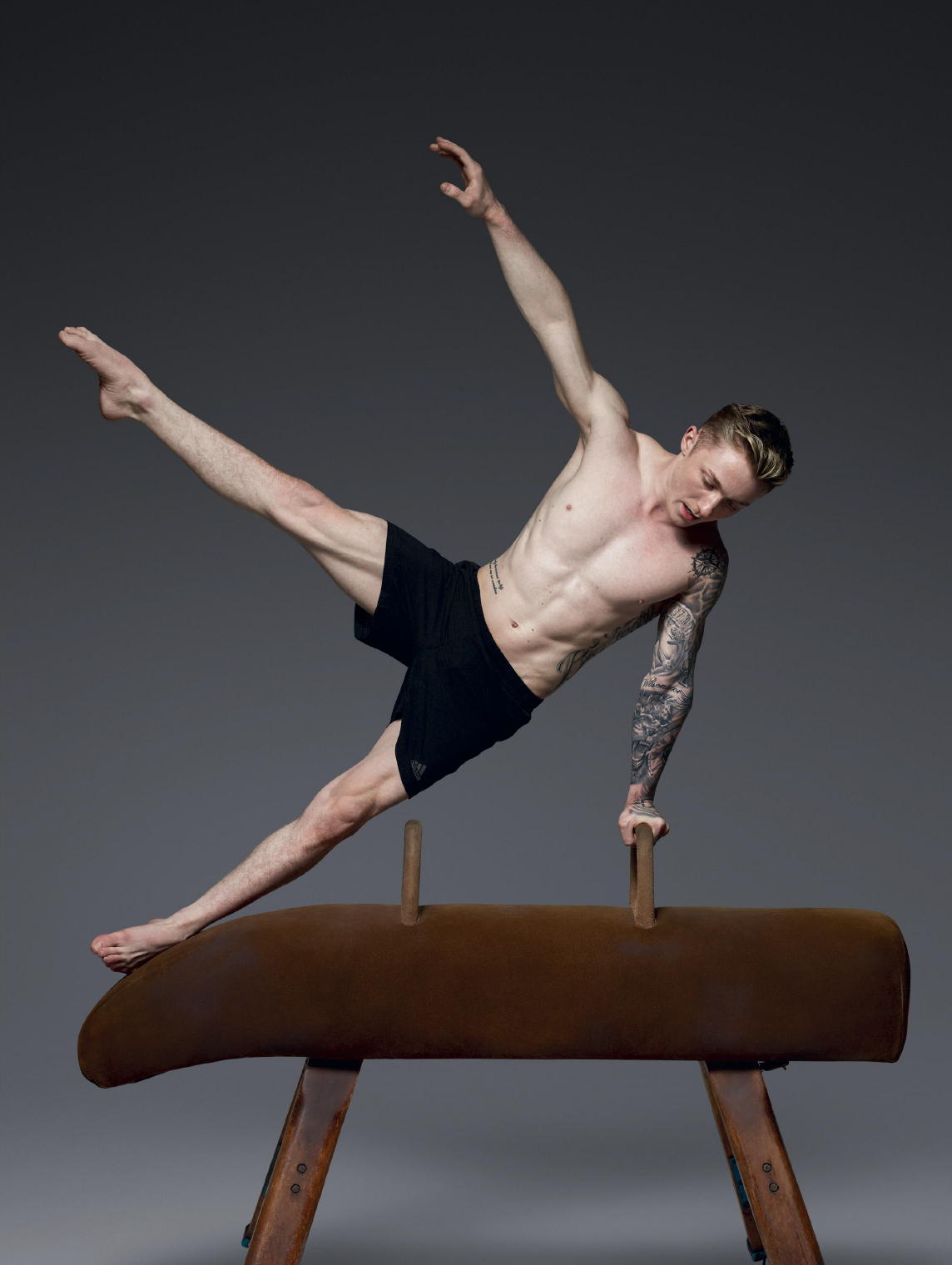
The compass near Wilson’s shoulder is a small design with a useful job in the overall layout. It gives the upper arm a crisp geometric point among the softer shading and figures. Compass tattoos are popular because the idea is easy to understand, but the placement still makes a difference. On the shoulder, the design can sit at the start of a sleeve and guide the eye into the larger work below it.
What works here is the contrast. A compass depends on clean points and steady symmetry. The rest of a detailed sleeve can be full of shadows, fabric, hair and movement. Putting the geometric symbol beside that realism creates a visual pause. It’s the same reason a small line of lettering can help a large portrait breathe. One simple shape gives the viewer somewhere to reset.
A shoulder compass also leaves room for personal choices. You can use a place you want to return to, a direction that matters to your family or a simple reminder to keep moving. The design doesn’t have to be overloaded with coordinates and dates. A clean symbol often lasts better than a crowded explanation, especially when the tattoo will be viewed from different angles.
For placement, ask your artist to test the stencil while your arm hangs naturally and while it reaches forward. The shoulder rolls under movement, so a design that looks perfectly centred in one pose may drift in another. Wilson’s tattoo collection makes a good case for giving each small symbol enough room to sit clearly before the larger sleeve is built around it.
Nile Wilson’s tiger eye tattoo turns the chest into a focal point
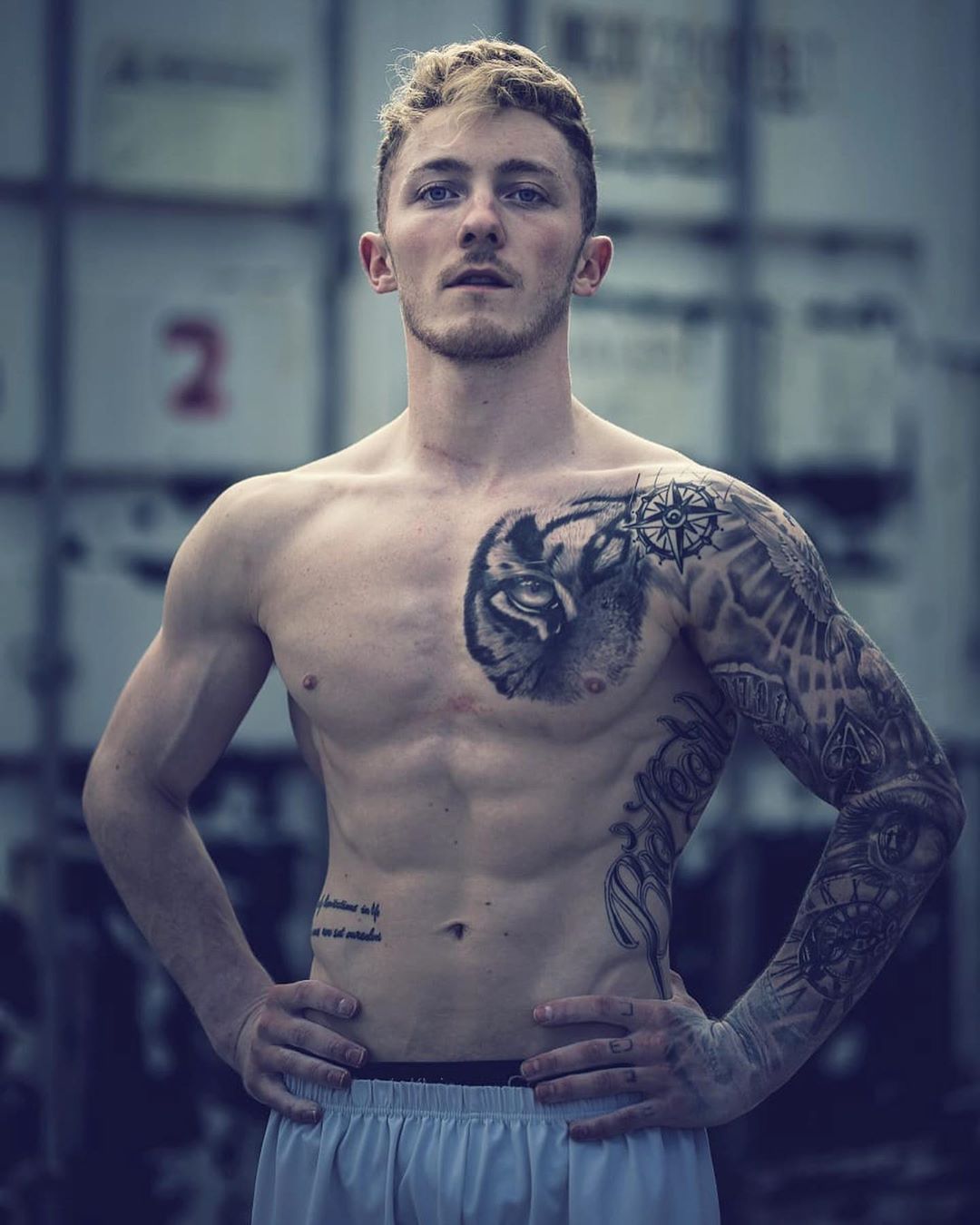
The tiger eye on Wilson’s chest has a different kind of impact from the sleeve. It faces outward, holds the centre of attention and uses the chest as a broad canvas for a realistic animal detail. The eye is the key feature. It gives the tattoo an immediate point of focus, while the surrounding fur and shading make the design feel connected to the rest of his upper-body ink.
Animal eyes are tricky because small changes in spacing can change the entire expression. The pupil needs to sit correctly, the highlights need to be controlled and the darker fur must not swallow the features. Wilson’s piece shows the value of choosing a chest placement that allows the artist to keep the face large enough to read. Realism needs breathing room, not a tiny canvas squeezed between existing lines.
The tiger also brings a visual balance to the collection. His arm work is full of vertical movement, but the chest piece spreads sideways and gives the torso a wider centre. That balance matters when you’re building a large tattoo map. A series of narrow designs can make the body feel crowded in one direction. One broad animal, wing or floral shape can steady the composition.
If you like the idea of a tiger eye but want something less literal, the same approach works with a wolf, big cat, owl or even a human portrait. Start with the expression you want the design to carry. Then choose the contrast and scale that will keep it readable after healing. A powerful face doesn’t need to be aggressive. It just needs a clear focal point and enough surrounding skin to let the features stay sharp.
His rib lettering tattoos keep a private line close to the body
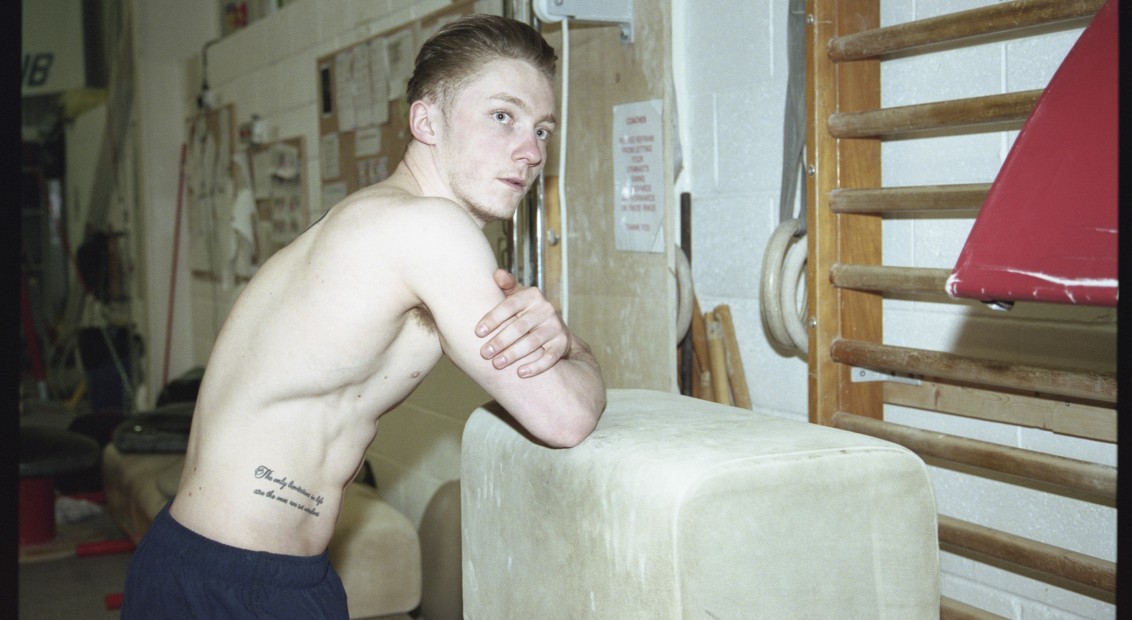
Wilson also has lettering along the side of his body, including the line, “The only limitations in life are the ones we set ourselves.” Script on the ribs changes the feeling of a collection because it is easy to cover and usually more personal than a design placed on the forearm. The words follow the curve of the body instead of sitting on a flat, public-facing panel.
Rib lettering brings a few practical challenges. The skin moves with every breath, the surface curves sharply and long words can become difficult to read when the body turns. A phrase that looks perfect on a phone needs to be checked at the real size, with the torso relaxed. Ask your artist to show you how the letters will sit when you’re standing, sitting and twisting.
The line itself works because it feels like a short reminder rather than a paragraph. It leaves enough space between the words for the letters to age without closing together. That’s a useful lesson for anyone considering a quote tattoo. You rarely need every sentence from the source that inspired you. Choose the part that still feels true when the appointment is over.
Lettering can also soften a collection full of pictures. Wilson’s sleeve and chest designs make strong visual statements, while the rib text gives the body a quieter voice. That change of pace is what makes a large collection feel lived in. Use bold art where you want energy, then place words or small symbols where you want a thought to stay close.
Nile Wilson’s Olympic and competition tattoos turn sport into memory
Wilson’s Olympic rings and competition-related tattoos connect his body art to a very specific period of life. The rings are a simple image, but on an athlete they carry a clear sense of achievement, pressure and time. They mark the years of training that led to Rio and the bronze medal he won on the horizontal bar. That kind of design can mean something even when the wearer never explains it publicly.
The useful idea here is choosing a symbol that represents the experience rather than recording every detail. You could tattoo a medal, a piece of equipment, a route, a team number or a small image from the place where an important event happened. The strongest version usually keeps the emotional centre intact. It doesn’t need a full timeline around it.
Sports tattoos can also age well when they avoid short-lived branding. A logo may be meaningful in the moment, but the feeling behind a season or competition is usually deeper. Wilson’s collection mixes recognizable symbols with personal imagery, which gives the work more staying power. Build the design around what the achievement changed in you, not only what it looked like on the day.
Placement changes the story too. A back tattoo can feel private and ceremonial. A shoulder or arm piece can stay visible during training. A leg design can keep a milestone close without making it part of every outfit. Think about whether you want the memory to be shown often or saved for the moments when you choose to reveal it.
Looking at Nile Wilson’s tattoos as a group, the biggest lesson is balance. The sleeve carries movement and detail. The compass brings a clean geometric pause. The tiger eye widens the focus across the chest. The rib lettering adds a private reminder, and the Olympic imagery ties the collection to the years that shaped his identity.
You can borrow that structure without copying a single design. Start with one tattoo that carries the main story, then give future pieces a job of their own. Use a realistic image for emotion, a symbol for direction, lettering for a phrase you want close and an open area for the collection to grow. Not every tattoo has to match, but each one should earn its place.
Before you book the appointment, bring your artist the feeling behind the idea and the body placement you have in mind. Let them adjust the scale, line weight and flow to suit you. The best result will have the same confidence as Wilson’s collection while still looking like it belongs to one life, one body and one honest story.