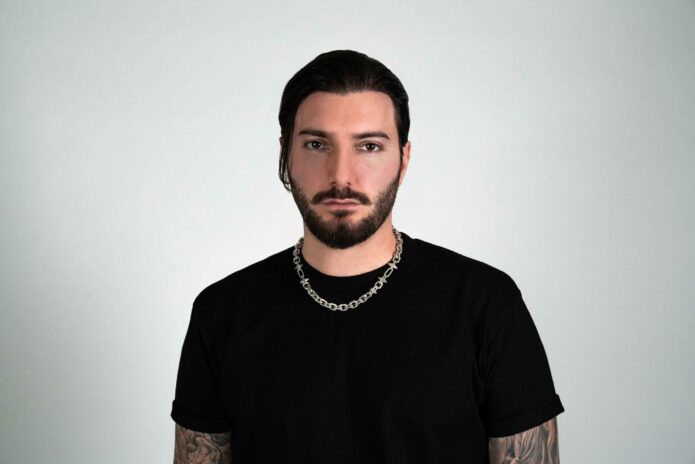
Alesso’s tattoos are part of the visual language he brings to a stage. The Swedish DJ and producer is often photographed in black T-shirts or sleeveless tops, and that makes the ink on his arms easy to read. The collection moves from an eagle and cross to denser blackwork across the sleeves, with open skin and lighter shading keeping the arms from looking like one solid block.
That mix makes Alesso tattoos interesting for anyone who likes music-inspired body art without wanting a loud logo on every inch of skin. The photos show a collection that grew over time. Some pieces have a clear subject. Others work more as texture, filling the arm and helping separate one tattoo from the next.
Alesso has spoken about at least one piece in a very relaxed way. In a Young Hollywood interview, he described the eagle as a spontaneous tattoo and said he liked the bird. That detail matters because it pushes back against the idea that every tattoo needs a grand explanation. Sometimes the design simply looks right, and the placement gives it a life of its own.
This guide sticks to the visible work in close portraits and live photos. It looks at the eagle, the cross, the sleeve balance, and the way the designs work with his clothes and movement. The useful ideas are in the placement, contrast, and flow, not in trying to copy a celebrity’s exact ink.
Alesso’s tattoo sleeve sets the whole look
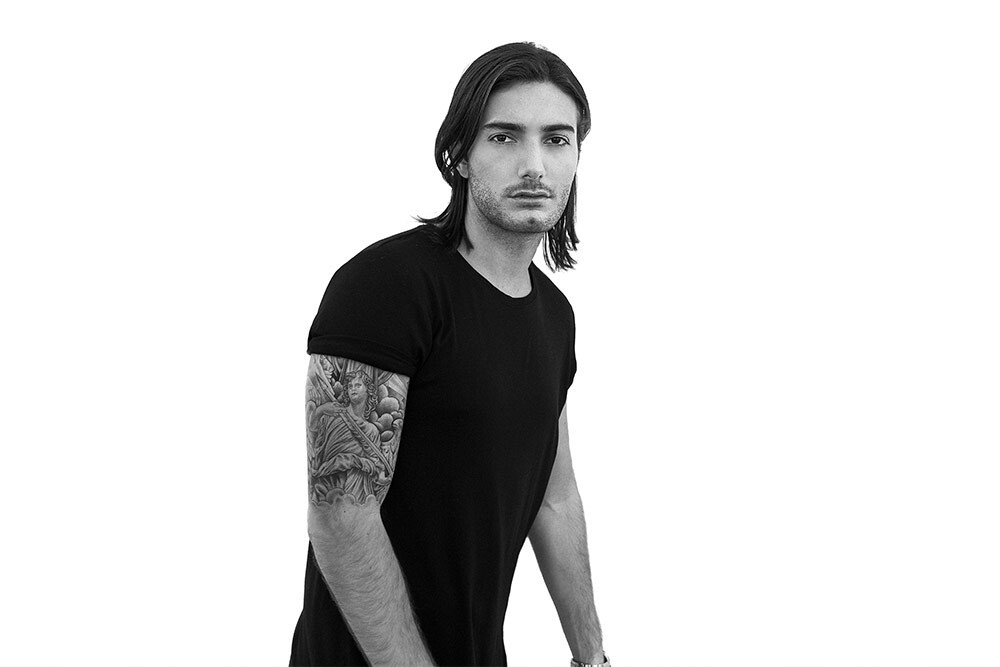
The first thing the studio portrait shows is how much of Alesso’s arms are covered. The tattoos run from the upper arm down toward the forearm, giving the collection the feel of connected sleeves even when a single photo only shows part of the work. The lines and shading are detailed, but the skin breaks keep the arm from reading as a flat wall of black.
That balance is useful if you are planning a large arm project. A sleeve has to work as a whole shape before anyone gets close enough to study the details. The outer silhouette is just as important as the tiny lines inside it. When the arm is relaxed, the darker areas create a strong outline. When it bends, the separate images start to overlap and the piece feels more alive.
Alesso’s clothes also help explain why the tattoos stand out. A plain black shirt gives the arms a clean background. There are no bright prints competing with the designs, so the eye goes straight to the skin. You do not need to dress exactly the same way, but a simple outfit can make a busy collection feel more intentional.
If you like the look of a full sleeve, start with the way you want it to read from a few steps away. Choose the largest value areas first, then work out where lighter textures and smaller marks should sit. Your artist can use open skin to separate the motifs and guide the eye around the arm. That kind of planning makes later additions easier.
The eagle tattoo is small but impossible to miss
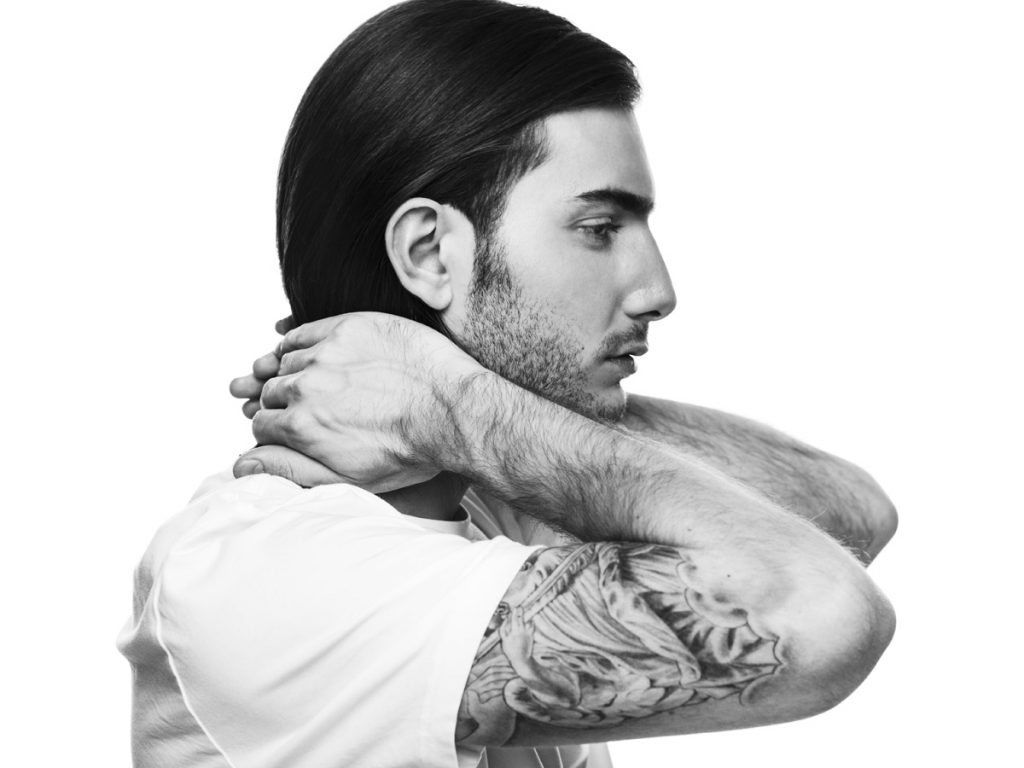
The eagle is one of the clearest individual tattoos associated with Alesso. In the side-profile image, the bird sits on the forearm and reads as a compact blackwork design. It does not need a huge scale to be recognizable. The wings, body, and direction of the shape give it enough movement to stand out against the rest of the arm.
What makes the placement work is the curve of the forearm. A bird already has a natural direction, so it can follow the long line of the arm without looking boxed in. The design feels like it is moving along the skin instead of sitting inside a square. Choosing a subject with its own built-in motion can make a small tattoo feel more dynamic.
Alesso has described the tattoo as spontaneous and said he simply liked the eagle. That is a useful reminder for anyone who gets stuck trying to explain every idea in a paragraph. A personal tattoo can start with a shape, animal, or object that you enjoy looking at. Meaning can come later, or it can stay simple.
For your own forearm, think about whether the design should face toward your hand, toward your elbow, or across the side plane of the arm. The answer changes how the tattoo looks when you move. Ask for a stencil in a few positions before you commit. A bird that looks perfect straight on can look cramped when the wrist turns.
Cross ink gives the forearm a clear focal point

The performance photo shows another recognizable part of Alesso’s visible ink: a cross on the upper arm. It has a strong shape, so it catches the eye even in darker stage lighting. The piece gives the arm a clear focal point while the surrounding work supplies texture.
Simple religious symbols are deceptively difficult to place. A cross has a straight center line and a strong horizontal bar, so small changes in angle are easy to see. On a rounded upper arm, the design has to be set so it still feels balanced when the muscle turns. A clean symbol needs a clean placement.
The cross also works as a visual pause inside a larger collection. Dense sleeves can become hard to read if every section has the same level of detail. A simple symbol creates a moment of clarity, then lets the eye move back into the more shaded pieces nearby.
If you want a similar effect, choose one straightforward tattoo to act as an anchor. It might be a cross, star, letter, number, or small portrait. Put that piece where it can be seen, then use softer shading or smaller designs around it. The anchor does not have to explain the whole arm. It just needs to give the composition a place to settle.
The paired sleeves create balance on stage
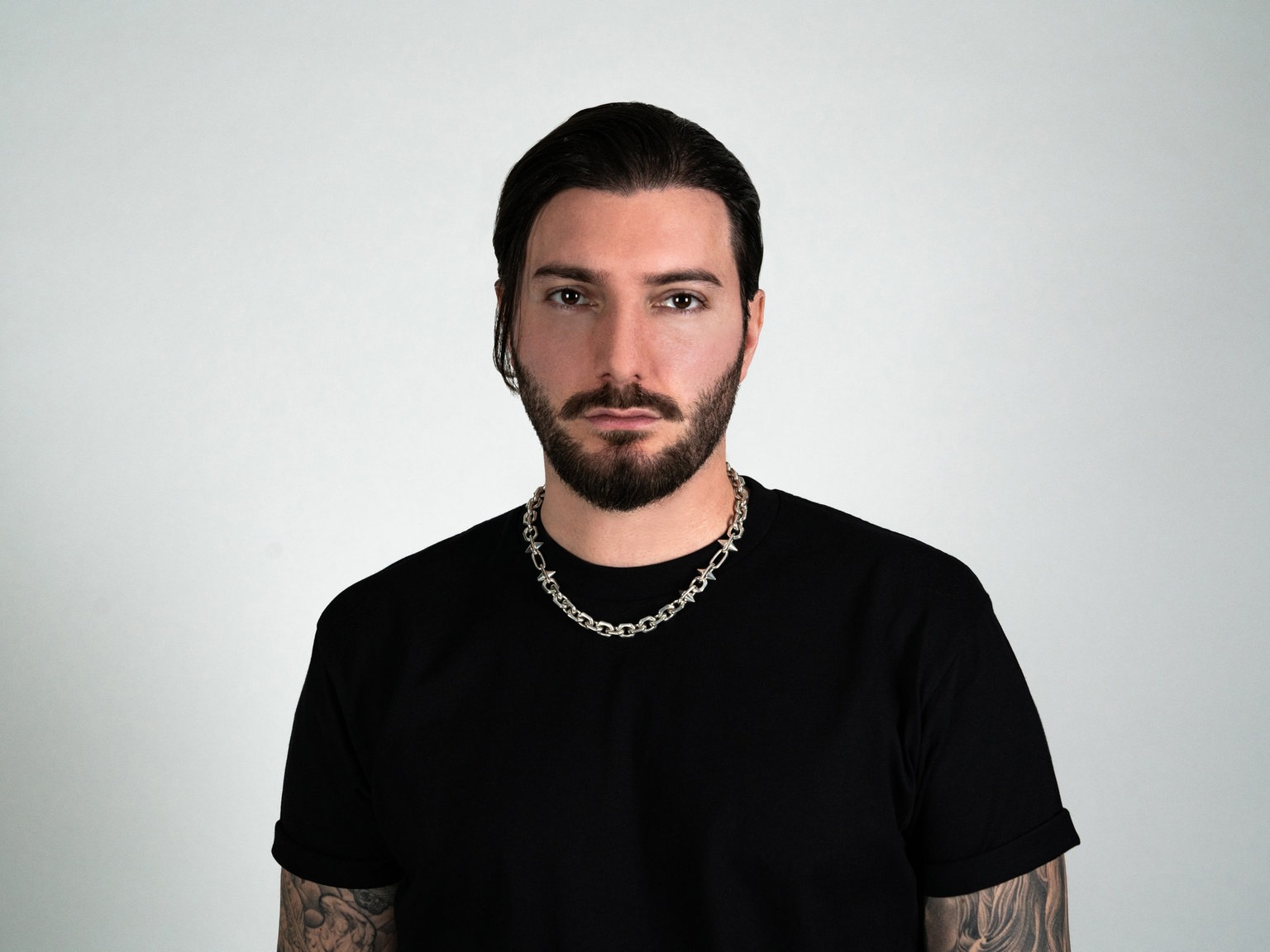
The sleeveless portrait makes the overall balance easier to see. Both arms carry tattoo work, but the coverage is not necessarily identical from one side to the other. That slight difference gives the look some movement. Perfect symmetry can feel stiff. Related density and a similar black and grey mood are often enough to make two arms feel connected.
Stage photos are useful because they show how the tattoos behave when the arms are open. Alesso’s forearms become long visual lines leading out from his torso, which suits the wide gestures of a DJ set. The tattoos do not stay in one neat pose. They stretch, twist, and break into different shapes as he reaches for equipment or addresses the crowd.
Your body is not a flat poster, so the design should not depend on one frozen angle. When planning matching or related arm work, take photos with your arms down, bent, crossed, and raised. Check what the audience or a friend sees in each position. The best flow usually comes from designing around movement rather than correcting for it later.
Clothing matters here too. A sleeveless shirt reveals more of the upper arm, while a short sleeve may only show the forearm. If you want your collection to have different levels of visibility, decide which pieces should stay private and which ones should appear in everyday outfits. That helps you choose the order of your sessions.
Alesso’s travel and music tattoos feel personal

The live stage image brings the tattoos into the setting where most people know Alesso best. Under blue light, the arms read as two dark bands of texture around a simple black shirt. Individual designs are harder to identify at that distance, but the overall shape still works. That is a sign that the collection has a strong visual rhythm.
Some of Alesso’s tattoos have been connected with travel, music, and the people around him. A long-running tattoo story about his early work describes a friend and a spontaneous approach to choosing designs. Other references point to personal names and travel ideas in the collection. The exact meaning of every piece is not always public, so it is better to focus on what the photographs show clearly.
That visible mix gives the arms a lived-in feeling. They do not look like one marketing graphic built around a single concept. They look like a musician’s collection, added at different moments and shaped by different moods. That kind of uneven growth can make a sleeve feel more personal.
If you are building a music-related tattoo collection, consider using one design that points to your work and another that belongs only to you. A waveform, instrument, lyric, or stage symbol can sit beside a family mark, travel memory, or image you simply love. The contrast often makes the whole arm stronger than a row of matching logos.
Alesso’s tattoos are a good example of how a large collection can stay readable. The eagle gives the forearm motion. The cross adds a simple focal point. The darker sleeve work creates depth, while the open skin keeps the arms from becoming too heavy. If you want similar energy, plan the flow first, leave room for lighter areas, and let the designs grow in a way that still feels like you.
For a little more context on the spontaneous eagle tattoo and Alesso’s style, the interview below is a useful watch alongside the photos.
One thought on “Alesso Tattoos: Eagle, Sleeves, Cross and More”