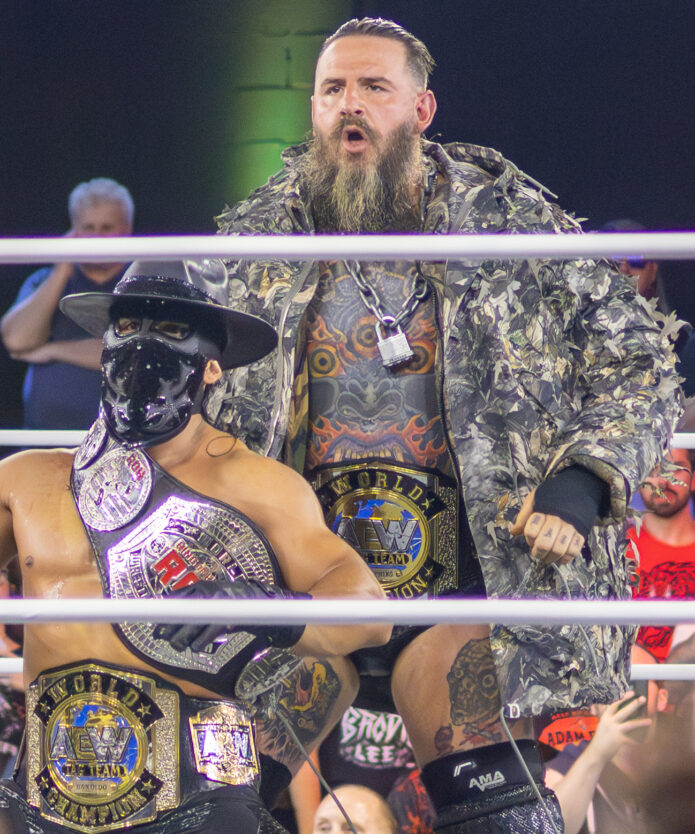
Brody King’s tattoos cover his chest, arms, back and legs. Bright colour sits alongside dark outlines and dense shading. King is an AEW wrestler and the vocalist of God’s Hate; photos from both settings show the same extensive body art, not just a generic wrestling portrait.
The five body images here show different parts of the work. One brings the chest and sleeves into close view, another shows the thighs, and a stage photo catches the forearms in motion. A rear view shows the back tattoo. The featured image is a separate portrait and doesn’t appear in the article body.
There’s also video of King getting a demonic leg tattoo from Paul Booth. It’s embedded at the end. The photos and video show the placement, colour, scale and linework; they don’t establish a private meaning for each design.
Brody King’s chest and sleeves carry the brightest colour
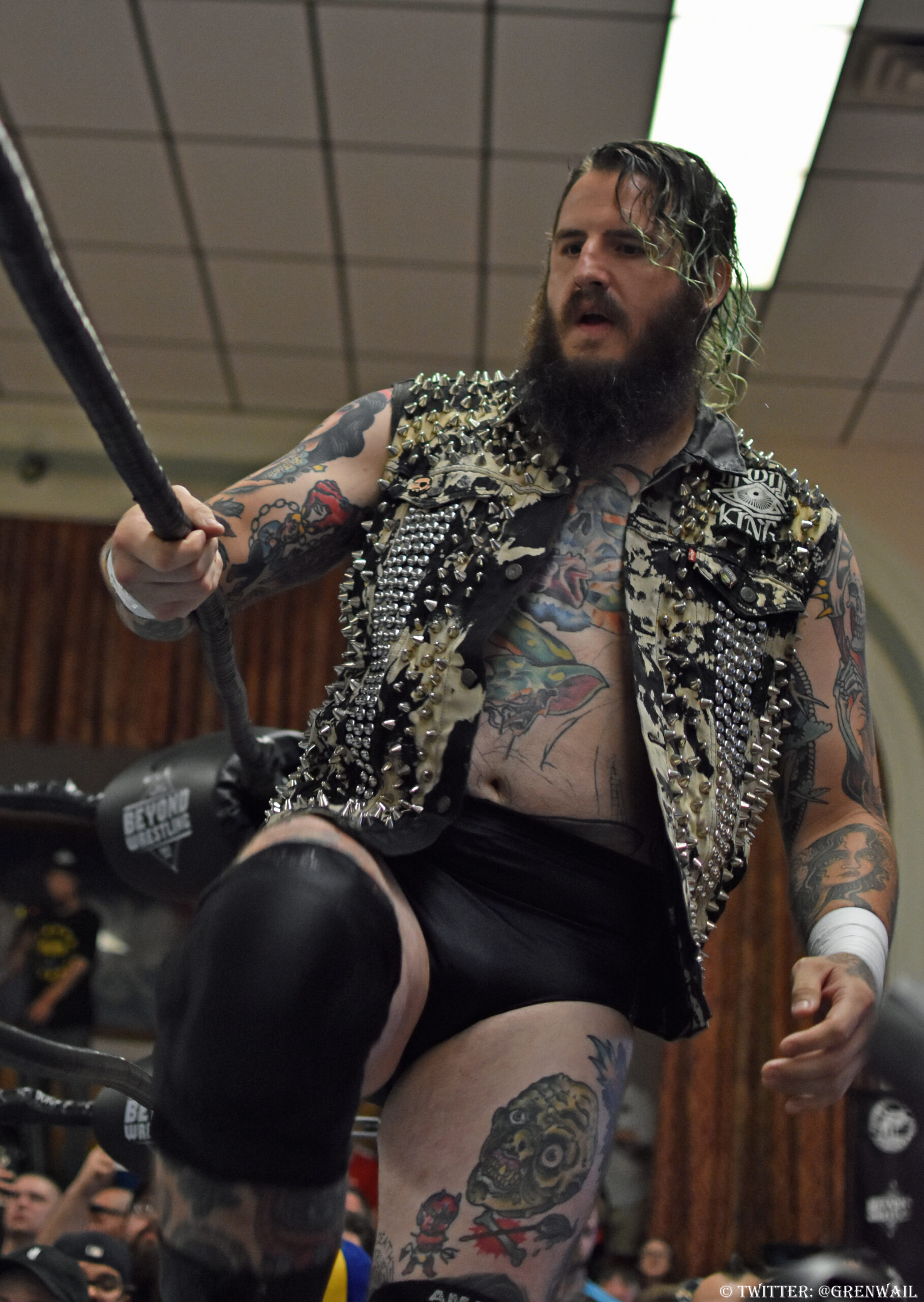
In this 2018 photo, a large design sits at the centre of King’s chest while ink runs from both shoulders down the arms. Red, yellow and blue remain visible alongside the dark shading; the arena lights haven’t washed them out.
The arms read as sleeves, but the skin isn’t filled with one uninterrupted block of black. Separate faces and shapes sit beside small open spaces, with the outlines helping each piece stand apart. Your eye can follow the designs from shoulder to wrist without losing track of the individual images.
Contrast is what holds the pieces together. Larger colour areas sit beside smaller black-and-grey details. The thigh has its own design, so the lower body draws attention in its own right rather than looking like a continuation of one pattern.
The chest design gives the collection a clear centre
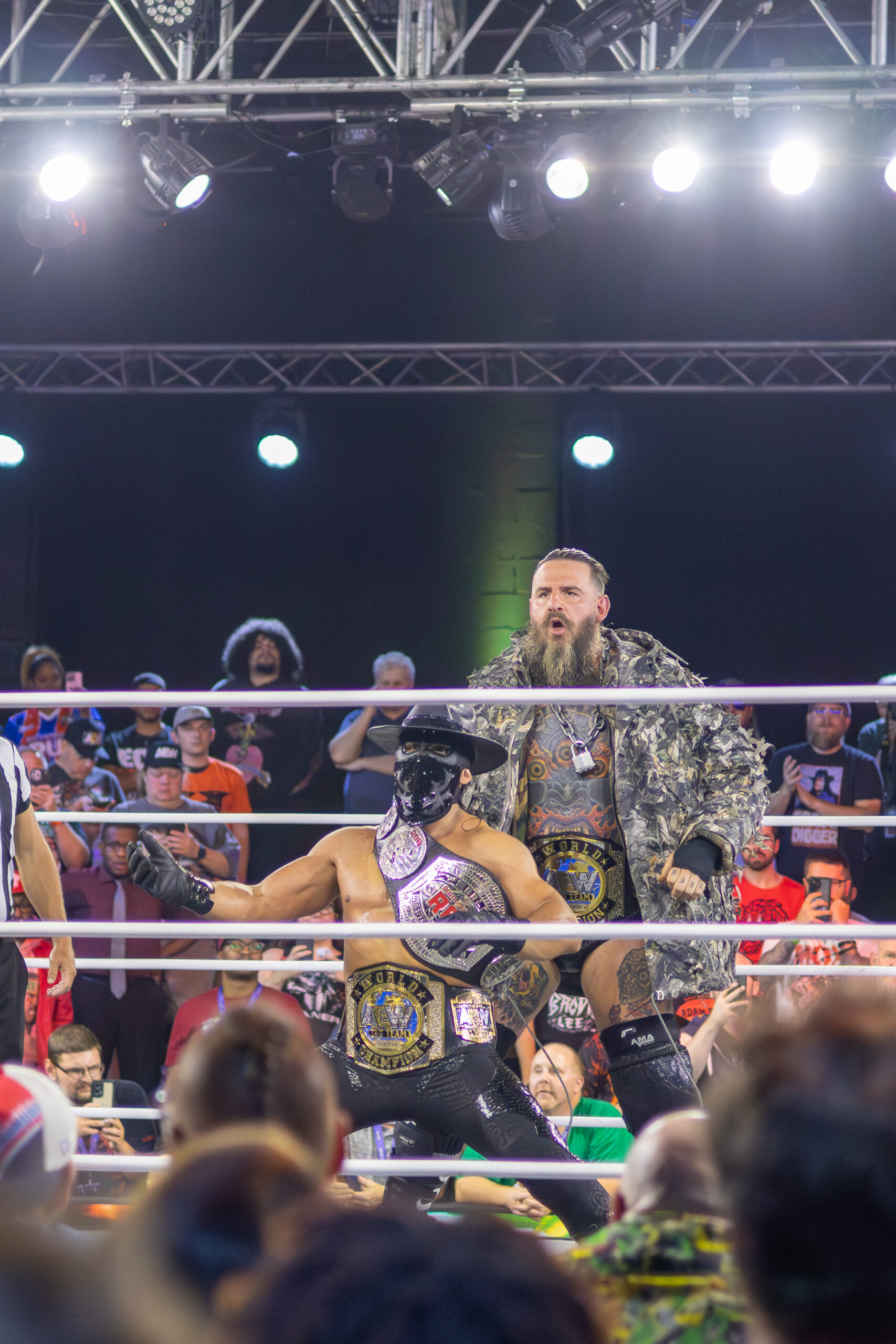
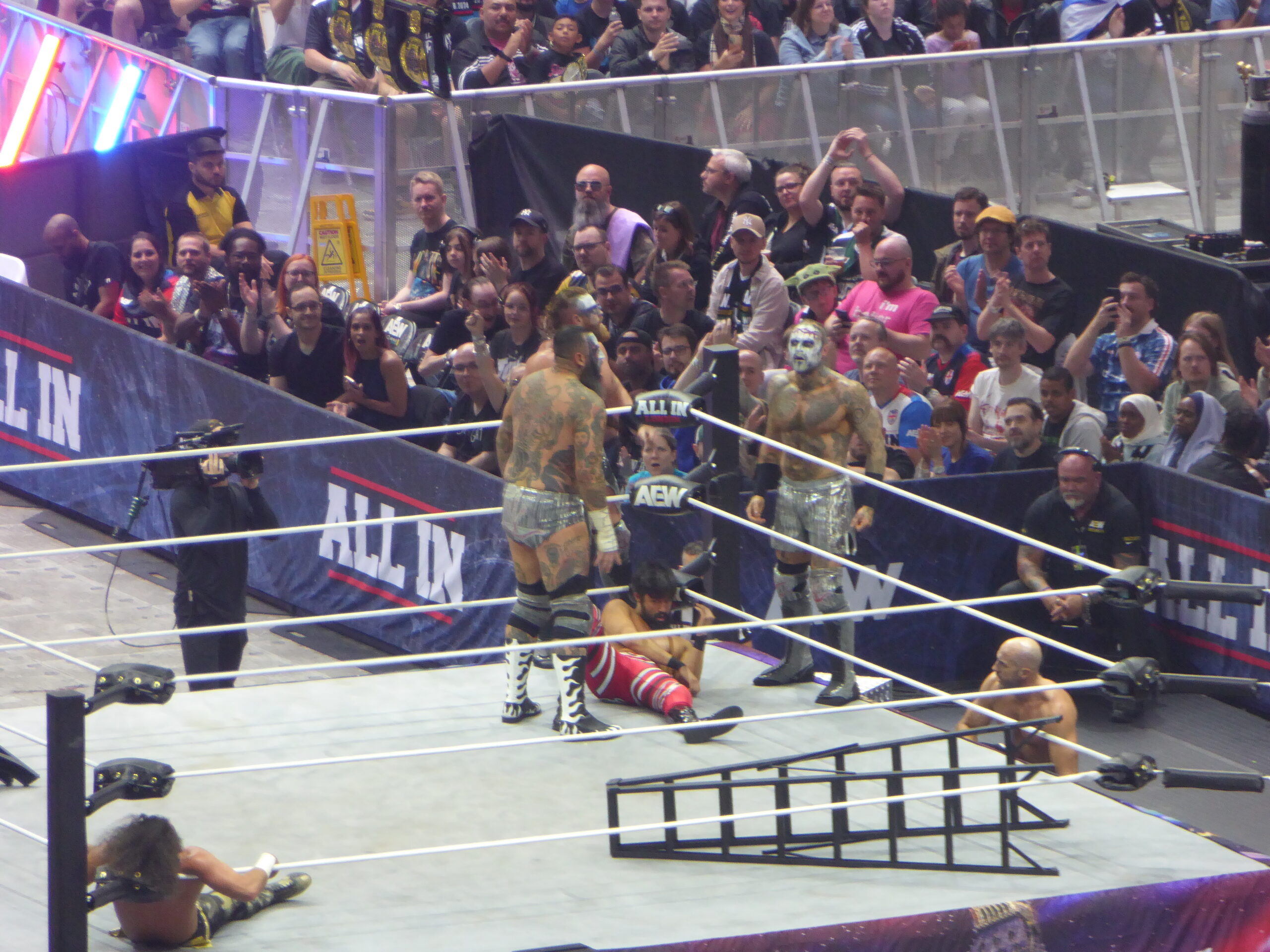
This full-body ring shot shows the chest work below King’s beard and above his waist. The central image is large enough to read from a distance, and smaller marks fill the surrounding torso. Ropes, belts, lights and another wrestler are in the frame, but the chest piece still stands out.
The same photo catches the forearms and thighs, so you can see how those areas relate to the chest. The ink doesn’t stop at the torso: it continues across the arms and down toward the knees.
The placement gives the collection its order. The chest catches your eye first, the sleeves carry the design across the shoulders and the thigh pieces extend it below the ring gear. That layout stays visible during matches, when King’s torso and arms are often exposed.
The forearms stay visible even in a moving entrance
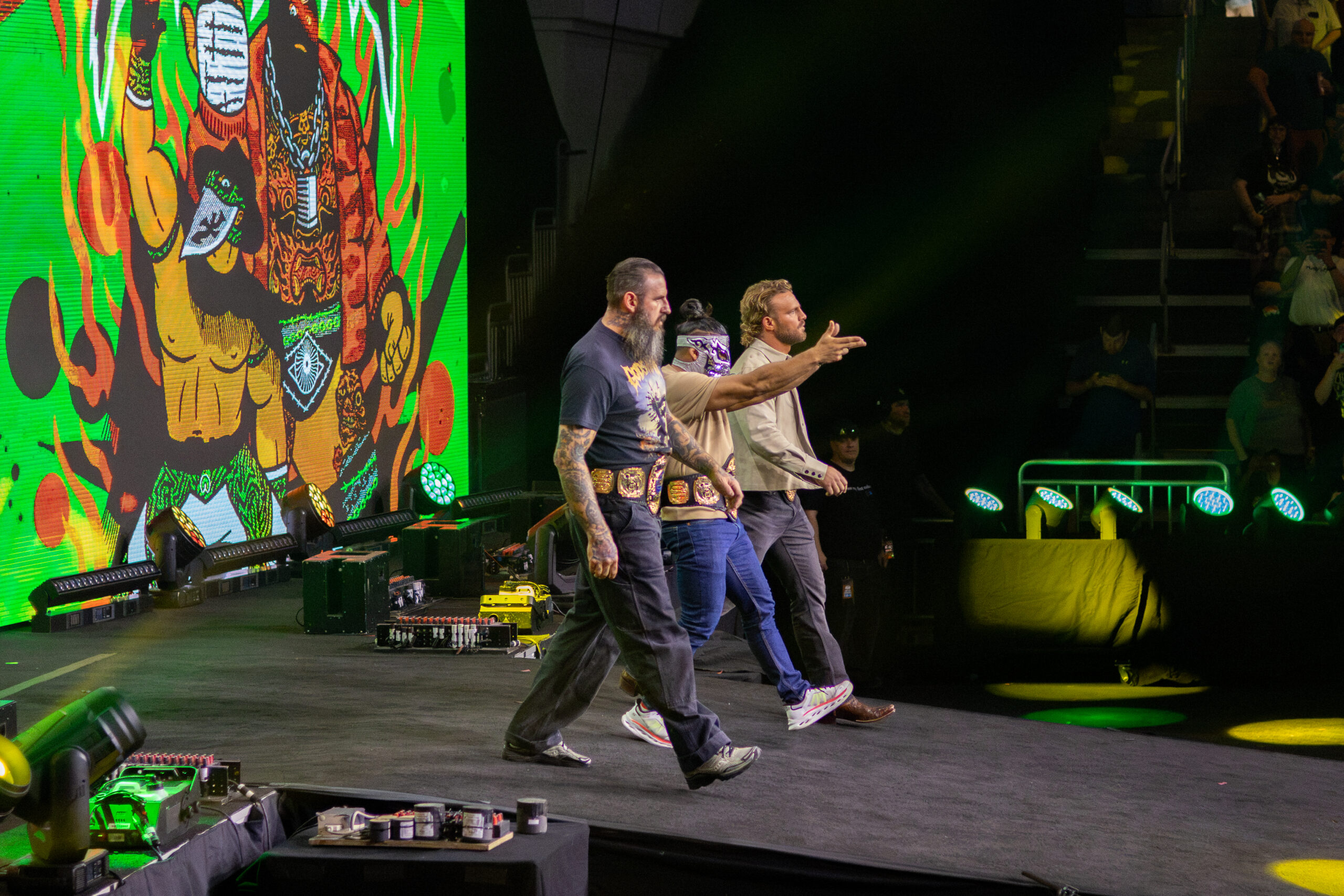
In this stage photo, King walks with the House of Black. His forearms are close to the camera, making the coverage easy to see even though he’s in the middle of an entrance. The opening in his shirt reveals part of the chest design; his hands and wrists come in and out of shadow as he moves.
A photograph doesn’t need to be posed in a studio to show how the ink sits. Here, you can see the elbows bend and the wrists turn as King walks. The scene also shows which areas remain visible while he’s moving, speaking or carrying a belt.
The ring setting is part of what makes this reference useful. The lights and crowd show how the colours and outlines look in the places fans usually see King, rather than in an isolated crop of his face.
The back tattoo reads as a large single field from a distance
This rear view shows a large tattoo across King’s upper back and shoulders. From farther away, the ink reads as one broad, connected area. The wide photo doesn’t make every small shape easy to distinguish, but the scale is unmistakable.
Back pieces rarely appear in front-facing wrestling photos, which makes this angle useful. The design spreads across the body rather than sitting in a small patch between the shoulders. The shoulders and upper arms frame it, while the densest ink sits across the back.
This photo shows the coverage, not the private meaning. We can describe the size, direction and density without claiming to know the story behind every symbol. That’s also the most useful information here for anyone studying how the piece is placed.
The leg tattoo designs add a separate layer below the ring gear
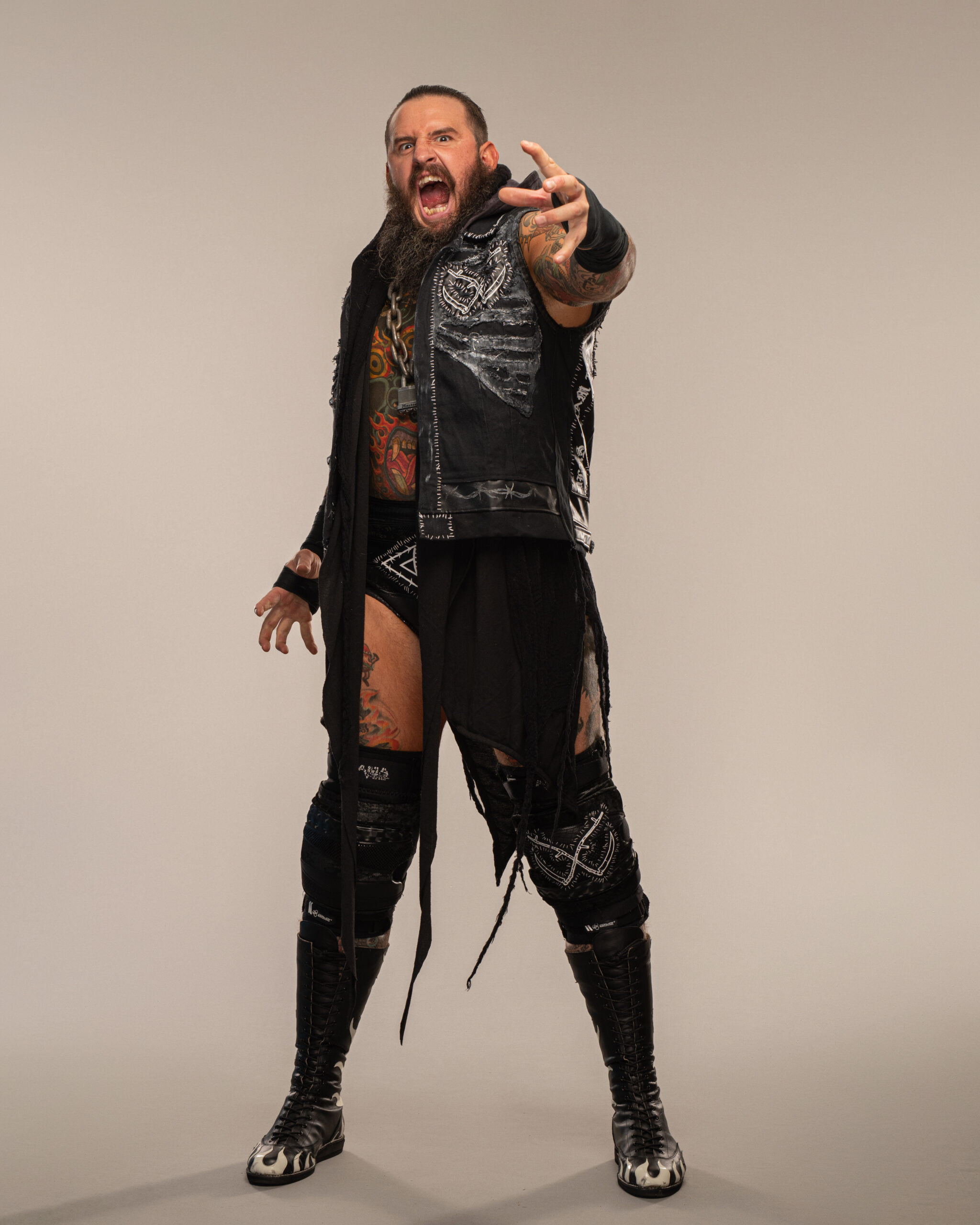
King’s legs have large pieces of their own. In this studio photo, a colourful tattoo covers part of the thigh, with more ink visible below the shorts. The 2018 ring image shows another leg design: a face-like figure surrounded by smaller marks and red accents.
Long trousers, ring gear or a championship belt can hide this work. With more of the leg exposed, its scale is easier to judge. These aren’t small additions; the designs have room to read as King’s knee bends and he moves across the mat.
The thigh pieces balance the work above the waist. The chest and sleeves usually get the first look, but the leg tattoos extend the composition below the ring gear. They also show King uses more than one body area for large, colourful designs.
Colour is a defining part of King’s tattoo style. Reds, yellows, blues and warm orange appear across the chest and arms, with black outlines keeping the images distinct. The mix stays legible under arena lights, even when the rest of the scene is dim or crowded.
The sleeves are dense, but the pieces are still separated. Larger images occupy the upper arms; smaller marks fill spaces around the elbows and forearms. That gives each design room to read when the arm bends, instead of turning the whole sleeve into a blurred band.
The chest anchors the collection. Its central design is broad enough to show through an open shirt, vest or entrance jacket. The shoulder and arm pieces carry that visual weight outward. In the 2018 image, the chest, sleeves and part of the thighs all appear in one frame.
The back adds another large surface. From behind, it forms a darker field across the upper back and shoulders. The wider event photo doesn’t reveal every small detail, but it shows how much skin the piece covers. A closer rear portrait would show more linework; this shot makes the overall scale clear.
The leg tattoos can be hidden by ring gear and then become a focus when King’s thighs are exposed. The photos show large designs with colour and heavy outlines, giving the lower body a visual weight that matches the chest and arms.
The moving entrance shot is a useful reference for how the ink looks outside a posed photo. King is walking, his arms are down and the lighting changes, yet the forearm tattoos remain visible. It shows more than a close face crop would: the ink in the setting where many fans see him.
The Paul Booth video offers another view of the collection. Booth is known for dark, surreal and black-and-grey work, and the clip shows him tattooing King’s leg. It documents that session; it doesn’t tell us the story behind every other design.
It’s tempting to supply a meaning for every monster, skull, face or symbol in a wrestler’s photos. We don’t need to. The images already show King’s preference for large areas, strong outlines, repeated colour and dense arm coverage.
For inspiration, pay attention to how the designs flow. A large chest or shoulder piece affects how a sleeve travels around the biceps and elbow. Ring gear and straps can cover some areas, so placement matters too. An artist can map the larger shapes first, then decide whether smaller marks fit around them. The thigh or calf can be a separate project if the upper body is already full.
No single dramatic entrance photo captures the whole collection. The 2018 close-up shows colour and linework; the full-body ring shot connects chest, arms and thighs; the stage image catches the forearms in motion; the rear view records the back. The studio portrait gives a clean face-visible image for the featured photo.
For more real celebrity and wrestler tattoo articles, visit the site’s wrestler tattoo section. Use clear photos of the person and the ink, keep the featured portrait separate and describe only what the photograph supports.