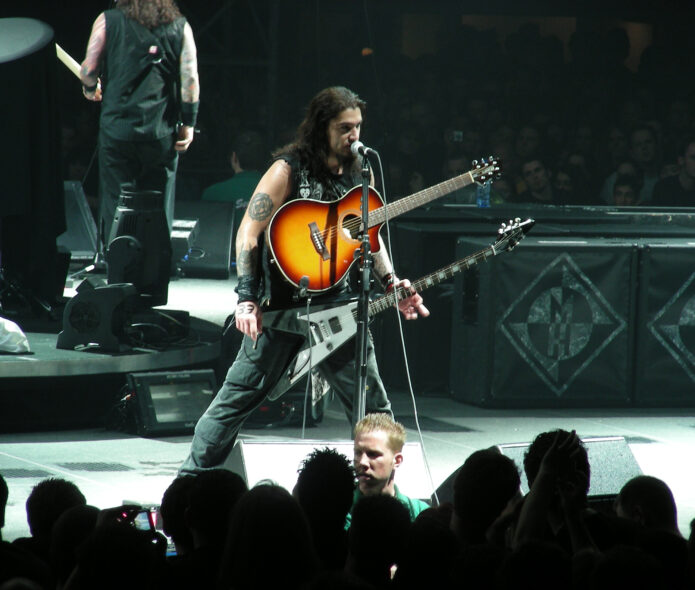
Robb Flynn’s tattoos cover both arms, with large pieces on the upper arms and denser work down the forearms. As Machine Head’s vocalist and guitarist, he’s usually photographed mid-performance: playing, leaning into a microphone or lifting his arms. Those pictures show how the ink sits when his arms are moving, which a posed portrait can’t quite capture.
Across the clearest shots, the tattoos mix black, grey and some colour. A large emblem-like panel stands out on an upper arm; tighter lines and shaded designs fill the forearms. Flynn hasn’t publicly explained the meaning of every piece, so this guide sticks to what the photos show: placement, colour, coverage and how the designs follow his arms.
The five body images below offer different views. The featured portrait is separate. Together, the photos show raised arms, close performance angles, upper-arm placement, forearm detail and an older stage shot.
Robb Flynn’s upper-arm tattoos are easiest to read in live photos
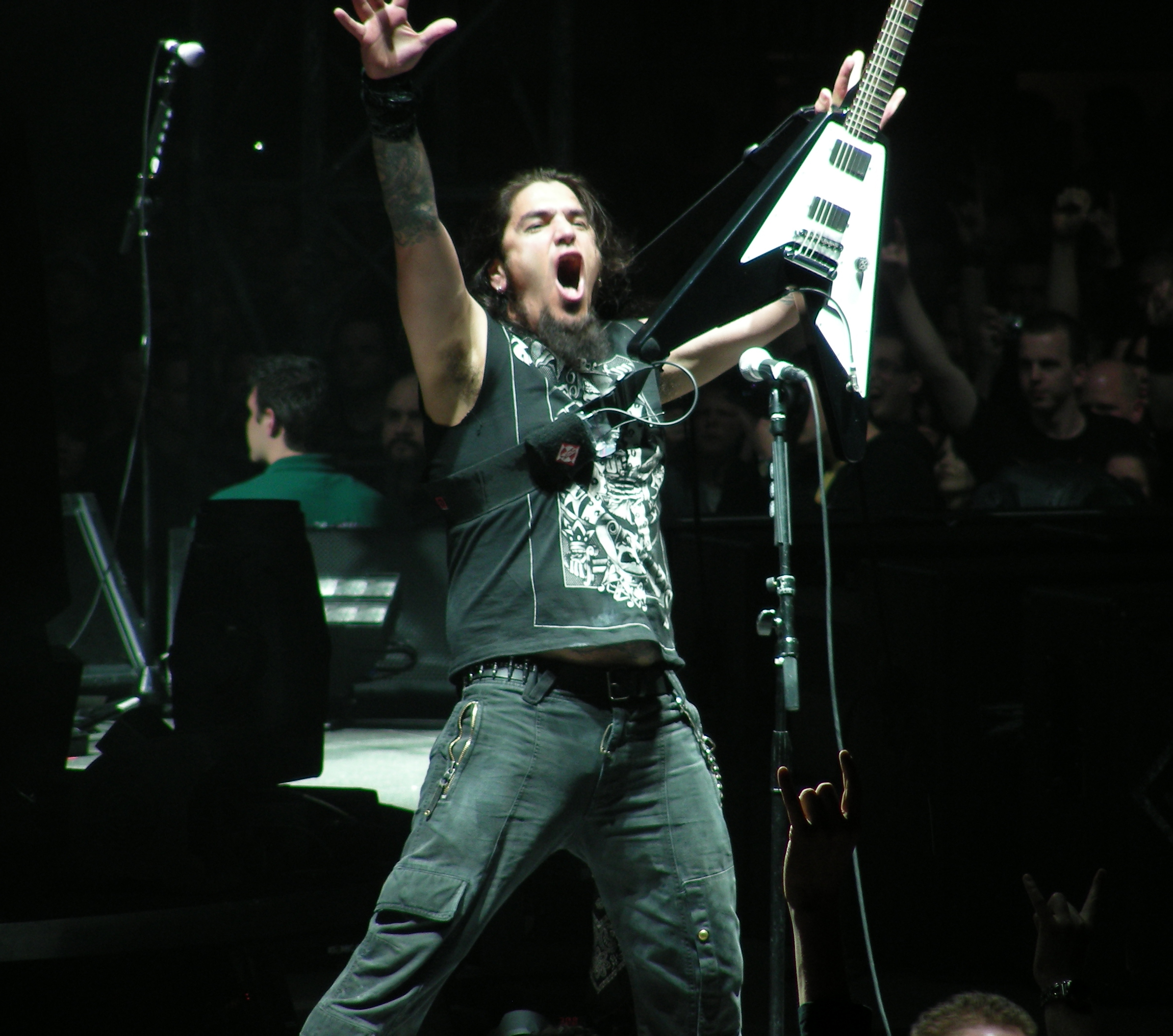
The upper-arm pieces are easiest to see when Flynn raises his hands on stage. In this shot, dark shapes and lighter gaps run from the shoulders toward the elbows. It isn’t one solid blackout sleeve: separate designs sit at different densities, with patches of open skin between them.
A change in pose can make familiar ink look different. When Flynn flexes, the skin turns away from the camera; red stage lights can flatten grey shading and make outlines seem heavier. The broad layout stays consistent across the photos, though: both arms have substantial coverage, and the upper-arm pieces give the eye a place to start.
The placement is clear; the meaning isn’t always documented. The photos don’t explain every symbol. They do show separate upper-arm panels, darker sections on the forearms and artwork arranged around the elbows.
Robb Flynn’s forearms mix dense linework with larger colour blocks
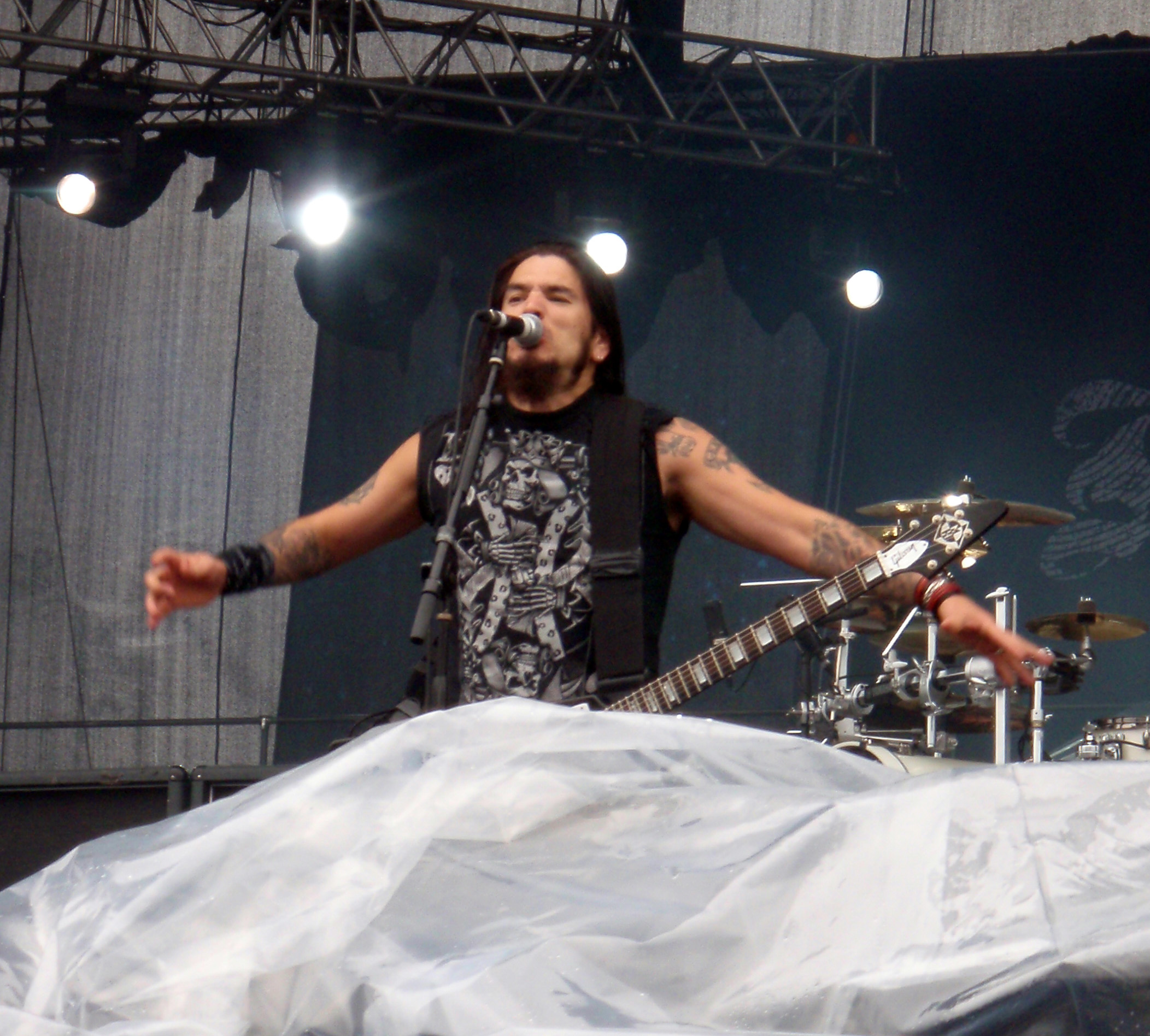
This performance photo brings the forearms into view. Lines and dark shapes cluster around the wrist and lower arm, while broader colour and black sections sit higher up. The designs are close together, but their different sizes keep them from reading as one blur.
Concert lighting can hide some of the colour. Red shows around the shoulder and upper arm, with black and grey filling the space nearby. Lower down, linework and shading become more prominent. Looking from shoulder to wrist makes the change in scale easier to see than treating the whole arm as one repeated pattern.
Density gives the sleeves much of their impact. The ink reads from across a stage, while lighter lines add edges in a closer shot. If you’re using the photos for sleeve ideas, notice how the larger filled areas sit beside detail that remains visible in motion and changing light.
The upper-arm panel gives Flynn’s tattoos a strong visual anchor
A side view isolates one of Flynn’s most recognisable areas. His upper arm has a large circular, emblem-like design, outlined in dark ink with lighter shapes inside. Below it is a separate group of imagery, giving the arm distinct upper, lower and wrist areas.
The panel remains visible when Flynn wears a vest or plays guitar. It sits on the exposed upper arm and reads as a large shape before the smaller details come into focus. That’s a practical spot for a musician who’s moving, holding an instrument and turning toward the crowd.
The tattoos share the frame with the performance. These aren’t catalogue poses: the guitar, microphone and changing lights are part of the photographs. Even so, the upper-arm design stays clear enough to compare across years.
The separate arm pieces stay readable when Flynn is playing guitar
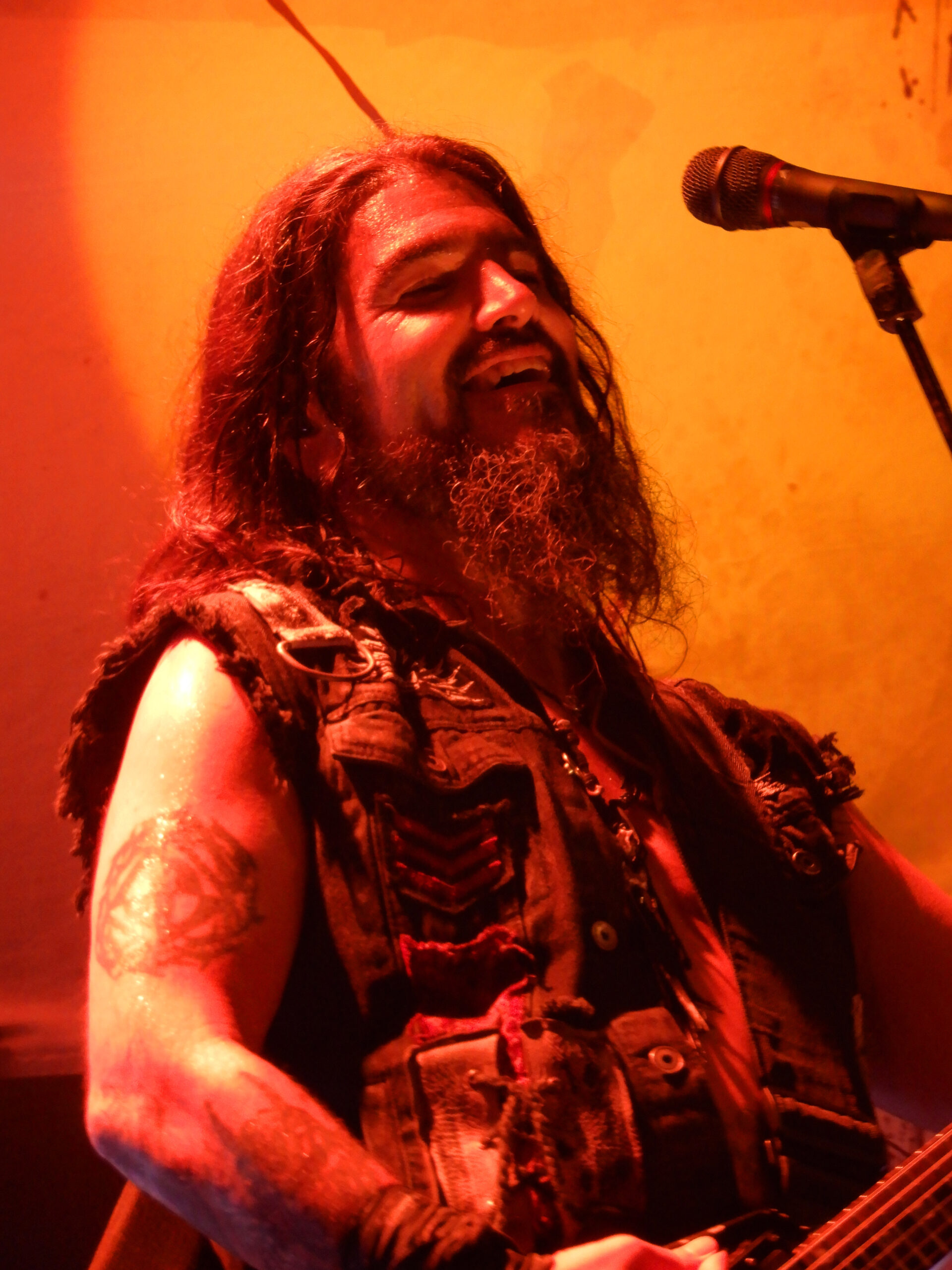
This live photo shows how the tattoos sit while Flynn plays. His wrists and forearms bend as he frets and picks, but the larger upper-arm design still faces the camera. Farther down, dark pieces and curved lines follow the arm toward the wrist. It gives a better sense of the wrap than a shot with the arm held flat.
The coverage isn’t perfectly even. Some areas have heavier fill; others leave skin between the designs. That spacing helps the pieces stay distinct when a bracelet, guitar strap or microphone enters the frame, and it gives the sleeves the look of work added over time.
More than one pose helps explain the layout. A straight-on portrait can show surface detail, while a playing shot reveals how the ink follows the arm and slips out of view when Flynn turns his elbow.
Older performance photos show the same arm layout in a different light
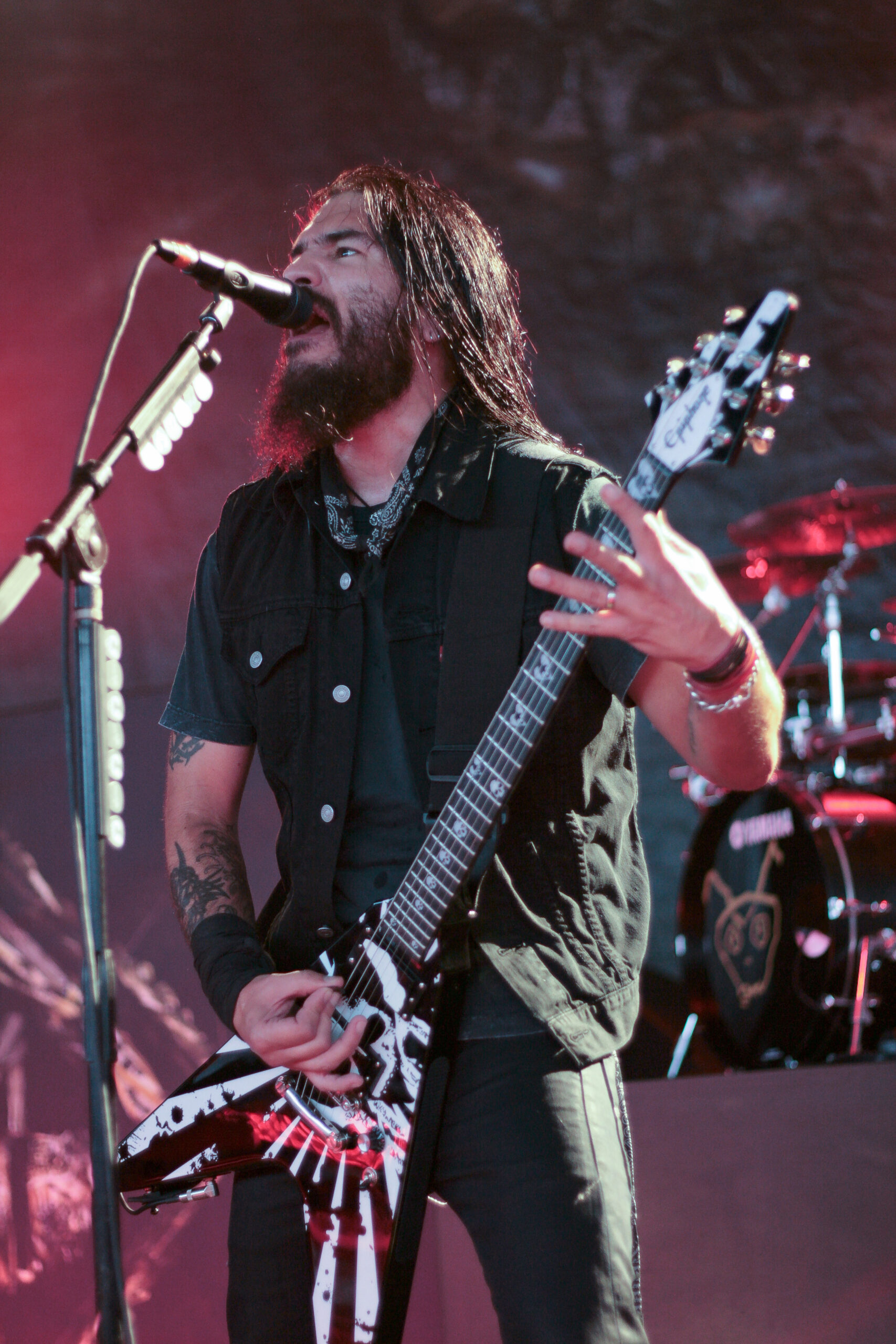
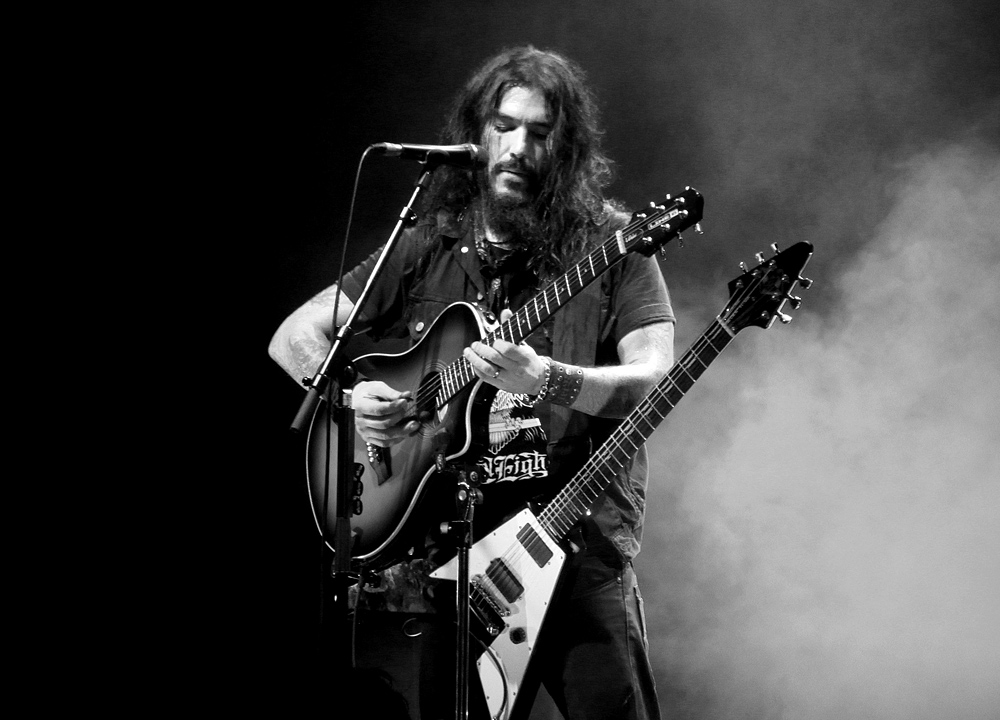
The vertical Blackening-era photo has dark, warm stage lighting, which changes how the tattoos read. The upper-arm emblem remains visible; the forearm looks like a dense mix of black, grey and soft-edged shading. Compared with daylight, the image is less crisp, but the overall layout is still easy to follow.
It also shows the ink alongside clothing and gear. The guitar strap crosses Flynn’s torso rather than his arm, leaving the main pieces visible. A bandana covers part of the wrist, so this photo can’t tell us exactly what the tattooing looks like across the whole hand or lower forearm.
Age and lighting matter when comparing photos. Ink can look softer, darker or more faded depending on the camera and conditions. The details that recur across several shots are the safest to describe: heavy arm coverage, a large upper-arm emblem, dense work lower down and colour in parts of the sleeves.
Across the photos, Flynn’s tattoos cover the arms without turning them into one flat block. The upper arms hold the largest shapes; smaller marks and darker shading fill the forearms. That contrast gives the eye somewhere to land, while a close shot can reveal lines that disappear in a wide concert frame.
The pose changes what you can see. When Flynn lifts an arm, the upper-arm panel faces the camera and the forearm lengthens. While he plays, the wrist bends and some of the lower-arm designs turn away. Each angle shows a different part of the same work.
Lighting shifts the details too. Bright, neutral light makes colour and lighter shading easier to pick out. Red or blue stage lights push the ink toward a darker silhouette. Comparing different kinds of photos helps avoid mistaking a lighting change for a new tattoo or a grey area for solid black.
Clothing and instruments also affect the view. Flynn’s vests leave his upper arms exposed; guitar straps cross his torso, and bracelets can cover the wrists. The larger designs remain visible because of where they’re placed, even while he’s performing.
There’s no need to guess at a backstory to describe the visible work. The upper-arm emblem, black and grey forearm pieces and flashes of colour already give the collection a distinct look. When a tattoo’s meaning hasn’t been made public, describing its design is more accurate than supplying a story.
For sleeve inspiration, the photos show how a larger upper-arm piece can sit beside tighter forearm work, with open skin separating denser sections. They also show how the layout changes when an arm bends. Anyone drawing on the same approach should work with an artist on scale and flow around the elbow and wrist.
Machine Head fans know Flynn through the band’s lyrics and album art, and he has talked about seeing listeners tattoo those words and images. That’s separate from the record of his own tattoos, but it helps explain why his arms draw attention in performance shots: the ink is visible alongside the music and artwork people associate with him.
The clearest picture comes from looking across several photographs. A raised-arm shot shows the coverage; a close performance angle reveals linework; an older image helps with comparisons over time. Each adds something without asking one frame to show everything.
For more real celebrity and musician tattoo guides, visit the site’s celebrity tattoo section. As with this guide, the useful details are the ones a photograph supports: show the tattooed person, keep the featured image separate and describe what can actually be seen.