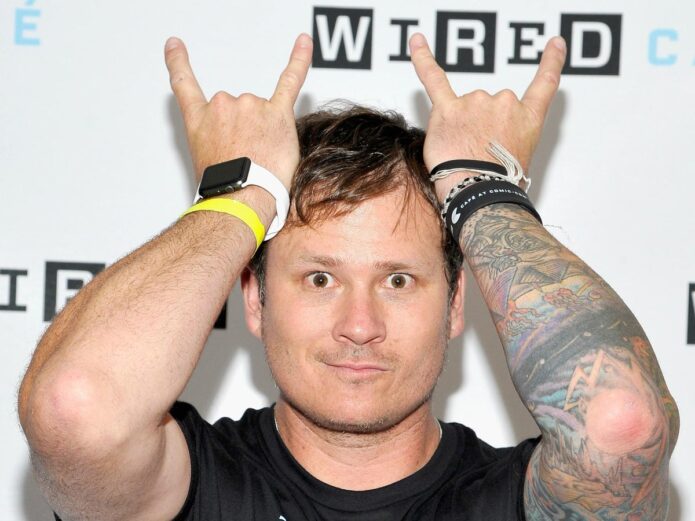
Tom DeLonge’s right-arm sleeve has been part of his public image since the Blink-182 years. It is dense with color, symbols and layers of line work, and the coverage has appeared through his time with Blink-182 and Angels & Airwaves. The design has changed over the years, so it is better understood as a long-running collection than a single piece added all at once.
Start with the whole arm, then look closer at individual sections. The sleeve mixes stars, heavy outlines, shaded panels and less familiar shapes. Some of it fits with DeLonge’s music and public interest in UFOs, but he has not published a full explanation of every design. The photographs let us describe what is visible; they do not settle every meaning.
The sleeve is the main event in Tom DeLonge’s tattoo story.

The first thing you notice is how much of the arm is covered. The sleeve runs from the upper arm toward the wrist, with pieces close enough together to read as one composition from across the room.
This Kerrang portrait catches the sleeve in a relaxed pose. His forearm rests across his body, showing how the ink wraps around the arm. The view changes when the arm is straight, bent or turned away from the light, so a single flat photo cannot show the full layout.
The artwork has a punk feel: heavy outlines, bright sections and shapes that do not all use the same style. It looks collected over time, with later work fitting around existing pieces. The sleeve is busy, but the darker borders and shifts in color help keep its sections distinct.
Color remains legible because the outlines separate one panel from another, while brighter areas draw the eye across the arm. If you like the look, the useful details to study are the spacing and contrast, not any one symbol in isolation.
The raised-arm shot shows how far the color runs
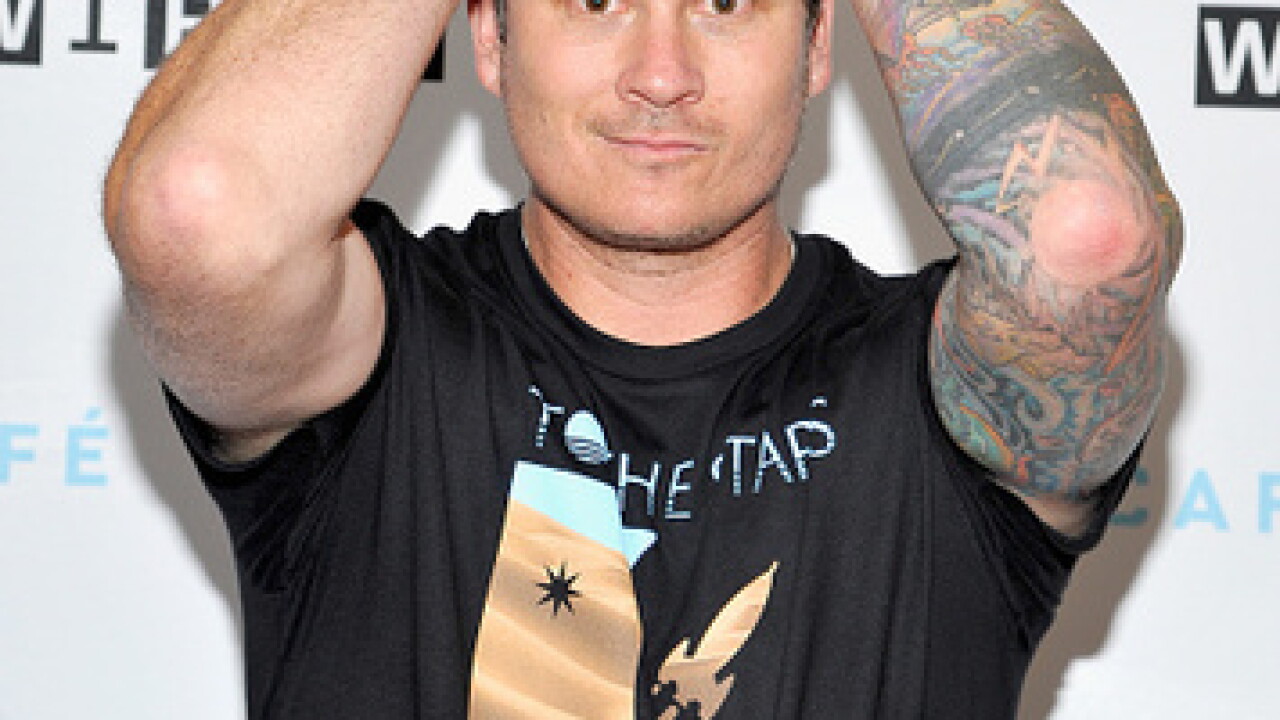
With both arms raised, the right sleeve is hard to miss. The pose opens up the elbow and upper arm, and the colors stand out against his black shirt. Photos across different years and settings show the ink on his arm, rather than a single stylized image creating the impression of a tattoo.
The sleeve also holds together while he moves. DeLonge is making a rock-hand gesture, but the main shapes remain visible as the skin stretches. The photographs do not tell us whether every later addition was planned as part of one project; they do show how the existing design works across a bent arm.
The elbow is a difficult place to tattoo because it bends, creases and catches shadows. Here, the surrounding shapes keep the coverage looking connected from the shoulder down. A sleeve has to make sense in motion as well as in a posed photo.
Some of the stars and space-like shapes fit naturally beside DeLonge’s public interest in unusual aerospace stories and life beyond Earth. That is a visual connection, though; it is safer to describe the resemblance than assign a private meaning he has not confirmed.
The close portrait makes the sleeve’s mix of styles easier to read
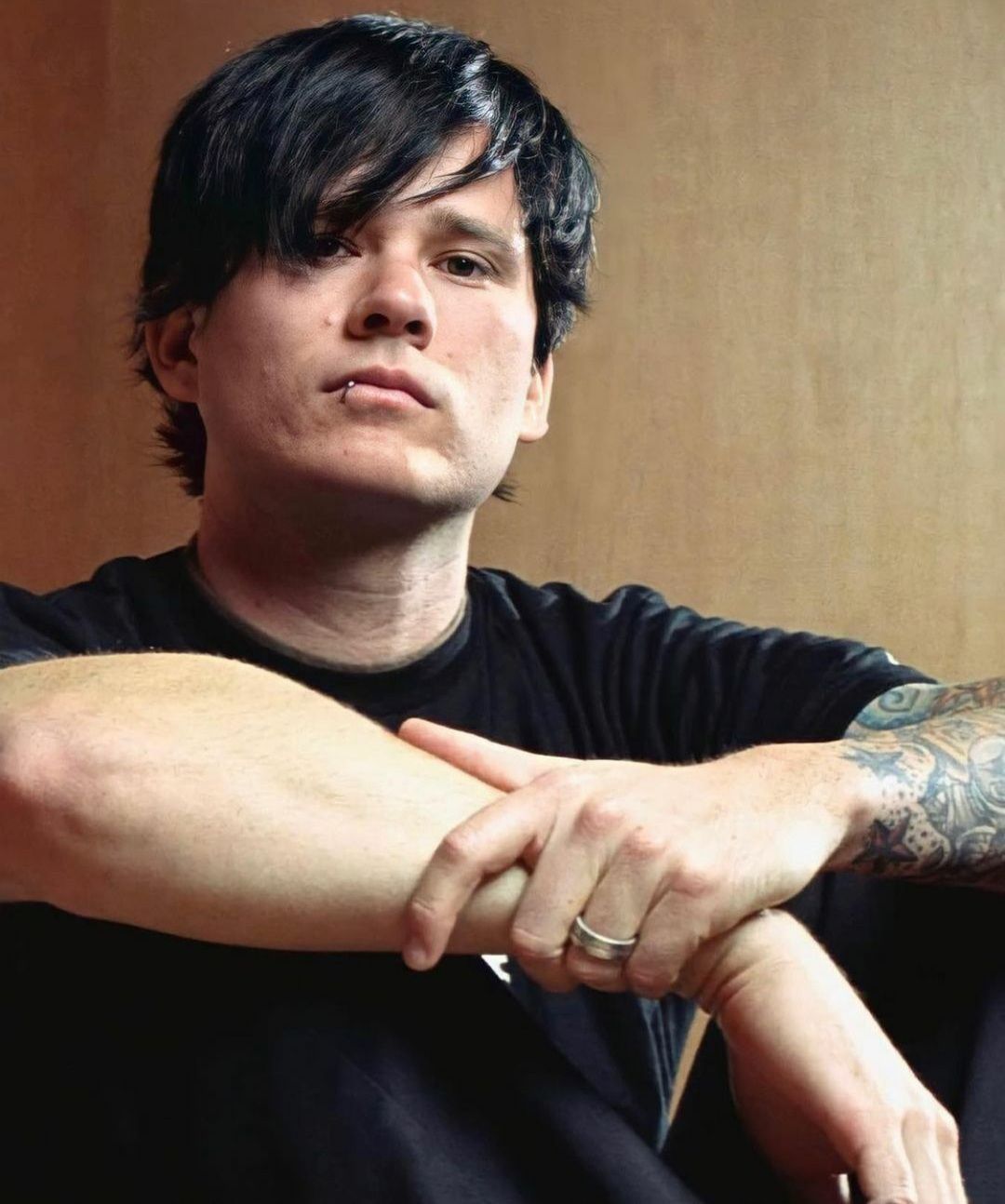
In a tight portrait, the forearm is close enough to show the sleeve’s different textures. It is not one flat block of color: black line work, illustrated sections and small gaps sit beside one another. From a distance they form one bold arm; up close, each area reads as a separate idea.
The sleeve does not look like a set of designs lifted from one flash sheet. Its mix of cartoon-like shapes, hard black marks and bright panels reflects a collection built over years. Those choices also sit comfortably with the punk and alternative scenes DeLonge came from.
It is easy to misread a small shape in a photograph. Lighting, resolution and the angle of the skin can make a mark look like a letter or logo. Describe what the photo shows before guessing what it means.
The close view also shows how the color has softened at the edges in places. Arm tattoos move constantly and get sun; older color can look less sharp than it did when fresh. That gives the sleeve some texture. For colorful work, contrast and how a design will age are part of the planning too.
The early Blink-182 photos show the sleeve’s punk color palette
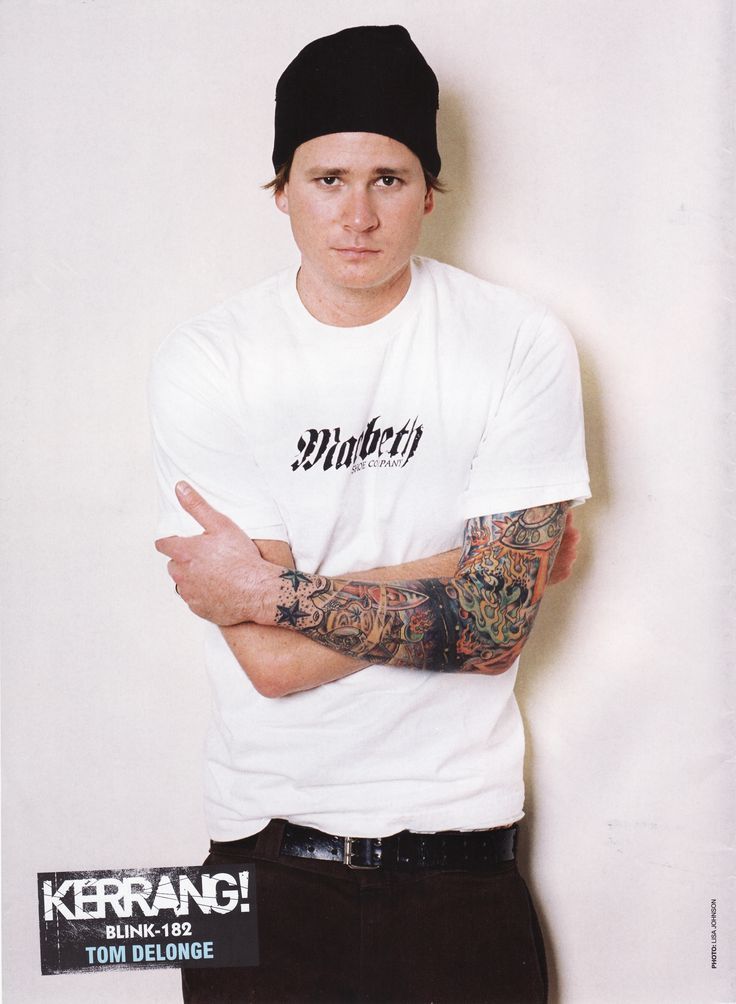
An early promotional portrait shows DeLonge when the sleeve was already a prominent part of his look. He crosses his arms in front of a white shirt, which makes the colored right arm easy to see. The image shows how much of the sleeve’s character comes from its saturated color, not only from the dark outlines.
The beanie, shirt and bold shapes all fit the same punk-rock presentation. The tattoos feel like part of the image rather than an accessory added afterward, which helps explain why fans connect the arm with DeLonge’s early years in Blink-182.
A photo that looks like a complete sleeve does not prove every part was done in one sitting. A design can be built in stages, extended or reworked later. DeLonge’s arm has appeared across different bands and visual periods, so the photographs are a record of how the sleeve developed, not a precise appointment timeline.
The color palette creates a shared mood without making every element identical. Stars, lettering, mechanical shapes and abstract panels can sit together when the line weight and colors connect them. That leaves space for new work while keeping the older sections visible.
The casual street photo shows the sleeve away from the stage
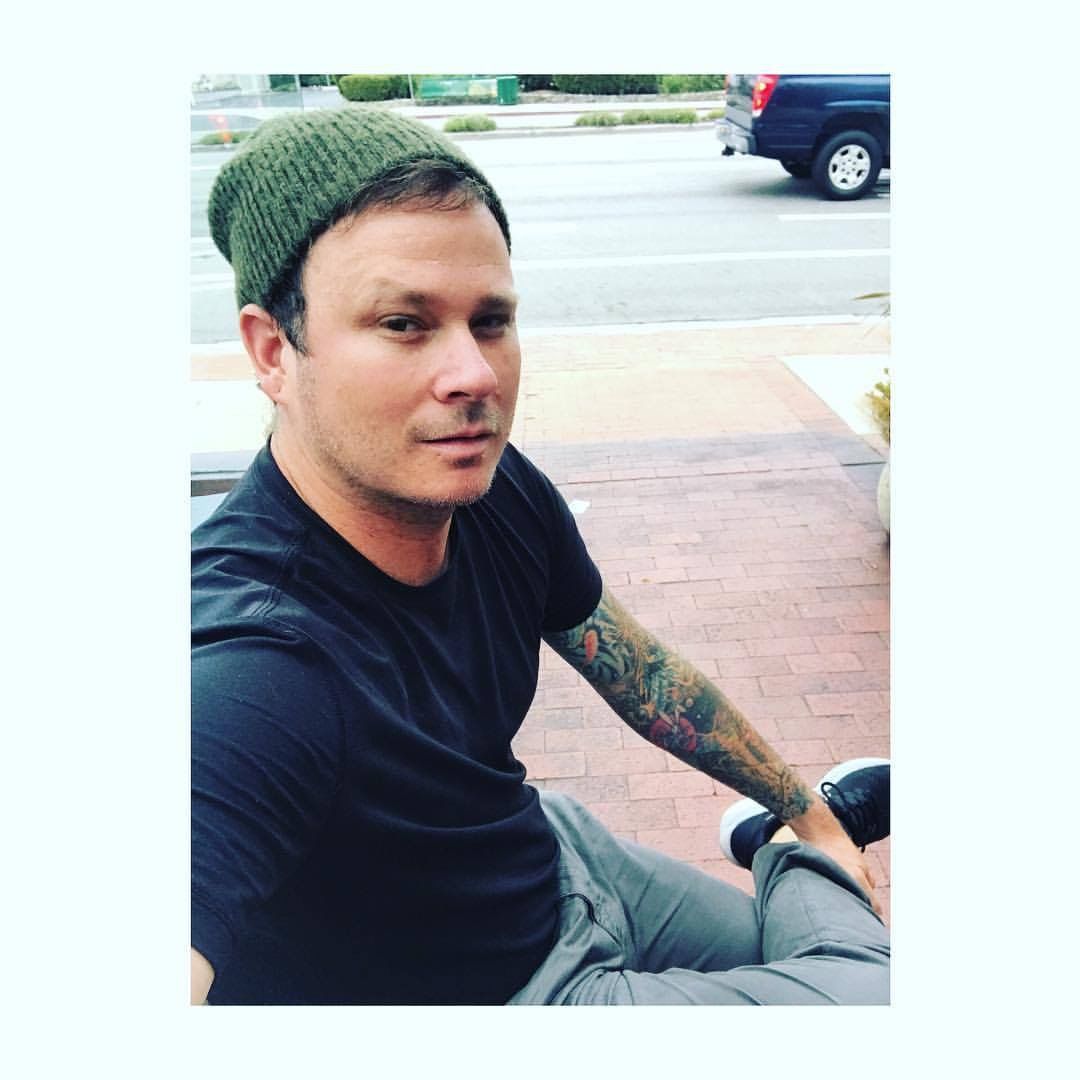
This outdoor portrait is more casual than the interview and promotional images. DeLonge sits in ordinary clothes with the tattooed arm in the foreground. There are no stage lights or dramatic backdrop, and the sleeve still reads clearly in everyday light.
The relaxed pose makes the arm feel like part of daily life rather than a stage prop. The colors are softer, and the shapes follow the way his forearm rests. That is a useful reminder when looking at placement: tattoos appear in ordinary settings too, not only when someone is posing for a camera.
His neck tattoos have also drawn attention because of the public connection to UFOs and unexplained stories. Reports about their meaning are partly speculative. DeLonge has not offered a complete official explanation for every mark, so it is better to leave those details open than invent a quote.
What the photos do show clearly is a recognizable, colorful right-arm sleeve. It is layered, appears in interviews, event photos and casual portraits, and is closely tied to the image he built with Blink-182 and Angels & Airwaves. That is enough to discuss the look without claiming to know the private meaning of every part.
The sleeve also works as a visual timeline. Early punk references, later space-like imagery and additions from a long career share the same arm. You can study how the work uses the elbow, how color divides the panels and how newer designs sit beside older ones.
Tom DeLonge’s tattoos are not a neat list of isolated symbols. The right arm is the main canvas, and the photographs show an evolving sleeve. The ink is real; the exact meaning of every design is not public. If you borrow from the look, take its structure and contrast and make the design your own.
For a quick video reference, watch this early Blink-182 tattoo interview: