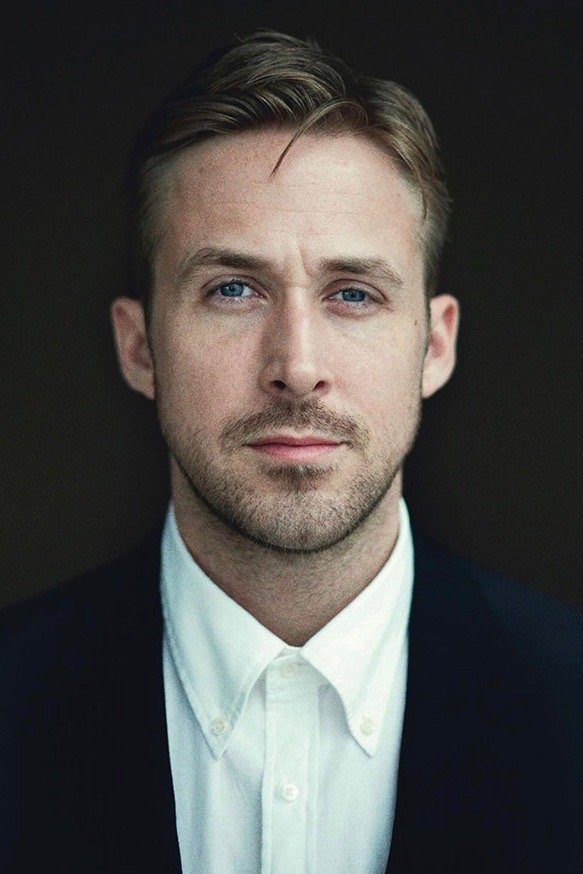
Ryan Gosling’s real tattoos are not a polished sleeve or a tidy collection of symbols with official explanations. The best-documented pieces are a homemade forearm design, a picture from a children’s book and a ghostly figure on his inner arm. He has also been photographed with Esme written across his fingers, although later coverage described that mark as temporary. His comments about the do-it-yourself ink are part of the story: he has never pretended every design was carefully planned.
The monster hand was meant to drop a bleeding heart
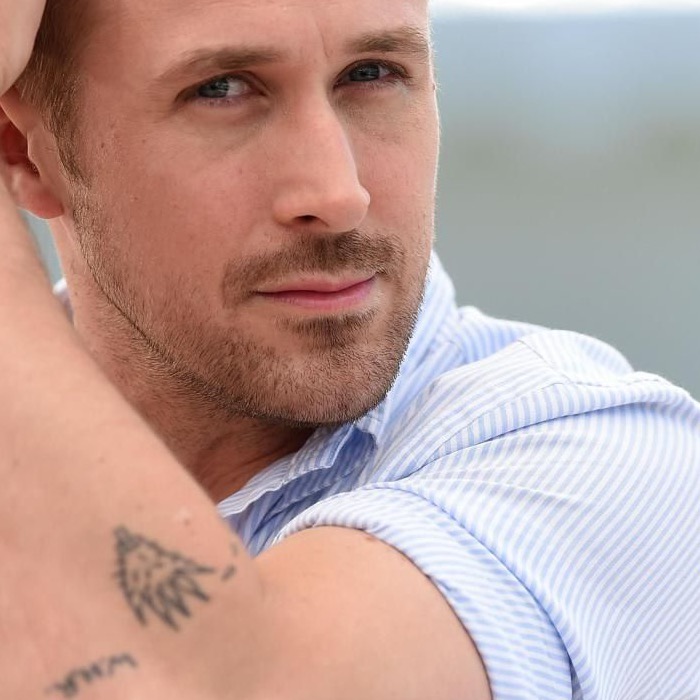
The forearm design is the one people most often mistake for a cactus. Gosling told The Guardian that he meant to draw a monster’s hand dropping a bloody heart, then tattooed the drawing himself with a kit. The result is a loose, spiky shape. At a glance it can look like a plant; once you know the original idea, the dangling heart becomes easier to pick out.
That gap between plan and result is what makes the tattoo memorable. It looks homemade because it was homemade, and Gosling has leaned into that rather than dressing it up as expert work. In the same interview he joked that people see different things in it. The design works as a small story about impatience, bad execution and a person who can laugh at the mark instead of pretending it came out exactly as intended.
Some tattoo inventories also note the letters W.H.R. beside the drawing and expand them as Werewolf Heart Records, a reference associated with Gosling’s band, Dead Man’s Bones. That detail appears in secondary tattoo coverage, so it is safer to treat it as a reported identification than as a meaning Gosling has personally explained in the same interview. The photo is useful for the placement and shape; it cannot tell us more than that.
The small barcode-like mark on his left wrist belongs to the same casual, homemade chapter of his tattoo history. It is often hidden by a watch, which is why clear photographs are scarce. No dependable first-person explanation for the barcode has surfaced. It may invite theories about identity or commerce, but those are guesses, not facts, so the article should leave its meaning open rather than invent one.
The Giving Tree is both a childhood memory and a book he argues with
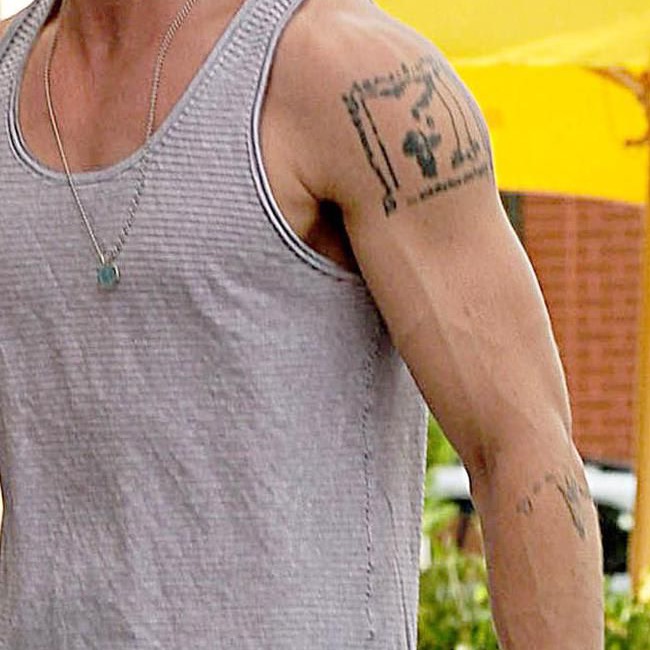
Gosling has a The Giving Tree image on his upper left arm. His mother read Shel Silverstein’s book to him and his sister when he was young, a personal connection that explains why the image stayed with him. In a 2010 conversation with Vulture, though, he pushed back against the story’s familiar lesson. He objected to the tree giving everything away and said, “I don’t want to be the tree.”
That is a better story than the simple version in which a book tattoo is automatically a sweet tribute. The picture can hold a warm childhood memory and an adult’s criticism of the book at the same time. Gosling has not described the tattoo as a solemn declaration of what the story means to him. The image is recognizable, the family connection is reported, and his later joke complicates the sentiment in a very Gosling way.
In photographs, the artwork sits high on the arm and is easiest to see when he wears a tank top or a short sleeve. Its placement also explains why ordinary red-carpet pictures are not always useful evidence: the shoulder can disappear under clothing, and a distant photo rarely shows the illustration clearly. This close view is more useful than a generic portrait because it lets readers connect the book-cover image to the actual location.
The ghostly woman and skeleton remain an unanswered design
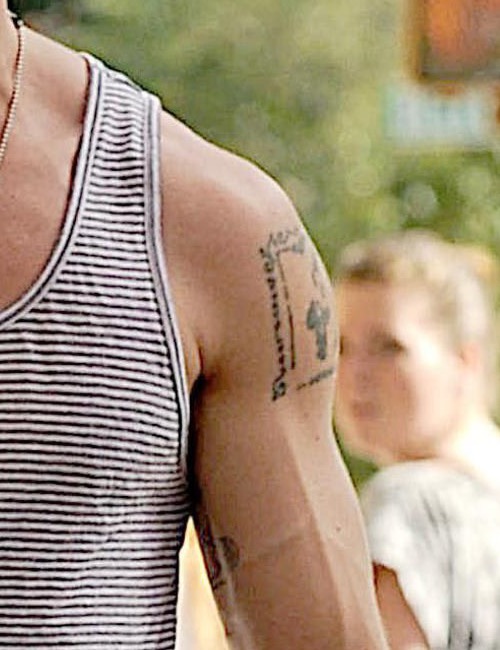
A separate design on the inner left upper arm shows a woman with a skeleton. It is often identified in tattoo articles as an image of silent-film actor Theda Bara, but Gosling has not publicly confirmed that identification or explained why he chose the design. HOLA’s tattoo coverage also cautions that the piece is difficult to see clearly in ordinary photographs. The sensible description is therefore the one the image supports: a woman and a skeleton, with Bara as a recurring but unconfirmed identification.
The tattoo is less legible than the forearm drawing. It sits on the inside of the arm, where the skin turns away from the camera, and the available photographs are often soft or taken from too far back. That makes confident claims about small details risky. There is no solid basis for assigning it a story about a particular film, relationship or personal loss. Its appeal is partly that it resists the tidy explanation people want to attach to it.
It is also easy to confuse this real piece with the much larger tattoo layouts Gosling wore as Luke Glanton in The Place Beyond the Pines. The movie character’s full chest, neck and arm designs were largely costume work. The ghost-and-skeleton image is part of Gosling’s own tattoo record; the surrounding screen sleeve is not.
“Esme” was photographed on his fingers, but permanence was never settled
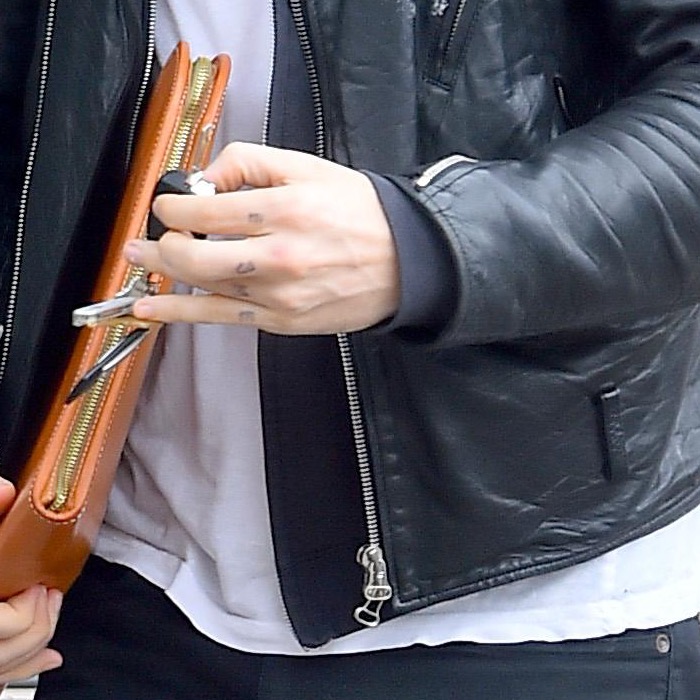
In February 2015, photographers caught Gosling with Esme written across the fingers of his left hand. The letters refer to his daughter Esmeralda, and the family connection is clear. Whether the writing was permanent ink was not. Contemporary coverage from E! News said it could not tell whether the mark was a tattoo or pen; HOLA later described it as temporary.
So this belongs in a careful tattoo guide as a photographed tribute, not as a confirmed permanent tattoo. The distinction matters. A dark mark in one street photograph does not prove it stayed there, and a daughter’s name does not give us permission to fill in details the family has kept private. The available image is a close crop of the hand, not a generic photograph of Gosling, but its resolution and angle still limit how confidently every letter can be read.
It is easy to see why the picture travelled: the name is personal, the placement is unusually visible, and the moment arrived when he had recently become a father. The responsible conclusion is modest. Gosling was photographed with the name on his fingers; the mark was reported as a tribute to Esmeralda; its permanence was uncertain and was later described as temporary.
Film roles add another layer of confusion. Sierra Six’s Sisyphus tattoo in The Gray Man belongs to the character, not to Gosling’s real-life collection. Coverage of the film’s tattoo identifies it as character design, just as Luke’s extensive ink in The Place Beyond the Pines helped create a fictional person. Keep those screen designs out of the real-tattoo count and the actual collection comes into focus: a comic DIY forearm piece, an upper-arm book image, a shadowy figure on the inner arm, a barcode that rarely escapes his watch, and one much-photographed name whose permanence was never established.