
Kat Von D has said she’s been tattooed by more than 30 artists. Her collection has grown through years of television, touring, friendships, family milestones and changes in taste.
The stars around her left eye are easy to recognize. Other work sits across her arms, hands, neck and chest, and some older designs have been changed or covered.
Kat Von D’s face stars are the first thing people notice
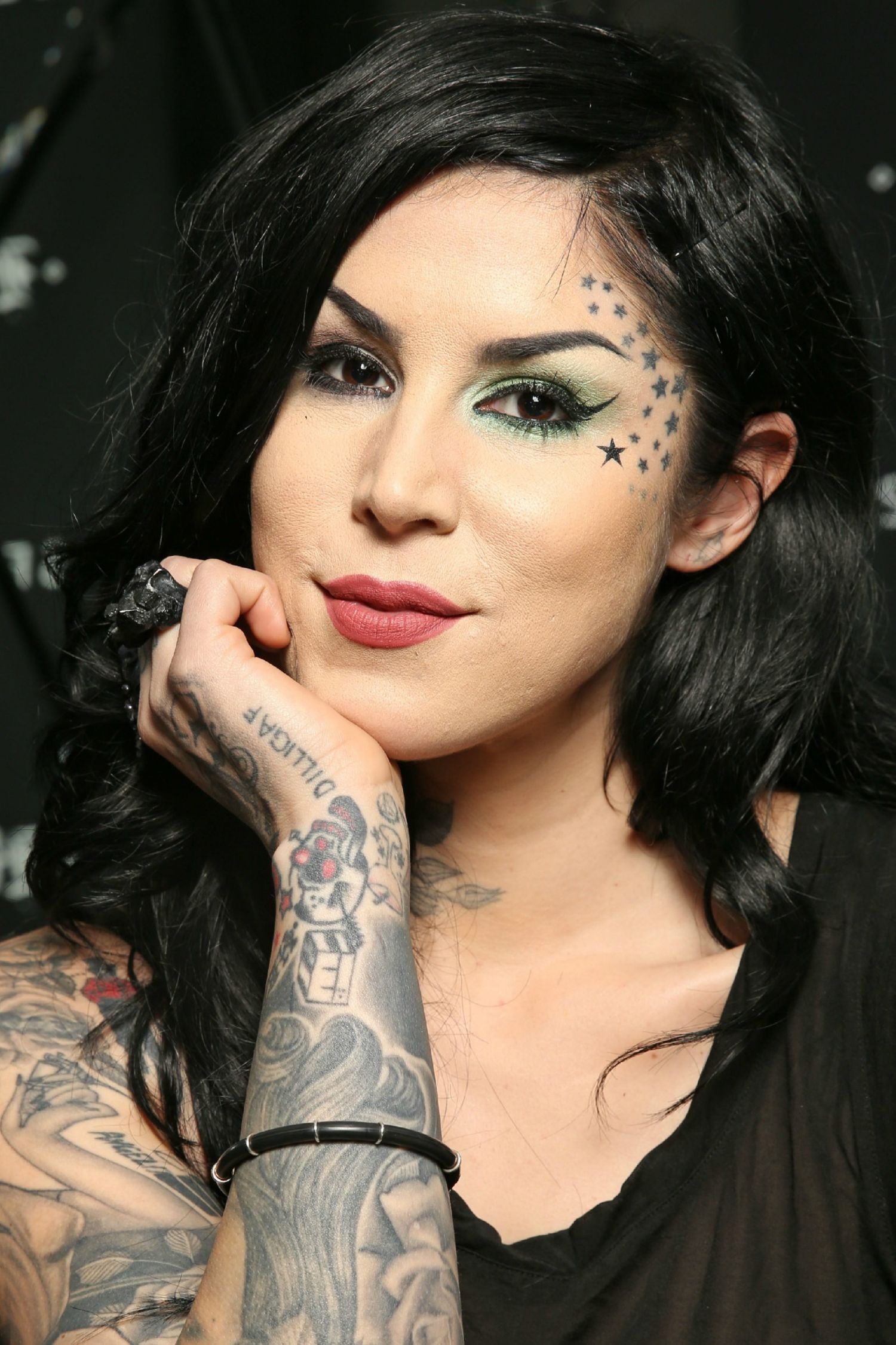
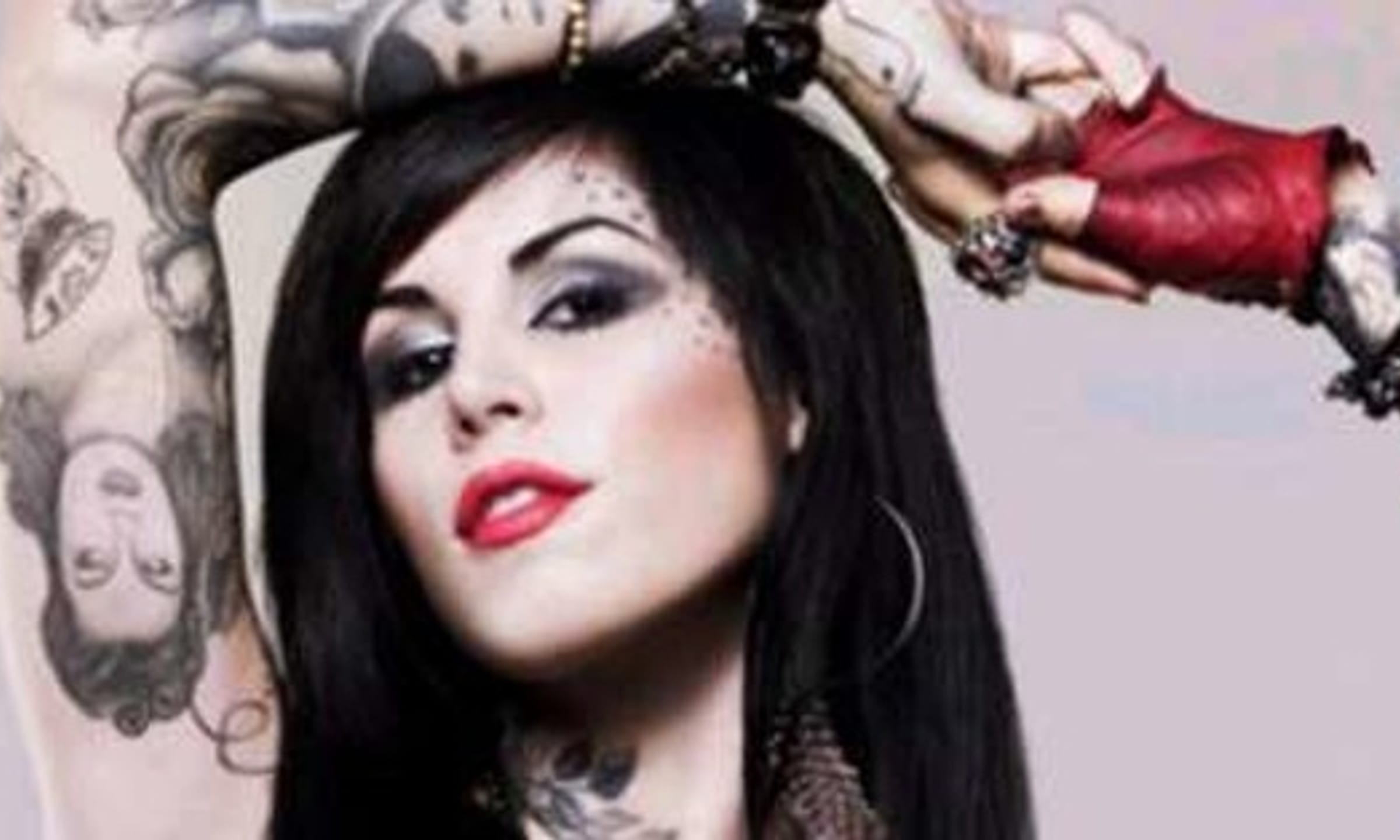
The stars around Kat’s left eye are her signature tattoo: one larger star near the outer corner, with smaller stars around it and toward her temple.
Their black shapes are clear in close portraits. Next to the eye they can look like eyeliner, but the stars remain visible as tattoos.
Kat has other small marks around her face and hairline. Makeup, hair and lighting change how they appear, so faint lines in a photo are not always easy to identify.
Lettering and small designs continue across her fingers and wrist. When she rests a hand near her cheek, the hand tattoos appear in the same frame as the stars.
In an interview, Kat described her first tattoo as a small “J” for a first love named James. She said she still loved it, even though people often warn against name tattoos.
She has described tattoos as memories and landmarks from different periods of her life. The face stars are the most recognizable, while older pieces carry their own history.
Her sleeves mix portraits, flowers and old-school blackwork
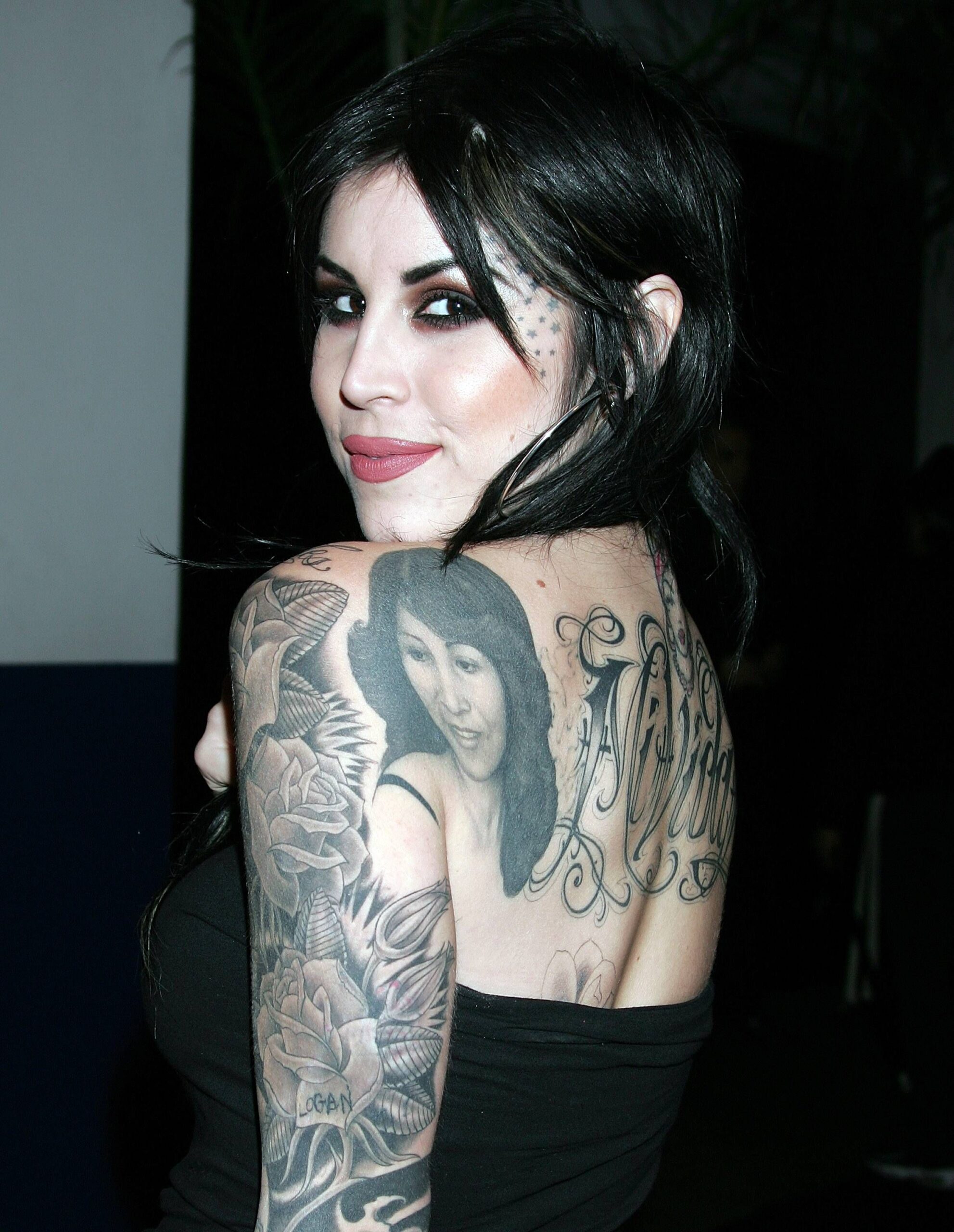
Kat’s arms carry layered black-and-gray work: flowers, faces, lettering, scrolls and smaller filler designs that run into one another.
A large portrait sits on her upper arm and shoulder within the sleeve. Floral work softens its edges, while darker shading gives the arm depth.
Clean outlines, grey wash and careful shading shape much of the work. Strong contrast gives it definition without bright color.
A jacket, a cropped photo or a different angle can hide part of a sleeve. Another image may reveal a design that was there all along.
Kat has also reworked and covered pieces, changing the look of her arms over time. Her collection has not stayed fixed since her early television years.
The portraits, flowers and smaller marks meet across the sleeve rather than sitting as isolated designs. The layers show how the arm has developed over time.
The blackout sleeve is a newer, heavier chapter
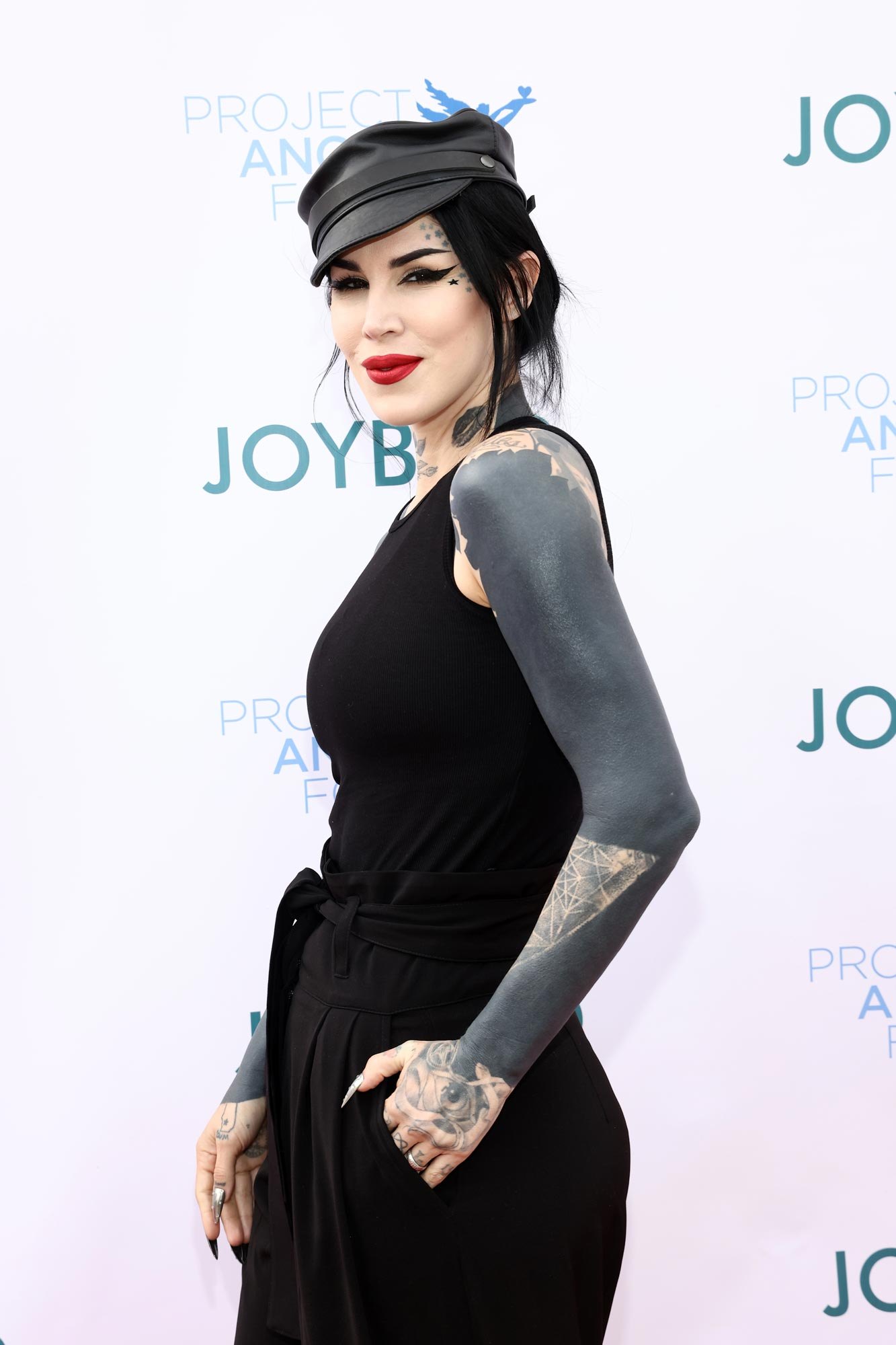
One of the biggest changes in Kat’s tattoo story has been her move toward blackout work. Solid black now covers large sections of her arm, including older designs.
Blackout changes the balance of a sleeve. Broad black areas sit beside older tattoos that remain visible on her hand, shoulder or at the edge of the arm.
Kat has said she wanted less visual clutter and liked the clean feeling of looking down at a blacked-out section. Even with a large collection, she chose to remove detail from parts of it.
People have different reactions to the change. Some prefer the earlier portrait-heavy sleeve; others like the darker, more graphic look. The blackout is her choice and one stage in a collection that has changed over time.
In poor lighting, blackout work can look flat. A clear, close photo shows the solid fill beside older designs that remain visible near the hand, shoulder or edge of the arm.
Older tattoo lists may describe designs that have since been covered. Those tattoos were there, even if the same details are no longer visible.
Neck and chest tattoos tie the bigger pieces together
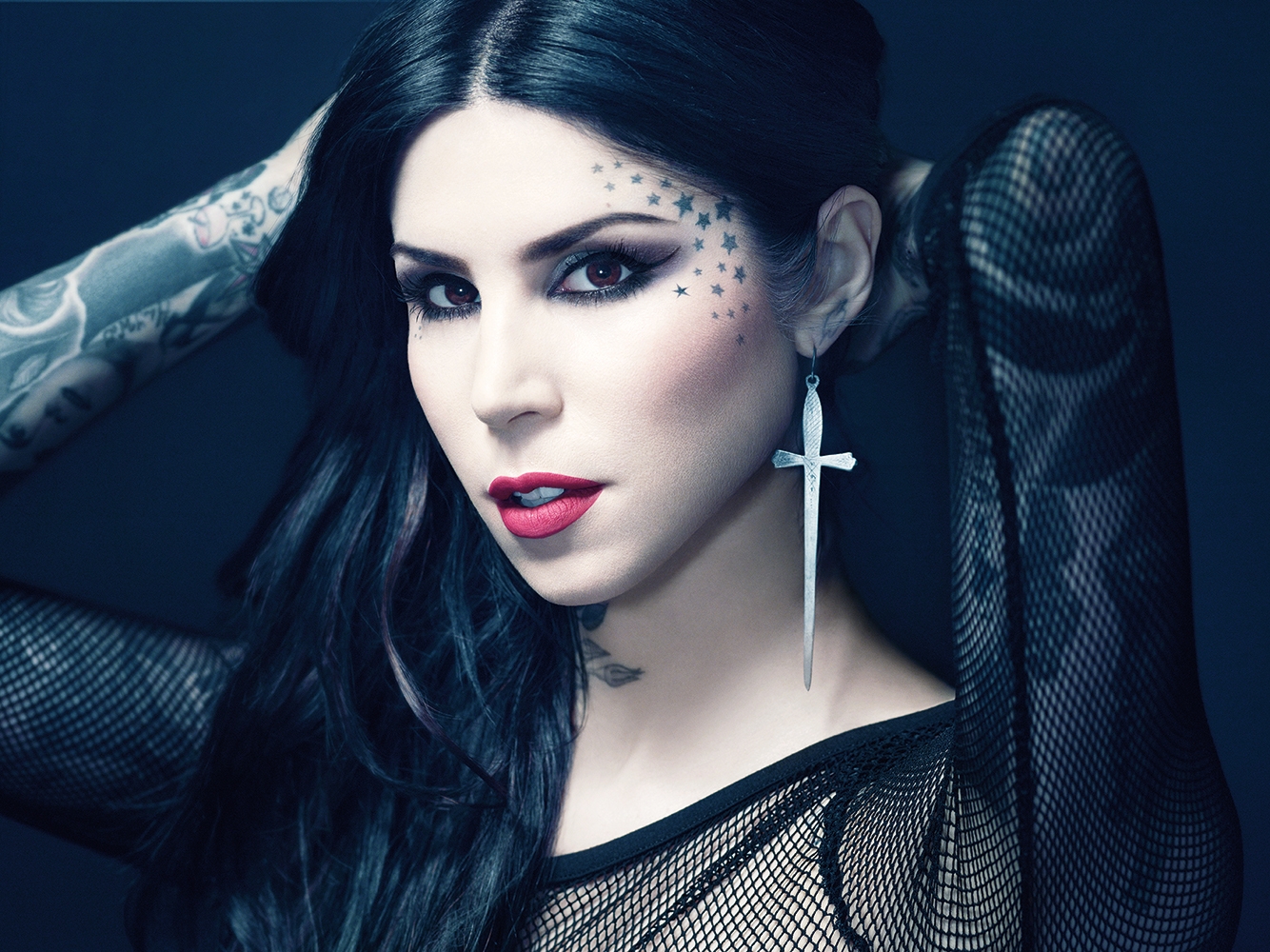
Kat’s neck and upper chest use the same black-and-gray style as her arms. Depending on her clothing, photos show fine lettering, small symbols, leaves and shading beneath the jaw and along the collarbone.
The neck ink helps connect the stars on her face with the work on her arms. When her hair is back or she wears a lower neckline, more of that line is visible.
Makeup can soften the neck tattoos in some photos; a close, bare portrait shows their outlines more clearly. Styling changes how much ink a single image reveals.
Some tattoos are tied to people from Kat’s life and work. Names and initials can be hard to read in photos, but she has described tattoos as landmarks in time.
Leaves, stars and curved lines add space between the denser areas of ink. They guide the eye from her neck toward the chest and shoulders.
The transitions matter alongside the individual designs. Kat’s face, neck and sleeves have been built up over time, and the smaller details help the areas sit together.
Family ink, High Voltage and the tattoos linked to her story
Family, music and her tattoo career recur in Kat’s accounts of her ink. One design is linked to her father; others point to people and places from different periods of her life.
The High Voltage tattoo refers to the shop that became a major part of her career, including her years on LA Ink. The name has a place in her personal and public history.
Kat has had tattoos connected with former friends, relationships and fellow artists. Some remain, some have changed and some have been covered over the years.
Music appears in her collection too. Kat has talked about classical music and Beethoven, and the video below discusses that side of her taste.
A small letter, date or symbol may matter to the person wearing it even when other people don’t recognize it. Not every tattoo needs a public explanation.
Taken together, the collection reflects family memories, relationships, work milestones, music and designs she liked at the time. It doesn’t fit one theme.
Kat has had time to collect, revise and cover pieces. For comparison, Post Malone’s tattoos use a different mix; Kat’s work is especially associated with portraiture, tattoo-shop culture and black-and-gray shading. She has described the collection as a record of different moments in her life. Some pieces have changed along with those moments.
Watch Kat explain the stories behind her tattoos
The video covers several of Kat’s better-known tattoos, including the family pieces, face stars, her first tattoo, the blackout sleeve and the High Voltage reference.
2 thoughts on “Kat Von D Tattoos: Stars, Sleeves and Blackout Ink Explained”