
Rose McGowan’s tattoo history is a little more complicated than a quick celebrity-ink list suggests. Her best-known piece was a 1940s-style pin-up girl on the right shoulder blade, a striking back tattoo she later spent years having laser-removed. She has also spoken about a tiny matching dot tattoo shared with Asia Argento, a small mark that carried a very different kind of meaning from the large image she eventually decided to leave behind.
That gives McGowan’s ink a clear arc: one highly visible figure, a long removal process, and a miniature friendship tattoo that became part of a very public falling-out. The details are worth separating carefully because old photographs often show the pin-up at different stages, while newer images can make the remaining traces easy to miss. Here’s what is documented, what changed, and what should be treated as uncertain.
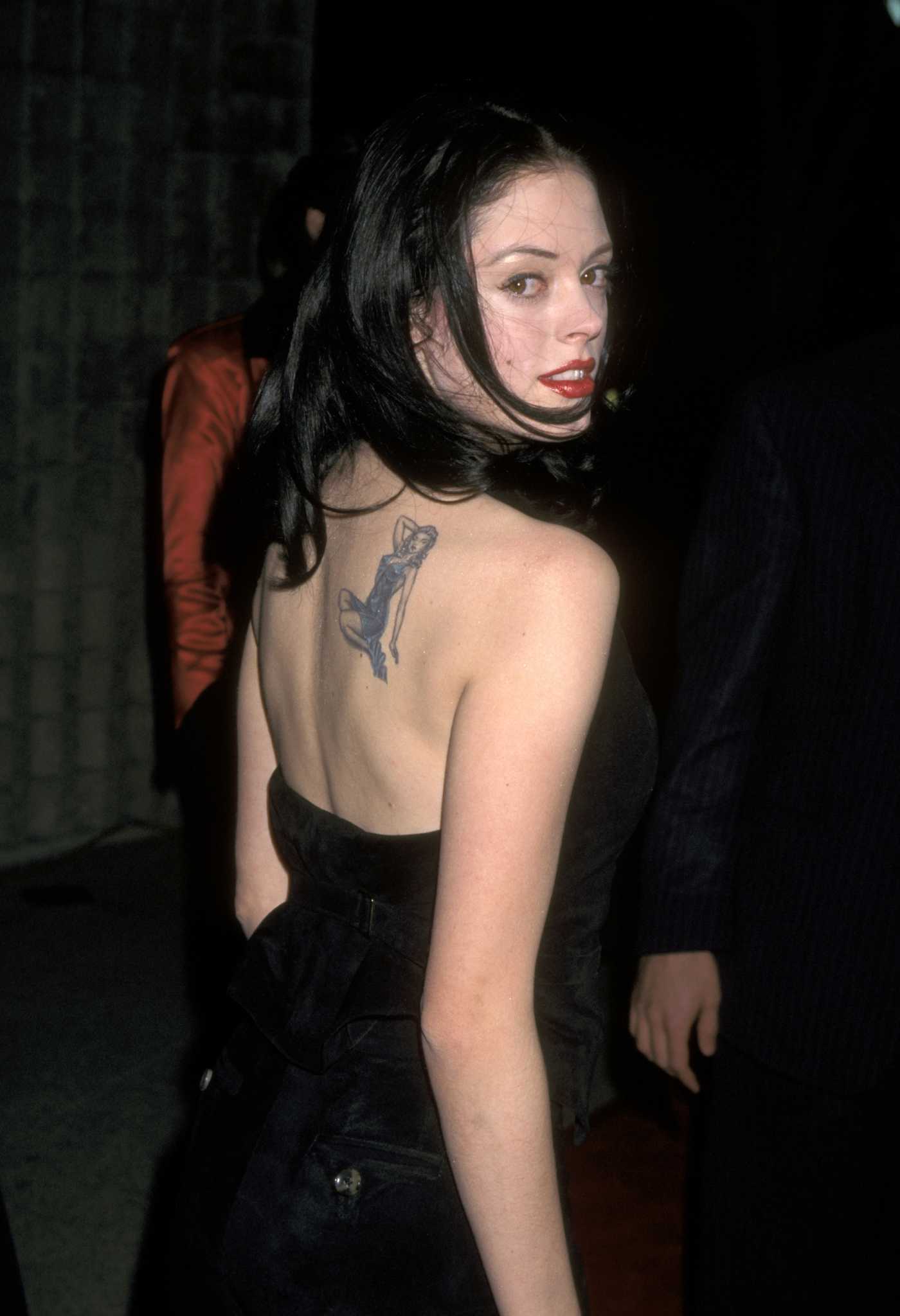
The pin-up girl sat on Rose McGowan’s right shoulder blade

McGowan’s signature tattoo was a large pin-up figure placed on her right shoulder blade. Descriptions from tattoo-history sites and entertainment coverage identify it as a 1940s-style woman, sometimes described in broader coverage as a woman riding a tiger. The placement made the work especially visible whenever McGowan wore a backless dress, a swimsuit or a low-backed top.
It was not a discreet little line of lettering. The tattoo occupied enough of the shoulder-blade area to become part of her early public image, especially in the late 1990s and 2000s when red-carpet photographs frequently caught it from behind. The vintage pin-up idea also fitted the era’s fascination with old-school glamour, but the exact appeal was personal to McGowan rather than a logo or character tied to one of her films.
Photographs do not all show the same version of the tattoo. Some are clearer than others, and the pose, lighting and clothing can hide the lower part of the design. That is why the safest inventory description is one large 1940s-inspired pin-up tattoo on the right shoulder blade. The “woman riding a tiger” wording appears in later summaries, but the public images are not consistently sharp enough to turn every suggested detail into a certainty.
McGowan has never become known for a sprawling sleeve or a body covered in dozens of individually documented symbols. The shoulder-blade pin-up is the piece that repeatedly appears in tattoo histories because it was both distinctive and easy to identify. It functioned almost like a visual signature during the years when her style was deliberately bold and a little confrontational.
There is also a difference between being famous for a tattoo and being defined by it. McGowan’s acting, activism and writing have all moved through different phases, while the pin-up belonged to one period of her image. The tattoo was memorable, but it was never the whole story.
Why the large back tattoo was eventually removed
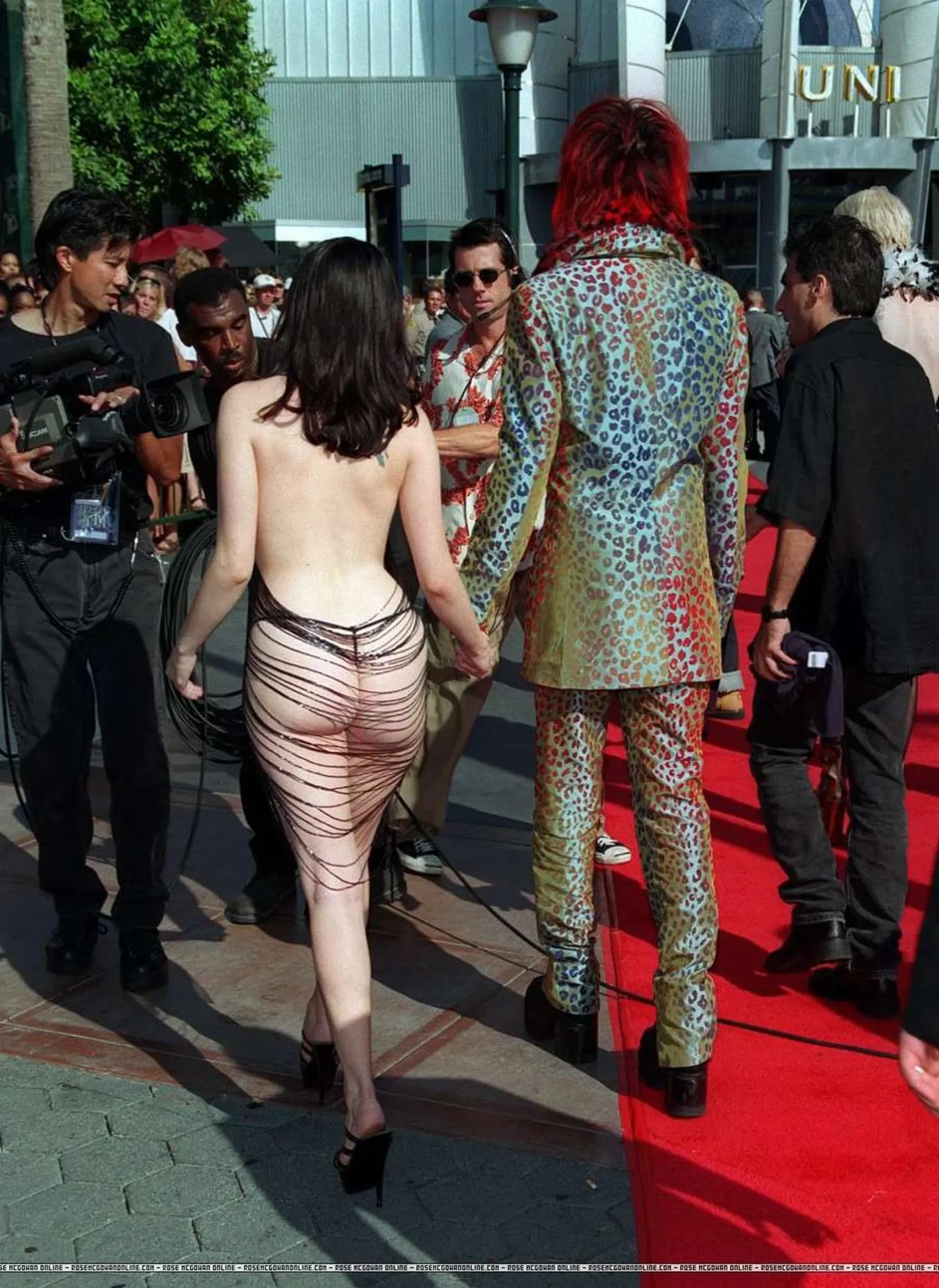
McGowan later chose to remove the shoulder-blade tattoo. Public coverage says the process took years, which makes sense for a large, dark design in a sensitive area. Laser removal is not a single appointment, and a tattoo with a lot of ink can change slowly from a clear figure into a faded outline and then into a set of uneven traces.
The reason McGowan gave for moving away from the tattoo has not been documented in a detailed, definitive explanation. Several articles mention the removal without pretending to know every private motivation. That restraint matters. It is easy for a retrospective piece to invent a neat story about regret, a breakup or a change in identity, but the reliable fact is that she decided the pin-up no longer belonged on her skin and committed to the long process of taking it away.
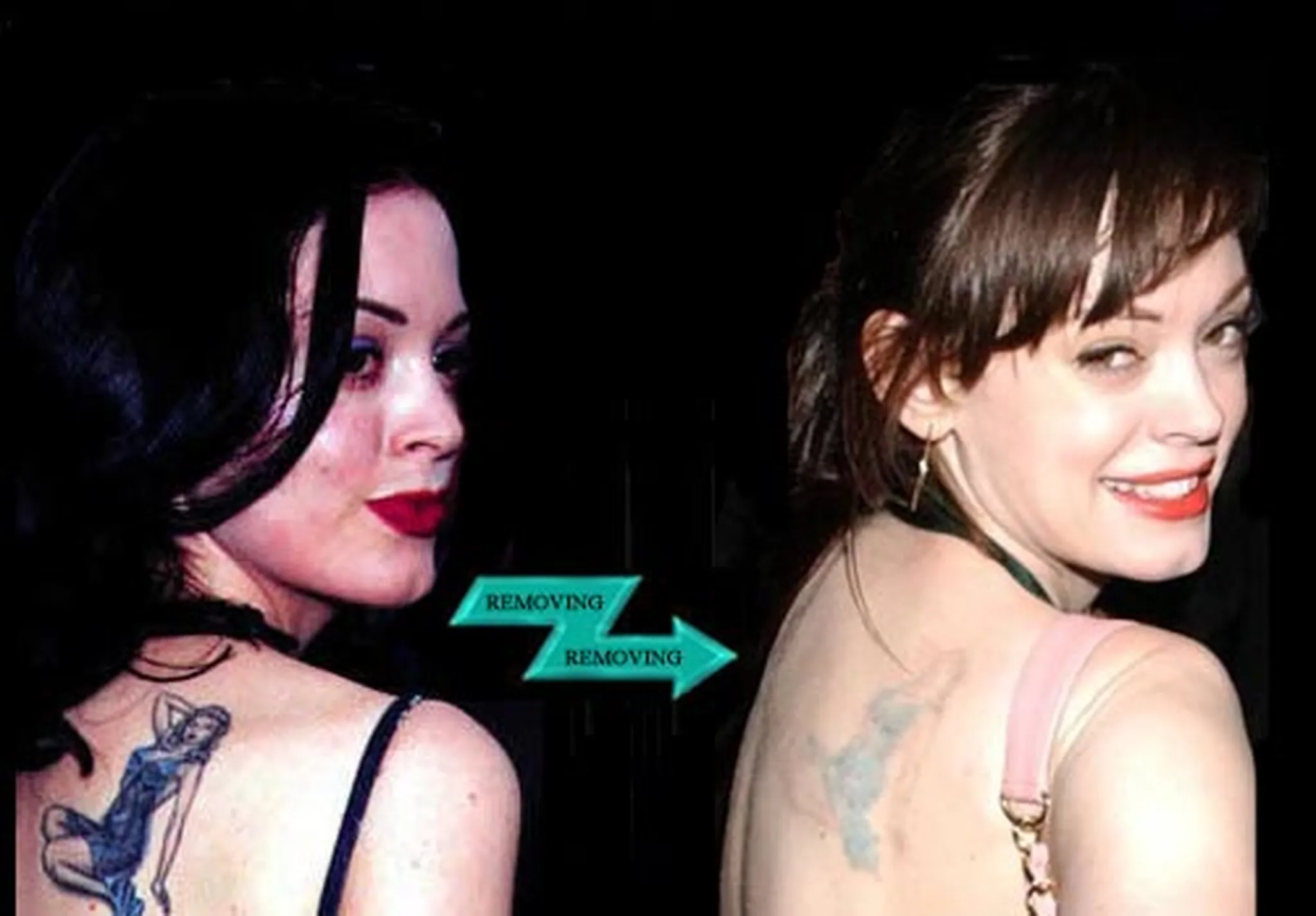
Removal also changed the way photographers recorded the tattoo. Older images show the design as a deliberate, readable composition. Later photographs may show only remnants, discoloration or an area that looks almost clear at first glance. Those are not necessarily different tattoos. They can be different points on the same removal timeline.
The shoulder blade is a particularly demanding place for a tattoo-removal story because the skin moves with the shoulder and back. A photo taken at an angle can make remaining ink appear darker on one side, while a flash photograph can flatten the contrast. What looks like a new design may simply be the original pin-up at a later stage of fading.
The change is still meaningful even without a dramatic public statement. Getting a large tattoo was one decision; spending years removing it was another. McGowan’s ink history is therefore less about collecting new designs and more about deciding which version of herself she wanted to keep visible.
The removal timeline is part of the tattoo’s story
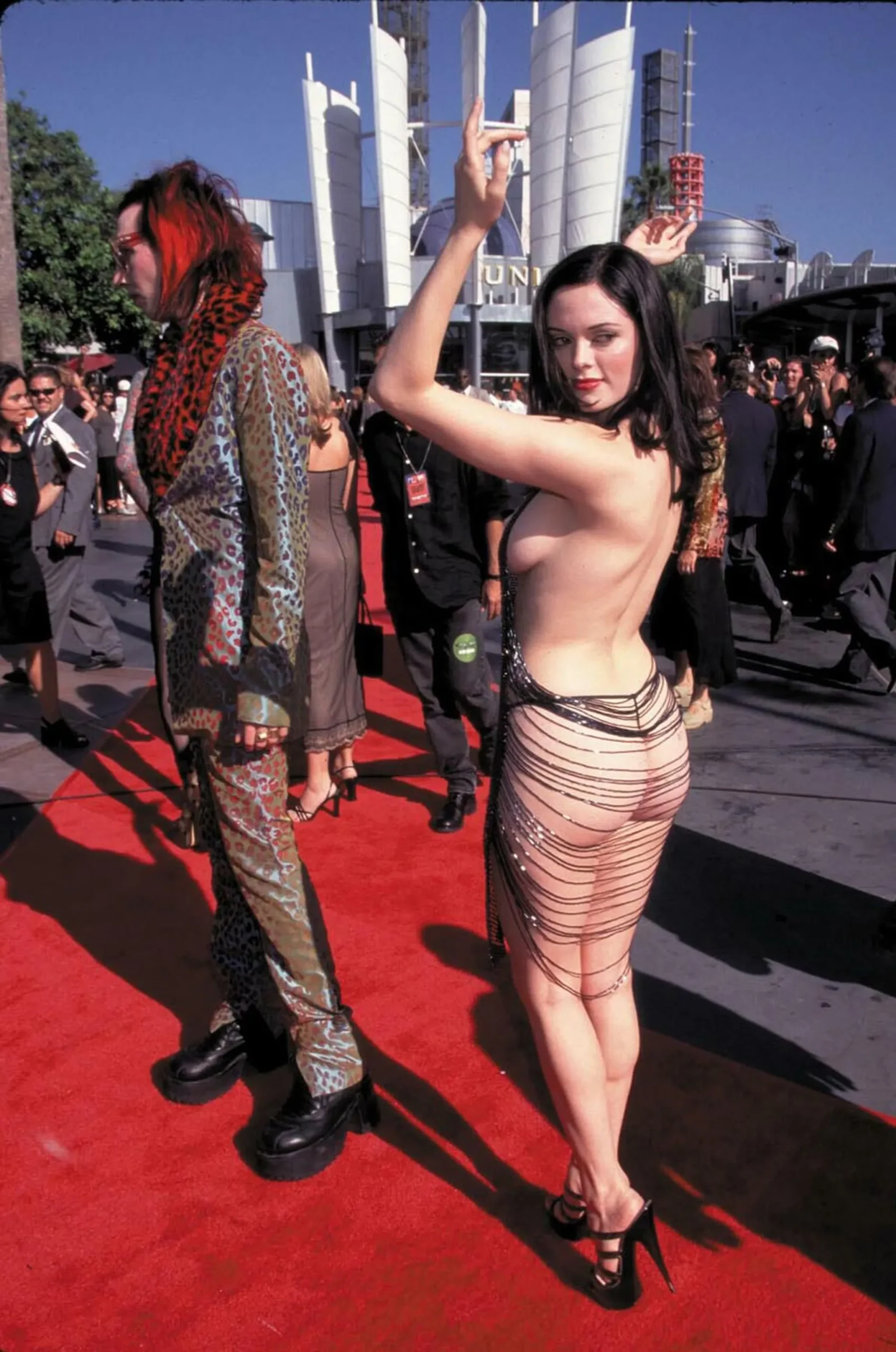
Tattoo removal can be visually confusing because the “before” and “after” photographs are rarely taken under identical conditions. With McGowan’s pin-up, the useful timeline is broad rather than a list of exact session dates. First, the figure was visible as a large back piece. Later, it was described as something she was having laser-removed. Eventually, the design became much less prominent than it had been during her earlier public appearances.
That timeline explains why different online galleries can seem to disagree. One image may show a crisp outline, another may show partial fading and a third may show almost no obvious tattoo at all. Unless the photograph is dated and the angle is comparable, it is better to treat those images as evidence of change rather than proof of several separate versions.
There is a wider cultural point here too. Celebrity tattoo stories often stop at the moment ink is applied, as if permanence is the only interesting part. McGowan’s story shows the opposite. The decision to remove a tattoo can be just as deliberate as the decision to get one, especially when the tattoo has become attached to an older public persona.
Removing the pin-up did not erase the fact that it mattered. For years, the design was part of how people recognized McGowan in photographs. It helped create a particular silhouette and added a rebellious, vintage note to outfits that were already meant to draw attention. The later absence of the tattoo became its own kind of visual statement.
That is why it is misleading to call the piece simply a “regretted tattoo” without qualification. McGowan’s choice may have involved changing taste, changing identity, practical concerns, or a mixture of reasons she has kept private. The public record supports the removal. It does not support a precise psychological explanation.
Sometimes the meaning of a tattoo changes because the person wearing it changes. In McGowan’s case, the fading shoulder-blade image tells that story more clearly than a dramatic quote would.
Rose McGowan and Asia Argento shared a tiny dot tattoo
McGowan also confirmed that she and Asia Argento got matching dot tattoos. In a 2018 interview about their friendship, McGowan described the tiny mark as something they shared. It was a completely different scale from the pin-up: minimal, easy to overlook and tied to a relationship rather than a stage persona.
The dot is important because it shows that McGowan’s documented tattoo history is not only one giant image. The public discussion identifies the design as a simple dot, but it does not establish a highly specific location that should be repeated as fact. Small matching tattoos are often photographed poorly, and the exact mark can disappear into ordinary skin texture or jewelry.
The tattoo became news again after the friendship broke down and Argento later covered her matching mark with a bloody dagger design. That later tattoo belonged to Argento, not McGowan, so it should not be counted as part of Rose’s collection. What it does confirm is that the matching dot had been real and had been understood by both women as a shared symbol.
McGowan’s side of the story is more interesting when kept separate from the feud headlines. The original tattoo represented closeness at one point in their friendship. The later cover-up became a public sign that the relationship had changed. The same tiny dot could carry friendship in one chapter and controversy in another.
It is also a reminder that tattoos do not need elaborate artwork to matter. A dot can be almost invisible to everyone except the people who chose it. Compared with the pin-up, this piece has very little visual information, but its context is unusually well documented because McGowan herself talked about it.
What can be said confidently about her current ink
The strongest documented inventory is therefore short and specific. McGowan had a large vintage-style pin-up figure on the right shoulder blade, with some descriptions adding the image of a woman riding a tiger. She spent years having that tattoo removed. Separately, she shared a matching dot tattoo with Asia Argento. Those are the pieces supported by the most consistent reporting and first-person comments.
There may have been other tiny marks or temporary-looking details in individual photographs, but a careful article should not turn every dark pixel into a tattoo. The images available online are often scans, cropped red-carpet photos or reposts without dates. A responsible tattoo inventory includes uncertainty instead of padding the list with guesses.
This also means the pin-up should not be described as fully intact in every era. Older photographs can show the tattoo clearly; later photographs reflect removal. Both belong in the story, but they represent different moments. The matching dot should be described as a tiny shared tattoo, not as a second large back design or as part of the laser-removal area.
McGowan’s tattoo history is compelling precisely because it is not overloaded. One bold image became associated with her early public style, then slowly disappeared. One tiny mark recorded a friendship and later gained unexpected cultural baggage. Together, they show how tattoo meaning can be built through time, relationships and change rather than through the number of pieces someone has.
Rose McGowan’s ink is really a story about changing identity
Seen from a distance, the back tattoo and the matching dot seem almost unrelated. One was large, visual and easy for photographers to capture. The other was tiny and meaningful mainly because another person carried the same mark. But both reflect a choice about identity: one announced a version of McGowan to the world, while the other quietly connected her to a friend.
The removal process then turned the large tattoo into a record of change. McGowan did not simply outgrow a trend in private; the change could be seen in public images over many years. Her body retained traces of an older decision while her career and public voice moved somewhere else.
That is why her tattoo story deserves more nuance than a before-and-after gallery. The design was real, the removal was real, and the friendship tattoo was real. The missing piece is a definitive explanation of every private reason behind those decisions, and it would be unfair to invent one. The most honest reading is also the most interesting: people change, and their tattoos sometimes have to catch up.
Watch a Rose McGowan interview
There does not appear to be a dependable tattoo-tour video focused entirely on McGowan’s ink, so this relevant interview is included as a broader profile of the celebrity. The tattoo discussion above stays grounded in documented reporting and McGowan’s own comments.