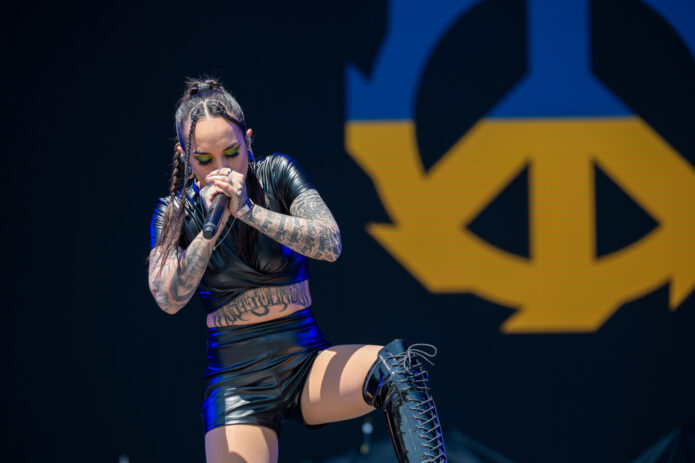
Tatiana Shmayluk has not described her tattoos as a list of symbols with one explanation for each. In interviews, she has talked more plainly: she likes certain images, lives with the result and sometimes a design simply stays with her. That makes her collection interesting, though it also means a careful account should distinguish her comments from guesses based on stage photos.
Tattoo Life, Metal Hammer and Louder have all discussed parts of her ink. A dedicated Tattoo.com interview with Jinjer also includes a section on the band’s tattoos. Taken together, the interviews suggest a useful starting point: an image can matter to her without needing a grand public meaning.
Her look changes from one era to another, and stage lighting can alter how a tattoo appears. Black-and-white photos hide color; a magazine close-up may show one area and crop out another. The sections below stick to designs that she has discussed or that are clear in published photos.
The throat tattoo is the collection’s most recognisable landmark
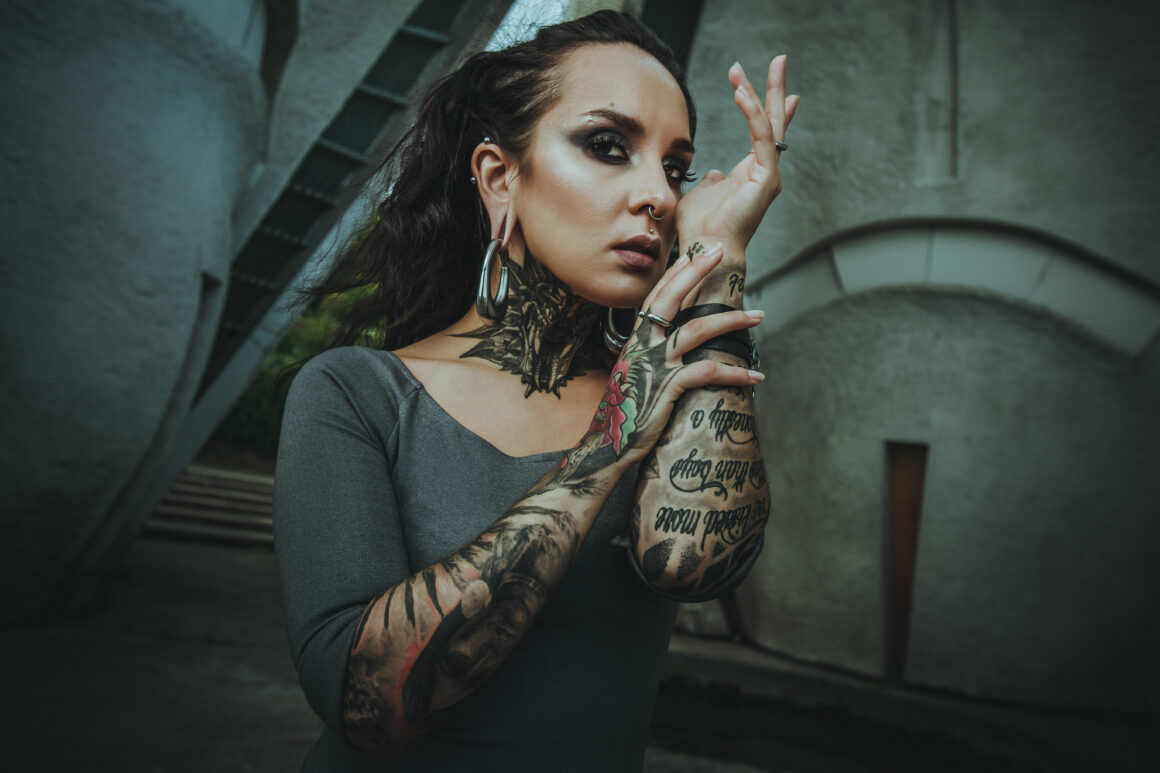
Tatiana’s Quetzalcoatl, or feathered-serpent, throat tattoo is among the best-documented pieces. In a Tattoo Life interview, she identified the design and said an artist at Barma Tattoo Studio in Kyiv, Ukraine, did the work. That gives the tattoo a named motif, placement and studio context.
She has pushed back on the idea that every tattoo needs a special meaning. The serpent can be described without treating it as a secret code. Its placement is bold and easy to see in portraits and performance photos, especially when her hair is tied back or her neck is uncovered.
A design can matter to someone without a public explanation attached. The motif and placement are documented because Tatiana has discussed them; any more specific private meaning should be left to her.
Frida Kahlo and Amy Winehouse appear among her portrait-inspired ink
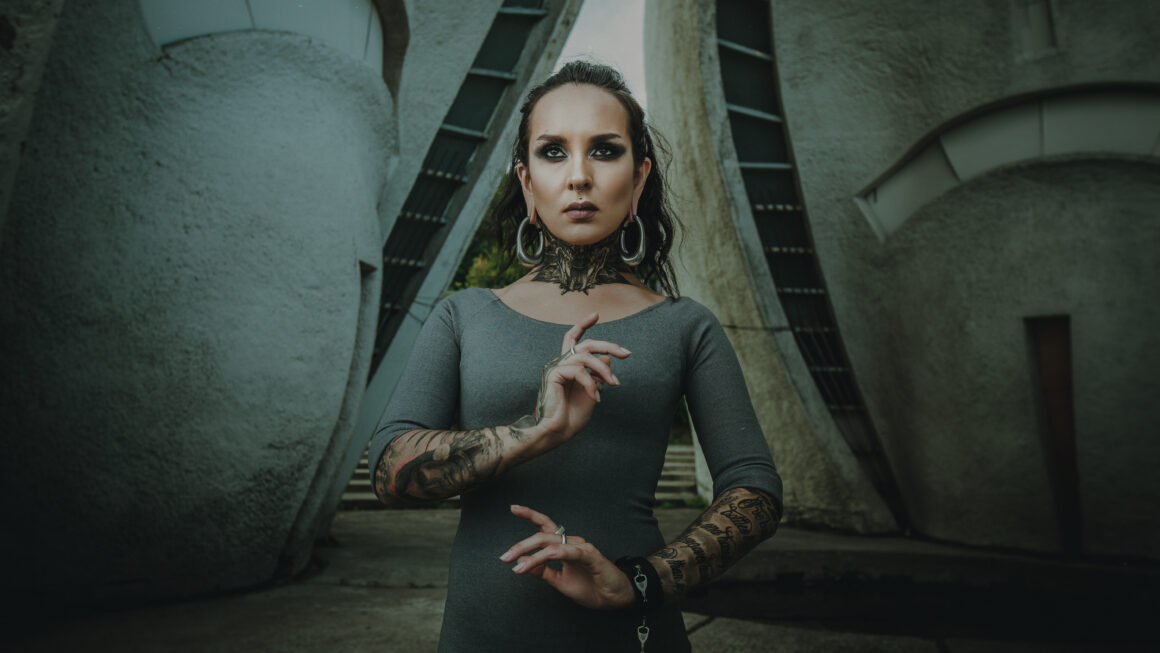
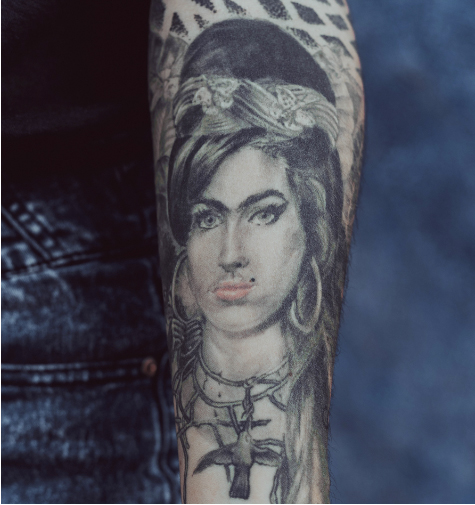
Tatiana has mentioned tattoos connected with Frida Kahlo and Amy Winehouse when talking about images that mean something to her. The interviews document those references, though every detail is not visible in every photograph.
Kahlo’s work fits the wider visual interests Tatiana has discussed: art, strong faces and images that do not feel polished for their own sake. Winehouse brings a different musical reference. Tatiana has not reduced either to a slogan, so it is better to call them portrait or tribute references than invent a precise backstory.
Her comments also leave room for a simpler reason: sometimes a design just feels right. That is less dramatic than a rehearsed origin story, but it says something about how the tattoos belong to her life as an artist without turning each one into public mythology.
Her early tattoos began with a friend at home
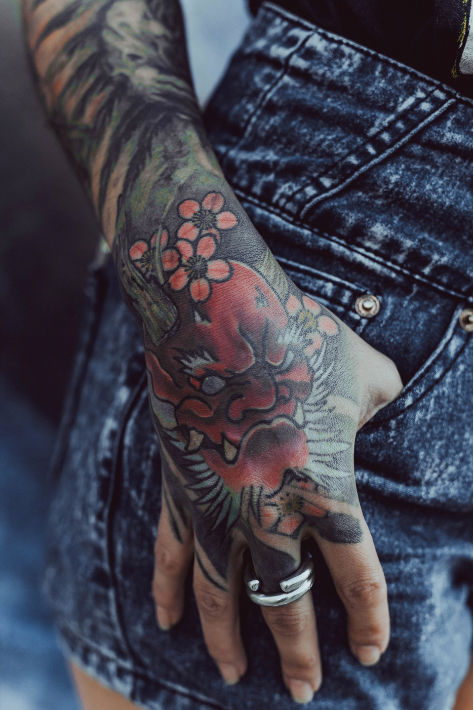
In a Metal Hammer interview, Tatiana said her first tattoo was done when she was 17. A friend who had studied art with her was just beginning to tattoo and worked on her at his home, where he was tattooing some of his first customers. It was a very different start from booking a famous studio for a planned sleeve.
She has said she sometimes regrets much of her tattoo work because she is not fully satisfied with how it was executed. That is a comment about the result, not necessarily the decision to get tattooed. A design can matter while the linework or technique still disappoints her.
She has also linked her interest in tattoos to rock music and to temporary tattoos and painted hands she liked as a child. The story runs from play and drawing on skin to permanent images. It is a more grounded account than assuming each tattoo arrived with a single fixed meaning.
Some tattoos are self-made or deliberately imperfect
In another interview, Tatiana pointed to small tattoos on her wrist and ankle and said she had done some herself. Those marks show a different side of the collection from the throat design and portrait references: experimenting with images and accepting a rougher result.
She spoke about the wrist and ankle pieces matter-of-factly. The placements are reported, but the available photos do not always make the individual designs clear enough to name them precisely.
Tatiana has also said prison-style imagery is not for her. That is a useful boundary: her collection is selective, not an attempt to adopt every traditional tattoo motif. Her comments about regret and imperfect execution make the same point from another angle. The tattoos record choices, not a flawless display.
What the stage photographs can and cannot prove
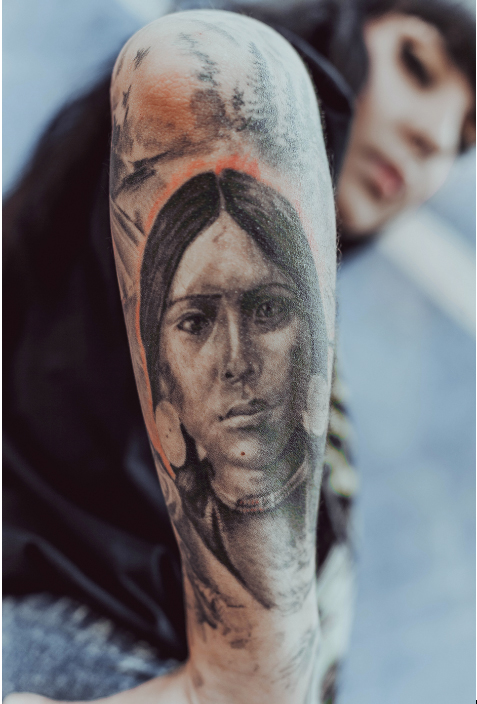
Jinjer’s performances produce plenty of images, but a concert photo is not automatically a good tattoo reference. Microphones, shadows, hair, gloves, mesh, color and movement can hide or distort linework. Interviews and close portraits are more helpful when trying to identify a design.
The documented outline includes the Quetzalcoatl throat tattoo, references to Frida Kahlo and Amy Winehouse, small wrist and ankle marks she has said she did herself, and her first tattoo at 17 by an artist friend. Other pieces appear in photos, but the sources do not consistently identify their designs. Tatiana has also said that she does not give every tattoo a special meaning.
The interviews do not support exact dates for every piece, a complete list of symbols or unverified claims about tattoo artists she has not named. Her own comments give the collection more detail, not less: she likes images, has experimented, remembers the people around her first tattoos and is candid when the execution did not meet her hopes.
Visibility is not the same as a full explanation. Tatiana’s interviews identify the designs she has chosen to discuss; photos show where they sit at particular moments. That is enough for a useful record without claiming that every part of her skin has been catalogued.
Her stage presence is vivid, but the story also rests on quieter details: a throat design she identified by name, portrait references she has discussed, small marks from early experiments and her admission that not every tattoo feels perfect. Those details let the collection change over time, as she adds work or explains another piece.
Watch the Jinjer tattoo interview
This dedicated Jinjer Tattoo.com interview includes a segment on the band’s tattoo collection and gives Tatiana’s style more context. It follows the written guide so the documented details are clear before the video.