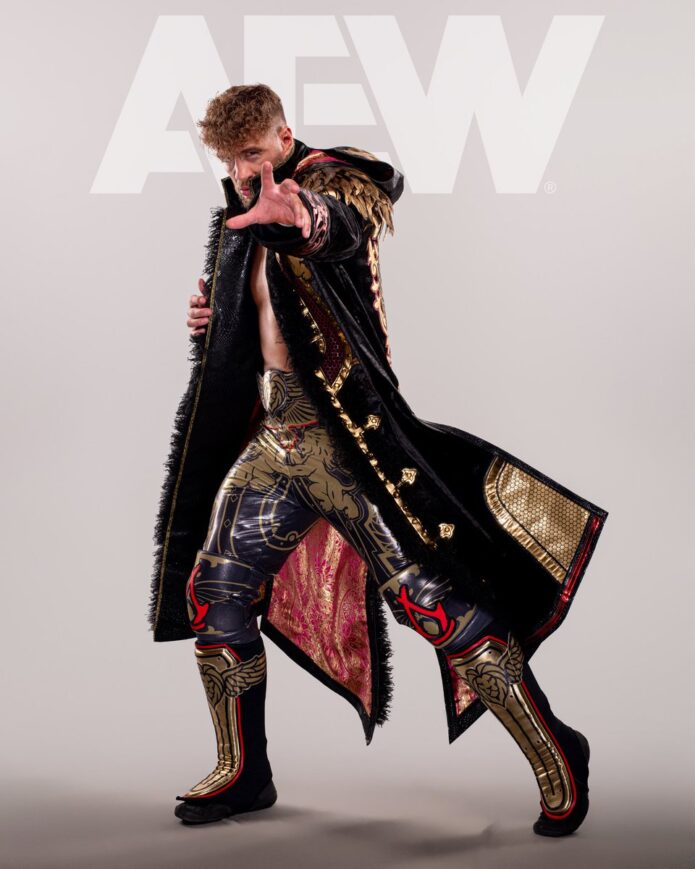
Will Ospreay’s tattoos are not a side note to his wrestling image. They are part of the visual language he carries into the ring: a dense arm collection that has grown alongside his move from British independent wrestling to New Japan Pro-Wrestling and then All Elite Wrestling. The clearest photographs show sleeves, forearm work, and newer additions that turn the arm into a moving record of the places and moments that shaped his career.
There is also an unusually strong paper trail for some of the ink. Ospreay has spoken publicly about a commemorative All In tattoo, a New Japan tribute, and a newer Venom design. Other details are best treated as visual observations rather than assigned meanings. That distinction makes the collection more interesting, not less: the documented stories provide anchors, while the photographs show how the larger composition has developed around them.
At a glance: the visual record
The overall impression is of a collection built through accumulation. Ospreay’s shoulders and upper arms carry large illustrative forms, while the forearms become denser and more textural. The work is easiest to read in shirtless match and entrance photographs, where the arm is extended or turned toward the camera. Ring tape, lighting, and motion can hide smaller areas, so no single frame should be mistaken for a complete inventory.
The two arms also do not function as identical panels. One frame may reveal the larger shoulder composition; another catches the inside of the forearm; a third makes the relationship between the upper-arm piece and the newer lower-arm additions easier to see. The collection therefore rewards comparison. It looks less like one finished emblem and more like a visual timeline that has kept expanding as his career reached new stages.
The sleeve as a visual timeline
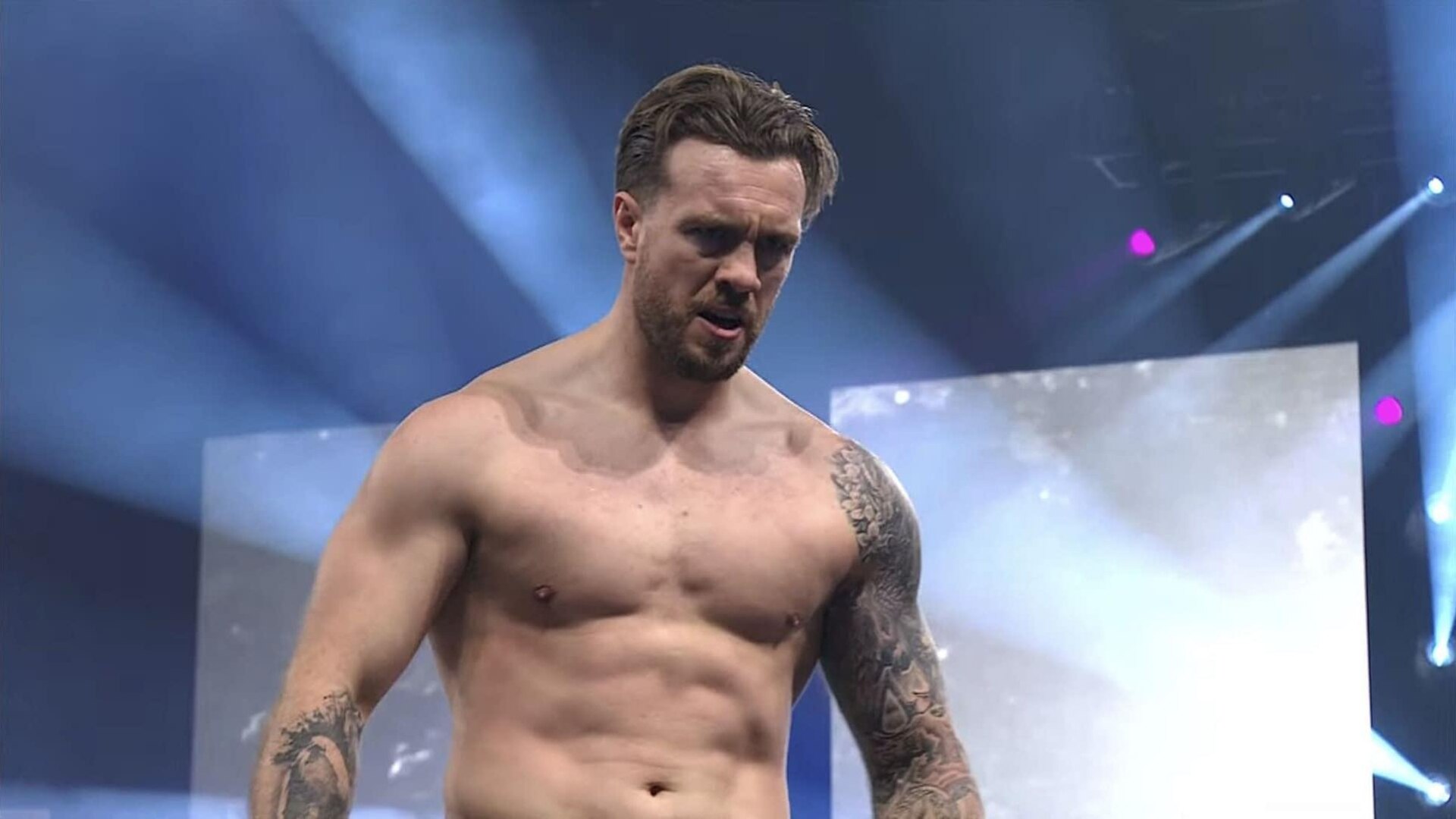
The strongest first impression comes from the way the sleeve follows movement. When Ospreay leans on the ropes, the shoulder rolls forward and the upper-arm artwork compresses into a darker, graphic shape. When he raises his arms, the sleeve opens out and reveals a longer chain of shaded forms. That change in angle is important because it explains why different photographs appear to show different amounts of ink without implying that the tattoos themselves have changed.
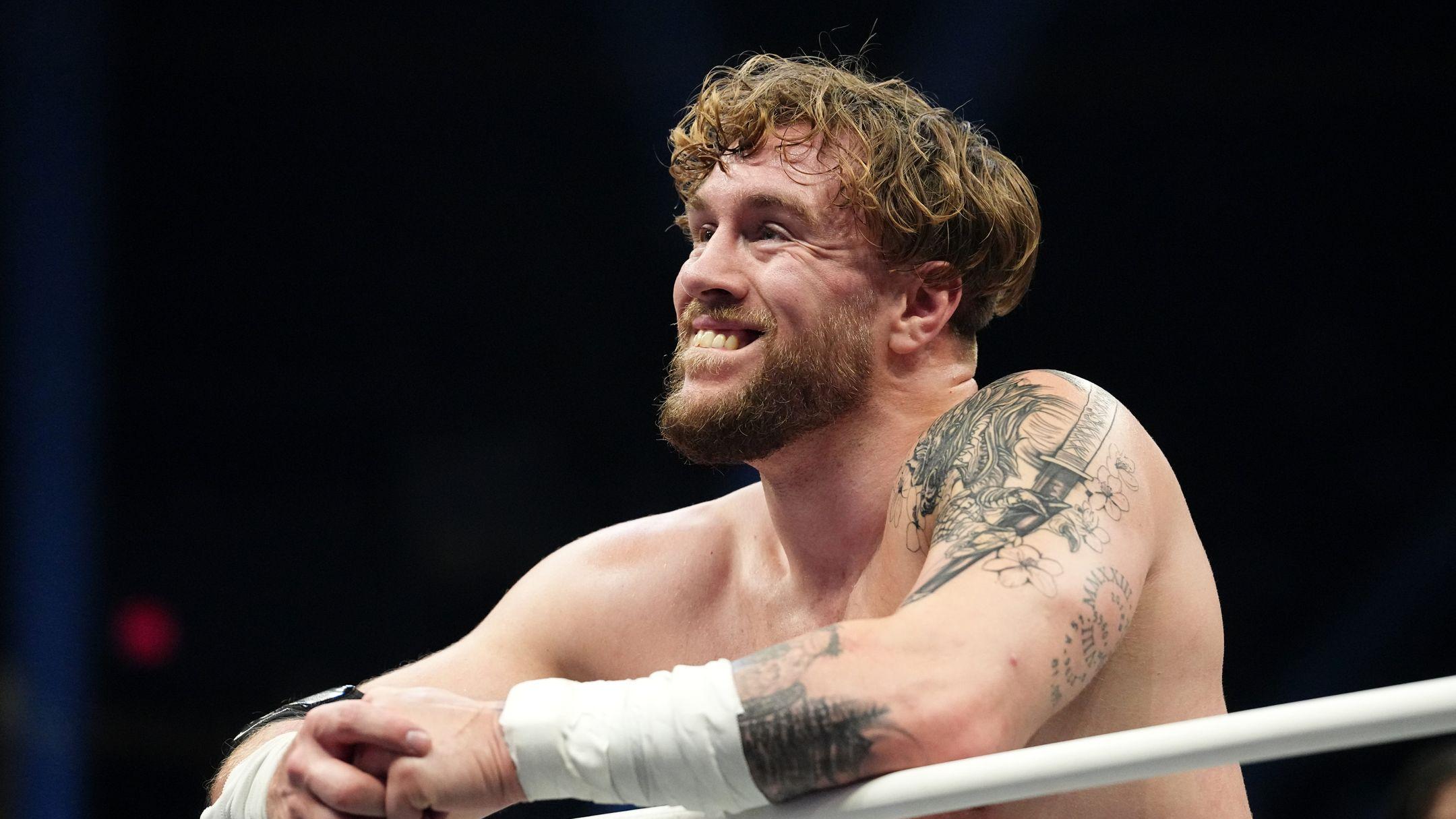
The in-ring photograph above is useful precisely because it is not a posed studio portrait. The arm is working, the body is turned, and the camera catches the tattoo through the physical vocabulary of a match. The visible mix of black-and-grey shading, floral forms, and denser linework gives the sleeve a clear identity even when smaller symbols are not readable.
The visual lesson is about flow rather than a single motif. The larger shapes create a silhouette from a distance, while the smaller marks keep the surface engaging close up. Ospreay’s sleeve demonstrates how a tattoo can remain legible while the body is moving, sweating, and changing position under arena light.
The All In coordinates and attendance tattoo
One of Ospreay’s best-documented tattoos is tied to AEW All In at Wembley Stadium in 2023. Fightful reported that the arm piece included the venue’s coordinates, the Roman-numeral date of the show, the London time of his match with Chris Jericho, and the announced paid attendance of 81,035. It is a very literal form of memory: a place, a date, a time, and a number fixed to the body.
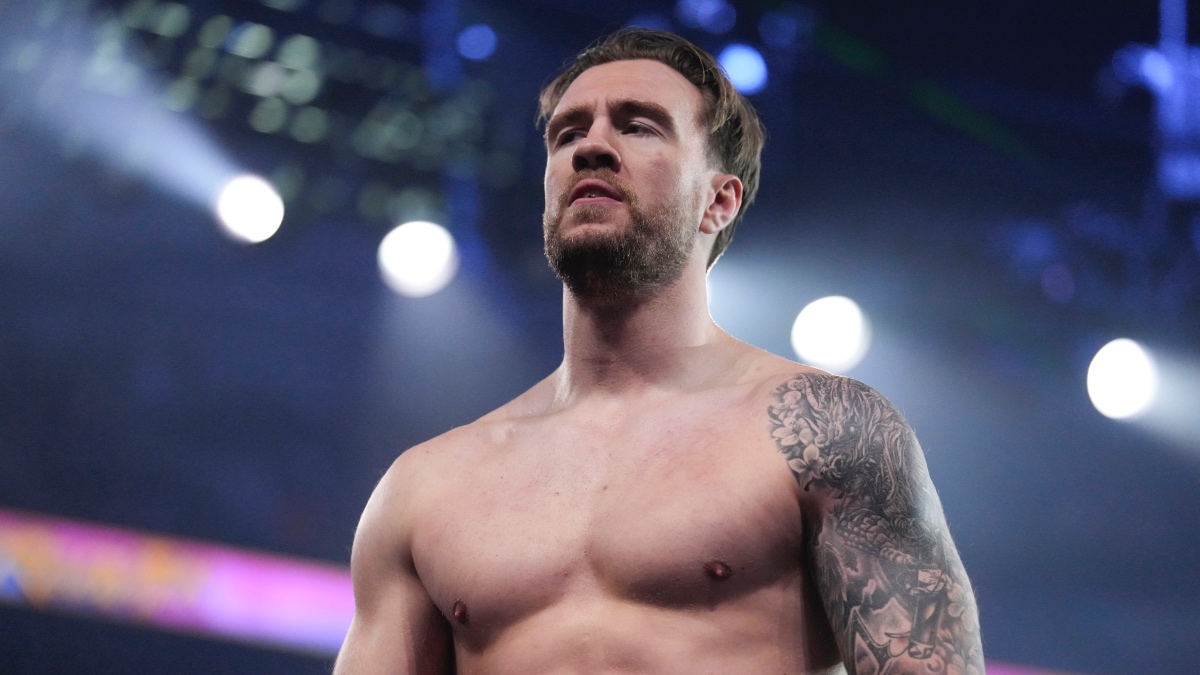
The photograph here shows why that kind of commemorative tattoo works within the larger collection. The arm is not presented as a clean white space reserved for one inscription. It sits beside illustrative coverage, so the factual details become part of a broader sleeve instead of looking like an isolated souvenir. The effect is closer to a scrapbook assembled in ink than to a single minimalist badge.
There is a useful emotional logic in that choice. Ospreay has described wrestling at Wembley as a dream and later returned to the venue as a major AEW headliner. A tattoo that records the exact coordinates and match time turns a career milestone into something portable. It does not depend on a belt, a poster, or a video package to explain why the night mattered.
The New Japan tribute on the forearm
Ospreay’s relationship with New Japan Pro-Wrestling is another visible thread. WrestleTalk reported in 2024 that he revealed a new tattoo of the NJPW lion mark before his final contracted match for the promotion. The article also noted that he had already marked the date of his first New Japan match on his body. Together, those pieces connect the beginning of his Japanese chapter with the organization that helped define his international career.
That is why the forearm work is more than decoration in a career-focused reading of the collection. It points to a period when Ospreay learned a different rhythm of wrestling, spent years working in Japan, and built the reputation that eventually brought him to AEW. A logo can be simple in outline while still carrying a large amount of personal history.

The 2026 return photograph provides a wide view of the sleeve in a different setting. The arm is exposed against strong stage lighting, and the composition reads as a continuous field of ink rather than a collection of unrelated stickers. This is where the visual record and the reported history meet: the photograph shows the coverage, while the New Japan reporting explains why certain areas of the arm function as career markers.
It is also a reminder to be careful with certainty. The public sources identify the NJPW lion and the first-match date, but they do not explain every adjacent shape. The safest account leaves those smaller pieces at the level of visible form. That keeps the story grounded while still acknowledging the craft and density of the tattooed surface.
The newer Venom tattoo
In August 2026, Ospreay told The Ariel Helwani Show that he had received a large Venom tattoo before his AEW World Championship match at Wembley. SEScoops reported that he wanted his arm covered before returning to the ring at that level and that the new piece was still flaking while it healed. The comment gives the design a clear place in the collection’s ongoing development: it was not a random addition, but part of a deliberate push to complete more of the arm.
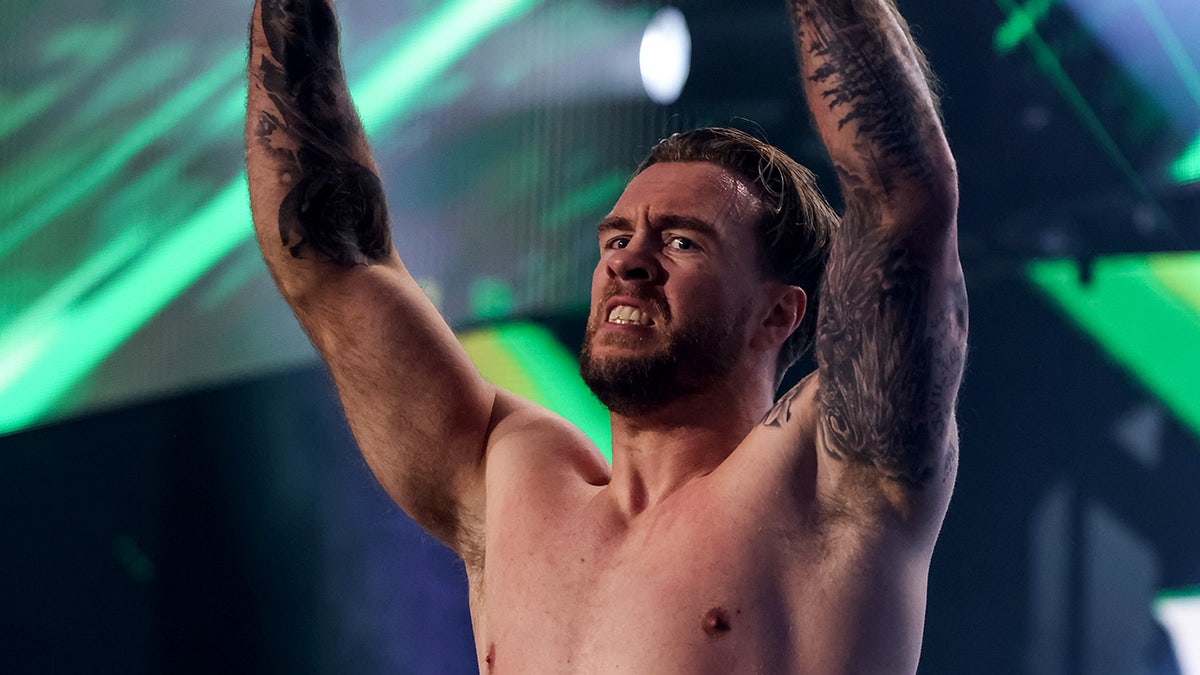
The raised-arms image makes the newer coverage easy to understand. Both arms are visible, and the lighting emphasizes how the tattooed areas extend from the shoulder toward the forearm. The frame is not a close-up of the Venom design, so it should not be used to identify every detail of that character. It does, however, document the scale of the collection and the way the newer work sits inside a much larger sleeve.
Healing also matters here. Fresh tattoos change as they settle, and Ospreay’s remark about flaking is a useful reminder that a tattoo photograph is a moment in a process. The completed look may read differently from the first public glimpse. That makes dated photography especially valuable for an evolving collection: it preserves not just what was inked, but when viewers were able to see it.
How the sleeve reads in performance photos
Ospreay’s tattoos are most recognizable when they are allowed to move. A posed portrait can clarify the shoulder, but performance photography shows the relationship between ink and gesture. Arms raised in celebration stretch the lines. A lean over the ropes bends the forearm into a shorter visual block. A turn toward the hard camera can make the same section appear lighter or darker depending on the light.
The later match image shows the sleeve in a more compressed, close-range view. The dense upper-arm work remains readable, while the lower marks become a textured edge around the forearm. It is a different kind of evidence from the full-body return shot, and that difference is exactly why it deserves its own place in the sequence. One photograph establishes scale; the other supplies detail.
For anyone studying the collection as tattoo inspiration, the central pattern is layering. Ospreay combines recognizable commemorative references with larger illustrative work and newer character-driven imagery. The result has a strong personal vocabulary without requiring every element to be explained in an interview. A sleeve can communicate through placement, contrast, and repetition even when the wearer has only spoken about a few individual pieces.
What the documented meanings have in common
The tattoos that Ospreay has explained publicly tend to connect the body to wrestling history. The All In piece records a specific night. The New Japan lion marks a formative promotion. The first-match date turns a beginning into a permanent reference point. The Venom tattoo belongs to a later moment when he wanted the arm to feel more complete before another major match.
Those references share a preference for directness. They are not vague symbols detached from biography. They point to places, organizations, dates, characters, and milestones that Ospreay can name. Around them, the more abstract sleeve work supplies texture and continuity. The collection therefore balances readable story with visual atmosphere: some pieces tell you exactly where to look for meaning, while others are best appreciated through their shapes and their relationship to the body.
Why the collection keeps evolving
Ospreay’s public career has moved through several distinct phases, and the arm reflects that movement. The New Japan years brought one set of memories. AEW added new stages, new rivals, and new milestones. The Wembley return and the later championship run created fresh reasons to add or extend the work. In that context, the sleeve does not need to be treated as a finished product. Its unfinished quality is part of the story.
The photographs also show why a tattoo collection can become more coherent over time without being planned as one giant piece from the beginning. Repeated black-and-grey texture ties separate moments together. Similar density gives the upper arm and forearm a shared visual weight. New additions can occupy open skin while still reading as part of the same moving field. In Ospreay’s case, repetition and placement create continuity after the fact.
Career memory in context
The clearest way to read Ospreay’s ink is as a record of chosen moments. The All In coordinates preserve a dream realized in a specific arena. The New Japan symbol and first-match date preserve the promotion that shaped his international identity. Venom marks a later effort to bring more coverage to the arm before another defining match. The surrounding imagery supplies the visual bridge between those documented references.
That combination gives the collection its staying power. It is personal without being sealed off from the viewer, because the known meanings provide entry points and the photographs make the larger design visible. At the same time, the unresolved details should remain unresolved. Good tattoo coverage does not require invented symbolism. In Ospreay’s case, the evidence is already strong enough: a changing sleeve, a handful of clearly explained milestones, and a career that keeps giving the ink new context.
Seen across dates, the tattoos become a parallel timeline. They begin with the marks of ambition and belonging, expand through major nights in Japan and London, and continue into the present with new imagery layered over the arm. The collection is not just a list of designs. It is a working archive carried into every entrance, match, recovery, and return, a form of documented memory carried on skin.
One thought on “Will Ospreay Tattoos: Wembley Memories, NJPW Ink and a Growing Sleeve”