
Tua Tagovailoa’s most visible tattoo is a patterned sleeve over his right shoulder and arm. Later photographs show substantial ink on both arms. He has connected the sleeve to his son and to Samoan ideas of protection and guidance; a small cross is also visible inside his left wrist. Tagovailoa has not explained every pattern, so the public record is clearest when it sticks to what he has said and what the photos show.
The Samoan-inspired sleeve is the central tattoo story
Before the 2023 offseason, Tagovailoa had not been seen with the large collection of body art that appears in his later football photos. At Dolphins training camp that year, after the birth of his first child, Ace, he explained that the sleeve was connected to his son and to cultural ideas of protection and guidance. He said the work took three sessions, about two and a half days.
The piece wraps from the shoulder toward the wrist in bands, triangles and dark geometric sections. Tagovailoa has described it as Samoan-inspired, but he has not published a guide to what each shape means. The family connection is documented; a symbol-by-symbol translation is not.
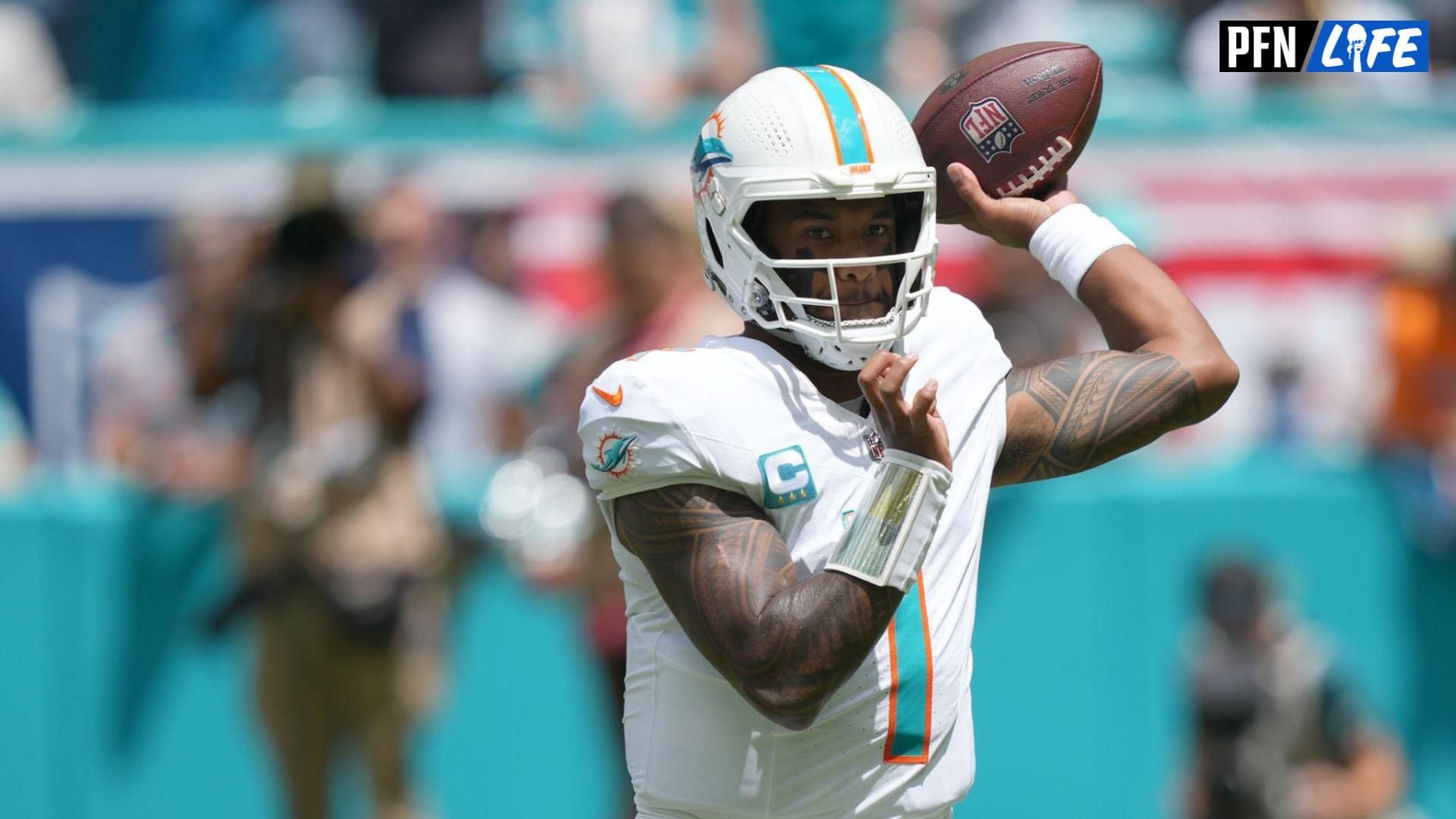
Family and protection are the meanings in Tagovailoa’s tattoos
In his camp comments, Tagovailoa said the sleeve represented his first child and mentioned protection and guidance as ideas that matter in Samoan culture. Published coverage also notes a name worked into the sleeve, though it is hard to read in many action photos, where his arm is bent, turned away or partly covered by a jersey.
Documented meaning: family, cultural identity, protection and guidance. Documented timing: the sleeve was revealed at Dolphins camp after Ace’s birth. His comments give the larger idea, not a separate meaning for every mark.
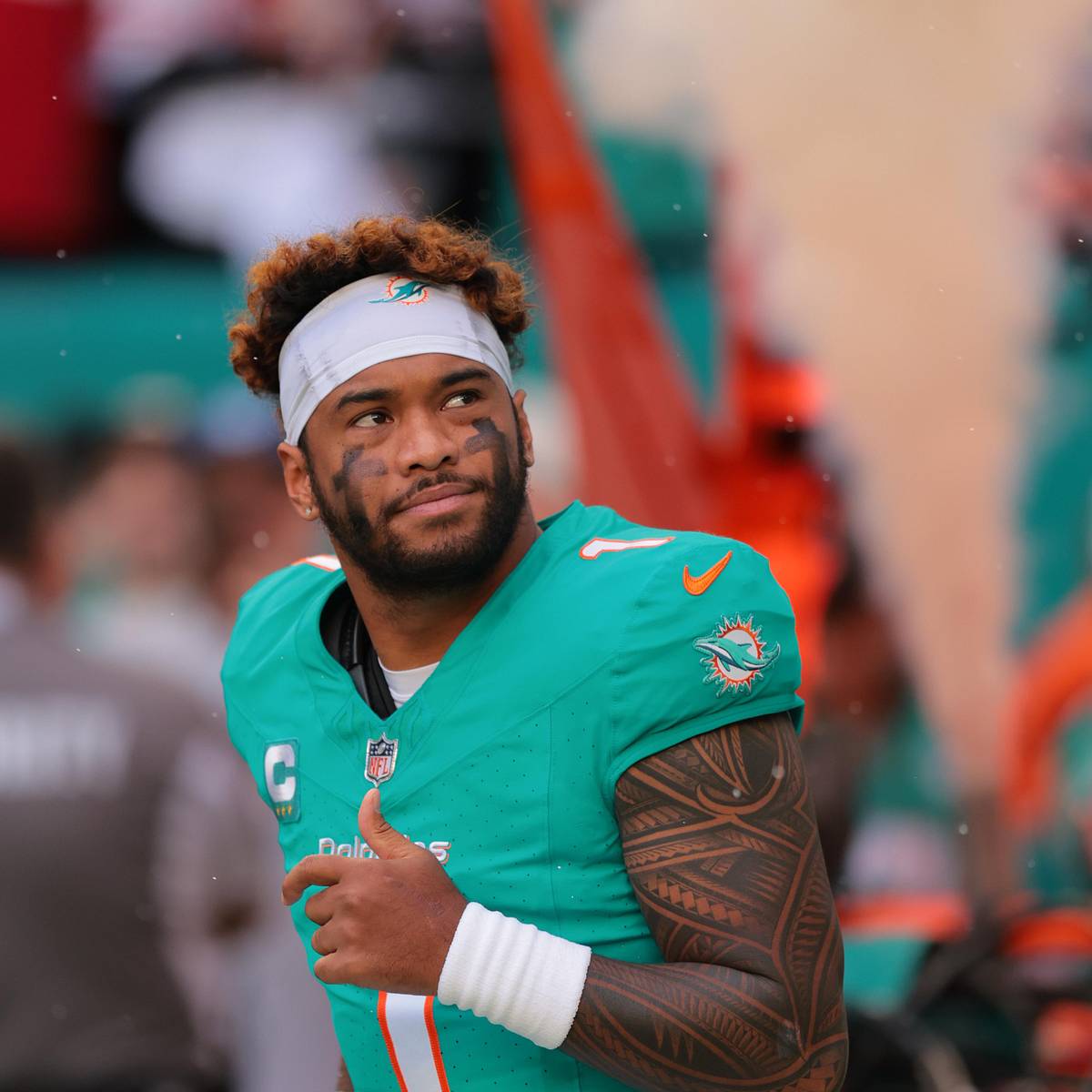
The geometric tattoo linework changes with every angle
There is no single portrait or mascot at the center of the sleeve. Repeated bands circle the arm, with smaller lines and shapes set inside the darker sections. A sideline photo shows the pattern curving around the shoulder; a closer camp portrait makes the changes in line and density easier to see.
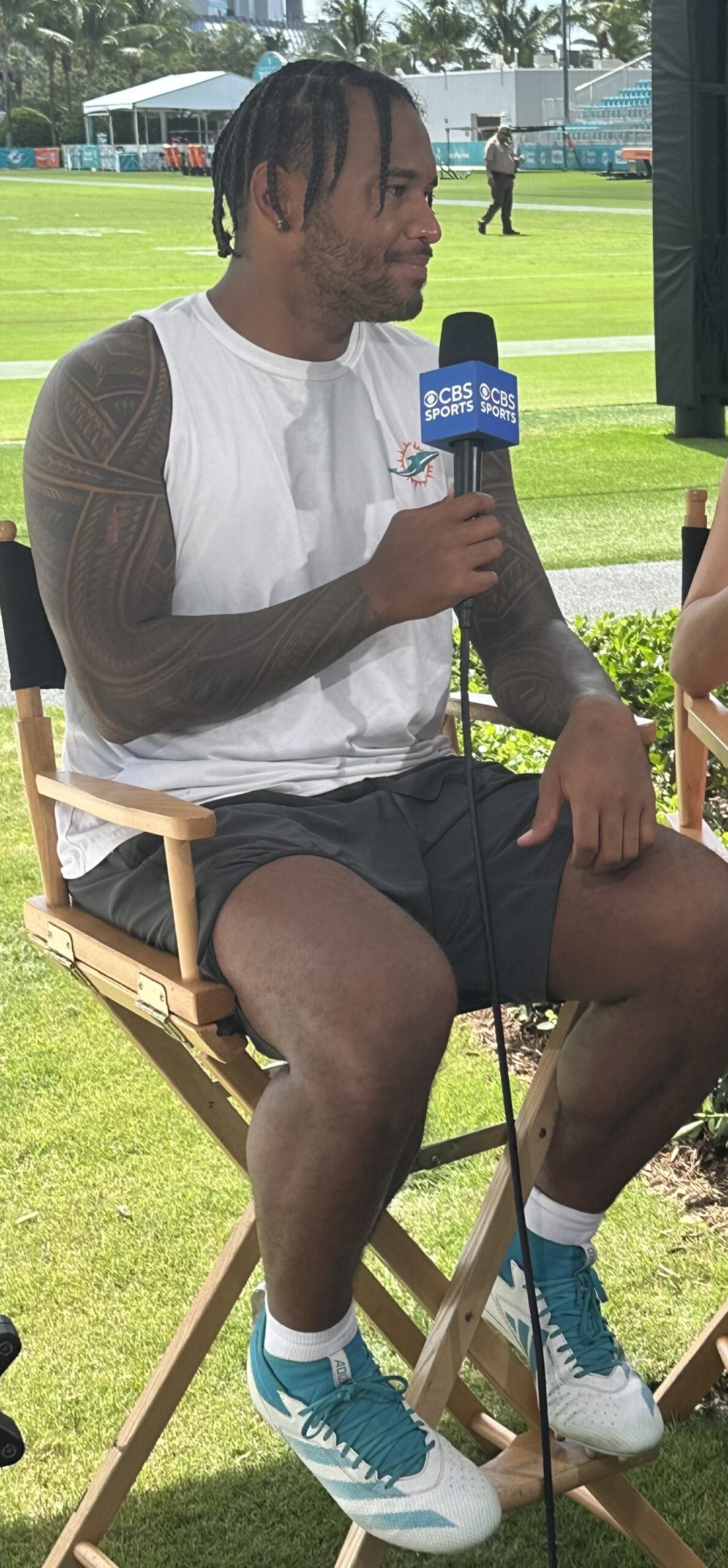
The viewing angle can change its appearance. A raised elbow stretches the bands, while a front-facing pose may hide the inside of the arm. A 2025 CBS Sports interview shows the sleeve at rest. Tagovailoa has also discussed heritage and weaving patterns in a Complex interview about a Perry Ellis clothing collaboration; that conversation offers cultural context, not a translation of the tattoo.
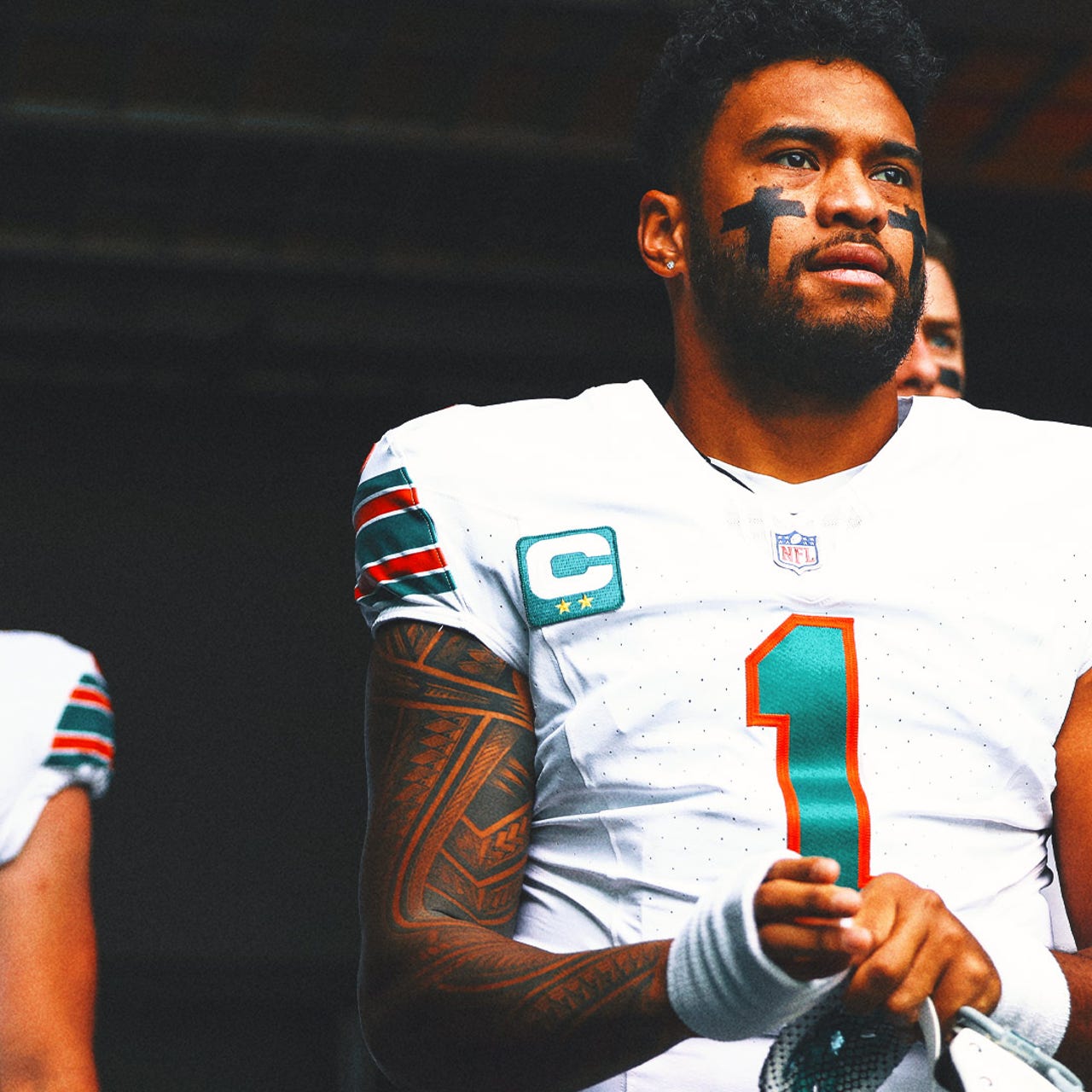
The left wrist cross connects the sleeve to his faith
Coverage also identifies a small cross on the inside of Tagovailoa’s left wrist. It is often covered by a wristband during games, so it appears less often than the sleeve in sports photos.
Tagovailoa has spoken publicly about his Christian faith. That context is relevant, but the available evidence establishes the cross and its placement, not a more detailed private story about it.
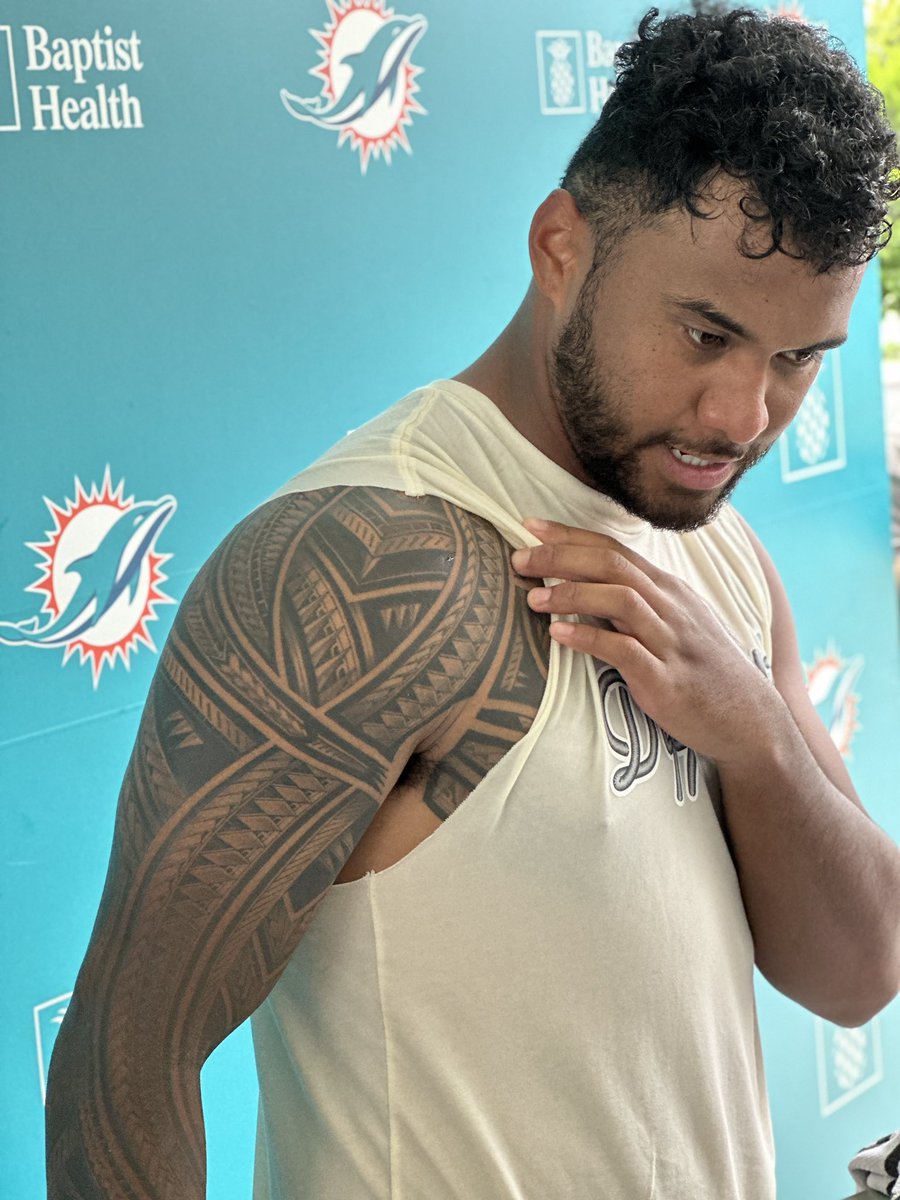
Later photographs show the tattoo story expanding
Photos from Tagovailoa’s 2024 football camp show substantial ink on his opposite arm. In a 2025 training-camp interview, he sits with a CBS Sports microphone and both arms visible: the familiar sleeve on his right, with patterned coverage on the other arm as well.
These images show the collection grew beyond the original right-arm reveal, but they do not establish when each section was added. The photos come from different camps and interviews, not a complete record of every session.
How to read the collection without inventing meanings
The photos show dense patterned coverage and, in some frames, a name within the sleeve. They do not provide a key to each triangle, band or smaller mark. A design can also look like separate pieces when the arm turns or bends, so its outline should not be guessed from one photograph.
The sleeve is visible in Dolphins uniforms, but that does not make football the reason for every tattoo. Tagovailoa’s own comments point to family and cultural ideas; other details should remain descriptions of what is visible unless he or a reliable source explains more.
Why Tagovailoa’s visual style works
The dark bands read as a broad shape in stadium photos, while close portraits show more of the linework. A white jersey sets the ink apart; sleeveless camp gear reveals more of the arm. Clothing, posture and lighting explain why the same sleeve can look different from one image to another.
The documented record in one view
The public record identifies a Samoan-inspired right-arm sleeve that Tagovailoa connected to his son and to protection and guidance, a cross inside his left wrist, and later photos showing more ink on the opposite arm. The sources do not offer a complete translation of the patterns or an exact timeline for every addition.