
Ozuna’s tattoos range from small marks near his neck to a large Last Supper scene across his chest. Portraits and interviews show layered black-and-grey work on both arms, including a face and rose on the upper arm and a microphone on the forearm. Some pieces have been discussed publicly; others are clear in photos but have no confirmed explanation.
The collection grew over time, mixing religious imagery, lettering, portraits and music-related designs. The chest piece and a few smaller tattoos have documented context, while the meaning of many individual marks remains private.
The Last Supper chest tattoo

The Last Supper is Ozuna’s largest documented chest tattoo. Its black-and-grey scene stretches across his torso, with a long table, seated figures and arches framing the interior. Deep shading gives the architecture and figures a mural-like depth. Above it, the dates “S-2013” and “J-2016” sit below his collarbone.
Reports in 2024 said the tattoo took about eight hours and involved the No Pain By Ganga team. The same coverage showed a second new piece on his leg with cartoon imagery. Ozuna had previously said he wanted a Last Supper on his chest and an image of his father on his back, so the interview gives a timeline for the chest design. The available reporting doesn’t explain the two dates.
The portrait and rose on his upper arm
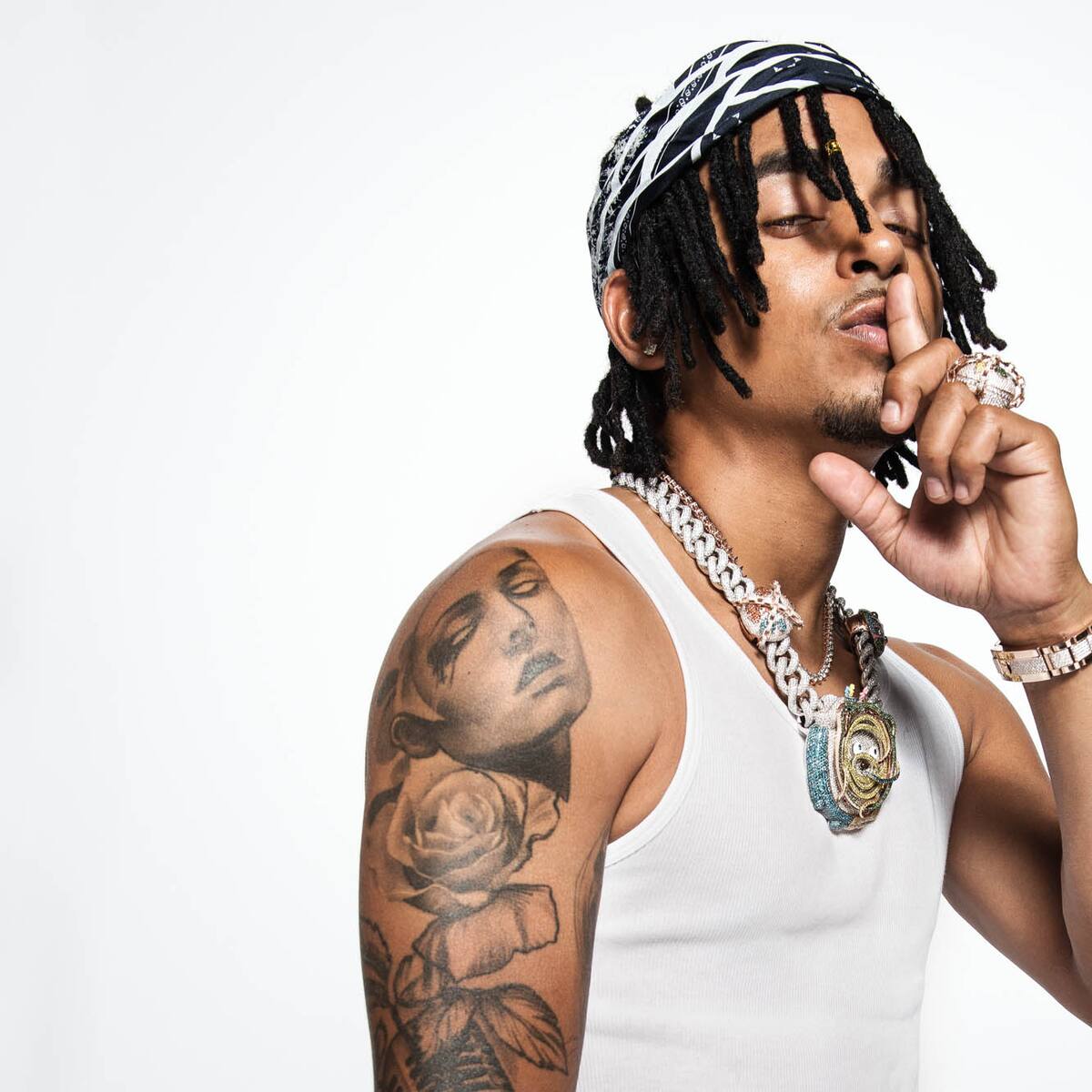
A shaded face sits above a rose and ornamental forms on the outside of Ozuna’s upper arm. The portrait uses smooth tonal shading, while darker outlines and layered petals define the flower. In a sleeveless portrait, the face remains legible and the lower work continues toward the elbow.
The sources identify the placement and design but not the person in the portrait. It’s part of a larger sleeve rather than a separate image on bare skin; the surrounding ink runs toward the shoulder and forearm.
The microphone tattoo and forearm lettering

An XSET member-archive portrait shows a microphone along Ozuna’s forearm, surrounded by dark fills, lettering and smaller marks. The grille and body are recognizable, and the placement is visible in the seated photo, where he holds his forearm across his knees.
The microphone connects visually to his work as a singer, while the surrounding designs vary in scale and density. Some lettering is hard to read in the photograph, and available sources don’t provide a verified translation for every mark.
Full-sleeve coverage in the El País portrait

An El País portrait shows both tattooed arms at once. Ozuna’s sleeveless denim outfit leaves the shoulders, biceps and forearms visible: larger shaded pieces sit higher on the arms, with darker bands and symbols lower down. Portrait-like faces, rounded forms, lettering and ornamental fills appear across the sleeves.
The two arms have different designs and line weights rather than matching patterns. This wider view shows how the portrait and microphone sit within the surrounding coverage, which extends from shoulder toward wrist and meets his watch and bracelets.
Layered arm work in GQ Mexico

GQ Mexico’s portrait shows Ozuna seated by the water in a patterned outfit, with both arms exposed. The nearer forearm has a large dark composition of curved lines and shaded forms; other pieces appear on the upper arm and opposite side. Natural light and the lower camera angle make this view distinct from the studio portrait.
The image confirms how much of the collection sits on his arms, but it doesn’t establish the meaning of each design. It shows black-and-grey work with different densities, large motifs and smaller details from shoulder to wrist.
How the smaller marks fit the collection
The chest photo shows “S-2013” and “J-2016” above the Last Supper. Other portraits show marks near Ozuna’s neck and behind his ear. Body Art Guru documented a small diamond there; a tattoo-artist profile linked an earlier neck design to a heart and the name “Odisea.”
These smaller pieces sit between the larger chest and arm designs. Reports on the neck work predate the 2024 chest project, so newer photographs show the compact marks alongside the later mural. The meaning of the dates hasn’t been confirmed in the available coverage.
The religious imagery and classical references
The Last Supper is the clearest religious scene in Ozuna’s tattoo record. Reports tied the chest piece to the No Pain By Ganga session, and an earlier People en Español interview recorded his plan to get the design. That history gives the identification a stronger basis than a caption based only on resemblance.
Ozuna’s diamond grills have also featured Renaissance images, including the Last Supper and The Creation of Adam. Those are dental accessories, not tattoos. Keeping them separate leaves the tattoo record focused on the chest scene, arm portraits, microphone, lettering, neck symbols and leg work documented in the session coverage.
How the collection developed over time
Early photographs show smaller neck symbols, a diamond and arm designs. Later portraits reveal the face and rose, the microphone and wider sleeve coverage. In 2024, reports documented the Last Supper across his chest and cartoon imagery on his leg. Together, the images show the collection expanding from individual marks to larger connected areas.
The arm work remains the most consistently photographed section, while the chest mural adds a large central scene. Some meanings have been shared by Ozuna or recorded by sources; other designs can be described visually but shouldn’t be assigned a story without evidence.
What the documented images show
Across the photos, Ozuna’s tattoos vary in subject and scale: a small diamond and collarbone dates, a portrait and rose, a forearm microphone, dense sleeves and an architectural chest scene. The images show how the pieces sit together, while interviews and tattoo-artist coverage supply context for the designs they discuss.
The arms carry much of the older coverage, and the Last Supper marks a later expansion across the chest. Religious imagery, music references, lettering and portraits appear in the same evolving collection, but the meaning of many individual marks remains undocumented.