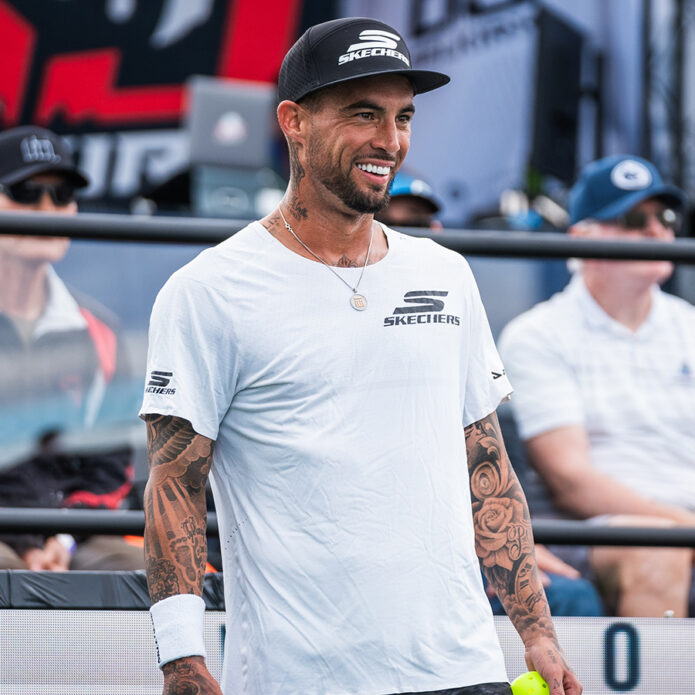
Tyson McGuffin’s documented tattoos are a visible record of the people, objects, faith references, and sporting identity that have shaped his life. The professional pickleball player has described his body as a place where he collects meaningful art, and the available photographs show that the collection is extensive rather than limited to one signature design. His arms, chest, back, neck, and legs appear in different stages of the work, with dense black-and-gray realism sitting alongside lettering, logos, portraits, and equipment references.
The newest group of photographs focuses on both legs. The images show a series of detailed designs that include portraits of family members, faith imagery, pickleball paddles, footwear, and other personal references. Earlier reporting also documents a large back project by tattoo artist Lawry Fong, including a crucifixion scene and a portrait of McGuffin’s wife. Taken together, the record describes a collection built around biography rather than a single visual style.
The structure of Tyson McGuffin’s body art
McGuffin has spoken about his tattoos as a collection of art connected to his life. The photographs support that description, especially through the black-and-gray realism visible in the leg and torso work. His ink is not presented as a repeated flash motif or a single sleeve pattern. Instead, different areas of the body carry different subjects. The leg photographs show faces and objects rendered in a dark, high-contrast realism style, while the torso and arm images reveal lettering, ornamental lines, and larger shaded compositions.
The source descriptions identify family members, faith, his children, his wife, and the development of his pickleball career as recurring subjects. That combination gives the tattoos a clear personal structure. The images are busy, but the themes are consistent: people who matter to him, symbols associated with belief, and objects that connect directly to the sport that made him widely known.
The leg portraits bring family faces into the tattoo collection
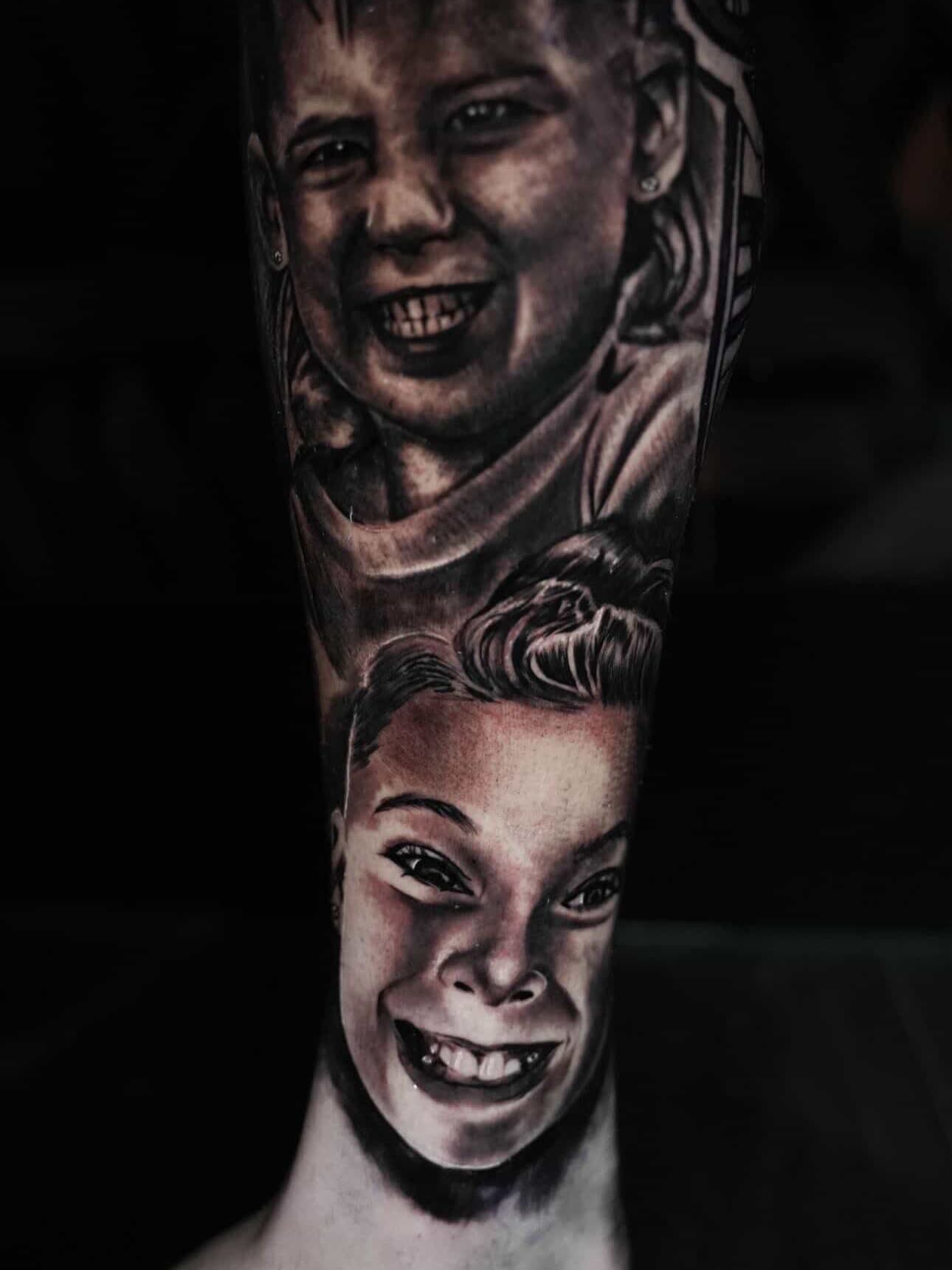
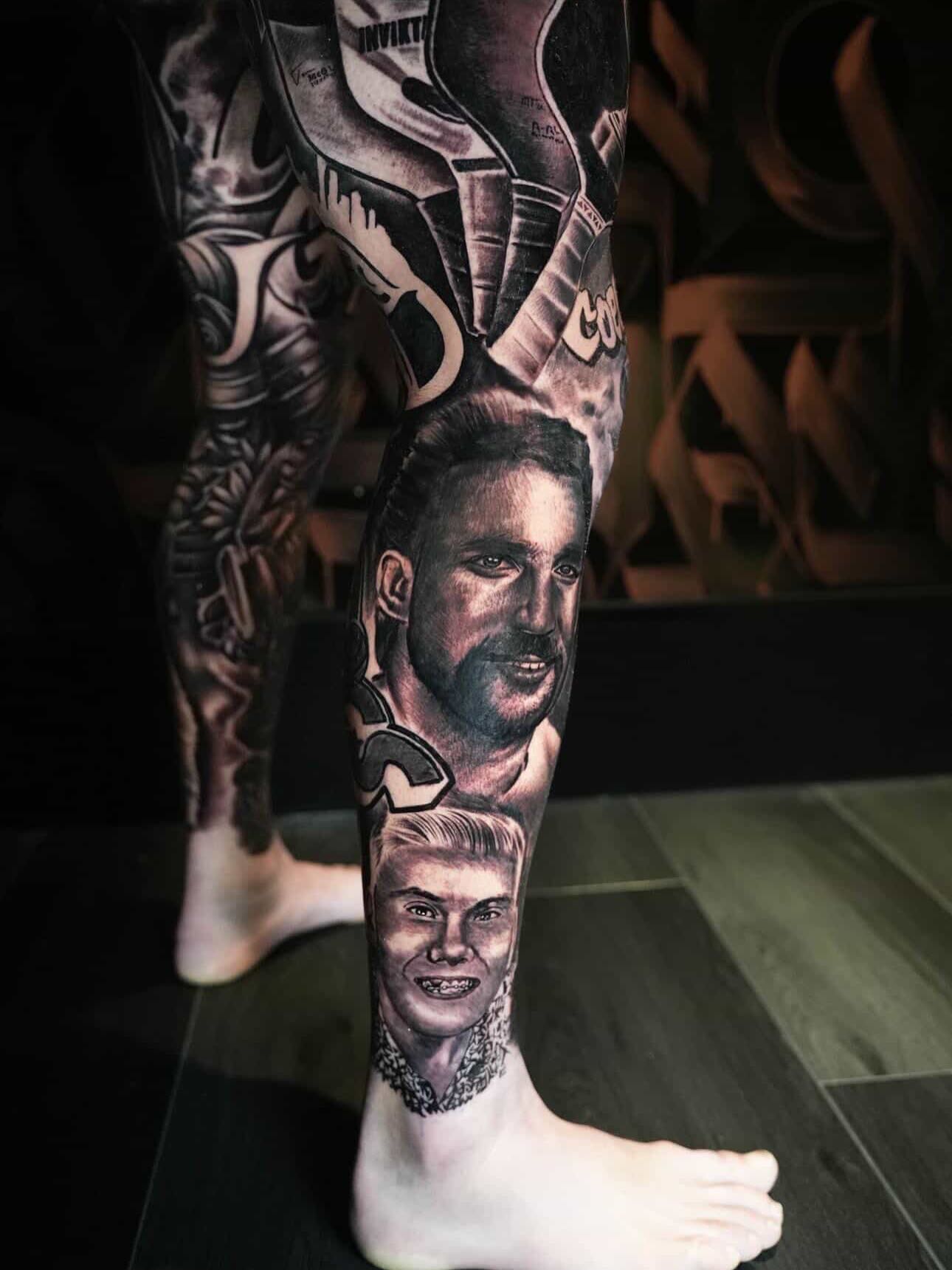
The first leg photograph is dominated by portrait work. Two faces are stacked vertically on the lower leg, with the upper portrait occupying the shin and the second face extending toward the ankle and foot. The faces are framed by surrounding black-and-gray work, so the piece reads as part of a larger leg composition rather than an isolated miniature portrait.
The second close-up makes the portrait technique easier to see. Fine changes in tone separate hair, skin, teeth, and shadow, while darker areas around the faces create a strong border against the surrounding skin. The placement is unusually vertical, allowing more than one face to sit in a single continuous field of ink. The source article identifies the new leg work as including detailed designs featuring family members, and these photographs are the clearest visual evidence of that family-centered theme.
The gorilla tattoo adds a powerful animal portrait to his sleeve
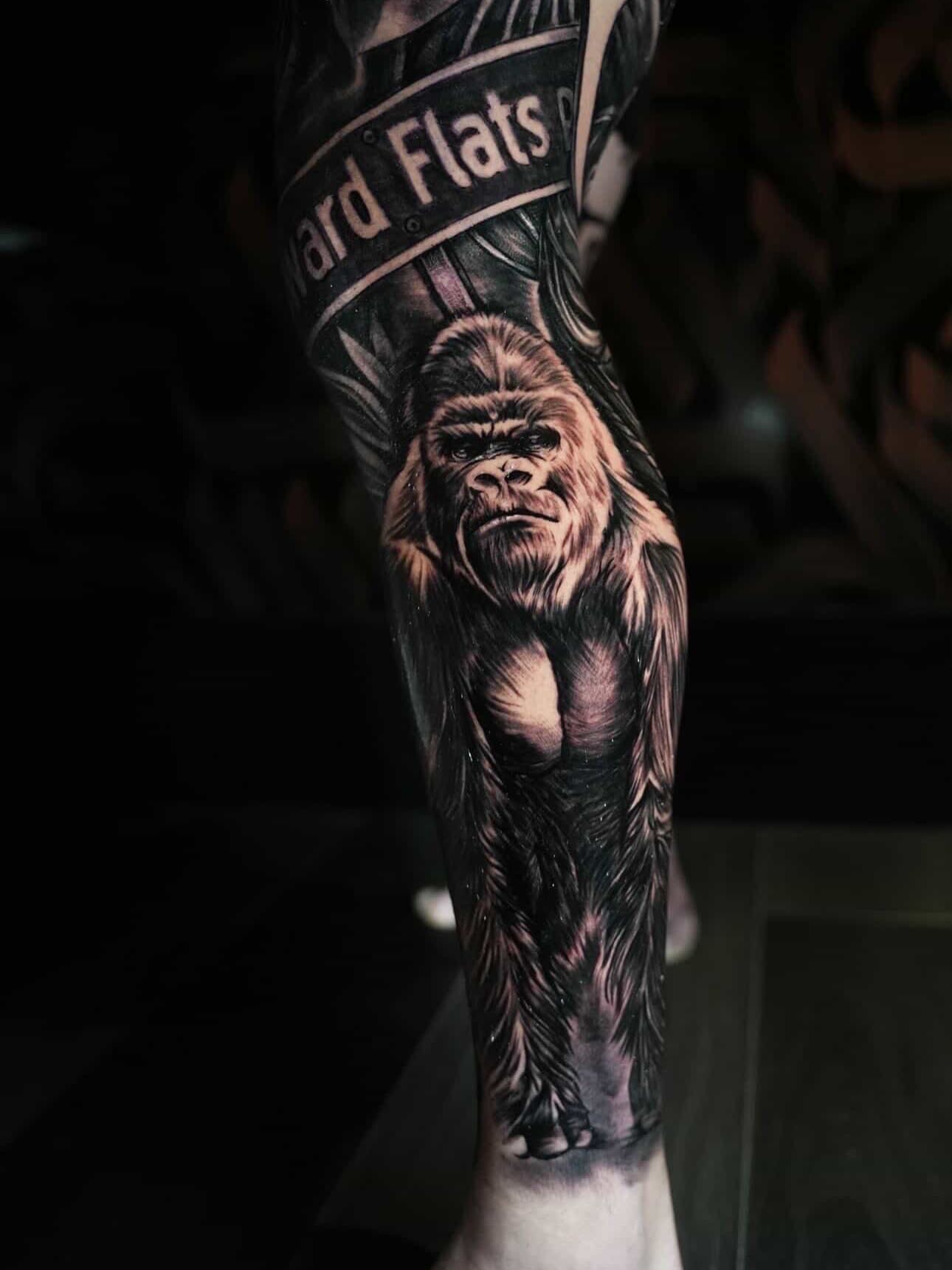
A separate leg photograph shows a large gorilla rendered in warm brown and black tones. The animal faces forward with the eyes, nose, mouth, and layered fur picked out through dense shading. Above it is a band of lettering, and geometric background shapes push the gorilla forward as the main subject. The image has the visual weight of a full panel, with the gorilla extending down the leg instead of appearing as a small emblem.
The published material does not assign a specific personal meaning to the gorilla. Its documented visual role is clearer than any interpretation: it is a prominent realism piece within the leg work, surrounded by the bold lettering and strong black framing that appear elsewhere in McGuffin’s collection. The photograph also shows how the newer designs are fitted into an already heavily tattooed body rather than treated as separate pieces with large areas of untouched skin around them.
Pickleball equipment appears as tattoo imagery, not just a career reference
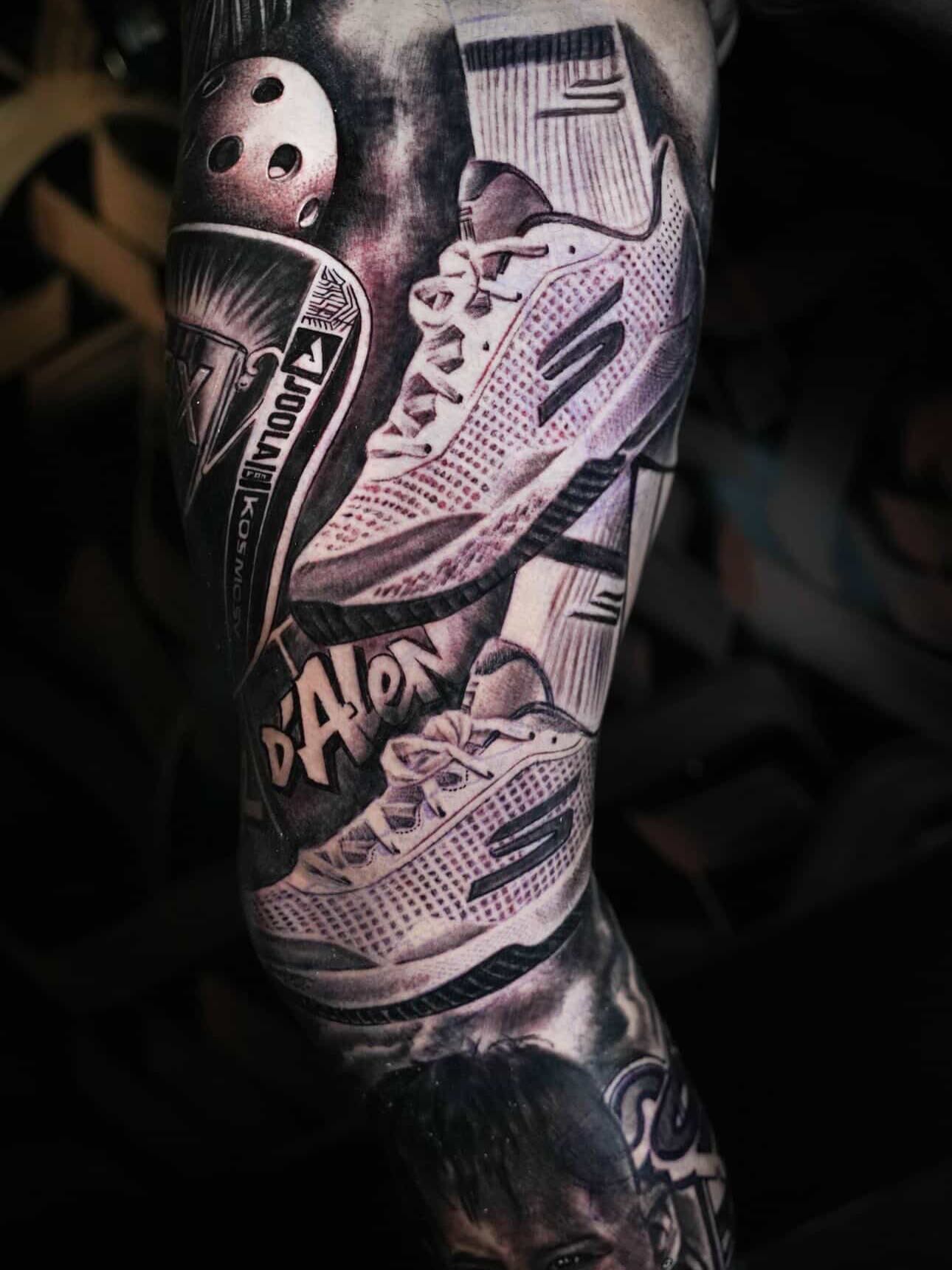
McGuffin’s connection to pickleball is unusually direct in the tattoo photographs. One close-up shows multiple pickleball paddles and shoes arranged as a large black-and-gray composition on the leg. The paddle faces, handles, shoe panels, laces, and brand markings are all treated as recognizable objects. The design is more specific than a generic sports symbol because it records pieces of the equipment associated with his professional life.
The source article specifically identifies his signature pickleball paddles and Skechers shoes among the subjects in the newest work. The close-up supports that description: the paddles are legible as paddles, and the footwear is rendered with enough detail to read as a particular set of shoes. The effect is almost archival. The tattoo turns the tools of his career into permanent visual subjects alongside the family portraits and religious imagery.
The back piece expands the story beyond the newest leg photographs
McGuffin’s earlier back project gives the tattoo history another scale. A 2025 report described an eighteen-hour session over two days with Lawry Fong, who was responsible for a crucifixion scene and a portrait of McGuffin’s wife. McGuffin described the back as a heroic and inspirational piece about people who had influenced him throughout his journey. He also said that a portrait of Michael Jordan was planned as a later addition.
That account is important because it shows that the recent leg work is part of a continuing process. The back is not simply a background behind the sleeves. It is another large narrative surface, with religious imagery and a family portrait carrying the same personal emphasis found in the newer photographs. The tattoos therefore connect across body areas through subject matter, even when the specific images and placements differ.
Existing lettering and sleeve work frame the new designs
The leg photographs also reveal how the newer pieces sit inside McGuffin’s older tattoo vocabulary. Lettering appears above the gorilla, while the close-up of the paddle and shoe panel shows older blackwork around the edges. The images do not present a clean before-and-after boundary. Instead, new realism work is surrounded by older marks, large shaded fields, and small pieces that have accumulated across the body.
Earlier reporting records that McGuffin has two sleeves, a finished chest, and a back that was still being completed at the time of the interview. The same reporting mentions a small “T and M” tattoo shared with his brothers, which he called his silliest tattoo and expected to cover as the back work developed. That detail gives the larger collection a personal timeline: shared family lettering, extensive sleeves, a developing back narrative, and newer legs filled with portraits and sporting references.
The collection’s visual language is black-and-gray realism with personal symbols
Across the available photographs, black-and-gray realism is the dominant visual language. Portrait faces depend on soft tonal transitions, while the gorilla uses dense fur texture and the sports panel relies on hard edges, logos, and repeated contours. Lettering and geometric framing create darker breaks between the realistic subjects. The result is a collection that can hold portraits, animals, religious images, and equipment without flattening them into one repeated pattern.
There is also a clear difference between what the sources document and what the photographs merely suggest. The reporting identifies family, faith, paddles, shoes, and the back’s inspirational figures. The images show the placement, shading, and density. They do not establish an official meaning for every small mark, so those details remain visual rather than being assigned a speculative story.

The documented record in one view
The documented record establishes a tattoo collection that has grown alongside McGuffin’s life and career. Family portraits occupy the legs and back. Religious imagery appears in the larger back project. Pickleball equipment has been translated into detailed body art. Older lettering and shared family marks remain part of the timeline, even as larger pieces cover more of the available skin.
The photographs also explain why McGuffin’s tattoos stand out on the pickleball circuit. They are not limited to one sleeve or one visible emblem. The collection extends across the body and uses portraits, objects, lettering, and realism to preserve different parts of his history. The most recent images make that pattern especially clear: the legs function as a gallery of faces, sporting equipment, and large-scale black-and-gray compositions, while the earlier reports place those pieces inside a much longer story of family, faith, and athletic identity.
The visual record in motion
For a visual record of the latest leg work, the embedded video appears below the documented tattoo history and image sections.
The visual record is especially useful because the collection is shown from several distances. The photographs also preserve details that are easy to miss in ordinary competition coverage, including the small lettering around larger panels, the transition from one portrait to the next, and the way the chest and neck pieces meet the shirt line.
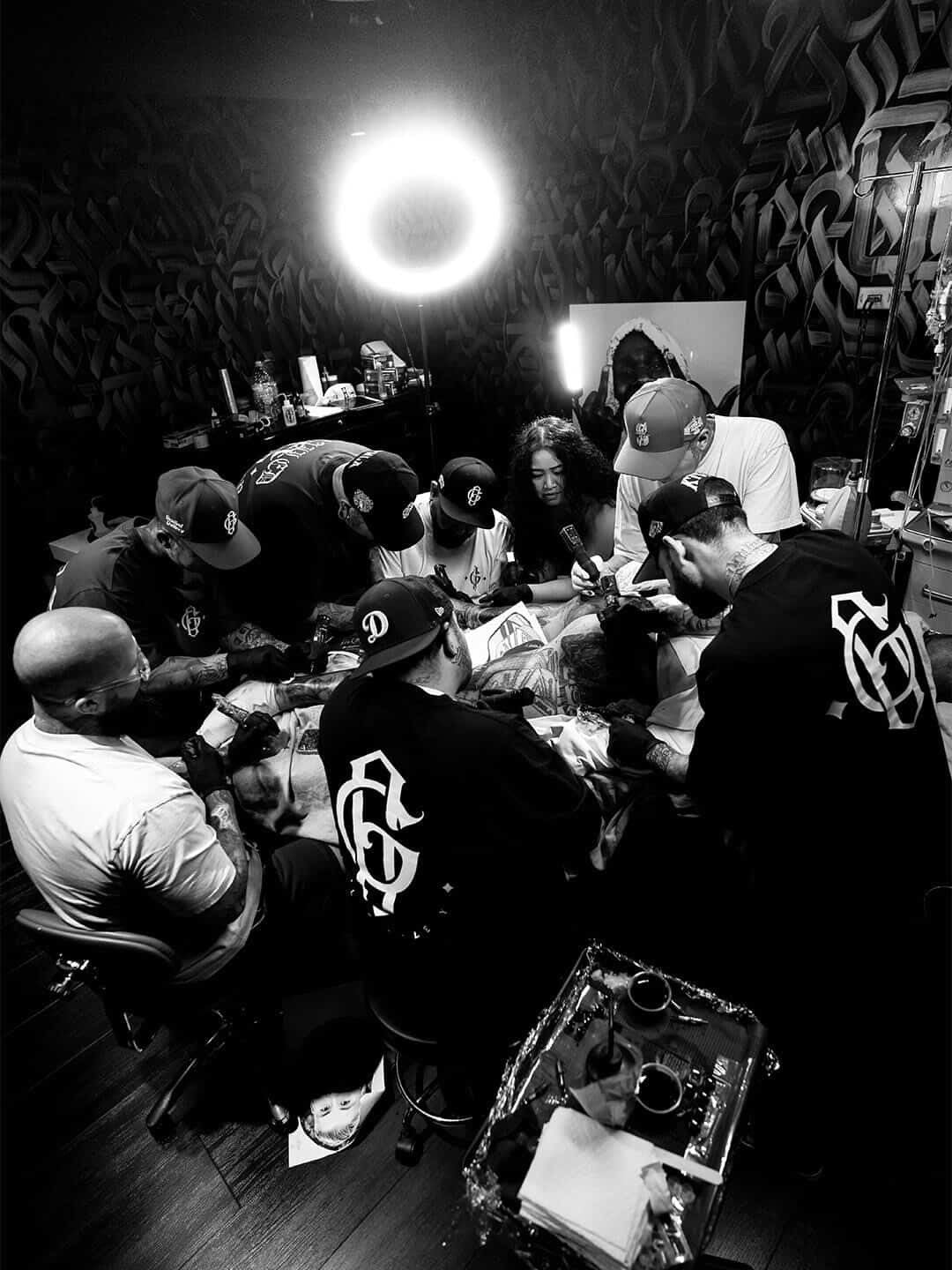
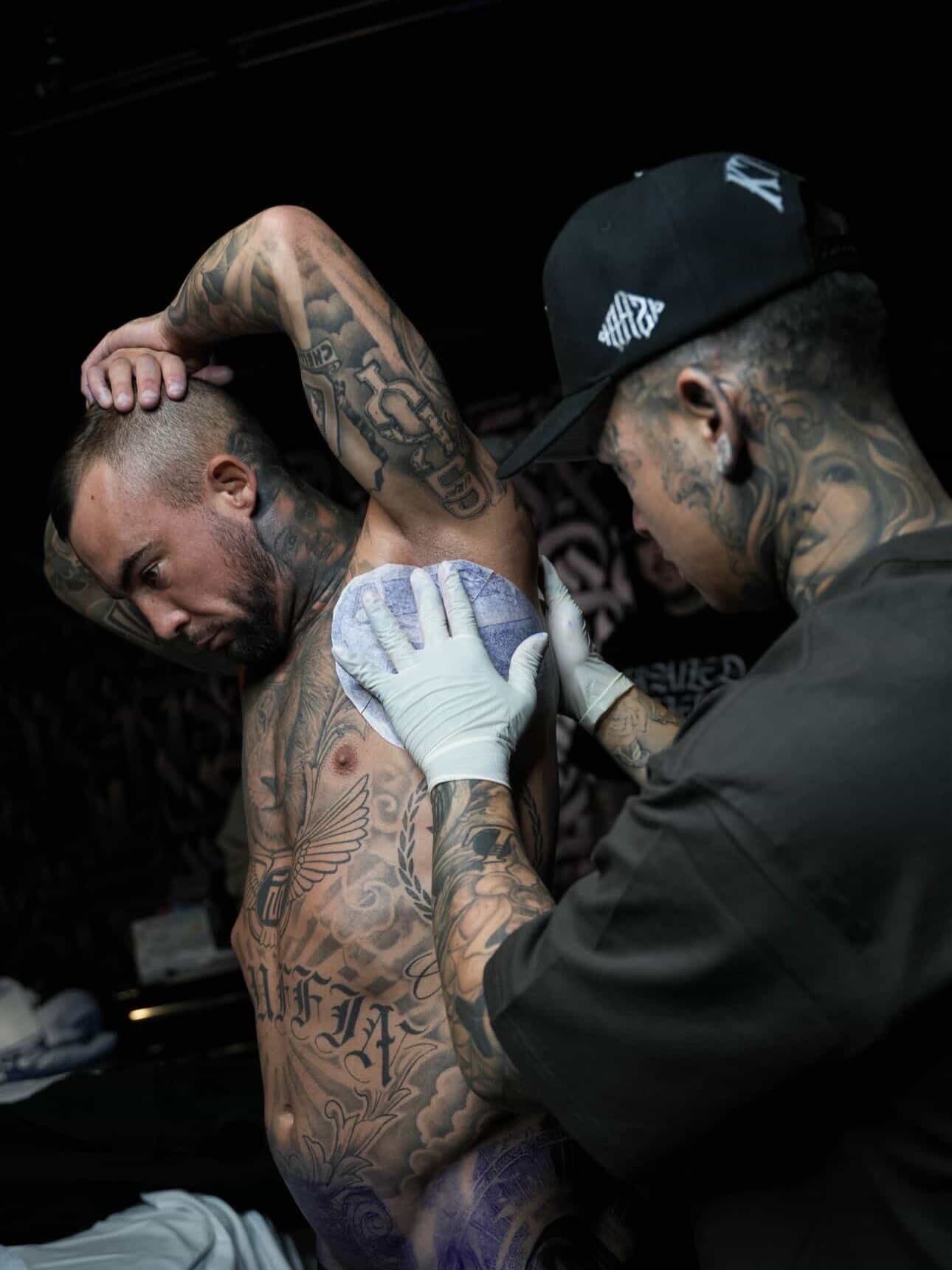
Close photographs isolate individual faces and objects, while the wider session image places those designs beside the older chest, arm, and neck tattoos. That contrast makes the timeline visible: portrait realism and sports imagery are being added to a body that already carries lettering, shaded backgrounds, and long-running family references. The tattoo history is therefore documented through both finished details and the broader arrangement of the pieces.