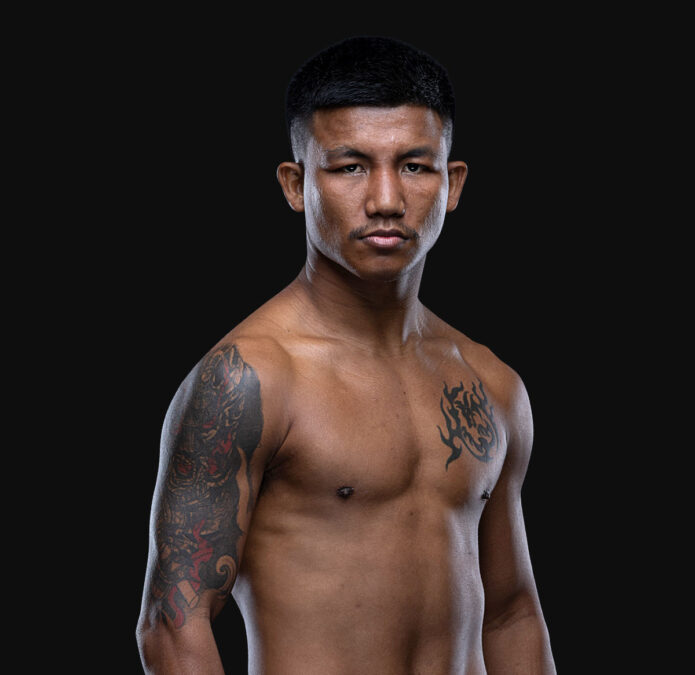
Rodtang Jitmuangnon’s tattoos are most visible in the photographs that show him without a shirt: a dark chest motif sits opposite a heavily worked arm, and the two placements give his public image a distinct balance. The chest piece is compact and sharply outlined, while the arm tattoo carries more density, layered shading and red accents. The photographs do not establish a private explanation for every figure, so the description stays with the forms, locations and details that can actually be seen.
The clearest documented images come from fight coverage, portrait sessions and a Thai profile that discusses the ink on his chest and upper arm. Across those settings, the work remains recognisable even when the lighting changes. The chest design reads as a dark, flame-like silhouette, while the arm piece occupies a much larger field and creates a more continuous sleeve effect. Together, they show two different scales within the same tattoo collection.
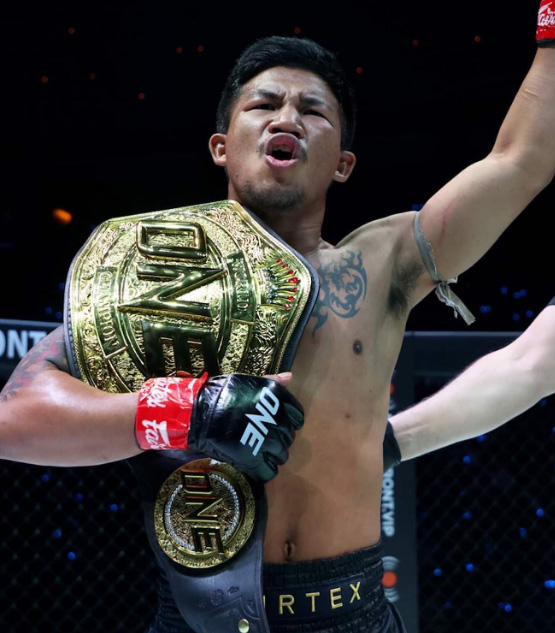
Rodtang is often photographed in motion, with gloves raised or a championship belt across his torso. Those pictures make the ink part of his athletic identity, but they can also obscure small details. The closer portraits are therefore important because they show the edges of the chest motif and the way the arm work follows the shoulder. A public photograph can document placement and appearance without proving a meaning that Rodtang has not personally explained.
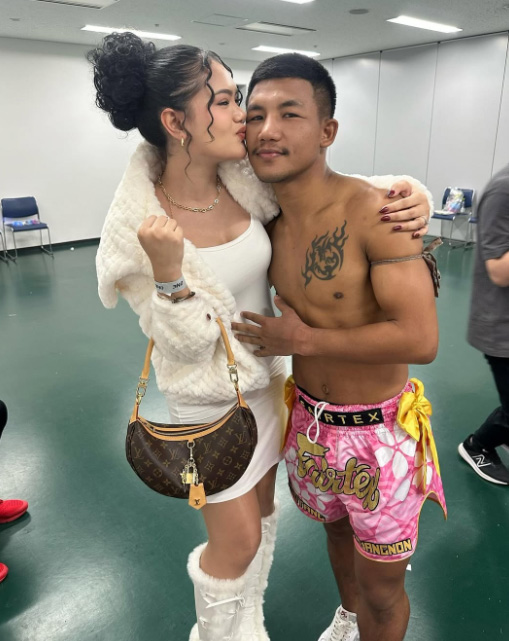
The dark chest motif on Rodtang’s upper torso
The chest tattoo is positioned high on the pectoral area and has a strong black outline. In the clearest photographs, the exterior shape appears pointed and slightly irregular, with dark sections that give the design a flame-like or tribal impression. It is not a fine-line mark and it does not spread across the entire chest. The open skin around it keeps the design visually separate from the larger arm piece.
One of the most consistent details is the contrast between the filled black passages and the lighter breaks inside the form. The contrast gives the motif a readable edge in both posed portraits and fight photographs. At a distance, the tattoo appears as a single graphic shape. At closer range, the internal curves and small changes in line weight make it less mechanically symmetrical than a simple logo.
A Thai sports feature identifies the chest and upper-arm tattoos as part of Rodtang’s visible body art and presents photographs of the designs. The feature is useful for confirming the placement and the general subject of the tattoo, while the images provide the strongest evidence for its appearance. No reliable source reviewed gives a verified personal statement from Rodtang explaining the chest motif’s meaning, so its symbolism remains unconfirmed.
The chest placement also changes with posture. When Rodtang turns toward a camera, the pectoral muscle pulls the outer points into a different angle. When he raises an arm, the design sits closer to the shoulder line and appears to connect visually with the sleeve. That movement is visible in the public photographs and helps explain why the chest piece can look compact in one frame and more expansive in another.
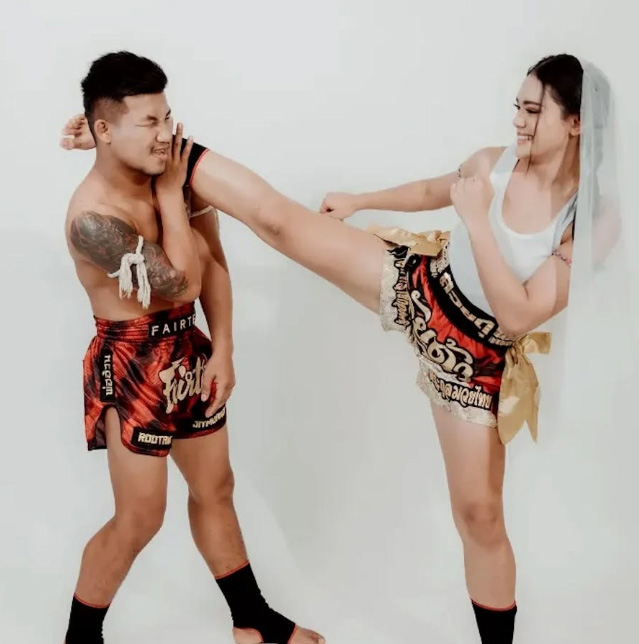
The dense tattoo sleeve running down his arm
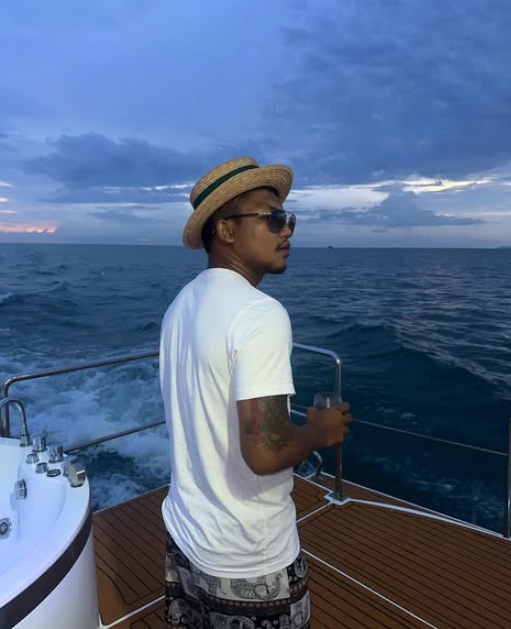
Rodtang’s arm tattoo is the larger visual element in the collection. It begins around the upper arm and continues toward the elbow and forearm, creating a packed field of black, grey and red. The photographs show overlapping illustrative shapes rather than one isolated emblem. Dark outlines hold the sections together, while red areas appear as accents within the heavier black coverage.
The sleeve is especially prominent in side-profile photographs. A view from behind the shoulder shows how the ink wraps around the upper arm instead of remaining on a single flat plane. That wrapping matters to the appearance of the work because the outer edge changes as Rodtang turns. The tattoo can look like a solid dark panel from one direction and a more layered arrangement from another.
Several photographs show the upper-arm area with enough clarity to distinguish the red details from the black shading. The red is not spread evenly across the whole tattoo. It appears in smaller sections, giving the sleeve points of visual emphasis. That limited colour is one of the clearest differences between the arm and the chest, which is dominated by dark ink and open skin.
The design also changes in appearance when Rodtang is photographed in the ring. Sweat and arena lighting can make the black sections appear flatter, and a glove or opponent may hide the lower arm. A portrait with the shoulder uncovered gives a more reliable view of the composition. Those different frames document the same placement from different angles rather than proving that every variation is a separate tattoo.
The portrait tattoo recorded on the upper arm
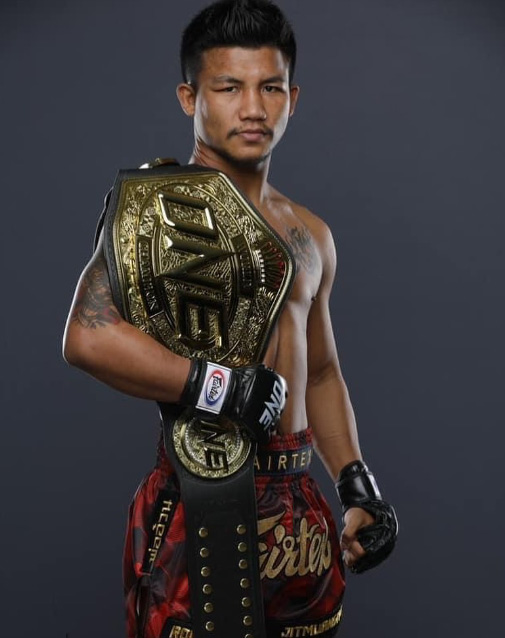
A tattoo directory records a small illustrative portrait on Rodtang’s upper arm and places it within a Thai cultural category. The listing is separate from the broader photographs of his chest and sleeve, so it adds a specific detail to the visible inventory. The available description identifies the subject as a portrait tattoo and gives the location as the upper arm.
The directory entry does not provide a direct interview in which Rodtang explains the portrait. Its category is therefore best treated as cataloguing information, not as a confirmed statement of personal meaning. The photograph itself shows a compact figure surrounded by the denser arm work. The relationship between the small portrait and the surrounding sleeve is more certain than the private story behind the image.
In wider portraits, the portrait element can disappear into the rest of the sleeve because the black shading around it is so visually strong. A closer frame separates the small figure from the larger dark field. That difference illustrates the limits of public tattoo photography: the body art is clearly present, but the camera does not always preserve every detail at the same scale.
The upper-arm location gives the portrait a transitional role in the collection. It sits between the exposed shoulder and the lower sections of the sleeve, so it can be seen when Rodtang wears open fight gear or poses shirtless. It is less visually dominant than the chest motif and less expansive than the full arm piece, but it adds a more figurative note to an otherwise graphic arrangement.
Red accents across the shoulder and arm
The red details are easiest to see in the photographs where Rodtang faces the camera with his tattooed shoulder turned forward. They break up the black and grey coverage without changing the overall dark character of the sleeve. Some red areas appear close to the shoulder, while other touches sit farther down the arm. The exact shapes are softened by distance, but the colour contrast is consistent across the supplied images.
Colour also helps distinguish the sleeve from the chest mark. The chest tattoo has a simpler black-and-grey reading, with its outside edge doing most of the visual work. The arm uses a denser arrangement in which colour, shadow and overlapping outlines share the attention. The contrast makes the two placements look related without making them look like matching copies.
Fight-week images show how the red accents behave under bright artificial light. They remain visible when the arm is raised, but they can lose saturation when the photograph is compressed or the skin is wet. A more controlled portrait gives the colour a deeper appearance. These changes are photographic rather than evidence of a new version of the tattoo.
The shoulder is also where the sleeve’s scale becomes clearest. The ink is not confined to a narrow band around the bicep. It covers a broad area and follows the roundness of the deltoid before continuing down the arm. The result is a large silhouette that frames Rodtang’s upper body in photographs, especially when his gloves, belt and shorts create a strong surrounding contrast.
How the chest and arm tattoos read together
Seen together, the tattoos create a clear visual hierarchy. The arm is the dominant piece because it covers more skin and contains more tonal variation. The chest motif works as a separate anchor, with an open border that keeps it from merging completely into the sleeve. This arrangement is visible in portrait photographs, championship images and the shirtless frames used by sports publications.
The collection is not presented as a single fully explained narrative in the sources reviewed. What can be confirmed is more precise: Rodtang has a dark chest tattoo, a large arm tattoo with red accents and a smaller portrait element documented on the upper arm. The locations remain visible across different years and settings, even when individual details are hidden by clothing or movement.
Rodtang’s public image gives the tattoos a distinctive setting. In the ring, the arm work moves with his guard and shoulder, while the chest motif appears between the ropes, gloves and championship belts. In posed photographs, the same tattoos look more deliberate because the camera can hold on the outlines. The photographs are strongest when they are used to compare placement and design rather than to invent a private backstory.
The visible ink also changes the balance of his portraits. The tattooed arm carries a darker visual weight on one side, while the chest piece gives the opposite side a compact focal point. That asymmetry is part of the collection’s character. It creates a recognisable silhouette without requiring every piece to share the same size, colour or subject.
A final comparison shows why Rodtang’s tattoos are often noticed in fight photography. The pieces are large enough to survive a wide shot, but detailed enough to reward a closer image. The chest tattoo remains legible as a simple dark form, and the arm remains legible as layered coverage with red highlights. Those are the documented visual facts that define the collection.
Rodtang Jitmuangnon in his own fight-world context
Rodtang’s tattoos sit within photographs of training, competition and public appearances. The surrounding images show a fighter whose body is repeatedly documented in motion, which makes the placement of the ink unusually easy to compare. A still portrait reveals the shoulder and chest. A ring image shows how the pieces shift when he punches or raises a guard. A post-fight frame places the tattoos alongside the gloves and championship presentation that define his public career.
That context does not change the designs themselves, but it explains why the tattoos have become such a consistent part of his visual identity. The chest motif is visible when the camera moves close to the torso, while the arm sleeve remains present in three-quarter views. The pieces are therefore connected to the record of Rodtang’s fights without being reduced to costume or branding.
The available evidence supports a careful account rather than a catalogue of unverified meanings. The sources identify the visible chest and arm tattoos, the upper-arm portrait listing and the colour and placement details shown in the photographs. They do not establish the date of every session, the identity of every tattooist or a personal explanation for every figure. Rodtang’s documented ink is most distinctive in the way its dark chest shape and dense coloured sleeve work as a pair.
Rodtang Jitmuangnon discusses his career
This official interview provides additional context for Rodtang’s life in Muay Thai and is placed after the tattoo record, so the visual discussion remains the focus of the article.