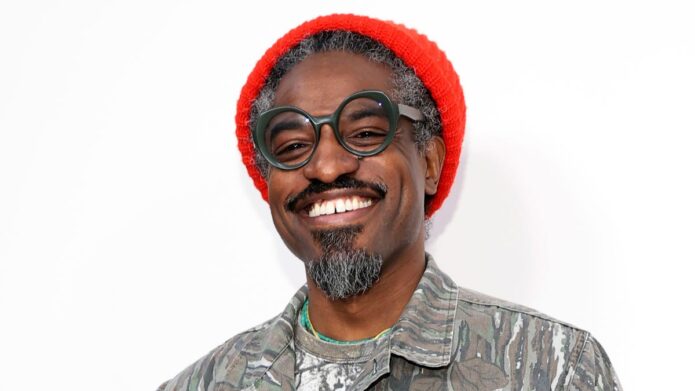
Photographs from André 3000’s OutKast years show a large seven on his chest and tattoos across his upper arms and forearms. The images establish placement and appearance; they do not settle a complete count or the meaning of every design.
André 3000’s tattoos are documented across chest and arms
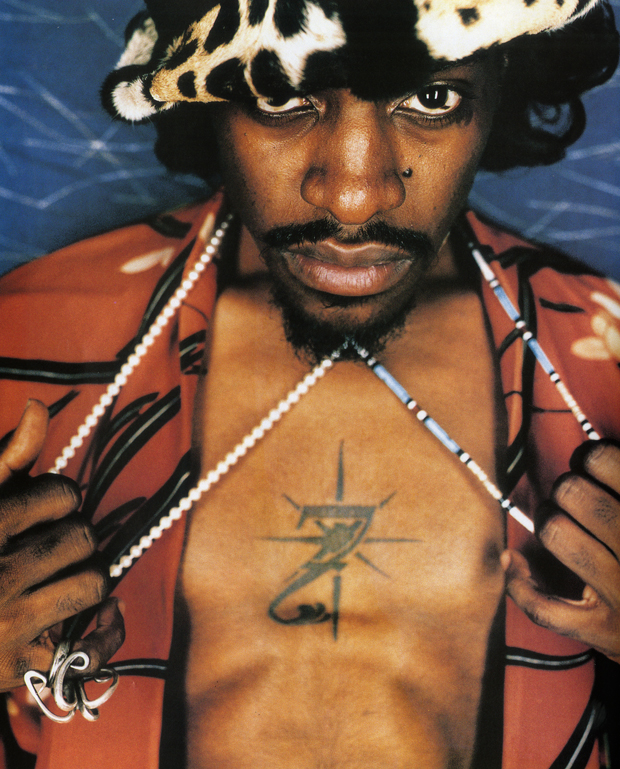
A Stankonia-era portrait published by The FADER shows André opening his shirt to reveal a large, dark seven at the centre of his chest. The number is clear in the photograph, but the source does not give a verified explanation of its meaning.
The chest seven is the clearest early tattoo
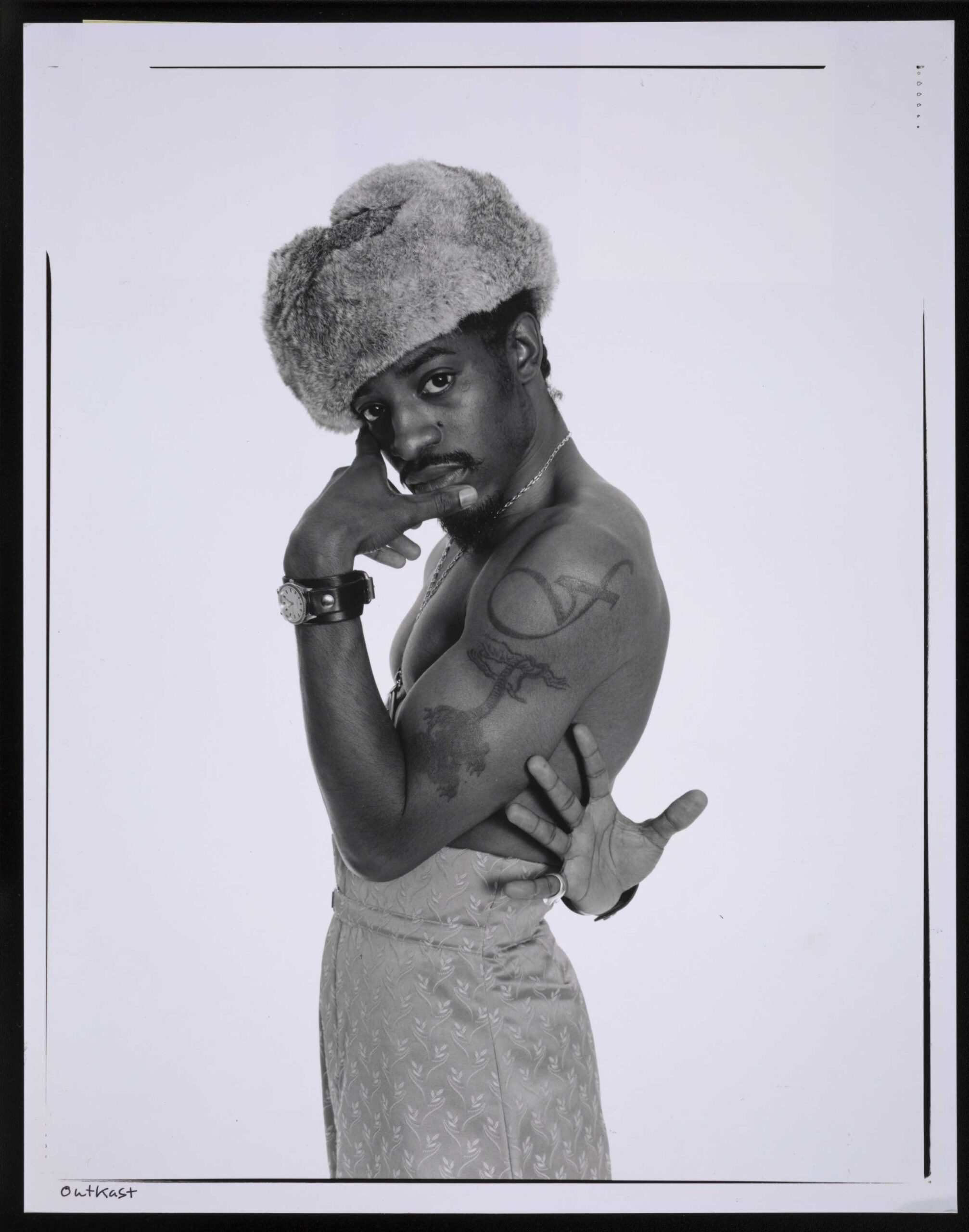
A 2003 photograph by Janette Beckman, preserved by the Smithsonian’s National Museum of African American History and Culture, shows two large tattoos on André’s upper arm. Beside the FADER portrait, it confirms that the chest seven was not his only prominent early tattoo.
The studio portraits show two large upper-arm tattoos
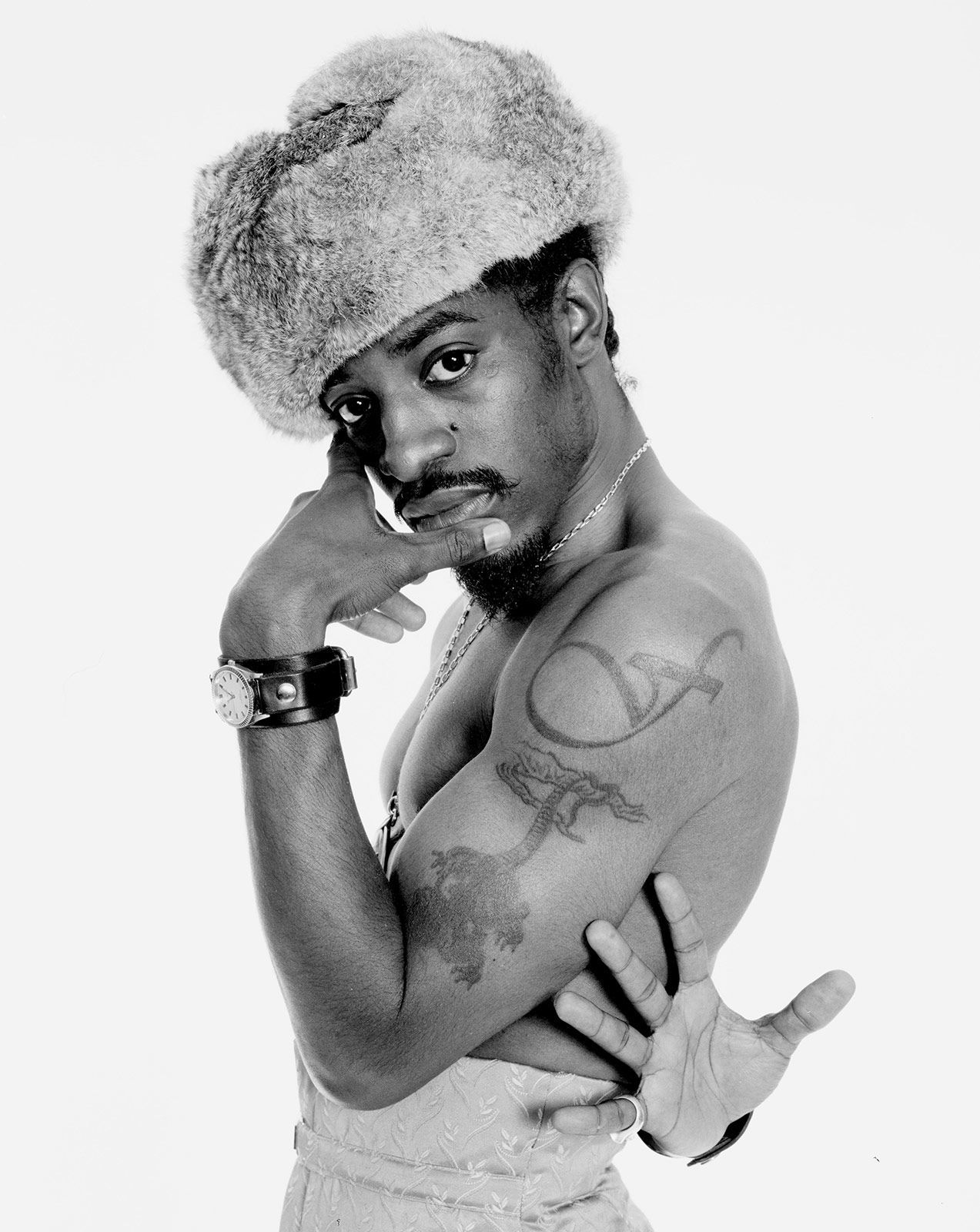
Foam’s closer reproduction of Beckman’s photograph shows a rounded mark high on the arm and a more irregular, dragon-like design below it, with open skin between. Some descriptions offer labels for the shapes, but the records do not provide official names or meanings.
A live image confirms the tattoos were part of his stage-era appearance
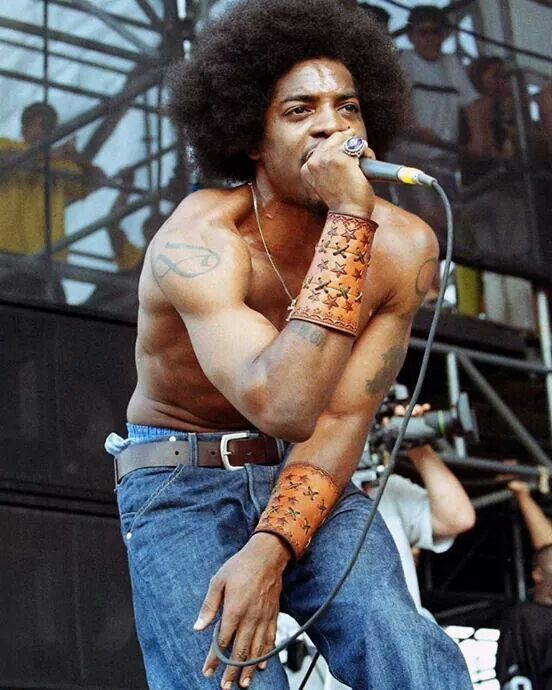
A performance photograph shows André shirtless at a microphone, with his shoulder, upper arm and forearm exposed. The image confirms the tattoos appeared onstage; distance and lighting make some of the smaller forms hard to identify.
The arm imagery is visible in archival photographs
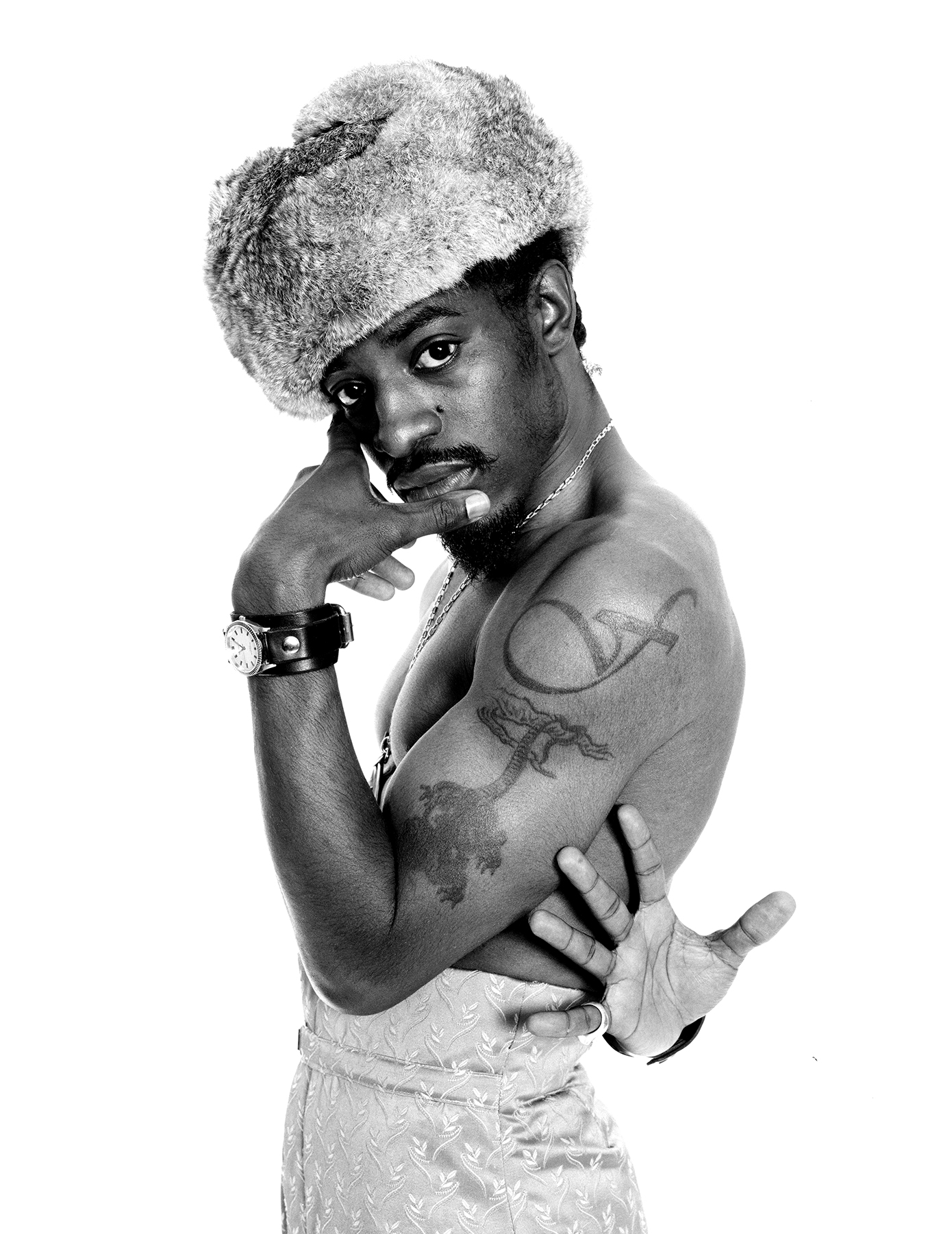
The Pilgrm published a high-resolution Janette Beckman portrait from a 2003 New York session. It gives a clear view of the looping upper-arm mark and the dragon-like design below, including the space between them.
What the photographed record can establish
The photographs show a chest seven, two substantial upper-arm designs and additional forearm marks. One online summary gives a count of six tattoos, while a general body-facts page says André has none; both claims sit uneasily beside the dated images. The photographs are stronger evidence for the tattoos’ existence and placement than for an exact total.
The 2000s archive contains different views
The FADER portrait documents the chest mark during the Stankonia era. Beckman’s 2003 portraits show the arm tattoos in a studio, while the live image records them during a performance. Each setting reveals a different part of the collection.
Meaning should stay close to the images
Neither the photographs nor the published descriptions confirm that the chest seven represents a particular person, album or belief. The sources also leave the exact meaning of the arm designs open. A visual description is supported; a personal explanation is not.
Why the collection resists a single label
The chest seven is a clear graphic mark, while the upper-arm pieces are larger and more illustrative. The photographs show separate designs and open skin between them, not one continuous sleeve. Angle and lighting change how much of the forearm work is visible.
The documented record remains deliberately incomplete
The record comes from a small set of named editorial, museum and performance photographs. They establish substantial tattoos across the chest and arms, but do not amount to a complete inventory. The remaining uncertainty belongs in the account.
A concise visual summary of the documented record
OutKast-era and 2003 images document the chest seven, two upper-arm pieces and additional forearm marks. They leave the exact count and personal meanings unsettled.