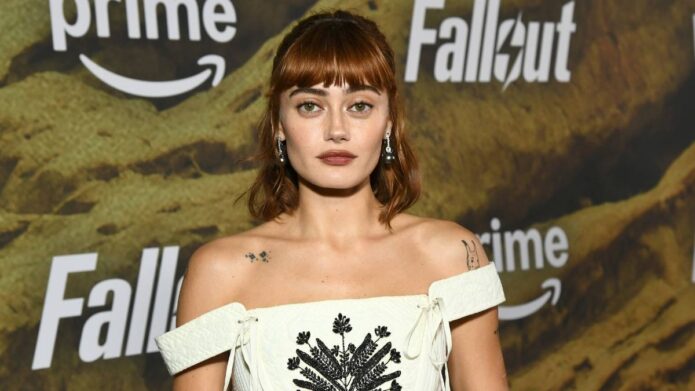
Ella Purnell’s tattoos are easy to spot whenever a dress, halter top or sleeveless editorial look leaves her shoulders and arms uncovered. The British actor has spoken about having more than twenty tattoos, and her public photographs show a collection spread across the shoulders, upper arms, forearms, hands and legs. The designs are mostly fine-line pieces with a playful, storybook quality, but the collection also includes small lettering, stars, a sun and larger illustrated figures.
That mix is part of what makes Purnell’s ink distinctive. Her tattoos do not read as one dense sleeve or a single themed project. They appear as separate drawings with open skin between them, so a red-carpet photograph can reveal one group while a magazine portrait shows another. The clearest account comes from her own interviews and from fashion photographs where the designs are actually visible, rather than from guesses about marks hidden by clothing.
Ella Purnell’s cherub tattoos on the shoulder
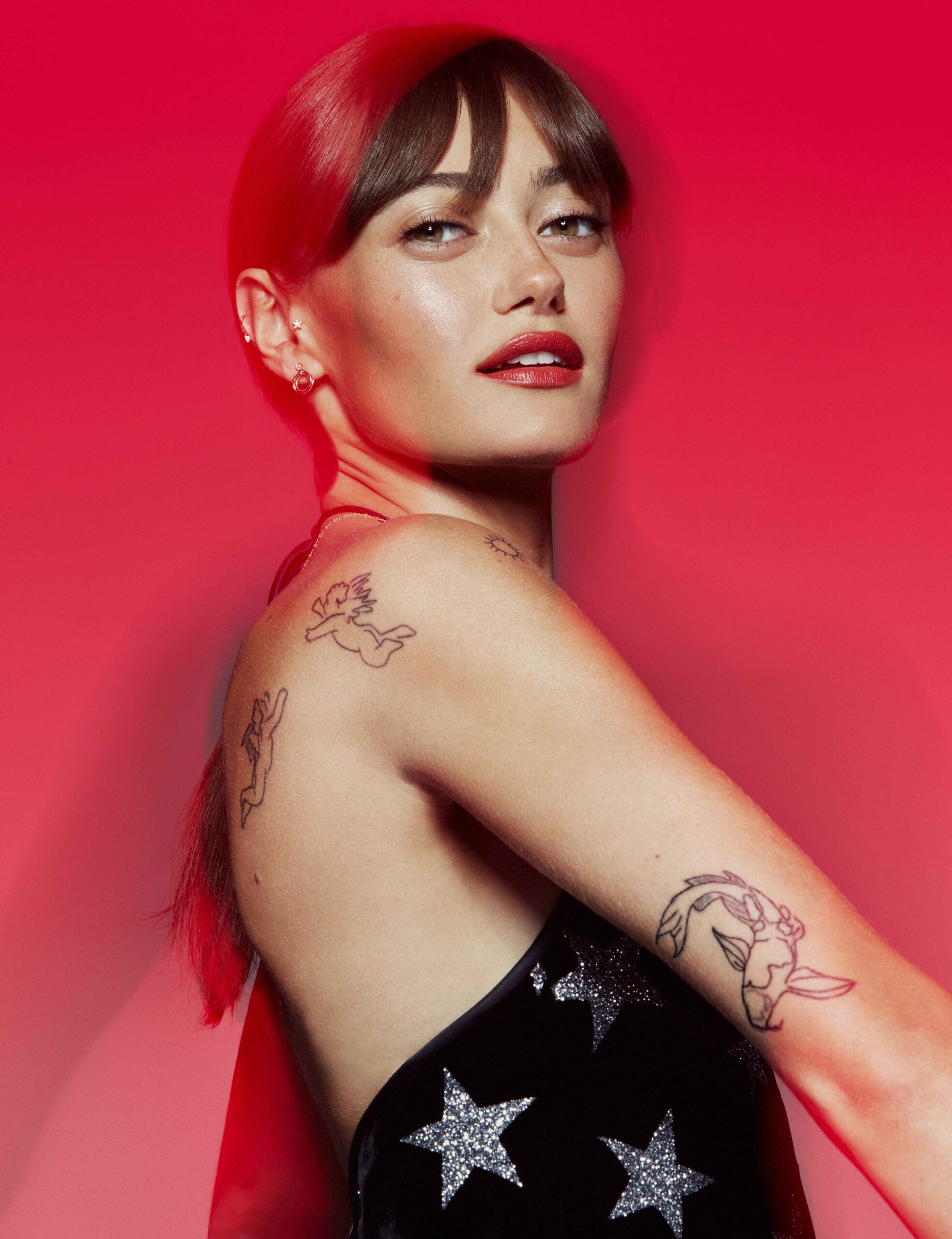
The most recognisable pieces in Purnell’s collection are the small cherub or angel figures across her shoulder and upper arm. In the HUNGER portrait, two outlined cherub figures sit close together on the shoulder blade, with one appearing to move toward the other. The linework is light rather than heavily shaded, which leaves the surrounding skin open and keeps the figures readable even when the image is viewed from a distance.
A second figure appears lower on the upper arm in the same portrait. The placement creates a loose vertical arrangement: one figure sits near the shoulder, another drops toward the side of the arm, and the surrounding space keeps them from merging into a single block. The drawings have a deliberately informal quality, with thin outlines and small interior details instead of the deep black fill found in a traditional sleeve.
Purnell has connected some of her tattoo inspiration to family. Cosmopolitan UK described her discussing intimate tattoo inspiration from her great-grandmother, while the public images show how that personal history sits alongside the more whimsical figures. The photographs establish the cherubs and their placement; the family connection supplies context without requiring a private meaning to be assigned to every individual line.
The small sun tattoo near Purnell’s shoulder
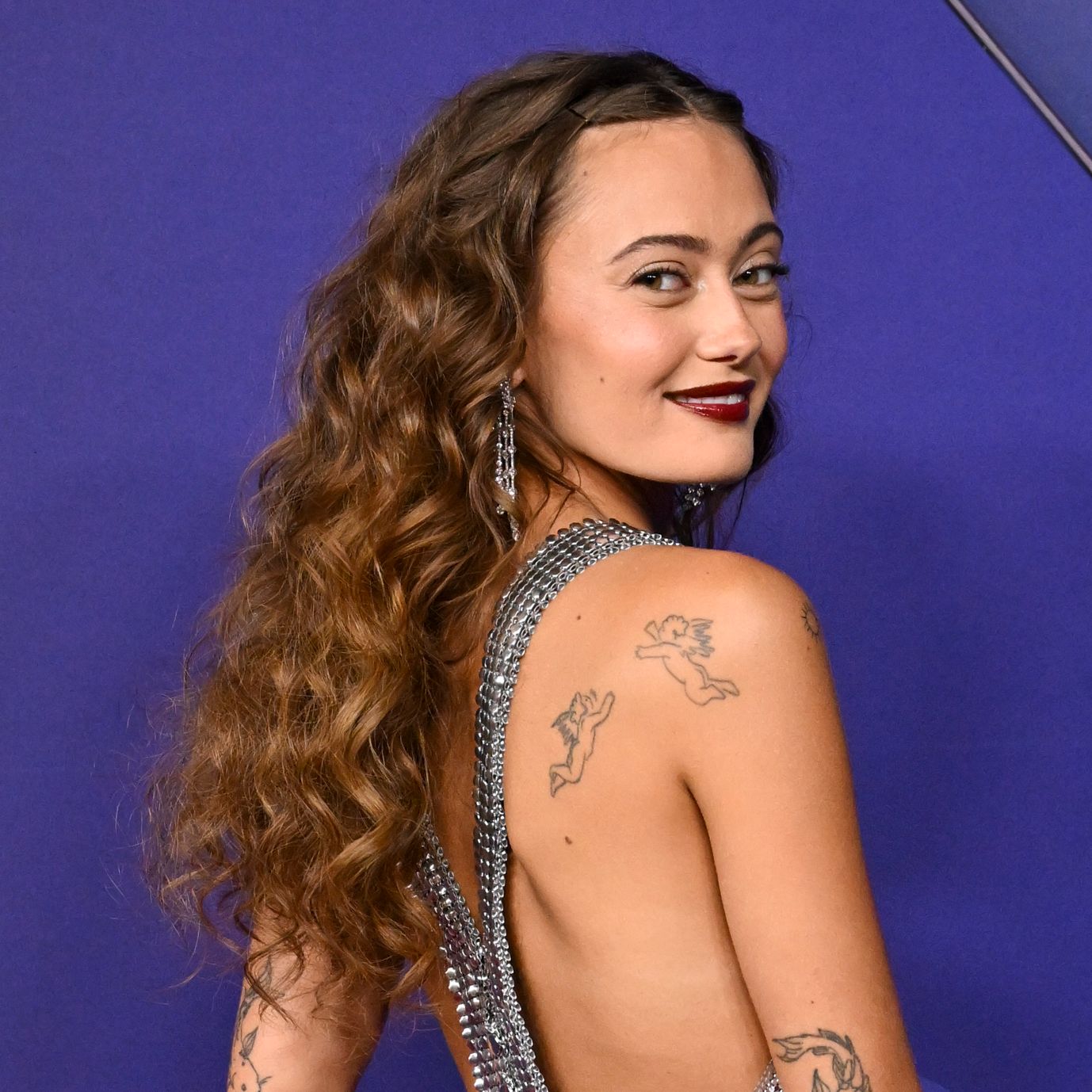
The shoulder photographs also show a small sun design near the upper back and shoulder line. It is a compact outline with short rays around the centre, placed above and away from the larger cherub figures. Because the design is small and isolated, it works as a separate mark rather than as a background detail inside the larger group.
In the Vanity Fair image, the sun is particularly clear because Purnell is turned away from the camera while looking back over her shoulder. The angle shows the relationship between the sun and the cherub tattoos: the sun sits higher and closer to the shoulder ridge, while the figures occupy more of the shoulder blade and upper arm. The open space between them gives each drawing its own outline.
The sun is also a good example of why Purnell’s collection should be read from photographs rather than reduced to a list. Some of her tattoos are visible only when her shoulder is bare and turned toward the camera. In a straight-on portrait, the same pieces can disappear beneath hair, straps or fabric. A side angle changes the record by showing placement as well as design.
Fine-line figures across the upper arm
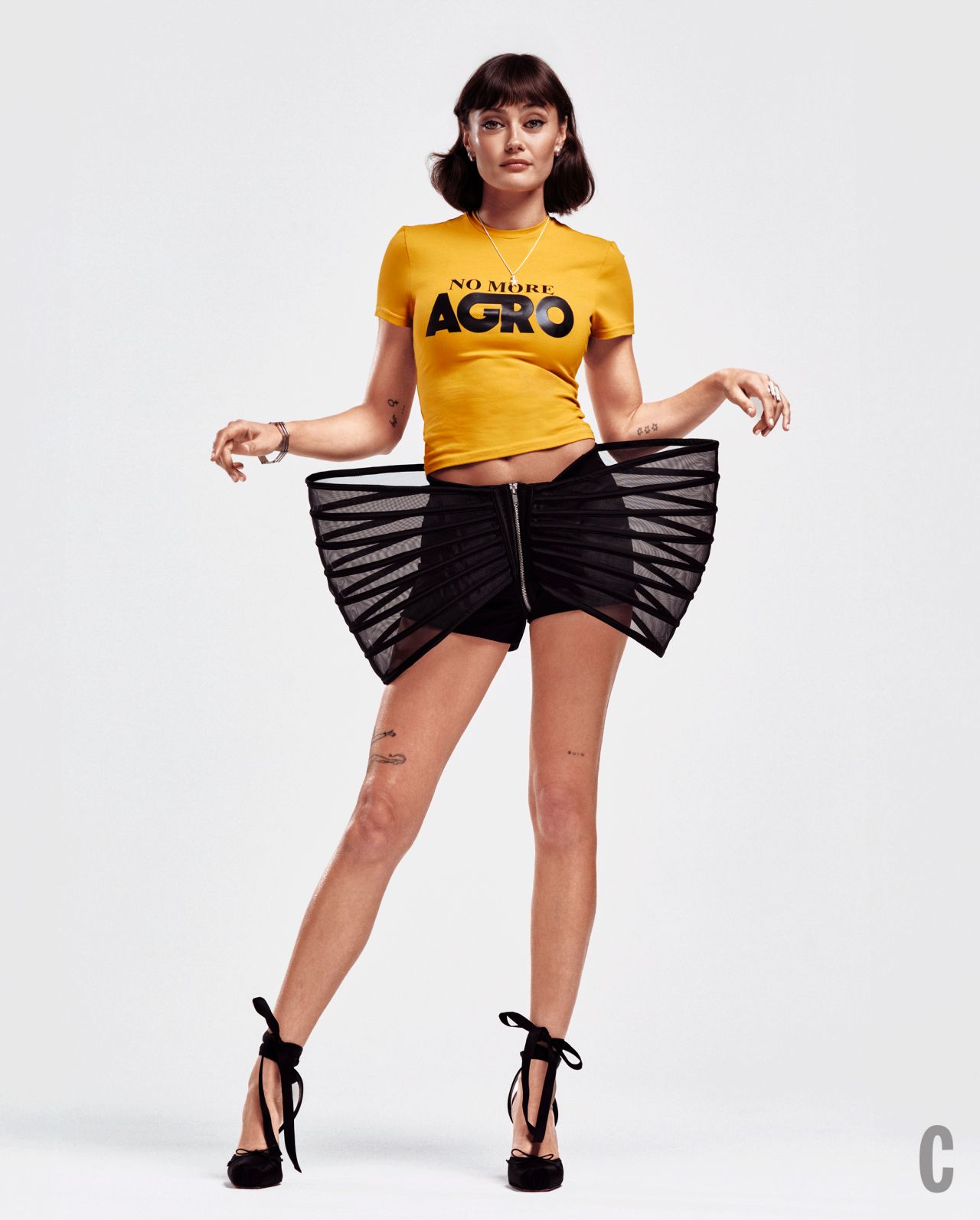
The Cosmopolitan UK editorial gives a wider view of Purnell’s tattoo layout. In the yellow top photograph, small marks can be seen along both arms, while a larger outlined figure appears lower on the leg. The frame is useful because it shows scale: the shoulder drawings are not isolated from the rest of the collection, but they are also not part of a solid, continuous sleeve.
Several of the smaller arm pieces use the same thin, open line quality as the cherubs. Tiny stars and compact marks sit near the wrist and forearm, while the larger illustrated figures carry more visual weight on the upper arm and thigh. The difference in scale makes the collection feel assembled over time. The pieces remain individually legible instead of being packed together under one layer of shading, with the fine-line illustrated figures providing the strongest contrast to the smallest marks.
The same photograph shows why clothing changes the way Purnell’s tattoos are read. The short sleeves expose the lower arms and wrists, but the black skirt and crop styling cover much of the torso. The visible tattoos therefore look like a selection from a larger collection, not a complete inventory. Purnell’s interviews support that broader picture by describing a longstanding interest in tattoos and more than twenty pieces.
Stars, hand marks and tiny lettering
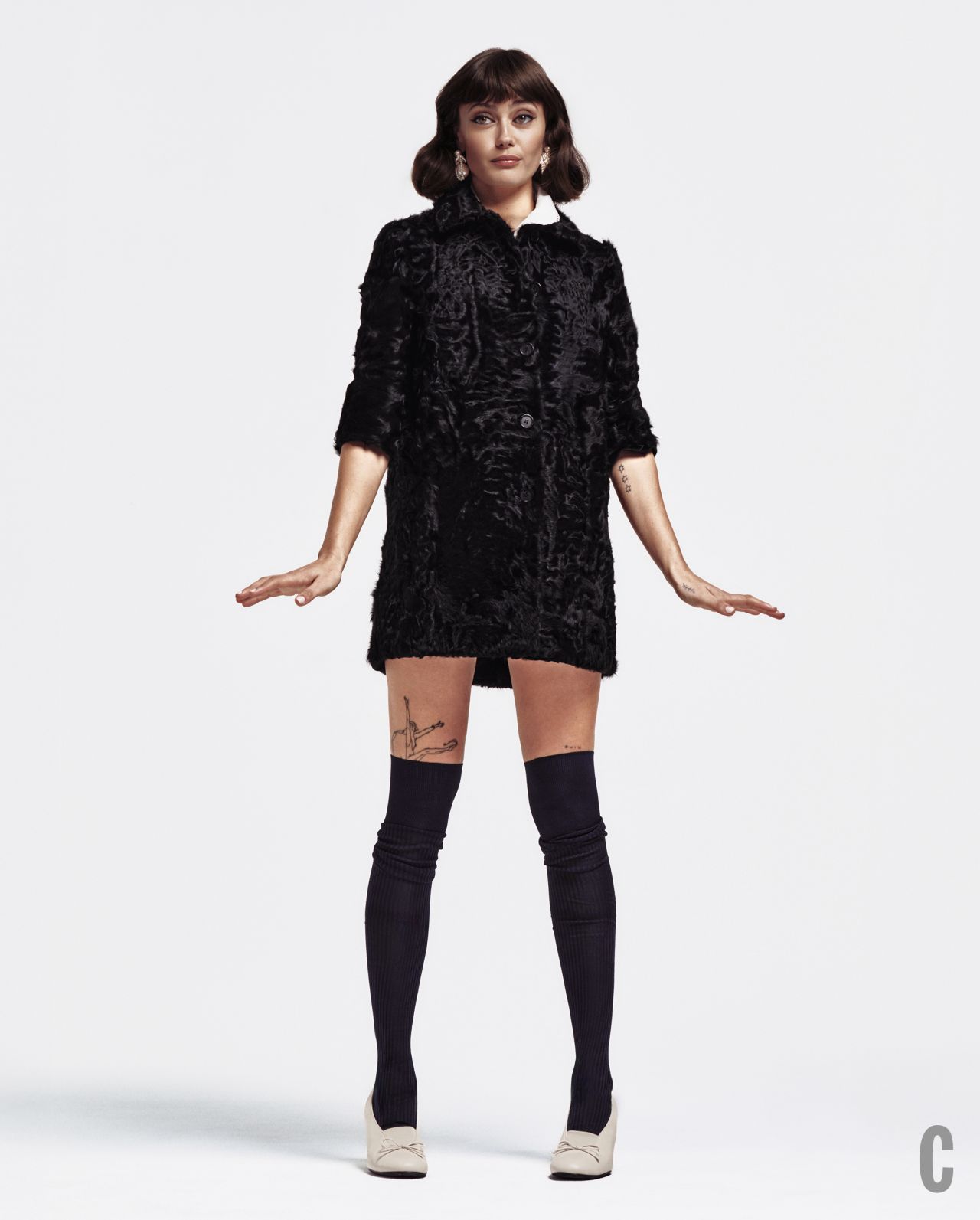
The Cosmopolitan black-coat portrait brings the smaller tattoos into focus. A cluster of small stars is visible near one forearm, and tiny marks sit around the hands and wrists. The designs are subtle beside the larger upper-arm figures, but they give the collection a different rhythm. They appear as punctuation around the bolder drawings rather than competing with them.
Purnell’s smaller pieces include lettering and compact symbols that are difficult to read in every public photograph. Where the letters are not sharp enough to identify, the responsible description is simply small lettering or a short mark. The photos show their placement and scale, but they do not prove a meaning for every word. That distinction matters because several of her tattoos are deliberately intimate rather than publicly explained.
The stars also show how the collection balances repeated shapes with one-off drawings. A star can be read quickly from a red-carpet distance, while the cherubs and larger arm figures reward a closer view. Together they make the collection recognisable without making it uniform. Purnell’s tattoos have a light visual language, but the individual marks do not all serve the same role.
The larger illustrated tattoo on her arm
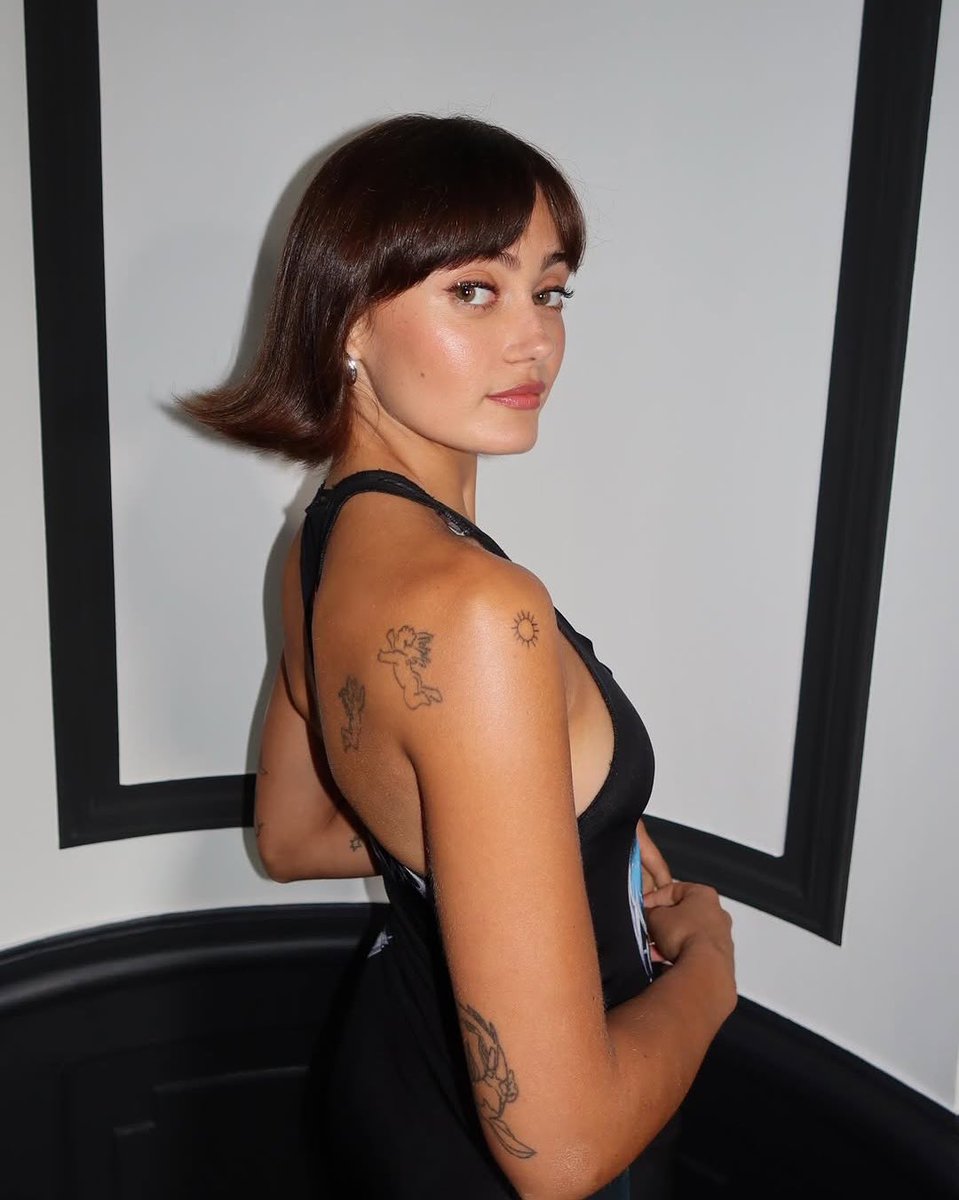
A separate editorial photograph shows a larger outlined figure running along Purnell’s upper arm and shoulder. The design has more visual mass than the tiny wrist marks, with a recognisable body shape and a sweeping outline that follows the arm. The nearby sun and smaller figures make the image look like a cluster of related drawings, even though each tattoo retains its own boundary.
The close portrait is valuable because the camera is near enough to show the line quality. The outlines are not built from heavy black shading. They remain fine and slightly irregular, which gives the pieces the feel of hand-drawn illustrations. That quality is consistent with the cherubs visible in the HUNGER and Vanity Fair photographs, even though the poses and placements are different.
The larger figure is also one of the tattoos most affected by posture. When Purnell turns her shoulder toward the camera, the drawing follows the curve of the arm and becomes easier to identify. When her arm hangs at her side or is covered by a jacket, the same tattoo can disappear into the overall styling. The public image record therefore varies with the pose as much as with the design itself.
The wider fashion view
Purnell’s tattoos are not limited to her arms. Editorial photographs show additional marks on her thighs and lower legs, including an outlined figure that is much larger than the tiny symbols near her wrists. The leg pieces give the collection a second area of visual weight. They also explain why a portrait showing only the shoulders can never represent the complete group of tattoos.
The leg designs keep the same contrast between open skin and outlined forms. A larger drawing may sit alone on the thigh, while a small word or symbol appears lower down. That spacing gives the tattoos room to remain distinct. It also creates a different effect from the densely packed arm tattoos associated with a full sleeve.
In the wider fashion photograph, the leg work becomes part of the styling without being absorbed by it. The tattoo lines remain visible against the bare skin, while the graphic clothing creates a separate visual frame. The result is a collection that moves between intimate marks and more visible illustrated pieces, depending on what the outfit leaves uncovered.
The personal context behind the drawings
Purnell has discussed her interest in tattoos in interviews, including the fact that her mother became interested in tattoos too. A Vanity Fair lie-detector interview also referred to a tattoo based on one associated with her Sweetbitter character. Those comments place the collection in a longer personal history rather than presenting it as a recent fashion accessory.
The family connection is especially useful when reading the small, intimate designs. Purnell’s comments about inspiration from her great-grandmother explain why some marks carry personal weight even when they look simple in a photograph. The visual record still has limits: the public interviews do not provide a complete meaning for every cherub, star, line of lettering or figure seen on her body.
That combination of explanation and uncertainty is visible in the images. Some elements can be named with confidence because they are repeated across several photographs, such as the shoulder cherubs and the small sun. Other marks are clear as tattoos but not clear enough to identify. Keeping those categories separate produces a more accurate account of Purnell’s ink.
Why clothing changes the view
Purnell’s public tattoo photographs often come from fashion coverage rather than dedicated tattoo interviews. A backless dress exposes the shoulder figures. A sleeveless top reveals the forearms and hands. A raised arm changes the angle of the linework, while a coat can hide almost everything except the wrists. Each photograph therefore records a different section of the collection.
The HUNGER portrait is the strongest view of the cherub group and larger arm figure. Vanity Fair’s side-angle image isolates the sun and shoulder placement. The Cosmopolitan photographs show the arms and legs together, making the scale of the smaller marks easier to understand. The Interview-style portrait gives another view of the shoulder and forearm drawings under simple studio lighting.
Taken together, the images show a collection built from fine outlines, small lettering, stars, a sun, cherub figures and larger illustrated forms. The tattoos are personal without being visually heavy, and playful without being limited to one motif. Their variety is what gives Purnell’s ink its character across red carpets, magazine shoots and interview photographs.
A collection built from open linework
The available photographs and interviews support a clear but bounded description of Ella Purnell’s tattoos. She has more than twenty pieces, with visible work across her shoulders, upper arms, forearms, hands and legs. The most recognisable designs are the cherubs, the small sun and the larger outlined figures. Tiny stars, lettering and other compact marks fill out the collection without turning it into a single uniform sleeve.
Her own comments add family and character context, while the photographs establish the designs and placements that can be seen. The result is a collection that feels drawn rather than painted: thin lines, open skin, small symbols and a few larger figures arranged across different parts of the body. Purnell’s tattoos remain distinctive because the images show both the individual drawings and the changing ways they appear through fashion, posture and light.