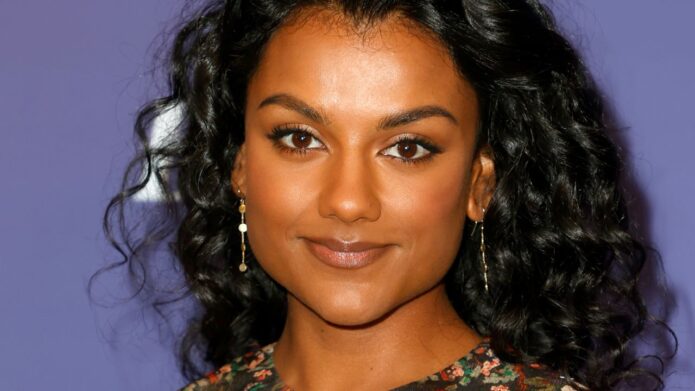
Simone Ashley’s best-documented tattoo is a small sphinx cat on her left ankle, a piece she made herself during the first COVID-19 lockdown. The design became public in March 2022, when Ashley appeared on Jimmy Kimmel Live! and explained how a stalled period at home turned into an unexpected experiment with a rotary tattoo pen.
The tattoo is easy to miss in red-carpet photographs because it sits low on the ankle and is usually covered by shoes, trousers, or a long dress. Its story is unusually clear, however. Ashley described the machine, the online tutorial that guided her, and the moment the host tried to identify the small Egyptian-inspired animal. The available images and interviews connect the mark to one specific time in her life rather than to a broad, undocumented list of celebrity ink.
The Sphinx Cat Tattoo on the Left Ankle
The visible design is a compact outline of a sphinx cat. Ashley showed the mark during the late-night interview, holding the ankle close enough for the audience to see the small figure. The tattoo is not presented as a large ornamental composition. It is a contained black-ink drawing, placed where a shoe or trouser hem can easily hide it and where the story of its unusual origin becomes more important than its scale.
The animal has also been described as a cat with Egyptian styling, which explains the sphinx reference. Kimmel jokingly read the image as a dog, and Ashley answered with good humour rather than turning the exchange into a formal explanation of symbolism. That moment is useful visual evidence because it shows the actual mark and records the subject’s own description at the same time.
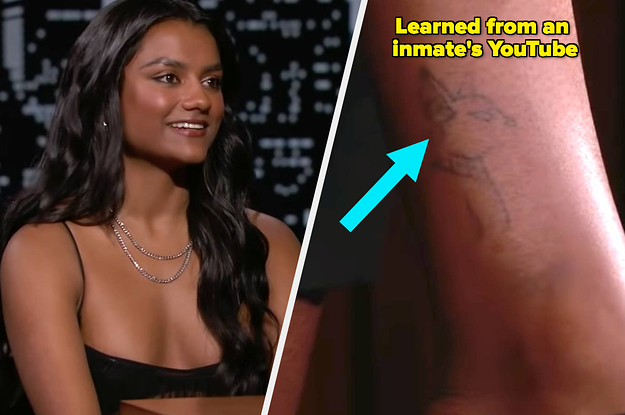
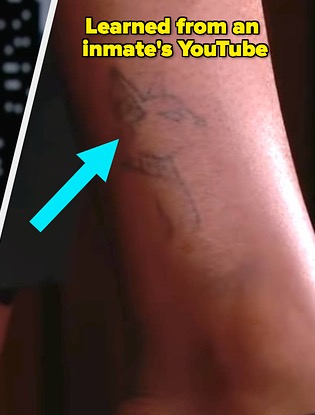
Reports from Glamour, Teen Vogue, and Entertainment Tonight agree on the central facts: the mark is on Ashley’s ankle, it depicts a sphinx, and she made it during quarantine. The sources do not establish a larger symbolic meaning, an artist credit, or a date beyond the lockdown period. Those limits keep the tattoo identifiable without turning speculation into biography.
A separate tattoo is visible on Ashley’s upper shoulder
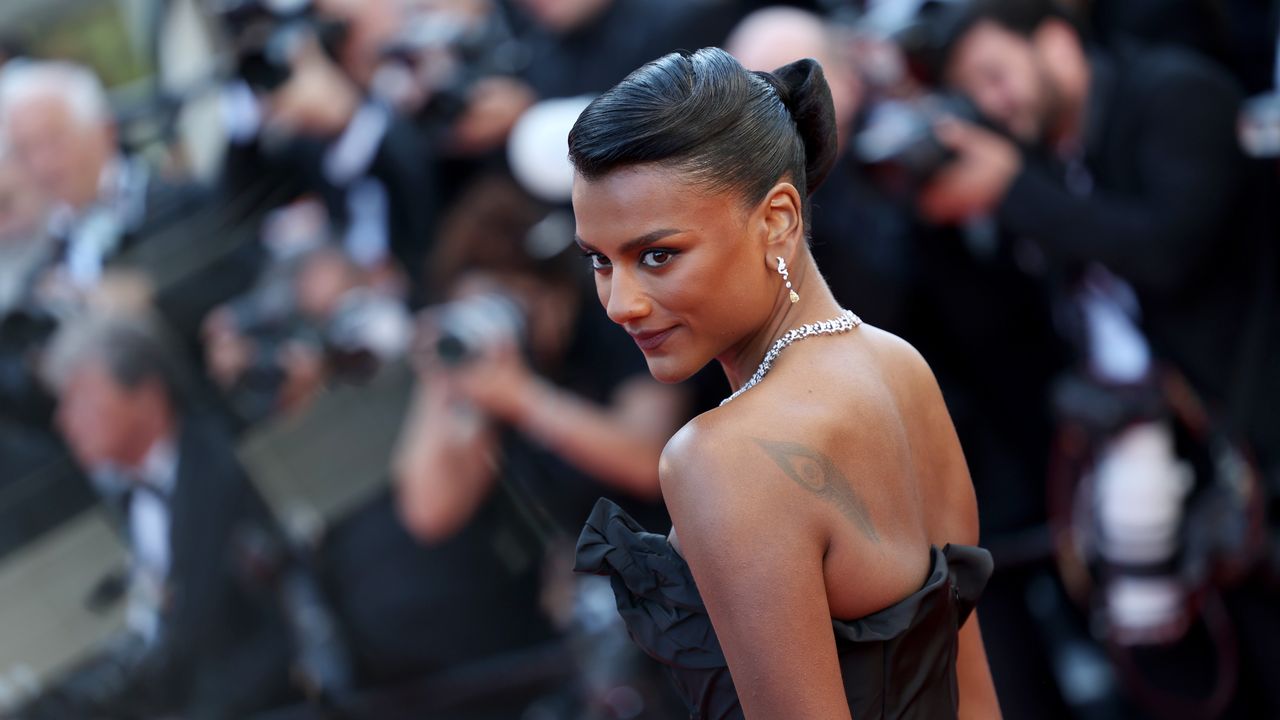
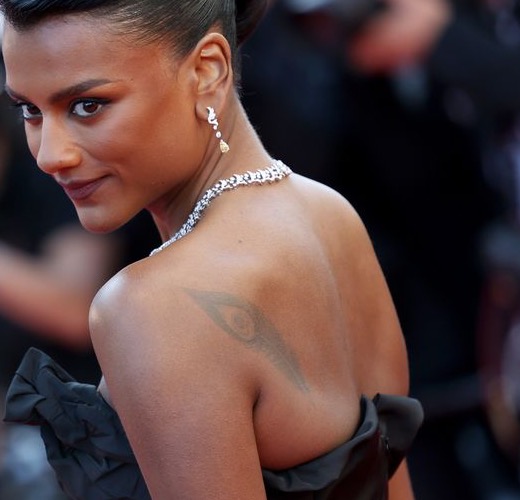
A later Teen Vogue portrait also shows a separate tattoo across Simone Ashley’s upper shoulder and back. The mark appears as a pale, curved motif against the skin, distinct in both location and scale from the small sphinx cat on her left ankle.
The published image makes the placement visible, but the accompanying coverage does not identify a formal name or meaning for the design. The reliable record therefore supports the upper-shoulder location and the visible outline, while the sphinx cat remains the tattoo with the clearest first-person history.
How the Story Emerged in Lockdown
Ashley said the tattoo began with the familiar boredom of early lockdown. She mentioned activities such as baking banana bread and tie-dying before describing the decision to buy a tattoo pen. The change in scale is part of the story’s character. A routine account of quarantine hobbies became a record of a permanent mark, made privately and then revealed during a television conversation.
The reports describe a rotary pen that Ashley purchased online. She said the process did not require identification and that the purchase happened with only a few clicks. That detail explains why the object was available during a period when tattoo studios were closed, but it does not turn the account into a general method. The documented subject is Ashley’s unusual lockdown project and the single ankle image that resulted from it.
The wider lockdown context also explains why the tattoo appears as a story about improvisation. Ashley was an actor living away from a normal production routine, and the interview presents the new hobby as a burst of curiosity. The sphinx is therefore linked to an identifiable chapter in her career, before the global audience knew her primarily through Kate Sharma in Bridgerton.
The Kimmel Conversation
The late-night segment is the clearest first-person record of the tattoo. Ashley spoke about searching for a tutorial after buying the pen, then described discovering that the creator was an inmate. She repeated the site name and laughed at the strangeness of learning from a prison-made video. The tone was conversational, but the details were specific enough to establish the sequence from lockdown boredom to the ankle image.
When Ashley showed the result, Kimmel guessed that the animal looked like a dog. The joke drew attention to the fact that the tattoo is small and not instantly legible from a distance. Ashley still defended the result as a good attempt, and the exchange fixed the sphinx cat in the published coverage as a handmade piece with a deliberately modest scale.
The segment also matters because Ashley discussed tattooing other people from her cast. That information describes a temporary creative activity around the same period, while the ankle sphinx remains the clearest documented tattoo on her own body. It is possible to separate the confirmed mark from the broader anecdote: the interview identifies the ankle placement, while the reports do not provide a complete inventory of every mark that may have existed later.
A Small Mark in a Visible Moment
The sphinx is visually restrained compared with the large-scale ink associated with many musicians and actors. Its position near the ankle gives the mark a private quality, yet the television reveal made that hidden placement briefly public. The contrast is central to the tattoo’s identity. It is a small drawing with an unusually memorable origin story.
Photographs from Ashley’s fashion and film coverage often frame her from the waist or shoulders upward, so the ankle mark rarely becomes the visual subject. That absence is informative. The tattoo is not part of a frequently photographed sleeve, neck composition, or face design. It appears as a detail that emerges in a specific interview, then recedes beneath the clothing and styling of her public appearances.
The design is also connected to Ashley’s own sense of humour. Her account does not present the sphinx as a solemn emblem or a carefully explained family symbol. It arrives beside stories of online shopping, pandemic boredom, an unexpected tutorial, and Kimmel’s teasing response. The result is a tattoo history built from concrete circumstances rather than a claimed meaning that the available sources never supplied.
What the Published Images Add
The image record around Ashley’s tattoo is varied. The late-night still establishes her face and the setting in which she discussed the mark. A syndicated close-up presents the body art in a more direct way, although its graphic treatment includes text and an arrow. Red-carpet and editorial photographs provide a separate view of Ashley’s public image, where the ankle is usually outside the frame or hidden by clothing.
That distinction matters when the photographs are read together. A portrait can identify Ashley without proving a tattoo. A fashion photograph can show her posture, styling, or shoulder area without documenting the ankle sphinx. The direct interview image carries the strongest connection between the person, the story, and the mark, while the surrounding photographs supply context about the actor’s visibility and public career.
The Later Images and the Missing Ankle
Later photographs do not overturn the central account. They show Ashley in editorials, interviews, and red-carpet settings where the lower leg is frequently cropped or covered. The absence of a clear ankle view is not evidence that the sphinx disappeared. It simply explains why the television appearance and its accompanying reports remain the most useful record of the mark.
The published material also leaves the wider collection open-ended. Articles mention that Ashley tattooed herself and castmates, while some fashion coverage shows body art in other parts of the frame. Those details can be acknowledged as part of the story, but the sphinx remains the only design with a consistent placement and a direct on-camera explanation in the cited sources.
British Vogue’s profile places Ashley in a different visual register, presenting her as a rising actor and fashion figure. The Los Angeles Times portrait does something similar through a clean editorial composition. Neither photograph is evidence of a second design. Their value lies in showing how easily a small ankle tattoo disappears from the images that otherwise define Ashley’s public appearance.
The Shape of the Story
The tattoo’s history has three firm stages. Ashley acquired a rotary pen during lockdown. She followed an online prison tutorial while learning how the process worked. She produced a sphinx cat on her left ankle and displayed it during a television appearance. Each stage is supported by a published interview or a contemporary report, and each remains close to Ashley’s own account.
Other details are less certain. The sources do not establish the tattoo’s exact date, its artist, a formal title, or a complete map of Ashley’s body art. Later articles repeat the ankle story and sometimes mention additional images or marks, but those references should not be expanded into a catalogue without matching photographs or a direct statement from Ashley.
This combination of certainty and restraint gives the sphinx its distinctive place in celebrity tattoo history. The mark is not important because it covers a large area. It is memorable because the subject described how it came to exist, showed the result immediately, and allowed the small drawing to be judged in real time by a television host.
A Personal Detail Within Ashley’s Screen Career
Ashley’s tattoo story sits beside a career built around highly visible roles and carefully styled appearances. She became widely known through Bridgerton, while her interviews and fashion profiles place her in controlled editorial settings. The ankle sphinx comes from the opposite direction. It began as an improvised private experiment, then entered public view through a casual anecdote rather than a red-carpet reveal.
The placement reinforces that difference. The tattoo lives at the edge of the frame, appearing when Ashley chooses to discuss it rather than when a photographer builds an image around it. That makes the mark a useful example of how celebrity ink can be documented through testimony as much as through photographs. The interview supplies the history, the close-up supplies the visual confirmation, and the portrait record shows why the design is not constantly visible.
At present, the most reliable summary is therefore a focused one. Simone Ashley has a documented sphinx cat tattoo on her left ankle, made during the COVID-19 lockdown after she learned from an inmate’s online tutorial. She has spoken about tattooing herself and castmates, but the ankle sphinx remains the design with the clearest placement, origin, and visual record. The story is small in scale and unusually complete in detail.