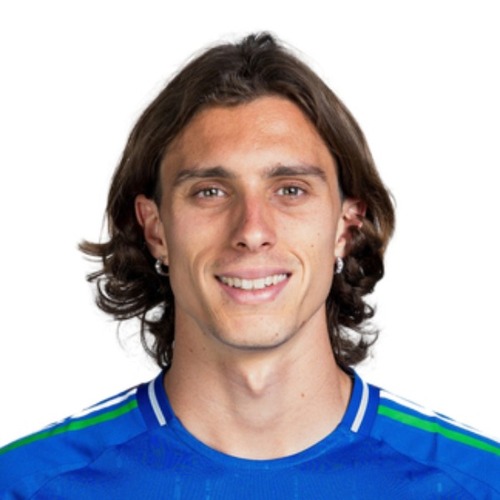
Riccardo Calafiori’s tattoos cover both arms and parts of his chest, mixing black-and-grey shading, script and color. The red sun in the centre of his chest stands apart from the darker sleeve work. Photos also show a reported “never give up” phrase on his arm; the meaning of every other image or line of script hasn’t been confirmed.
Riccardo Calafiori’s red sun chest tattoo
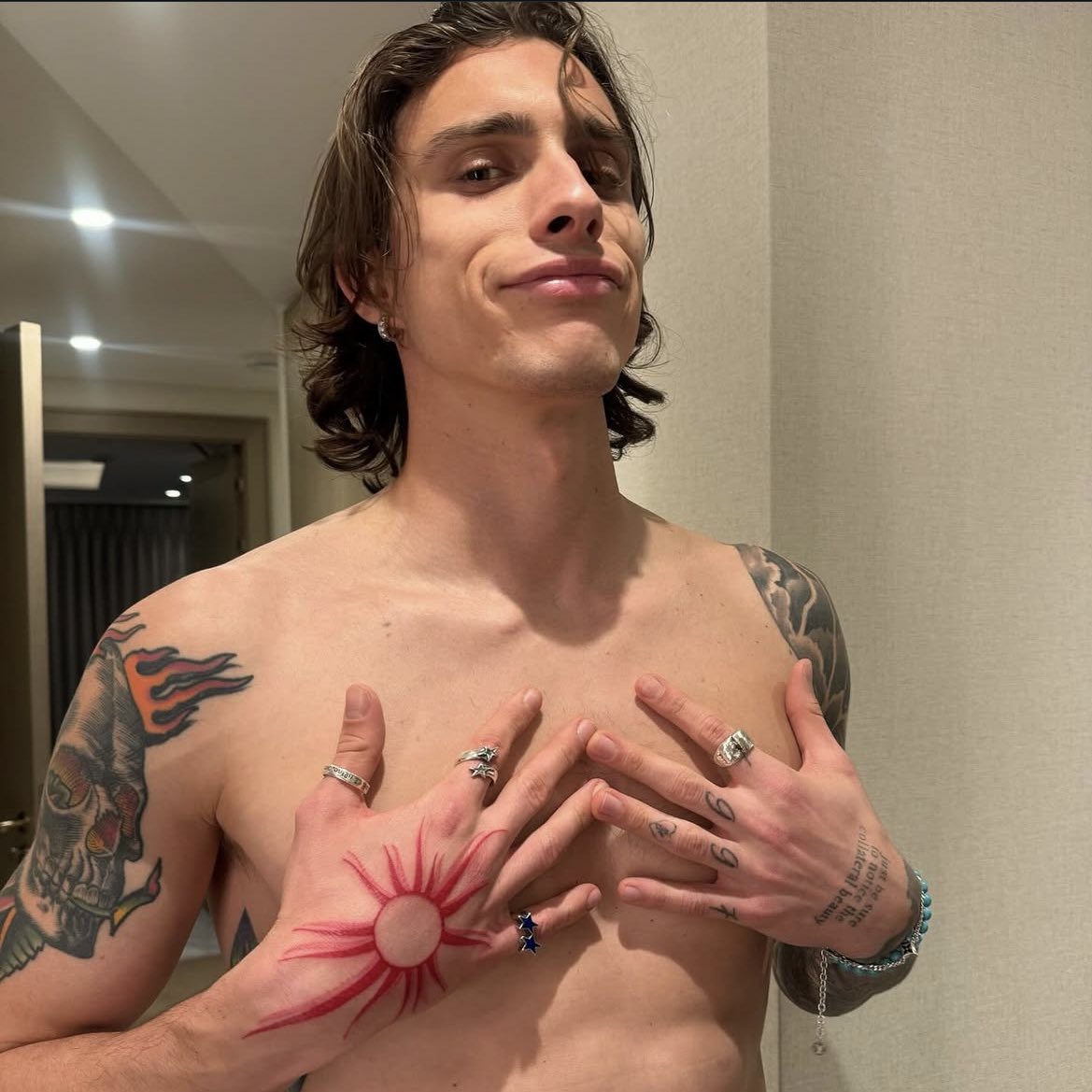
The sun sits low in the centre of Calafiori’s chest. Its round red centre and long, uneven rays look hand-drawn rather than like a precise compass or logo. Against the darker tattoos on his arms, it becomes the clearest point of color.
A football shirt can hide the design during a match, while shirtless photos show it at once. Calafiori hasn’t publicly explained its meaning, so the image supports a description of its shape and placement, not a claim about what it symbolizes.
The full arm sleeve and its darker imagery
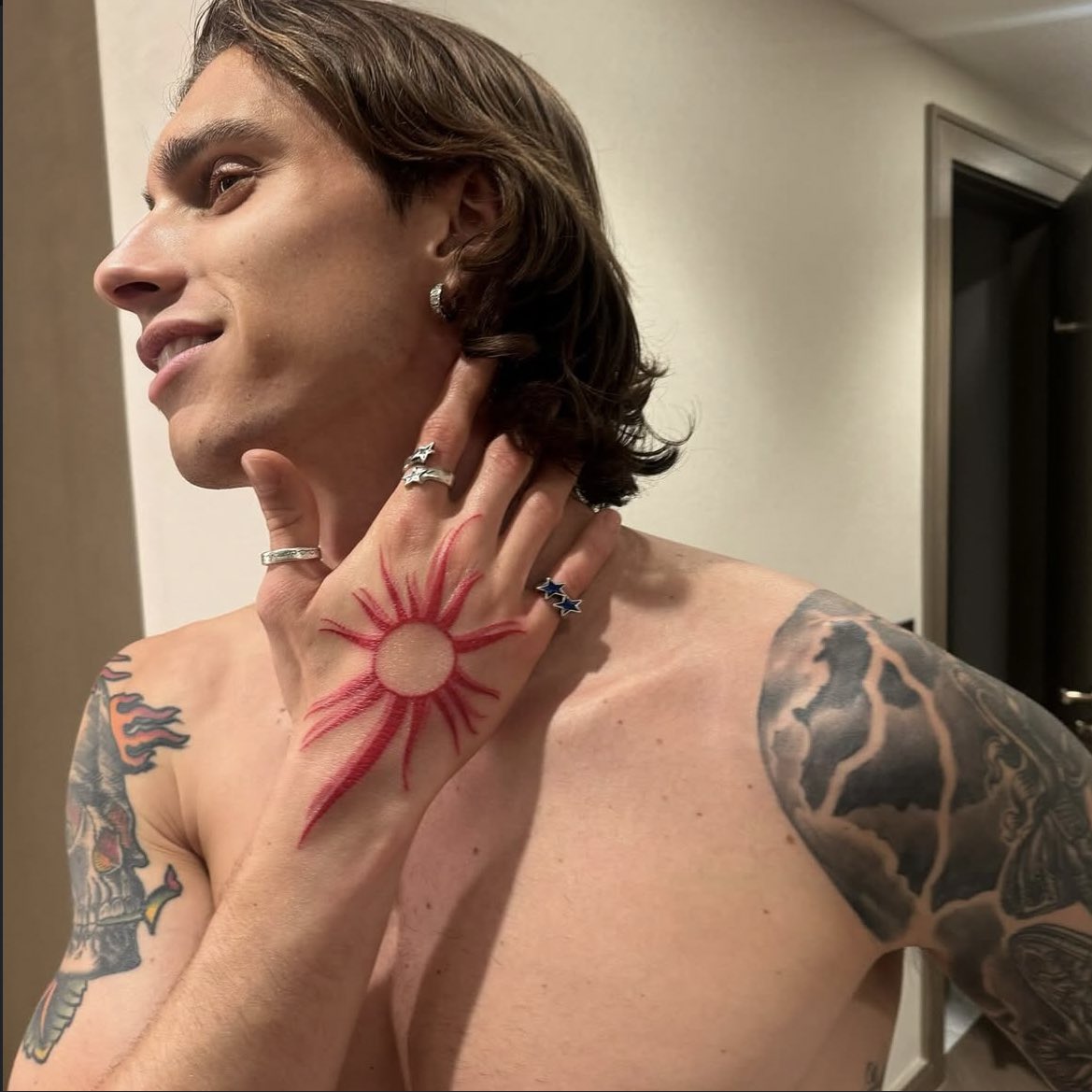
In a shirtless match photo, one upper arm shows a skull-like image, curved black shapes and red accents. The other arm is also heavily shaded, with smaller elements continuing toward the forearm. Together the designs run from shoulder toward wrist.
The sleeves combine recognizable images with softer shadows, so they read as connected work rather than separate flash designs. Skin breaks and changes in scale keep the darker areas from forming one solid block.
What the match photos reveal about the sleeve
Match and celebration photos show the tattoos while Calafiori is moving. Stadium lights, sweat and the angle of his arms change which details stand out; a social-media crop can’t provide a complete inventory.
The arm work is visually dense, while the chest remains more open around the red sun and smaller marks. That gives the sun room to stand out against the sleeves.
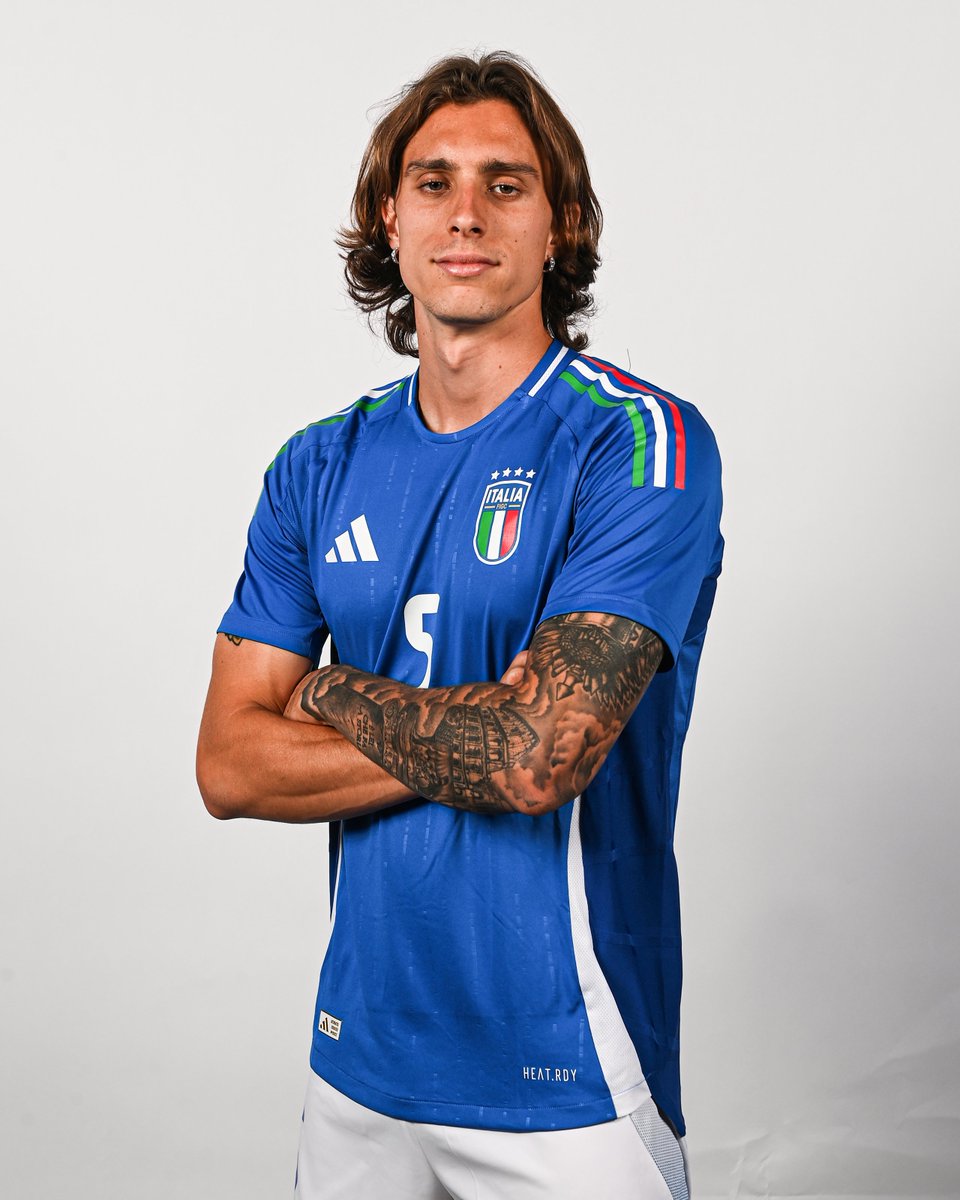
The architectural black-and-grey work on his arm
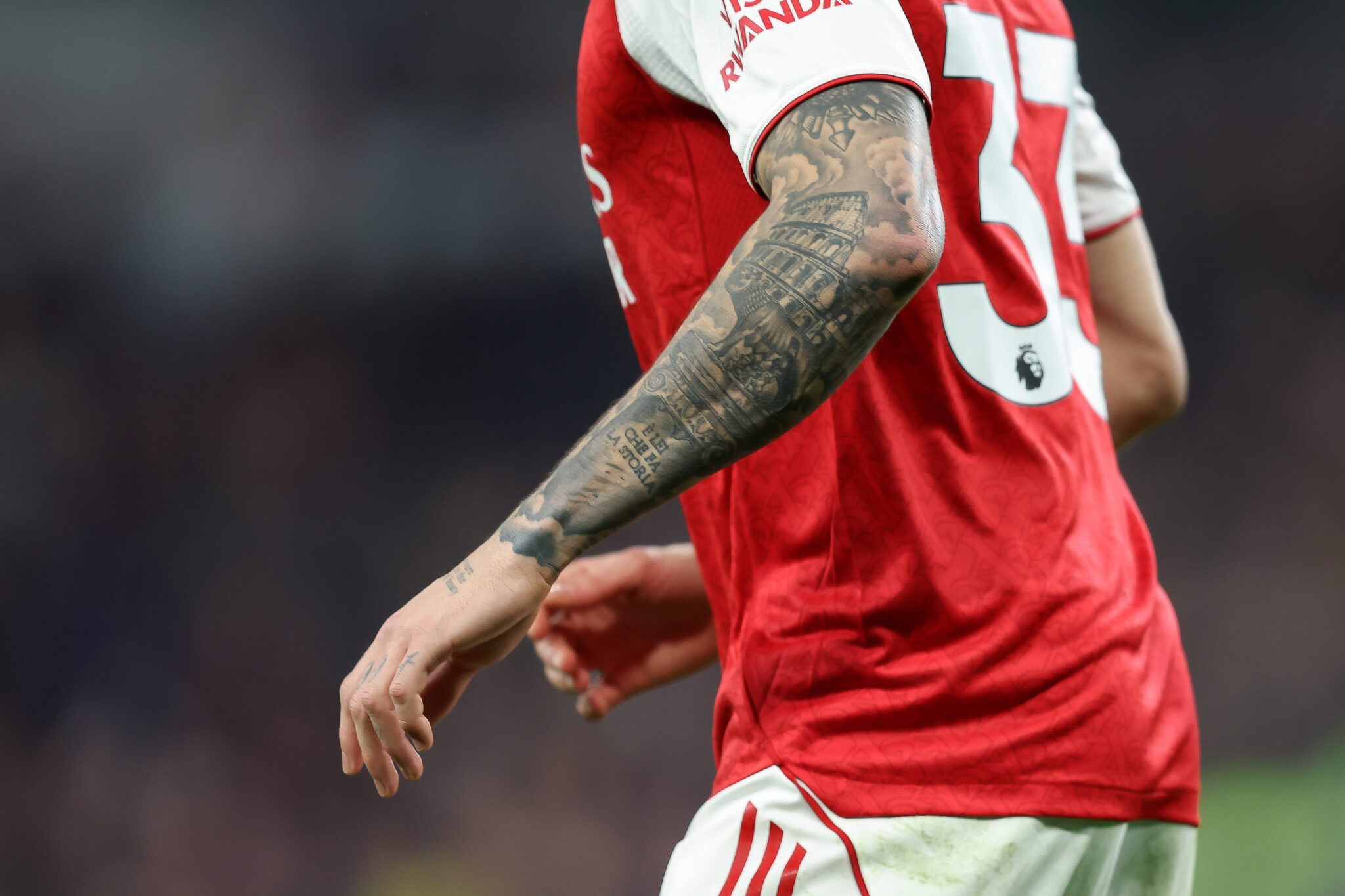
A closer sports photograph shows layered black-and-grey work, including what appears to be building-like detail, curved forms and blocks of script near the wrist. The image isn’t clear enough to identify every object or read all the lettering.
Soft shading and lighter areas break up the darker outline around the elbow and forearm. The sleeve has a textured, realism-style look, but the small marks are best left undescribed where the photograph doesn’t show them clearly.
The “never give up” arm tattoo message

The phrase “never give up” has been reported on Calafiori’s arm. A football report connected it with his recovery from a serious knee injury when he was younger, which threatened to interrupt his career. It’s one of the few tattoos in his collection that has a reported link to a specific event in his life.
The short line of text sits within a sleeve already filled with images. It offers a clear point of context, while the meaning of the other designs remains unconfirmed.
How his style works with his football image
Calafiori is photographed in motion, under stadium lights and with different parts of his body covered by his kit or tape. Dark sleeves can remain visible in short sleeves; the red chest sun is more often seen in shirtless or personal photos.
Away from football, his longer hair, earrings, rings and tattoos form part of a broader personal style. They help explain why the ink gets noticed, but they don’t tell us what each piece means.
Why the collection feels built over time
The tattoos don’t share one uniform style. The red sun is simple and bright; the sleeves are darker and more layered, and the lettering uses a different scale. The contrast suggests work added in stages rather than one matching session.
Some areas are dense, others leave more skin visible, and the images don’t all use the same palette. That gives the collection a lived-in quality while the sun brings a distinct burst of color to the chest.
The practical takeaway
Calafiori’s visible collection centres on the red chest sun, shaded arm sleeves and the reported “never give up” phrase. The photographs show how black-and-grey work, lettering and a bright color accent can sit in one evolving collection.
If you’re using the photos as reference, focus on the way the designs follow the arm and leave room around the chest piece. Keep any words or symbols personal, and don’t assign a meaning to a design just because it looks familiar.