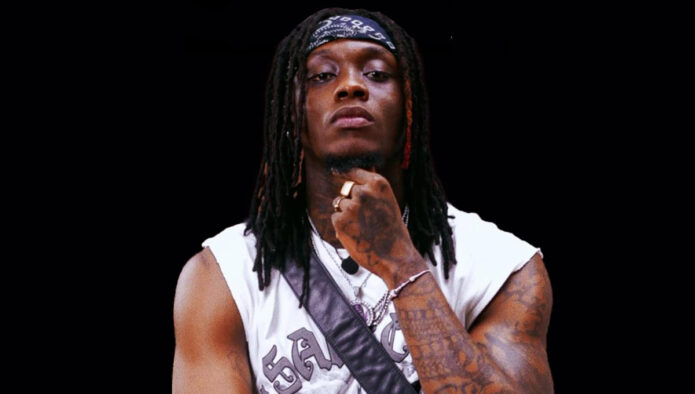
Himra’s tattoos are visible across his hands, neck and arms, and they’re part of the image he brings to portraits and performances. Photos show dense black-and-grey work alongside his dreadlocks, chains and sharp styling; they don’t explain the meaning of every design.
Himra, whose real name is Abdul Rahim Souleymane Bakayoko, came out of Côte d’Ivoire’s rap scene with a sound shaped by American drill and rooted in Abidjan. The pictures catch his tattoos from different angles, including close views of his hands and wider shots of his arms, neck and chest.
Himra’s visible hand and forearm tattoos
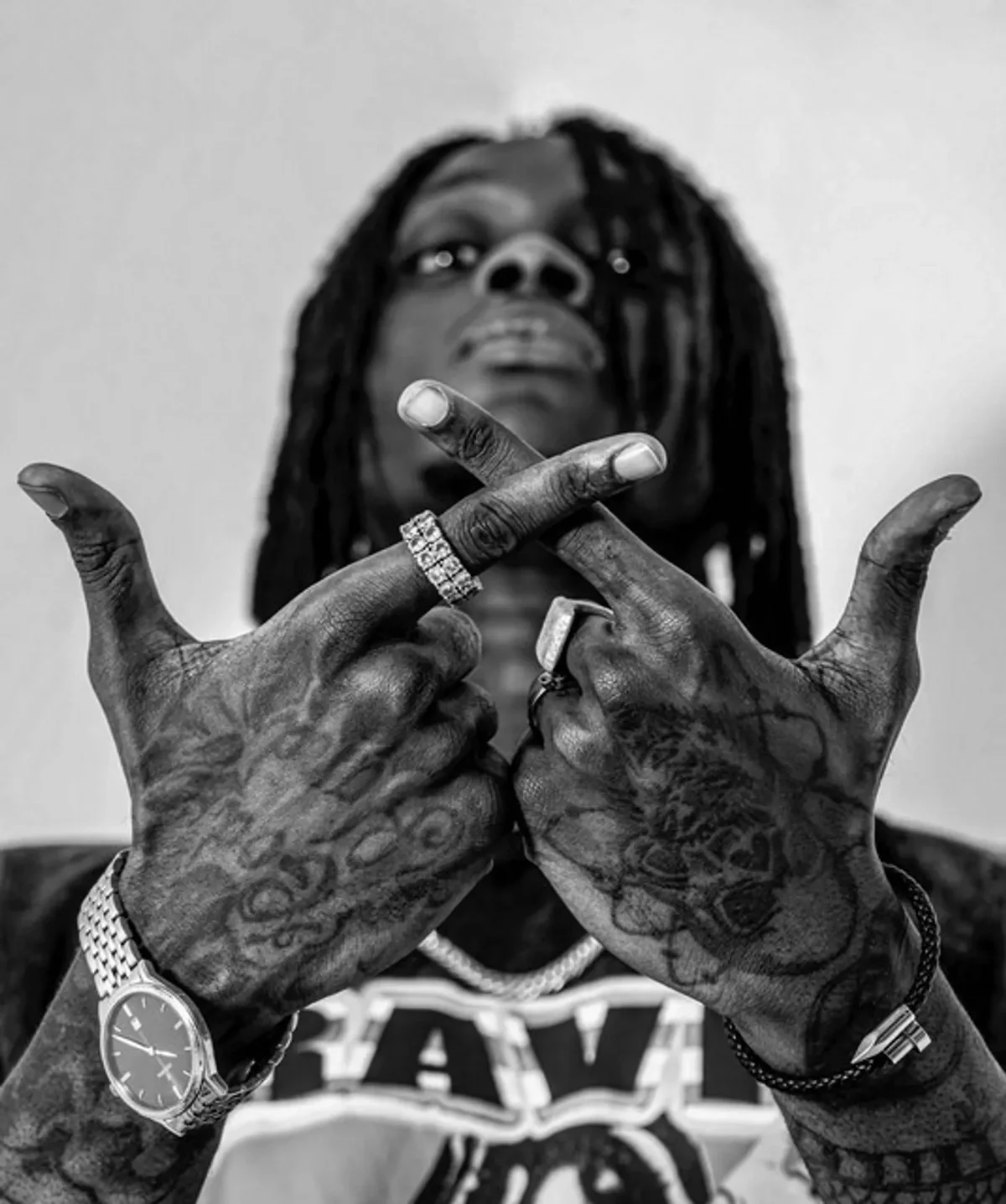
The clearest hand view is a black-and-white portrait with Himra’s fingers crossed in front of his face. Dark shapes and lettering cover the backs of his hands and run across his fingers, packed close together.
Rings, a watch and chains frame the pose, but the ink still holds the eye: the tattooed hands are part of the picture, not just in the background. Hand tattoos stay exposed and move constantly, so the placement takes regular upkeep as well as a willingness to keep the designs in view.
Reading the sleeve coverage
A wider portrait shows tattoos across both forearms and up the upper arms. Dark shading, linework and larger forms overlap to create sleeve-like coverage; the arm reads as one busy but controlled field rather than a single focal piece.
Cropped photos can make one patch look separate from the rest, while a wider view shows more of the coverage at once. The photos don’t identify an artist, dates or individual design names, so the description can go only as far as the visible black-and-grey work, illustrative shapes and lettering-like details.
What the neck ink adds

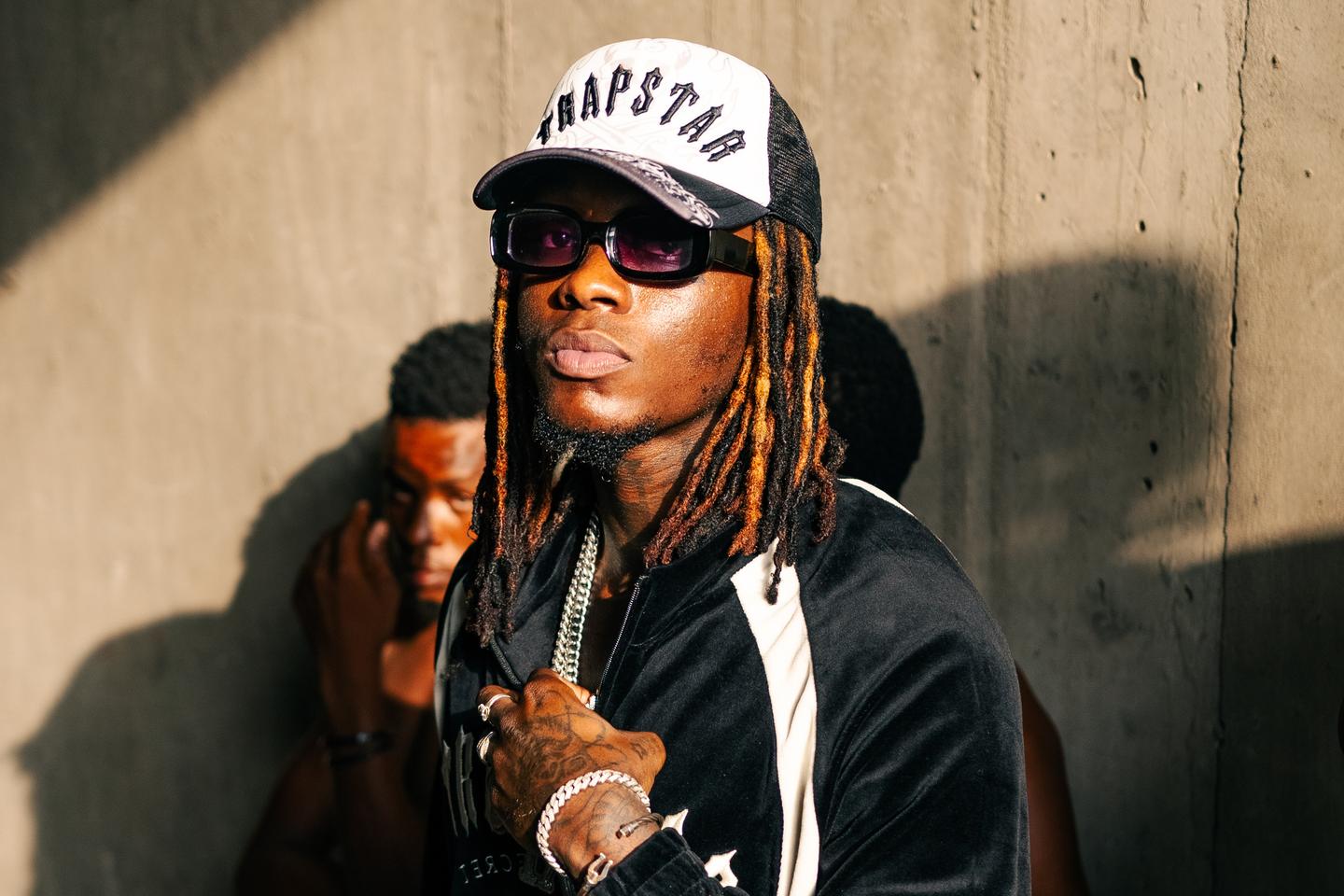
In an outdoor portrait, Himra’s dreadlocks fall away from the side of his neck, leaving dark ink visible above his T-shirt collar. His arm work fills more of the frame, but the neck tattoos extend the collection beyond the sleeves.
The neck stays part of his outline in portraits, unlike an arm that can disappear under a jacket. The design itself is hard to make out, and the photo doesn’t explain its meaning; what it shows is the placement and how it sits beside his hair and collar.
Black-and-grey texture across both arms
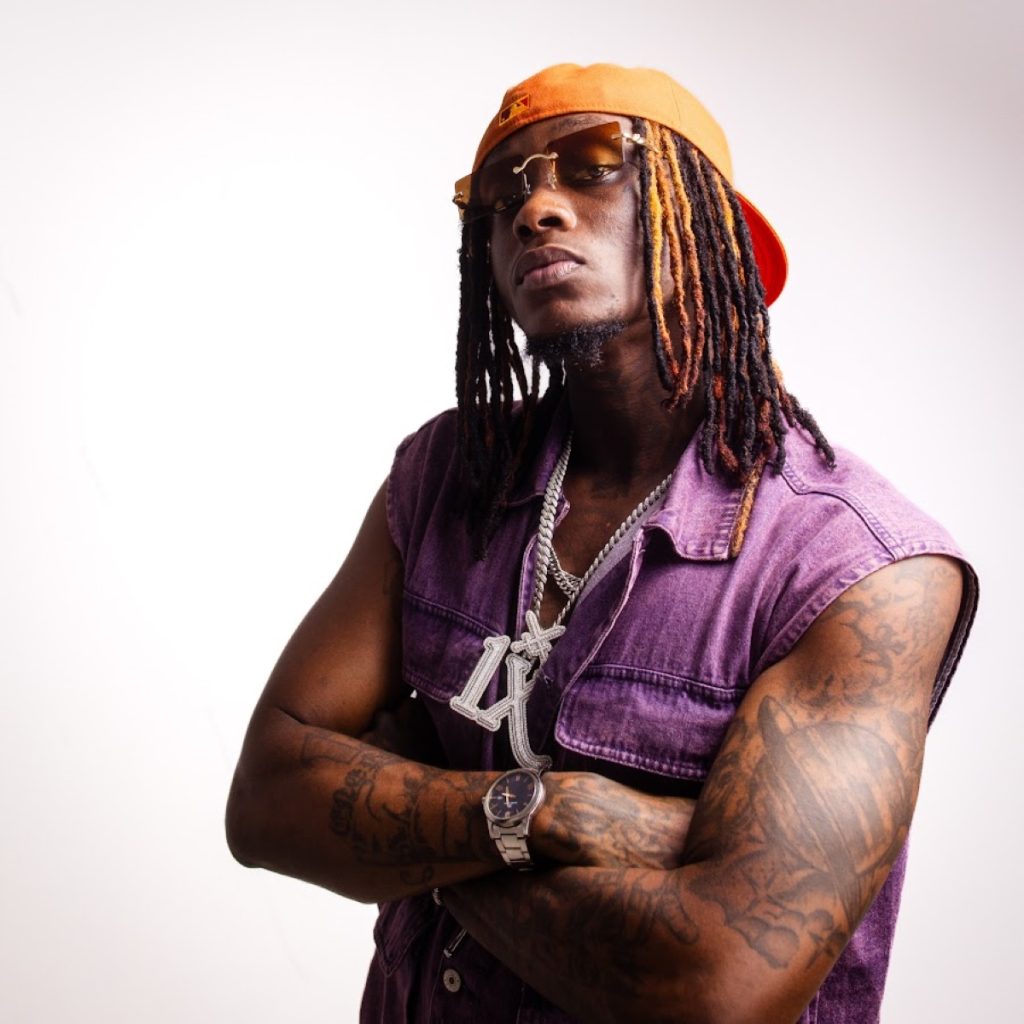
A portrait in a sleeveless purple vest exposes both arms, with silver chains and an orange cap adding colour around the mostly dark ink. The tattoos vary in scale: some look illustrative, while others resemble lettering or small symbols.
There’s little blank space on the visible arms, but small breaks of skin and changes in line weight keep the coverage from looking flat. The dark shapes remain legible against the brighter clothes and jewellery, and the pose gives a view from shoulder to forearm.
Hands, jewellery and the performance image
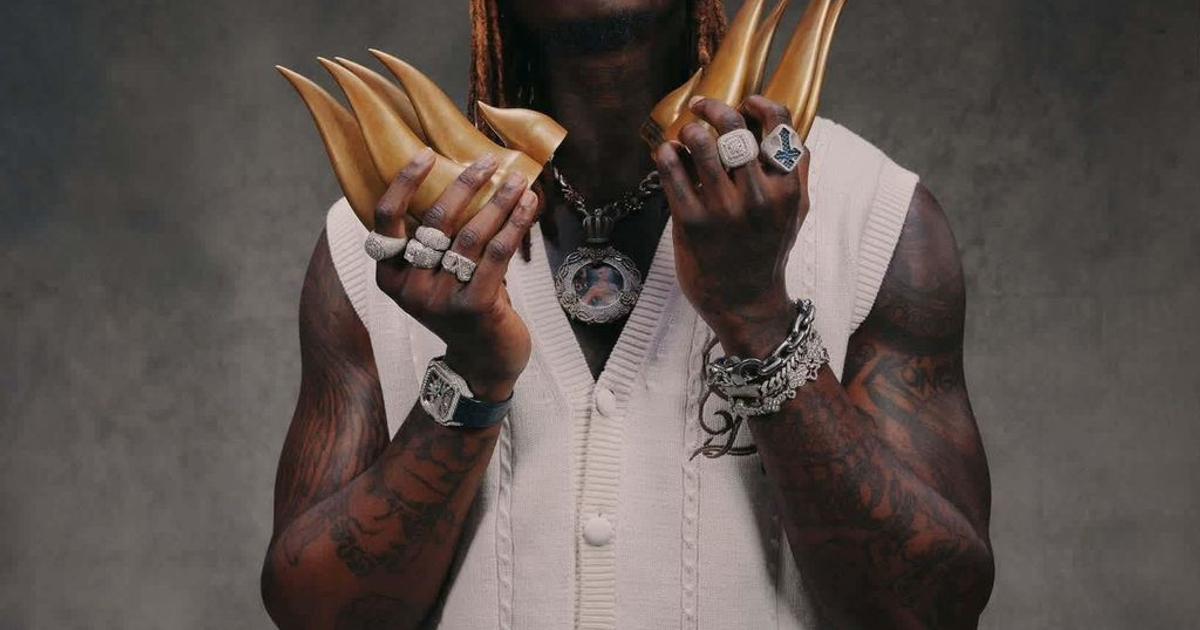
In an award portrait, Himra holds two gold trophies while wearing rings and layered jewellery. The tattoos remain visible across his hands and arms, even in a more formal setting, alongside the clothes and accessories that shape the image.
Other photos bring his hands close to his face; this one puts them near the trophies. Together, the poses show how placement changes what people notice when he moves or holds something, without requiring a separate explanation for each design.
Why the collection feels so complete
The visible tattoos reach across the hands, neck, forearms and upper arms, areas that define a portrait even when Himra wears a simple T-shirt. His dreadlocks, sunglasses, chains and poses add to that outline.
The pieces don’t all have to match to sit together. The hands, neck and arms have different shapes and textures, and tattoos added over time can vary in line weight, scale and mood. Shared shading or spacing can link them if you’re planning a sleeve.
How to borrow the energy without copying the image
Start with the placement you’re prepared to live with. Hand tattoos stay on view; even a small neck design changes a portrait, while a larger one may draw the eye first. A sleeve can be dense or leave more open skin. Think about how your clothes and daily movement will change what people see.
If you’re planning a sleeve, you might place a larger design near the shoulder, medium pieces through the upper arm and smaller marks toward the forearm. Leave space for each part to read and for the collection to grow over time.
The short version
Photos show Himra with dark hand tattoos, dense arm coverage and ink on his neck. They support a description of the collection’s placement and black-and-grey look, but don’t establish the private meaning of each design.
The practical idea is to choose placement and designs that suit your own life, then build at a pace that gives each piece room. Himra’s photos show the effect of a collection worn as part of his public style.