Bely Basarte’s tattoos are personal first and decorative second. Her collection feels more like a notebook: some pages are loud, some are private, and a few only make sense once she explains the memory behind them. That’s what makes her ink so interesting. You can admire the colour and linework first, then find a much more personal idea underneath.
The clearest example is the large elephant tattoo on her leg. Bely discussed it with LOS40 while showing the design during an interview, and the story behind it is warmer than the usual celebrity-tattoo sound bite. She talked about her affection for elephants, her love of Dumbo, and a visit to an elephant orphanage in South Africa. The animal became a way to hold onto that experience, not just a dramatic piece of body art.
That elephant gives the whole collection a useful starting point. Bely’s tattoos aren’t presented as one perfectly matched sleeve or a single rigid style. They’re a mix of memories, references, drawings and symbols that have gathered over time. Some are colourful and neotraditional. Others are smaller and easier to miss. Together, they make sense because the meaning comes before the matching.
Bely Basarte’s elephant tattoo
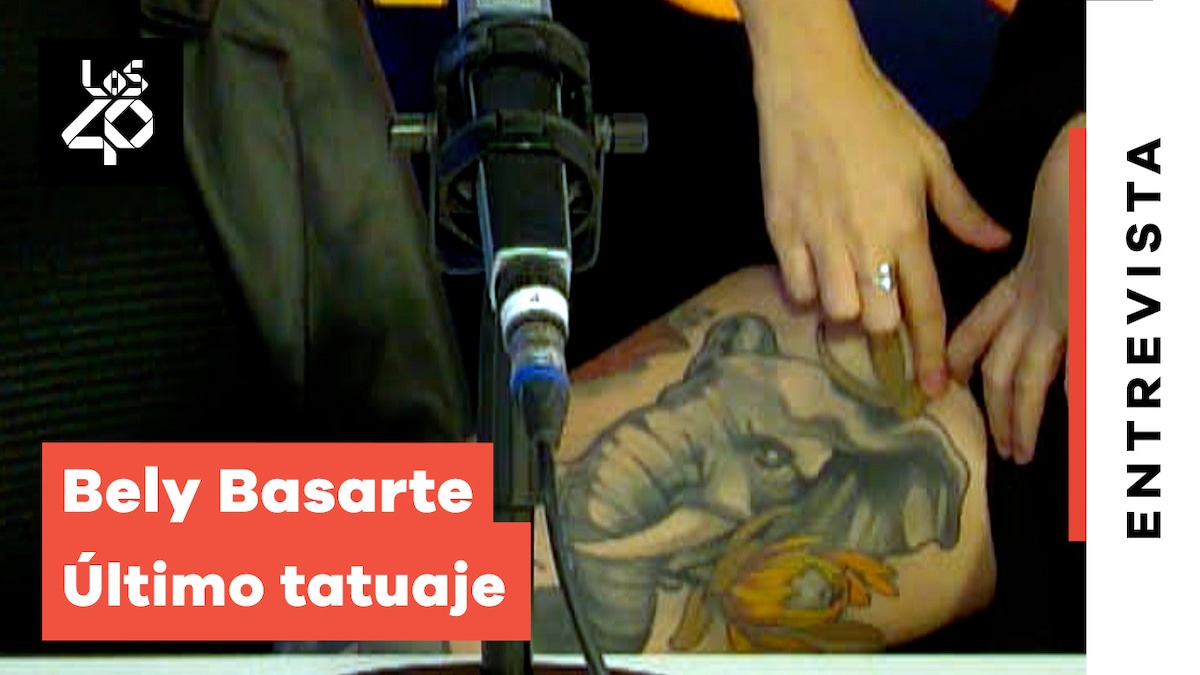
The elephant is the piece with the strongest documented backstory. In the LOS40 interview, Bely showed a large design on her leg while explaining that elephants have always meant something to her. Her interest isn’t only about the animal’s size or recognisable shape. It connects to the way elephants care for one another, and to the emotional effect of seeing rescued animals up close.
She also connected the tattoo to Dumbo, which is a very Bely detail: sentimental, visual and rooted in a story she has carried for years. The design turns that feeling into something permanent without needing to spell out a long message. An elephant already carries ideas of memory, family, loyalty and resilience. The personal context gives those familiar meanings a sharper edge.
The image from the interview shows the tattoo at close range, with the head and large ears easy to recognise and warm colour worked into the design. It’s a proper tattoo-reveal image rather than a red-carpet photograph where the details are half hidden. That matters when you’re trying to understand the piece. The placement gives the design room to breathe, while the scale makes it feel like a focal point rather than a tiny symbol tucked away.
Bely’s explanation also keeps the tattoo from becoming a generic animal idea. She didn’t describe it as a random symbol of strength. She connected it to a specific trip, a favourite story and the sight of orphaned elephants forming their own group. Her phrase about a herd of orphans accepting each other is the emotional centre of the idea. The tattoo works because the image and the memory are inseparable.
Why the elephant means so much

There’s a difference between a tattoo that looks meaningful and one that has a real, traceable story behind it. Bely’s elephant belongs in the second category. The explanation is concrete: she had a long-standing affection for elephants, she had a connection to Dumbo, and she had visited an elephant sanctuary in South Africa. None of those details feels bolted on after the fact.
That approach is useful if you’re collecting tattoo ideas yourself. You don’t need to copy the exact animal or placement. The better lesson is to start with the memory and then ask what image carries it naturally. For Bely, an elephant can hold tenderness, family and remembrance without looking like a block of text. For someone else, it might be a bird, a house, a flower or a small object from a very specific day.
The elephant also shows why colour can be worth keeping when the subject has emotional weight. Black linework would still make the design readable, but the warmer tones give it a softer, almost illustrated quality. It feels closer to a storybook drawing than a harsh emblem. That suits the Dumbo connection and keeps the tattoo personal instead of overly serious.
Placement plays a part too. A large leg tattoo can be seen when Bely wants it to be seen, but it doesn’t have to dominate every outfit or performance. That kind of flexibility is easy to overlook. A meaningful tattoo doesn’t have to be on the hand or neck to stay present in your life. Sometimes a larger area gives the artist space to make the drawing expressive while still leaving the wearer control over when it appears.
The stories behind the collection
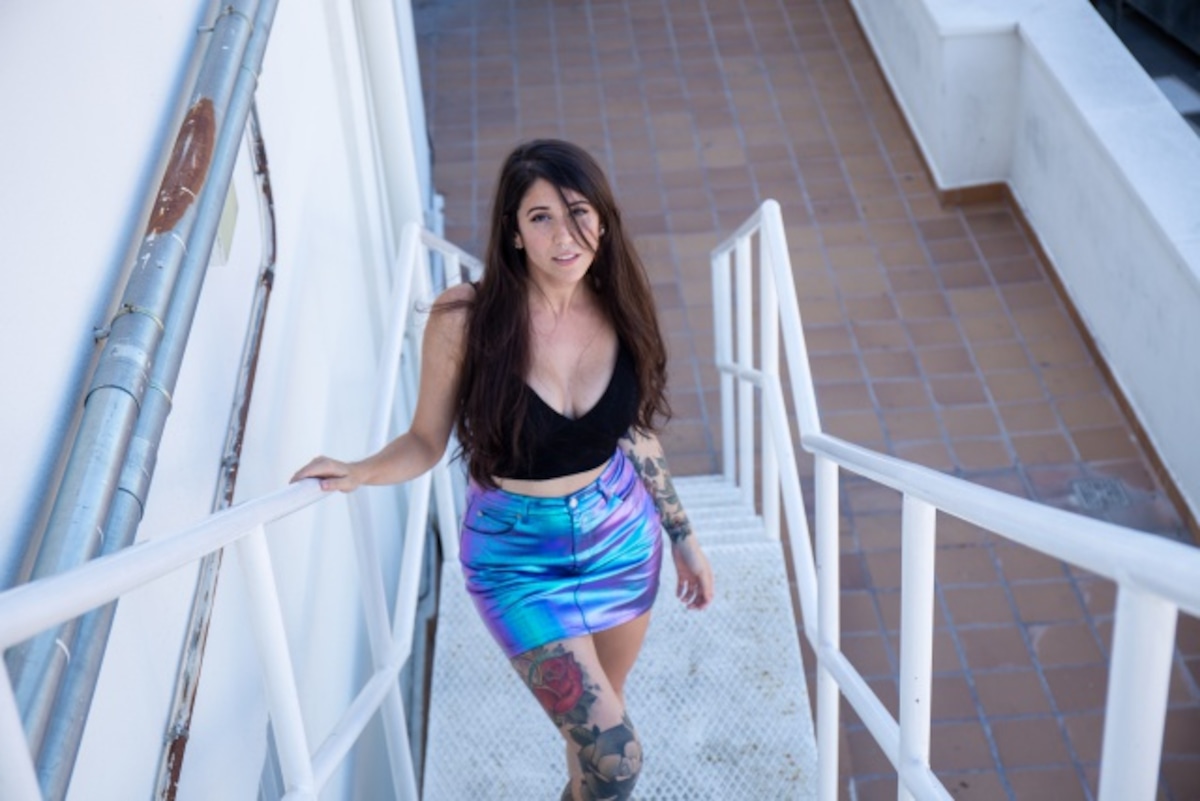
RTVE Playz’s Tintas episode gives a wider view of Bely’s tattoo collection. The programme presents her as someone with tattoos across a substantial part of her body, with designs that include owls and colourful neotraditional work. That description helps explain why one close-up elephant frame can’t stand in for the whole collection. There are several visual languages happening at once.
Owls bring a different mood from the elephant. They can suggest observation, night, instinct or wisdom, but Bely’s collection doesn’t force every design into the same symbolic box. The value is in the combination. A bold traditional-inspired piece can sit beside a smaller personal mark and still feel coherent because both belong to the same person.
The Playz material is helpful for another reason: it treats the tattoos as part of a conversation. You see Bely talking about the ideas rather than posing in a frozen image where every piece is supposed to be instantly legible. That makes the collection feel lived in. Some details are clear, while others remain partly hidden by angle, clothing or the limits of a video still. Good tattoo coverage should be honest about that.
It’s tempting to build a celebrity tattoo page by listing every shape visible in a photograph. That can turn into guesswork quickly. Bely’s interviews offer a better model. The elephant has a documented explanation, the lavender branch and other pieces have meaning she has discussed, and the broader collection can be described without pretending every small line has an official interpretation.
A quieter personal memory
In a LOS40 question-and-answer, Bely described a favourite tattoo as a hand holding a lavender branch. She connected it with home, which gives the design a quieter feeling than the large elephant. Lavender can already suggest calm, memory or care, but the hand changes the image. It feels held rather than simply planted, like something being protected or carried.
She also spoke about a blindfolded girl tattoo as a symbol of trusting the people she loves. That idea says a lot about the way Bely talks about her ink. The design isn’t reduced to a neat online definition. Trust is a relationship, so the image becomes a reminder of who she can rely on when she can’t see everything clearly herself.
Those two examples make the collection feel more intimate. The elephant is large and immediately recognisable. The lavender branch is a smaller domestic image. The blindfolded figure is more figurative and open to interpretation. They don’t need to match stylistically to belong together. Their shared thread is that each image is tied to a feeling Bely can name.
There’s a practical design lesson in that mix. If you’re planning a meaningful tattoo, you can choose one image for the big memory and another for the quieter everyday idea. You don’t have to make every piece dramatic. A small botanical symbol can carry as much emotional weight as a large animal when the connection is real.
How the images fit together

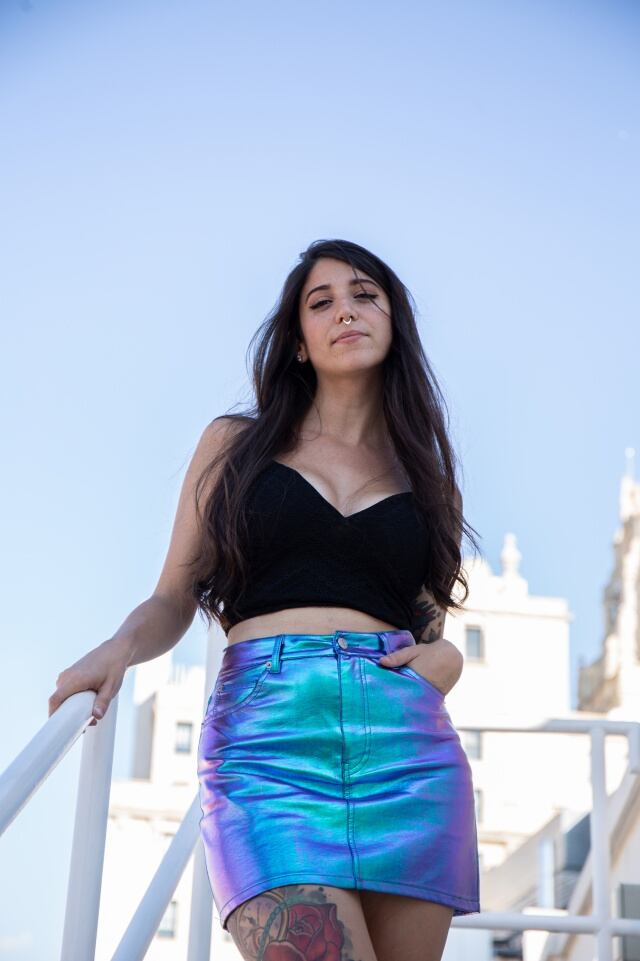
The supporting photographs here are context rather than proof of a particular tattoo. LOS40’s portrait images show Bely with visible arm and leg work, which helps communicate how much of her collection is part of her everyday look. They don’t identify every design, and they shouldn’t be read as a catalogue of confirmed meanings. Their job is to show the person wearing the tattoos, not to replace the interviews.
That distinction is important with celebrity ink. A photograph can show that a tattoo exists, but it can’t always tell you when it was done, who designed it or what it means. Bely’s own explanations fill in some of those gaps. The images then give you a visual sense of scale, colour and placement without pretending to know more than the sources support.
The RTVE and LOS40 material also shows why different angles matter. A close-up can reveal the elephant’s shape. A wider portrait can show how the leg piece sits with the rest of the collection. A posed interview frame can make the arm work easier to see. None of those views needs to be treated as a separate tattoo. They’re different ways of understanding the same body of work.
What to borrow from Bely’s approach
Bely’s best tattoo lesson is simple: pick images that can carry your memories without needing a caption underneath them forever. The elephant works because the subject already matters to her, then the trip to South Africa gives it a sharper personal edge. The lavender branch works because home is a feeling she can return to. The blindfolded girl works because trust is something she wants to remember.
You can borrow that method without copying the artwork. Start by writing down a few moments, people or places that still feel important. Look for a visual that holds the same mood. If the memory is soft, a botanical design may fit. If it’s about endurance, an animal or weather symbol might make sense. If the meaning is private, a small image can be better than a giant statement piece.
It’s also worth leaving room for the tattoo to grow with you. Bely’s collection doesn’t look as if it was planned as one locked set. It has room for different colours, eras and drawing styles. That can be more realistic than trying to design a perfect sleeve before you’ve had any tattoo experience. A collection can become a record of changing interests rather than a single brand identity.
Finally, don’t rush the explanation. Bely’s elephant story is compelling because the image came after the feeling, not before it. Spend time with the idea, find an artist whose linework suits it and make sure the placement works for your daily life. A good tattoo can be beautiful on day one, but the meaning is what keeps it from feeling disposable later.
The short version
Bely Basarte’s tattoos are a mix of colour, character and memories. The large elephant on her leg is the standout documented piece, linked to her love of elephants, Dumbo and a South African sanctuary visit. Her lavender branch represents home, while a blindfolded girl reflects trust in the people close to her. RTVE Playz has also highlighted owls and neotraditional designs across a collection that covers much of her body.
The collection doesn’t work because every tattoo follows one trend. It works because the images have somewhere to come from. That’s the part worth taking away: choose a picture that feels like a real memory, then let the style and placement support it.