
Janella Salvador has said she got a tattoo for her son, Jude. A public photo also shows a fine-line snake on her upper thigh. The two pieces have different stories: she hasn’t publicly explained the snake, while the Jude tattoo is tied to her son.
A relaxed, sunny photo shows Salvador reclining outdoors in a bright pink swimsuit. It isn’t a formal tattoo reveal; the Jude tattoo comes from a separate interview.
Janella Salvador’s snake tattoo
The snake is the clearest piece to identify. Its thin, winding body follows the curve of Salvador’s upper thigh, with a small head and a simple outline. It is much lighter than a traditional snake design with thick borders and dense shading.
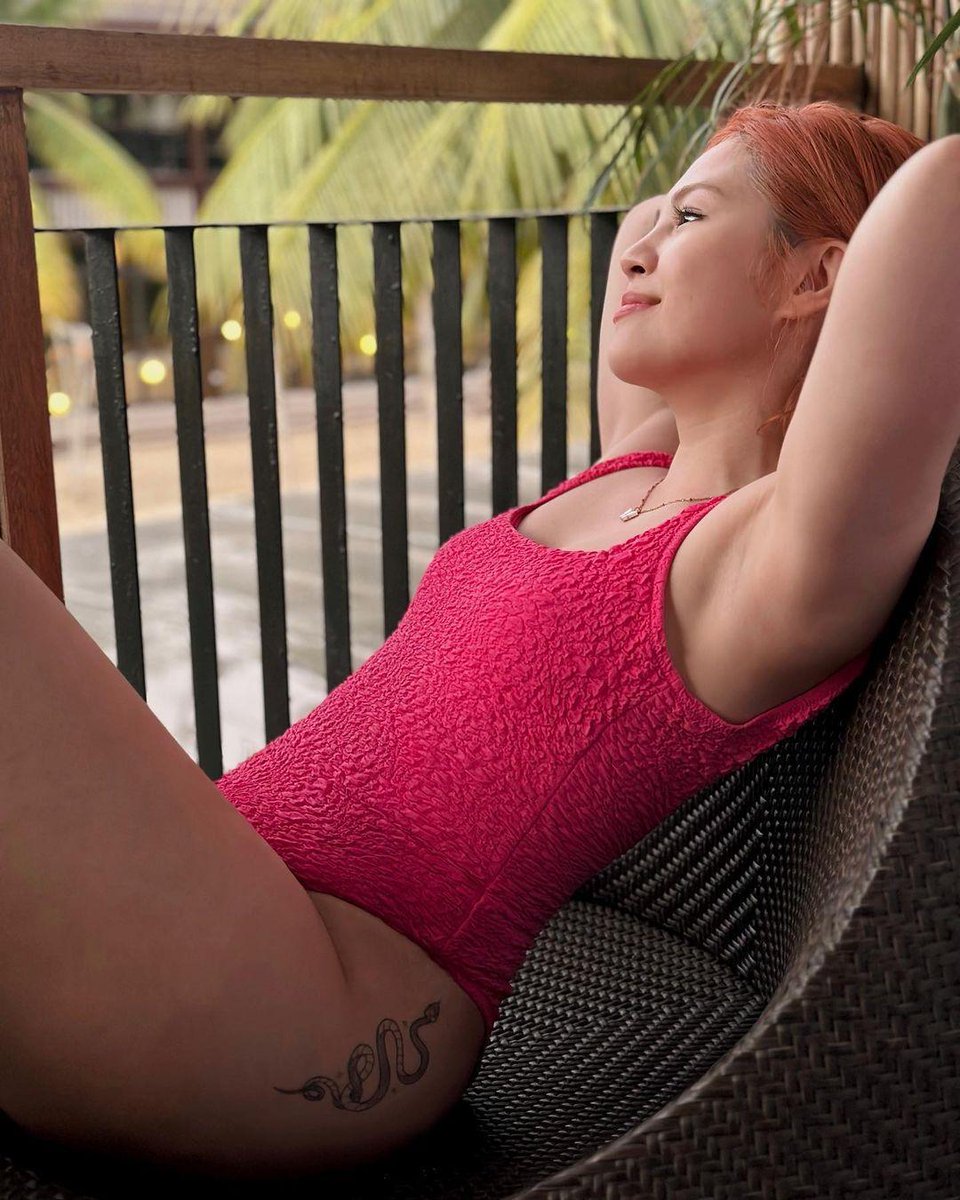
Salvador hasn’t explained what the snake means to her, so there’s no reason to assign it a story. If you like the shape, you can use its movement as a starting point: an artist might curve a different serpent along the hip, ankle or ribs without copying this exact design.
Family, privacy, and meaning
ABS-CBN reported on a separate tattoo Salvador called “my Jude tattoo,” linking it to her son. The public explanation doesn’t specify every detail of the design. A name, initial, date or small symbol can hold a family memory without spelling it out to everyone who sees it.

Some people choose a child’s handwriting, a birth flower or a symbol from a shared memory. Others prefer a mark that looks ordinary to everyone else. The meaning can stay private; it doesn’t need to turn into a list of birthdays and milestones.
Making room for a small piece
The upper thigh offers room for a small design and lets the wearer choose when it shows. That can suit a family tattoo, or simply someone who doesn’t want ink visible in every photo or conversation.

Before settling on a spot, try the stencil while standing and sitting. See how the lines shift when your hip bends, and decide whether the design should face forward, wrap toward the side or sit flat on the thigh. Those changes can affect the shape more than a phone preview suggests.
Simple shapes with personality
For a fine-line snake, a loose curve can look more natural than a perfectly symmetrical coil. A tiny eye, forked tongue or a few scales can add character, but too many small details may crowd the outline. A small flower or sprig of leaves gives the design a softer look.

A Jude-inspired idea can be just as personal without repeating Salvador’s tattoo. An initial inside a simple shape, a birth-month flower or a small star can stand on its own. If you want lettering, leave enough room for the words to remain clear as they age.
Keeping fine lines clear
Fine lines need space between them. Details that look separate when fresh can blur together over time, so an artist may need to simplify a reference instead of squeezing in every mark. Sun exposure and friction from clothing can also affect how the tattoo holds its contrast.

Follow the artist’s aftercare instructions, keep the area clean while it heals and avoid picking at peeling skin. Once healed, sunscreen helps protect the lines, especially if you often swim or spend time outdoors. Ask to see healed work as well as fresh photos; it gives you a better sense of how the artist’s line weight settles.
Why quiet choices last
The contrast is in how much is public: the snake can be seen, but its meaning is hers to keep. Salvador chose to explain the Jude tattoo through the relationship it marks.
Before choosing a similar piece
Before taking a reference photo to an artist, decide whether you’re drawn to the snake’s shape, the thigh placement, the fine lines or the private family meaning. Those are separate choices. Ask the artist to adjust the size and spacing for your body instead of tracing the photo. The reference can guide the conversation without dictating the result.