Tiago PZK’s most recognisable tattoo is easy to miss for a second, then hard to forget: a little crescent beside his eye, with dark details dropping below it. It doesn’t take up much room. Next to his changing hair colours, earrings and stage clothes, it can look almost understated. The reason he chose his face, though, was anything but casual.
The Argentine singer has described that decision as a way of committing himself to music. He’s also connected the moon to his younger sister and the idea of finding light when things get difficult. Those explanations give a small design quite a lot to carry. The placement and the symbol have different parts to play, and both matter if you want to understand why this particular piece feels so personal.
The crescent tattoo beside Tiago PZK’s eye
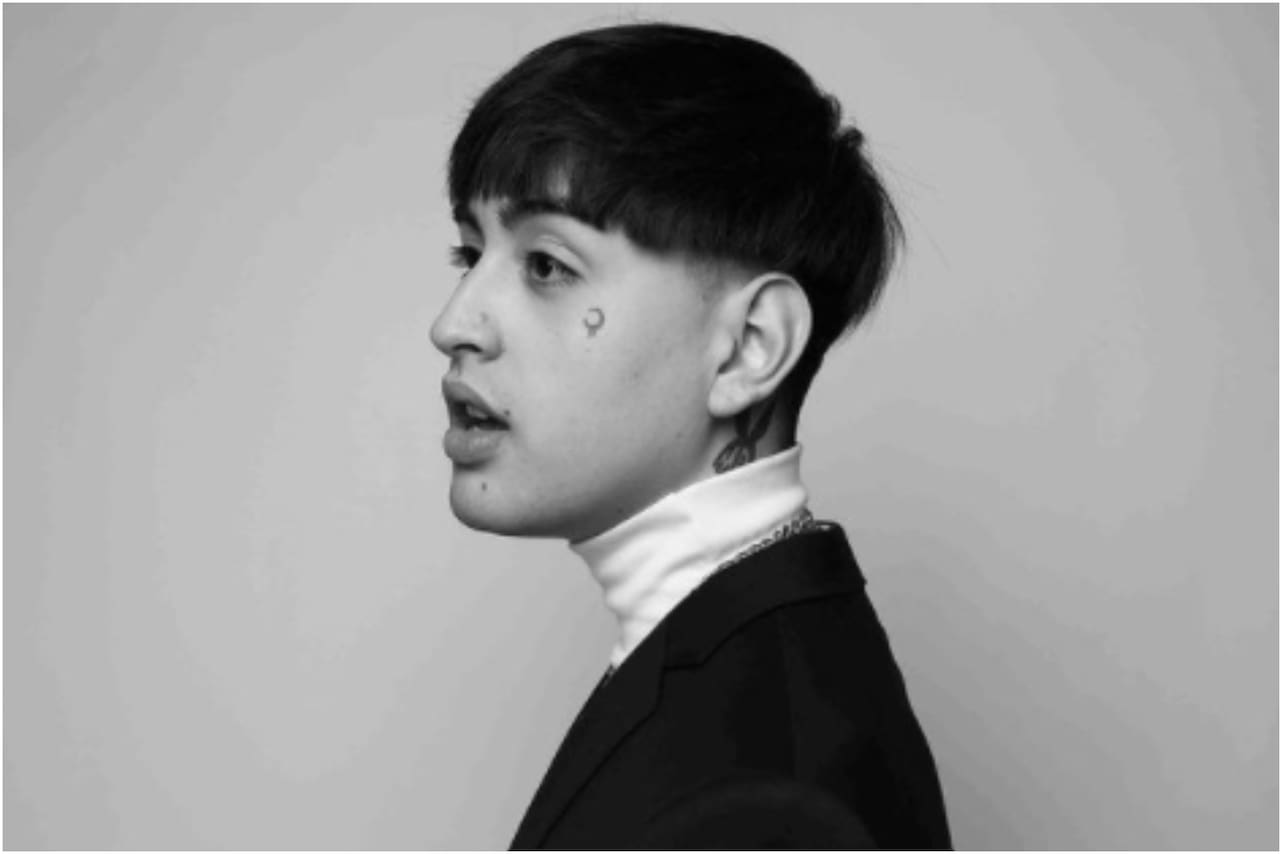
The clearest thing about the design is its simplicity. A dark crescent sits on his cheek near the outer corner of his eye, with short marks beneath it that give it a slightly dripping appearance. In the black-and-white profile photograph above, there’s plenty of bare skin around the shape. That space makes it readable without needing a large patch of ink or an elaborate background.
In a tattoo interview with Tu Música Hoy, later covered by Vía País in January 2022, Tiago connected the moon to his sister Ambar. He described music as an environment that could be exciting and also have a dark side. Thinking of his sister helped him stay connected to light. That’s his explanation, rather than a general meaning assigned to every crescent tattoo.
A moon can mean all sorts of things to different people. Here, the family connection comes first. Reading it as an automatic reference to astrology, a relationship or a particular religion would add something he hasn’t established in that explanation. The little descending details make the drawing distinctive, but they don’t need a separate invented meaning to make the piece interesting.
It also helps to see the design in an ordinary portrait. There’s no need for a dramatic pose to find it. It sits close enough to the eye to be part of how you recognise his face, while leaving most of the cheek open. That’s a very different visual effect from covering a whole side of the face with lettering or shading.
Why he put the moon on his face
When Tiago appeared on Los Mammones in October 2021, the conversation turned to why he’d tattooed his face. As reported by La Nación, he remembered telling his mother that he wanted to go all in on music. Her concern was that a face tattoo could make other work harder to find. His answer was that music was the work he wanted.
That’s an unusually direct reason for choosing a placement. He wasn’t simply picking the spot where a small moon would look best. He was giving himself a visible reminder of the decision he’d made. A design that could have been tucked under a sleeve instead became something he’d see whenever he looked in a mirror.
That was Tiago’s personal gamble. It isn’t a rule about how serious someone has to be to become an artist. You can hear determination in the account without treating it as advice to copy the same choice. His memory of that conversation is part of his own early career, with his own circumstances behind it.
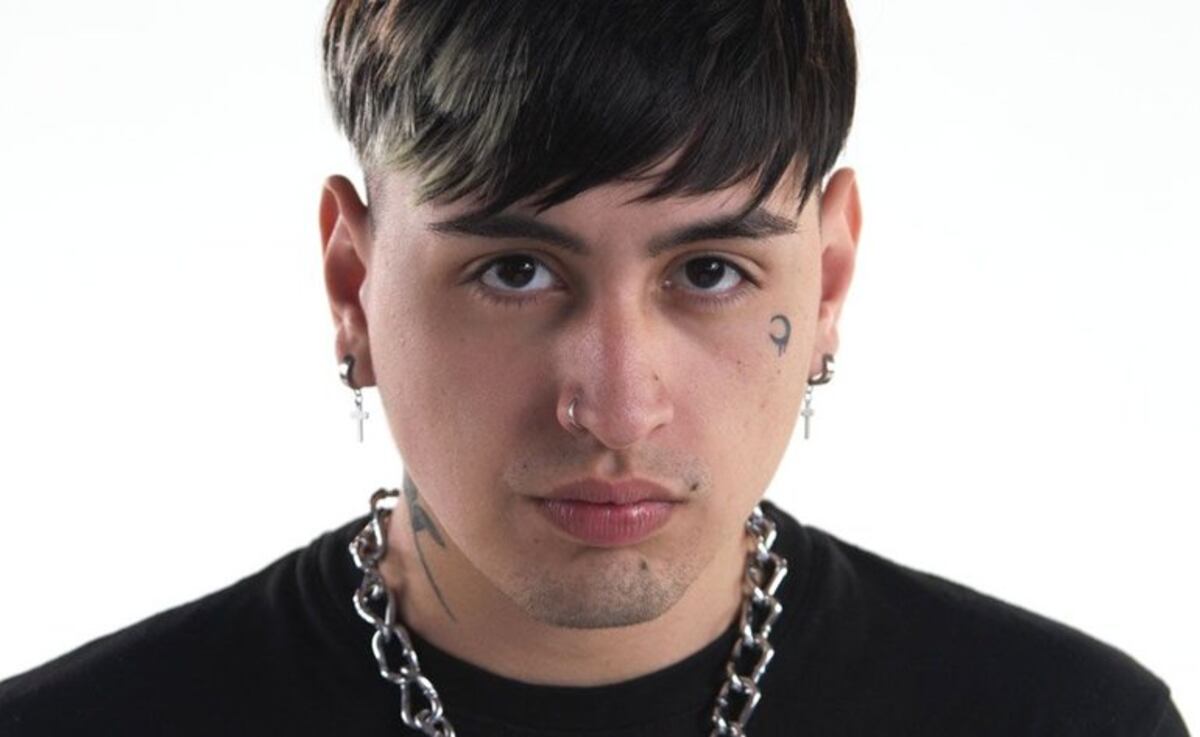
The frontal photograph shows how compact the result is. The crescent doesn’t compete with his eyes or need to fill the cheek. Its size keeps the drawing spare; its location supplies the impact. If you only looked at the amount of ink, you’d miss most of what made the decision significant to him.
The conversation behind the public image
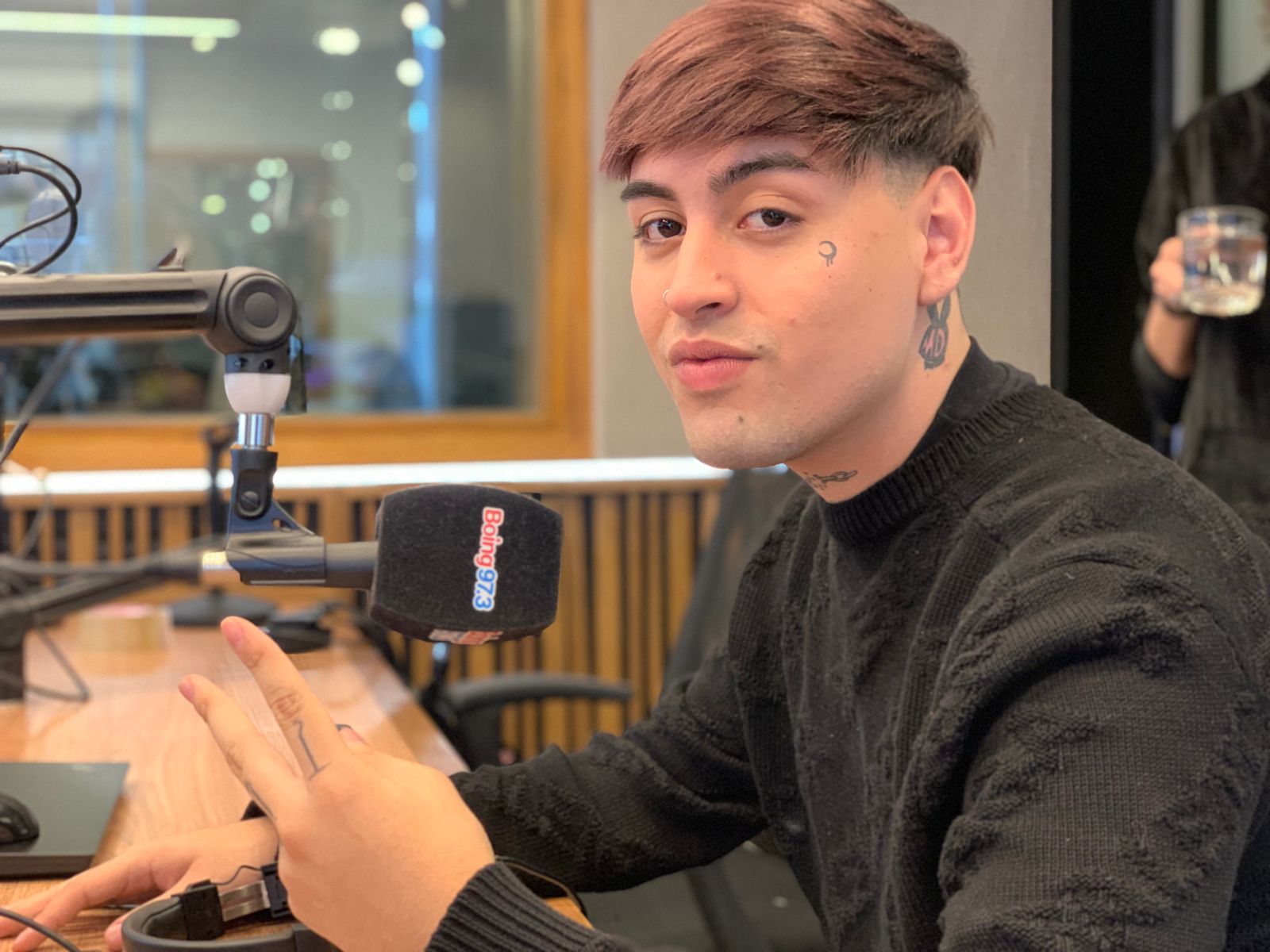
The radio-studio photograph feels much more everyday than a polished publicity shot. Tiago is sitting beside a microphone in a dark sweater, looking towards the camera. It’s useful context for someone whose image is often seen in a video or on a stage: the same musician also has to sit down and explain what he was thinking.
During his July 2022 visit to Radio Boing in Rosario, he returned to the subject of committing to music. He described tattooing his face as a way of putting pressure on himself to keep pursuing that work. The interview also covered the adjustment from a small number of shows to a much busier touring life.
What makes that account worth remembering is how practical the pressure sounds. The issue was work and the future, rather than an abstract wish to look rebellious. He also spoke about the value of parents supporting young people who want to make music. That family support sits naturally beside the more private explanation he gave for the moon itself.
It’s easy to turn an artist’s early decision into a neat success anecdote once their songs are well known. His interviews leave room for the uncertainty that came before. The crescent was there while he was trying to make things happen, rather than being designed afterwards to celebrate a guaranteed outcome.
Monte Grande and the music he wanted to make
Tiago’s roots in freestyle help explain the musical world around that decision. In a July 2022 interview with Paraguay’s La Nación, he talked about returning to the country after visiting for a freestyle competition when he was much younger. By then he was promoting Portales, his debut album, and preparing for a very different kind of appearance.
He also talked about the difference between improvising and writing a finished song. Freestyle could help him find rhymes or melodies in the studio, but making a record involved a different process. That distinction is useful when you hear him move between rapping and singing. The skills overlap without making every performance the same thing.
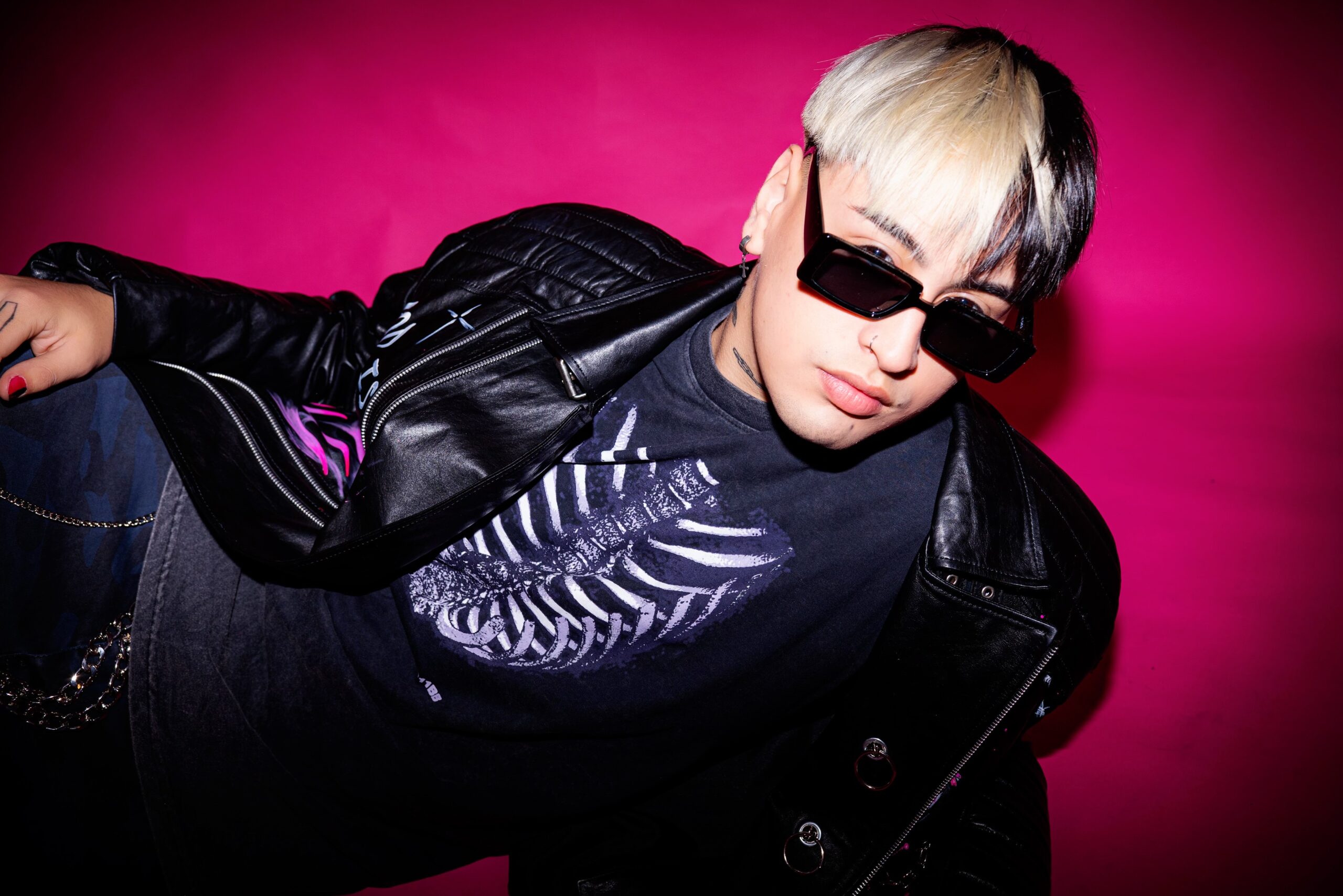
The name Tiago PZK belongs to that background in Argentine music. His public identity grew around competitions, songs and collaborations, rather than starting with a finished celebrity image. The reclining publicity photograph above is a later, more styled presentation: leather jacket, dark glasses, two-tone hair and a bright pink backdrop.
You can appreciate that image on its own terms. The clothes and colour make an immediate impression, while the interviews fill in what a photograph can’t tell you. Neither needs to do the other’s job. A strong portrait gives you a look; hearing the artist speak gives you reasons.
A public style that leaves room to change
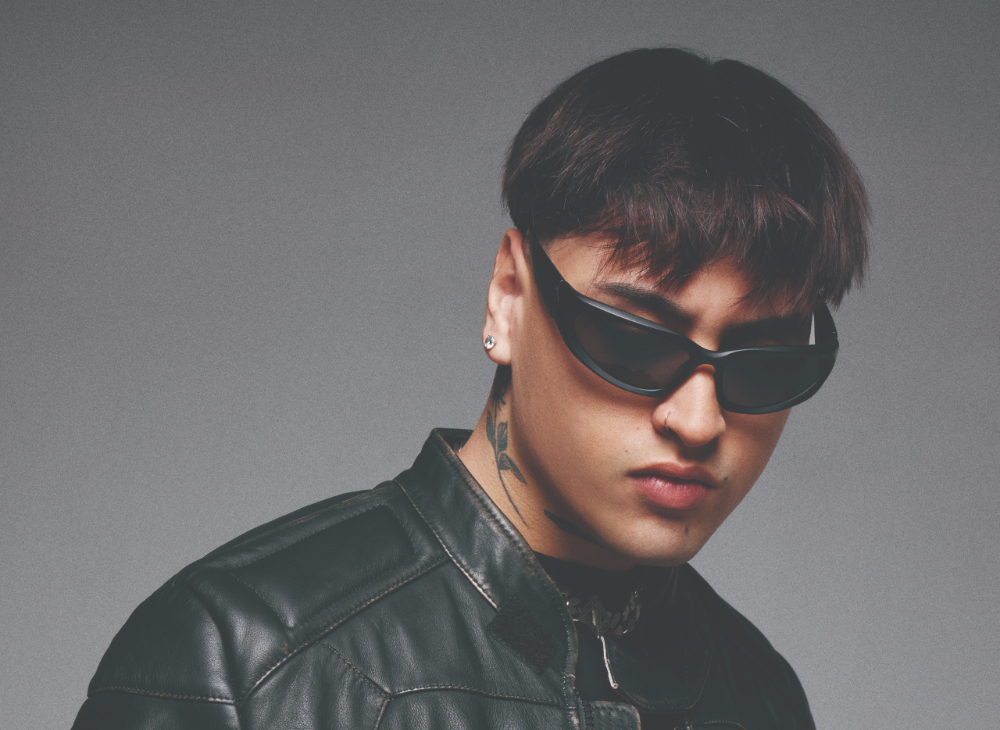
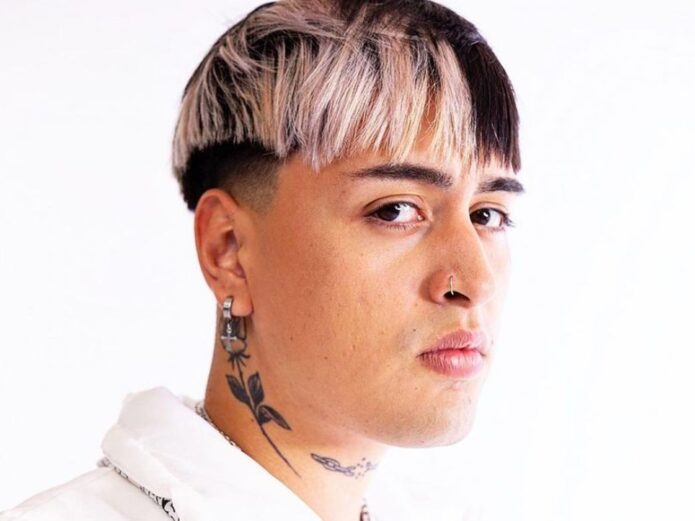
Put his photographs next to each other and the changes are obvious. There’s the pale fringe against white clothing, the dark hair and leather jacket, and the pink-tinted hair at the radio desk. Different lighting changes the mood again. The grey-background portrait here is quieter than the saturated pink publicity photograph, even though both use dark clothes and sunglasses.
That’s part of what makes a small, recognisable detail interesting in a musician’s appearance. Clothes, hair and photography can move around it. You don’t have to read every change in styling as a new personal declaration, or assume that a different-looking photograph means an older design has disappeared.
A photograph is a moment, not a full inventory. Glasses can cover the area beside an eye. A turned head can hide a cheek. A collar can cover part of the neck. Those are ordinary reasons an image may show less, and they matter before drawing conclusions about someone’s appearance.
A wider audience in 2022
In May 2022, El Planeta Urbano reported that Amazon Music Latin had selected Tiago for its Rompe programme supporting emerging Latin American artists. That coverage placed him firmly in a period of growing visibility. Publicity photographs were introducing him to people who might have heard a song before they knew much about the person singing it.
What the stage photographs add
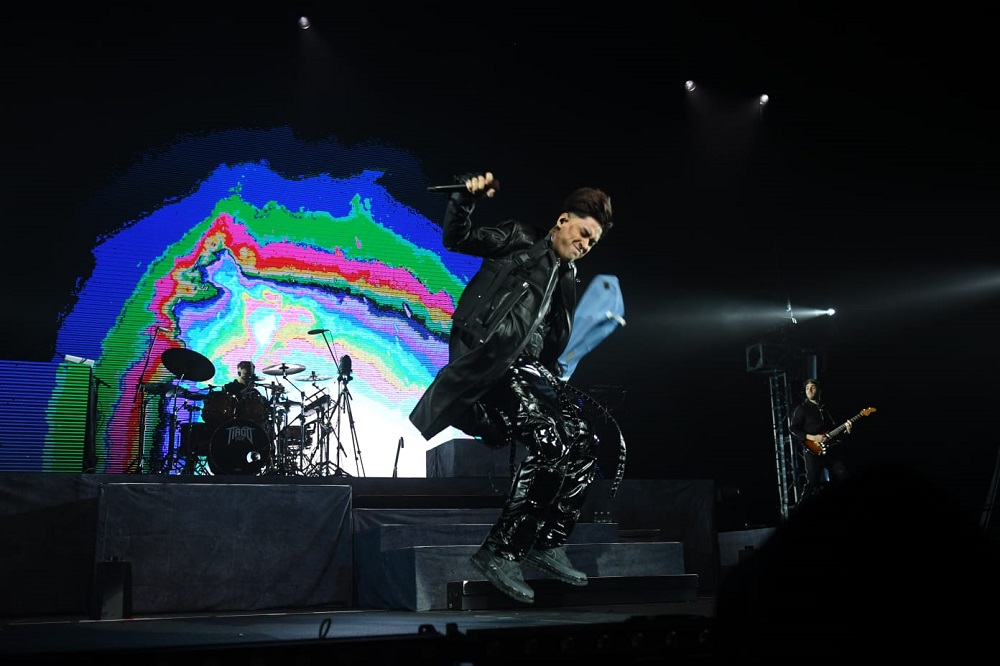
The concert photograph catches Tiago off the ground, microphone lifted, with a colourful screen and musicians behind him. It’s a long way from a still headshot. You get the shape of the performance, the clothes in motion and the distance between the singer and the audience. You don’t get a reliable close-up of tiny details on his face.
His January 2023 conversation with Uruguay’s El País described how touring had changed his relationship with performing. He remembered the response at Montevideo’s Antel Arena, but also spoke about the distance from loved ones and the difficulty of keeping his sense of surprise as shows became routine.
He recalled a much smaller London performance as a moment that brought the early feeling back. That contrast is more revealing than a simple claim that bigger crowds automatically make everything better. A career can be growing quickly while the person doing the work is still figuring out how to live inside it.
For a fan looking through photographs, that gives the performance image some useful depth. The jump, the lighting and the microphone are the visible part of the job. The interviews describe the adjustment around it. Both belong to the same period, but a dramatic concert picture can’t tell you everything about how it felt.
The long-coat studio look
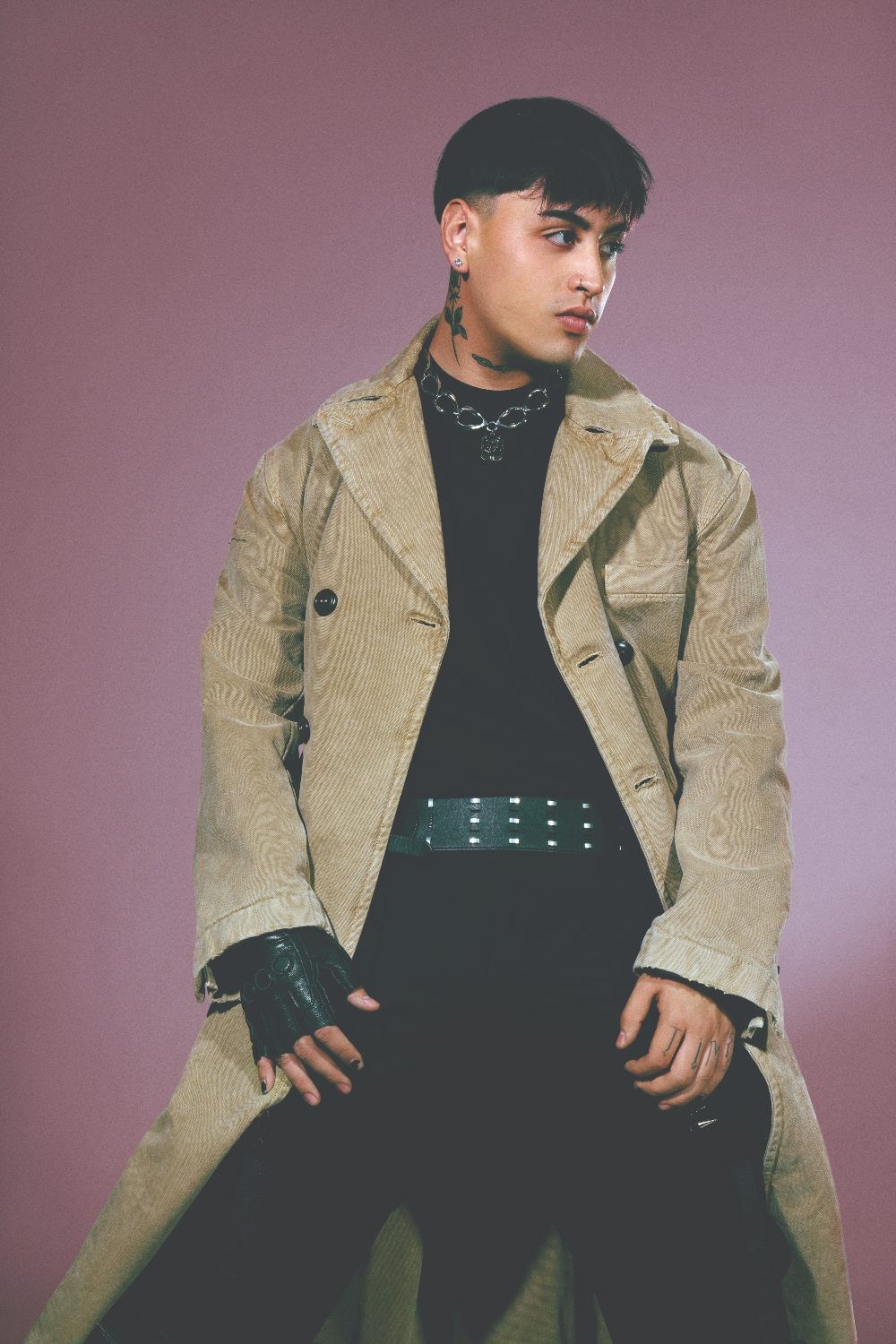
The full-length photograph makes another part of the styling clear. A long tan coat, black clothes and a heavy belt create the overall silhouette. Your eye takes in the outfit before settling on the smaller details. A close portrait reverses that order: face first, jewellery and skin next, clothing further down the list.
That shift in scale is useful if you like the visual idea behind Tiago’s crescent. A compact shape can remain recognisable without becoming the largest feature in an outfit. In his close photographs, the open skin around the moon helps keep its outline clear. In a full-length image, the whole person takes over.
Borrowing an idea doesn’t have to mean borrowing his exact face placement or his private explanation. The useful design question is what you like about the shape: its curve, its size, the dark outline or the little details underneath. The personal meaning is something each person brings themselves. Tiago’s connection to his sister belongs to him.
Hear Tiago explain it himself
His own interview is a good place to leave the subject. You can hear him explain the designs in his voice, with the pauses and phrasing that disappear when an answer is shortened into a headline. The moon may be small, but he has given a clear reason for choosing it and a separate reason for putting it where everyone can see it.