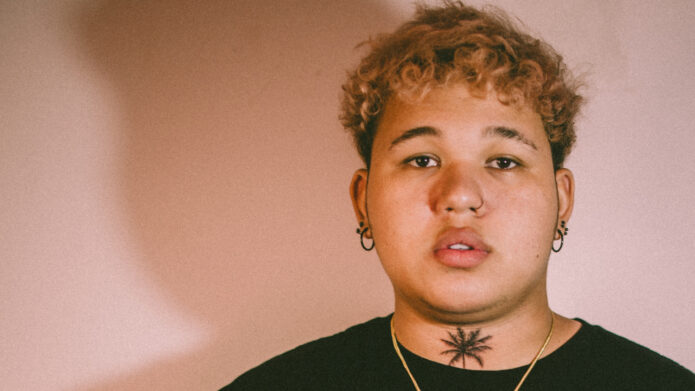
Beéle’s tattoos are easiest to appreciate when you slow down a little. A quick concert clip gives you a blur of dark lines, jewelry and movement. A clear photograph reveals smaller pieces sitting beside larger ones, with enough bare skin between them to keep their shapes readable. His right forearm is a good place to start: the moon imagery is easy to pick out, even among the surrounding work.
The Colombian singer has talked about several of his tattoos himself. That helps separate an actual explanation from a meaning someone has attached to a picture. Some details are personal, some connect with places he loves, and one much-discussed addition came courtesy of Shakira.
The moon phases on Beéle’s right forearm
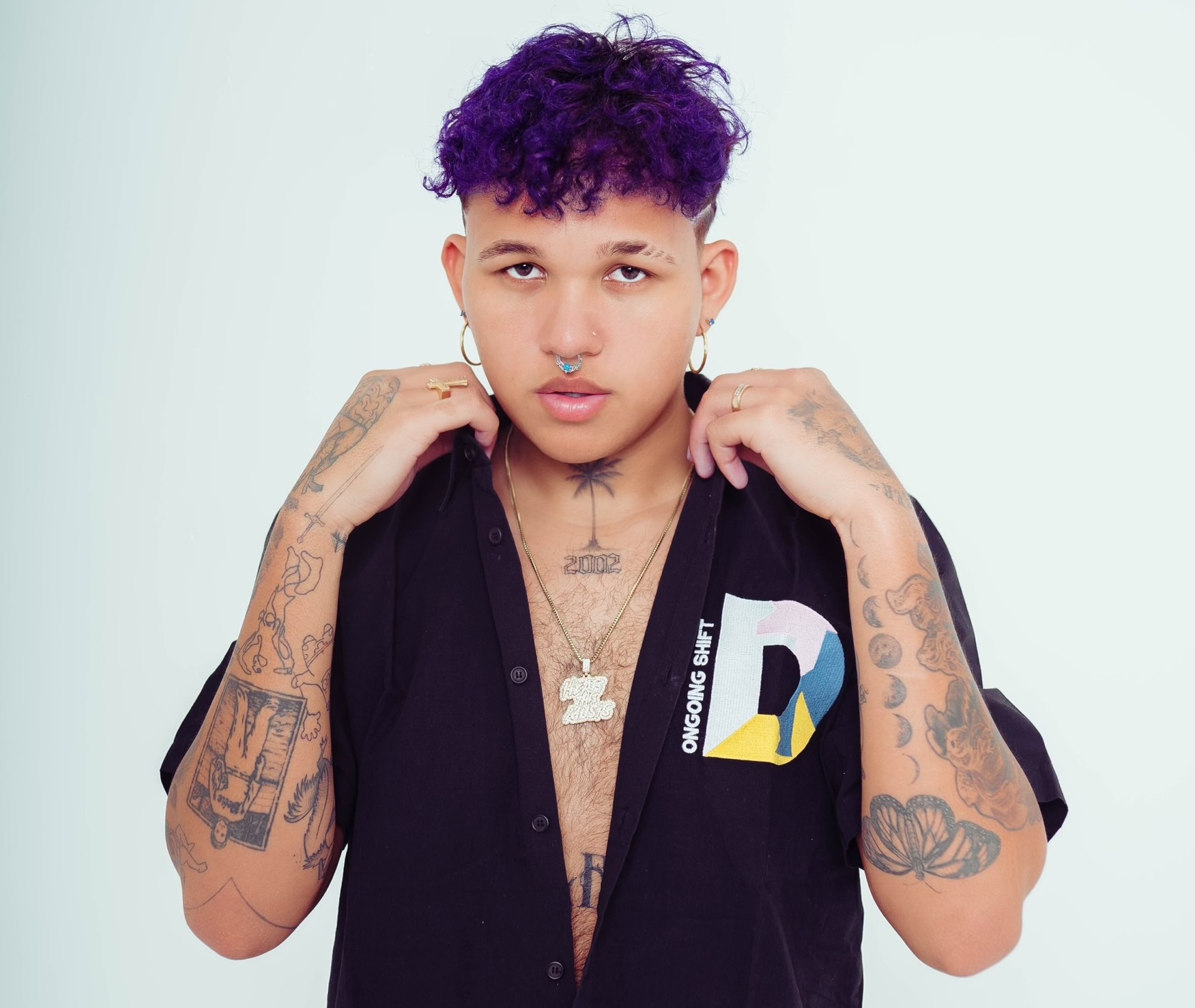
In the purple-haired studio photograph, Beéle holds both sides of his open shirt near the collar. That pose turns the inside of his right forearm toward the camera, making a vertical run of moon shapes especially clear. You can see a mixture of round and crescent forms, arranged down the arm rather than wrapped around it. The changing shapes do most of the work; they don’t need a heavy border or a solid background to stand apart.
Look at the spacing, too. The moons sit close enough together to read as a connected sequence, but each shape has its own patch of skin around it. Their placement lets the eye move along the arm without losing the individual forms. Beside them, larger shaded imagery and other outlined pieces change the texture. It’s a busy area, but it doesn’t become one uninterrupted block of black.
Beéle mentioned a moon among his right-arm tattoos during his 2023 Caracol TV interview. He described that arm as holding more emotional and personal references, including imagery connected with his home city. He also said he was still looking for a sun he wanted to have tattooed. That was his position at the time, rather than a promise that a particular sun design would appear later.
What he didn’t establish there was a separate meaning for every phase visible in this photograph. It’s tempting to jump straight to change, rebirth or cycles, because those readings are familiar in tattoo culture. But a familiar interpretation isn’t automatically his interpretation. The solid description here is the visible sequence and its position on his right forearm. The artist, exact appointment date and a phase-by-phase explanation remain unconfirmed.
As a piece of composition, it’s a neat example of using repetition without making every element identical. The shapes stay related, while their changing areas of dark ink give the row its rhythm.
How the collection changed
His 2023 tattoo conversation already described a substantial collection. Beéle linked much of his left-arm imagery with the sea, naming Poseidon, a seahorse, a lobster and fish. He connected the seahorse with his affection for San Andrés. On the other side, he discussed more personal imagery. He also talked about an anatomical heart combined with a brain on his hand, and a yellow smiley face that reminded him of the little rewards children received for doing schoolwork well.
Those explanations have a pleasingly ordinary quality. The smiley didn’t require an elaborate theory: he associated it with doing well and checking in with himself. That’s a useful reminder that a tattoo can be emotionally specific without looking solemn. A small cheerful image can carry as much personal weight as a large shaded scene.
By February 2026, another addition was attracting attention. Shakira tattooed the nickname Shaki on his right arm during their time together in Barranquilla. El Heraldo reported the finished lettering, while LOS40 described footage of the process and the encouragement Beéle gave her as she worked. The connection to Shakira is established; guesses about a hidden romantic message aren’t needed to explain it.
That addition also changes how you read older photographs. An earlier shot can be perfectly genuine while leaving out something added months or years later. Clothing, camera angle and the position of an arm hide still more. It makes more sense to enjoy a particular clear view than to treat every appearance as a complete inventory.
There’s no reliable current total to put on the whole collection here. The useful details are the ones he has actually discussed, together with shapes a clear photograph allows you to see. His tattoos have accumulated over time, and a fixed count would make that moving picture sound more settled than it is.
Barranquilla comes first
Beéle is Brandon de Jesús López Orozco, a singer whose connection with Barranquilla runs through the way he talks about his music. That background matters more than a convenient label for his sound. In his Billboard Colombia conversation around Borondo, he described growing up with salsa and African music as parts of his culture. He wasn’t presenting those influences as a new costume for a particular release.
His account of making music is rooted in listening, familiarity and a feeling for what moves people. That gives a little more depth to the relaxed presentation in his promotional photographs. A cap, loose jacket and white shirt are simple clothes, but they fit an artist who often speaks about enjoyment and ease rather than rigid boundaries between genres.
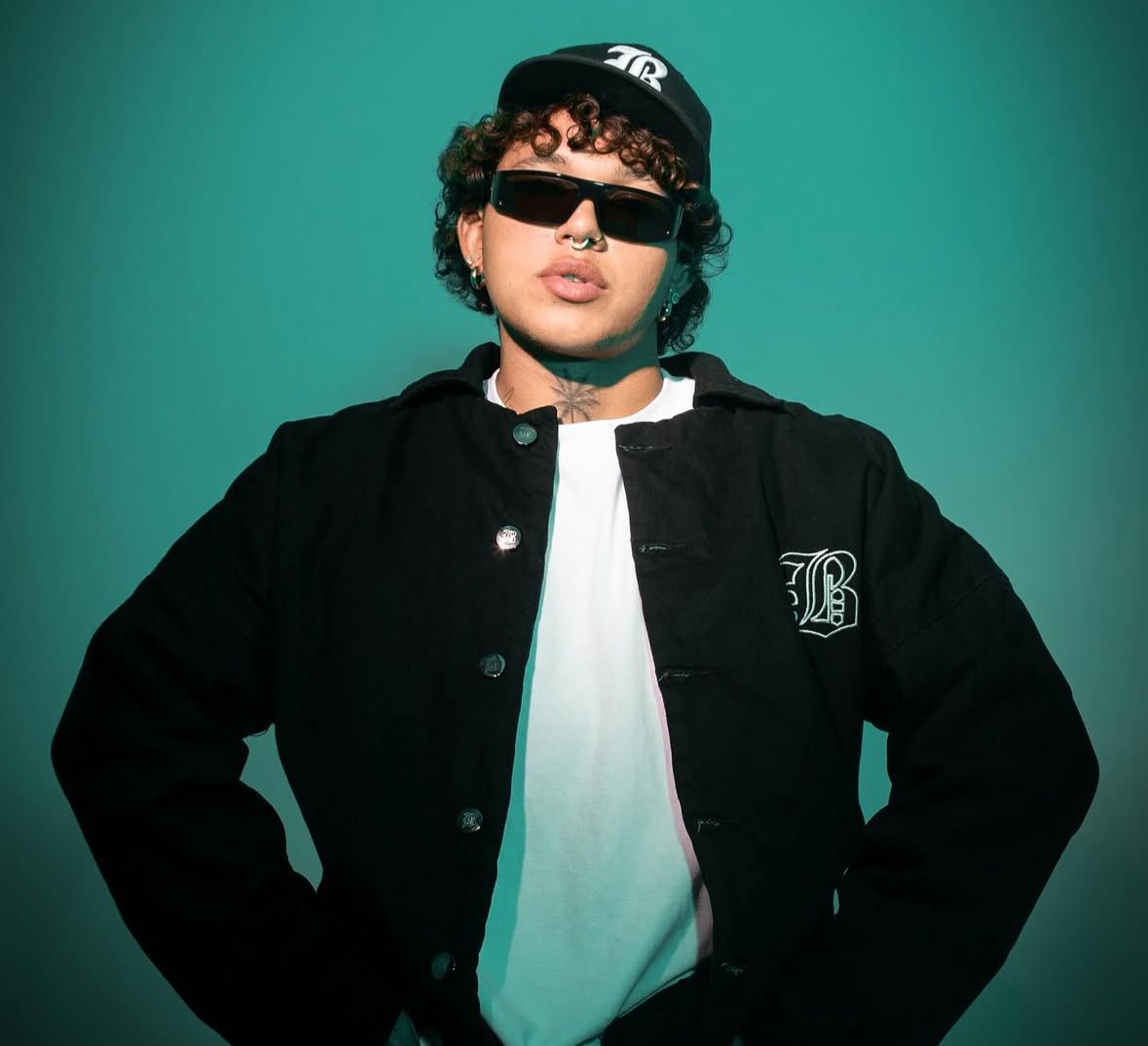
The dark jacket photograph here is a studio view, separate from the close look at his forearm. It gives a sense of his everyday public styling: soft curls under the cap, jewelry and a roomy silhouette. There’s no need to turn every visible accessory into a clue. Sometimes the useful thing a photograph does is let you see how a person puts the whole look together.
A sound built for moving
Sony Music describes Beéle’s music through a mixture of urban and Afro-Caribbean influences, including reggae and dancehall. His breakout song Loco arrived in 2019, before the much larger platform that came with his debut album. That earlier release is a better starting point for his career than assuming everything began with a recent viral chorus.
Listening across the songs also makes a single neat genre label feel a little restrictive. The attraction is often in the way an easy vocal line sits over a beat that keeps pushing forward. You can enjoy the lightness without treating the music as something disposable. A relaxed delivery still depends on choices about timing, melody and what to leave out.
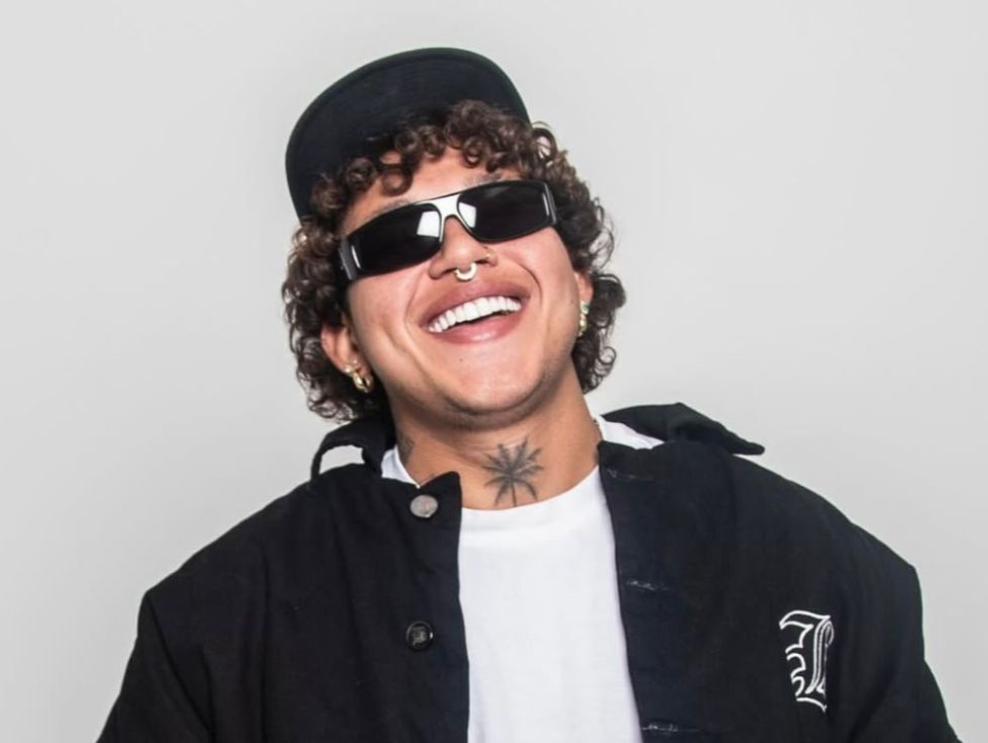
The smiling photograph captures a different pose from the straight-on jacket shot. His head is tilted, the backdrop changes and the expression opens up the whole frame. It’s a small difference in mood, but a real one. The same clothes can feel quite different when the person wearing them stops holding a neutral expression. That easygoing side suits the pleasure he describes taking in his music.
Talking through the songs
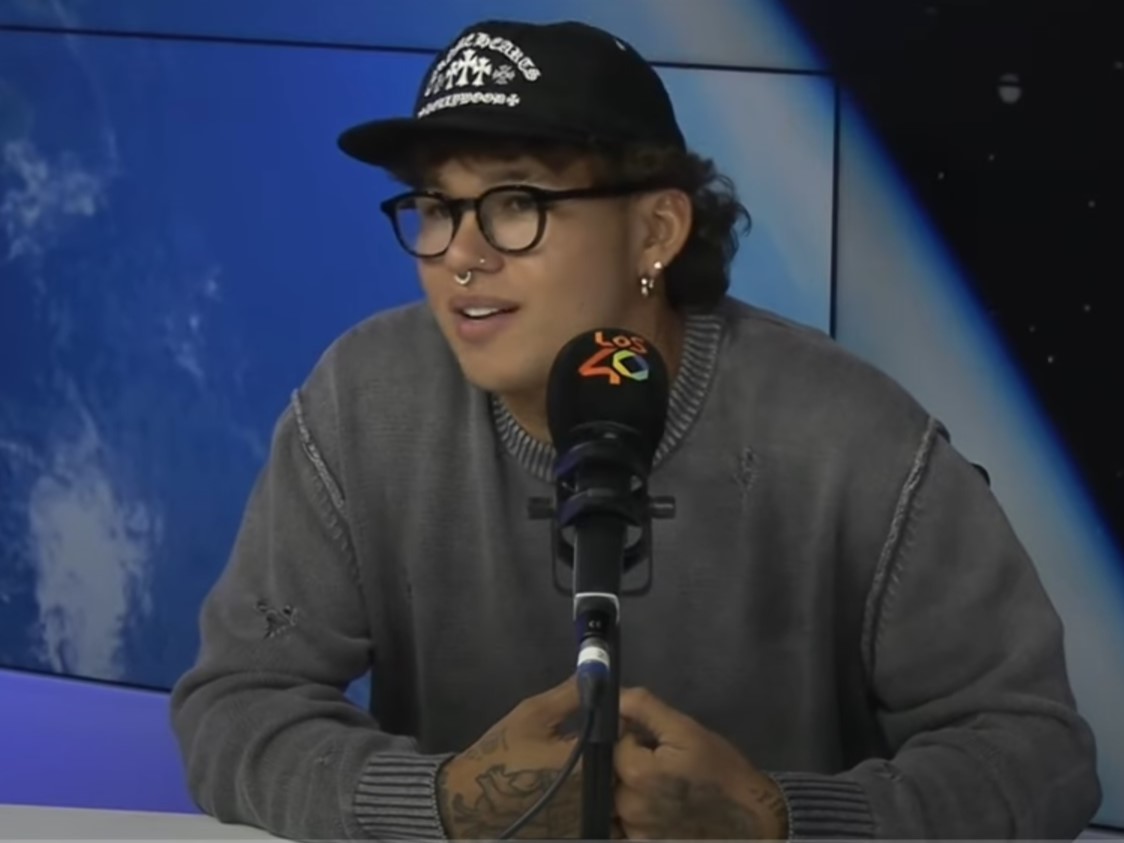
In his April 2025 LOS40 Global Show appearance with Tony Aguilar, Beéle talked about Sobelove, his musical relationships and the public response to his songs. The conversation put his speaking voice alongside the more polished version people know through recordings. You get the pauses, excitement and little changes in emphasis that a finished single naturally leaves out.
He discussed Ovy on the Drums as a friend as well as a creative collaborator. The appeal of that account is how unforced the sessions sounded: spending time together and making music didn’t need to be completely separate activities. That doesn’t tell us how every record was made, but it does explain something about the atmosphere he valued in that partnership.
The radio photograph belongs in that setting. Beéle is seated at the microphone in glasses, a cap and a loose gray sweater. The clothes are quieter than a stage outfit, and his attention is on the conversation. It’s another part of the same public personality, with the performance volume turned down. Watching an interview is often the easiest way to hear where a singer places the emphasis when he gets to explain himself.
The scale of a live performance
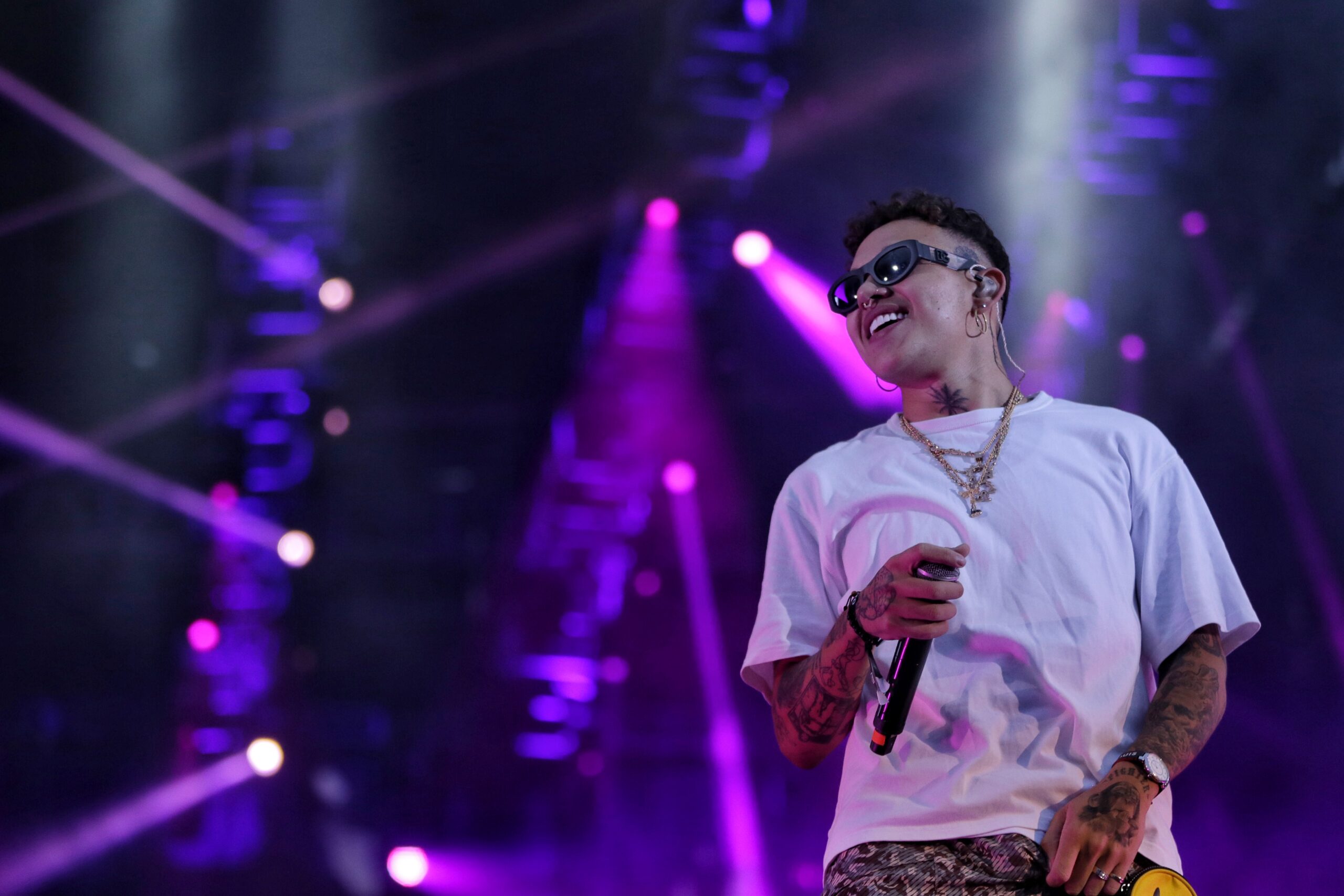
A concert photograph changes the proportions again. In the purple-lit performance view, Beéle wears a white T-shirt and sunglasses, with a microphone in one hand. The lighting fills far more of the frame than the clothes do. He’s smiling, and the open space around him makes the scene feel larger than the close studio pictures.
That difference is useful when looking at any musician’s personal style. A detail that dominates a tightly framed portrait may barely register across a venue. Clothing needs to read at a distance, gestures become broader and a face is often seen under colored light. A still photograph catches one instant inside all that movement. It can give you a mood without reproducing the experience of being there.
Vanguardia used this performance photograph in its coverage of his Borondo Tour. It’s a clear view of him performing, rather than a close study of any individual piece of body art. What stands out is the balance between a fairly simple outfit and a big, colorful setting. He doesn’t need an elaborate costume for the stage image to have its own character.
Borondo gave the music more room
Borondo, his first studio album, arrived in May 2025. Rolling Stone described a 26-song release with guests including Marc Anthony and Carla Morrison. That length gave listeners a wider introduction than one hit could offer, with room for different voices and different kinds of songs alongside the material already circulating online.
In his Billboard interview, Beéle pushed against the idea that a quickly completed record had appeared out of nowhere. The work drew on years of experience and listening. It’s a sensible distinction: the stretch when songs are recorded isn’t the whole period during which someone learns what they want to make. A debut can arrive relatively quickly while still carrying a much longer history behind it.
That longer view suits him. His music, appearance and collection of tattoos don’t all belong to a single moment. An old portrait, a newer interview and a live photograph each catch a different slice. You can appreciate those changes without forcing them into one grand explanation, or assuming that every new choice cancels out an earlier one.
Hear him explain it himself
For the tattoos, the clearest place to begin is still the visible work and the explanations Beéle has chosen to give. The moon sequence offers a strong bit of visual repetition; the smiley has a straightforward personal association; the Shaki lettering records a specific moment with another musician. Those are different kinds of choices, and they don’t have to share one overarching meaning.
His LOS40 conversation below is about the music rather than a tattoo tour. It’s a good companion to the photographs because you can hear the person behind them talking through his songs, friendships and creative interests in his own voice.