
Kofi Kingston’s tattoos can be hard to catch during a match, but the close-up photos show how the designs fit together. There’s a pair of wings across his upper back, symbols down the spine, an armband, and newer ink on his lower leg. The pieces give his look a sense of motion without covering him in one unbroken mass of ink.
The back is broad and symmetrical; the spine marks draw the eye down the middle. The armband and leg tattoo break up those larger shapes. Kingston has also talked about the cultural meaning of the symbols on his back, so they aren’t there only to make a dramatic picture from a distance.
Here’s a closer look at the main designs, their placement, and the way they sit alongside one another.
Kofi Kingston’s winged back tattoo creates the main shape
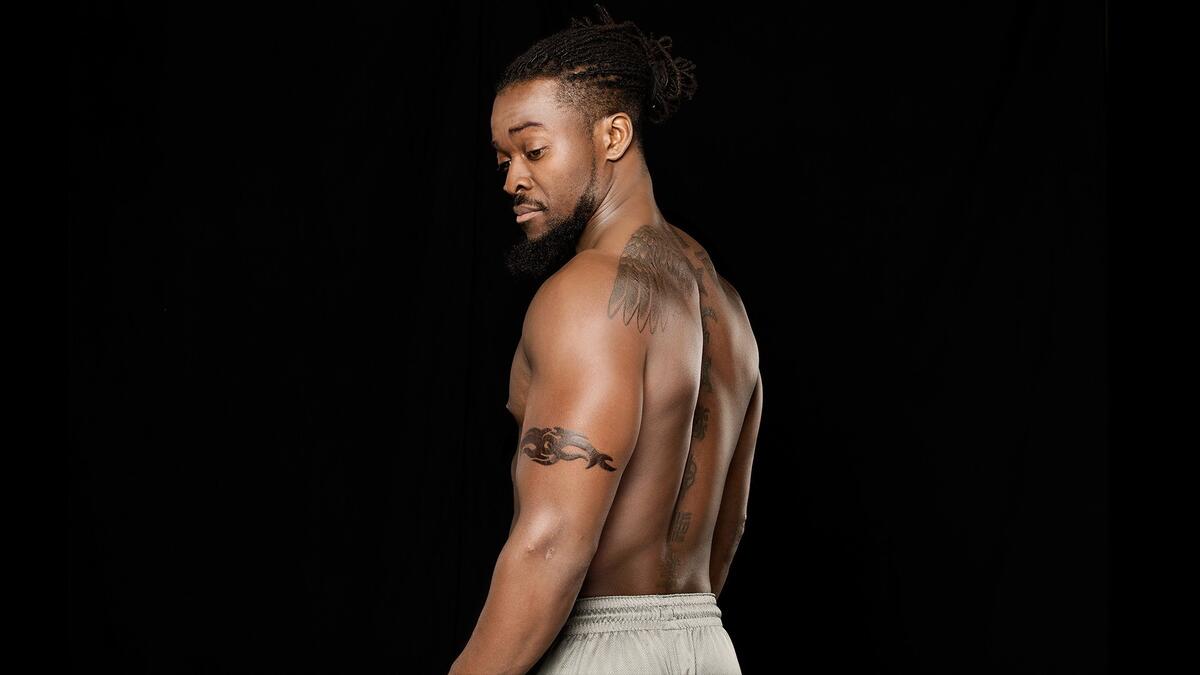
The pair of wings across Kingston’s upper back gives the collection its widest shape. Feathers spread from the center toward his shoulders, following the line of his frame. The design changes with the angle: from the side you see one wing’s edge; from behind, the symmetry comes into view.
The wings use shading instead of a single flat black fill. Feather lines and softer shifts between light and dark keep the image detailed, and the design moves with his back. When Kingston raises his arms or leaps, the wings seem to open with him.
Wings are a familiar tattoo subject, but the placement gives this piece its own shape. The spine symbols begin at the center, so the wings frame the top of a larger design instead of sitting apart from it.
Plan a large back tattoo around the body’s natural lines. The shoulders, spine, and shoulder blades already give the artist a structure to work with. A design can follow those landmarks rather than cover them up.
The spine symbols turn a back tattoo into a vertical story
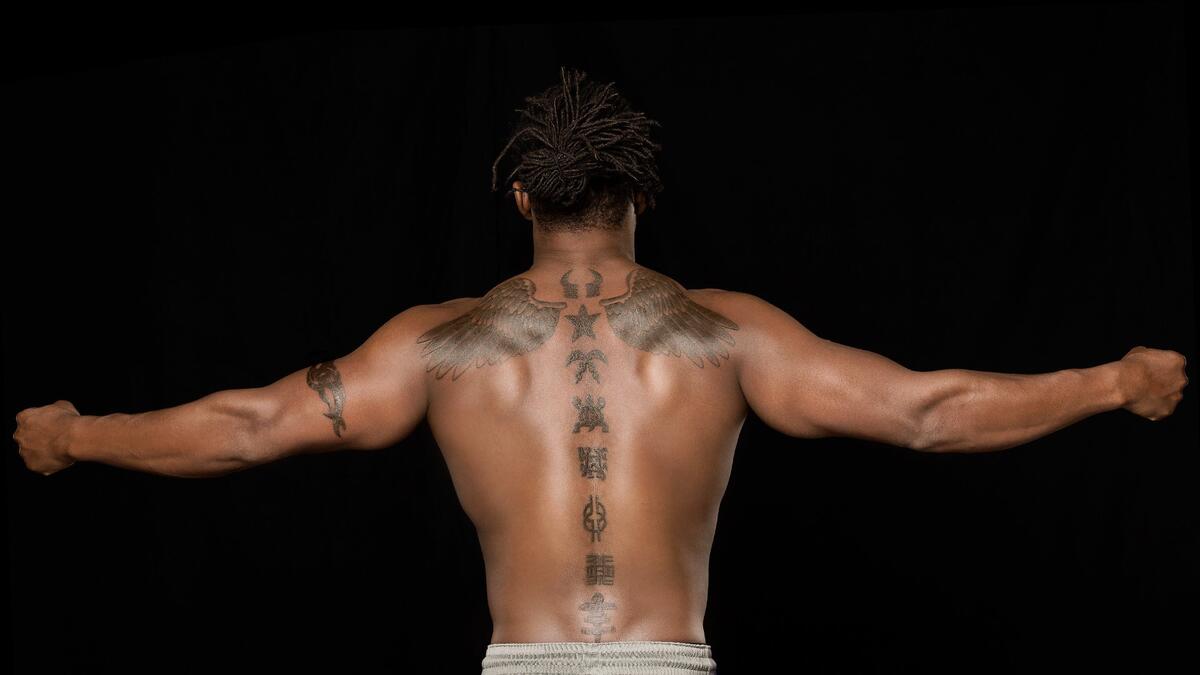
A row of symbols runs down the center of Kingston’s back, giving the area a different rhythm from the wings. Your eye starts near the neck, pauses on each mark, and continues toward the lower back.
The symbols also carry cultural meaning. During his Superstar Ink appearance, Kingston discussed their significance and said tattoos helped bring out his rebellious side when he was younger. That context makes them more than decorative shapes filling an open space.
Each mark has room around it, so the symbols remain distinct. If they were packed together, the line could become harder to read over time. Here, the spacing lets each one stand on its own while keeping the full row connected.
A vertical tattoo can feel connected without being one long image. A sequence of smaller symbols can create the same downward movement when the placement is consistent and the marks share a visual weight.
Kofi’s close-up back work shows the detail inside the ink
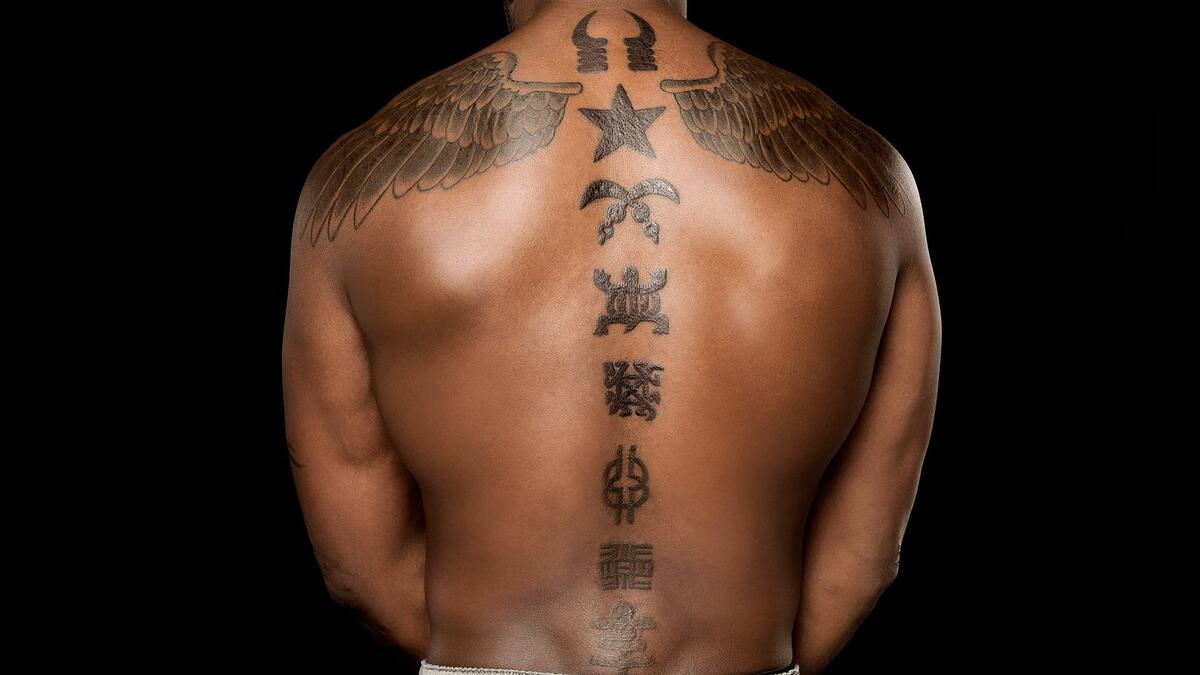
The closer view shows how the wings and spine designs meet. The feathers angle toward the symbols in the middle, so the two areas feel connected rather than like separate tattoos placed side by side.
Black-and-gray shading suits the design. Clear outlines keep the shapes legible, while softer gray areas stop the back from looking harsh. The overall effect is clean and athletic, with enough small detail to make the tattoo personal.
A close-up lets you see choices that disappear in a full-body photo: where feather tips overlap, how much dark shading is used, and which areas of skin are left open. Those details give the back piece its depth.
For a large symmetrical design, check it from both near and far. The outline should read across a room, and the smaller decisions should hold up when someone looks closer. Kingston’s back tattoo does both.
The arm band tattoo keeps the collection from feeling too symmetrical

The armband is smaller than the back piece, but it gives the collection another direction. It curves around the upper arm, adding a horizontal line against the vertical symbols down the spine.
That change in direction keeps the tattoos from feeling too rigid. The wings spread outward, the symbols run down, and the band wraps around. Each one uses the body’s shape differently.
An armband can stay clear without taking up much space. Strong outlines and a simple repeating pattern are usually easier to read than tiny details crowded into a narrow strip. It should look considered from each angle, not like a line that stops where a sleeve might cover it.
If you’re adding tattoos gradually, a band can stand on its own and still echo lines elsewhere in your collection. It doesn’t need to match every piece; a shared rhythm is enough.
The new leg tattoo adds a sharper, more personal accent
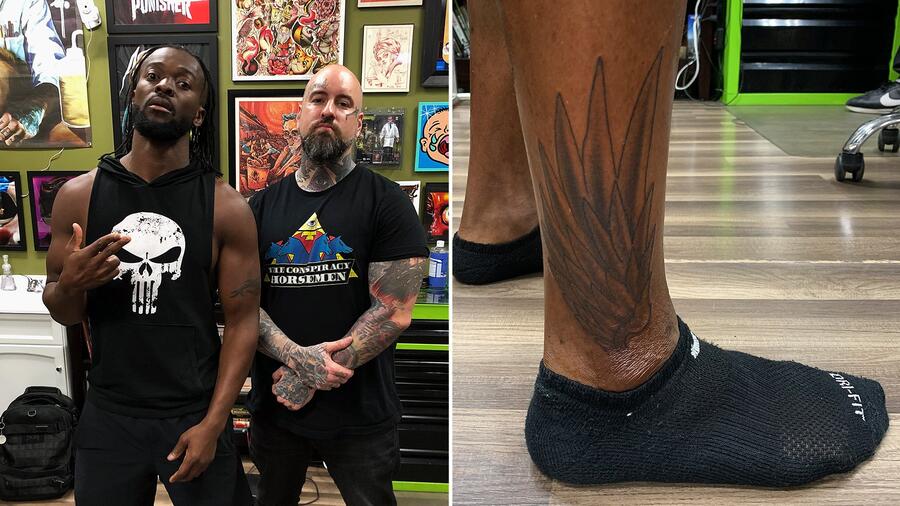
The newer tattoo on Kingston’s lower leg looks different from the older back work. It’s darker and more pointed, with long shapes that follow the ankle and calf. The design is more compact than the wings, but the lines still give it lift and direction.
The placement changes when the tattoo comes into view. A back piece is usually seen when the wearer turns around; a leg design shows during movement, especially with shorts, boots, or ring gear. That makes this piece part of his athletic look in a different way.
The session photo shows the design before it’s seen under stage lights or in motion. Its feather-like points and dark center are easy to make out, and the contrast helps it read from a distance.
New ink can fit a collection without repeating the older work. It can keep a related idea, such as movement or wings, while changing the scale and mood. Kingston’s leg tattoo feels like a new direction, not a copy of the back piece.
Why Kofi Kingston’s collection works
The tattoos have distinct shapes and placements. The wings spread across the back, the spine symbols run down the middle, the armband curves around the arm, and the leg tattoo creates another point of focus. Each occupies a different line of the body.
Personal meaning sits alongside the visual choices. Kingston has discussed the cultural significance of the back symbols, and the newer leg work shows that his style continues to change. The stories give the designs context; placement lets them sit together.
If you’re planning several tattoos, start with the story you want to keep, then think about the shape it could take. A larger piece can set the direction, while smaller tattoos can echo its lines or add a different one. The pieces don’t have to match perfectly; they should feel like they belong to you.
Questions readers ask
What tattoos does Kofi Kingston have on his back? He has winged designs across his upper back and a row of symbols down his spine.
What do Kofi Kingston’s spine tattoos mean? He has spoken about their cultural significance and about tattoos bringing out his rebellious side when he was younger.
Does Kofi Kingston have a new leg tattoo? Yes. A newer lower-leg design uses dark, pointed shapes and adds a different accent to the older back work.
Are Kofi Kingston’s tattoos all black and grey? The close-ups show mostly black-and-gray shading and linework.
What is the main idea behind Kofi Kingston’s tattoo style? The collection combines personal symbols with varied placements: wings, a vertical line of marks, and a band that wraps around the arm.
Kingston’s collection pairs a striking back piece with symbols that carry meaning, plus a newer leg tattoo that takes the design in another direction. The cultural context and the way the pieces follow his body are what make the set worth a closer look.