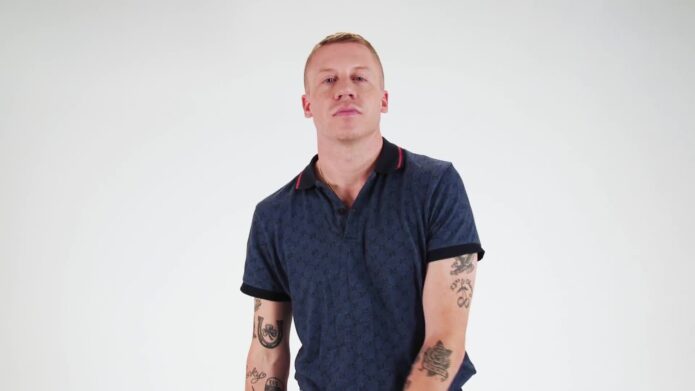
Macklemore’s collection is easier to follow when it is treated as a timeline of choices rather than a catalogue of symbols. He waited until his thirties to start, then went from a small clover on one finger to a crowded mix of American traditional animals, lettering, portraits and family tributes. In GQ’s Tattoo Tour, he explains several pieces himself. A separate visual inventory lists additional designs and placements. Where GQ does not confirm a meaning, the description below labels that material as reported rather than turning a guess into Macklemore’s story.
Chest and stomach tattoos, from Sloane’s name to the leopard
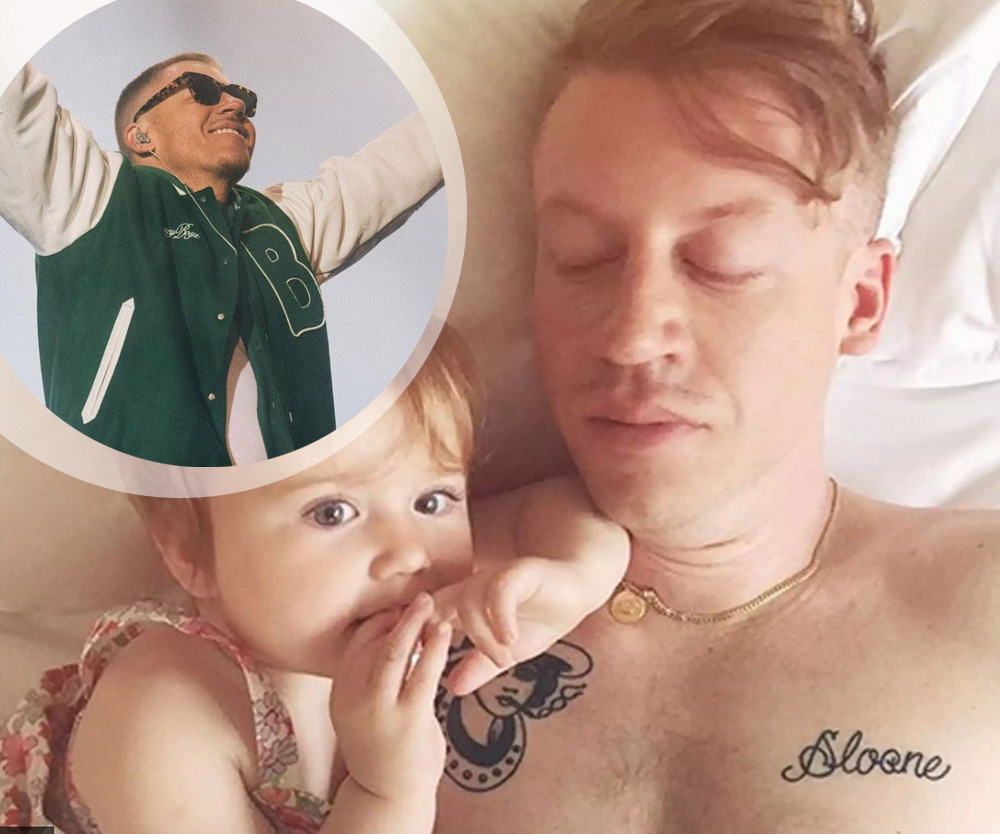
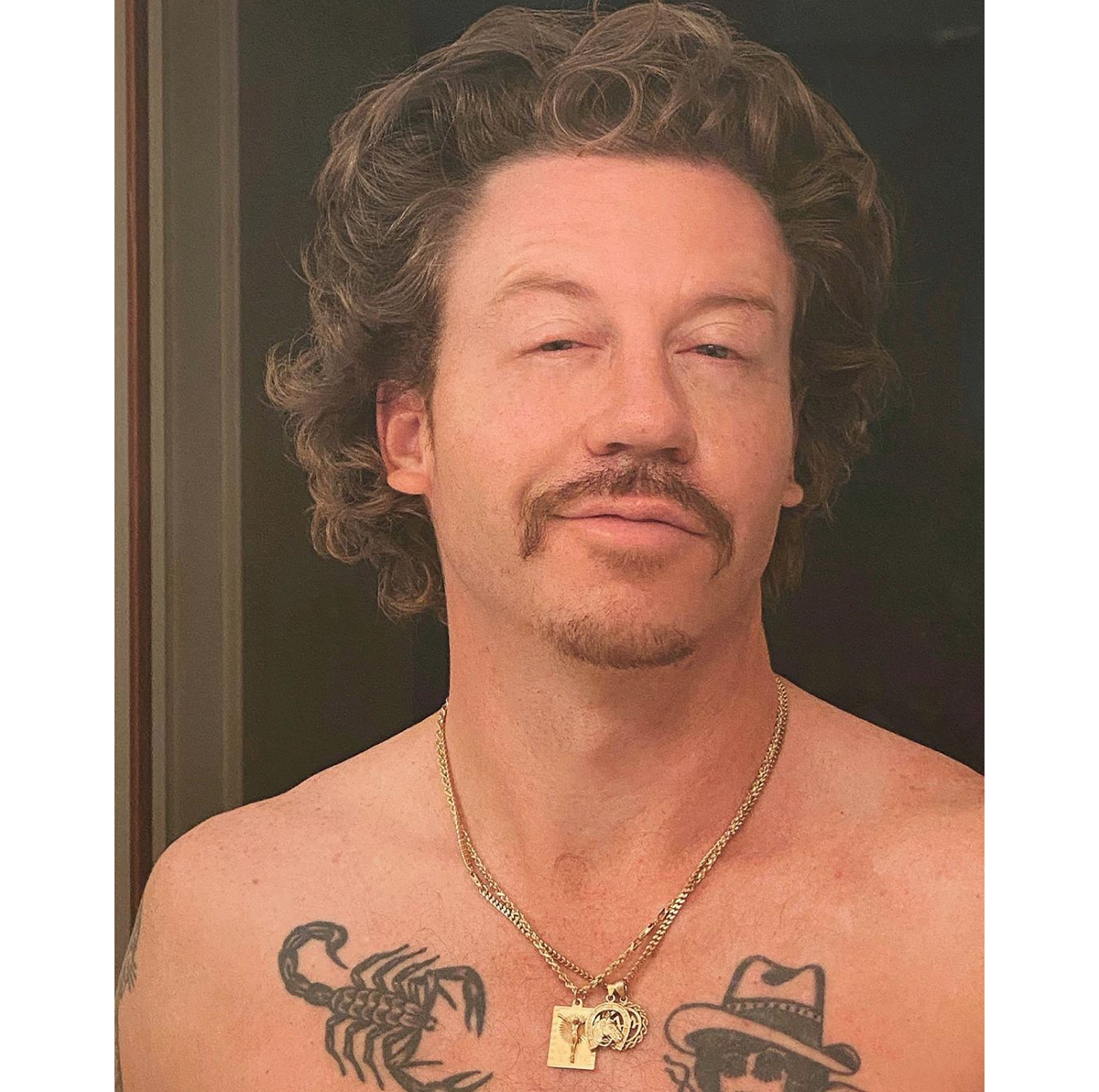
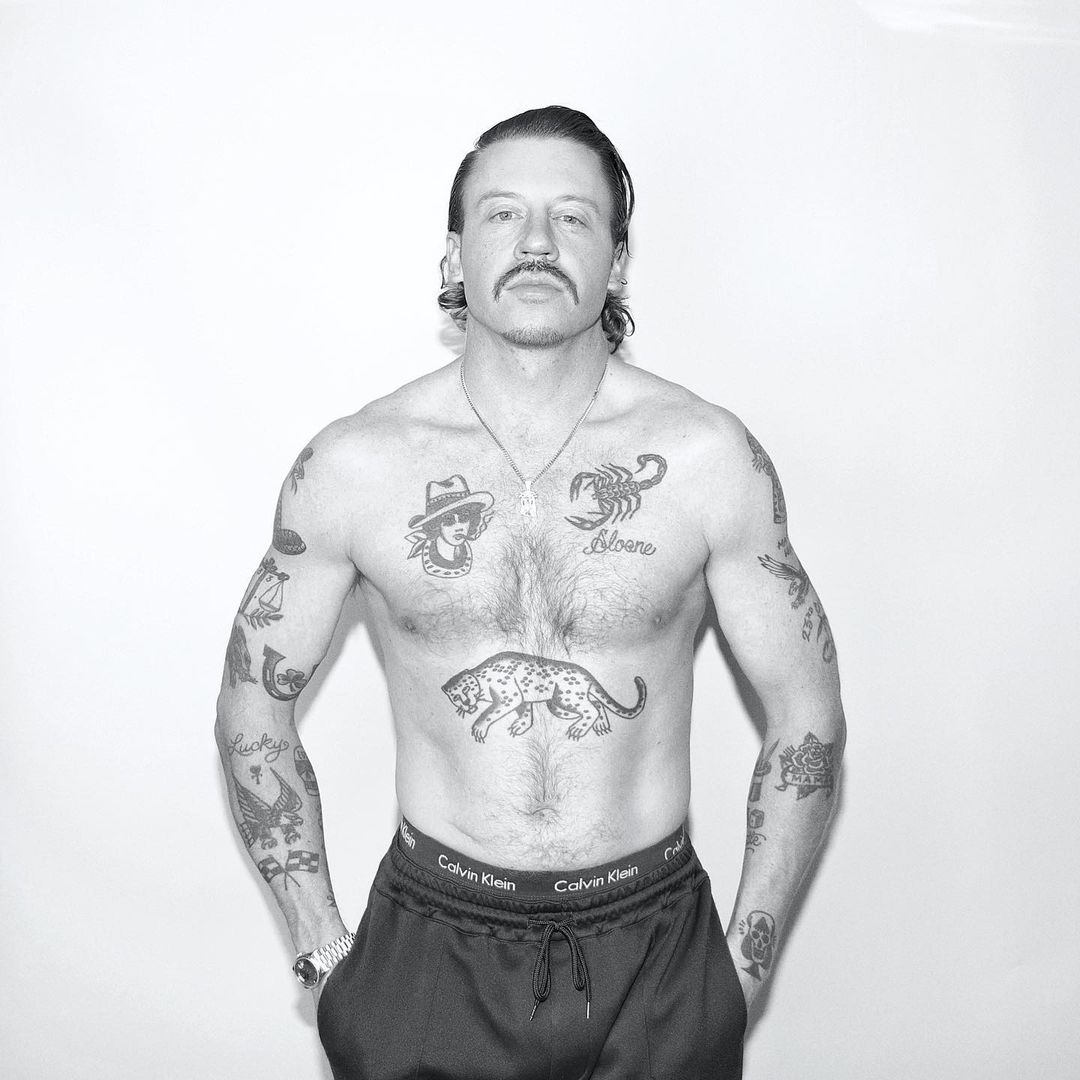
The name Sloane is one of the most legible family references in the collection. Macklemore points to his daughter’s name in the GQ video; the photograph above shows it written across his chest in script. The lettering is a simple design, but the scale and placement make it a prominent dedication rather than a hidden detail. It is also a useful example of why a close photograph matters: in a full-body shot, the name can shrink to a few dark strokes.
Beside that lettering, the visual inventory identifies a scorpion on the left side of his chest. It sits near the name and gives the area a different visual weight: the script is open and readable, while the scorpion is a compact, illustrated motif. GQ does not give the scorpion a personal meaning, so there is no reason to attach one. Its placement and neighboring lettering are clear enough to describe without inventing a symbolic explanation.
On the other side of his chest is the woman smoking a cigarette Macklemore points out in the GQ tour. The secondary visual catalogue describes her wearing a hat and scarf. That makes this piece a small portrait scene rather than plain lettering: the cigarette and clothing give the face its character, while the black outlines keep it in the traditional illustrative style he says he liked. He does not explain who the woman represents, so the design should not be labelled a portrait of a particular person.
The leopard across his abdomen is the clearest example of a meaning arriving after the design. Macklemore says he chose it because it looked tough, then later associated it with “don’t play with death, don’t do drugs.” That line is his own retrospective reading, not a universal meaning of leopard tattoos. In the photograph, the animal is broad enough to read across the stomach; the body placement also makes it less visible in ordinary dressed photographs than the chest lettering.
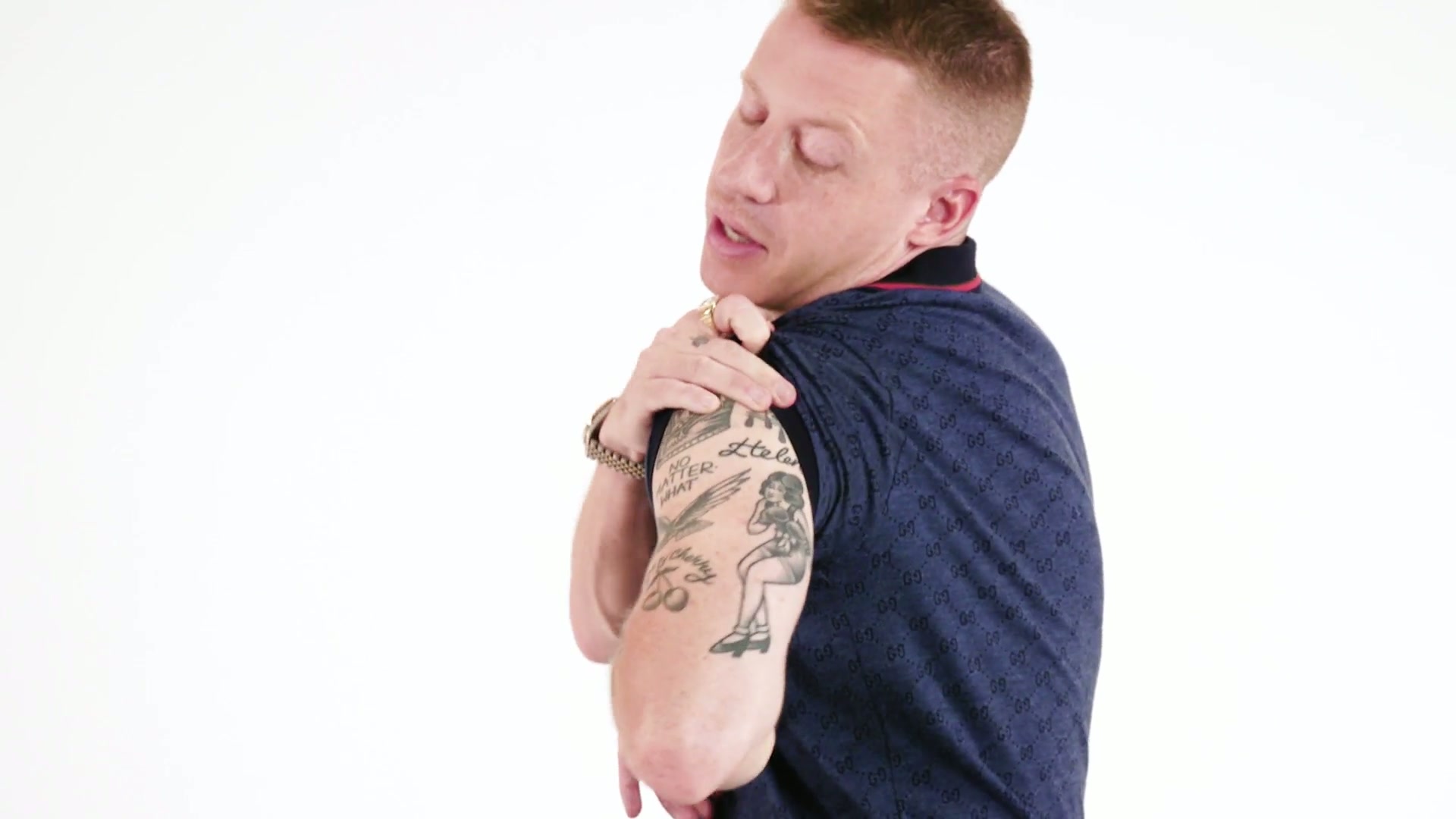
A visual catalogue also records a tiger, an eagle and the words “NO MATTER WHAT” on the left shoulder. The phrase appears between the two animal designs in that account. The arrangement gives the shoulder a stacked composition: a tiger’s face above, an eagle below, and a short line of text tying the space together. This is a reported inventory detail rather than a meaning Macklemore explains in the GQ interview, so the phrase can be quoted and the layout described, but its private significance should remain open.
Arm, wrist and hand pieces carry the stories he has told
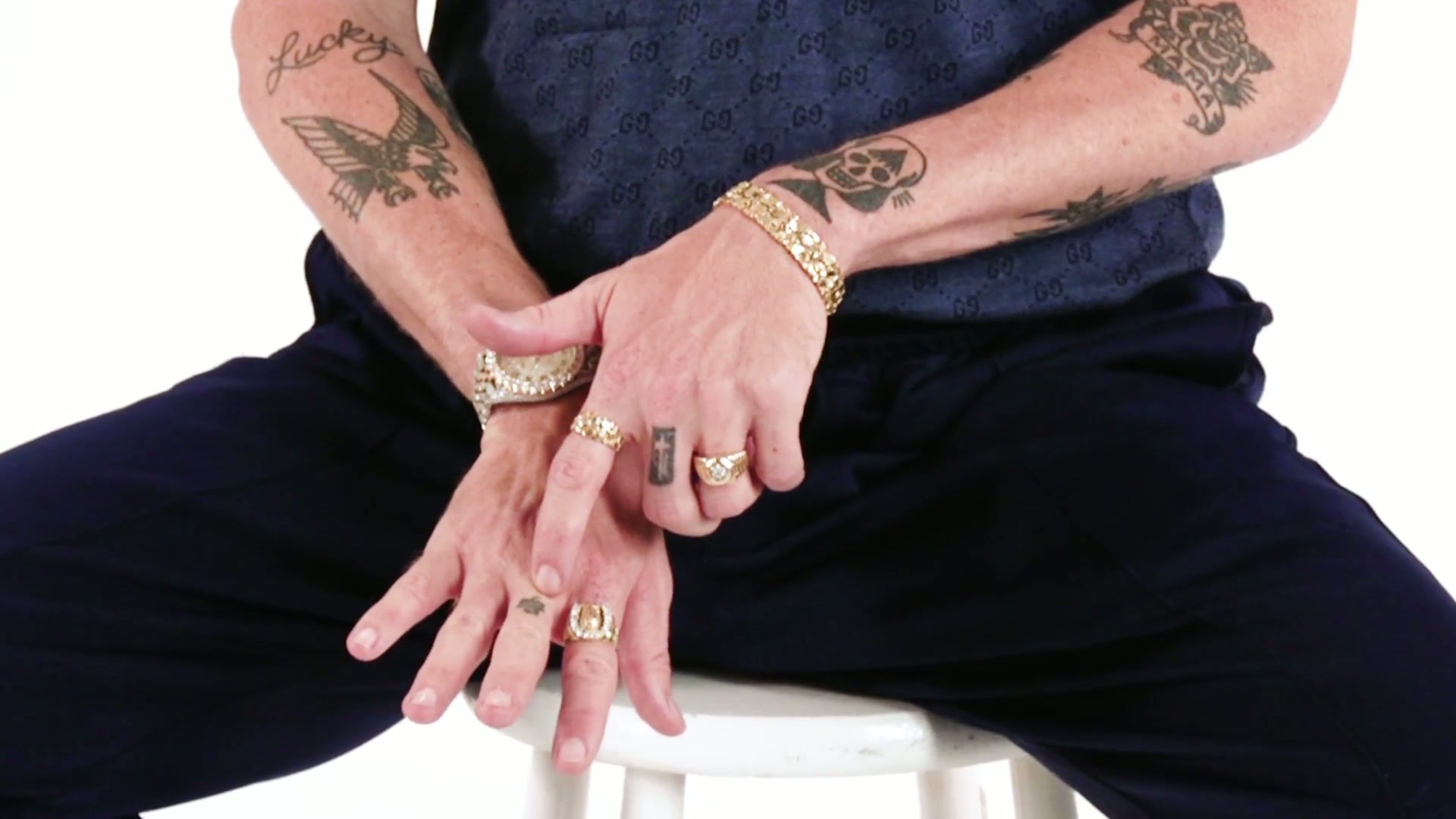
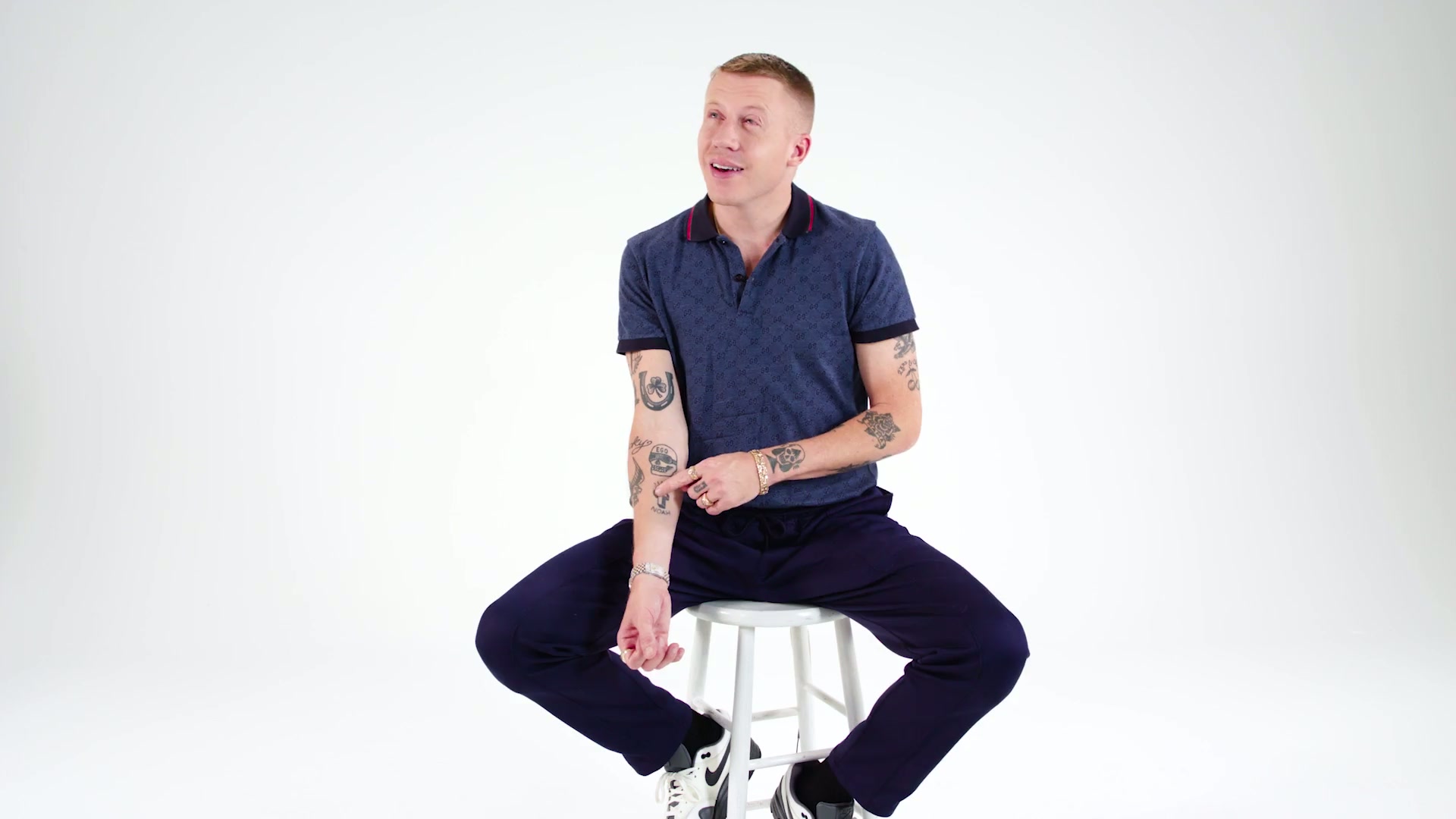
There is more first-person detail for the arms than for any other part of the collection. Macklemore says he had long liked “American traditional” tattoos and wanted to keep that style when he began. He also says he got roughly fifteen tattoos while on tour, often waking up intending to get one and returning with several. That pace helps explain why the arms look less like one planned sleeve and more like separate pictures added in quick succession.
The first tattoo was a three-leaf clover on a finger. He got it when Ryan Lewis was going to be tattooed, and joked that the clover was off-centre. Macklemore connects the choice to his Irish background; he does not frame it as a profound emblem. Its small scale and imperfect placement are part of the story he tells, and he later says he stopped obsessing over the result. The visual catalogue also lists a clover beside a horseshoe on his right bicep; that is a separate reported design, and no first-person meaning for it is documented.
The flower with a “MAMA” banner is one of the tattoos whose personal context is unusually clear. Macklemore says the flower-and-word design was intended for both his mother and his wife, Tricia, whom he jokingly calls his child’s mama. He chose that shared wording rather than tattooing his wife’s name, which he says he considers a bad idea for a marriage. The GQ account gives the explanation; it does not identify a separate, exclusive meaning for the flower itself.
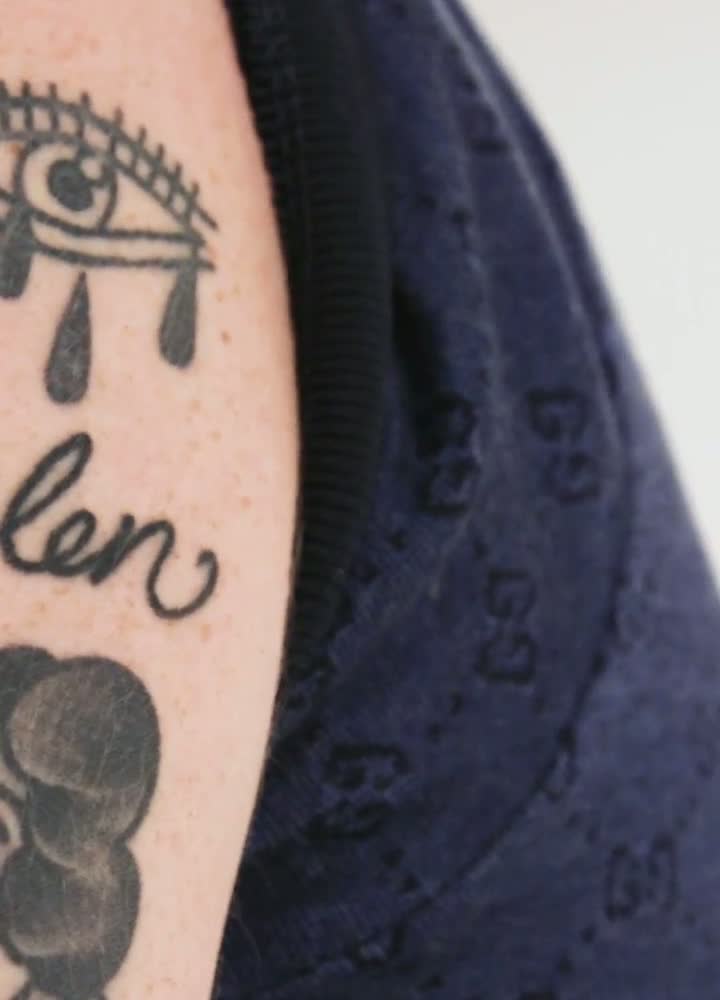
The Helen tattoo came out of the day he spent with his grandmother for the “Glorious” video. Macklemore says Helen picked the font and he had the tattoo done while they were together. The GQ conversation establishes the family connection and her role in choosing the lettering. A secondary tattoo catalogue also describes a woman’s portrait labelled Helen, but its description does not make clear whether this is the same piece or a separate portrait. The confirmed story is Helen’s lettering. The separate portrait shown below is included as a reported visual entry, not as proof that the portrait is Helen.
The Noah tribute is another first-person story. Macklemore describes Noah as a close childhood friend, painter and community activist who died, and says the tattoo keeps his friend’s presence in view. The secondary inventory associates the memorial with a cross and the name Noah on the inner right forearm, alongside a skull marked “EGO.” GQ confirms the tribute and its meaning, but does not verbally identify every element in that cluster. The image can show placement and design; his account is what establishes the memorial.
“23rd & Cherry” is the most specific recovery reference in his interview. Macklemore identifies it as a Seattle street and as the location of the fellowship hall where he got sober. He calls it home and says it helps keep him sober. A tattoo catalogue places cherry imagery and the words on the upper arm; GQ supplies the personal explanation. The street name therefore works as both a literal place reference and a reminder of a turning point he has chosen to keep close.
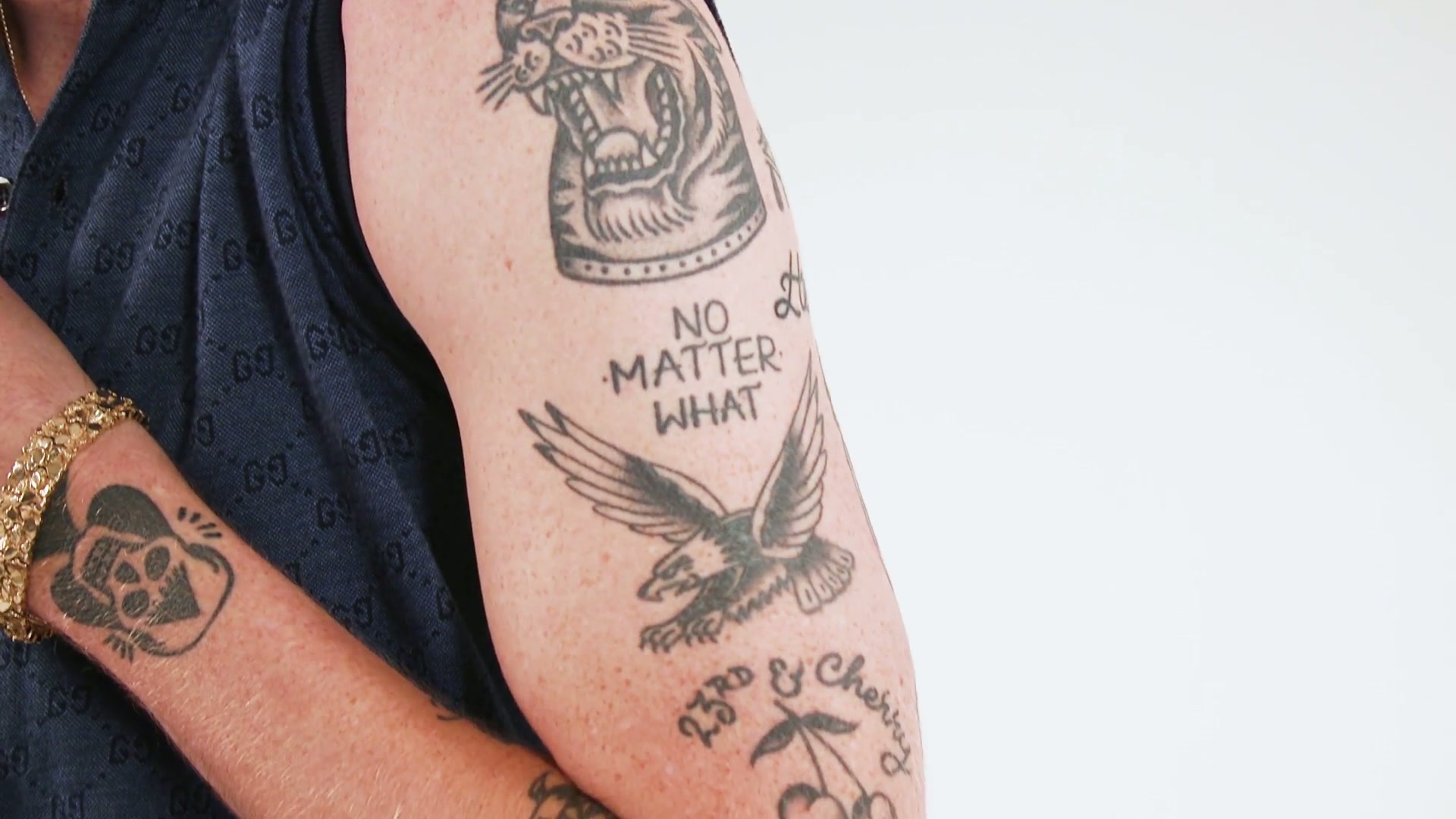
The remaining arm designs are more firmly catalogued visually than explained verbally. The secondary inventory lists a parrot on the left forearm; a skull pierced by a spade on the left wrist; and a small cross inside a square on the left middle finger. These sit among the traditional-style pictures and small marks rather than forming one continuous sleeve. GQ’s later warning about death and drugs follows his leopard story, so it should not be reassigned to the skull merely because the image seems to invite that reading.
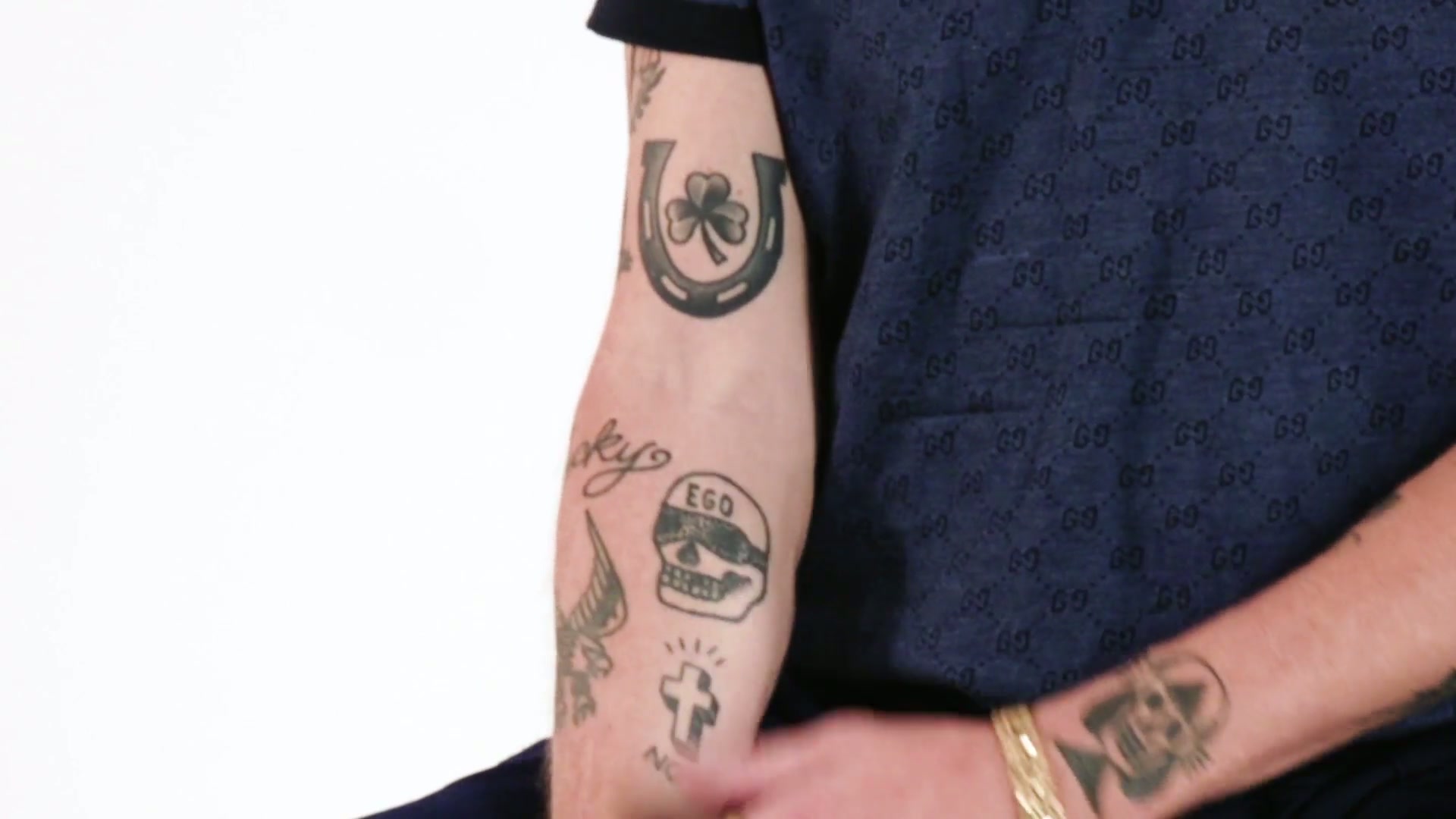
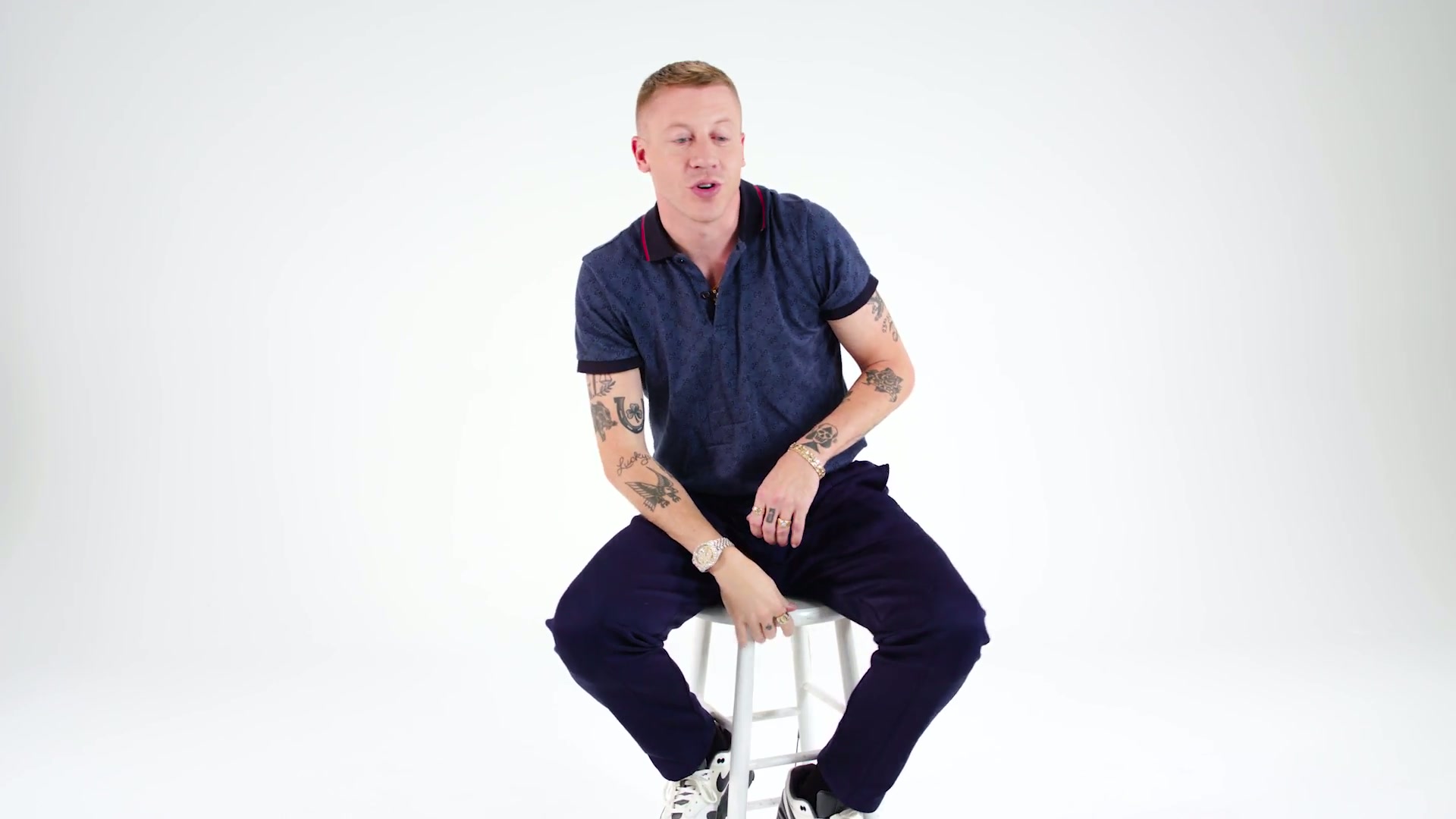
On the right arm, the same visual list identifies a woman on the outer forearm and checkered flags near the wrist, plus an eagle with a small heart and the word “Lucky” above it. It also records a horseshoe beside a three-leaf clover on the right bicep, and a serpent above scales, the number 33 and branches on the right shoulder. Those are concrete descriptions of what the catalogue says is visible; it does not provide a dependable first-person explanation for each motif.
Another reported grouping pairs dice with the word “Seattle” on the inner left forearm. That inventory calls it a hometown tribute, but the GQ interview’s clearly stated recovery story is about “23rd & Cherry,” not necessarily this separate dice design. Keeping those two references distinct matters: one can be a city marker while the other carries the more specific story Macklemore tells about sobriety.
The list also labels a right-upper-arm design as a rat, though its own accompanying description is vague. Without a sufficiently clear image or Macklemore’s identification, that label deserves caution rather than a confident explanation. At the lower end of the inventory, it records a shark above the left kneecap. That placement is reported by the visual catalogue, but no meaning for the shark appears in the GQ account.
What holds these tattoos together is not one grand theory. Macklemore has described a stylistic preference, a burst of activity on tour, a first clover he learned to live with, and several pieces connected to family, friendship and recovery. Some designs have a story in his own words; others are simply visible entries in a secondary catalogue. Leaving that difference intact makes the collection more interesting, not less: the tattoos stay specific, and their meanings stay with the person who chose them.