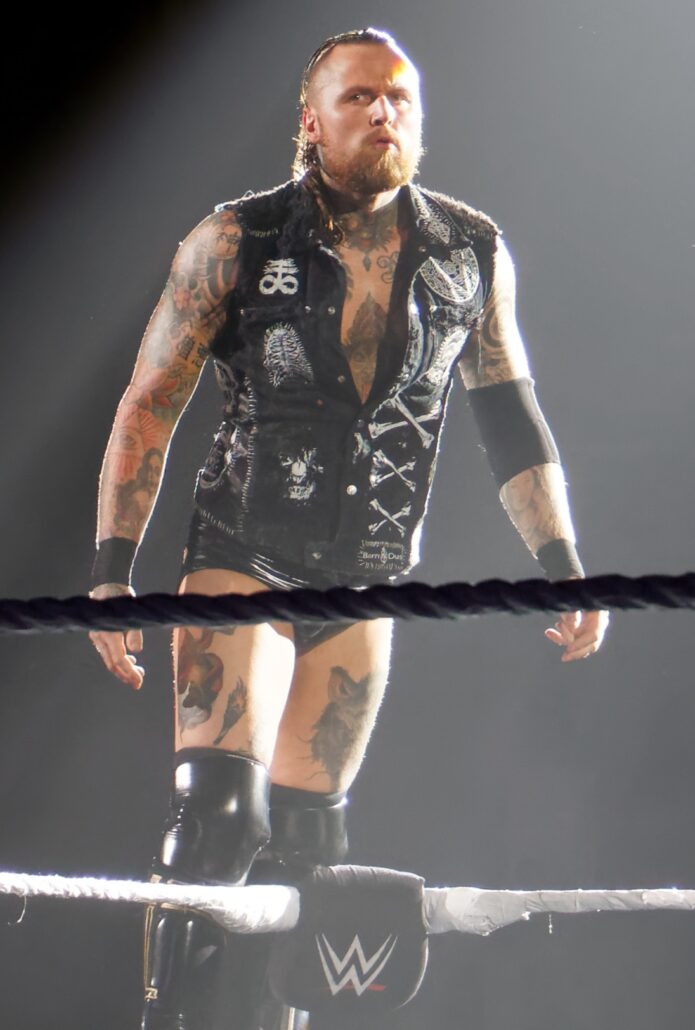
Malakai Black’s tattoos extend well beyond his arms. Wrestling photos show large pieces across his back, chest, shoulders and thighs, with smaller details on his hands. Black also wrestled under the name Aleister Black, so older images use that name for the same person.
The clearest references are the shots where the ink can actually be seen. A distant entrance photo may show who’s in the ring, but it won’t tell you much about tattoo detail. The five images here focus on his arms, chest, back or legs. The featured image is a separate portrait and doesn’t appear again in the article.
Some coverage of Black’s tattoos links them to dark, surreal and mythological ideas. That doesn’t establish the meaning of every symbol, though. Here, I’ll stick to visible placement, colour, scale and style rather than fill in a private story.
Malakai Black’s back piece carries the heaviest coverage

The back is a useful place to start. In this rear view, the tattooing covers most of Black’s upper back and reaches across both shoulders. It takes up far more space than a small mark between the shoulder blades. Dark outlines and lighter gaps break up the larger shapes as they continue toward the arms.
That angle fills in what a front portrait can’t show. Black’s chest and arms are usually more visible in the ring, but the back adds another large area of work. From a distance, the pieces read as a connected field. Closer in, you can make out separate faces, curves and shaded sections.
We can describe the coverage without assigning each figure a meaning. Some tattoo coverage discusses dark, surreal imagery, but this photograph doesn’t establish what every part represents. It does show broad back coverage, substantial shading and artwork that follows the shoulders instead of ending in a neat rectangle.
The chest and legs make the collection feel connected

This front-facing ring photo shows how far the tattoos extend below the neckline. Ink crosses Black’s chest and shoulders, runs down both arms and appears again on his thighs. The pieces vary in scale: some are compact and detailed, while larger dark shapes remain easy to see from across the ring.
The thigh work can disappear in tighter photos of the upper body. Here, the ring gear leaves more of it visible around the thighs and knees. It gives the collection a more complete outline and shows how much a head-and-shoulders portrait leaves out.
Look at how the pieces are placed. The chest anchors the front, the arms hold a dense mix of details and the thighs have their own larger panels. The layout moves from small marks around the hands to bigger forms across the back, torso and legs.
The arm work mixes flowers, symbols and dense shading

This closer ring shot makes the arm work easier to read than a wide entrance photo. Floral forms sit beside dark outlines, small symbols and shading that wraps around the biceps and forearms. There’s a lot on each arm, but the variation in scale keeps it from becoming one solid dark area.
The details shift as Black turns his arm. Larger images stand out on the outer biceps; lines and grey shading are more noticeable inside the arm and farther down the forearm. Smaller marks appear around the hands and wrists when he sits or leans toward the camera.
The ring is still in the frame, but this photo lets you study the ink. The ropes and vest belong to the scene; they don’t obscure the tattoos. That’s a more useful view for detail than a distant entrance shot, where the same work would be hard to distinguish.
Black-and-white photos show how the ink works with his entrance look
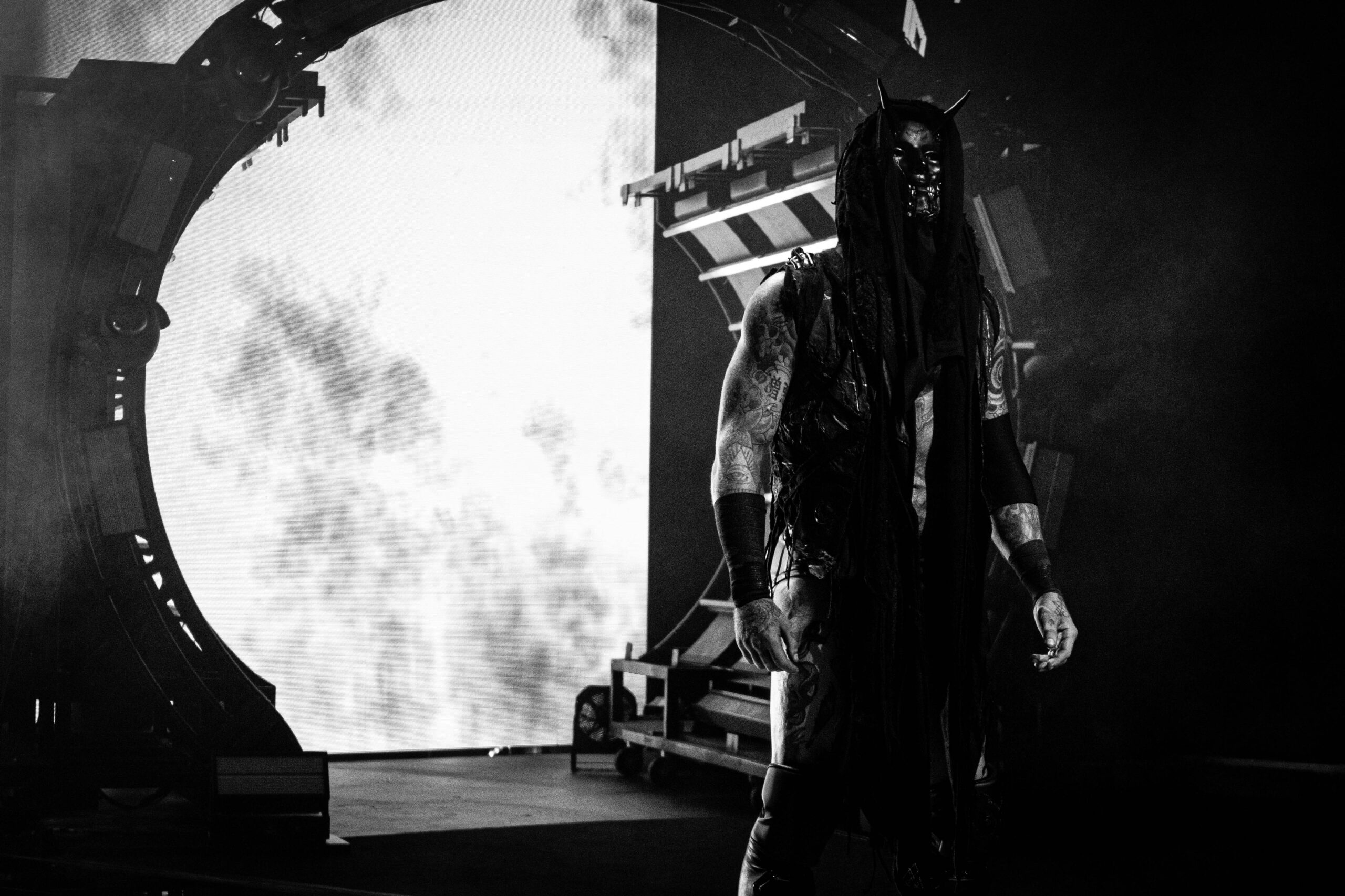
Black’s House of Black entrances often use dark clothing, smoke and low light. In this black-and-white event photo, the tattoos take on a more graphic look. The exposed arms and legs stand apart from the costume, and pale highlights help separate some of the ink from the deeper shadows.
That makes the photo useful for seeing contrast. Dark clothes can hide an arm, but where the skin is exposed, lighter areas and outlines still help define the designs. The tattoos complement the costume; they aren’t the same thing. They remain on Black’s body when the hood, vest or face paint changes between appearances.
Contrast keeps the larger designs visible from a distance. The outlines and shifts in tone hold up under difficult lighting. Anyone planning a large dark tattoo would still need to consider skin tone, spacing and how the ink may age, but these images show why clear edges help.
Older Aleister Black photos reveal the shoulder and thigh layout
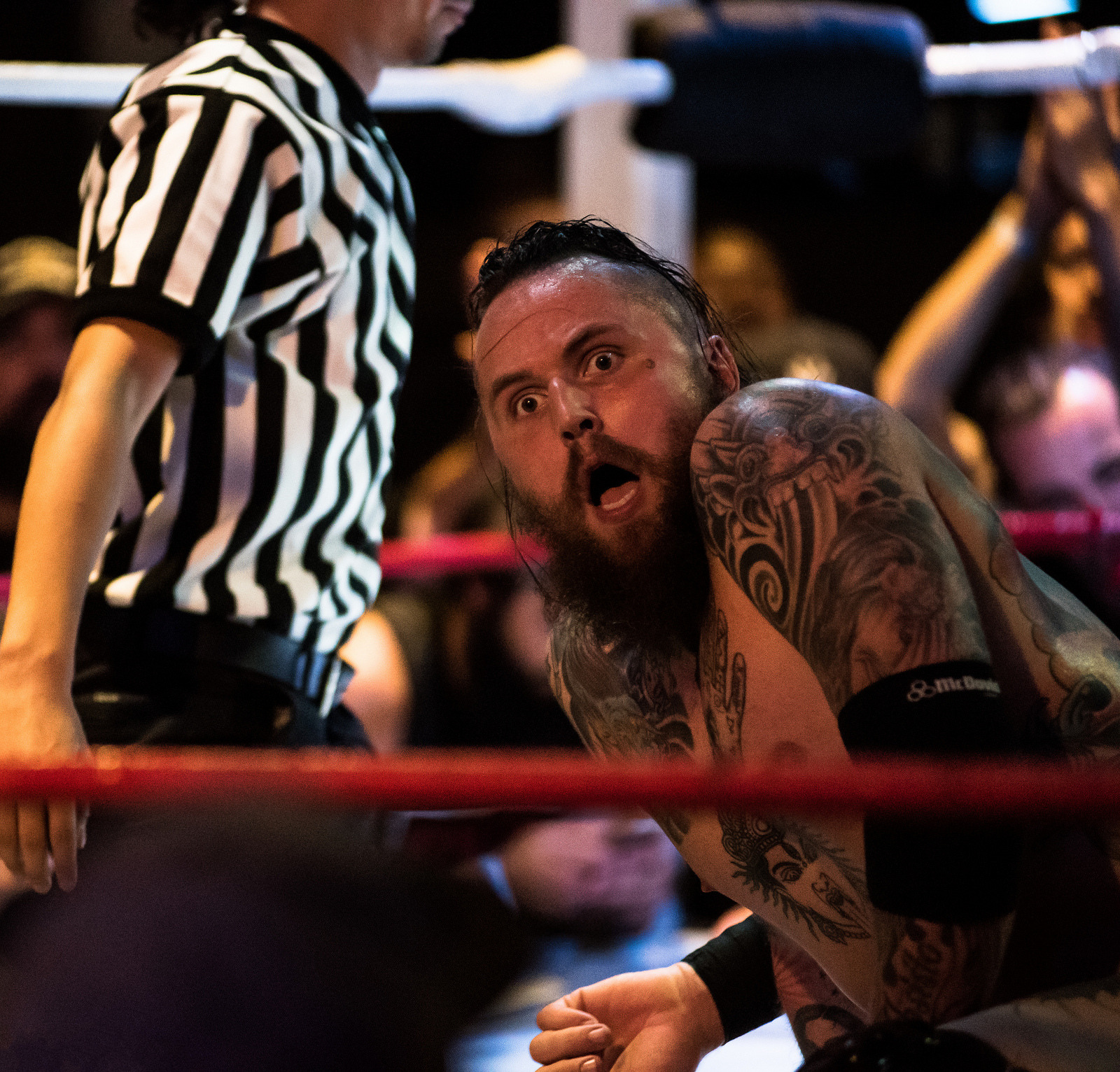
Older photos from Black’s Aleister Black years show plenty of body art before the House of Black presentation. In this action shot, the shoulder and arm work is visible, along with tattoos on the thighs below the trunks. The photo records the layout without later hooded entrance gear covering the same areas.
In this light, the work looks more colourful and open than in some of the later black-and-white images. Larger figures sit beside smaller script and linework. The arm pieces cross the rounded shoulder rather than stopping at the sleeve edge, and the thighs have separate designs of their own.
The older and newer images are useful for comparing placement, not guessing intent. Black’s ring name and presentation changed, but the photographs show the same broad approach: large areas, strong outlines, mixed shading and designs that follow the body.
Across the clearest photos, black and grey form much of the base, with colour in several of the larger pieces. Broad areas cover the back and chest. The arms have the widest mix of small and large marks, including flowers, symbols, faces and shading. The thigh pieces add coverage below the waist.
The placement also has to work in motion. Black’s shoulders roll as he wrestles, his elbows bend and his wrists turn as he grabs an opponent. A piece can look flat in a posed photo, then wrap around the arm in an action shot. Comparing angles makes the layout easier to understand.
Lighting changes the mood, but the basic placement stays put. Bright ring light brings out colour and fine lines. Smoke, shadows and dark clothing make the same tattoos look heavier. Both kinds of photograph help: one brings out detail, the other shows how the designs read from farther away.
Older Aleister Black photos also help separate the body art from the character styling. His name, entrance gear and face paint can change; the tattoos remain on the same shoulders, arms, chest and legs. Those earlier shots are especially useful where a newer hood or vest hides part of the body.
The main zones are distinct. The back piece is broad and dense. Chest and shoulders anchor the front. The arms carry the most varied detail, while separate thigh pieces appear when the ring gear leaves them uncovered. Smaller marks on the hands and neck are easiest to spot in close shots.
For tattoo ideas, the layout offers more than a set of designs to copy. Large pieces need room, especially where the shoulder meets the ribs. Smaller symbols can bridge gaps if they still have space to read when the skin bends. An artist can plan the flow across those surfaces before settling on the final artwork.
The overall look has a dark, surreal feel, but a photo doesn’t need a guessed explanation. A face, flower, geometric mark or shaded figure can be described by what it looks like. If Black hasn’t confirmed a particular meaning, it’s better to leave that part open.
The tattoos are visible even as Black’s wrestling presentation changes. He may appear shirtless or wear a vest, hood and face paint; the ink still sits alongside the character look. That’s one reason brief entrance shots draw the eye, even when they don’t reveal every detail.
The clearest record comes from several views together: the back photograph shows the large rear piece, a front-facing ring shot shows the chest and arms, and a closer pose reveals smaller forearm and hand details. The black-and-white entrance photo shows how the contrast reads on stage, while the older Aleister Black image adds the thighs and shows the coverage over time.
For more real celebrity and wrestler tattoo articles, visit the site’s wrestler tattoo section. Use photos that clearly show the person and the ink, keep the featured portrait separate and describe only what the image supports.
One thought on “Malakai Black Tattoos: Dark Chest, Arm and Back Ink”