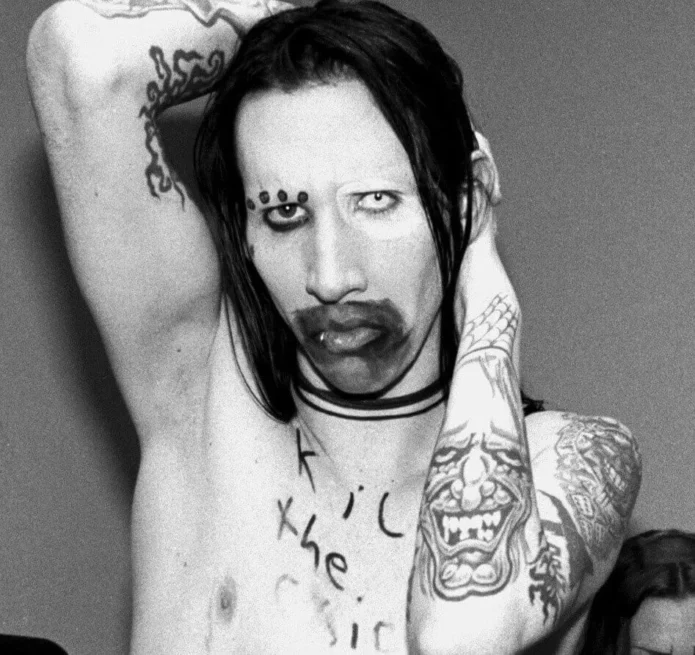
Marilyn Manson’s makeup, costumes and stage lights can dominate a photo. Look past them and there is a lot of permanent ink, especially on his arms. Color, heavy black outlines, skull-like images, lettering and smaller marks run from the upper arms toward the hands. Older shirtless performance photos also show tattoos across the chest and torso.
Photos can show where a symbol sits, but they do not automatically explain why Manson got it or who tattooed it. His public image uses theatrical symbols, and some designs look loaded with meaning. Unless an interview or reliable caption confirms a story, it is safer to describe what the image shows and leave the rest open.
This guide focuses on details visible in portraits and live photos. Some marks are clear; others are hard to identify through costume, shadows and movement. A plain description is more useful than giving an uncertain shape a made-up name.
The colorful arm tattoos carry the strongest visual identity
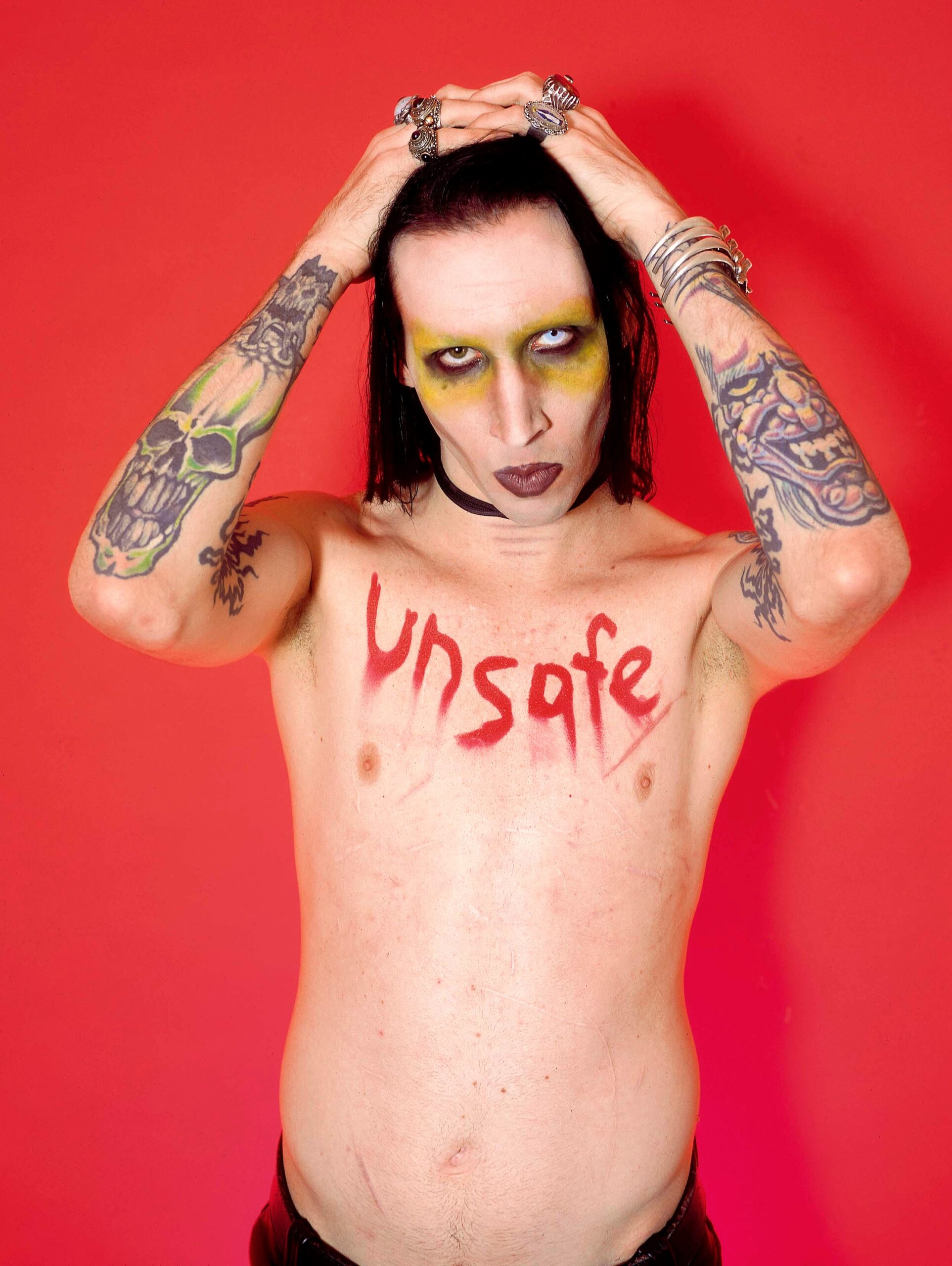
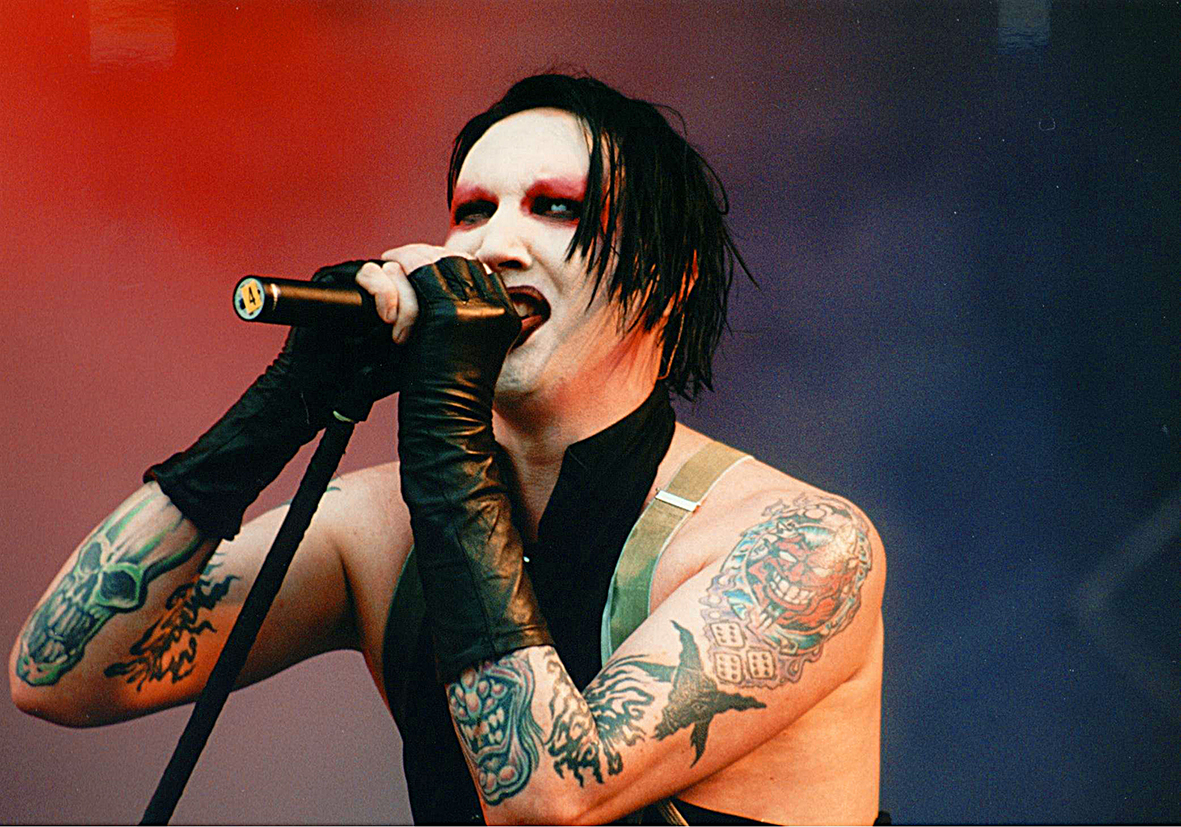
The arms are the clearest place to start. In this portrait, the ink stands out against the red background and pale makeup. Saturated color sits beside dark outlines and smaller marks. The pieces run from shoulder to forearm, but no single theme seems to explain all of them.
The tattoos are dense rather than delicate. Some parts disappear in shadow or beneath a costume, while the larger designs hold their shape as the arm bends. A turned torso also changes how broad the ink looks compared with a straight-on headshot.
It is tempting to give each shape a story, especially with Manson’s theatrical styling. Visually, the collection is built on contrast: bright patches next to black shading, with smaller marks in between. This close portrait shows more of the arm than a stage outfit often does.
The red demon and skull imagery make the arms feel like a gallery
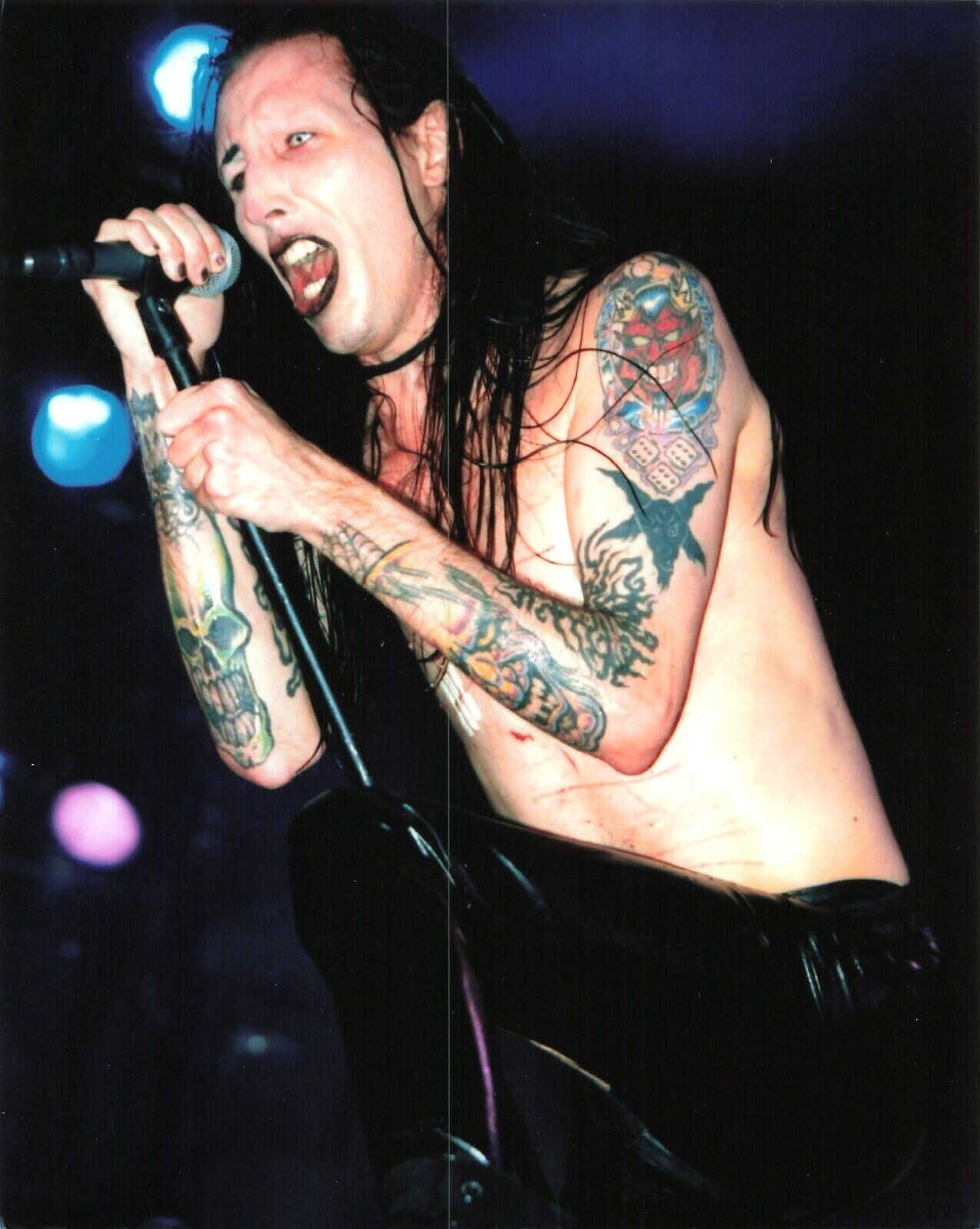
A shirtless live photo shows more of the imagery than a tight portrait. Skull shapes, dice-like forms and dark creature designs appear on the upper arms, with other pieces around them. The red and black palette is clear, though the photo does not show every line sharply enough to name each tattoo.
The imagery sits comfortably beside Manson’s long-running interest in horror, religious theatre and outsider art. That does not confirm the meaning of each piece. A skull might be a personal reference or simply an image he liked. The photo confirms that skull imagery is there; the story behind it may not be public.
Larger pictures sit higher on the arms, with smaller marks below and areas of skin still visible between them. The gaps keep the coverage from becoming one flat block. When his arms hang down, shadows can merge the images; when he raises a microphone or reaches toward the crowd, the pieces separate more clearly.
If you are studying the layout, notice how the limited tones connect the designs while each keeps its own outline. The same approach could work with different imagery and still give an arm the feeling of being built in chapters.
Live photos show how Marilyn Manson’s tattoos move onstage
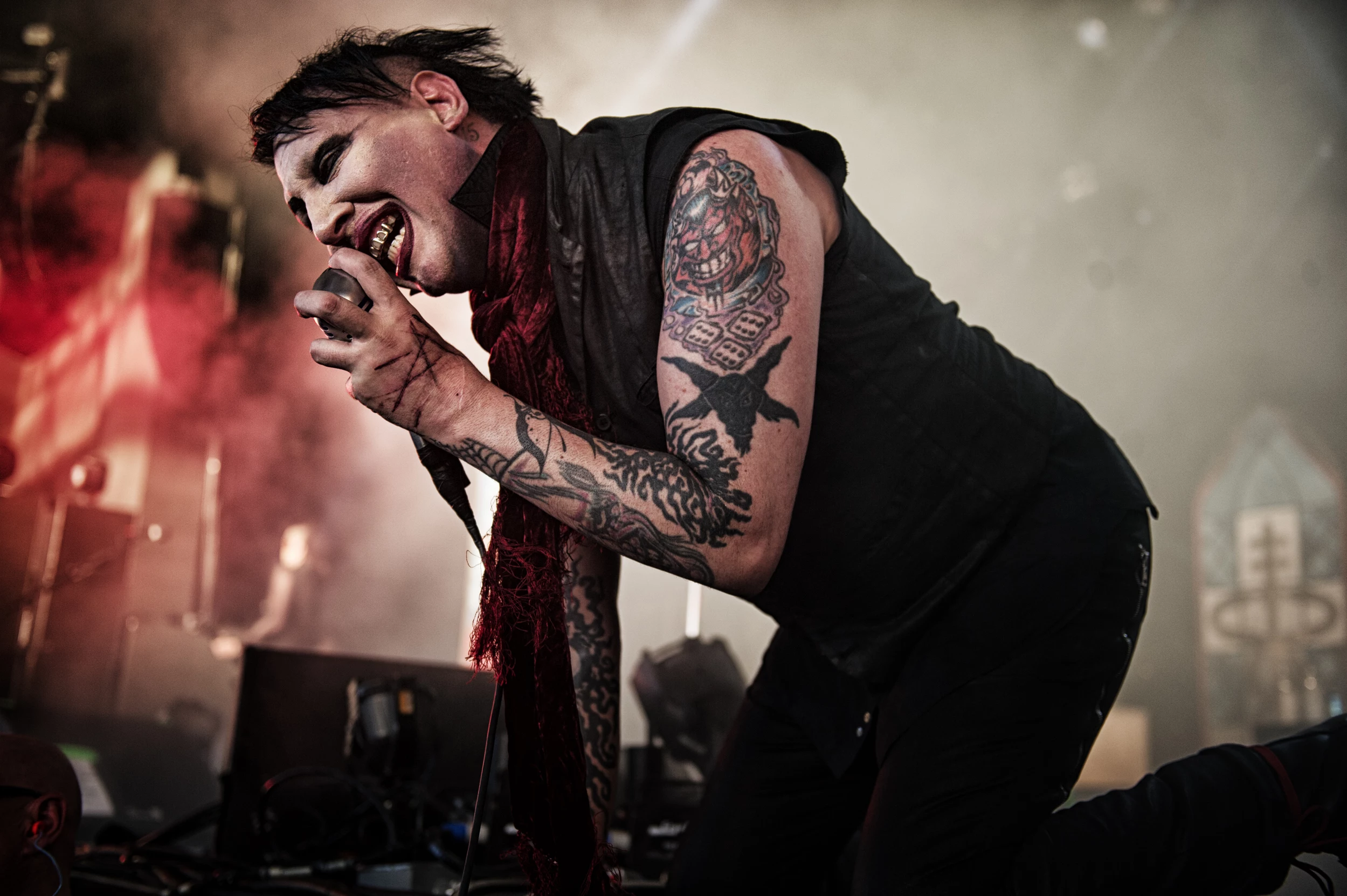
Stage photos are imperfect records, but they show how the tattoos look while Manson moves. In this image, the forearms catch the light before fading into red smoke. One hand covers part of an arm around the microphone; the other side has enough light for the dark outlines to stand apart.
At rest, an arm tattoo can look like a still illustration. Onstage, it bends and stretches with the elbow, breaking into fragments as he moves. Manson’s close-to-the-mic poses make the shifts more noticeable, with a raised shoulder and angled wrists. The ink becomes part of the shape of the performance.
A blurry screenshot can make ink, costume seams and makeup look alike. These higher-resolution photos give more detail, but they still do not show every design clearly. It is fair to say the image shows tattooed arms; it is not enough to identify every mark.
The same general areas of color and black work appear across different photographs, even as the styling changes. Makeup and costume can change from show to show; the arm tattoos stay visible in the frame.
Hand and wrist symbols bring the collection closer to the face
The smaller marks on his hands and wrists show up when Manson grips a microphone, raises a hand or brings his fingers near his face. That makes them visible in ordinary photos as well as onstage. A chest design may disappear under a shirt; a wrist mark can remain in view.
In a close black-and-white portrait, the eye moves between the face, makeup, hand and symbols lower on the body. Heavy eyeliner, painted skin and hard studio shadows can blur the boundary between styling and ink. Even in a high-resolution image, not every mark has a confirmed name.
Hand and wrist placement is exposed and constantly moving. The skin bends, is washed and appears at odd angles in photographs. Manson’s small pieces work with that visibility rather than being hidden in a pose made only for a tattoo reveal.
If you are considering hand ink, focus on how a small design looks when the wrist bends and in everyday photos. The placement will be seen often, so a clear silhouette matters more than a dramatic setting.
The chest and back pieces stay harder to read

The torso is harder to document than the arms. Older shirtless concert photos show ink on the chest, shoulders and back, but the camera is often far away and the lighting theatrical. A tattoo can be visible without being readable. This live photo confirms body coverage, but not an exact name for every dark shape.
Posture changes the view too. When Manson leans forward, folds in the skin compress the design; when he turns, one shoulder can hide the other. Paint, sweat and colored light further soften the edges. The torso is best described broadly as dark ink, lettering and larger pieces that connect with the arms.
Large areas leave room to build scale, but a stage photo is not a technical reference sheet. Neutral light would show the final lines more clearly. The performance images are compelling for their atmosphere, but they cannot support every detail a viewer might want to identify.
The contrast between the arms and torso is partly about the available photos. Close portraits and repeated stage shots keep the arm designs familiar; the chest and back are usually distant, shadowed or caught in motion. That does not tell us which tattoos matter most to him.
Manson’s tattoos are easier to understand as visible choices than as a puzzle where every gap needs filling in. The arms provide the clearest evidence, the hand and wrist marks appear in everyday gestures, and the torso adds more ink even when the photos cannot resolve it.
The photographs confirm the tattoos; they do not explain every personal meaning. For more artist ink stories, browse the musician tattoo guides.