Ville Valo’s tattoos share the dark, romantic feel people associate with HIM. His collection includes a dense ornamental sleeve, the Heartagram, portraits and smaller marks. The photographs show how the ink has developed from HIM’s years into his solo work as VV.
This account sticks to what is visible in photos and what Valo has discussed in interviews. Fans have attached plenty of stories to the designs, but a photograph and a confirmed explanation are different things. Some parts are documented; others remain personal.
The sleeve is the main visual anchor in Ville Valo’s tattoo story.
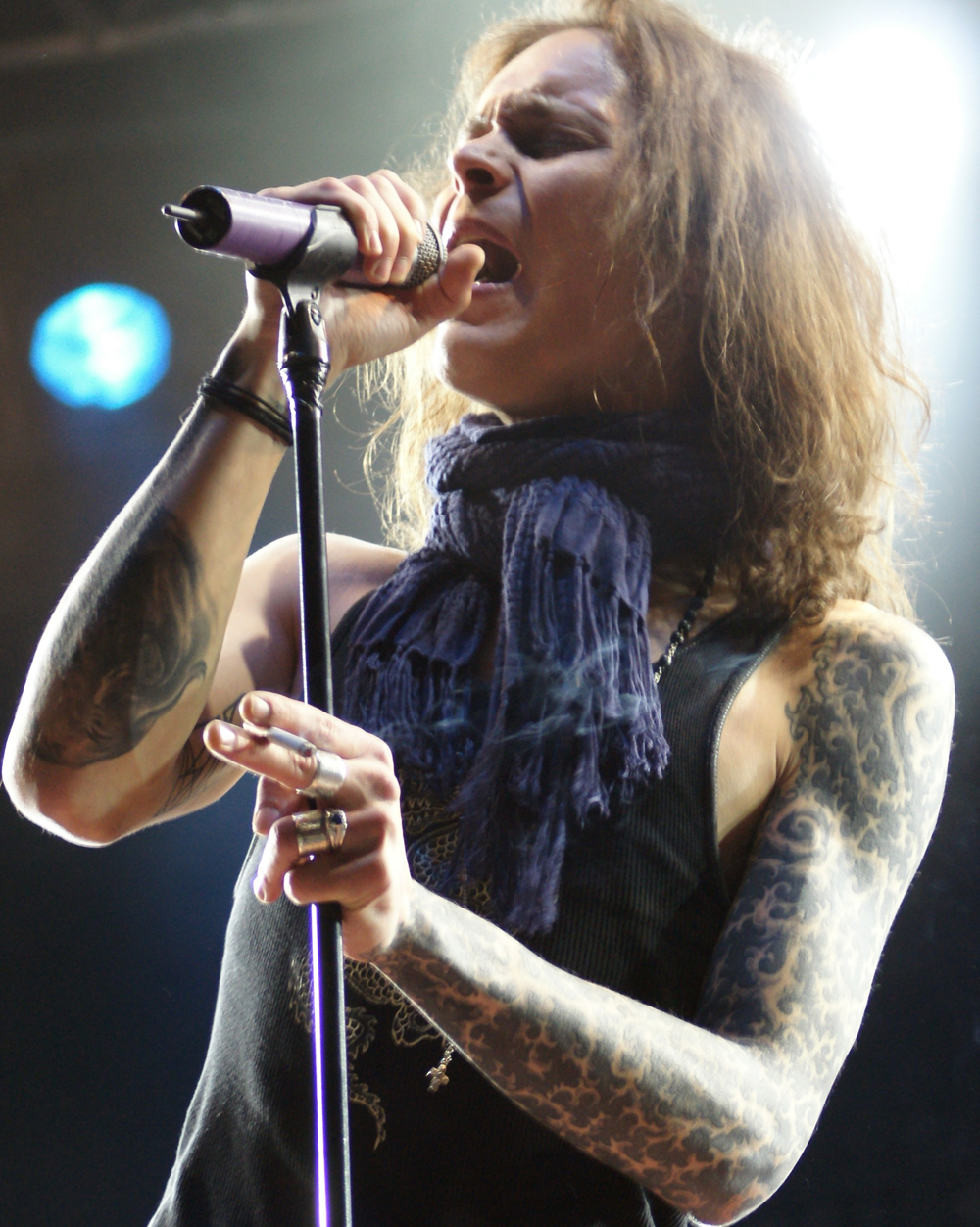
This sleeveless portrait shows the sleeve from upper arm toward the wrist. Black-and-grey ornament covers most of the arm, with repeated curves and open areas that keep the pattern from reading as one flat patch of ink.
Valo has described wanting one continuous idea around the arm and building trust with the person tattooing him. The sleeve’s patterns change, but the line work gives them a common feel. The shoulder uses heavier shapes; smaller repeated forms fill more of the lower arm.
That change in scale guides the eye along the arm, including when he bends it onstage. A sleeve can hold a lot of detail and still keep a clear outline if the darker sections are placed with care.
For anyone planning a sleeve, the useful starting point is the overall texture and how it travels around the arm. Valo’s does not rely on several unrelated images competing for attention. Open skin is part of the pattern too, leaving room for the smaller details to show when someone looks closely.
Lighting changes the effect. Warm stage light brings out softer grey areas and skin texture; a darker club photo makes the strongest black shapes stand out. More than one view gives a fairer sense of the sleeve than a single dramatic performance shot.
The Heartagram tattoos connect the band and the body art
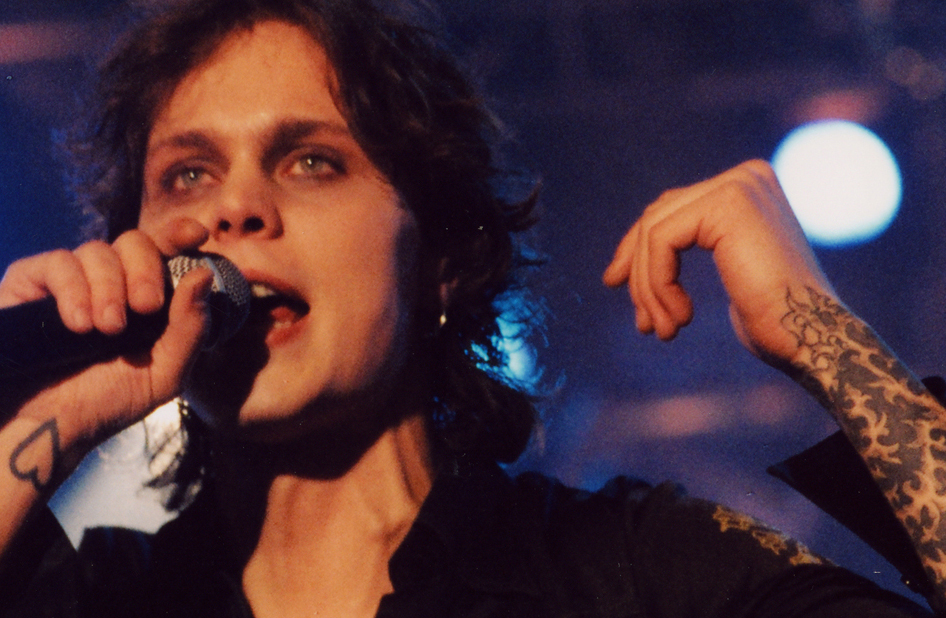
The Heartagram is the design most closely associated with Valo. It combines a heart with an inverted pentagram, and he created it as a symbol for HIM. In this photo it sits near the chest, with the arm tattoos around it without obscuring the shape.
Valo has described the symbol as bringing love and death together. That tension fits HIM’s identity, and the simple outline works on skin, record sleeves, shirts and stage backdrops.
Placement changes its effect. A large chest version becomes part of the public image, especially in a performance photo or an open shirt. Smaller Heartagrams can feel more private, even though fans recognize the mark.
The design does not need much decoration to stay legible. That is one reason fans use it as a starting point for their own tattoos. Valo’s examples show it beside a dense sleeve, a portrait or open skin while remaining recognizable.
The connection to HIM is documented; the reason for every individual placement is not. The symbol’s history can be described without guessing at what Valo has kept to himself.
The two-arm photographs show the contrast in Ville Valo’s ink
Photos that show both arms reveal a contrast: one is dominated by the ornamental sleeve, while the other has portraits and smaller symbols. The collection does not mirror itself on both sides, which gives each arm a different role.
Valo has discussed using different artists for particular designs, including portraits of writers and artists he admires. A portrait needs clear edges, so it reads best with some breathing room around it instead of being buried in the sleeve’s repeated pattern.
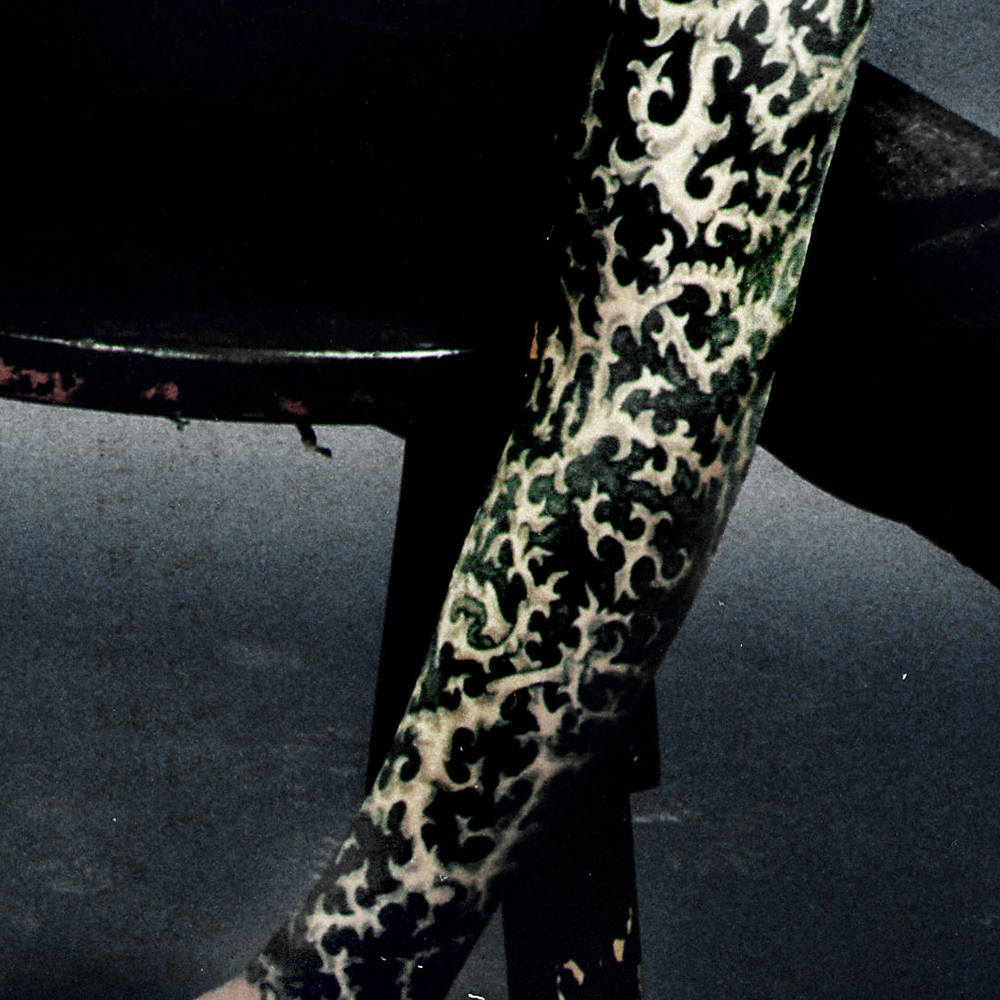
This close view also shows how the design wraps around the arm. A flat scan cannot capture the way a pattern changes when the wrist turns or the forearm moves.
Black and grey dominate, but the sleeve has plenty of contrast: solid black beside lighter skin, soft portrait shading beside firm outlines, and repeated ornament beside a single letter or heart. A limited palette can still feel varied when texture, line weight and spacing change.
Raised-arm photos help show the scale: where the sleeve begins at the shoulder, how far it reaches toward the wrist, and where other pieces stop. That tells more than simply calling him heavily tattooed.
The portraits and writer references give the collection its personal edge
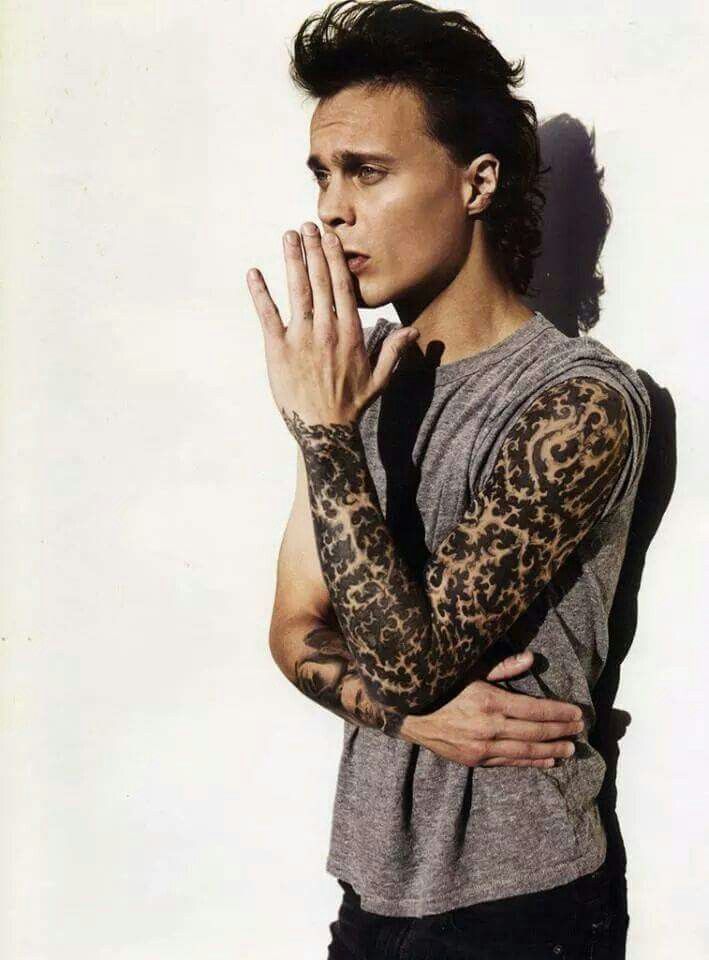
This studio portrait puts the arm ahead of the stage setting. The sleeve’s texture is easier to see, along with smaller marks near the wrist. After years of being added to, the arm looks like a collection of choices rather than a costume.
Valo’s tattoo history includes portraits connected with writers and artists. An Inked interview identified Charles Bukowski, Charles Baudelaire and Finnish novelist Timo K. Mukka among the figures represented. Those references fit a songwriter whose public image has often brought together literature, melancholy and heavy music.
Faces also change the rhythm of a sleeve. Repeating ornament carries the eye along the arm; a portrait gives it a place to pause. Different subjects can sit together when the shading and line work connect them.
The smaller marks work like punctuation. A heart on the wrist, a letter on the chest and the Heartagram do not need to be large. They break up the broader patterns and give fans details to notice in photographs.
Some older magazine images include headlines, watermarks or page layouts. They can help with the history, but cleaner photographs make it easier to see the actual tattoos and where they sit.
The full-body portrait shows how the sleeve works with the torso
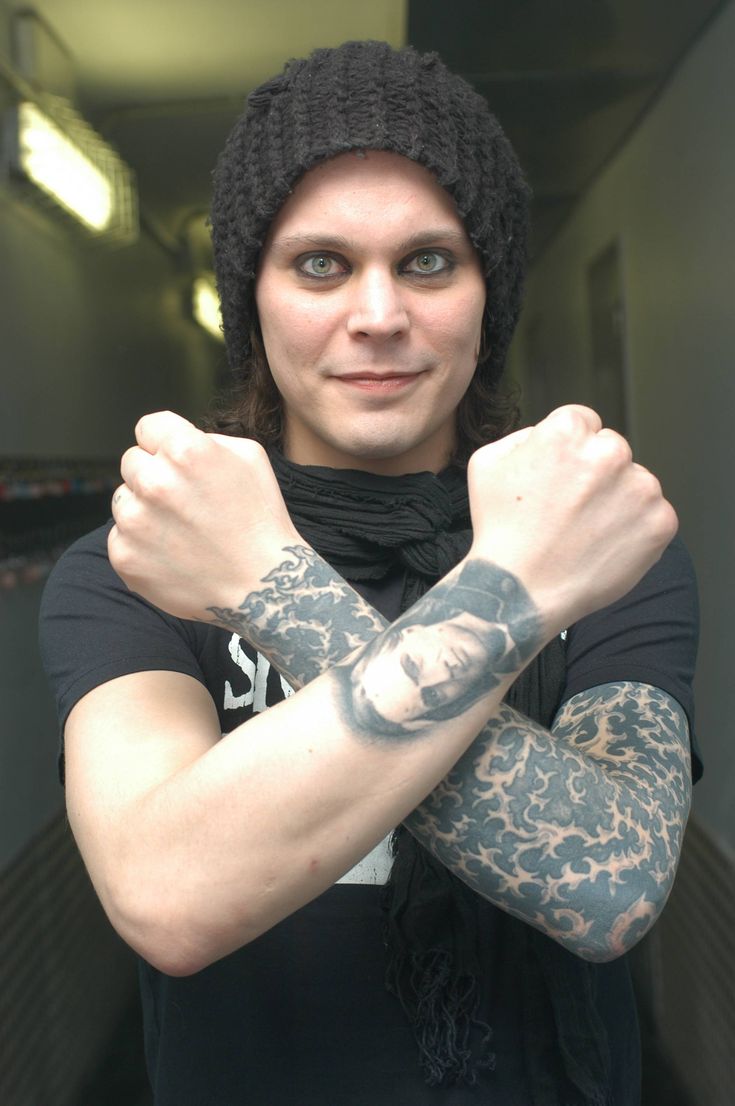
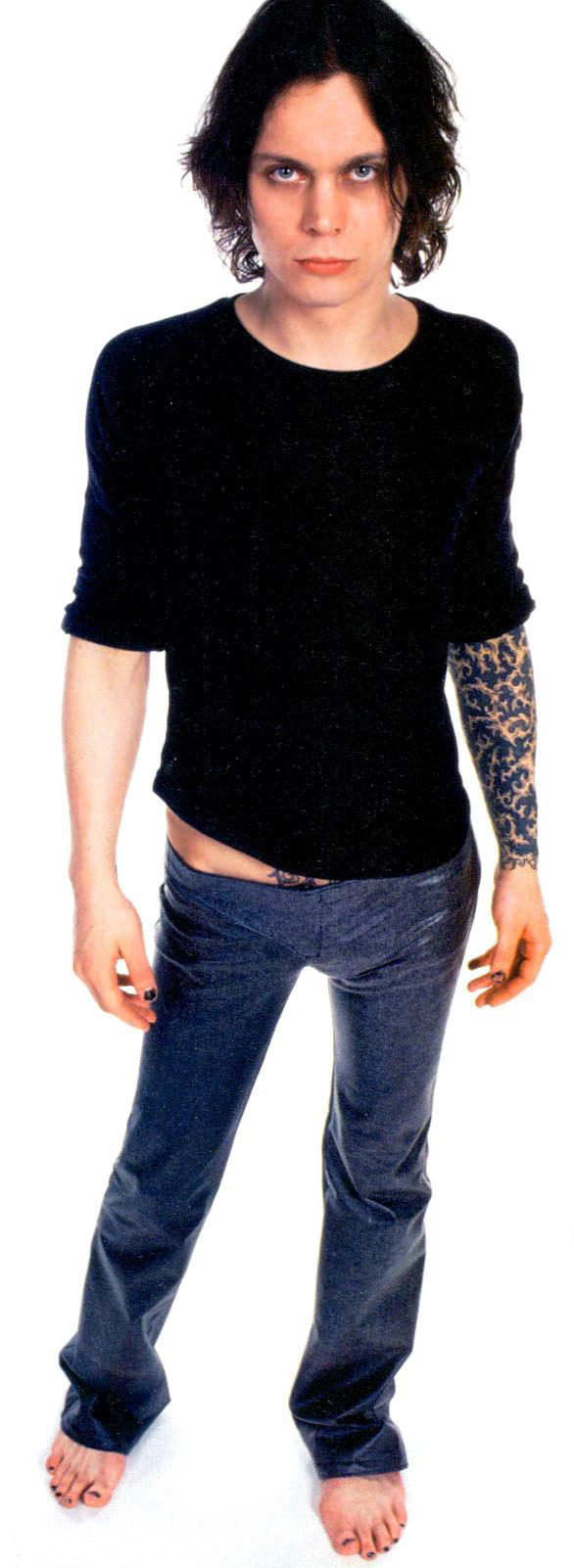
This wider portrait is quieter than a stage image. Valo stands in a plain shirt, with his face and tattooed arm both visible. The dark clothing sets off the sleeve without turning the photo into a performance shot.
The wider view gives a sense of how the arm sits beside the chest and torso. Some pieces appear only when a shirt lifts or the neckline changes; others are easier to see onstage. The collection has different levels of visibility, depending on the clothes and pose.
The sleeve is dense, but the chest and opposite arm are not a solid wall of black. Those open areas let each part keep its own shape, keep the Heartagram visible and give the portraits room.
You do not need to copy the exact images to borrow from the approach. A consistent sleeve texture can sit beside a personal symbol and a portrait that matters to you. Valo’s tattoos connect to his music, his reading and the people he trusted to do the work.
In short, the collection centers on an ornamental sleeve, Heartagram designs, black-and-grey portraits and smaller marks on the chest, wrist and other visible areas. Photos establish the broad picture; interviews explain a few of the stories. The rest should stay uncertain unless Valo confirms it.
For more on the ideas behind the designs, watch Valo in PitCam TV’s Behind The Ink interview: