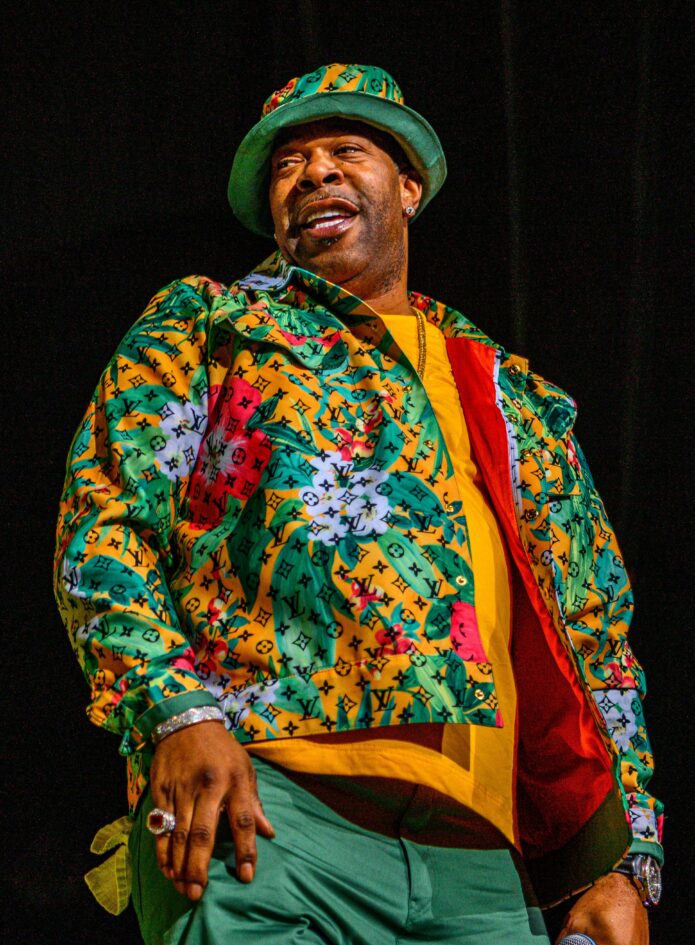
Busta Rhymes has never been the kind of artist who fades into the background. The same goes for his ink. His body art is built around heavy black shapes, tribal lines, and big pieces that read clearly from the stage. There is no neat little collection of tiny symbols here. The overall look is bold, busy, and unmistakably his.
This guide focuses on the Busta Rhymes tattoos that can actually be seen in clear photos. Some of the smaller details are hard to identify from public images, so I am keeping the descriptions grounded in what is visible instead of guessing at a private meaning. What stands out is the way the tattoos work together across his arms, shoulders, chest, and back.
His tribal arm tattoos are the main event
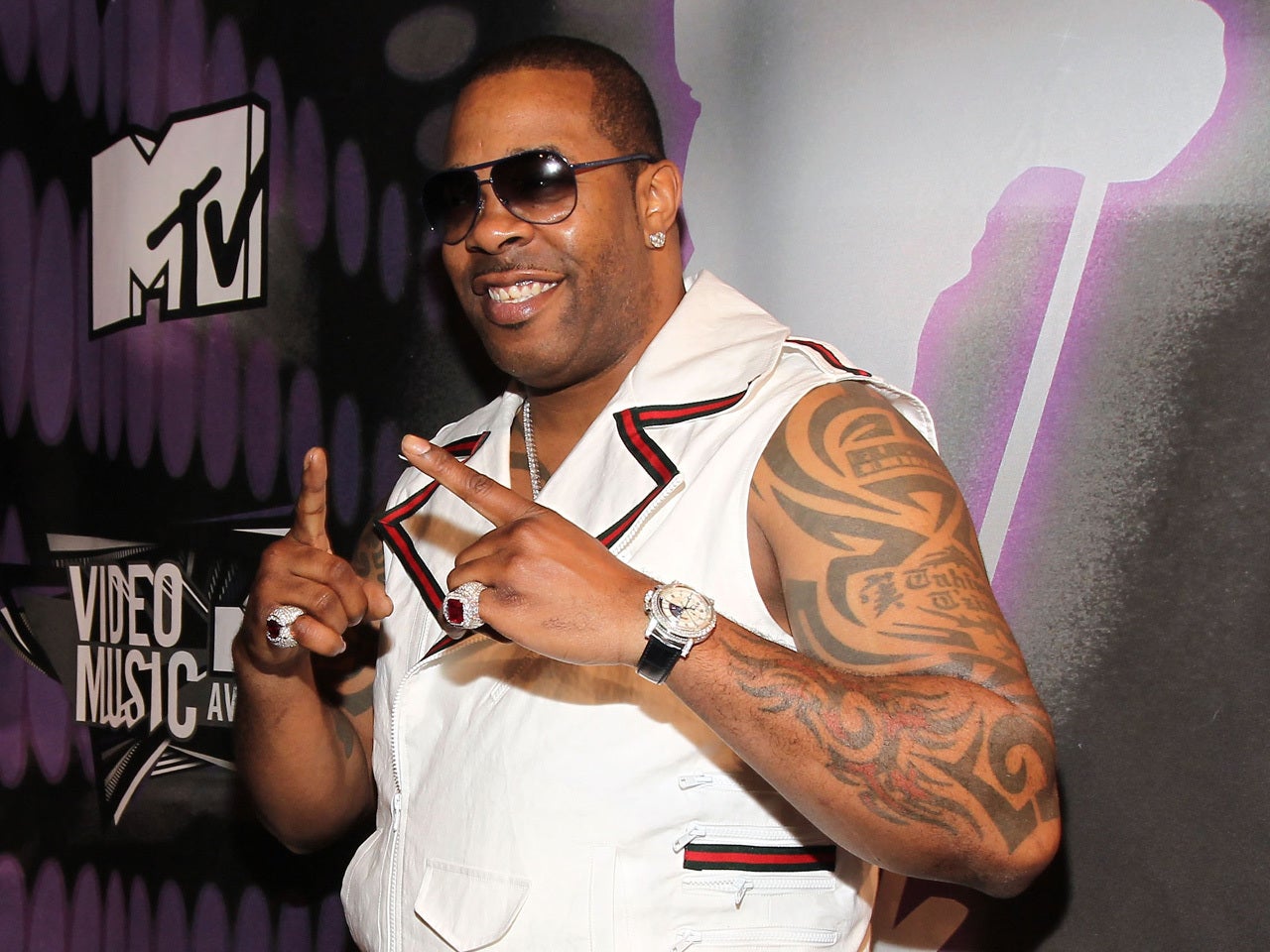
The first thing most people notice is the pair of dark, packed-out arm designs. Busta has worn versions of these tattoos for years, and they give both arms a strong sleeve-like look. The shapes are mostly thick black curves, hooks, points, and bands. They sit close together, leaving very little blank skin around the main sections.
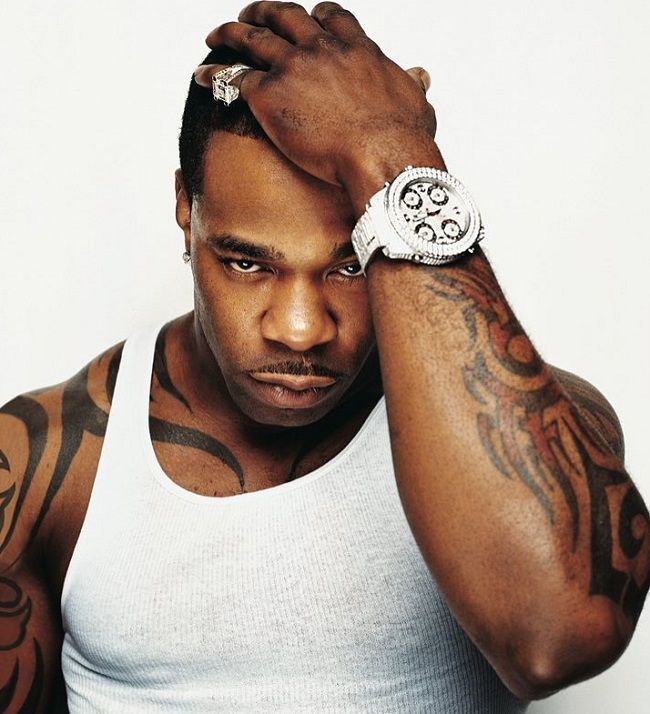
From a distance, the sleeves can look almost like armor. Up close, the contrast becomes easier to read. You can see the mix of solid black fill, open skin breaks, and sharp tribal-style edges. That contrast is what keeps the work from turning into one flat block of ink. It also suits Busta’s performance style, which has always leaned big, fast, and dramatic.
Blackwork shapes give the sleeves their weight
There is a real rhythm to Busta’s arm work. One section curls around the upper arm, another pushes toward the elbow, and smaller details help connect the design down the forearm. The exact boundaries are not always easy to see because the photos come from different years and lighting setups, but the same visual language keeps showing up: blackwork, tribal movement, and strong symmetry from one arm to the other.
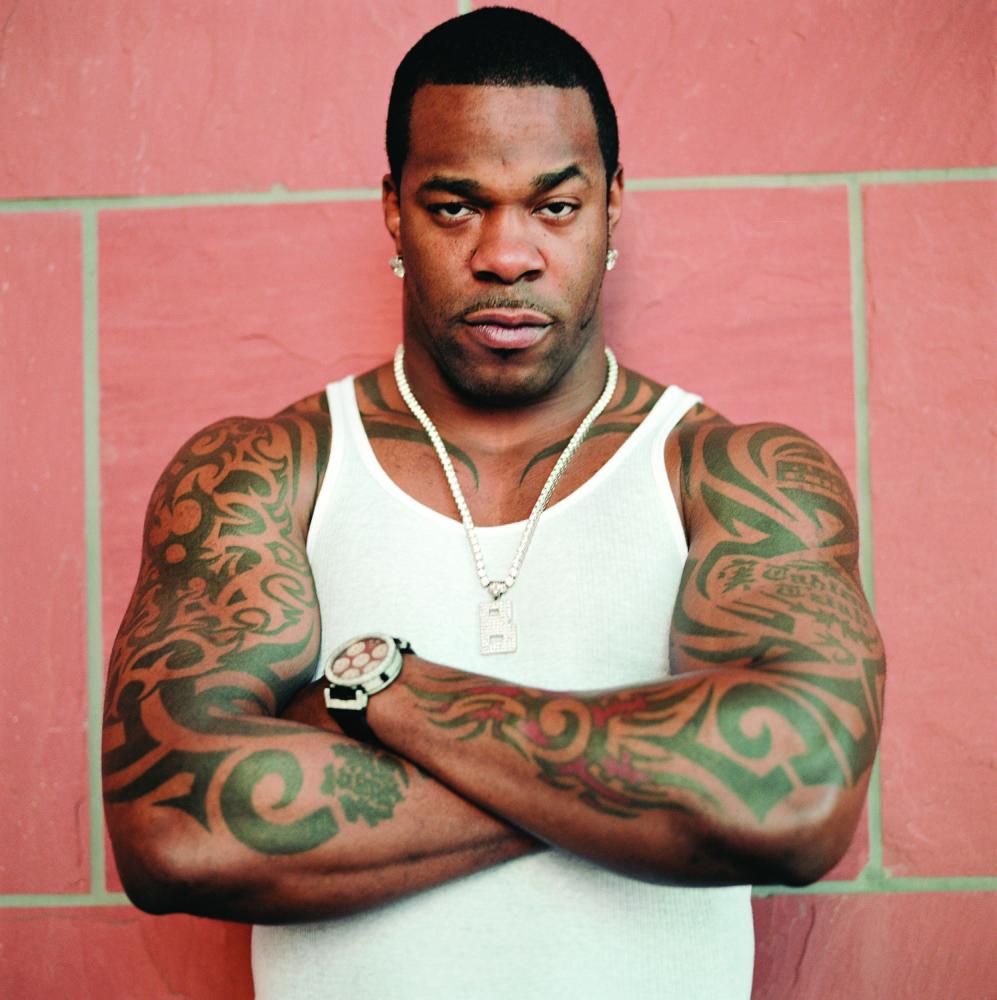
That makes the tattoos a useful reference if you like sleeve ideas that feel powerful without relying on color. The designs are not soft or delicate. They are built to hold their shape in a crowd, under stage lights, and in photographs where fine lines might disappear. Anyone borrowing the vibe should still create an original layout with a tattoo artist, rather than copying the exact shapes.
The back piece is much larger than the arm work
Busta’s back tattoo changes the scale completely. A clear back photo shows a large dark design spreading across the upper back and shoulder area. It has the same bold, tribal direction as the arms, but there is more room for the pattern to breathe. Instead of reading like a small emblem, it works as a full piece that follows the width of his back.
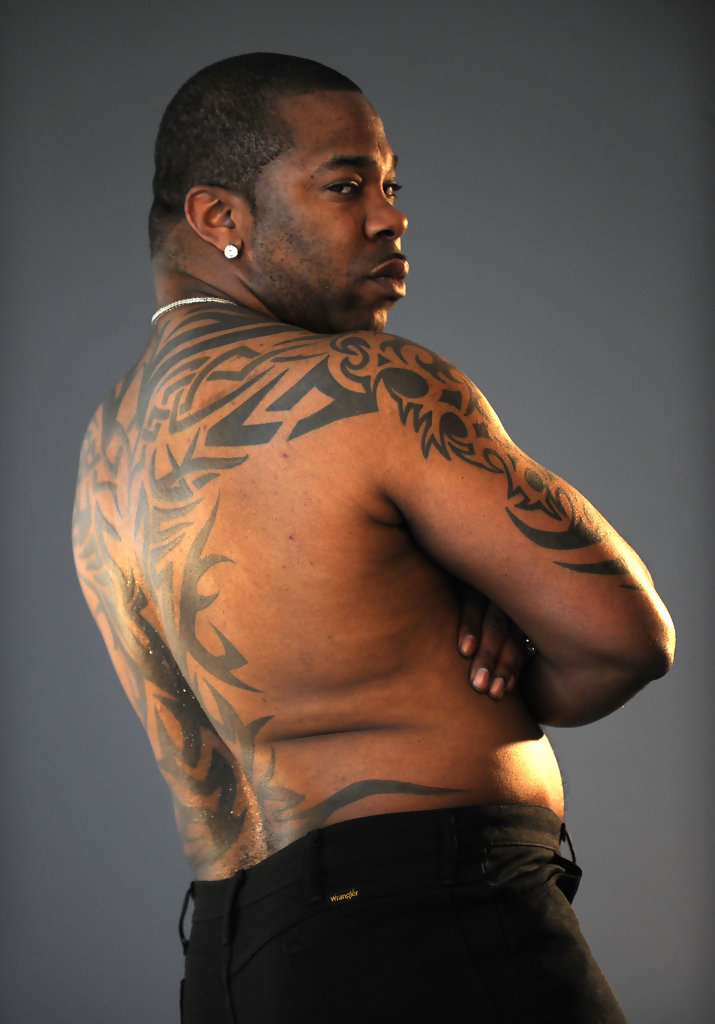
The piece is especially striking because of the way it uses the shoulder line. Large tattoos can look pasted on when they ignore the body’s shape. This one follows the shoulder and upper back, so the design feels connected to his frame. The deep black areas also help the outline stay readable when the photo is taken from a distance.
Public tattoo references commonly identify the back work as a piece associated with Los Angeles tattoo artist Paul Timman. That detail is worth keeping separate from the design description: the artist credit is useful background, while the exact personal meaning of every shape is not clearly documented. The safest read is that the tattoo is part of Busta’s broader love of large-scale tribal and neo-tribal work.
Chest and shoulder ink tie everything together
When Busta wears a vest or an open shirt, more of the connecting work becomes visible around his shoulders and upper chest. The designs do not feel like random stickers placed years apart. The dark shapes carry across the upper body, which helps the arm tattoos and back piece feel like part of one bigger collection.
That is also why his tattoos can look different from one photo to the next. A front-facing portrait emphasizes the sleeves and chest. A side angle brings out the shoulder shapes. A back shot turns the large upper-back piece into the focal point. The collection is not changing every time. The camera is simply showing a different section of a large canvas.
How the tattoos fit Busta Rhymes’ image
Busta’s tattoos match the energy he brings to hip-hop. His music, videos, and live shows have always had a larger-than-life quality, and the ink does the same job visually. The dark sleeves frame his arms when he performs, while the larger back work gives him an even more dramatic look when he turns away from the camera.
There is also something practical about the style. Bold tattoos survive movement and distance better than tiny detail work. When an artist is jumping, dancing, or working a stage, clean black shapes stay visible. That does not make the tattoos simple. It means the design choices are strong enough to work in real life, not only in a close-up photo.
A closer look at the arm coverage
Another clean image shows how much of the arm coverage is made from connected sections rather than one single flat sleeve. The upper arm has heavier shapes, while the forearm has more open gaps and directional lines. The result is a tattoo collection that looks dense without losing every bit of skin between the designs.
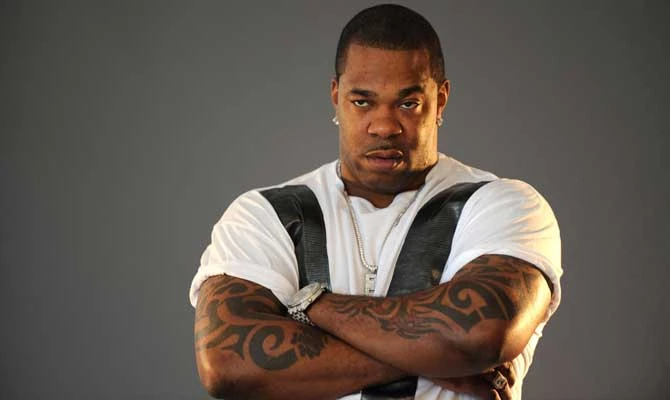
If you are using this as inspiration, pay attention to the balance. The impact comes from the relationship between thick and thin areas, not just from filling as much space as possible. A good artist can map the design around your muscles, leave breathing room, and build a sleeve that looks intentional as it ages.
What is known and what is still unclear
Photos make the large tribal arm tattoos and the back piece easy to confirm. Smaller symbols, script, and details around the chest are harder to identify with confidence because they are often hidden by clothing or lost in stage lighting. That is normal with celebrity tattoo coverage. A photo can show that a mark exists without explaining who designed it, when it was done, or what it means.
So the honest summary is simple: Busta Rhymes is known for extensive tribal and blackwork tattoos, especially across both arms and his back. The collection is visually consistent, but not every individual mark has a public story attached to it. That is better than turning a guess into a fact, and it still leaves plenty to appreciate in the artwork itself.
Why fans keep coming back to Busta’s ink
These tattoos have stayed memorable because they are part of his silhouette. You can spot the strong arm coverage even when the photo is not a close-up, and the back piece adds another recognizable layer. The work feels personal without needing a long explanation for every line.
For more hip-hop tattoo inspiration, take a look at our coverage of Snoop Dogg’s tattoos. If you are comparing different approaches to celebrity ink, our Ice Spice tattoo guide shows a much lighter and more delicate style. The contrast makes Busta’s heavy blackwork stand out even more.
At the end of the day, Busta Rhymes’ tattoos work because they commit to a look. The tribal sleeves, broad shoulder coverage, and large back tattoo all pull in the same direction. They are loud, graphic, and built to be seen, which is exactly why they fit the artist so well.
Watch a tattoo conversation connected to Busta Rhymes
Here is a tattoo-focused video discussion that talks about Busta Rhymes and the culture around heavily tattooed hip-hop artists: