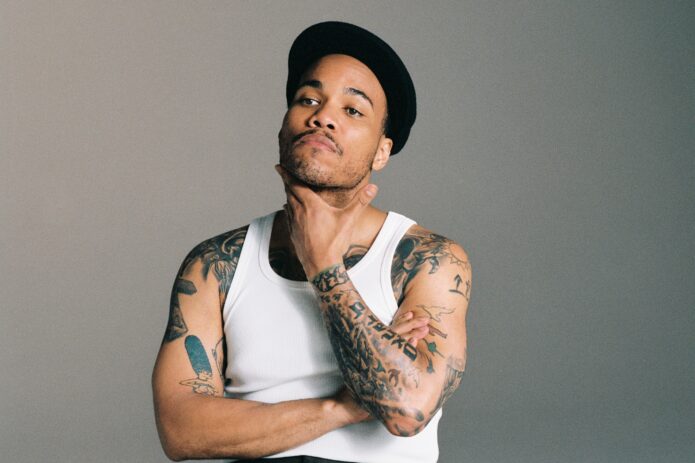
Anderson .Paak’s tattoos feel less like a checklist of cool images and more like a scrapbook that has grown louder over time. They hold family history, music heroes, faith, friendship and a few choices he wanted people to understand. His arms carry most of the story, though the portraits on his chest matter too.
There is a playful contrast in the collection. Some tattoos connect closely to his life; others came from a garage appointment, a long session or a sudden idea. That mix makes the ink feel lived-in rather than staged.
Paak has spoken about how the tattoos connect to his family and music. The details here stick to designs he has shown clearly or explained, rather than guessing at every shape in a busy sleeve.
His first tattoo was a praying figure and a cross
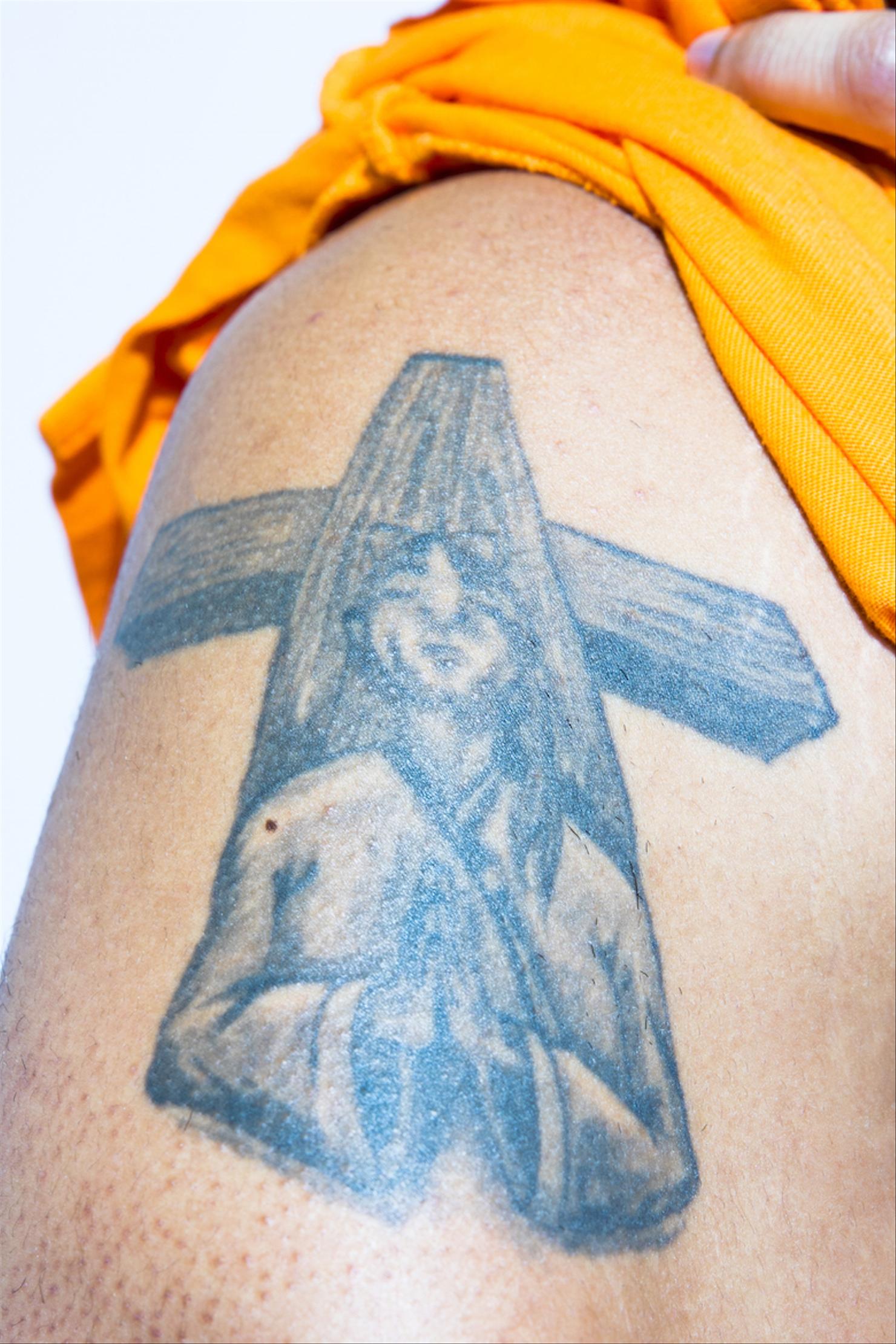
One of Paak’s earliest tattoos is a praying woman kneeling in front of a wooden cross. It sits high on his arm, shaded with a deliberately rough look. He got it at 18 from an amateur artist working in a garage.
That beginning is part of the tattoo’s appeal. It was not a polished celebrity appointment or a carefully planned sleeve; it was a young Paak seeing an image he wanted and finding a way to get it done.
He has said the design connects to his mother’s incarceration and to the hope his family held on to during a difficult time. The woman’s bow and folded hands make the religious image easy to recognise, but its meaning is personal. It is about holding on when life around him was rough.
The tattoo helps explain why the rest of the collection feels like a story. Paak did not begin with a neat visual plan. He started with an emotional image. Later work became more elaborate, but that first piece kept his family at the centre.
The blue tiger became the centre of his sleeve
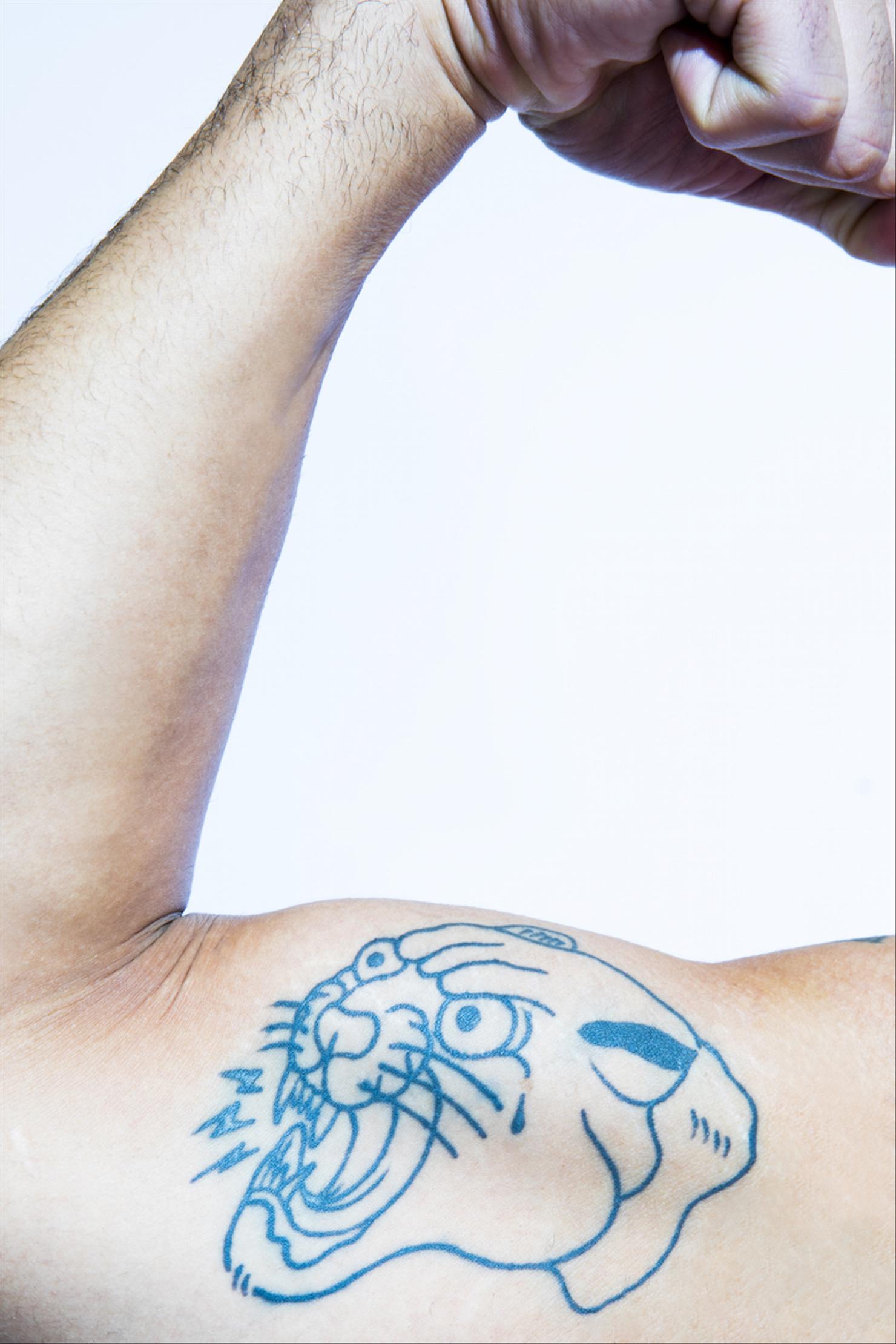
A blue tiger head sits on Paak’s inner bicep, frozen mid-roar. Its bold lines and blue ink give it a different feel from the darker work nearby. The expression has a playful edge, but the open mouth keeps the design from feeling soft. It is a strong focal point on an arm already full of detail.
Paak has described the piece as part of a tiger sleeve telling his family’s journey, including his mother’s adoption from Korea and the path that eventually brought his own story to Oxnard. The tiger is not just a random animal. It helps move the sleeve from one chapter to the next.
He has called it his first good tattoo, a comment that hints at how he views the early garage piece. The first tattoo carried the feeling; the tiger was when he began to pay more attention to the craft. One session lasted about 12 hours, long enough for him to miss a Drake concert. That is a serious commitment for a design that still feels playful.
The sleeve turns family history into a visual map
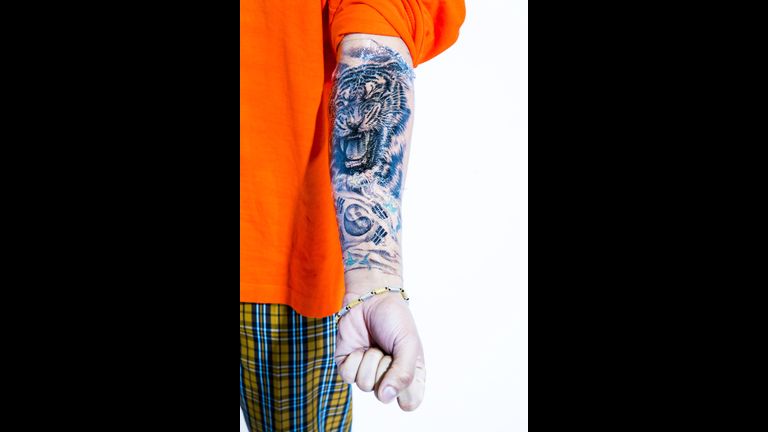
Seen from farther back, Paak’s arm works as a connected story. The tiger sleeve sits among symbols tied to Korea, California, family and the people around him. He has said a bear and a fighter jet represent parts of his mother’s journey. He has also described 24 birds as marking the age he was when his son was born.
Those details give the sleeve more than filler. It becomes a timeline without dates written across it: images standing for moves, relatives, parenthood and the music career that grew from those experiences. From a distance, the arm can look like busy American traditional patchwork, but the layers are part of the point.
The sleeve also includes Korean characters connected to his son and other small marks that are hard to identify from a distance. It is better to leave those unnamed than turn a guess into a fact. Paak uses the arm to keep personal history visible. The sleeve lets the family story stay with him, even onstage or in a magazine shoot.
His chest honours the musicians who shaped him
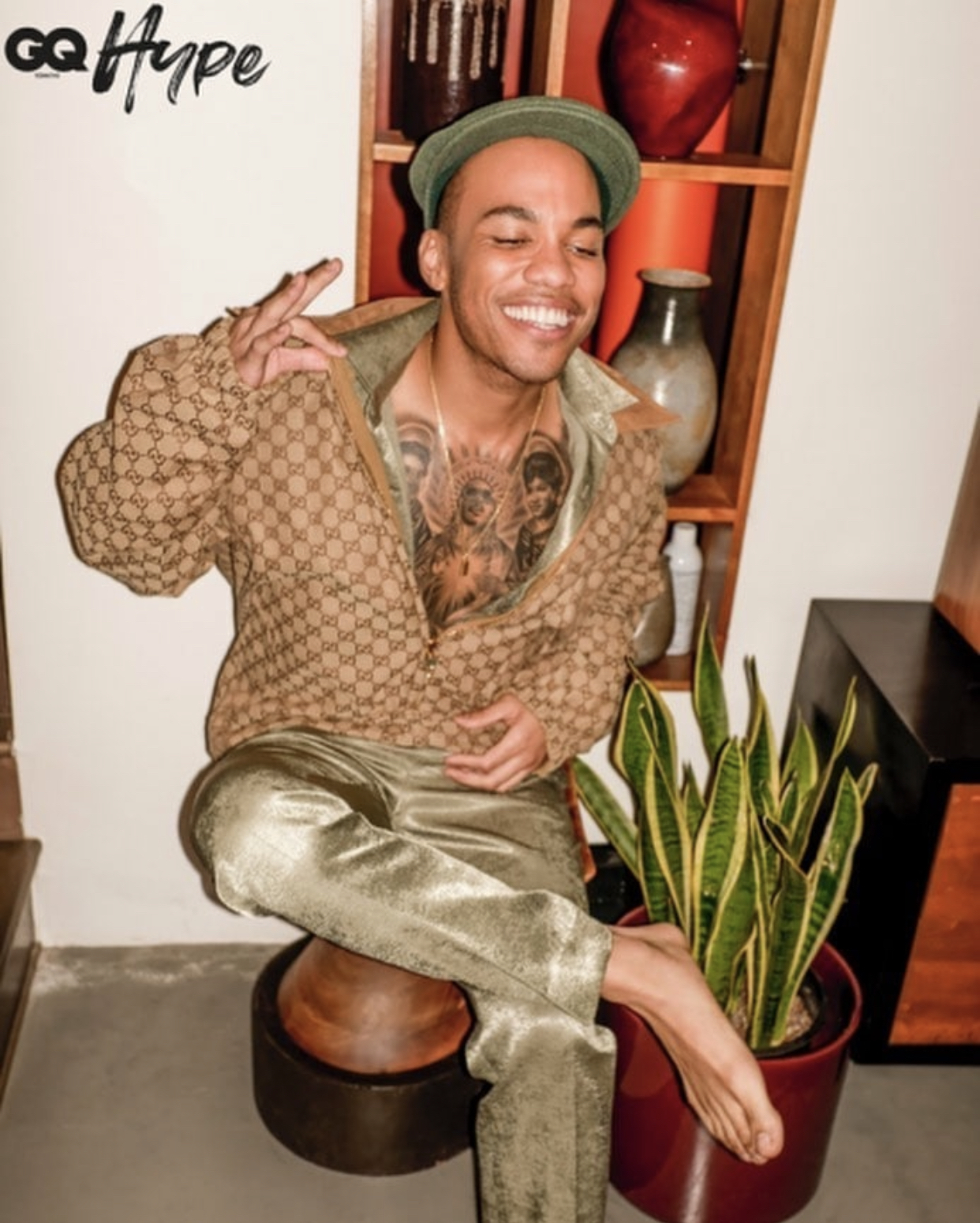
Paak’s chest has portraits of Stevie Wonder, Aretha Franklin, James Brown, Prince and Miles Davis. Together, the artists suggest the musical vocabulary behind his own work: soul, funk, jazz, rhythm, voice and showmanship.
The design can be hard to see under his jackets and patterned shirts, which makes the moments when he opens his shirt feel revealing. It is not only a way to show a large tattoo; it says who he considers part of the musical lineage. Paak often brings older sounds into the present, and these portraits put that connection on his body.
There is no need to invent a separate biography for each face. Five artists, one chest, and a clear statement that his music comes from somewhere. The tattoo makes influence physical and lasting.
Free Nationals ink keeps the band close
Paak has talked about matching Free Nationals logo tattoos with members of his band. It may sound like a familiar friendship gesture, but it fits: the band is central to his live identity, not just a backing group behind the singer.
The logo adds another relationship to a collection already full of family references: chosen family and working family. Touring, recording and building a show together is different from the bond represented by his mother or son, but the tattoo makes room for both.
The piece also fits Paak’s relaxed approach. His tattoos do not need to be solemn to matter. A simple shared mark can mean a lot when it comes from years of making music together.
The forearm warning about unreleased music is impossible to miss
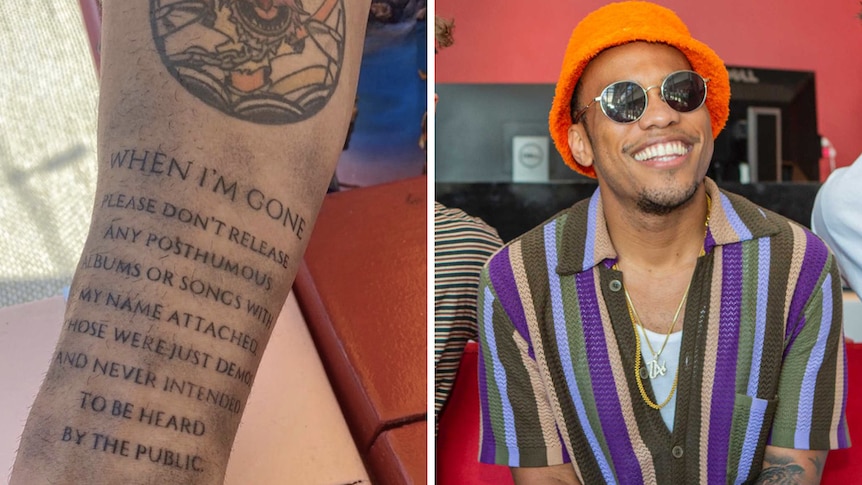
One of Paak’s most talked-about designs is a long message down his forearm. It asks that, after his death, unfinished demos or songs not be released with his name attached. The tattoo works as both a personal instruction and a public argument. Artists have limited control over what happens to unreleased recordings, and Paak made his position hard to ignore.
The wording is blunt, practical and a little funny: it sounds like someone trying to prevent one very specific future headache. The tattoo has become part of the discussion around posthumous releases by artists such as Aaliyah, Pop Smoke, DMX and Mac Miller. But the central point is Paak’s own request: unfinished music should not be released as if it were ready for the public. He wants unfinished work to remain unfinished.
Visually, the sentence is unusual. There is no symbol to decode or portrait to look at from across the room; you have to read it. That makes the forearm feel more like a note left in public than a traditional flash design.
Smaller marks fill in the edges
Photos show other tattoos across Paak’s arms and hands: lettering, small figures, geometric shapes and designs that sit within the larger sleeve. Some are clear in one photo and hidden by a jacket or hand in another. A careful inventory sticks to the pieces he has explained or that can be clearly identified.
The visible mix includes small birds, Korean characters, band-related marks and family symbols. Darker blocks and traditional-looking shapes help connect the sleeve, even when their meanings have not been published. They make the arm feel as though it grew over years instead of appearing all at once.
Paak’s chest and arms do not match perfectly. The portraits are formal, the tiger is bright and expressive, and the forearm message is plain text. That contrast is what keeps the collection interesting. It feels like a life put together in chapters, not a mood board ordered online.
What Anderson .Paak’s tattoos say as a whole
Taken together, Paak’s tattoos keep returning to family. His mother’s story, his son, his Korean heritage and the people who became part of his working life all appear in the collection. Music is there too, both in the portraits and in the way he treats his arms as a running visual narrative.
There is also a strong thread of ownership. The forearm message stakes a claim over what happens to his unreleased music. The band tattoo marks a shared journey. The portraits place him in a musical lineage. Even the first garage tattoo shows a young Paak choosing what mattered to him.
That does not mean every tattoo has a grand explanation. Some are part of being young, curious and willing to sit through a long session. Meaning and impulse can sit next to each other without cancelling each other out.
Paak’s ink works because it leaves those contradictions visible. It is sentimental without being precious, busy without feeling empty, and funny when it needs to be. Family, music, memory and a warning in plain English give the collection its own rhythm. You can spot the story from across the room, then move closer and find another detail.