
Raheem Sterling’s tattoos cover his chest, shoulders, arms and legs. The best-known designs include a cross, stars, birds, the word Familia, portraits, a tree, Wembley, a clock tower and a rifle on his right calf. Some have clear explanations; others are best described by what the photographs show.
Football photos hide much of the ink under shirts, shorts and socks. That is why the sections use different body views. A chest photo may show the lettering clearly, but it cannot also establish the details on Sterling’s calf, hand and shoulder.
Raheem Sterling’s chest carries stars, a cross, birds and Familia lettering
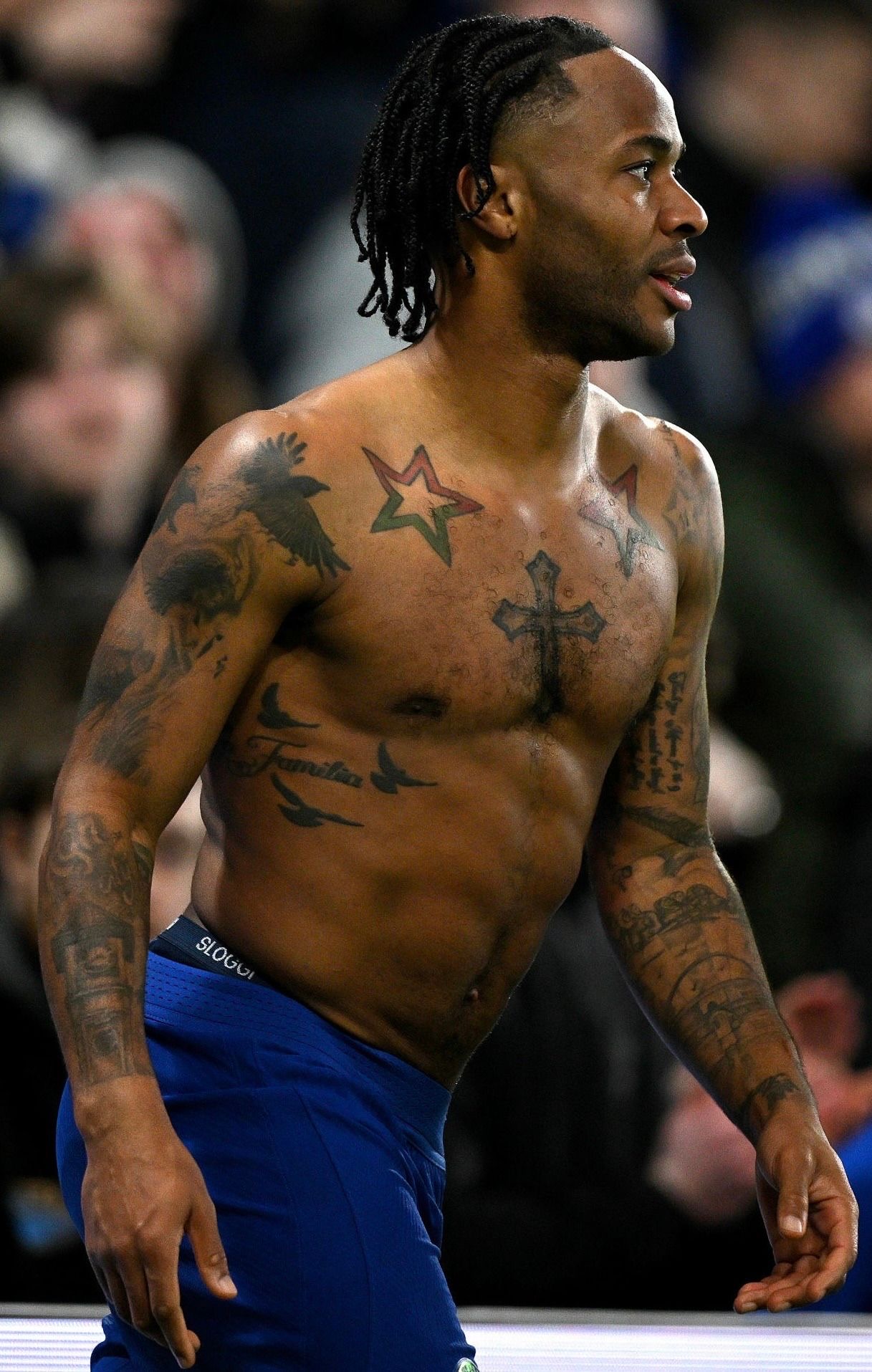
Sterling’s chest gives a clear sense of how much ink he has collected. Visible designs include coloured stars, a large cross, flying birds and the word Familia. They form a busy arrangement, though each remains a separate tattoo rather than one giant image.
The stars add a lighter, decorative touch, while the cross is larger and more central. Birds bring movement to the chest, and the family lettering gives the area a personal focus. A shirtless photo shows the layout far better than a standard football portrait.
In match and celebration photos, Sterling’s shirt may be lifted or removed, but the angle can make the designs blur together. A closer image separates the stars from the cross and makes the lettering easier to read.
Familia is one of the clearest statements in his collection, and it does not need a complicated theory. The photo establishes the words and their location. His public role as a father gives the family connection context without requiring us to invent a more private story.
The cross and shoulder work sit in a wider football-and-family layout

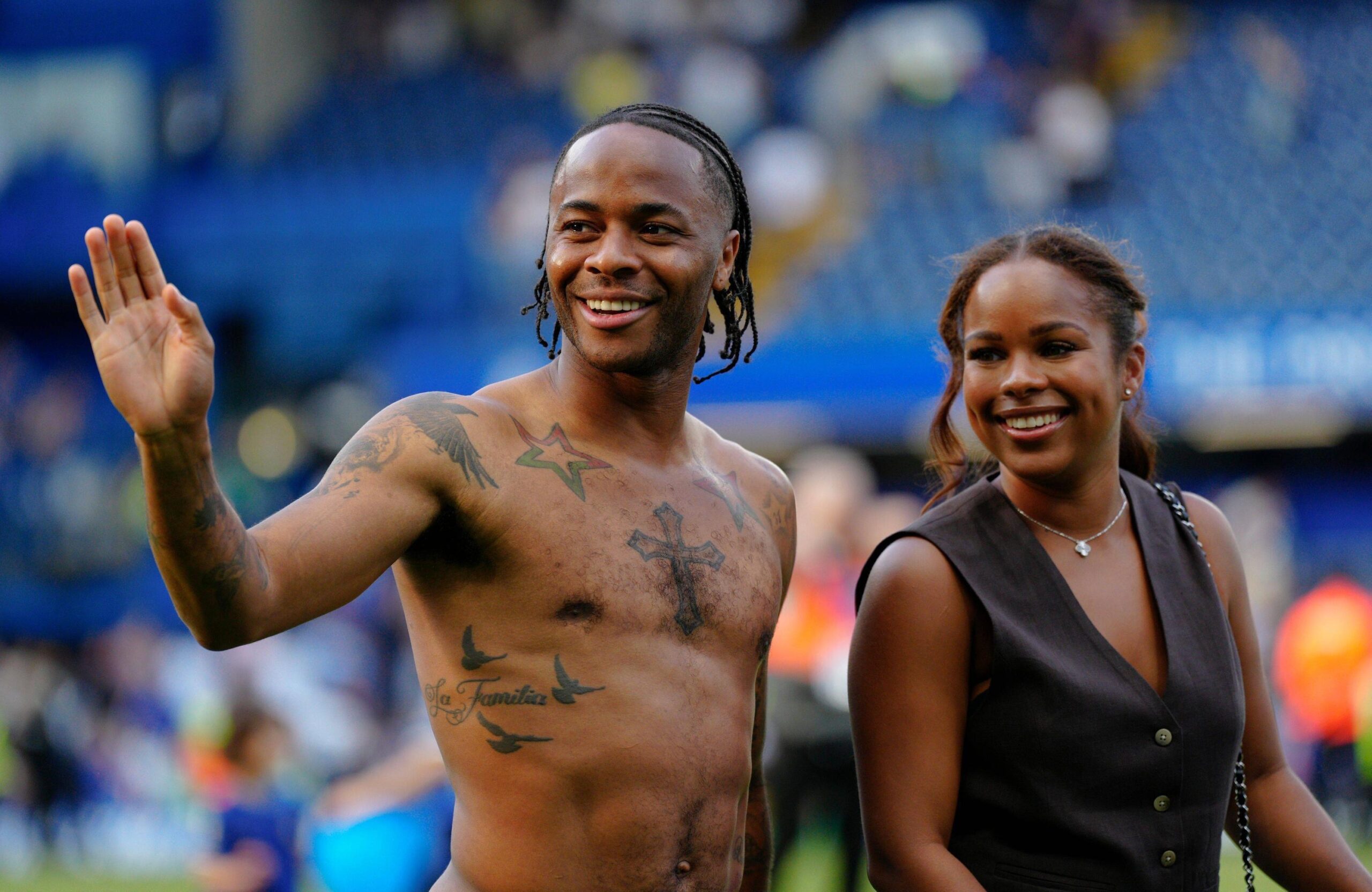
Smaller tattoos sit around the cross on Sterling’s shoulders and upper arms. This second shirtless photo shows how the work spreads when he raises his arms, while the first gives a more direct view from the front. Both angles help because a change in posture can alter the spacing and hide different edges.
Reports also mention small symbols, lettering and birds around his shoulders. Some details come from photographs rather than Sterling’s own explanations. A clear design can be named, but a shadow or partly covered mark should not be given a confident meaning simply to expand the list.
The collection grew alongside Sterling’s football career, and team shirts and training tops often cover parts of it. A stadium image may show the chest but hide the ribs, or reveal an arm while the collar obscures the upper lettering. The shoulder tattoos need their own photo because a straight-on portrait can hide them.
Together, the chest and shoulder pieces feel personal without following one style. Religious imagery, family words and simple graphic designs all share the space. That variety is more accurate than describing everything as one planned sleeve.
Portraits, birds and the tree tattoo bring family memories into the collection

Sterling’s collection includes portraits, birds and a tree design. These pieces have more detail than the tiny lettering near his wrist, so a sharp photo matters. Hair, sweat and stadium lighting can flatten the shading until a face looks like an ordinary dark patch.
The tree is often discussed as part of the family side of his tattoos. A tree can suggest roots and relatives, but the explanation should stay close to what a source confirms. The image shows its branches, trunk and placement; reporting supplies the family context.
Portraits need particular care. A clear photo may show a recognisable face, but it does not confirm who that person is unless Sterling or a reliable source identifies them. It is better to describe a reported portrait and where it sits than guess from a blurry image.
The portrait and tree work also show the range of styles in his collection. Beside the bold cross and stars are finer lines and softer shading. A separate tattoo photo keeps those details visible instead of burying them beneath the larger chest designs.
The rifle tattoo on Sterling’s right leg has a very specific personal explanation
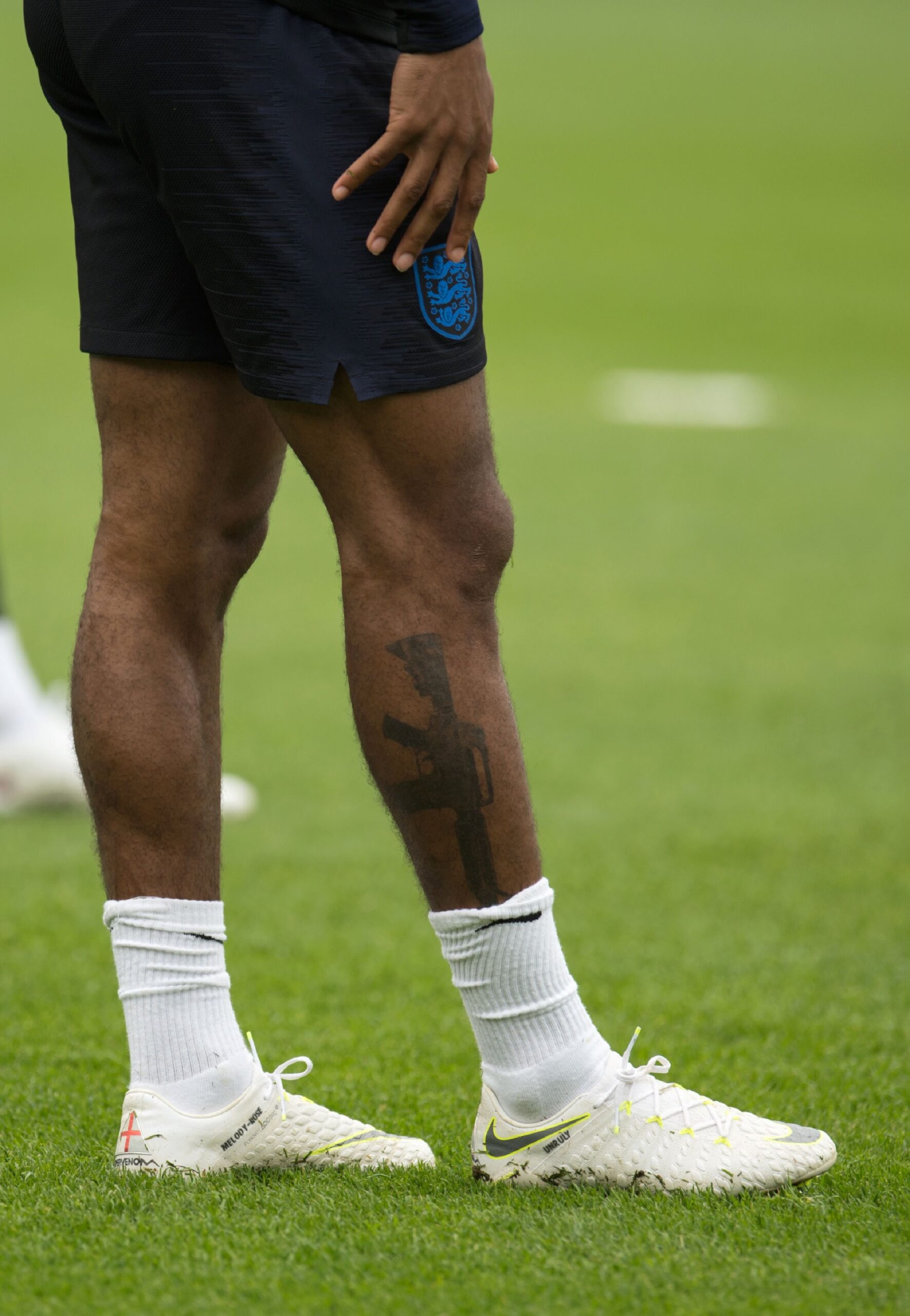
The rifle tattoo on Sterling’s right calf became the most controversial design in his collection. It was photographed during England training and quickly sparked debate about gun imagery. Sterling’s explanation is central: his father was fatally shot when Sterling was young, and he said he would never touch a gun.
He connected the rifle’s placement to football, explaining that he shoots with his right foot. The line was simple, but the personal history behind it was much heavier than the headlines suggested. Early photos showed the tattoo unfinished, another detail worth retaining instead of presenting the design as if it never changed.
The leg photo shows the black silhouette and its placement clearly. It is a separate calf view, not a generic portrait or a crop of the chest picture. That matters because socks, boots and shorts can cover the edges during a match.
The rifle tattoo should be described using Sterling’s explanation, not assumptions about violence or gang imagery. His account was direct, and the image shows the design. There is no need to attach a bigger moral lesson to it.
Sterling’s tattoos also include Wembley, a clock tower and smaller lettering
Sterling has also been photographed with a Wembley design, a clock tower and smaller lettering. Wembley has an obvious football connection. He has described it as a symbol of the dream he was living, giving the arm tattoo a more specific explanation than many smaller marks.
The clock tower is a compact design on his arm and can be difficult to spot while he is playing. Accounts also list family names and phrases, including words associated with his children. Since the photos do not show every design at once, each detail should be tied to the image that supports it.
A high-resolution training photo helps because the leg and boots provide context and scale. The angle also shows where the ink sits. It gives the article another distinct photo instead of reusing a shirtless celebration image.
The word Wembley is both personal and public: it points to a place and a football ambition, while the family lettering is more intimate. Sterling’s collection moves between those sides without needing one theme to tie everything together.
The smaller arm and hand tattoos complete a collection built over time
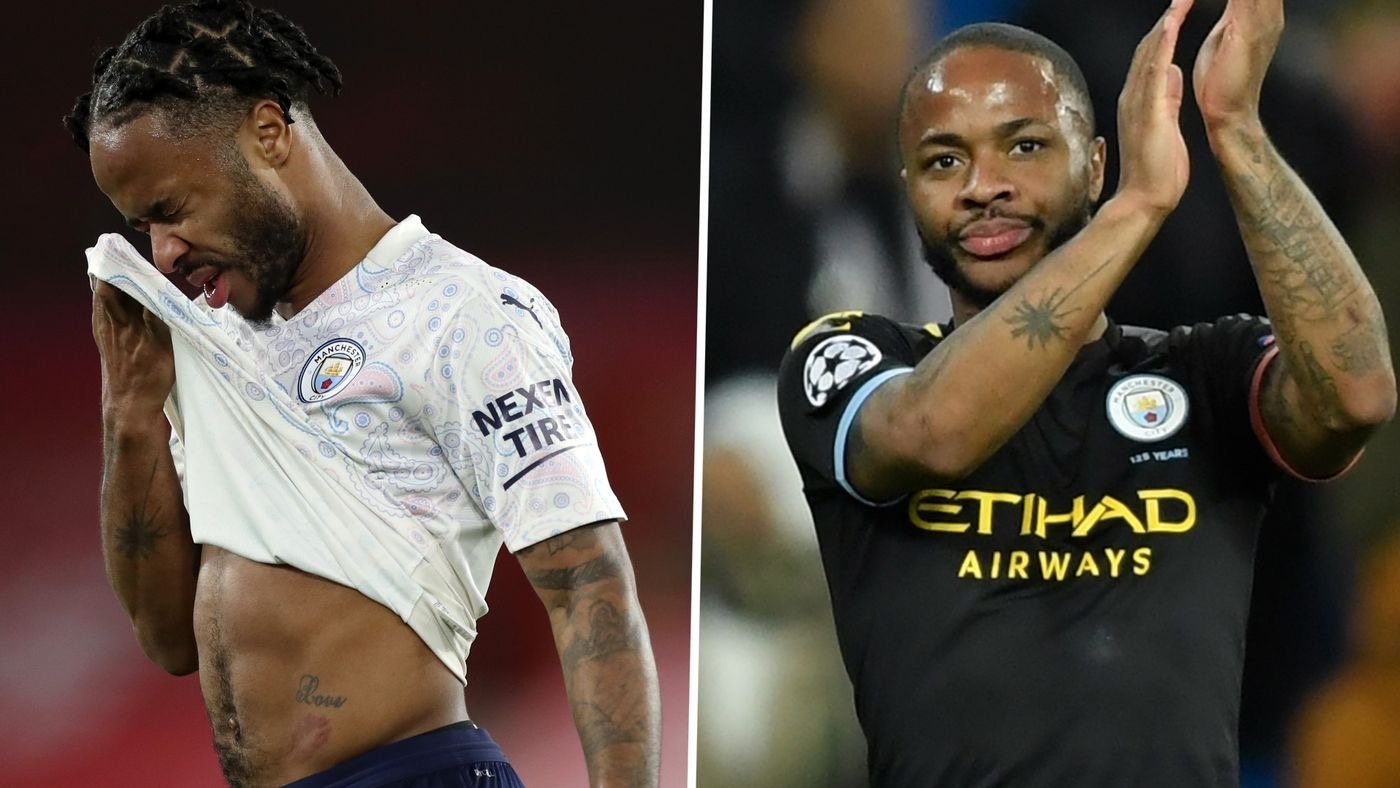
Smaller tattoos on Sterling’s arms and hands can appear or disappear from view depending on the photo. Some are clear enough to identify, including short words, symbols and marks near the wrist. Others blend into shadows or jewellery. That is common when a collection is mostly seen in sports and fashion photography.
Photos from tattoo artists and football coverage together offer a timeline, not a picture of one finished mural. Older images show the chest and early arm work; later views reveal more lettering and detail. A new angle should not automatically be taken as a new tattoo or cover-up.
Family life is another thread in the collection. Names, birds and Familia sit near football references such as Wembley. The designs use different styles, but many record people and moments that mattered to Sterling.
The clearest inventory includes the stars, cross, birds, Familia lettering, tree, portraits, Wembley, clock tower, rifle tattoo and smaller family marks. Six distinct tattoo photos give those groups room. The featured portrait remains separate, offering a face view rather than evidence for a particular design.
Sterling’s tattoos make more sense as a timeline. The rifle attracted attention because of its subject and placement, but the rest of the collection is just as revealing. Family names and birds appear beside football references, travel memories and small decorative designs. There is no single statement the whole collection has to make.
Image quality and framing matter here. Fine lettering can vanish in a small file, and a calf tattoo loses context when the leg is cropped out. Clear photographs give readers something specific to see instead of relying on general statements about Sterling’s style.
When Sterling has explained a tattoo, that explanation belongs in the guide. When a design is simply visible in a photograph, it can be described without adding a story. That balance gives readers a fuller view without claiming every symbol has a confirmed meaning.