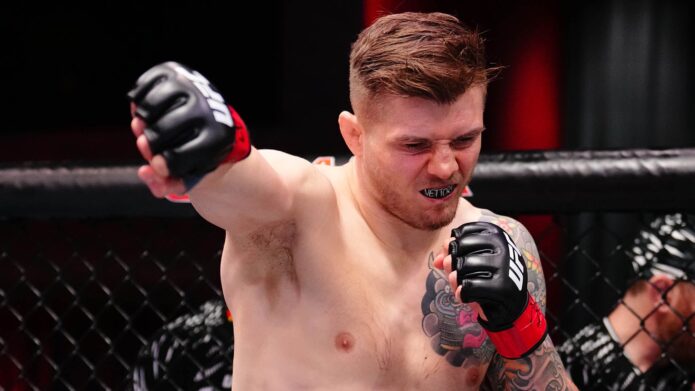
Marvin Vettori’s left-side tattoos form a connected chest-and-arm piece. A red samurai face sits on the chest, while a dragon, waves, flowers and an orange tiger continue down the sleeve. Most of the background is black and gray, with small areas of color picking out the main figures.
Tattoo coverage has described the work as Japanese-inspired and named Lorenzo Casarin as the artist. Vettori hasn’t given a personal explanation for every animal, flower or wave in the photos.
The Samurai Chest Tattoo

The samurai face sits on Vettori’s left pectoral beneath an elaborate helmet. Red fills much of the face; gold lines separate darker armor, with blue-green details near the sides. Curved, cloud-like shapes form an edge around the image and lead toward the shoulder.
The face and helmet remain clear in an event photo, even though the smaller armor lines need a closer look. Vettori hasn’t explained a specific memory or idea behind the samurai. The design’s subject is visible; a more personal story isn’t established in the material used here.
The Tiger on His Left Forearm
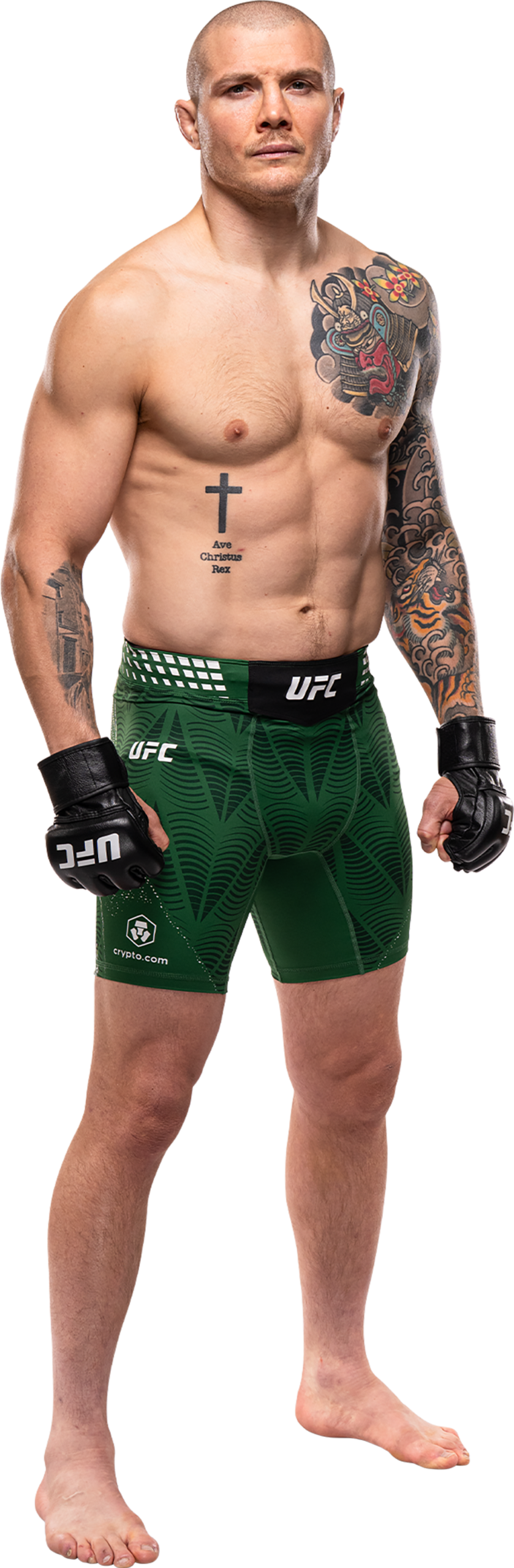
An orange tiger with black stripes and an open mouth stands out on Vettori’s left forearm. Gray-and-black waves curve around the animal and connect it to the darker work above. The glove hides the lowest part of the arm, so the photo doesn’t show where every line ends.
A newer official portrait also shows a separate black cross and the words “Ave Christus Rex” on the right side of his abdomen. The images don’t establish the timing or personal significance of those marks.
Waves, Flowers and the Dragon
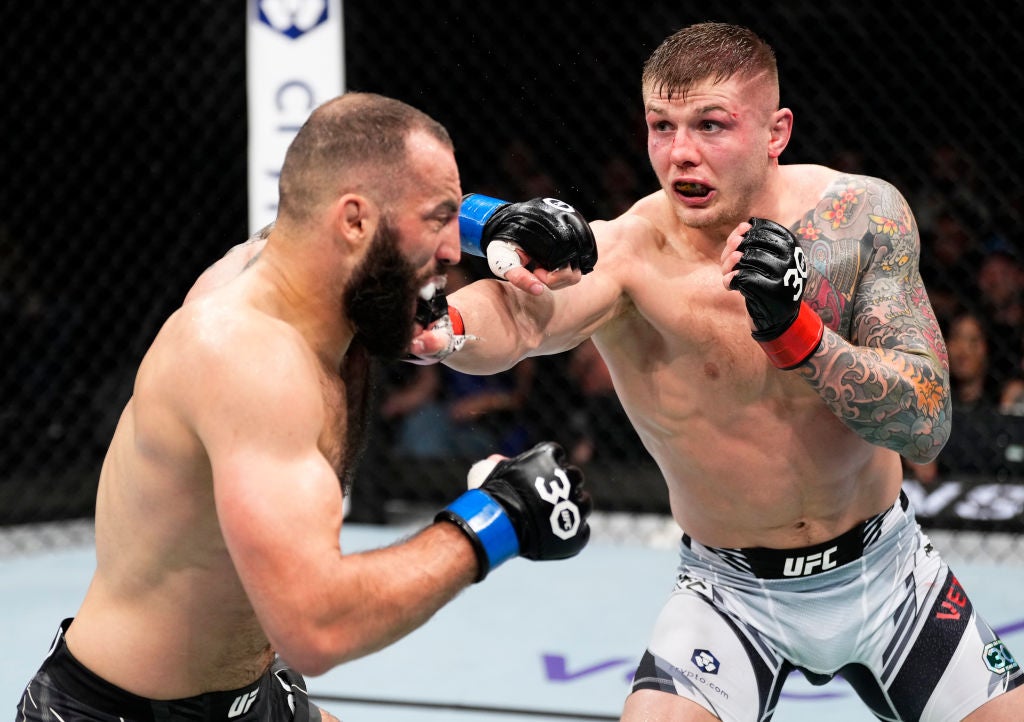
In the fight photo against Roman Dolidze, Vettori’s left arm is raised, exposing more of the sleeve. Yellow-and-red flowers sit near the shoulder, with green details lower down. The dragon appears high on the arm; its long snout, open mouth and scales are clearer in a turned pose than in a front-facing shot.
The waves repeat rounded curves around the chest and arm images. The flowers interrupt that darker background, while the red samurai and orange tiger give the eye two distinct points of color. These details help the varied subjects read as one composition.
How the Chest Piece Joins the Sleeve

An older front-facing cage photo shows the left-side piece running from chest over shoulder and down toward the wrist. The clouds and flowers fill the transition from the samurai to the upper-arm dragon. The opposite chest remains mostly open in that image.
Different poses show different surfaces: the samurai faces the camera more directly here, while the tiger is easier to see when the forearm turns outward. A newer portrait reveals right-side abdominal ink that isn’t visible in these older photos, so the earlier shots aren’t a full inventory of Vettori’s current tattoos.
The Italian Dream Behind the Photos

In the celebration photo, Vettori raises both arms while holding an Italian flag; the referee stands beside him. The flag covers part of the sleeve, so this image gives event context rather than a close view of the ink.
Vettori has competed in the UFC since 2016 and is known as The Italian Dream. The UFC 286 interview below follows his decision win over Roman Dolidze. It gives a view of the fighter outside the posed tattoo photos, without adding a backstory to designs he hasn’t discussed.